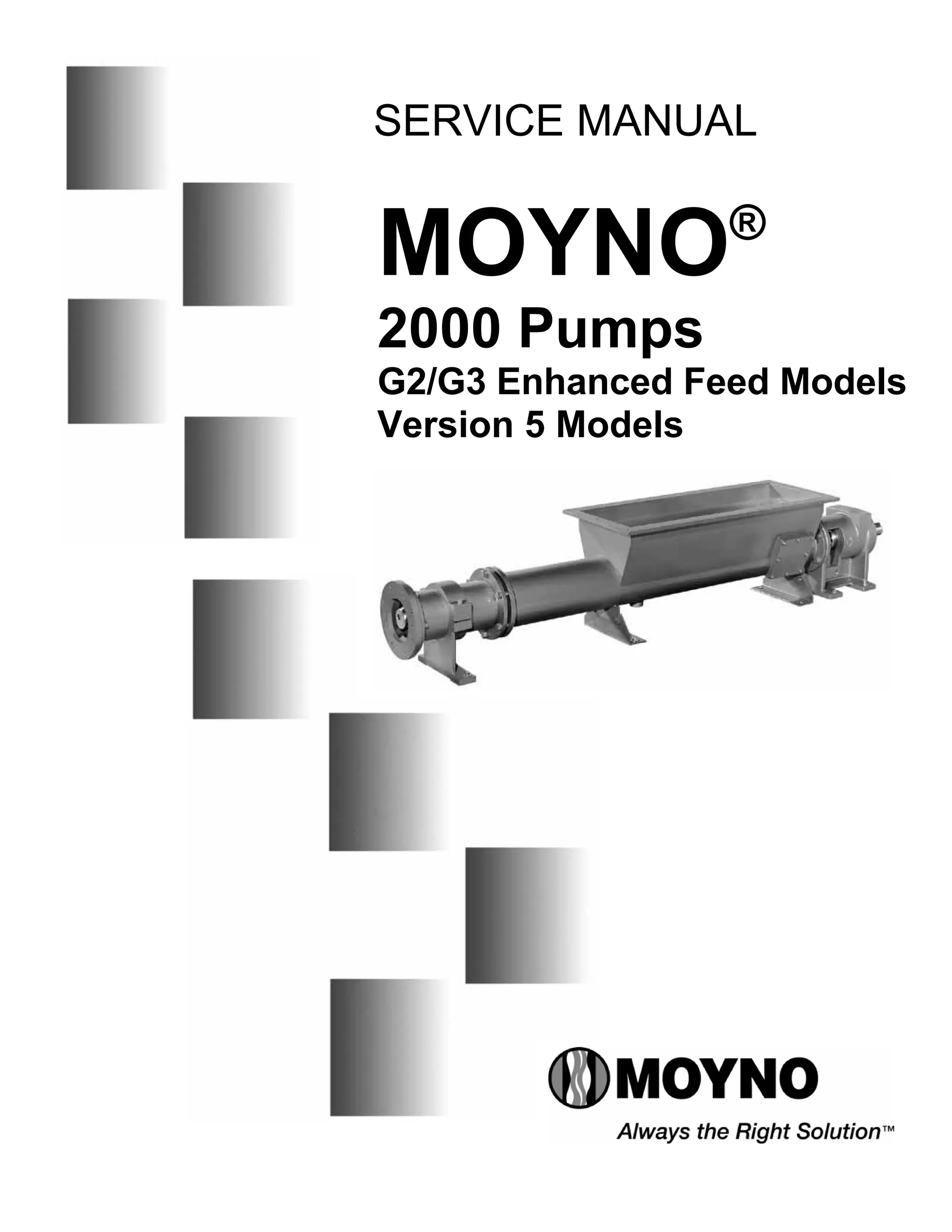
MOYNO®
2000 Pumps
G2/G3 Enhanced Feed Models
Version 5 Models
SERVICE MANUAL
Note: This service manual outlines installation, operation and maintenance procedures for the flanged ”G4” models of Moyno 2000
pump. For information on the flanged G1, open throat (G2) and/or the bridge breaker (G3) models of the Moyno 2000 pump,
refer to their respective Service Manual, or contact your nearest Moyno pump representative.
TABLE OF CONTENTS
Page
1-1. INTRODUCTION………………………………..... 1
1-2. GENERAL…………………………………1
1-3. NAMEPLATE DATA……………………...1
1-4. Pump Rotation…………………1
1-5. Model Number………………… 1
1-6. Frame Size Designation………1
1-7. Type Designation……………...1
1-8. Version Designation………….. 2
1-9. Trim Code……………………... 2
1-10. Variation of Standard Parts….. 2
2-1. INSTALLATION…………………………………… 2
2-2. GENERAL…………………………………2
2-3. PIPING……………………………………. 2
2-4. Suction Piping………………….2
2-5. Discharge Piping……………… 2
2-6. FOUNDATION…………………………… 2
2-7. SHAFT ALIGNMENT……………………. 3
2-8. On Coupling Connected Units. 3
2-9. On Belt Drive Units…………… 3
2-10. WATER FLUSH OF PACKING……….. 3
3-1. OPERATION…………………………………….... 3
3-2. INITIAL CHECK………………………….. 3
3-3. START-UP……………………………….. 3
3-4. PACKING LEAKAGE……………………. 4
4-1. MAINTENANCE……………………………………4
4-2. GENERAL…………………………………4
4-3. PACKING ADJUSTMENT……………….4
4-4. PACKING REPLACEMENT……………..4
4-5. LUBRICATION…………………………… 5
4-6. Bearings………………………...5
4-7. Gear Joints……………………..5
4-8. PUMP DISASSEMBLY……………..…... 5
4-9. Disconnect Pump……………...5
4-10. Packing Removal……………...5
4-11. Stator Removal……………….. 5
4-12. Drive train removal………..….. 5
4-13. Rotor, Connecting Rod, and
Intermediate Shaft Removal .. 6
4-14. Drive Shaft and Bearings
Removal………………………..6
4-15. G3 BRIDGE BREAKER
DISASSEMBLY…………………………6
4-16. G3 Paddle Removal………..… 6
4-17. G3 Bearing Side Removal..…..6
4-18. G3 Drive Side Removal……… 6
Page
4-19. CLEANING…………………………….. 7
4-20. INSPECTION………………………….. 7
4-21. Bearings…………………..….. 7
4-22. Drive shafts………………..…. 7
4-23. Seals……….……………..….. 7
4-24. Packing…….……………….... 7
4-25. Rotor…….………………..….. 7
4-26. Stator…….………………..….. 8
4-27. All Other Parts……………….. 8
4-28. PUMP ASSEMBLY ……………………8
4-29. Lubrication During Assembly. 8
4-30. Packing Installation…………. 8
4-31. Bearing Housing/Suction
Housing Assembly…………... 8
4-32. Bearing/Drive Shaft
Assembly……………………... 8
4-33. Rotor/Stator Assembly……… 9
4-34. Rotor Gear Joint Assembly… 9
4-35. Rotor/Stator to Drive End
Assembly……………………... 10
4-36. Stator Support/Discharge
Assembly…………………….. 10
4-37. G3 BRIDGE BREAKER ASSEMBLY .11
4-38. G3 Drive Side Assembly……. 11
4-39. G3 Bearing Side Assembly …11
4-40. G3 Paddle Assembly …….….11
4-41. FINAL ASSEMBLY…………………….12
4-42. Packing Adjustment……..…. 12
4-43. OTHER CONSIDERATIONS…………12
4-44. Short Term Storage .………. 12
4-44. Long Term Storage .………. 12
4-46. PACKING SPECIFICATION…………. 12
4-47. VARIATIONS OF STANDARD PARTS.
12
4-48. Rotors……..…………….……. 13
4-49. Drive Shafts……………...….. 13
4-50. PUMP MODEL DESIGNATION…..… 13
4-51. G2 PARTS LISTS………………….…. 14
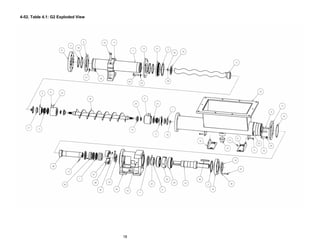
4-52. Table 4.1 G2 Exploded View 15
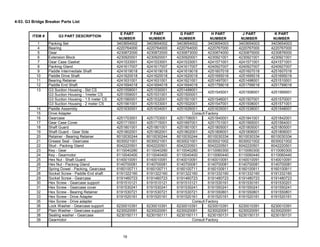
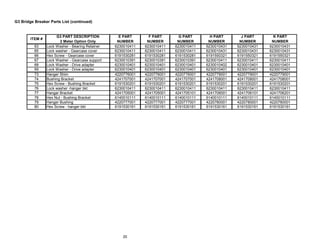
4-53. G3 PARTS LISTS………………….…. 16
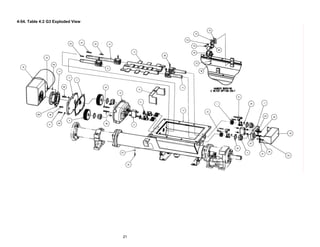
4-54. Table 4.2 G3 Exploded View.17
4-55. TROUBLESHOOTING CHART…..…. 18
1
SERVICE MANUAL
Moyno®
2000 Pumps
G2/G3 Enhanced Feed Open Throat Models
1-1. INTRODUCTION
1-2. GENERAL
The Moyno®
2000 Pump is the culmination of over 70 years of
experience in manufacturing and marketing fluids handling
equipment. This rugged pump has been engineered to be the most
reliable product ever sold under the Moyno name. The pump has
been painstakingly tested to assure consistent performance in the
most difficult of applications. It represents the next generation of the
world’s most versatile pump.
The Moyno 2000 Pump is a progressing cavity pump. A single
helical rotor rolling eccentrically in the double helix of the stator
creates the pumping action. The rotor in conjunction with the stator
forms a series of sealed cavities 180 degrees apart. s the rotor
turns, the cavities progress from the suction to the discharge. As
one cavity diminishes, the opposing cavity increases at exactly the
same rate. Thus the sum of the two discharges is a constant
volume. The result is a pulsation-free positive displacement flow
utilizing no valves.
The G2 product line is the latest Moyno design which incorporates a
wide open throat feed hopper with auger connecting rod for better
fill efficiency. The G3 version incorporates the features of the G2
open throat plus has a separate bridge breaker mechanism to
effectively pump even higher solids and viscosity products. This
manual supports the G2/G3 version 5 product lines purchased after
Oct 2003 (See fig 1-1 for indicator in trim code).
G2 Version 5 features include integral extension tube, larger auger
feed connecting rods, and two piece drive shaft for easy
maintenance. The G3 Version 5 includes the features of the G2 plus
separate drive on the Bridge Breaker to allow the flexibility to vary
the paddle speed, separate from the pump, when needed. The
paddle shaft is designed for maintenance ease by allowing the
paddles to be removed from the inside of the suction hopper. This
feature allows servicing of the bottom pump portion without
disturbing the bridge breaker drive mechanism, significantly
reducing downtime.
1-3. NAMEPLATE DATA
The pump nameplate, located on the bearing housing, contains
important information relating to the operation and servicing of the
pump. This information includes the direction of rotation arrow and
the pump model and serial numbers (see Figure 1-1.). The pump
model number must be used for reference when ordering spare
parts.
1-4. Pump Rotation. A rotation arrow on the nameplate indicates
the direction of rotation. Normal rotation of Moyno 2000 pumps is
clockwise, when viewed from the driven end of the pump.
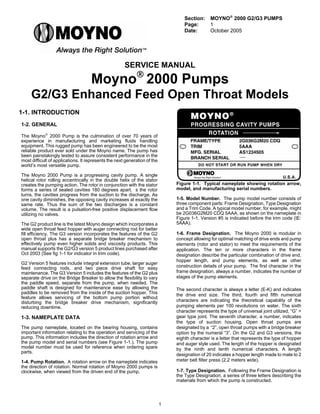
Figure 1-1. Typical nameplate showing rotation arrow,
model, and manufacturing serial numbers.
1-5. Model Number. The pump model number consists of
three component parts: Frame Designation, Type Designation
and a Trim Code. A typical model number, for example, might
be 2G036G2M20 CDQ 5AAA, as shown on the nameplate in
Figure 1-1. Version #5 is indicated before the trim code (IE:
5AAA).
1-6. Frame Designation. The Moyno 2000 is modular in
concept allowing for optimal matching of drive ends and pump
elements (rotor and stator) to meet the requirements of the
application. The ten or more characters in the frame
designation describe the particular combination of drive end,
hopper length, and pump elements, as well as other
construction details of your pump. The first character in the
frame designation, always a number, indicates the number of
stages of the pump elements.
The second character is always a letter (E-K) and indicates
the drive end size. The third, fourth and fifth numerical
characters are indicating the theoretical capability of the
pumping elements per 100 revolutions on water. The sixth
character represents the type of universal joint utilized, “G” =
gear type joint. The seventh character, a number, indicates
the type of suction housing. Open throat pumps are
designated by a “2”, open throat pumps with a bridge breaker
option by the numeral “3”. On the G2 and G3 versions, the
eighth character is a letter that represents the type of hopper
and auger style used. The length of the hopper is designated
by the ninth and tenth numerical characters. A length
designation of 20 indicates a hopper length made to mate to 2
meter belt filter press (2.2 meters wide).
1-7. Type Designation. Following the Frame Designation is
the Type Designation, a series of three letters describing the
materials from which the pump is constructed.
Section: MOYNO®
2000 G2/G3 PUMPS
Page: 1
Date: October 2005
2
The first letter identifies the material of the suction housing.
C ⎯ Cast Iron
E ⎯ Carpenter 20 Stainless Steel*
G ⎯ 416 Stainless Steel
H ⎯ Hastelloy “C”**
J ⎯ 17-4 pH Stainless Steel
M ⎯ Monel***
S ⎯ 316 Stainless Steel
W ⎯ Cast Steel
X ⎯ Special to Application
The second letter indicates the material used in the drive shaft,
connecting rod, rotor, and other wettable parts.
D ⎯ Alloy Steel
E ⎯ Carpenter 20 Stainless Steel*
G ⎯ 416 Stainless Steel
H ⎯ Hastelloy “C”**
J ⎯ 17-4 pH Stainless Steel
M ⎯ Monel***
S ⎯ 316 Stainless Steel
X ⎯ Special to Application
The third letter indicates the material of the stator. It identifies
only the stator material and not that of the tube. The stator tube
construction is typically carbon steel since it is isolated from the
pumpage. Standard stator materials used in the Moyno 2000
pump are as follows:
B ⎯ EPDM 300, 70 Durometer
C ⎯ Nitrile 103, 50 Durometer
D ⎯ Tool Steel
E ⎯ Nitrile 110, 70 Durometer
F ⎯ Fluoroelastomer 500, 75 Durometer
G ⎯ 416 Stainless Steel
H ⎯ Hastelloy “C”**
I ⎯ Teflon 15% Glass†
J ⎯ 17-4 pH Stainless Steel
K ⎯ Hypalon 800, 70 Durometer†
M ⎯ Nitrile 100M 70 Durometer
P ⎯ Thiokol 70 Durometer‡
Q ⎯ Nitrile 100, 70 Durometer
R ⎯ Natural Rubber 200, 55 Durometer
T — Teflon 15% glass
U ⎯ Urethane 70 Durometer
X ⎯ Special to Application
Z ⎯ White Nitrile 150, 70 Durometer
A typical type designation, such as CDQ, would identify the
following materials of construction:
C ⎯ Cast iron suction housing
D ⎯ Alloy steel rotor, drive shaft, connecting rod and
other minor metallic parts in contact with the fluid being
pumped.
Q ⎯ Nitrile (70 Durometer) stator
*Carpenter 20 is a trademark of Carpenter Technology Corp.
**Hastelloy is a trademark of Cabot Corp.
***Monel is a trademark of INCO Alloy Corp.
†Hypalon and Teflon are trademarks of E. I. DuPont de Nemours
and Company
‡Thiokol is a trademark of Morton Thiokol, Inc.
1-8. Version Designation. Following the Frame Designation is
the a number which indicates the version Designation. A metric
version sold into the world markets is designated as a 1. The
current ANSI version, covered in this service manual, is
designated by 5.
1-9. Trim Code. Also included in the Model Number is the
three character Trim Code which is used to identify pump
construction. The letters “AAA” signify standard construction,
with letters other than “A” signifying variations. The first letter
identifies sealing variations; the second, internal variations;
and the third, rotor variations.
1-10. Variations of Standard Parts. Refer to Sections 4-47
through 4-49 for variations available for modifying pumps to
meet specialized pumping conditions. If the trim code of your
pump is other than “AAA”, contact your nearest Moyno
representative for clarification. Do not modify your pump with
any variation unless you have determined that it is compatible
with your application.
2-1. INSTALLATION
2-2. GENERAL
Moyno pumps are lubricated and tested at the factory prior to
shipment and require minimum pre-start up maintenance.
Packing, however, is not lubricated at the factory.
Accessibility to the pump and adequate clearance should be a
prime consideration in any installation. Enough space should
surround the unit so that maintenance can be carried out with
ease.
2-3. PIPING
2-4. Suction Hopper used with open throat and bridge breaker
pumps should have nearly vertical sides, or be otherwise
designed to enhance the flow of the material into the pump.
2-5. Discharge Piping diameter should generally be as large
as the pump ports unless fluid conditions indicate otherwise.
An easily removable section of piping one-to-two times longer
than the connecting rod (approximately the length of the
suction housing and bearing housing together) should be
mated to the discharge port. This will allow the rotor and stator
to be removed without having to remove the complete pump
from the base.
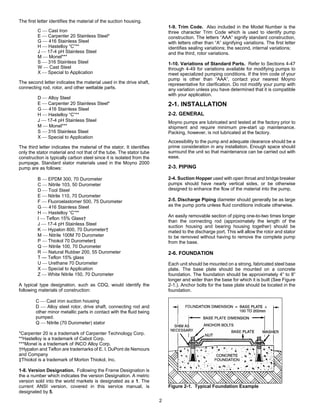
2-6. FOUNDATION
Each unit should be mounted on a strong, fabricated steel base
plate. The base plate should be mounted on a concrete
foundation. The foundation should be approximately 4” to 8”
longer and wider than the base for which it is built (See Figure
2-1.). Anchor bolts for the base plate should be located in the
foundation.
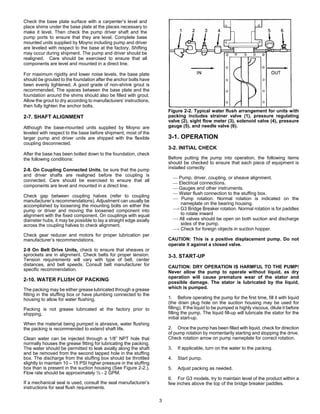
Figure 2-1. Typical Foundation Example
3
Check the base plate surface with a carpenter’s level and
place shims under the base plate at the places necessary to
make it level. Then check the pump driver shaft and the
pump ports to ensure that they are level. Complete base
mounted units supplied by Moyno including pump and driver
are leveled with respect to the base at the factory. Shifting
may occur during shipment. The pump and driver should be
realigned. Care should be exercised to ensure that all
components are level and mounted in a direct line.
For maximum rigidity and lower noise levels, the base plate
should be grouted to the foundation after the anchor bolts have
been evenly tightened. A good grade of non-shrink grout is
recommended. The spaces between the base plate and the
foundation around the shims should also be filled with grout.
Allow the grout to dry according to manufacturers’ instructions,
then fully tighten the anchor bolts.
2-7. SHAFT ALIGNMENT
Although the base-mounted units supplied by Moyno are
leveled with respect to the base before shipment, most of the
larger pump and driver units are shipped with the flexible
coupling disconnected.
After the base has been bolted down to the foundation, check
the following conditions:
2-8. On Coupling Connected Units, be sure that the pump
and driver shafts are realigned before the coupling is
connected. Care should be exercised to ensure that all
components are level and mounted in a direct line.
Check gap between coupling halves (refer to coupling
manufacturer’s recommendations). Adjustment can usually be
accomplished by loosening the mounting bolts on either the
pump or driver and moving the loosened component into
alignment with the fixed component. On couplings with equal
diameter hubs, it may be possible to lay a straight edge axially
across the coupling halves to check alignment.
Check gear reducer and motors for proper lubrication per
manufacturer’s recommendations.
2-9 On Belt Drive Units, check to ensure that sheaves or
sprockets are in alignment. Check belts for proper tension.
Tension requirements will vary with type of belt, center
distances, and belt speeds. Consult belt manufacturer for
specific recommendation.
2-10. WATER FLUSH OF PACKING
The packing may be either grease lubricated through a grease
fitting in the stuffing box or have plumbing connected to the
housing to allow for water flushing.
Packing is not grease lubricated at the factory prior to
shipping.
When the material being pumped is abrasive, water flushing
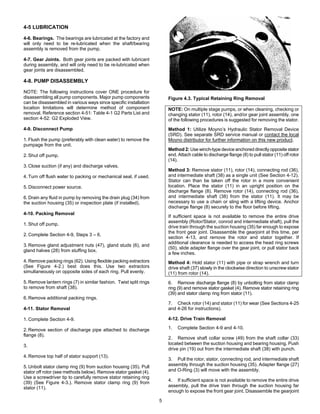
the packing is recommended to extend shaft life.
Clean water can be injected through a 1/8” NPT hole that
normally houses the grease fitting for lubricating the packing.
The water should be permitted to leak axially along the shaft
and be removed from the second tapped hole in the stuffing
box. The discharge from the stuffing box should be throttled
slightly to maintain 10 – 15 PSI higher pressure in the stuffing
box than is present in the suction housing (See Figure 2-2.).
Flow rate should be approximately ½ - 2 GPM.
If a mechanical seal is used, consult the seal manufacturer’s
instructions for seal flush requirements.
Figure 2-2. Typical water flush arrangement for units with
packing includes strainer valve (1), pressure regulating
valve (2), sight flow meter (3), solenoid valve (4), pressure
gauge (5), and needle valve (6).
3-1. OPERATION
3-2. INITIAL CHECK
Before putting the pump into operation, the following items
should be checked to ensure that each piece of equipment is
installed correctly:
⎯ Pump, driver, coupling, or sheave alignment.
⎯ Electrical connections.
⎯ Gauges and other instruments.
⎯ Water flush connection to the stuffing box.
⎯ Pump rotation. Normal rotation is indicated on the
nameplate on the bearing housing.
⎯- G3 Bridge Breaker rotation. Normal rotation is for paddles
to rotate inward
⎯ All valves should be open on both suction and discharge
sides of the pump.
⎯- Check for foreign objects in suction hopper.
CAUTION: This is a positive displacement pump. Do not
operate it against a closed valve.
3-3. START-UP
CAUTION: DRY OPERATION IS HARMFUL TO THE PUMP!
Never allow the pump to operate without liquid, as dry
operation will cause premature wear of the stator and
possible damage. The stator is lubricated by the liquid,
which is pumped.
1. Before operating the pump for the first time, fill it with liquid
(the drain plug hole on the suction housing may be used for
filling). If the liquid to be pumped is highly viscous, dilute it before
filling the pump. The liquid fill-up will lubricate the stator for the
initial start-up.
2. Once the pump has been filled with liquid, check for direction
of pump rotation by momentarily starting and stopping the drive.
Check rotation arrow on pump nameplate for correct rotation.
3. If applicable, turn on the water to the packing.
4. Start pump.
5. Adjust packing as needed.
6. For G3 models, try to maintain level of the product within a
few inches above the top of the bridge breaker paddles.
4
3-4. PACKING LEAKAGE
A packed stuffing box is designed to control leakage, not stop it
completely. Leakage is generally necessary to reduce friction
and dissipate heat. The amount of leakage necessary will
depend on the fluid pump, the installation, and pump speed and
type. Refer to Section 4-3. for packing adjustment. G3 pumps are
equipped with packing on the pump as well as both sides of each
bridge breaker paddle (IE: 4sets).
Moyno 2000 pumps have been designed for minimum stuffing
box leakage when properly maintained. If leakage cannot be
tolerated, then a mechanical seal should be used.
4-1. MAINTENANCE
NOTE: In this section, a number or a letter in parentheses will
follow the first reference to each pump part (#). These numbers
and letters are those used to identify the pump parts and
hardware items in the Exploded View (Section 4-52 and 4-54).
4-2. GENERAL
The Moyno 2000 pump has been designed for a minimum of
maintenance, the extent of which is routine adjustment and
lubrication of packing. The pump is one of the easiest to work on,
in that the main elements are very accessible and require few
tools to disassemble.
4-3. PACKING ADJUSTMENT
Packing gland nuts should be evenly adjusted so they are little
more than finger tight (See Figure 4-1). Over-tightening of the
packing gland may result in premature packing failure and
possible damage to the shaft and gland.
When packing is new, frequent minor adjustments during the first
few hours of operation are recommended in order to compress
and seat each ring of packing evenly.
1. Upon initial start-up of the pump, adjust the gland nuts for a
leakage rate of 1 – 2 drops per second until the packing has
seated and adjusted to the operating temperature (approximately
10 – 15 minutes).
2. If leakage is excessive after 15 minutes of operation, tighten
the gland nuts until a desired leakage rate is obtained.
CAUTION: Do not tighten until zero leakage is obtained.
Over-tightening of the packing gland may result in
accelerated wear on the packing and damage to the shaft. In
those situations where no packing leakage can be tolerated,
consult your Moyno Authorized Service Representative.
Figure 4-1. Cross Section of Stuffing Box
4-4. PACKING REPLACEMENT
When tightening the gland nuts can no longer regulate leakage,
remove and replace the packing. Replace as follows:
1. Remove packing gland nuts (47), and slide gland (28) and
clamp collar (33) back along drive shaft (38).
2. Remove packing gland studs(6)
3. Use a pair of packing extractors (Figure 4-2.) to remove four
packing rings (62), lantern ring halves (7), and two additional
packing rings (62).
Figure 4-2. Packing Removal Tool
4. Inspect surface of drive shaft for wear or grooves. If shaft
is worn through the chrome plating into the base metal, or is
badly scored or grooved, it should be replaced.
5. If drive shaft is not worn, install two rings of packing, the
lantern ring halves, and four more rings of packing; lubricating
them before installation with a good grade of packing grease.
Be sure to stagger the packing ring joints at 90-degree
increments (See Section 4-30.).
CAUTION: Always use a proper packing tamper tool to
install packing. Do not use a pointed for sharp tool, as
damage to the packing material or drive shaft could result.
To assure proper shaft lubrication, never use a one-piece
spiral wrap packing.
6. Replace packing gland (28) and secure with packing gland
nuts. (See Figure 4-1.)
7. Adjust packing per Section 4-3.
5
4-5 LUBRICATION
4-6. Bearings. The bearings are lubricated at the factory and
will only need to be re-lubricated when the shaft/bearing
assembly is removed from the pump.
4-7. Gear Joints. Both gear joints are packed with lubricant
during assembly, and will only need to be re-lubricated when
gear joints are disassembled.
4-8. PUMP DISASSEMBLY
NOTE: The following instructions cover ONE procedure for
disassembling all pump components. Major pump components
can be disassembled in various ways since specific installation
location limitations will determine method of component
removal. Reference section 4-51: Table 4-1 G2 Parts List and
section 4-52: G2 Exploded View.
4-9. Disconnect Pump
1. Flush the pump (preferably with clean water) to remove the
pumpage from the unit.
2. Shut off pump.
3. Close suction (if any) and discharge valves.
4. Turn off flush water to packing or mechanical seal, if used.
5. Disconnect power source.
6. Drain any fluid in pump by removing the drain plug (34) from
the suction housing (35) or inspection plate (if installed).
4-10. Packing Removal
1. Shut off pump.
2. Complete Section 4-9, Steps 3 – 6.
3. Remove gland adjustment nuts (47), gland studs (6), and
gland halves (28) from stuffing box.
4. Remove packing rings (62). Using flexible packing extractors
(See Figure 4-2.) best does this. Use two extractors
simultaneously on opposite sides of each ring. Pull evenly.
5. Remove lantern rings (7) in similar fashion. Twist split rings
to remove from shaft (38).
6. Remove additional packing rings.
4-11. Stator Removal
1. Complete Section 4-9.
2. Remove section of discharge pipe attached to discharge
flange (8).
3.
4. Remove top half of stator support (13).
5. Unbolt stator clamp ring (9) from suction housing (35). Pull
stator off rotor (see methods below). Remove stator gasket (4).
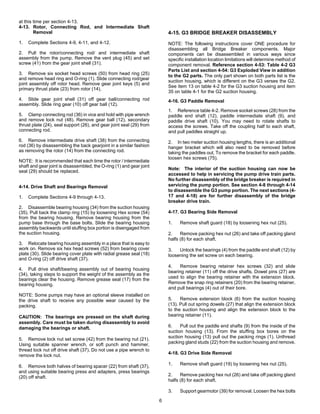
Use a screwdriver tip to carefully remove stator retaining ring
(39) (See Figure 4-3.). Remove stator clamp ring (9) from
stator (11).
Figure 4.3. Typical Retaining Ring Removal
NOTE: On multiple stage pumps, or when cleaning, checking or
changing stator (11), rotor (14), and/or gear joint assembly, one
of the following procedures is suggested for removing the stator.
Method 1: Utilize Moyno’s Hydraulic Stator Removal Device
(SRD). See separate SRD service manual or contact the local
Moyno distributor for further information on this new product.
Method 2: Use winch-type device anchored directly opposite stator
end. Attach cable to discharge flange (8) to pull stator (11) off rotor
(14).
Method 3: Remove stator (11), rotor (14), connecting rod (36),
and intermediate shaft (38) as a single unit (See Section 4-12).
Stator can than be taken off the rotor in a more convenient
location. Place the stator (11) in an upright position on the
discharge flange (8). Remove rotor (14), connecting rod (36),
and intermediate shaft (38) from the stator (11). It may be
necessary to use a chain or sling with a lifting device. Anchor
discharge flange (8) securely to the floor before lifting.
If sufficient space is not available to remove the entire drive
assembly (Rotor/Stator, conrod and intermediate shaft), pull the
drive train through the suction housing (35) far enough to expose
the front gear joint. Disassemble the gearjoint at this time, per
section 4-13, and remove the rotor and stator together. If
additional clearance is needed to access the head ring screws
(50), slide adapter flange over the gear joint, or pull stator back
a few inches.
Method 4: Hold stator (11) with pipe or strap wrench and turn
drive shaft (37) slowly in the clockwise direction to unscrew stator
(11) from rotor (14).
6. Remove discharge flange (8) by unbolting from stator clamp
ring (9) and remove stator gasket (4). Remove stator retaining ring
(39) and stator clamp ring from stator (11).
7. Check rotor (14) and stator (11) for wear (See Sections 4-25
and 4-26 for instructions).
4-12. Drive Train Removal
1. Complete Section 4-9 and 4-10.
2. Remove shaft collar screw (49) from the shaft collar (33)
located between the suction housing and bearing housing. Push
drive pin (19) out from the intermediate shaft (38) with punch.
3. Pull the rotor, stator, connecting rod, and intermediate shaft
assembly through the suction housing (35). Adapter flange (27)
and O-Ring (3) will move with the assembly.
4. If sufficient space is not available to remove the entire drive
assembly, pull the drive train through the suction housing far
enough to expose the front gear joint. Disassemble the gearjoint
6
at this time per section 4-13.
4-13. Rotor, Connecting Rod, and Intermediate Shaft
Removal
1. Complete Sections 4-9, 4-11, and 4-12.
2. Pull the rotor/connecting rod/ and intermediate shaft
assembly from the pump. Remove the vent plug (45) and set
screw (41) from the gear joint shell (31).
3. Remove six socket head screws (50) from head ring (25)
and remove head ring and O-ring (1). Slide connecting rod/gear
joint assembly off rotor head. Remove gear joint keys (5) and
primary thrust plate (23) from rotor (14).
4. Slide gear joint shell (31) off gear ball/connecting rod
assembly. Slide ring gear (10) off gear ball (12).
5. Clamp connecting rod (36) in vice and hold with pipe wrench
and remove lock nut (48). Remove gear ball (12), secondary
thrust plate (24), seal support (26), and gear joint seal (29) from
connecting rod.
6. Remove intermediate drive shaft (38) from the connecting
rod (36) by disassembling the back gearjoint in a similar fashion
as removing the rotor (14) from the connecting rod.
NOTE: It is recommended that each time the rotor / intermediate
shaft and gear joint is disassembled, the O-ring (1) and gear joint
seal (29) should be replaced.
4-14. Drive Shaft and Bearings Removal
1. Complete Sections 4-9 through 4-13.
2. Disassemble bearing housing (34) from the suction housing
(35). Pull back the clamp ring (15) by loosening Hex screw (54)
from the bearing housing. Remove bearing housing from the
pump base through the base bolts. Slide the bearing housing
assembly backwards until stuffing box portion is disengaged from
the suction housing.
3. Relocate bearing housing assembly in a place that is easy to
work on. Remove six hex head screws (52) from bearing cover
plate (30). Slide bearing cover plate with radial grease seal (18)
and O-ring (2) off drive shaft (37).
4. Pull drive shaft/bearing assembly out of bearing housing
(34), taking steps to support the weight of the assembly as the
bearings clear the housing. Remove grease seal (17) from the
bearing housing.
NOTE: Some pumps may have an optional sleeve installed on
the drive shaft to receive any possible wear caused by the
packing.
CAUTION: The bearings are pressed on the shaft during
assembly. Care must be taken during disassembly to avoid
damaging the bearings or shaft.
5. Remove lock nut set screw (42) from the bearing nut (21).
Using suitable spanner wrench, or soft punch and hammer,
thread lock nut off drive shaft (37). Do not use a pipe wrench to
remove the lock nut.
6. Remove both halves of bearing spacer (22) from shaft (37),
and using suitable bearing press and adapters, press bearings
(20) off shaft.
4-15. G3 BRIDGE BREAKER DISASSEMBLY
NOTE: The following instructions cover ONE procedure for
disassembling all Bridge Breaker components. Major
components can be disassembled in various ways since
specific installation location limitations will determine method of
component removal. Reference section 4-53: Table 4-2 G3
Parts List and section 4-54: G3 Exploded View in addition
to the G2 parts. The only part shown on both parts list is the
suction housing, which is different on the G3 verses the G2.
See item 13 on table 4-2 for the G3 suction housing and item
35 on table 4-1 for the G2 suction housing.
4-16. G3 Paddle Removal
1. Reference table 4-2. Remove socket screws (28) from the
paddle end shaft (12), paddle intermediate shaft (9), and
paddle drive shaft (10). You may need to rotate shafts to
access the screws. Take off the coupling half to each shaft,
and pull paddles straight up.
2. In two meter suction housing lengths, there is an additional
hanger bracket which will also need to be removed before
taking the paddles out. To remove the bracket for each paddle,
loosen hex screws (75).
Note: The interior of the suction housing can now be
accessed to help in servicing the pump drive train parts.
No further disassembly of the bridge breaker is required in
servicing the pump portion. See section 4-8 through 4-14
to disassemble the G3 pump portion. The next sections (4-
17 and 4-18) are for further disassembly of the bridge
breaker drive train.
4-17. G3 Bearing Side Removal
1. Remove shaft guard (18) by loosening hex nut (25).
2. Remove packing hex nut (26) and take off packing gland
halfs (8) for each shaft.
3. Unlock the bearings (4) from the paddle end shaft (12) by
loosening the set screw on each bearing.
4. Remove bearing retainer hex screws (32) and slide
bearing retainer (11) off the drive shafts. Dowel pins (27) are
used to align the bearing retainer with the extension block.
Remove the snap ring retainers (20) from the bearing retainer,
and pull bearings (4) out of their bore.
5. Remove extension block (6) from the suction housing
(13). Pull out spring dowels (27) that align the extension block
to the suction housing and align the extension block to the
bearing retainer (11).
6. Pull out the paddle end shafts (9) from the inside of the
suction housing (13). From the stuffing box bores on the
suction housing (13) pull out the packing rings (1). Unthread
packing gland studs (22) from the suction housing and remove.
4-18. G3 Drive Side Removal
1. Remove shaft guard (19) by loosening hex nut (25).
2. Remove packing hex nut (26) and take off packing gland
halfs (8) for each shaft.
3. Support gearmotor (39) for removal. Loosen the hex bolts
7
(35) on the drive adapter (15) Slide the female hollow shaft
gearmotor off the male Paddle Drive Shaft (10).
4. Loosen Hex screws (31) and remove the gear case cover
(17) and gear case gasket (7) by sliding them off the paddle
drive shaft (10). Remove grease seal (21) from the gear case
cover. Loosen hex screws (33) and remove drive adapter (15)
from the gear case cover.
Note: Certain models may use a belt and pulley
arrangement with a shaft output gearmotor instead of a
hollow shaft gearmotor. On these models, an adapter
flange is substituted for the drive adapter (15). A pulley
would be installed on the paddle drive shaft (10) instead
of the hollow shaft gearmotor.
5. Remove gears (5) by sliding each gear off the paddle drive
shaft (10) and off the paddle intermediate shaft (9). Remove
key (23 and 24) from their respective paddle shafts.
6. Unlock the bearings (4) from the paddle end shaft (12) by
loosening the set screw on each bearing.
7. Support gearcase (16) for removal. Remove hex screw (30)
which attaches the bottom of the gearcase to the suction
housing (13) support bracket. Unscrew socket screws (29) and
pull gearcase back away from the extension block (6) and
suction housing (13). Dowel pins (27) are used to align the
gearcase with the extension block (6). Remove seal washer
(38) from the gearcase.
8. Remove the snap ring retainers (20) from the gearcase
(16), and pull the bearings out of the gearcase (16) bore.
Remove grease seals (21) from the gearcase (16).
9. Remove extension block (6) from the suction housing (13).
Pull out spring dowels (27) that align the extension block to the
suction housing and align the extension block to the gearcase
(16).
10.Pull out the paddle drive shafts (10) and the paddle
intermediate shaft (9) from the inside of the suction housing
(13). From the stuffing box bores on the suction housing (13)
pull out the packing rings (1). Unthread packing gland studs
(22) from the suction housing and remove.
4-19. CLEANING
Clean all parts in a suitable cleaning solvent being careful to
observe all safety precautions regarding the use of solvent.
4-20. INSPECTION
4-21. Bearings. After cleaning, rotate bearings very slowly
under hand pressure to feel for smoothness and even action.
Never spin a dry bearing. Check for cracks, galling, pitting,
burrs, etc. Replace bearing if there is any doubt concerning
complete serviceability.
4-22. Drive Shaft. Inspect drive shaft (37) and intermediate
drive shaft (38) for scoring, burrs, cracks, etc. Replace as
necessary. For G3 models also inspect paddle drive shaft (10)
and paddle intermediate drive shaft (9) for scoring, burrs,
cracks, etc. Replace as necessary.
4-23. Seals. It is sound practice to always replace grease
seals (17 and 18) whenever drive shaft and tapered roller
bearings are removed. Apply Locktite 690 to outside diameter
of both grease seals. For G3 models, replace the grease seals
(21) whenever disassembling the bridge breaker bearings.
4-24. Packing. It is sound practice to always replace packing
(62) whenever the pump bearing housing is disassembled. For
G3 models, replace the packing (1) whenever disassembling the
bridge breaker bearings.
4-25. Rotor
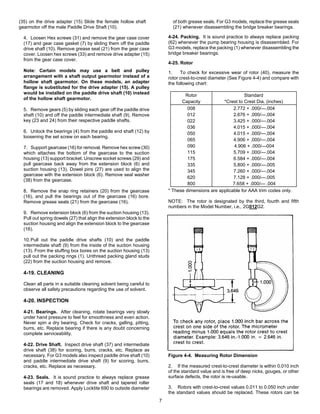
1. To check for excessive wear of rotor (40), measure the
rotor crest-to-crest diameter (See Figure 4-4) and compare with
the following chart:
Rotor
Capacity
Standard
*Crest to Crest Dia. (inches)
008 2.772 + .000/—.004
012 2.676 + .000/—.004
022 3.425 + .000/—.004
036 4.015 + .000/—.004
050 4.015 + .000/—.004
065 4.906 + .000/—.004
090 4.906 + .000/—004
115 5.709 + .000/—.004
175 6.584 + .000/—.004
335 5.800 + .000/—.005
345 7.260 + .000/—.004
620 7.128 + .000/—.005
800 7.658 + .000/— .004
* These dimensions are applicable for AAA trim codes only.
NOTE: The rotor is designated by the third, fourth and fifth
numbers in the Model Number, i.e., 2G012G2.
Figure 4-4. Measuring Rotor Dimension
2. If the measured crest-to-crest diameter is within 0.010 inch
of the standard value and is free of deep nicks, gouges, or other
surface defects, the rotor is re-usable.
3. Rotors with crest-to-crest values 0.011 to 0.050 inch under
the standard values should be replaced. These rotors can be
8
returned to Moyno for refurbishing. Rotors are stripped and re-
plated with chrome to standard dimensions provided that:
a. The key slots are not excessively worn.
b. The rotor surface is not cracked, pitted or deeply
grooved (1/32 inch or more).
c. The base surface metal is not pitted or corroded.
4-26. Stator. A worn stator may appear pitted and gouged or
may appear smooth similar to when new. Performance is the
best measure of rotor to stator fit. If unable to measure
performance adequately, suspected stator wear can be
evaluated by a Moyno sales or factory representative.
4-27. All Other Parts. Check for cracks, excessive wear,
damage to threaded holes, burrs, etc. Replace as necessary.
Replace O-rings and all gaskets at each disassembly and
reassembly.
4-28. PUMP ASSEMBLY
(Ref: Table 4-1, Section 4-51)
The Moyno 2000 pumps are reassembled in the reverse order of
dismantling. The following suggestions are offered:
1. While pump is dismantled, check all gaskets, seals, packing,
and O-rings. Replace all worn items. It is recommended that the
gear joint seals (29) and gear joint O-ring (1) be replaced each
time either of the gear joints is disassembled.
During the assembly process, cleanliness is important. To avoid
premature failure, bearings, and gear joint components must be
handled with care and kept clean.
4-29. Lubrication During Assembly
NOTE: The bearings are lubricated at the factory and will only
need to be re-lubricated when the shaft/bearing assembly is
completely removed from pump.
1. Bearings. Pack bearings after installation on shaft (Section
4-32). Lubricant should be packed around all of the rollers and
should completely cover the faces of the races. The void inside
the spacer between the bearings should be filled approximately
half way with lubricant.
2. Gear Joints. Both gear joints should be packed with
lubricant during assembly (Sections 4-34). DO NOT use zerk
fittings to lubricate gear joints after assembly. The pipe plugs (C)
in the drive shaft head, drive shaft, and gear joint shell are vent
plugs and MUST BE REMOVED during assembly of the gear
joints to allow excess lubricant to vent from the gear joints.
3. Packing. Lubricate packing rings during assembly.
Additional grease can be added after assembly through the zerk
fittings installed in the side of the stuffing box.
4. Approved Lubricants.
CAUTION: Do not mix different brands of lubricants for the
same application.
Area to Lubricate Approved Lubricant or Equivalent
Bearings, Gear Joints
& Packing
ACG-2
(Dubois Chemical, Inc.)
4-28. Packing Installation
1. The standard packing set (62) consists of five braided
packing rings. Lantern ring halves (7) must be ordered
separately.
2. Install packing and lantern ring halves into the stuffing
box area of the suction housing (35) in the following sequence:
a. Wipe a film of lubricant on each packing ring and
install two rings. Push each ring firmly in place.
NOTE: Install the packing rings with the splits staggered at 90
degrees to the adjacent ring of packing. On initial assembly,
one ring of packing may not fit in stuffing box. This final ring of
packing should be installed after pump is started and packing is
seated.
CAUTION: Always use a proper packing tamper tool to
install packing. Do not use pointed or sharp tool, as
damage to the packing material or drive shaft could result.
To assure proper shaft lubrication, never use a one-piece
spiral wrap packing.
b. Install the two lantern ring halves with the flat side
against the packing.
c. Install final three packing rings, firmly pushing each
ring into place.
3. Install packing gland studs (6), packing gland halves (28),
and gland adjusting nuts (47). Tighten nuts finger tight at this
time.
4-31. Bearing Housing/Suction Housing Assembly. This
procedure may be performed now or after the bearing drive
shaft assembly is installed in the bearing housing.
1. Place clamp ring (15) on suction housing (35) and install
retaining ring (40) in groove on suction housing.
2. Slide turned diameter of suction housing into bore on end
of bearing housing (34). Align holes in clamp ring (15) with four
threaded holes in bearing housing (34) and thread four hex
head screws (54) with lock washers into threaded holes.
Tighten finger tight.
3. Both suction housing and bearing housing supports should
be hand tightened only to the base. With suction housing and
bearing housing positioned correctly, tighten four hex head
screws (54) to secure suction housing to the bearing housing.
Tighten suction housing and bearing housing feet to the base.
NOTE: Refer to Torque Guidelines Chart (Page 12) for the
proper torque requirement for all threaded fasteners.
4-32. Bearing/Drive Shaft Assembly
1. Bearings must be pressed on the shaft in the following
sequence: (Larger units [G drive end and larger] require heating of
the bearings to 250 degrees F before assembly).
a. Press bearing (20) cone on shaft (37) making sure
rollers face in proper direction to receive cup (Step b). Cone
should be pressed firmly against shoulder on shaft.
b. Place cup on rollers.
c. Place bearing spacer (22) halves on cup.
d. Place second cup on spacers.
e. Press second bearing (20) cone on shaft with rollers
facing seat in cup. Cone should be pressed on until face of
cone is flush or even with shoulder on shaft.
9
CAUTION: Do not press second cone past shoulder on
shaft.
2. Thread bearing nut (21) on shaft (37) and tighten until it
rests against the shoulder on the drive shaft. Install brass tip
set screw (42) in bearing nut and tighten.
NOTE: The tapered bearings are designed such that when
properly installed there may be a very slight end play in the
bearings (bearing spacer halves may slip freely out of place) or
they may have a slight pre-load (bearing spacer halves held
tightly in place and bearings do not turn freely).
3. Remove bearing spacer halves (22). Thoroughly pack
lubricant around rollers and on bearing races. Install one half
of bearing spacer. Fill area between bearings half full of
lubricant, and install other half of bearing spacer.
NOTE: Assuming the bearings are not too hot, an alternate
method of lubricating bearings is as follows: Pack the rollers of
the first cone immediately after it is pressed on shaft. Lubricate
race of first cup before it is installed. Place bearing spacer
halves in place and fill it full of lubricant. Lubricate race of
second bearing cup and place on spacer. Pack rollers of
second cone with lubricant, and press on shaft until flush with
shoulder.
NOTE: If too much grease is packed into the bearings during
assembly, it may seep from the grease seals during the first
few hours of operation until the proper lubricant level is
achieved. This lubricant should be wiped from the seal area,
when the pump is not operating, to prevent contaminants from
collecting in the seal area.
4. Install (light press) grease lip seals ( 17 and 18) into bearing
cover plate (30) and bearing housing (34) with Locktite. The lip
of the radial grease seal (18) should be facing outward with
spring visible. The tip of the seal (17) should be facing the
bearings. The lips of both seals should be wiped with grease.
5. Install drive shaft (37) with bearings installed in bearing
housing, being careful to avoid damaging the grease seal (17).
6. Place O-ring (2) on bearing cover plate (30) and bolt bearing
cover plate to bearing housing (34) using six hex head screws
(52) and lock washers (56). The six screws should be
tightened evenly, and care should be taken to ensure the O-
ring becomes seated in the step in the bearing housing. When
the bearing cover plate is fully secured to the bearing housing,
a small gap of 0.010 to 0.020 inch will exist between the
bearing cover plate and the bearing housing.
NOTE: Some pumps have a sleeve installed on the drive
shaft to receive any possible wear caused by the packing. If
the shaft sleeve is used, install at this time and tighten set
screws to the drive shaft.
4-33. Rotor/Stator Assembly
1. Slide head ring (25) over rotor (14) contour to the rotor head.
The side of the head ring with the smallest diameter holes
should be facing the rotor head
NOTE: On some models the head ring is a two-piece com-
ponent which eliminates this step.
2. Slide stator clamp rings (9 and 16) on both ends of the
stator (11) and secure in position with retaining rings (39).
3. Place one stator gasket (4) in recess of adapter flange (27),
and fit adapter flange with gasket to end of stator (11). Install
O-Ring (3) onto adapter flange.
4. Coat the rotor (14) contour with waterless hand cleaner,
glycol, or other lubricant compatible with the stator elastomer.
Insert rotor into stator so that rotor head is at the specified
distance from the end of the stator (Dimension "A," Figure 5-
1). Be sure the rotor is inserted in the end of the stator fitted
with the adapter flange (27) and gasket (4).
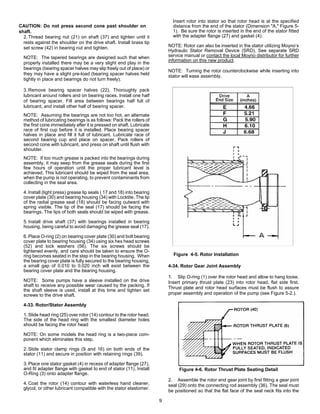
NOTE: Rotor can also be inserted in the stator utilizing Moyno’s
Hydraulic Stator Removal Device (SRD). See separate SRD
service manual or contact the local Moyno distributor for further
information on this new product.
NOTE: Turning the rotor counterclockwise while inserting into
stator will ease assembly.
Figure 4-5. Rotor Installation
4-34. Rotor Gear Joint Assembly
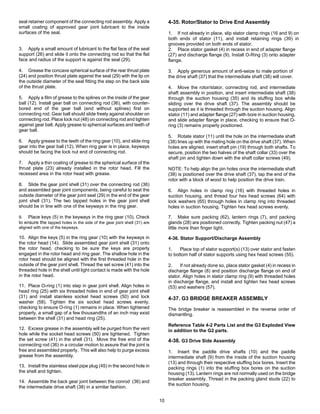
1. Slip O-ring (1) over the rotor head and allow to hang loose.
Insert primary thrust plate (23) into rotor head, flat side first.
Thrust plate and rotor head surfaces must be flush to assure
proper assembly and operation of the pump (see Figure 5-2.).
2. Assemble the rotor end gear joint by first fitting a gear joint
seal (29) onto the connecting rod assembly (36). The seal must
be positioned so that the flat face of the seal neck fits into the
Figure 4-6. Rotor Thrust Plate Seating Detail
10
seal retainer component of the connecting rod assembly. Apply a
small coating of approved gear joint lubricant to the inside
surfaces of the seal.
3. Apply a small amount of lubricant to the flat face of the seal
support (26) and slide it onto the connecting rod so that the flat
face and radius of the support is against the seal (29).
4. Grease the concave spherical surface of the rear thrust plate
(24) and position thrust plate against the seal (29) with the lip on
the outside diameter of the seal fitting the step on the back side
of the thrust plate.
5. Apply a film of grease to the splines on the inside of the gear
ball (12). Install gear ball on connecting rod (36), with counter-
bored end of the gear ball (end without splines) first on
connecting rod. Gear ball should slide freely against shoulder on
connecting rod. Place lock nut (48) on connecting rod and tighten
against gear ball. Apply grease to spherical surfaces and teeth of
gear ball.
6. Apply grease to the teeth of the ring gear (10), and slide ring
gear into the gear ball (12). When ring gear is in place, keyways
should be facing the lock nut end of connecting rod.
7. Apply a thin coating of grease to the spherical surface of the
thrust plate (23) already installed in the rotor head. Fill the
recessed area in the rotor head with grease.
8. Slide the gear joint shell (31) over the connecting rod (36)
and assembled gear joint components, being careful to seat the
outside diameter of the gear joint seal (29) in the end of the gear
joint shell (31). The two tapped holes in the gear joint shell
should be in line with one of the keyways in the ring gear.
9. Place keys (5) in the keyways in the ring gear (10). Check
to ensure the tapped holes in the side of the gear joint shell (31) are
aligned with one of the keyways.
10. Align the keys (5) in the ring gear (10) with the keyways in
the rotor head (14). Slide assembled gear joint shell (31) onto
the rotor head, checking to be sure the keys are properly
engaged in the rotor head and ring gear. The shallow hole in the
rotor head should be aligned with the first threaded hole in the
outside of the gear joint shell. Thread the set screw (41) into the
threaded hole in the shell until light contact is made with the hole
in the rotor head.
11. Place O-ring (1) into step in gear joint shell. Align holes in
head ring (25) with six threaded holes in end of gear joint shell
(31) and install stainless socket head screws (50) and lock
washer (58). Tighten the six socket head screws evenly,
checking to ensure O-ring (1) remains in place. When tightened
properly, a small gap of a few thousandths of an inch may exist
between the shell (31) and head ring (25).
12. Excess grease in the assembly will be purged from the vent
hole while the socket head screws (50) are tightened. Tighten
the set screw (41) in the shell (31). Move the free end of the
connecting rod (36) in a circular motion to assure that the joint is
free and assembled properly. This will also help to purge excess
grease from the assembly.
13. Install the stainless steel pipe plug (45) in the second hole in
the shell and tighten.
14. Assemble the back gear joint between the conrod (36) and
the intermediate drive shaft (38) in a similar fashion.
4-35. Rotor/Stator to Drive End Assembly
1. If not already in place, slip stator clamp rings (16 and 9) on
both ends of stator (11), and install retaining rings (39) in
grooves provided on both ends of stator.
2. Place stator gasket (4) in recess in end of adapter flange
(27) and discharge flange (9). Install O-Ring (3) onto adapter
flange.
3. Apply generous amount of anti-seize to male portion of
the drive shaft (37) that the intermediate shaft (38) will cover.
4. Move the rotor/stator, connecting rod, and intermediate
shaft assembly in position, and insert intermediate shaft (38)
through the suction housing (35) and its stuffing box while
sliding over the drive shaft (37). The assembly should be
supported as it is threaded through the suction housing. Align
stator (11) and adapter flange (27) with bore in suction housing,
and slide adapter flange in place, checking to ensure that O-
ring (3) remains properly positioned.
5. Rotate stator (11) until the hole on the intermediate shaft
(38) lines up with the mating hole on the drive shaft (37). When
holes are aligned, insert shaft pin (19) through both shafts. To
secure, position the two halves of the shaft collar (33) over the
shaft pin and tighten down with the shaft collar screws (49).
NOTE: To help align the pin holes once the intermediate shaft
(38) is positioned over the drive shaft (37), tap the end of the
rotor with a block of wood to help position the drive train.
6. Align holes in clamp ring (16) with threaded holes in
suction housing, and thread four hex head screws (64) with
lock washers (65) through holes in clamp ring into threaded
holes in suction housing. Tighten hex head screws evenly.
7. Make sure packing (62), lantern rings (7), and packing
glands (28) are positioned correctly. Tighten packing nut (47) a
little more than finger tight.
4-36. Stator Support/Discharge Assembly
1. Place top of stator support(s) (13) over stator and fasten
to bottom half of stator supports using hex head screws (55).
2. If not already done so, place stator gasket (4) in recess in
discharge flange (8) and position discharge flange on end of
stator. Align holes in stator clamp ring (9) with threaded holes
in discharge flange, and install and tighten hex head screws
(53) and washers (57).
4-37. G3 BRIDGE BREAKER ASSEMBLY
The bridge breaker is reassembled in the reverse order of
dismantling.
Reference Table 4-2 Parts List and the G3 Exploded View
in addition to the G2 parts.
4-38. G3 Drive Side Assembly
1. Insert the paddle drive shafts (10) and the paddle
intermediate shaft (9) from the inside of the suction housing
(13) and through their respective stuffing box bores. Insert the
packing rings (1) into the stuffing box bores on the suction
housing (13). Lantern rings are not normally used on the bridge
breaker assembly. Thread in the packing gland studs (22) to
the suction housing.
11
2. Insert spring dowels (27) into the extension block (6).
Dowel pins align the extension block to the suction housing
(13) and align the extension block to the gearcase (16). Insert
extension block (6) into the suction housing (13) through the
use of the spring dowels.
3. Insert grease seals (21) into gearcase (16) bore. Install
bearings (4) also into the gearcase bore and secure in position
with the snap ring retainers (20). Bearings on the G3 bridge
breaker are the sealed bearing type and do not require grease
themselves.
4. Insert seal washer (38) onto socket screws (29).
5. Support gearcase (16) for installation. Position gearcase
over the paddle drive shaft (10) and intermediate drive shaft
(9), and position so spring dowels (27) are engaged in the
gearcase. Tap lightly with a rubber mallet to ensure proper
engagement.
6. Screw socket screws (29) through the gearcase(16),
both sets of dowel pins(27), extension block (6), and thread
into the suction housing (13). Gearcase is also supported from
the suction housing. Insert screw (30) through washer (67) and
suction housing (13) support bracket, and tighten into the
gearcase.
7. Position heads of the paddle drive shafts (10) and the
paddle intermediate shaft (9) approximately 0.125” from the
inside of the suction housing (13). Lock down the bearing (4)
to the shafts by tightening the bearing set screw.
8. Position key (23) into the keyway on the paddle drive
shaft (10). Lubricate gears (5) with bearing grease and slide
gear over the drive shaft and position on the key inside of the
gearcase (16). Turn the paddle drive shaft (10) and paddle
intermediate shaft (9) so the exposed clamp collar portion in
the suction housing (13) is facing up. Install key (23) and gear
(5) on the intermediate paddle drive shaft (9) in a similar way.
Position so teeth of the gears are intermeshing.
9. Insert grease seal (21) into the gear case cover (17).
Install drive adapter (15) onto the gear case cover (17) by
securing hex screw (33) and washer (65). Position the gear
case gasket (7) on the gearcase cover.
10. Install the gearcase cover (17) over the paddle drive
shaft (10) ensuring the grease seal (21) and gasket (7) is
properly positioned. Secure with hex screws (31 and 66) and
washers (65).
11. Align the key way of the gearmotor (39) with the key way
of the paddle drive shaft (10). Gearmotor shaft can be rotated
by spinning the motor fan. Support gearmotor (39) for
installation and insert key (24) on to the paddle drive shaft
(10). Slide the gearmotor over the paddle drive shaft until the
gearmotor flange meets up with the drive adapter (15). Secure
gearmotor with the hex bolts (35) and washers (66) to the
drive adapter (15).
NOTE: Certain models may use a belt and pulley arrangement
with a shaft output gearmotor instead of a hollow shaft
gearmotor. On these models, an adapter flange is substituted
for the drive adapter (15). A pulley would be installed on the
paddle drive shaft (10) instead of the hollow shaft gearmotor.
4-39. G3 Bearing Side Assembly
1. Insert the paddle end shafts (12) from the inside of the
suction housing (13) and through their respective stuffing box
bores. Insert the packing rings (1) into the stuffing box bores
on the suction housing (13). Lantern rings are not normally
used on the bridge breaker assembly. Thread in the packing
gland studs (22) to the suction housing.
2. Insert spring dowels (27) into the extension block (6). Dowel
pins align the extension block to the suction housing (13) and
align the extension block to the bearing retainer (11). Insert
extension block (6) into the suction housing (13) through the
use of the spring dowels.
Install bearings (4) into the bearing retainer bore and secure in
position with the snap ring retainers (20). Bearings on the G3
bridge breaker are the sealed bearing type and do not require
grease themselves.
3. Insert washer (63) onto hex screws (32).
4. Support bearing retainer (11) for installation. Position
bearing retainer over the paddle end shaft (12) and position so
spring dowels (27) are engaged in the bearing retainer. Tap
lightly with a rubber mallet to ensure proper engagement.
5. Screw socket screws (32) through the bearing retainer (11),
both sets of dowel pins(27), extension block (6), and thread into
the suction housing (13).
4-40. G3 Paddle Assembly
1. Rotate paddle drive shaft (10), paddle intermediate shaft (9),
and paddle end shafts (12) with open collar half up. Insert
paddles into each shaft. It may be necessary to move paddle end
shafts (12) along their axis to position the bridge breaker drive
train.
2. Use Locktite 242 medium strength thread locker compound
on the socket screws (28). Place shaft collar on paddle shaft and
secure with socket screws (28). Torque socket screws to 190 in.
lbs of torque on the E, F, and G drive ends and 345 in. lbs of
torque on the H, J, and K drive ends. Torque down screws using
a cross over sequence so coupling half is evenly spaced on
paddles and not slanted towards one side.
Note: Do not operate paddles without using a thread locker
compound on the socket screws and torquing the screws to
their proper level.
3. On the bearing side assembly, lock down the bearing (4) to
the paddle end shafts (12) by tightening the bearing set screw.
4. In two meter suction housing lengths, there is an additional
hanger bracket which will also need to be installed after paddles
are positioned. To install the bracket for each paddle, position
hanger bushing (79) around paddle end shaft (12). Position
bushing bracket (74) around bushings (79) and secure with hex
screw (80), washer (77) and hex nuts (78). Locate the bushing
bracket (74), in comparison to the suction housing (13), through
the use of bushing shims (73). Attach bushing bracket (74) to the
suction housing with hex screw (75) and washer (76).
12
4-4.FINAL ASSEMBLY
1. Install pipe plugs (43) and zerk fittings (63) in appropriate
threaded holes in suction housing. Install pipe plugs in threaded
holes of the bearing housing catch basin under the exposed drive
shaft, or attach drain lines if preferred.
2. Position packing gland halves (8) around each shaft and
tighten packing hex nut (26) to slightly more than finger tight.
3. Install shaft guard (18 and 19) by securing hex nut (25) and
washers (36 and 37).
4. Connect power source. Turn on flush water to packing if
used. Open suction and discharge valves, and start pump.
4-42. Packing Adjustment
After starting, adjust packing per Section 4-3.
4-43. OTHER CONSIDERATIONS
4-44. Short-Term Storage. Storage of 6 months or less will not
damage the pump. However, to ensure the best possible
protection, the following is advised:
1. Store pump inside whenever possible or cover with some
type of protective covering. Do not allow moisture to collect
around pump.
2. Remove drain plug and inspection plates to allow the pump
body to drain and dry completely. Replace inspection plates.
3. Loosen the packing gland and inject a liberal amount of
grease into the stuffing box. Tighten the gland nuts only hand
tight. When water flush systems are to be used, do not use
grease. A small amount of light oil is recommended.
4. See drive manufacturer's instructions for motor and/or drive
storage.
5. See OPERATION Sections 3-1 through 3-4 before startup.
Be sure all lubricants are in good condition.
4-45. Long-Term Storage. If pump is to be in storage for more
than 6 months, perform the above short-term storage procedures
plus the following:
1. Occasionally rotate the pump manually a few revolutions to
avoid a "set" condition of rotor in stator elastomer. This will
prevent hard starting and excessive torque requirements when
pump is again put into operation.
2. Apply rust inhibitor to all unpainted cast iron and machined
carbon steel surfaces.
3. Remove drive belts if applicable.
4-46. PACKING SPECIFICATION
Standard packing on all Moyno 2000 pumps consists of braided
PTFE fibers impregnated with ultra-fine graphite. Optional types
of packing are available for food, high temperature, and other
types of service. Consult your nearest Moyno representative.
4-47. VARIATIONS OF STANDARD PARTS
The following are variations available for modifying pumps to
meet specialized pumping conditions. If the trim code of your
pump is other than "AAA", contact your nearest Moyno
representative for clarification. Do not modify your pump with
any variation unless you have determined that it is compatible
with your application.
The three-character trim code is designed as follows. The first
character identifies any seal variations, the second character
identifies any internal variations, and the third character
identifies any rotor variations.
Sealing
Variation
Internal
Variation
Rotor
Variation
A A A
The trim code "AAA" represents a pump with standard features.
Deviations from standard are to be indicated by changing the
appropriate character from the choices listed. When two or
more letters are combined, dashes are used to separate the
three areas of the trim code for clarify.
SEALING VARIATIONS
A ⎯ BRAIDED TEFLON & GRAPHITE PACKING (Black).
Standard to all lines except Quick Disassembly pumps.
Optional on Quick Disassembly pumps.
C ⎯ BRAIDED TEFLON PACKING (White). Optional packing
on all lines.
D ⎯ DOUBLE MECHANICAL SEAL. Optional on all lines; not
offered on #2 "L" Frame.
F ⎯ BRAIDED TEFLON FOOD GRADE PACKING (White).
Standard on all Quick Disassembly pumps. Optional on
all other lines.
G ⎯ 100% GRAPHITE PACKING (Gray). Optional to all lines.
H ⎯ FLUSH PACKING GLAND.
S ⎯ SINGLE MECHANICAL SEAL. Optional on all lines.
W ⎯ WATER FLUSH. Optional on all lines.
X ⎯ Special to application
INTERNAL VARIATIONS
A ⎯ Standard plated shaft.
B ⎯ Non--plated shaft.
C ⎯ Solid drive shaft configuration.
E ⎯ Extension tube with auger (Standard on G2/G3 version 5)
F ⎯ Extended drive shaft (for back stop or large pulley).
G ⎯ RMP15 ceramic coated drive shaft.
K ⎯ RMS20 carbide coated drive shaft
M ⎯ RMD10 carbide coated drive shaft.
R ⎯ Fiber deflector
S ⎯ Shaft sleeve
X ⎯ Special to application.
ROTOR VARIATIONS
A ⎯ Standard size with chrome plating.
B ⎯ Non-plated (no plating).
13
C ⎯ Standard undersize.
E ⎯ Standard oversize.
G ⎯ RMP15 ceramic coating.
K ⎯ RMS20 carbide coating.
M ⎯ RMD10 carbide coating.
X ⎯ Special to application.
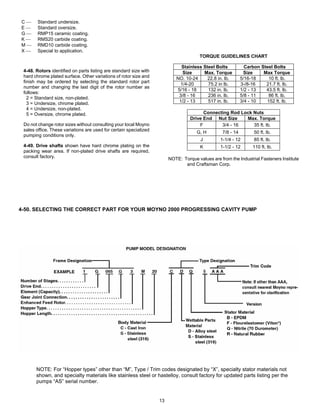
4-48. Rotors identified on parts listing are standard size with
hard chrome plated surface. Other variations of rotor size and
finish may be ordered by selecting the standard rotor part
number and changing the last digit of the rotor number as
follows:
2 = Standard size, non-plated.
3 = Undersize, chrome plated.
4 = Undersize, non-plated.
5 = Oversize, chrome plated.
Do not change rotor sizes without consulting your local Moyno
sales office. These variations are used for certain specialized
pumping conditions only.
4-49. Drive shafts shown have hard chrome plating on the
packing wear area. If non-plated drive shafts are required,
consult factory.
TORQUE GUIDELINES CHART
Stainless Steel Bolts Carbon Steel Bolts
Size Max. Torque Size Max Torque
NO. 10-24 22.8 in. lb. 5/16-18 10 ft. lb.
1/4-20 75.2 in lb. 3-/8-16 21.7 ft. lb.
5/16 - 18 132 in. lb. 1/2 - 13 43.5 ft. lb.
3/8 - 16 236 in. lb. 5/8 - 11 86 ft. lb.
1/2 - 13 517 in. lb. 3/4 - 10 152 ft. lb.
Connecting Rod Lock Nuts
Drive End Nut Size Max. Torque
F 3/4 - 16 35 ft. lb.
G, H 7/8 - 14 50 ft. lb.
J 1-1/4 - 12 85 ft. lb.
K 1-1/2 - 12 110 ft. lb.
NOTE: Torque values are from the Industrial Fasteners Institute
and Craftsman Corp.
4-50. SELECTING THE CORRECT PART FOR YOUR MOYNO 2000 PROGRESSING CAVITY PUMP
NOTE: For “Hopper types” other than “M”, Type / Trim codes designated by “X”, specialty stator materials not
shown, and specialty materials like stainless steel or hastelloy, consult factory for updated parts listing per the
pumps “AS” serial number.
14
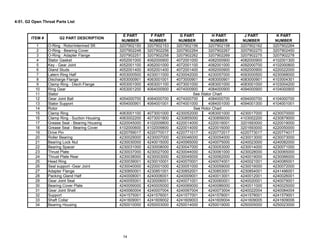
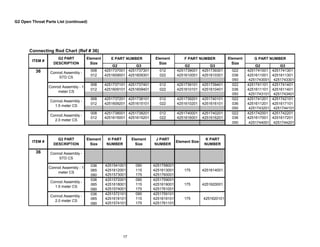
4-51. G2 Open Throat Parts List
1 O-Ring : Rotor/intermed Sft 3207902150 3207902153 3207902156 3207902158 3207902162 3207902264
2 O-Ring - Bearing Cover 3207902248 3207902256 3207902264 3207902267 3207902270 3207902450
3 O-Ring : Adapter Flange 3207902251 3207902258 3207902262 3207902269 3207902275 3207902278
4 Stator Gasket 4052001000 4062000900 4072001000 4082000900 4082000900 4102001300
5 Key - Gear Joint 4052001100 4062001000 4072001100 4082001000 4092000700 4102000800
6 Gland Studs 4052001400 4052001400 4072001400 4092000900 4092000900 4220022000
7 Latern Ring Half 4053000500 4230011000 4230042000 4230057000 4093000500 4230068000
8 Discharge Flange 4053000901 4063001001 4073000901 4083000901 4083000901 4103004301
9 Clamp Ring - Disch Flange 4053001000 4063001100 4073001000 4083001000 4083001000 4103004200
10 Ring Gear 4053001200 4064000900 4074000900 4084000900 4094000900 4104000900
11 Stator
12 Gear Joint Ball 4054000700 4064000700 4074000700 4084000700 4094000700 4104000700
13 Stator Support 4054000901 4064001001 4074001000 4084001000 4094001300 4104001001
14 Rotor
15 Clamp Ring 4063001100 4073001000 4230052000 4083001000 4230017000 4230070000
16 Clamp Ring - Suction Housing 4063002200 4073001800 4230855000 4230856000 4103002200 4230879000
17 Grease Seal - Bearing Housing 4220045000 4102009800 4220014000 4220016001 3201693000 4220019000
18 Grease Seal - Bearing Cover 4102000600 4102009800 4220014000 4220016000 3201693000 4220050000
19 Drive Pin 4220769017 4220770017 4220771017 4220772017 4220773017 4220774017
20 Roller Bearing 4230029000 4230007000 4230046000 4230054000 4230013000 4230073000
21 Bearing Lock Nut 4230030000 4240015000 4240065000 4240075000 4240023000 4240082000
22 Bearing Spacer 4230031000 4230008000 4230047000 4230053000 4230014000 4230071000
23 Thrust Plate 4230037000 4230027000 4230044000 4230061000 4230028000 4230065000
24 Thrust Plate Rear 4230038000 4230003000 4230045000 4230062000 4240019000 4230066000
25 Head Ring 4230039001 4230010001 4240070001 4240074001 4240021001 4240085001
26 Seal support -Gear Joint 4230040000 4220001000 4230051000 4230059000 4230016000 4230072000
27 Adapter Flange 4230850001 4230851001 4230852001 4230853001 4230854001 4241496001
28 Packing Gland Half 4240008001 4240006001 4240009001 4240013001 4240012001 4240026001
29 Gear Joint Seal 4240055001 4230006001 4240071001 4230060001 4240020001 4240079001
30 Bearing Cover Plate 4240059000 4240005000 4240069000 4240086000 4240011000 4240025000
31 Gear Joint Shell 4240060004 4240007004 4240067004 4240073004 4240022004 4240084004
32 Support 4241575001 4241576001 4241577001 4241578001 4241578001 4241579001
33 Shaft Collar 4241609001 4241609002 4241609003 4241609004 4241609005 4241609006
34 Bearing Housing 4250010000 4250003000 4250014000 4250019000 4250005000 4250023000
ITEM # G2 PART DESCRIPTION
E PART
NUMBER
F PART
NUMBER
G PART
NUMBER
H PART
NUMBER
J PART
NUMBER
K PART
NUMBER
See Rotor Chart
See Stator Chart
15
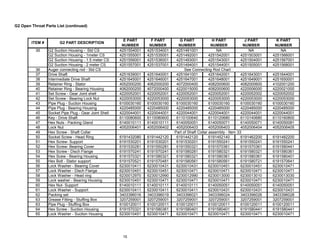
G2 Open Throat Parts List (continued)
G2 Suction Housing - Std CS 4251554001 4251534001 4251491001 NA NA NA
G2 Suction Housing - 1meter CS 4251555001 4251535001 4251492001 4251542001 4251503001 4251566001
G2 Suction Housing - 1.5 meter CS 4251556001 4251536001 4251493001 4251543001 4251504001 4251567001
G2 Suction Housing - 2 meter CS 4251557001 4251537001 4251494001 4251544001 4251505001 4251568001
36 Auger connecting rod - Std CS
37 Drive Shaft 4251639001 4251640001 4251641001 4251642001 4251643001 4251644001
38 Intermediate Drive Shaft 4251645001 4251646001 4251647001 4251648001 4251649001 4251650001
39 Retainer Ring - Stator 4052000200 4062000200 4072000400 4082000600 4082000600 4102001200
40 Retainer Ring - Bearing Housing 4062000200 4072000400 4220015000 4082000600 4220006000 4220021000
41 Set Screw - Gear Joint shell 4220052001 4220052001 4220052001 4220052001 4220052002 4220052002
42 Set Screw - Bearing Lock Nut 4220053000 4220053000 4220053000 4220053000 4220053000 4220053000
43 Pipe Plug - Suction Housing 6100030160 6100030160 6100030160 6100030160 6100030160 6100030160
44 Pipe Plug - Bearing Housing 4220485000 4220485000 4220485000 4220485000 4220485000 4220485000
45 Socket Pipe Plug - Gear Joint Shell 4220044001 4220044001 4220044001 4220044001 4220044001 4220044001
46 Key - Drive Shaft 6110080600 6110080600 6110100640 6110120680 6110140680 6110160800
47 Hex Nuts - Packing Gland 6140010111 6140010111 6140050051 6140050071 6140050071 6140050081
48 Lock Nut 4052006401 4052006402 4052006403 4052006403 4052006404 4052006405
49 Hex Screw - Shaft Collar
50 Socket Screw - Head Ring 6191432080 6191442120 6191442120 6191452140 6191462200 6191482200
51 Hex Screw- Support 6191530201 6191530201 6191530201 6191550241 6191550241 6191550241
52 Hex Screw- Bearing Cover 6191530281 6191550281 6191550321 6191570361 6191570361 6191580441
53 Hex Screw - Disch Flange 6191570241 6191570241 6191580281 6191580321 6191580321 6191580361
54 Hex Scew - Bearing Housing 6191570321 6191580321 6191580321 6191580361 6191580361 6191580401
55 Hex Bolt - Stator support 6191570521 6191570481 6191580561 6191580561 6191580721 6191570641
56 Lock Washer - Bearing Cover 6230010411 6230010431 6230010431 6230010451 6230010451 6230010471
57 Lock Washer - Disch Flange 6230010451 6230010451 6230010471 6230010471 6230010471 6230010471
58 Lock Washer - Head ring 6230012970 6230012990 6230012990 6230013000 6230013010 6230013030
59 Lock washer - Bearing Housing 6230010451 6230010471 6230010471 6230010471 6230010471 6230010471
60 Hex Nut- Support 6140010111 6140010111 6140010111 6140050051 6140050051 6140050051
61 Lock Washer - Support 6230010411 6230010411 6230010411 6230010431 6230010431 6230010431
62 Packing set 3403396016 3403396019 3403396021 3403396024 3403396026 3403396028
63 Grease Fitting - Stuffing Box 3207259001 3207259001 3207259001 3207259001 3207259001 3207259001
63 Pipe Plug - Stuffing Box 6100120011 6100120011 6100120011 6100120011 6100120011 6100120011
64 Hex Screw - Suction Housing 6191570321 6191580361 6191580401 6191580401 6191580441 6191580441
65 Lock Washer - Suction Housing 6230010451 6230010471 6230010471 6230010471 6230010471 6230010471
35
ITEM # G2 PART DESCRIPTION
E PART
NUMBER
F PART
NUMBER
G PART
NUMBER
K PART
NUMBER
H PART
NUMBER
J PART
NUMBER
See Connecting Rod Chart
Part of Shaft Collar assembly - Item 33
16
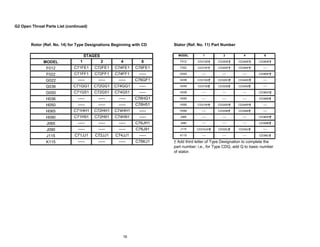
G2 Open Throat Parts List (continued)
Rotor (Ref. No. 14) for Type Designations Beginning with CD Stator (Ref. No. 11) Part Number
MODEL 1 2 4 6
1 2 4 6 F012 CD310E† CD320E† CD340E† CD360E†
C71FE1 C72FE1 C74FE1 C76FE1 F022 CD310F† CD320F† CD340F† ----
C71FF1 C72FF1 C74FF1 ----- G022 ---- ---- ---- CD360F†
----- ----- ----- C76GF1 G036 CD310G† CD320G† CD340G† ----
C71GG1 C72GG1 C74GG1 ----- G050 CD3150† CD3250† CD3450† ----
C71G51 C72G51 C74G51 ----- H036 ---- ---- ---- CD360G†
----- ----- ----- C76HG1 H050 ---- ---- ---- CD3650†
----- ----- ----- C76H51 H065 CD310H† CD320H† CD340H† ----
C71HH1 C72HH1 C74HH1 ----- H090 ---- CD3290† CD3490† ----
C71H91 C72H91 C74H91 ----- J065 ---- ---- ---- CD360H†
----- ----- ----- C76JH1 J090 ---- ---- ---- CD3690†
----- ----- ----- C76J91 J115 CD310JH† CD320J† CD340J† ----
C71JJ1 C72JJ1 C74JJ1 ----- K115 ---- ---- ---- CD360J†
----- ----- ----- C76KJ1
STAGES
MODEL
F012
F022
G022
G036
G050
H036
H050
H065
H090
J065
J090
J115
K115 † Add third letter of Type Designation to complete the
part number; i.e., for Type CDQ, add Q to basic number
of stator.
17
G2 Open Throat Parts List (continued)
Connecting Rod Chart (Ref # 36)
G2 G3 G2 G3 G2 G3
008 4251737001 4251737301 012 4251739001 4251739301 022 4251741001 4251741301
012 4251609001 4251609301 022 4251610001 4251610301 036 4251611001 4251611301
050 4251743001 4251743301
008 4251737101 4251737401 012 4251739101 4251739401 022 4251741101 4251741401
012 4251609101 4251609401 022 4251610101 4251610401 036 4251611101 4251611401
050 4251743101 4251743401
008 4251737201 4251738101 012 4251739201 4251740101 022 4251741201 4251742101
012 4251609201 4251615101 022 4251610201 4251616101 036 4251611201 4251617101
050 4251743201 4251744101
008 4251738001 4251738201 012 4251740001 4251740201 022 4251742001 4251742201
012 4251615001 4251615201 022 4251616001 4251616201 036 4251617001 4251617201
050 4251744001 4251744201
036 4251541001 090 4251758001
065 4251612001 115 4251613001 175 4251614001
090 4251573001 175 4251760001
036 4251572001 090 4251759001
065 4251618001 115 4251619001 175 4251620001
090 4251574001 175 4251761001
036 4251572101 090 4251759101
065 4251618101 115 4251619101 175 4251620101
090 4251574101 175 4251761101
Element Size
K PART
NUMBER
G PART NUMBER
Element
Size
Element
Size
H PART
NUMBER
Element
Size
J PART
NUMBER
ITEM #
G2 PART
DESCRIPTION
36 Conrod Assembly -
STD CS
Conrod Assembly - 1
meter CS
Conrod Assembly -
1.5 meter CS
Conrod Assembly -
2.0 meter CS
36 Conrod Assembly -
STD CS
Conrod Assembly - 1
meter CS
Conrod Assembly -
1.5 meter CS
Conrod Assembly -
2.0 meter CS
Element
Size
F PART NUMBER
ITEM #
G2 PART
DESCRIPTION
Element
Size
E PART NUMBER
18
4-52. Table 4.1: G2 Exploded View
19
4-53. G3 Bridge Breaker Parts List
1 Packing Set 3403654002 3403654002 3403654002 3403654003 3403654003 3403654003
4 Bearing 4220764000 4220764000 4220764000 4220767000 4220767000 4220767000
5 Gear 4230872000 4230872000 4230873000 4230874000 4230875000 4230876000
6 Extension Block 4230920001 4230920001 4230920001 4230921001 4230921001 4230921001
7 Gear Case Gasket 4241533001 4241533001 4241533001 4241571001 4241571001 4241571001
8 Packing Gland 4241617007 4241617007 4241617007 4240927007 4240927007 4240927007
9 Paddle Intermediate Shaft 4241619018 4241619018 4241619018 4251607018 4251607018 4251607018
10 Paddle Drive Shaft 4241620018 4241620018 4241620018 4251695018 4251695018 4251695018
11 Bearing Retainer 4241631001 4241631001 4241621001 4251497001 4251498001 4251510001
12 Paddle End Shaft 4241694018 4241694018 4241694018 4251799018 4251799018 4251799018
G3 Suction Housing - Std CS 4251558001 4251530001 4251499001
G3 Suction Housing - 1meter CS 4251559001 4251531001 4251500001
G3 Suction Housing - 1.5 meter CS 4251560001 4251532001 4251501001 4251546001 4251507001 4251570001
G3 Suction Housing - 2 meter CS 4251561001 4251533001 4251502001 4251547001 4251508001 4251571001
14 Paddle Assembly 4251630001 4251634001 4251626001 4251635001 4251538001 4251548001
15 Drive Adapter
16 Gearcase 4251703001 4251703001 4251706001 4251840001 4251841001 4251842001
17 Gear Case Cover 4251715001 4251715001 4251697001 4251701001 4251565001 4251564001
18 Shaft Guard 4251801001 4251801001 4251801001 4251805001 4251805001 4251805001
19 Shaft Guard - Gear Side 4251802001 4251802001 4251802001 4251806001 4251806001 4251806001
20 Retainer - Bearing Retainer 6010030244 6010030244 6010030244 6010030334 6010030334 6010030334
21 Grease Seal - Gearcase 6030021001 6030021001 6030021001 6030021002 6030021002 6030021002
22 Stud - Packing Gland 6042220501 6042220501 6042220501 6042220501 6042220501 6042220501
23 Key - Gear 6110040280 6110040280 6110040280 6110060300 6110060300 6110060300
24 Key - Gearmotor 6110040400 6110040400 6110040400 6110060440 6110060440 6110060440
25 Hex Nut - Shaft Guard 6140010091 6140010091 6140010091 6140010091 6140010091 6140010091
26 Hex Nut - Packing Gland 6140700081 6140700081 6140700081 6140700081 6140700081 6140700081
27 Spring Dowel - Packing, Gearcase 6160100711 6160100711 6160100711 6160100911 6160100911 6160100911
28 Socket Screw - Paddle End shaft 6191322160 6191322160 6191322160 6191332160 6191332160 6191332160
29 Socket Screw - Gearcase 6191460723 6191460723 6191460723 6191480723 6191480723 6191480723
30 Hex Screw - Gearcase support 6191510121 6191510121 6191510121 6191530161 6191530161 6191530201
31 Hex Screw - Gearcase cover 6191530241 6191530241 6191530241 6191550241 6191550241 6191550241
32 Hex Screw - Bearing Retainer 6191530721 6191530721 6191530721 6191550801 6191550801 6191550801
33 Hex Screw - Drive Adapter 6191520161 6191520161 6191520161 6191520161 6191520161 6191520161
35 Hex Screw - Drive adapter
36 Lock Washer - Gearcase support 6230010391 6230010391 6230010391 6230010391 6230010391 6230010391
37 Plain Washer - Gearcase support 6230020091 6230020091 6230020091 6230020091 6230020091 6230020091
38 Sealing washer - Gearcase 6230150111 6230150111 6230150111 6230150131 6230150131 6230150131
39 Gearmotor
ITEM # G3 PART DESCRIPTION
E PART
NUMBER
13
G PART
NUMBER
Consult Factory
4251545001 4251506001 4251569001
Consult Factory
Consult Factory
H PART
NUMBER
J PART
NUMBER
K PART
NUMBER
F PART
NUMBER
20
G3 Bridge Breaker Parts List (continued)
63 Lock Washer - Bearing Retainer 6230010411 6230010411 6230010411 6230010431 6230010431 6230010431
65 Lock washer - Gearcase cover 6230010411 6230010411 6230010411 6230010431 6230010431 6230010431
66 Hex Screw - Gearcase cover 6191530281 6191530281 6191530281 6191550321 6191550321 6191550321
67 Lock Washer - Gearcase support 6230010391 6230010391 6230010391 6230010411 6230010411 6230010411
68 Lock Washer - Drive adapter 6230010401 6230010401 6230010401 6230010402 6230010401 6230010401
69 Lock Washer - Drive adapter 6230010401 6230010401 6230010401 6230010401 6230010401 6230010401
73 Hanger Shim 4220776001 4220776001 4220776001 4220779001 4220779001 4220779001
74 Bushing Bracket 4241707001 4241707001 4241707001 4241708001 4241708001 4241708001
75 Hex Screw - Bushing Bracket 6191530201 6191530201 6191530201 6191530201 6191530201 6191530201
76 Lock washer -hanger bkt 6230010411 6230010411 6230010411 6230010411 6230010411 6230010411
77 Hangar Bracket 4241705001 4241705001 4241705101 4241706001 4241706101 4241706201
78 Hex Nut - Bushing Bracket 6140010111 6140010111 6140010111 6140010111 6140010111 6140010111
79 Hanger Bushing 4220777001 4220777001 4220777001 4220780001 4220780001 4220780001
80 Hex Screw - hanger bkt 6191530161 6191530161 6191530161 6191530161 6191530161 6191530161
G PART
NUMBER
H PART
NUMBER
J PART
NUMBER
K PART
NUMBER
ITEM #
G3 PART DESCRIPTION
2 Meter Option Only
E PART
NUMBER
F PART
NUMBER
21
4-54. Table 4:2 G3 Exploded View
22
4-55.
TROUBLESHOOTING CHART
PUMP PROBLEMS
Pump does not rotate.
Pump does not discharge.
Discharge output low.
Discharge output fluctuates.
Pump drive overloaded.
Pump noisy.
Shaft seal leaks.
Stator wears too fast.
Rotor wears too fast.
PROBABLE CAUSE AND REMEDY
Incorrect power supply; drive not properly wired. Check motor nameplate data; test voltage,
phase, & frequency.
O O O
Foreign matter in pump. Remove foreign matter. O O O O
If pump or stator is new, too much static friction. Fill with liquid, and hand turn. O O
Stator swells due to chemical attack. Change stator material. O O O
Stator swells due to high liquid temp. Reduce liquid temp. or use an undersized rotor. O O O O
Blockage due to solids in liquid. Decrease solids-to-liquid ratio. O O O O O O
Liquid settles and hardens after pump shut down. Clean and rinse pump after each use. O O O O O O O O
Suction pipe not submerged. Reposition suction pipe. O O O O
Air in suction pipe. Tighten connections to stop leaks. O O O O
Pump speed too low. Increase drive speed. O O
Suction lift too high (cavitation). Reduce suction losses; move pump to lower elevation;
increase pipe size.
O O O O O O
Pump running dry; no prime. Fill pump with liquid; relocate suction piping. O O O O O
Stator worn excessively. Replace stator & inspect rotor. O O O O
Rotor worn excessively. Replace rotor. O O O O O
Wrong direction of rotation. Reverse drive motor polarity. O O
Discharge pressure too high. Open discharge valve; reduce discharge pipe length; remove
obstruction, increase pipe size.
O O O O O
Suction pipe leaks. Tighten pipe connections. O O O
Shaft packing leaks. Tighten packing gland; replace packing; lubricate packing. O O
Stator material brittle. Replace stator. O O O O
Pump speed too high. Reduce drive speed. O O O O O
Liquid viscosity or specific gravity too high. Measure and compare with specification. O O O O O O
Packing too tight. Loosen gland nuts, & lubricate packing. O O
Bent drive shaft. Replace drive shaft. O O
Drive and pump misaligned. Re-align drive and pump. O O
Flexible drive coupling worn. Repair or replace coupling. O
Drive shaft bearing worn. Replace bearings. O O
Incorrect packing. Change packing material. O
Packing too loose. Tighten gland nuts, & lubricate. O
Incorrect part. If pump has been rebuilt, check to verify original Moyno parts used. O O O O O O O O
NOTE: If further troubleshooting procedural information is needed, please contact your authorized Moyno Pump distributor.
© 2005 by Moyno, Inc.
® Moyno is a registered trademark of Moyno, Inc.
Moyno, Inc. is a Unit of Robbins & Myers, Inc.

Moyno pumps 2000 g2 g3

  • 1.
    MOYNO® 2000 Pumps G2/G3 EnhancedFeed Models Version 5 Models SERVICE MANUAL
  • 2.
    Note: This servicemanual outlines installation, operation and maintenance procedures for the flanged ”G4” models of Moyno 2000 pump. For information on the flanged G1, open throat (G2) and/or the bridge breaker (G3) models of the Moyno 2000 pump, refer to their respective Service Manual, or contact your nearest Moyno pump representative. TABLE OF CONTENTS Page 1-1. INTRODUCTION………………………………..... 1 1-2. GENERAL…………………………………1 1-3. NAMEPLATE DATA……………………...1 1-4. Pump Rotation…………………1 1-5. Model Number………………… 1 1-6. Frame Size Designation………1 1-7. Type Designation……………...1 1-8. Version Designation………….. 2 1-9. Trim Code……………………... 2 1-10. Variation of Standard Parts….. 2 2-1. INSTALLATION…………………………………… 2 2-2. GENERAL…………………………………2 2-3. PIPING……………………………………. 2 2-4. Suction Piping………………….2 2-5. Discharge Piping……………… 2 2-6. FOUNDATION…………………………… 2 2-7. SHAFT ALIGNMENT……………………. 3 2-8. On Coupling Connected Units. 3 2-9. On Belt Drive Units…………… 3 2-10. WATER FLUSH OF PACKING……….. 3 3-1. OPERATION…………………………………….... 3 3-2. INITIAL CHECK………………………….. 3 3-3. START-UP……………………………….. 3 3-4. PACKING LEAKAGE……………………. 4 4-1. MAINTENANCE……………………………………4 4-2. GENERAL…………………………………4 4-3. PACKING ADJUSTMENT……………….4 4-4. PACKING REPLACEMENT……………..4 4-5. LUBRICATION…………………………… 5 4-6. Bearings………………………...5 4-7. Gear Joints……………………..5 4-8. PUMP DISASSEMBLY……………..…... 5 4-9. Disconnect Pump……………...5 4-10. Packing Removal……………...5 4-11. Stator Removal……………….. 5 4-12. Drive train removal………..….. 5 4-13. Rotor, Connecting Rod, and Intermediate Shaft Removal .. 6 4-14. Drive Shaft and Bearings Removal………………………..6 4-15. G3 BRIDGE BREAKER DISASSEMBLY…………………………6 4-16. G3 Paddle Removal………..… 6 4-17. G3 Bearing Side Removal..…..6 4-18. G3 Drive Side Removal……… 6 Page 4-19. CLEANING…………………………….. 7 4-20. INSPECTION………………………….. 7 4-21. Bearings…………………..….. 7 4-22. Drive shafts………………..…. 7 4-23. Seals……….……………..….. 7 4-24. Packing…….……………….... 7 4-25. Rotor…….………………..….. 7 4-26. Stator…….………………..….. 8 4-27. All Other Parts……………….. 8 4-28. PUMP ASSEMBLY ……………………8 4-29. Lubrication During Assembly. 8 4-30. Packing Installation…………. 8 4-31. Bearing Housing/Suction Housing Assembly…………... 8 4-32. Bearing/Drive Shaft Assembly……………………... 8 4-33. Rotor/Stator Assembly……… 9 4-34. Rotor Gear Joint Assembly… 9 4-35. Rotor/Stator to Drive End Assembly……………………... 10 4-36. Stator Support/Discharge Assembly…………………….. 10 4-37. G3 BRIDGE BREAKER ASSEMBLY .11 4-38. G3 Drive Side Assembly……. 11 4-39. G3 Bearing Side Assembly …11 4-40. G3 Paddle Assembly …….….11 4-41. FINAL ASSEMBLY…………………….12 4-42. Packing Adjustment……..…. 12 4-43. OTHER CONSIDERATIONS…………12 4-44. Short Term Storage .………. 12 4-44. Long Term Storage .………. 12 4-46. PACKING SPECIFICATION…………. 12 4-47. VARIATIONS OF STANDARD PARTS. 12 4-48. Rotors……..…………….……. 13 4-49. Drive Shafts……………...….. 13 4-50. PUMP MODEL DESIGNATION…..… 13 4-51. G2 PARTS LISTS………………….…. 14 4-52. Table 4.1 G2 Exploded View 15 4-53. G3 PARTS LISTS………………….…. 16 4-54. Table 4.2 G3 Exploded View.17 4-55. TROUBLESHOOTING CHART…..…. 18
  • 3.
    1 SERVICE MANUAL Moyno® 2000 Pumps G2/G3Enhanced Feed Open Throat Models 1-1. INTRODUCTION 1-2. GENERAL The Moyno® 2000 Pump is the culmination of over 70 years of experience in manufacturing and marketing fluids handling equipment. This rugged pump has been engineered to be the most reliable product ever sold under the Moyno name. The pump has been painstakingly tested to assure consistent performance in the most difficult of applications. It represents the next generation of the world’s most versatile pump. The Moyno 2000 Pump is a progressing cavity pump. A single helical rotor rolling eccentrically in the double helix of the stator creates the pumping action. The rotor in conjunction with the stator forms a series of sealed cavities 180 degrees apart. s the rotor turns, the cavities progress from the suction to the discharge. As one cavity diminishes, the opposing cavity increases at exactly the same rate. Thus the sum of the two discharges is a constant volume. The result is a pulsation-free positive displacement flow utilizing no valves. The G2 product line is the latest Moyno design which incorporates a wide open throat feed hopper with auger connecting rod for better fill efficiency. The G3 version incorporates the features of the G2 open throat plus has a separate bridge breaker mechanism to effectively pump even higher solids and viscosity products. This manual supports the G2/G3 version 5 product lines purchased after Oct 2003 (See fig 1-1 for indicator in trim code). G2 Version 5 features include integral extension tube, larger auger feed connecting rods, and two piece drive shaft for easy maintenance. The G3 Version 5 includes the features of the G2 plus separate drive on the Bridge Breaker to allow the flexibility to vary the paddle speed, separate from the pump, when needed. The paddle shaft is designed for maintenance ease by allowing the paddles to be removed from the inside of the suction hopper. This feature allows servicing of the bottom pump portion without disturbing the bridge breaker drive mechanism, significantly reducing downtime. 1-3. NAMEPLATE DATA The pump nameplate, located on the bearing housing, contains important information relating to the operation and servicing of the pump. This information includes the direction of rotation arrow and the pump model and serial numbers (see Figure 1-1.). The pump model number must be used for reference when ordering spare parts. 1-4. Pump Rotation. A rotation arrow on the nameplate indicates the direction of rotation. Normal rotation of Moyno 2000 pumps is clockwise, when viewed from the driven end of the pump. Figure 1-1. Typical nameplate showing rotation arrow, model, and manufacturing serial numbers. 1-5. Model Number. The pump model number consists of three component parts: Frame Designation, Type Designation and a Trim Code. A typical model number, for example, might be 2G036G2M20 CDQ 5AAA, as shown on the nameplate in Figure 1-1. Version #5 is indicated before the trim code (IE: 5AAA). 1-6. Frame Designation. The Moyno 2000 is modular in concept allowing for optimal matching of drive ends and pump elements (rotor and stator) to meet the requirements of the application. The ten or more characters in the frame designation describe the particular combination of drive end, hopper length, and pump elements, as well as other construction details of your pump. The first character in the frame designation, always a number, indicates the number of stages of the pump elements. The second character is always a letter (E-K) and indicates the drive end size. The third, fourth and fifth numerical characters are indicating the theoretical capability of the pumping elements per 100 revolutions on water. The sixth character represents the type of universal joint utilized, “G” = gear type joint. The seventh character, a number, indicates the type of suction housing. Open throat pumps are designated by a “2”, open throat pumps with a bridge breaker option by the numeral “3”. On the G2 and G3 versions, the eighth character is a letter that represents the type of hopper and auger style used. The length of the hopper is designated by the ninth and tenth numerical characters. A length designation of 20 indicates a hopper length made to mate to 2 meter belt filter press (2.2 meters wide). 1-7. Type Designation. Following the Frame Designation is the Type Designation, a series of three letters describing the materials from which the pump is constructed. Section: MOYNO® 2000 G2/G3 PUMPS Page: 1 Date: October 2005
  • 4.
    2 The first letteridentifies the material of the suction housing. C ⎯ Cast Iron E ⎯ Carpenter 20 Stainless Steel* G ⎯ 416 Stainless Steel H ⎯ Hastelloy “C”** J ⎯ 17-4 pH Stainless Steel M ⎯ Monel*** S ⎯ 316 Stainless Steel W ⎯ Cast Steel X ⎯ Special to Application The second letter indicates the material used in the drive shaft, connecting rod, rotor, and other wettable parts. D ⎯ Alloy Steel E ⎯ Carpenter 20 Stainless Steel* G ⎯ 416 Stainless Steel H ⎯ Hastelloy “C”** J ⎯ 17-4 pH Stainless Steel M ⎯ Monel*** S ⎯ 316 Stainless Steel X ⎯ Special to Application The third letter indicates the material of the stator. It identifies only the stator material and not that of the tube. The stator tube construction is typically carbon steel since it is isolated from the pumpage. Standard stator materials used in the Moyno 2000 pump are as follows: B ⎯ EPDM 300, 70 Durometer C ⎯ Nitrile 103, 50 Durometer D ⎯ Tool Steel E ⎯ Nitrile 110, 70 Durometer F ⎯ Fluoroelastomer 500, 75 Durometer G ⎯ 416 Stainless Steel H ⎯ Hastelloy “C”** I ⎯ Teflon 15% Glass† J ⎯ 17-4 pH Stainless Steel K ⎯ Hypalon 800, 70 Durometer† M ⎯ Nitrile 100M 70 Durometer P ⎯ Thiokol 70 Durometer‡ Q ⎯ Nitrile 100, 70 Durometer R ⎯ Natural Rubber 200, 55 Durometer T — Teflon 15% glass U ⎯ Urethane 70 Durometer X ⎯ Special to Application Z ⎯ White Nitrile 150, 70 Durometer A typical type designation, such as CDQ, would identify the following materials of construction: C ⎯ Cast iron suction housing D ⎯ Alloy steel rotor, drive shaft, connecting rod and other minor metallic parts in contact with the fluid being pumped. Q ⎯ Nitrile (70 Durometer) stator *Carpenter 20 is a trademark of Carpenter Technology Corp. **Hastelloy is a trademark of Cabot Corp. ***Monel is a trademark of INCO Alloy Corp. †Hypalon and Teflon are trademarks of E. I. DuPont de Nemours and Company ‡Thiokol is a trademark of Morton Thiokol, Inc. 1-8. Version Designation. Following the Frame Designation is the a number which indicates the version Designation. A metric version sold into the world markets is designated as a 1. The current ANSI version, covered in this service manual, is designated by 5. 1-9. Trim Code. Also included in the Model Number is the three character Trim Code which is used to identify pump construction. The letters “AAA” signify standard construction, with letters other than “A” signifying variations. The first letter identifies sealing variations; the second, internal variations; and the third, rotor variations. 1-10. Variations of Standard Parts. Refer to Sections 4-47 through 4-49 for variations available for modifying pumps to meet specialized pumping conditions. If the trim code of your pump is other than “AAA”, contact your nearest Moyno representative for clarification. Do not modify your pump with any variation unless you have determined that it is compatible with your application. 2-1. INSTALLATION 2-2. GENERAL Moyno pumps are lubricated and tested at the factory prior to shipment and require minimum pre-start up maintenance. Packing, however, is not lubricated at the factory. Accessibility to the pump and adequate clearance should be a prime consideration in any installation. Enough space should surround the unit so that maintenance can be carried out with ease. 2-3. PIPING 2-4. Suction Hopper used with open throat and bridge breaker pumps should have nearly vertical sides, or be otherwise designed to enhance the flow of the material into the pump. 2-5. Discharge Piping diameter should generally be as large as the pump ports unless fluid conditions indicate otherwise. An easily removable section of piping one-to-two times longer than the connecting rod (approximately the length of the suction housing and bearing housing together) should be mated to the discharge port. This will allow the rotor and stator to be removed without having to remove the complete pump from the base. 2-6. FOUNDATION Each unit should be mounted on a strong, fabricated steel base plate. The base plate should be mounted on a concrete foundation. The foundation should be approximately 4” to 8” longer and wider than the base for which it is built (See Figure 2-1.). Anchor bolts for the base plate should be located in the foundation. Figure 2-1. Typical Foundation Example
  • 5.
    3 Check the baseplate surface with a carpenter’s level and place shims under the base plate at the places necessary to make it level. Then check the pump driver shaft and the pump ports to ensure that they are level. Complete base mounted units supplied by Moyno including pump and driver are leveled with respect to the base at the factory. Shifting may occur during shipment. The pump and driver should be realigned. Care should be exercised to ensure that all components are level and mounted in a direct line. For maximum rigidity and lower noise levels, the base plate should be grouted to the foundation after the anchor bolts have been evenly tightened. A good grade of non-shrink grout is recommended. The spaces between the base plate and the foundation around the shims should also be filled with grout. Allow the grout to dry according to manufacturers’ instructions, then fully tighten the anchor bolts. 2-7. SHAFT ALIGNMENT Although the base-mounted units supplied by Moyno are leveled with respect to the base before shipment, most of the larger pump and driver units are shipped with the flexible coupling disconnected. After the base has been bolted down to the foundation, check the following conditions: 2-8. On Coupling Connected Units, be sure that the pump and driver shafts are realigned before the coupling is connected. Care should be exercised to ensure that all components are level and mounted in a direct line. Check gap between coupling halves (refer to coupling manufacturer’s recommendations). Adjustment can usually be accomplished by loosening the mounting bolts on either the pump or driver and moving the loosened component into alignment with the fixed component. On couplings with equal diameter hubs, it may be possible to lay a straight edge axially across the coupling halves to check alignment. Check gear reducer and motors for proper lubrication per manufacturer’s recommendations. 2-9 On Belt Drive Units, check to ensure that sheaves or sprockets are in alignment. Check belts for proper tension. Tension requirements will vary with type of belt, center distances, and belt speeds. Consult belt manufacturer for specific recommendation. 2-10. WATER FLUSH OF PACKING The packing may be either grease lubricated through a grease fitting in the stuffing box or have plumbing connected to the housing to allow for water flushing. Packing is not grease lubricated at the factory prior to shipping. When the material being pumped is abrasive, water flushing the packing is recommended to extend shaft life. Clean water can be injected through a 1/8” NPT hole that normally houses the grease fitting for lubricating the packing. The water should be permitted to leak axially along the shaft and be removed from the second tapped hole in the stuffing box. The discharge from the stuffing box should be throttled slightly to maintain 10 – 15 PSI higher pressure in the stuffing box than is present in the suction housing (See Figure 2-2.). Flow rate should be approximately ½ - 2 GPM. If a mechanical seal is used, consult the seal manufacturer’s instructions for seal flush requirements. Figure 2-2. Typical water flush arrangement for units with packing includes strainer valve (1), pressure regulating valve (2), sight flow meter (3), solenoid valve (4), pressure gauge (5), and needle valve (6). 3-1. OPERATION 3-2. INITIAL CHECK Before putting the pump into operation, the following items should be checked to ensure that each piece of equipment is installed correctly: ⎯ Pump, driver, coupling, or sheave alignment. ⎯ Electrical connections. ⎯ Gauges and other instruments. ⎯ Water flush connection to the stuffing box. ⎯ Pump rotation. Normal rotation is indicated on the nameplate on the bearing housing. ⎯- G3 Bridge Breaker rotation. Normal rotation is for paddles to rotate inward ⎯ All valves should be open on both suction and discharge sides of the pump. ⎯- Check for foreign objects in suction hopper. CAUTION: This is a positive displacement pump. Do not operate it against a closed valve. 3-3. START-UP CAUTION: DRY OPERATION IS HARMFUL TO THE PUMP! Never allow the pump to operate without liquid, as dry operation will cause premature wear of the stator and possible damage. The stator is lubricated by the liquid, which is pumped. 1. Before operating the pump for the first time, fill it with liquid (the drain plug hole on the suction housing may be used for filling). If the liquid to be pumped is highly viscous, dilute it before filling the pump. The liquid fill-up will lubricate the stator for the initial start-up. 2. Once the pump has been filled with liquid, check for direction of pump rotation by momentarily starting and stopping the drive. Check rotation arrow on pump nameplate for correct rotation. 3. If applicable, turn on the water to the packing. 4. Start pump. 5. Adjust packing as needed. 6. For G3 models, try to maintain level of the product within a few inches above the top of the bridge breaker paddles.
  • 6.
    4 3-4. PACKING LEAKAGE Apacked stuffing box is designed to control leakage, not stop it completely. Leakage is generally necessary to reduce friction and dissipate heat. The amount of leakage necessary will depend on the fluid pump, the installation, and pump speed and type. Refer to Section 4-3. for packing adjustment. G3 pumps are equipped with packing on the pump as well as both sides of each bridge breaker paddle (IE: 4sets). Moyno 2000 pumps have been designed for minimum stuffing box leakage when properly maintained. If leakage cannot be tolerated, then a mechanical seal should be used. 4-1. MAINTENANCE NOTE: In this section, a number or a letter in parentheses will follow the first reference to each pump part (#). These numbers and letters are those used to identify the pump parts and hardware items in the Exploded View (Section 4-52 and 4-54). 4-2. GENERAL The Moyno 2000 pump has been designed for a minimum of maintenance, the extent of which is routine adjustment and lubrication of packing. The pump is one of the easiest to work on, in that the main elements are very accessible and require few tools to disassemble. 4-3. PACKING ADJUSTMENT Packing gland nuts should be evenly adjusted so they are little more than finger tight (See Figure 4-1). Over-tightening of the packing gland may result in premature packing failure and possible damage to the shaft and gland. When packing is new, frequent minor adjustments during the first few hours of operation are recommended in order to compress and seat each ring of packing evenly. 1. Upon initial start-up of the pump, adjust the gland nuts for a leakage rate of 1 – 2 drops per second until the packing has seated and adjusted to the operating temperature (approximately 10 – 15 minutes). 2. If leakage is excessive after 15 minutes of operation, tighten the gland nuts until a desired leakage rate is obtained. CAUTION: Do not tighten until zero leakage is obtained. Over-tightening of the packing gland may result in accelerated wear on the packing and damage to the shaft. In those situations where no packing leakage can be tolerated, consult your Moyno Authorized Service Representative. Figure 4-1. Cross Section of Stuffing Box 4-4. PACKING REPLACEMENT When tightening the gland nuts can no longer regulate leakage, remove and replace the packing. Replace as follows: 1. Remove packing gland nuts (47), and slide gland (28) and clamp collar (33) back along drive shaft (38). 2. Remove packing gland studs(6) 3. Use a pair of packing extractors (Figure 4-2.) to remove four packing rings (62), lantern ring halves (7), and two additional packing rings (62). Figure 4-2. Packing Removal Tool 4. Inspect surface of drive shaft for wear or grooves. If shaft is worn through the chrome plating into the base metal, or is badly scored or grooved, it should be replaced. 5. If drive shaft is not worn, install two rings of packing, the lantern ring halves, and four more rings of packing; lubricating them before installation with a good grade of packing grease. Be sure to stagger the packing ring joints at 90-degree increments (See Section 4-30.). CAUTION: Always use a proper packing tamper tool to install packing. Do not use a pointed for sharp tool, as damage to the packing material or drive shaft could result. To assure proper shaft lubrication, never use a one-piece spiral wrap packing. 6. Replace packing gland (28) and secure with packing gland nuts. (See Figure 4-1.) 7. Adjust packing per Section 4-3.
  • 7.
    5 4-5 LUBRICATION 4-6. Bearings.The bearings are lubricated at the factory and will only need to be re-lubricated when the shaft/bearing assembly is removed from the pump. 4-7. Gear Joints. Both gear joints are packed with lubricant during assembly, and will only need to be re-lubricated when gear joints are disassembled. 4-8. PUMP DISASSEMBLY NOTE: The following instructions cover ONE procedure for disassembling all pump components. Major pump components can be disassembled in various ways since specific installation location limitations will determine method of component removal. Reference section 4-51: Table 4-1 G2 Parts List and section 4-52: G2 Exploded View. 4-9. Disconnect Pump 1. Flush the pump (preferably with clean water) to remove the pumpage from the unit. 2. Shut off pump. 3. Close suction (if any) and discharge valves. 4. Turn off flush water to packing or mechanical seal, if used. 5. Disconnect power source. 6. Drain any fluid in pump by removing the drain plug (34) from the suction housing (35) or inspection plate (if installed). 4-10. Packing Removal 1. Shut off pump. 2. Complete Section 4-9, Steps 3 – 6. 3. Remove gland adjustment nuts (47), gland studs (6), and gland halves (28) from stuffing box. 4. Remove packing rings (62). Using flexible packing extractors (See Figure 4-2.) best does this. Use two extractors simultaneously on opposite sides of each ring. Pull evenly. 5. Remove lantern rings (7) in similar fashion. Twist split rings to remove from shaft (38). 6. Remove additional packing rings. 4-11. Stator Removal 1. Complete Section 4-9. 2. Remove section of discharge pipe attached to discharge flange (8). 3. 4. Remove top half of stator support (13). 5. Unbolt stator clamp ring (9) from suction housing (35). Pull stator off rotor (see methods below). Remove stator gasket (4). Use a screwdriver tip to carefully remove stator retaining ring (39) (See Figure 4-3.). Remove stator clamp ring (9) from stator (11). Figure 4.3. Typical Retaining Ring Removal NOTE: On multiple stage pumps, or when cleaning, checking or changing stator (11), rotor (14), and/or gear joint assembly, one of the following procedures is suggested for removing the stator. Method 1: Utilize Moyno’s Hydraulic Stator Removal Device (SRD). See separate SRD service manual or contact the local Moyno distributor for further information on this new product. Method 2: Use winch-type device anchored directly opposite stator end. Attach cable to discharge flange (8) to pull stator (11) off rotor (14). Method 3: Remove stator (11), rotor (14), connecting rod (36), and intermediate shaft (38) as a single unit (See Section 4-12). Stator can than be taken off the rotor in a more convenient location. Place the stator (11) in an upright position on the discharge flange (8). Remove rotor (14), connecting rod (36), and intermediate shaft (38) from the stator (11). It may be necessary to use a chain or sling with a lifting device. Anchor discharge flange (8) securely to the floor before lifting. If sufficient space is not available to remove the entire drive assembly (Rotor/Stator, conrod and intermediate shaft), pull the drive train through the suction housing (35) far enough to expose the front gear joint. Disassemble the gearjoint at this time, per section 4-13, and remove the rotor and stator together. If additional clearance is needed to access the head ring screws (50), slide adapter flange over the gear joint, or pull stator back a few inches. Method 4: Hold stator (11) with pipe or strap wrench and turn drive shaft (37) slowly in the clockwise direction to unscrew stator (11) from rotor (14). 6. Remove discharge flange (8) by unbolting from stator clamp ring (9) and remove stator gasket (4). Remove stator retaining ring (39) and stator clamp ring from stator (11). 7. Check rotor (14) and stator (11) for wear (See Sections 4-25 and 4-26 for instructions). 4-12. Drive Train Removal 1. Complete Section 4-9 and 4-10. 2. Remove shaft collar screw (49) from the shaft collar (33) located between the suction housing and bearing housing. Push drive pin (19) out from the intermediate shaft (38) with punch. 3. Pull the rotor, stator, connecting rod, and intermediate shaft assembly through the suction housing (35). Adapter flange (27) and O-Ring (3) will move with the assembly. 4. If sufficient space is not available to remove the entire drive assembly, pull the drive train through the suction housing far enough to expose the front gear joint. Disassemble the gearjoint
  • 8.
    6 at this timeper section 4-13. 4-13. Rotor, Connecting Rod, and Intermediate Shaft Removal 1. Complete Sections 4-9, 4-11, and 4-12. 2. Pull the rotor/connecting rod/ and intermediate shaft assembly from the pump. Remove the vent plug (45) and set screw (41) from the gear joint shell (31). 3. Remove six socket head screws (50) from head ring (25) and remove head ring and O-ring (1). Slide connecting rod/gear joint assembly off rotor head. Remove gear joint keys (5) and primary thrust plate (23) from rotor (14). 4. Slide gear joint shell (31) off gear ball/connecting rod assembly. Slide ring gear (10) off gear ball (12). 5. Clamp connecting rod (36) in vice and hold with pipe wrench and remove lock nut (48). Remove gear ball (12), secondary thrust plate (24), seal support (26), and gear joint seal (29) from connecting rod. 6. Remove intermediate drive shaft (38) from the connecting rod (36) by disassembling the back gearjoint in a similar fashion as removing the rotor (14) from the connecting rod. NOTE: It is recommended that each time the rotor / intermediate shaft and gear joint is disassembled, the O-ring (1) and gear joint seal (29) should be replaced. 4-14. Drive Shaft and Bearings Removal 1. Complete Sections 4-9 through 4-13. 2. Disassemble bearing housing (34) from the suction housing (35). Pull back the clamp ring (15) by loosening Hex screw (54) from the bearing housing. Remove bearing housing from the pump base through the base bolts. Slide the bearing housing assembly backwards until stuffing box portion is disengaged from the suction housing. 3. Relocate bearing housing assembly in a place that is easy to work on. Remove six hex head screws (52) from bearing cover plate (30). Slide bearing cover plate with radial grease seal (18) and O-ring (2) off drive shaft (37). 4. Pull drive shaft/bearing assembly out of bearing housing (34), taking steps to support the weight of the assembly as the bearings clear the housing. Remove grease seal (17) from the bearing housing. NOTE: Some pumps may have an optional sleeve installed on the drive shaft to receive any possible wear caused by the packing. CAUTION: The bearings are pressed on the shaft during assembly. Care must be taken during disassembly to avoid damaging the bearings or shaft. 5. Remove lock nut set screw (42) from the bearing nut (21). Using suitable spanner wrench, or soft punch and hammer, thread lock nut off drive shaft (37). Do not use a pipe wrench to remove the lock nut. 6. Remove both halves of bearing spacer (22) from shaft (37), and using suitable bearing press and adapters, press bearings (20) off shaft. 4-15. G3 BRIDGE BREAKER DISASSEMBLY NOTE: The following instructions cover ONE procedure for disassembling all Bridge Breaker components. Major components can be disassembled in various ways since specific installation location limitations will determine method of component removal. Reference section 4-53: Table 4-2 G3 Parts List and section 4-54: G3 Exploded View in addition to the G2 parts. The only part shown on both parts list is the suction housing, which is different on the G3 verses the G2. See item 13 on table 4-2 for the G3 suction housing and item 35 on table 4-1 for the G2 suction housing. 4-16. G3 Paddle Removal 1. Reference table 4-2. Remove socket screws (28) from the paddle end shaft (12), paddle intermediate shaft (9), and paddle drive shaft (10). You may need to rotate shafts to access the screws. Take off the coupling half to each shaft, and pull paddles straight up. 2. In two meter suction housing lengths, there is an additional hanger bracket which will also need to be removed before taking the paddles out. To remove the bracket for each paddle, loosen hex screws (75). Note: The interior of the suction housing can now be accessed to help in servicing the pump drive train parts. No further disassembly of the bridge breaker is required in servicing the pump portion. See section 4-8 through 4-14 to disassemble the G3 pump portion. The next sections (4- 17 and 4-18) are for further disassembly of the bridge breaker drive train. 4-17. G3 Bearing Side Removal 1. Remove shaft guard (18) by loosening hex nut (25). 2. Remove packing hex nut (26) and take off packing gland halfs (8) for each shaft. 3. Unlock the bearings (4) from the paddle end shaft (12) by loosening the set screw on each bearing. 4. Remove bearing retainer hex screws (32) and slide bearing retainer (11) off the drive shafts. Dowel pins (27) are used to align the bearing retainer with the extension block. Remove the snap ring retainers (20) from the bearing retainer, and pull bearings (4) out of their bore. 5. Remove extension block (6) from the suction housing (13). Pull out spring dowels (27) that align the extension block to the suction housing and align the extension block to the bearing retainer (11). 6. Pull out the paddle end shafts (9) from the inside of the suction housing (13). From the stuffing box bores on the suction housing (13) pull out the packing rings (1). Unthread packing gland studs (22) from the suction housing and remove. 4-18. G3 Drive Side Removal 1. Remove shaft guard (19) by loosening hex nut (25). 2. Remove packing hex nut (26) and take off packing gland halfs (8) for each shaft. 3. Support gearmotor (39) for removal. Loosen the hex bolts
  • 9.
    7 (35) on thedrive adapter (15) Slide the female hollow shaft gearmotor off the male Paddle Drive Shaft (10). 4. Loosen Hex screws (31) and remove the gear case cover (17) and gear case gasket (7) by sliding them off the paddle drive shaft (10). Remove grease seal (21) from the gear case cover. Loosen hex screws (33) and remove drive adapter (15) from the gear case cover. Note: Certain models may use a belt and pulley arrangement with a shaft output gearmotor instead of a hollow shaft gearmotor. On these models, an adapter flange is substituted for the drive adapter (15). A pulley would be installed on the paddle drive shaft (10) instead of the hollow shaft gearmotor. 5. Remove gears (5) by sliding each gear off the paddle drive shaft (10) and off the paddle intermediate shaft (9). Remove key (23 and 24) from their respective paddle shafts. 6. Unlock the bearings (4) from the paddle end shaft (12) by loosening the set screw on each bearing. 7. Support gearcase (16) for removal. Remove hex screw (30) which attaches the bottom of the gearcase to the suction housing (13) support bracket. Unscrew socket screws (29) and pull gearcase back away from the extension block (6) and suction housing (13). Dowel pins (27) are used to align the gearcase with the extension block (6). Remove seal washer (38) from the gearcase. 8. Remove the snap ring retainers (20) from the gearcase (16), and pull the bearings out of the gearcase (16) bore. Remove grease seals (21) from the gearcase (16). 9. Remove extension block (6) from the suction housing (13). Pull out spring dowels (27) that align the extension block to the suction housing and align the extension block to the gearcase (16). 10.Pull out the paddle drive shafts (10) and the paddle intermediate shaft (9) from the inside of the suction housing (13). From the stuffing box bores on the suction housing (13) pull out the packing rings (1). Unthread packing gland studs (22) from the suction housing and remove. 4-19. CLEANING Clean all parts in a suitable cleaning solvent being careful to observe all safety precautions regarding the use of solvent. 4-20. INSPECTION 4-21. Bearings. After cleaning, rotate bearings very slowly under hand pressure to feel for smoothness and even action. Never spin a dry bearing. Check for cracks, galling, pitting, burrs, etc. Replace bearing if there is any doubt concerning complete serviceability. 4-22. Drive Shaft. Inspect drive shaft (37) and intermediate drive shaft (38) for scoring, burrs, cracks, etc. Replace as necessary. For G3 models also inspect paddle drive shaft (10) and paddle intermediate drive shaft (9) for scoring, burrs, cracks, etc. Replace as necessary. 4-23. Seals. It is sound practice to always replace grease seals (17 and 18) whenever drive shaft and tapered roller bearings are removed. Apply Locktite 690 to outside diameter of both grease seals. For G3 models, replace the grease seals (21) whenever disassembling the bridge breaker bearings. 4-24. Packing. It is sound practice to always replace packing (62) whenever the pump bearing housing is disassembled. For G3 models, replace the packing (1) whenever disassembling the bridge breaker bearings. 4-25. Rotor 1. To check for excessive wear of rotor (40), measure the rotor crest-to-crest diameter (See Figure 4-4) and compare with the following chart: Rotor Capacity Standard *Crest to Crest Dia. (inches) 008 2.772 + .000/—.004 012 2.676 + .000/—.004 022 3.425 + .000/—.004 036 4.015 + .000/—.004 050 4.015 + .000/—.004 065 4.906 + .000/—.004 090 4.906 + .000/—004 115 5.709 + .000/—.004 175 6.584 + .000/—.004 335 5.800 + .000/—.005 345 7.260 + .000/—.004 620 7.128 + .000/—.005 800 7.658 + .000/— .004 * These dimensions are applicable for AAA trim codes only. NOTE: The rotor is designated by the third, fourth and fifth numbers in the Model Number, i.e., 2G012G2. Figure 4-4. Measuring Rotor Dimension 2. If the measured crest-to-crest diameter is within 0.010 inch of the standard value and is free of deep nicks, gouges, or other surface defects, the rotor is re-usable. 3. Rotors with crest-to-crest values 0.011 to 0.050 inch under the standard values should be replaced. These rotors can be
  • 10.
    8 returned to Moynofor refurbishing. Rotors are stripped and re- plated with chrome to standard dimensions provided that: a. The key slots are not excessively worn. b. The rotor surface is not cracked, pitted or deeply grooved (1/32 inch or more). c. The base surface metal is not pitted or corroded. 4-26. Stator. A worn stator may appear pitted and gouged or may appear smooth similar to when new. Performance is the best measure of rotor to stator fit. If unable to measure performance adequately, suspected stator wear can be evaluated by a Moyno sales or factory representative. 4-27. All Other Parts. Check for cracks, excessive wear, damage to threaded holes, burrs, etc. Replace as necessary. Replace O-rings and all gaskets at each disassembly and reassembly. 4-28. PUMP ASSEMBLY (Ref: Table 4-1, Section 4-51) The Moyno 2000 pumps are reassembled in the reverse order of dismantling. The following suggestions are offered: 1. While pump is dismantled, check all gaskets, seals, packing, and O-rings. Replace all worn items. It is recommended that the gear joint seals (29) and gear joint O-ring (1) be replaced each time either of the gear joints is disassembled. During the assembly process, cleanliness is important. To avoid premature failure, bearings, and gear joint components must be handled with care and kept clean. 4-29. Lubrication During Assembly NOTE: The bearings are lubricated at the factory and will only need to be re-lubricated when the shaft/bearing assembly is completely removed from pump. 1. Bearings. Pack bearings after installation on shaft (Section 4-32). Lubricant should be packed around all of the rollers and should completely cover the faces of the races. The void inside the spacer between the bearings should be filled approximately half way with lubricant. 2. Gear Joints. Both gear joints should be packed with lubricant during assembly (Sections 4-34). DO NOT use zerk fittings to lubricate gear joints after assembly. The pipe plugs (C) in the drive shaft head, drive shaft, and gear joint shell are vent plugs and MUST BE REMOVED during assembly of the gear joints to allow excess lubricant to vent from the gear joints. 3. Packing. Lubricate packing rings during assembly. Additional grease can be added after assembly through the zerk fittings installed in the side of the stuffing box. 4. Approved Lubricants. CAUTION: Do not mix different brands of lubricants for the same application. Area to Lubricate Approved Lubricant or Equivalent Bearings, Gear Joints & Packing ACG-2 (Dubois Chemical, Inc.) 4-28. Packing Installation 1. The standard packing set (62) consists of five braided packing rings. Lantern ring halves (7) must be ordered separately. 2. Install packing and lantern ring halves into the stuffing box area of the suction housing (35) in the following sequence: a. Wipe a film of lubricant on each packing ring and install two rings. Push each ring firmly in place. NOTE: Install the packing rings with the splits staggered at 90 degrees to the adjacent ring of packing. On initial assembly, one ring of packing may not fit in stuffing box. This final ring of packing should be installed after pump is started and packing is seated. CAUTION: Always use a proper packing tamper tool to install packing. Do not use pointed or sharp tool, as damage to the packing material or drive shaft could result. To assure proper shaft lubrication, never use a one-piece spiral wrap packing. b. Install the two lantern ring halves with the flat side against the packing. c. Install final three packing rings, firmly pushing each ring into place. 3. Install packing gland studs (6), packing gland halves (28), and gland adjusting nuts (47). Tighten nuts finger tight at this time. 4-31. Bearing Housing/Suction Housing Assembly. This procedure may be performed now or after the bearing drive shaft assembly is installed in the bearing housing. 1. Place clamp ring (15) on suction housing (35) and install retaining ring (40) in groove on suction housing. 2. Slide turned diameter of suction housing into bore on end of bearing housing (34). Align holes in clamp ring (15) with four threaded holes in bearing housing (34) and thread four hex head screws (54) with lock washers into threaded holes. Tighten finger tight. 3. Both suction housing and bearing housing supports should be hand tightened only to the base. With suction housing and bearing housing positioned correctly, tighten four hex head screws (54) to secure suction housing to the bearing housing. Tighten suction housing and bearing housing feet to the base. NOTE: Refer to Torque Guidelines Chart (Page 12) for the proper torque requirement for all threaded fasteners. 4-32. Bearing/Drive Shaft Assembly 1. Bearings must be pressed on the shaft in the following sequence: (Larger units [G drive end and larger] require heating of the bearings to 250 degrees F before assembly). a. Press bearing (20) cone on shaft (37) making sure rollers face in proper direction to receive cup (Step b). Cone should be pressed firmly against shoulder on shaft. b. Place cup on rollers. c. Place bearing spacer (22) halves on cup. d. Place second cup on spacers. e. Press second bearing (20) cone on shaft with rollers facing seat in cup. Cone should be pressed on until face of cone is flush or even with shoulder on shaft.
  • 11.
    9 CAUTION: Do notpress second cone past shoulder on shaft. 2. Thread bearing nut (21) on shaft (37) and tighten until it rests against the shoulder on the drive shaft. Install brass tip set screw (42) in bearing nut and tighten. NOTE: The tapered bearings are designed such that when properly installed there may be a very slight end play in the bearings (bearing spacer halves may slip freely out of place) or they may have a slight pre-load (bearing spacer halves held tightly in place and bearings do not turn freely). 3. Remove bearing spacer halves (22). Thoroughly pack lubricant around rollers and on bearing races. Install one half of bearing spacer. Fill area between bearings half full of lubricant, and install other half of bearing spacer. NOTE: Assuming the bearings are not too hot, an alternate method of lubricating bearings is as follows: Pack the rollers of the first cone immediately after it is pressed on shaft. Lubricate race of first cup before it is installed. Place bearing spacer halves in place and fill it full of lubricant. Lubricate race of second bearing cup and place on spacer. Pack rollers of second cone with lubricant, and press on shaft until flush with shoulder. NOTE: If too much grease is packed into the bearings during assembly, it may seep from the grease seals during the first few hours of operation until the proper lubricant level is achieved. This lubricant should be wiped from the seal area, when the pump is not operating, to prevent contaminants from collecting in the seal area. 4. Install (light press) grease lip seals ( 17 and 18) into bearing cover plate (30) and bearing housing (34) with Locktite. The lip of the radial grease seal (18) should be facing outward with spring visible. The tip of the seal (17) should be facing the bearings. The lips of both seals should be wiped with grease. 5. Install drive shaft (37) with bearings installed in bearing housing, being careful to avoid damaging the grease seal (17). 6. Place O-ring (2) on bearing cover plate (30) and bolt bearing cover plate to bearing housing (34) using six hex head screws (52) and lock washers (56). The six screws should be tightened evenly, and care should be taken to ensure the O- ring becomes seated in the step in the bearing housing. When the bearing cover plate is fully secured to the bearing housing, a small gap of 0.010 to 0.020 inch will exist between the bearing cover plate and the bearing housing. NOTE: Some pumps have a sleeve installed on the drive shaft to receive any possible wear caused by the packing. If the shaft sleeve is used, install at this time and tighten set screws to the drive shaft. 4-33. Rotor/Stator Assembly 1. Slide head ring (25) over rotor (14) contour to the rotor head. The side of the head ring with the smallest diameter holes should be facing the rotor head NOTE: On some models the head ring is a two-piece com- ponent which eliminates this step. 2. Slide stator clamp rings (9 and 16) on both ends of the stator (11) and secure in position with retaining rings (39). 3. Place one stator gasket (4) in recess of adapter flange (27), and fit adapter flange with gasket to end of stator (11). Install O-Ring (3) onto adapter flange. 4. Coat the rotor (14) contour with waterless hand cleaner, glycol, or other lubricant compatible with the stator elastomer. Insert rotor into stator so that rotor head is at the specified distance from the end of the stator (Dimension "A," Figure 5- 1). Be sure the rotor is inserted in the end of the stator fitted with the adapter flange (27) and gasket (4). NOTE: Rotor can also be inserted in the stator utilizing Moyno’s Hydraulic Stator Removal Device (SRD). See separate SRD service manual or contact the local Moyno distributor for further information on this new product. NOTE: Turning the rotor counterclockwise while inserting into stator will ease assembly. Figure 4-5. Rotor Installation 4-34. Rotor Gear Joint Assembly 1. Slip O-ring (1) over the rotor head and allow to hang loose. Insert primary thrust plate (23) into rotor head, flat side first. Thrust plate and rotor head surfaces must be flush to assure proper assembly and operation of the pump (see Figure 5-2.). 2. Assemble the rotor end gear joint by first fitting a gear joint seal (29) onto the connecting rod assembly (36). The seal must be positioned so that the flat face of the seal neck fits into the Figure 4-6. Rotor Thrust Plate Seating Detail
  • 12.
    10 seal retainer componentof the connecting rod assembly. Apply a small coating of approved gear joint lubricant to the inside surfaces of the seal. 3. Apply a small amount of lubricant to the flat face of the seal support (26) and slide it onto the connecting rod so that the flat face and radius of the support is against the seal (29). 4. Grease the concave spherical surface of the rear thrust plate (24) and position thrust plate against the seal (29) with the lip on the outside diameter of the seal fitting the step on the back side of the thrust plate. 5. Apply a film of grease to the splines on the inside of the gear ball (12). Install gear ball on connecting rod (36), with counter- bored end of the gear ball (end without splines) first on connecting rod. Gear ball should slide freely against shoulder on connecting rod. Place lock nut (48) on connecting rod and tighten against gear ball. Apply grease to spherical surfaces and teeth of gear ball. 6. Apply grease to the teeth of the ring gear (10), and slide ring gear into the gear ball (12). When ring gear is in place, keyways should be facing the lock nut end of connecting rod. 7. Apply a thin coating of grease to the spherical surface of the thrust plate (23) already installed in the rotor head. Fill the recessed area in the rotor head with grease. 8. Slide the gear joint shell (31) over the connecting rod (36) and assembled gear joint components, being careful to seat the outside diameter of the gear joint seal (29) in the end of the gear joint shell (31). The two tapped holes in the gear joint shell should be in line with one of the keyways in the ring gear. 9. Place keys (5) in the keyways in the ring gear (10). Check to ensure the tapped holes in the side of the gear joint shell (31) are aligned with one of the keyways. 10. Align the keys (5) in the ring gear (10) with the keyways in the rotor head (14). Slide assembled gear joint shell (31) onto the rotor head, checking to be sure the keys are properly engaged in the rotor head and ring gear. The shallow hole in the rotor head should be aligned with the first threaded hole in the outside of the gear joint shell. Thread the set screw (41) into the threaded hole in the shell until light contact is made with the hole in the rotor head. 11. Place O-ring (1) into step in gear joint shell. Align holes in head ring (25) with six threaded holes in end of gear joint shell (31) and install stainless socket head screws (50) and lock washer (58). Tighten the six socket head screws evenly, checking to ensure O-ring (1) remains in place. When tightened properly, a small gap of a few thousandths of an inch may exist between the shell (31) and head ring (25). 12. Excess grease in the assembly will be purged from the vent hole while the socket head screws (50) are tightened. Tighten the set screw (41) in the shell (31). Move the free end of the connecting rod (36) in a circular motion to assure that the joint is free and assembled properly. This will also help to purge excess grease from the assembly. 13. Install the stainless steel pipe plug (45) in the second hole in the shell and tighten. 14. Assemble the back gear joint between the conrod (36) and the intermediate drive shaft (38) in a similar fashion. 4-35. Rotor/Stator to Drive End Assembly 1. If not already in place, slip stator clamp rings (16 and 9) on both ends of stator (11), and install retaining rings (39) in grooves provided on both ends of stator. 2. Place stator gasket (4) in recess in end of adapter flange (27) and discharge flange (9). Install O-Ring (3) onto adapter flange. 3. Apply generous amount of anti-seize to male portion of the drive shaft (37) that the intermediate shaft (38) will cover. 4. Move the rotor/stator, connecting rod, and intermediate shaft assembly in position, and insert intermediate shaft (38) through the suction housing (35) and its stuffing box while sliding over the drive shaft (37). The assembly should be supported as it is threaded through the suction housing. Align stator (11) and adapter flange (27) with bore in suction housing, and slide adapter flange in place, checking to ensure that O- ring (3) remains properly positioned. 5. Rotate stator (11) until the hole on the intermediate shaft (38) lines up with the mating hole on the drive shaft (37). When holes are aligned, insert shaft pin (19) through both shafts. To secure, position the two halves of the shaft collar (33) over the shaft pin and tighten down with the shaft collar screws (49). NOTE: To help align the pin holes once the intermediate shaft (38) is positioned over the drive shaft (37), tap the end of the rotor with a block of wood to help position the drive train. 6. Align holes in clamp ring (16) with threaded holes in suction housing, and thread four hex head screws (64) with lock washers (65) through holes in clamp ring into threaded holes in suction housing. Tighten hex head screws evenly. 7. Make sure packing (62), lantern rings (7), and packing glands (28) are positioned correctly. Tighten packing nut (47) a little more than finger tight. 4-36. Stator Support/Discharge Assembly 1. Place top of stator support(s) (13) over stator and fasten to bottom half of stator supports using hex head screws (55). 2. If not already done so, place stator gasket (4) in recess in discharge flange (8) and position discharge flange on end of stator. Align holes in stator clamp ring (9) with threaded holes in discharge flange, and install and tighten hex head screws (53) and washers (57). 4-37. G3 BRIDGE BREAKER ASSEMBLY The bridge breaker is reassembled in the reverse order of dismantling. Reference Table 4-2 Parts List and the G3 Exploded View in addition to the G2 parts. 4-38. G3 Drive Side Assembly 1. Insert the paddle drive shafts (10) and the paddle intermediate shaft (9) from the inside of the suction housing (13) and through their respective stuffing box bores. Insert the packing rings (1) into the stuffing box bores on the suction housing (13). Lantern rings are not normally used on the bridge breaker assembly. Thread in the packing gland studs (22) to the suction housing.
  • 13.
    11 2. Insert springdowels (27) into the extension block (6). Dowel pins align the extension block to the suction housing (13) and align the extension block to the gearcase (16). Insert extension block (6) into the suction housing (13) through the use of the spring dowels. 3. Insert grease seals (21) into gearcase (16) bore. Install bearings (4) also into the gearcase bore and secure in position with the snap ring retainers (20). Bearings on the G3 bridge breaker are the sealed bearing type and do not require grease themselves. 4. Insert seal washer (38) onto socket screws (29). 5. Support gearcase (16) for installation. Position gearcase over the paddle drive shaft (10) and intermediate drive shaft (9), and position so spring dowels (27) are engaged in the gearcase. Tap lightly with a rubber mallet to ensure proper engagement. 6. Screw socket screws (29) through the gearcase(16), both sets of dowel pins(27), extension block (6), and thread into the suction housing (13). Gearcase is also supported from the suction housing. Insert screw (30) through washer (67) and suction housing (13) support bracket, and tighten into the gearcase. 7. Position heads of the paddle drive shafts (10) and the paddle intermediate shaft (9) approximately 0.125” from the inside of the suction housing (13). Lock down the bearing (4) to the shafts by tightening the bearing set screw. 8. Position key (23) into the keyway on the paddle drive shaft (10). Lubricate gears (5) with bearing grease and slide gear over the drive shaft and position on the key inside of the gearcase (16). Turn the paddle drive shaft (10) and paddle intermediate shaft (9) so the exposed clamp collar portion in the suction housing (13) is facing up. Install key (23) and gear (5) on the intermediate paddle drive shaft (9) in a similar way. Position so teeth of the gears are intermeshing. 9. Insert grease seal (21) into the gear case cover (17). Install drive adapter (15) onto the gear case cover (17) by securing hex screw (33) and washer (65). Position the gear case gasket (7) on the gearcase cover. 10. Install the gearcase cover (17) over the paddle drive shaft (10) ensuring the grease seal (21) and gasket (7) is properly positioned. Secure with hex screws (31 and 66) and washers (65). 11. Align the key way of the gearmotor (39) with the key way of the paddle drive shaft (10). Gearmotor shaft can be rotated by spinning the motor fan. Support gearmotor (39) for installation and insert key (24) on to the paddle drive shaft (10). Slide the gearmotor over the paddle drive shaft until the gearmotor flange meets up with the drive adapter (15). Secure gearmotor with the hex bolts (35) and washers (66) to the drive adapter (15). NOTE: Certain models may use a belt and pulley arrangement with a shaft output gearmotor instead of a hollow shaft gearmotor. On these models, an adapter flange is substituted for the drive adapter (15). A pulley would be installed on the paddle drive shaft (10) instead of the hollow shaft gearmotor. 4-39. G3 Bearing Side Assembly 1. Insert the paddle end shafts (12) from the inside of the suction housing (13) and through their respective stuffing box bores. Insert the packing rings (1) into the stuffing box bores on the suction housing (13). Lantern rings are not normally used on the bridge breaker assembly. Thread in the packing gland studs (22) to the suction housing. 2. Insert spring dowels (27) into the extension block (6). Dowel pins align the extension block to the suction housing (13) and align the extension block to the bearing retainer (11). Insert extension block (6) into the suction housing (13) through the use of the spring dowels. Install bearings (4) into the bearing retainer bore and secure in position with the snap ring retainers (20). Bearings on the G3 bridge breaker are the sealed bearing type and do not require grease themselves. 3. Insert washer (63) onto hex screws (32). 4. Support bearing retainer (11) for installation. Position bearing retainer over the paddle end shaft (12) and position so spring dowels (27) are engaged in the bearing retainer. Tap lightly with a rubber mallet to ensure proper engagement. 5. Screw socket screws (32) through the bearing retainer (11), both sets of dowel pins(27), extension block (6), and thread into the suction housing (13). 4-40. G3 Paddle Assembly 1. Rotate paddle drive shaft (10), paddle intermediate shaft (9), and paddle end shafts (12) with open collar half up. Insert paddles into each shaft. It may be necessary to move paddle end shafts (12) along their axis to position the bridge breaker drive train. 2. Use Locktite 242 medium strength thread locker compound on the socket screws (28). Place shaft collar on paddle shaft and secure with socket screws (28). Torque socket screws to 190 in. lbs of torque on the E, F, and G drive ends and 345 in. lbs of torque on the H, J, and K drive ends. Torque down screws using a cross over sequence so coupling half is evenly spaced on paddles and not slanted towards one side. Note: Do not operate paddles without using a thread locker compound on the socket screws and torquing the screws to their proper level. 3. On the bearing side assembly, lock down the bearing (4) to the paddle end shafts (12) by tightening the bearing set screw. 4. In two meter suction housing lengths, there is an additional hanger bracket which will also need to be installed after paddles are positioned. To install the bracket for each paddle, position hanger bushing (79) around paddle end shaft (12). Position bushing bracket (74) around bushings (79) and secure with hex screw (80), washer (77) and hex nuts (78). Locate the bushing bracket (74), in comparison to the suction housing (13), through the use of bushing shims (73). Attach bushing bracket (74) to the suction housing with hex screw (75) and washer (76).
  • 14.
    12 4-4.FINAL ASSEMBLY 1. Installpipe plugs (43) and zerk fittings (63) in appropriate threaded holes in suction housing. Install pipe plugs in threaded holes of the bearing housing catch basin under the exposed drive shaft, or attach drain lines if preferred. 2. Position packing gland halves (8) around each shaft and tighten packing hex nut (26) to slightly more than finger tight. 3. Install shaft guard (18 and 19) by securing hex nut (25) and washers (36 and 37). 4. Connect power source. Turn on flush water to packing if used. Open suction and discharge valves, and start pump. 4-42. Packing Adjustment After starting, adjust packing per Section 4-3. 4-43. OTHER CONSIDERATIONS 4-44. Short-Term Storage. Storage of 6 months or less will not damage the pump. However, to ensure the best possible protection, the following is advised: 1. Store pump inside whenever possible or cover with some type of protective covering. Do not allow moisture to collect around pump. 2. Remove drain plug and inspection plates to allow the pump body to drain and dry completely. Replace inspection plates. 3. Loosen the packing gland and inject a liberal amount of grease into the stuffing box. Tighten the gland nuts only hand tight. When water flush systems are to be used, do not use grease. A small amount of light oil is recommended. 4. See drive manufacturer's instructions for motor and/or drive storage. 5. See OPERATION Sections 3-1 through 3-4 before startup. Be sure all lubricants are in good condition. 4-45. Long-Term Storage. If pump is to be in storage for more than 6 months, perform the above short-term storage procedures plus the following: 1. Occasionally rotate the pump manually a few revolutions to avoid a "set" condition of rotor in stator elastomer. This will prevent hard starting and excessive torque requirements when pump is again put into operation. 2. Apply rust inhibitor to all unpainted cast iron and machined carbon steel surfaces. 3. Remove drive belts if applicable. 4-46. PACKING SPECIFICATION Standard packing on all Moyno 2000 pumps consists of braided PTFE fibers impregnated with ultra-fine graphite. Optional types of packing are available for food, high temperature, and other types of service. Consult your nearest Moyno representative. 4-47. VARIATIONS OF STANDARD PARTS The following are variations available for modifying pumps to meet specialized pumping conditions. If the trim code of your pump is other than "AAA", contact your nearest Moyno representative for clarification. Do not modify your pump with any variation unless you have determined that it is compatible with your application. The three-character trim code is designed as follows. The first character identifies any seal variations, the second character identifies any internal variations, and the third character identifies any rotor variations. Sealing Variation Internal Variation Rotor Variation A A A The trim code "AAA" represents a pump with standard features. Deviations from standard are to be indicated by changing the appropriate character from the choices listed. When two or more letters are combined, dashes are used to separate the three areas of the trim code for clarify. SEALING VARIATIONS A ⎯ BRAIDED TEFLON & GRAPHITE PACKING (Black). Standard to all lines except Quick Disassembly pumps. Optional on Quick Disassembly pumps. C ⎯ BRAIDED TEFLON PACKING (White). Optional packing on all lines. D ⎯ DOUBLE MECHANICAL SEAL. Optional on all lines; not offered on #2 "L" Frame. F ⎯ BRAIDED TEFLON FOOD GRADE PACKING (White). Standard on all Quick Disassembly pumps. Optional on all other lines. G ⎯ 100% GRAPHITE PACKING (Gray). Optional to all lines. H ⎯ FLUSH PACKING GLAND. S ⎯ SINGLE MECHANICAL SEAL. Optional on all lines. W ⎯ WATER FLUSH. Optional on all lines. X ⎯ Special to application INTERNAL VARIATIONS A ⎯ Standard plated shaft. B ⎯ Non--plated shaft. C ⎯ Solid drive shaft configuration. E ⎯ Extension tube with auger (Standard on G2/G3 version 5) F ⎯ Extended drive shaft (for back stop or large pulley). G ⎯ RMP15 ceramic coated drive shaft. K ⎯ RMS20 carbide coated drive shaft M ⎯ RMD10 carbide coated drive shaft. R ⎯ Fiber deflector S ⎯ Shaft sleeve X ⎯ Special to application. ROTOR VARIATIONS A ⎯ Standard size with chrome plating. B ⎯ Non-plated (no plating).
  • 15.
    13 C ⎯ Standardundersize. E ⎯ Standard oversize. G ⎯ RMP15 ceramic coating. K ⎯ RMS20 carbide coating. M ⎯ RMD10 carbide coating. X ⎯ Special to application. 4-48. Rotors identified on parts listing are standard size with hard chrome plated surface. Other variations of rotor size and finish may be ordered by selecting the standard rotor part number and changing the last digit of the rotor number as follows: 2 = Standard size, non-plated. 3 = Undersize, chrome plated. 4 = Undersize, non-plated. 5 = Oversize, chrome plated. Do not change rotor sizes without consulting your local Moyno sales office. These variations are used for certain specialized pumping conditions only. 4-49. Drive shafts shown have hard chrome plating on the packing wear area. If non-plated drive shafts are required, consult factory. TORQUE GUIDELINES CHART Stainless Steel Bolts Carbon Steel Bolts Size Max. Torque Size Max Torque NO. 10-24 22.8 in. lb. 5/16-18 10 ft. lb. 1/4-20 75.2 in lb. 3-/8-16 21.7 ft. lb. 5/16 - 18 132 in. lb. 1/2 - 13 43.5 ft. lb. 3/8 - 16 236 in. lb. 5/8 - 11 86 ft. lb. 1/2 - 13 517 in. lb. 3/4 - 10 152 ft. lb. Connecting Rod Lock Nuts Drive End Nut Size Max. Torque F 3/4 - 16 35 ft. lb. G, H 7/8 - 14 50 ft. lb. J 1-1/4 - 12 85 ft. lb. K 1-1/2 - 12 110 ft. lb. NOTE: Torque values are from the Industrial Fasteners Institute and Craftsman Corp. 4-50. SELECTING THE CORRECT PART FOR YOUR MOYNO 2000 PROGRESSING CAVITY PUMP NOTE: For “Hopper types” other than “M”, Type / Trim codes designated by “X”, specialty stator materials not shown, and specialty materials like stainless steel or hastelloy, consult factory for updated parts listing per the pumps “AS” serial number.
  • 16.
    14 4-51. G2 OpenThroat Parts List 1 O-Ring : Rotor/intermed Sft 3207902150 3207902153 3207902156 3207902158 3207902162 3207902264 2 O-Ring - Bearing Cover 3207902248 3207902256 3207902264 3207902267 3207902270 3207902450 3 O-Ring : Adapter Flange 3207902251 3207902258 3207902262 3207902269 3207902275 3207902278 4 Stator Gasket 4052001000 4062000900 4072001000 4082000900 4082000900 4102001300 5 Key - Gear Joint 4052001100 4062001000 4072001100 4082001000 4092000700 4102000800 6 Gland Studs 4052001400 4052001400 4072001400 4092000900 4092000900 4220022000 7 Latern Ring Half 4053000500 4230011000 4230042000 4230057000 4093000500 4230068000 8 Discharge Flange 4053000901 4063001001 4073000901 4083000901 4083000901 4103004301 9 Clamp Ring - Disch Flange 4053001000 4063001100 4073001000 4083001000 4083001000 4103004200 10 Ring Gear 4053001200 4064000900 4074000900 4084000900 4094000900 4104000900 11 Stator 12 Gear Joint Ball 4054000700 4064000700 4074000700 4084000700 4094000700 4104000700 13 Stator Support 4054000901 4064001001 4074001000 4084001000 4094001300 4104001001 14 Rotor 15 Clamp Ring 4063001100 4073001000 4230052000 4083001000 4230017000 4230070000 16 Clamp Ring - Suction Housing 4063002200 4073001800 4230855000 4230856000 4103002200 4230879000 17 Grease Seal - Bearing Housing 4220045000 4102009800 4220014000 4220016001 3201693000 4220019000 18 Grease Seal - Bearing Cover 4102000600 4102009800 4220014000 4220016000 3201693000 4220050000 19 Drive Pin 4220769017 4220770017 4220771017 4220772017 4220773017 4220774017 20 Roller Bearing 4230029000 4230007000 4230046000 4230054000 4230013000 4230073000 21 Bearing Lock Nut 4230030000 4240015000 4240065000 4240075000 4240023000 4240082000 22 Bearing Spacer 4230031000 4230008000 4230047000 4230053000 4230014000 4230071000 23 Thrust Plate 4230037000 4230027000 4230044000 4230061000 4230028000 4230065000 24 Thrust Plate Rear 4230038000 4230003000 4230045000 4230062000 4240019000 4230066000 25 Head Ring 4230039001 4230010001 4240070001 4240074001 4240021001 4240085001 26 Seal support -Gear Joint 4230040000 4220001000 4230051000 4230059000 4230016000 4230072000 27 Adapter Flange 4230850001 4230851001 4230852001 4230853001 4230854001 4241496001 28 Packing Gland Half 4240008001 4240006001 4240009001 4240013001 4240012001 4240026001 29 Gear Joint Seal 4240055001 4230006001 4240071001 4230060001 4240020001 4240079001 30 Bearing Cover Plate 4240059000 4240005000 4240069000 4240086000 4240011000 4240025000 31 Gear Joint Shell 4240060004 4240007004 4240067004 4240073004 4240022004 4240084004 32 Support 4241575001 4241576001 4241577001 4241578001 4241578001 4241579001 33 Shaft Collar 4241609001 4241609002 4241609003 4241609004 4241609005 4241609006 34 Bearing Housing 4250010000 4250003000 4250014000 4250019000 4250005000 4250023000 ITEM # G2 PART DESCRIPTION E PART NUMBER F PART NUMBER G PART NUMBER H PART NUMBER J PART NUMBER K PART NUMBER See Rotor Chart See Stator Chart
  • 17.
    15 G2 Open ThroatParts List (continued) G2 Suction Housing - Std CS 4251554001 4251534001 4251491001 NA NA NA G2 Suction Housing - 1meter CS 4251555001 4251535001 4251492001 4251542001 4251503001 4251566001 G2 Suction Housing - 1.5 meter CS 4251556001 4251536001 4251493001 4251543001 4251504001 4251567001 G2 Suction Housing - 2 meter CS 4251557001 4251537001 4251494001 4251544001 4251505001 4251568001 36 Auger connecting rod - Std CS 37 Drive Shaft 4251639001 4251640001 4251641001 4251642001 4251643001 4251644001 38 Intermediate Drive Shaft 4251645001 4251646001 4251647001 4251648001 4251649001 4251650001 39 Retainer Ring - Stator 4052000200 4062000200 4072000400 4082000600 4082000600 4102001200 40 Retainer Ring - Bearing Housing 4062000200 4072000400 4220015000 4082000600 4220006000 4220021000 41 Set Screw - Gear Joint shell 4220052001 4220052001 4220052001 4220052001 4220052002 4220052002 42 Set Screw - Bearing Lock Nut 4220053000 4220053000 4220053000 4220053000 4220053000 4220053000 43 Pipe Plug - Suction Housing 6100030160 6100030160 6100030160 6100030160 6100030160 6100030160 44 Pipe Plug - Bearing Housing 4220485000 4220485000 4220485000 4220485000 4220485000 4220485000 45 Socket Pipe Plug - Gear Joint Shell 4220044001 4220044001 4220044001 4220044001 4220044001 4220044001 46 Key - Drive Shaft 6110080600 6110080600 6110100640 6110120680 6110140680 6110160800 47 Hex Nuts - Packing Gland 6140010111 6140010111 6140050051 6140050071 6140050071 6140050081 48 Lock Nut 4052006401 4052006402 4052006403 4052006403 4052006404 4052006405 49 Hex Screw - Shaft Collar 50 Socket Screw - Head Ring 6191432080 6191442120 6191442120 6191452140 6191462200 6191482200 51 Hex Screw- Support 6191530201 6191530201 6191530201 6191550241 6191550241 6191550241 52 Hex Screw- Bearing Cover 6191530281 6191550281 6191550321 6191570361 6191570361 6191580441 53 Hex Screw - Disch Flange 6191570241 6191570241 6191580281 6191580321 6191580321 6191580361 54 Hex Scew - Bearing Housing 6191570321 6191580321 6191580321 6191580361 6191580361 6191580401 55 Hex Bolt - Stator support 6191570521 6191570481 6191580561 6191580561 6191580721 6191570641 56 Lock Washer - Bearing Cover 6230010411 6230010431 6230010431 6230010451 6230010451 6230010471 57 Lock Washer - Disch Flange 6230010451 6230010451 6230010471 6230010471 6230010471 6230010471 58 Lock Washer - Head ring 6230012970 6230012990 6230012990 6230013000 6230013010 6230013030 59 Lock washer - Bearing Housing 6230010451 6230010471 6230010471 6230010471 6230010471 6230010471 60 Hex Nut- Support 6140010111 6140010111 6140010111 6140050051 6140050051 6140050051 61 Lock Washer - Support 6230010411 6230010411 6230010411 6230010431 6230010431 6230010431 62 Packing set 3403396016 3403396019 3403396021 3403396024 3403396026 3403396028 63 Grease Fitting - Stuffing Box 3207259001 3207259001 3207259001 3207259001 3207259001 3207259001 63 Pipe Plug - Stuffing Box 6100120011 6100120011 6100120011 6100120011 6100120011 6100120011 64 Hex Screw - Suction Housing 6191570321 6191580361 6191580401 6191580401 6191580441 6191580441 65 Lock Washer - Suction Housing 6230010451 6230010471 6230010471 6230010471 6230010471 6230010471 35 ITEM # G2 PART DESCRIPTION E PART NUMBER F PART NUMBER G PART NUMBER K PART NUMBER H PART NUMBER J PART NUMBER See Connecting Rod Chart Part of Shaft Collar assembly - Item 33
  • 18.
    16 G2 Open ThroatParts List (continued) Rotor (Ref. No. 14) for Type Designations Beginning with CD Stator (Ref. No. 11) Part Number MODEL 1 2 4 6 1 2 4 6 F012 CD310E† CD320E† CD340E† CD360E† C71FE1 C72FE1 C74FE1 C76FE1 F022 CD310F† CD320F† CD340F† ---- C71FF1 C72FF1 C74FF1 ----- G022 ---- ---- ---- CD360F† ----- ----- ----- C76GF1 G036 CD310G† CD320G† CD340G† ---- C71GG1 C72GG1 C74GG1 ----- G050 CD3150† CD3250† CD3450† ---- C71G51 C72G51 C74G51 ----- H036 ---- ---- ---- CD360G† ----- ----- ----- C76HG1 H050 ---- ---- ---- CD3650† ----- ----- ----- C76H51 H065 CD310H† CD320H† CD340H† ---- C71HH1 C72HH1 C74HH1 ----- H090 ---- CD3290† CD3490† ---- C71H91 C72H91 C74H91 ----- J065 ---- ---- ---- CD360H† ----- ----- ----- C76JH1 J090 ---- ---- ---- CD3690† ----- ----- ----- C76J91 J115 CD310JH† CD320J† CD340J† ---- C71JJ1 C72JJ1 C74JJ1 ----- K115 ---- ---- ---- CD360J† ----- ----- ----- C76KJ1 STAGES MODEL F012 F022 G022 G036 G050 H036 H050 H065 H090 J065 J090 J115 K115 † Add third letter of Type Designation to complete the part number; i.e., for Type CDQ, add Q to basic number of stator.
  • 19.
    17 G2 Open ThroatParts List (continued) Connecting Rod Chart (Ref # 36) G2 G3 G2 G3 G2 G3 008 4251737001 4251737301 012 4251739001 4251739301 022 4251741001 4251741301 012 4251609001 4251609301 022 4251610001 4251610301 036 4251611001 4251611301 050 4251743001 4251743301 008 4251737101 4251737401 012 4251739101 4251739401 022 4251741101 4251741401 012 4251609101 4251609401 022 4251610101 4251610401 036 4251611101 4251611401 050 4251743101 4251743401 008 4251737201 4251738101 012 4251739201 4251740101 022 4251741201 4251742101 012 4251609201 4251615101 022 4251610201 4251616101 036 4251611201 4251617101 050 4251743201 4251744101 008 4251738001 4251738201 012 4251740001 4251740201 022 4251742001 4251742201 012 4251615001 4251615201 022 4251616001 4251616201 036 4251617001 4251617201 050 4251744001 4251744201 036 4251541001 090 4251758001 065 4251612001 115 4251613001 175 4251614001 090 4251573001 175 4251760001 036 4251572001 090 4251759001 065 4251618001 115 4251619001 175 4251620001 090 4251574001 175 4251761001 036 4251572101 090 4251759101 065 4251618101 115 4251619101 175 4251620101 090 4251574101 175 4251761101 Element Size K PART NUMBER G PART NUMBER Element Size Element Size H PART NUMBER Element Size J PART NUMBER ITEM # G2 PART DESCRIPTION 36 Conrod Assembly - STD CS Conrod Assembly - 1 meter CS Conrod Assembly - 1.5 meter CS Conrod Assembly - 2.0 meter CS 36 Conrod Assembly - STD CS Conrod Assembly - 1 meter CS Conrod Assembly - 1.5 meter CS Conrod Assembly - 2.0 meter CS Element Size F PART NUMBER ITEM # G2 PART DESCRIPTION Element Size E PART NUMBER
  • 20.
    18 4-52. Table 4.1:G2 Exploded View
  • 21.
    19 4-53. G3 BridgeBreaker Parts List 1 Packing Set 3403654002 3403654002 3403654002 3403654003 3403654003 3403654003 4 Bearing 4220764000 4220764000 4220764000 4220767000 4220767000 4220767000 5 Gear 4230872000 4230872000 4230873000 4230874000 4230875000 4230876000 6 Extension Block 4230920001 4230920001 4230920001 4230921001 4230921001 4230921001 7 Gear Case Gasket 4241533001 4241533001 4241533001 4241571001 4241571001 4241571001 8 Packing Gland 4241617007 4241617007 4241617007 4240927007 4240927007 4240927007 9 Paddle Intermediate Shaft 4241619018 4241619018 4241619018 4251607018 4251607018 4251607018 10 Paddle Drive Shaft 4241620018 4241620018 4241620018 4251695018 4251695018 4251695018 11 Bearing Retainer 4241631001 4241631001 4241621001 4251497001 4251498001 4251510001 12 Paddle End Shaft 4241694018 4241694018 4241694018 4251799018 4251799018 4251799018 G3 Suction Housing - Std CS 4251558001 4251530001 4251499001 G3 Suction Housing - 1meter CS 4251559001 4251531001 4251500001 G3 Suction Housing - 1.5 meter CS 4251560001 4251532001 4251501001 4251546001 4251507001 4251570001 G3 Suction Housing - 2 meter CS 4251561001 4251533001 4251502001 4251547001 4251508001 4251571001 14 Paddle Assembly 4251630001 4251634001 4251626001 4251635001 4251538001 4251548001 15 Drive Adapter 16 Gearcase 4251703001 4251703001 4251706001 4251840001 4251841001 4251842001 17 Gear Case Cover 4251715001 4251715001 4251697001 4251701001 4251565001 4251564001 18 Shaft Guard 4251801001 4251801001 4251801001 4251805001 4251805001 4251805001 19 Shaft Guard - Gear Side 4251802001 4251802001 4251802001 4251806001 4251806001 4251806001 20 Retainer - Bearing Retainer 6010030244 6010030244 6010030244 6010030334 6010030334 6010030334 21 Grease Seal - Gearcase 6030021001 6030021001 6030021001 6030021002 6030021002 6030021002 22 Stud - Packing Gland 6042220501 6042220501 6042220501 6042220501 6042220501 6042220501 23 Key - Gear 6110040280 6110040280 6110040280 6110060300 6110060300 6110060300 24 Key - Gearmotor 6110040400 6110040400 6110040400 6110060440 6110060440 6110060440 25 Hex Nut - Shaft Guard 6140010091 6140010091 6140010091 6140010091 6140010091 6140010091 26 Hex Nut - Packing Gland 6140700081 6140700081 6140700081 6140700081 6140700081 6140700081 27 Spring Dowel - Packing, Gearcase 6160100711 6160100711 6160100711 6160100911 6160100911 6160100911 28 Socket Screw - Paddle End shaft 6191322160 6191322160 6191322160 6191332160 6191332160 6191332160 29 Socket Screw - Gearcase 6191460723 6191460723 6191460723 6191480723 6191480723 6191480723 30 Hex Screw - Gearcase support 6191510121 6191510121 6191510121 6191530161 6191530161 6191530201 31 Hex Screw - Gearcase cover 6191530241 6191530241 6191530241 6191550241 6191550241 6191550241 32 Hex Screw - Bearing Retainer 6191530721 6191530721 6191530721 6191550801 6191550801 6191550801 33 Hex Screw - Drive Adapter 6191520161 6191520161 6191520161 6191520161 6191520161 6191520161 35 Hex Screw - Drive adapter 36 Lock Washer - Gearcase support 6230010391 6230010391 6230010391 6230010391 6230010391 6230010391 37 Plain Washer - Gearcase support 6230020091 6230020091 6230020091 6230020091 6230020091 6230020091 38 Sealing washer - Gearcase 6230150111 6230150111 6230150111 6230150131 6230150131 6230150131 39 Gearmotor ITEM # G3 PART DESCRIPTION E PART NUMBER 13 G PART NUMBER Consult Factory 4251545001 4251506001 4251569001 Consult Factory Consult Factory H PART NUMBER J PART NUMBER K PART NUMBER F PART NUMBER
  • 22.
    20 G3 Bridge BreakerParts List (continued) 63 Lock Washer - Bearing Retainer 6230010411 6230010411 6230010411 6230010431 6230010431 6230010431 65 Lock washer - Gearcase cover 6230010411 6230010411 6230010411 6230010431 6230010431 6230010431 66 Hex Screw - Gearcase cover 6191530281 6191530281 6191530281 6191550321 6191550321 6191550321 67 Lock Washer - Gearcase support 6230010391 6230010391 6230010391 6230010411 6230010411 6230010411 68 Lock Washer - Drive adapter 6230010401 6230010401 6230010401 6230010402 6230010401 6230010401 69 Lock Washer - Drive adapter 6230010401 6230010401 6230010401 6230010401 6230010401 6230010401 73 Hanger Shim 4220776001 4220776001 4220776001 4220779001 4220779001 4220779001 74 Bushing Bracket 4241707001 4241707001 4241707001 4241708001 4241708001 4241708001 75 Hex Screw - Bushing Bracket 6191530201 6191530201 6191530201 6191530201 6191530201 6191530201 76 Lock washer -hanger bkt 6230010411 6230010411 6230010411 6230010411 6230010411 6230010411 77 Hangar Bracket 4241705001 4241705001 4241705101 4241706001 4241706101 4241706201 78 Hex Nut - Bushing Bracket 6140010111 6140010111 6140010111 6140010111 6140010111 6140010111 79 Hanger Bushing 4220777001 4220777001 4220777001 4220780001 4220780001 4220780001 80 Hex Screw - hanger bkt 6191530161 6191530161 6191530161 6191530161 6191530161 6191530161 G PART NUMBER H PART NUMBER J PART NUMBER K PART NUMBER ITEM # G3 PART DESCRIPTION 2 Meter Option Only E PART NUMBER F PART NUMBER
  • 23.
    21 4-54. Table 4:2G3 Exploded View
  • 24.
    22 4-55. TROUBLESHOOTING CHART PUMP PROBLEMS Pumpdoes not rotate. Pump does not discharge. Discharge output low. Discharge output fluctuates. Pump drive overloaded. Pump noisy. Shaft seal leaks. Stator wears too fast. Rotor wears too fast. PROBABLE CAUSE AND REMEDY Incorrect power supply; drive not properly wired. Check motor nameplate data; test voltage, phase, & frequency. O O O Foreign matter in pump. Remove foreign matter. O O O O If pump or stator is new, too much static friction. Fill with liquid, and hand turn. O O Stator swells due to chemical attack. Change stator material. O O O Stator swells due to high liquid temp. Reduce liquid temp. or use an undersized rotor. O O O O Blockage due to solids in liquid. Decrease solids-to-liquid ratio. O O O O O O Liquid settles and hardens after pump shut down. Clean and rinse pump after each use. O O O O O O O O Suction pipe not submerged. Reposition suction pipe. O O O O Air in suction pipe. Tighten connections to stop leaks. O O O O Pump speed too low. Increase drive speed. O O Suction lift too high (cavitation). Reduce suction losses; move pump to lower elevation; increase pipe size. O O O O O O Pump running dry; no prime. Fill pump with liquid; relocate suction piping. O O O O O Stator worn excessively. Replace stator & inspect rotor. O O O O Rotor worn excessively. Replace rotor. O O O O O Wrong direction of rotation. Reverse drive motor polarity. O O Discharge pressure too high. Open discharge valve; reduce discharge pipe length; remove obstruction, increase pipe size. O O O O O Suction pipe leaks. Tighten pipe connections. O O O Shaft packing leaks. Tighten packing gland; replace packing; lubricate packing. O O Stator material brittle. Replace stator. O O O O Pump speed too high. Reduce drive speed. O O O O O Liquid viscosity or specific gravity too high. Measure and compare with specification. O O O O O O Packing too tight. Loosen gland nuts, & lubricate packing. O O Bent drive shaft. Replace drive shaft. O O Drive and pump misaligned. Re-align drive and pump. O O Flexible drive coupling worn. Repair or replace coupling. O Drive shaft bearing worn. Replace bearings. O O Incorrect packing. Change packing material. O Packing too loose. Tighten gland nuts, & lubricate. O Incorrect part. If pump has been rebuilt, check to verify original Moyno parts used. O O O O O O O O NOTE: If further troubleshooting procedural information is needed, please contact your authorized Moyno Pump distributor. © 2005 by Moyno, Inc. ® Moyno is a registered trademark of Moyno, Inc. Moyno, Inc. is a Unit of Robbins & Myers, Inc.