Cloud‐Enabling
Technology
1
Enabling technologies
1. Broadband networks and internet architecture
2. Data center technology
3. Virtualization technology
4. Web technology
5. Multitenant technology
2
1. Broadband networks & Internet architecture
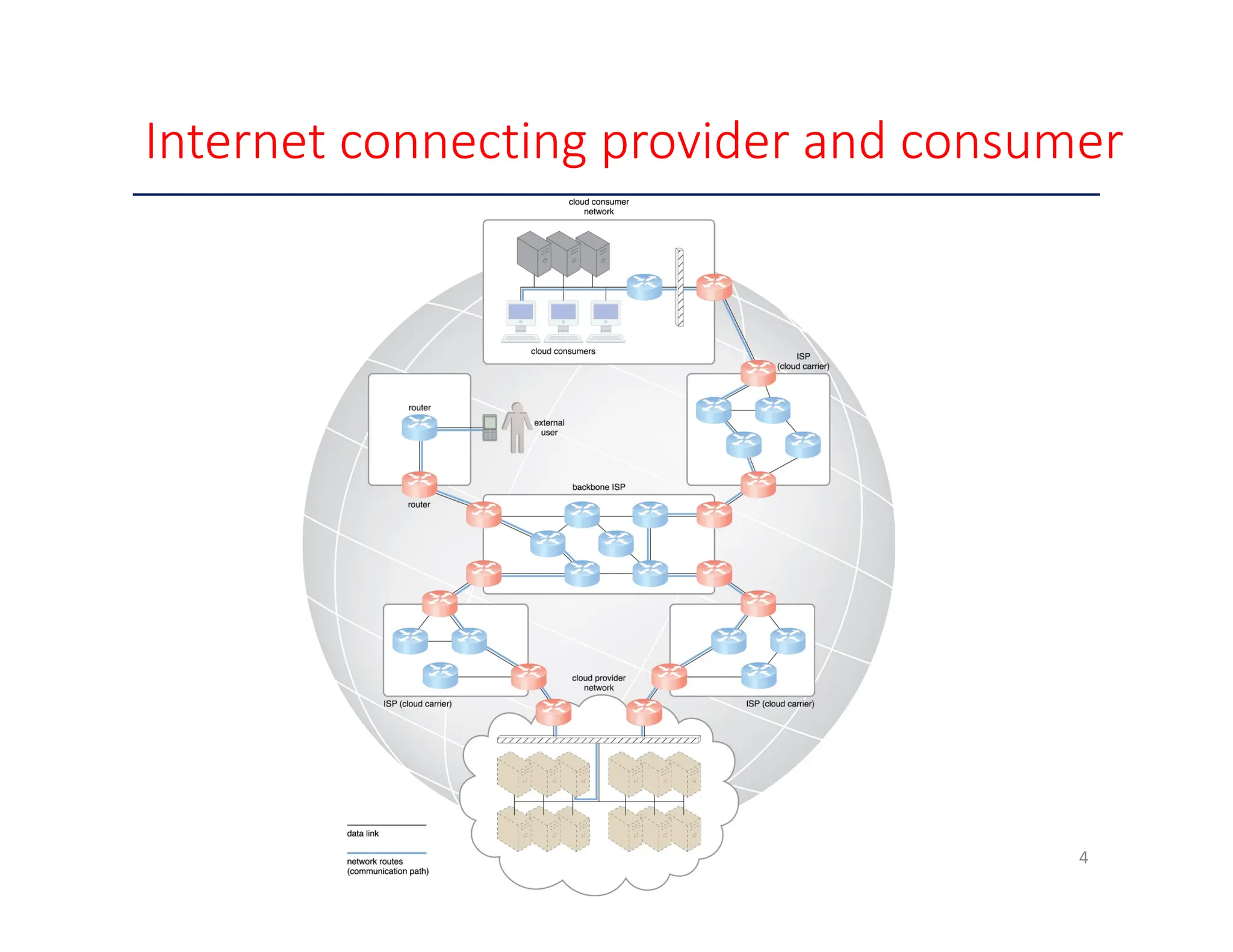
• All clouds must be connected to a network
• Internet’s largest backbone networks, established
and deployed by ISPs, are interconnected by core
routers
 ISP: internet service provider
3
Internet connecting provider and consumer
4
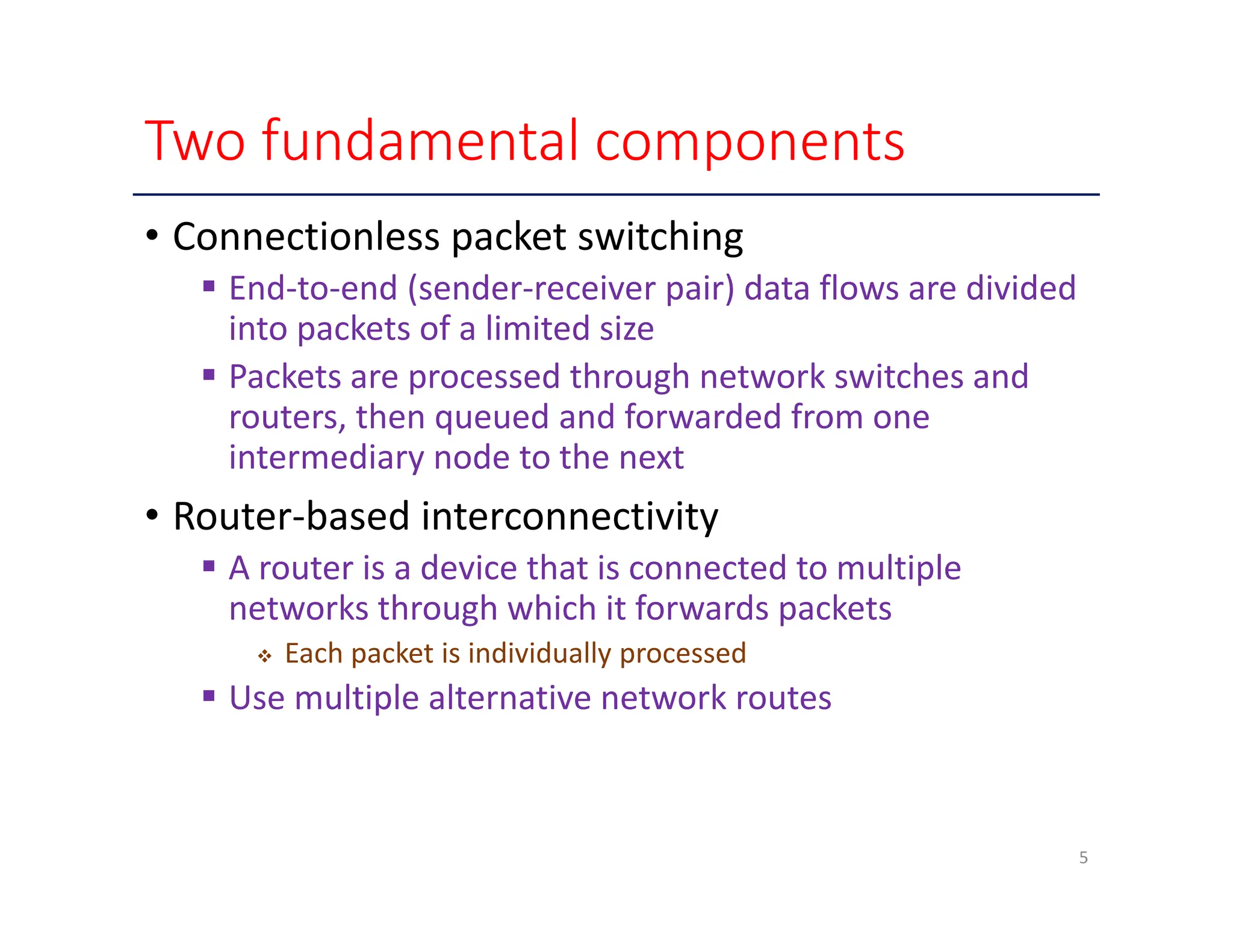
Two fundamental components
• Connectionless packet switching
 End‐to‐end (sender‐receiver pair) data flows are divided
into packets of a limited size
 Packets are processed through network switches and
routers, then queued and forwarded from one
intermediary node to the next
• Router‐based interconnectivity
 A router is a device that is connected to multiple
networks through which it forwards packets
 Each packet is individually processed
 Use multiple alternative network routes
5
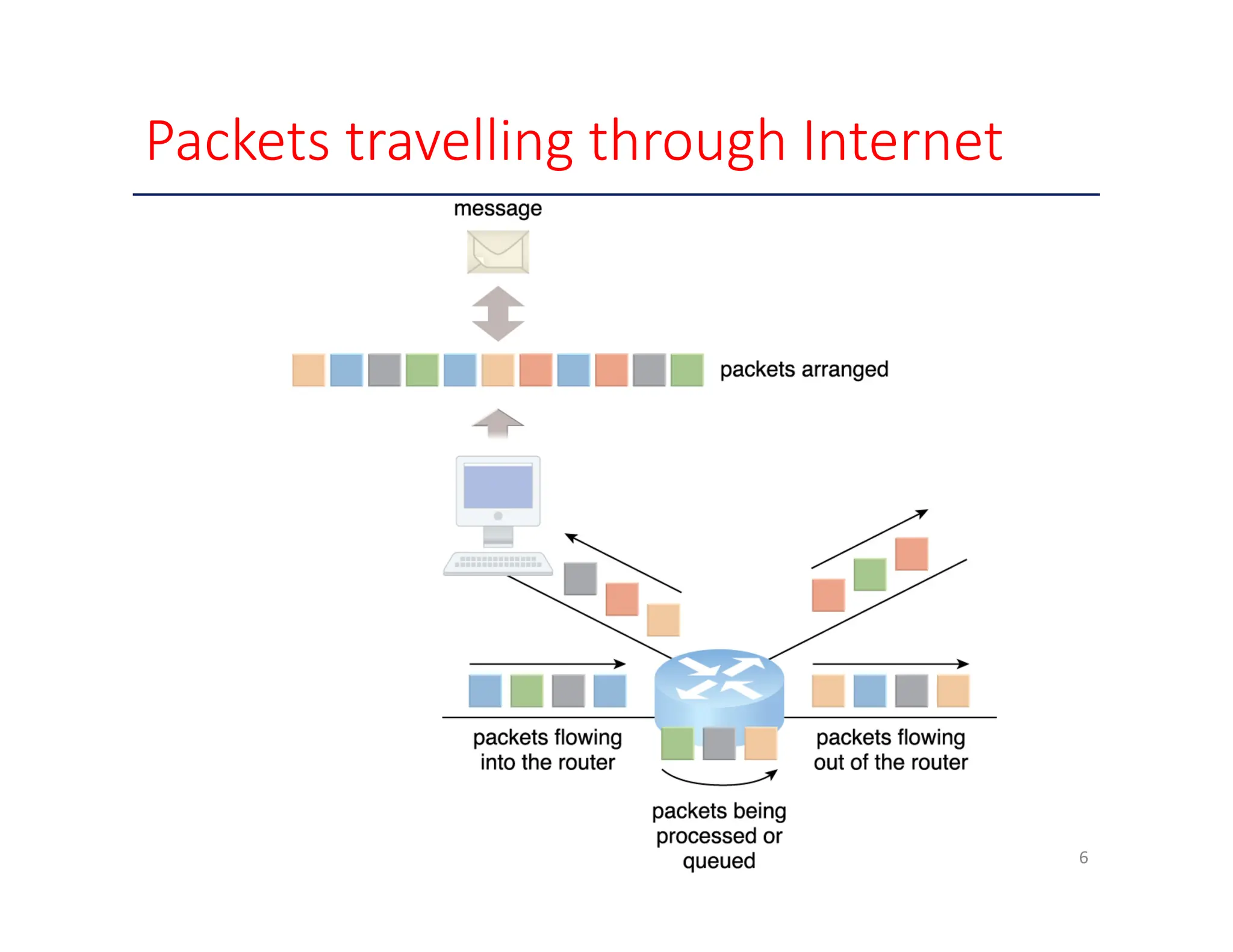
Packets travelling through Internet
6
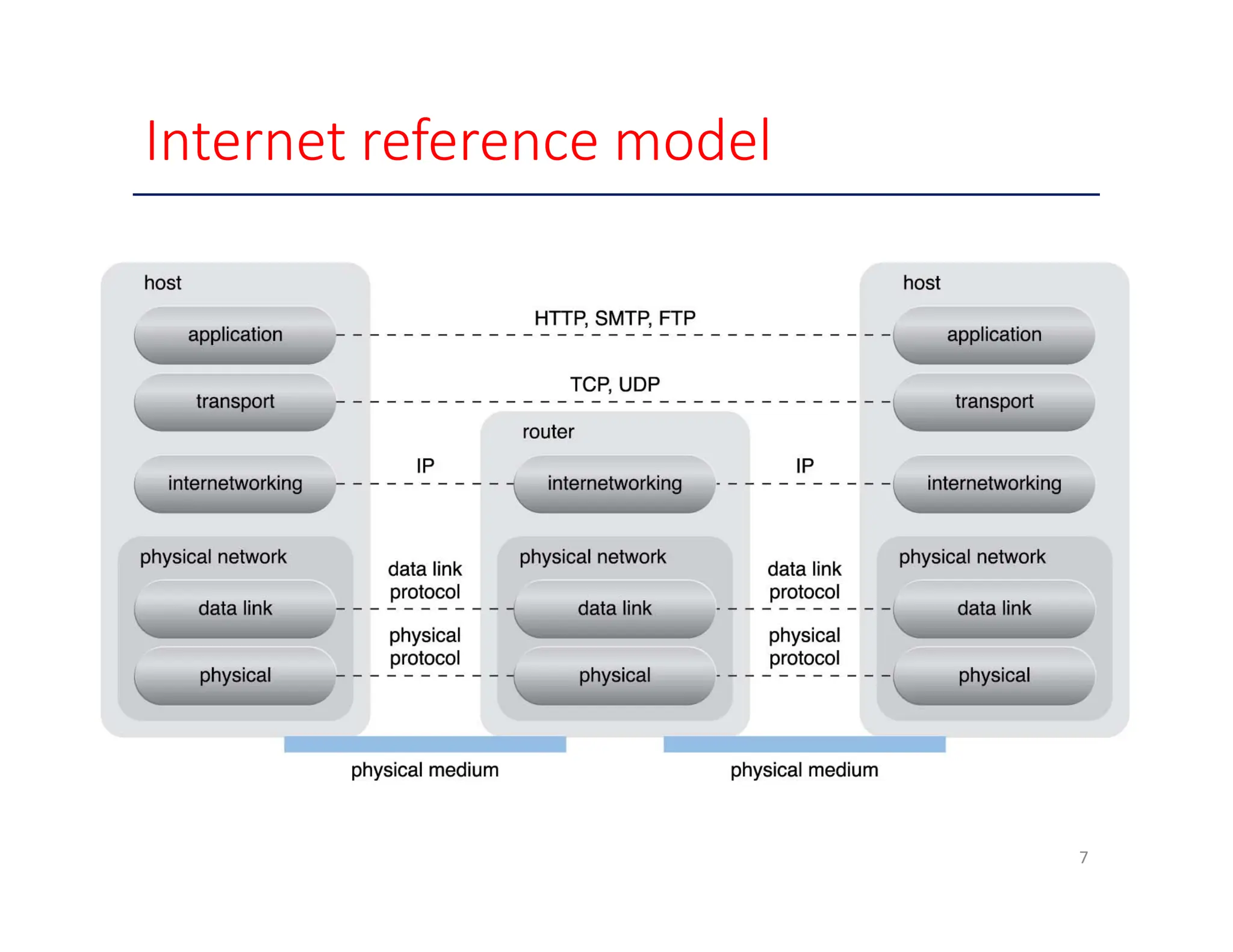
Internet reference model
7
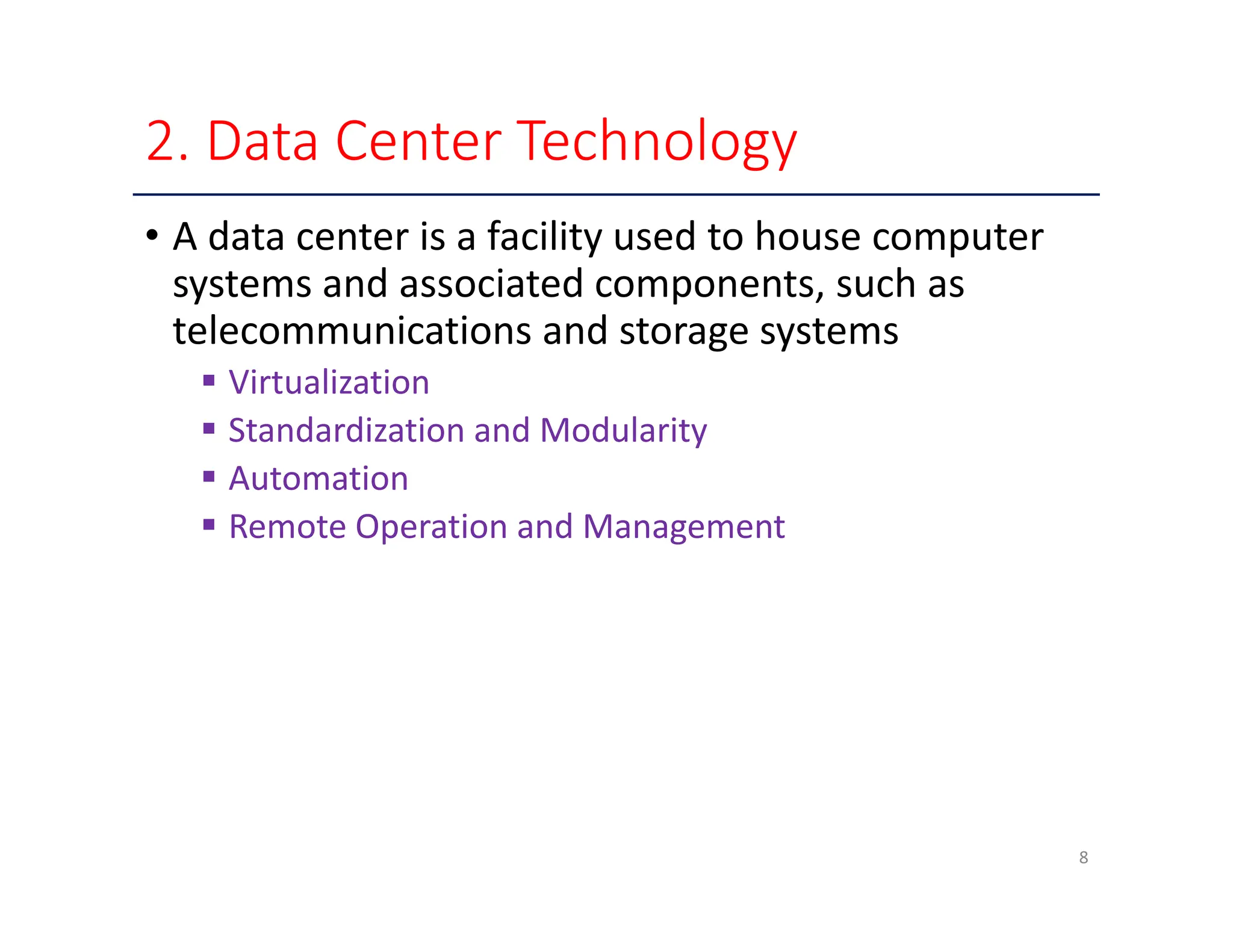
2. Data Center Technology
• A data center is a facility used to house computer
systems and associated components, such as
telecommunications and storage systems
 Virtualization
 Standardization and Modularity
 Automation
 Remote Operation and Management
8
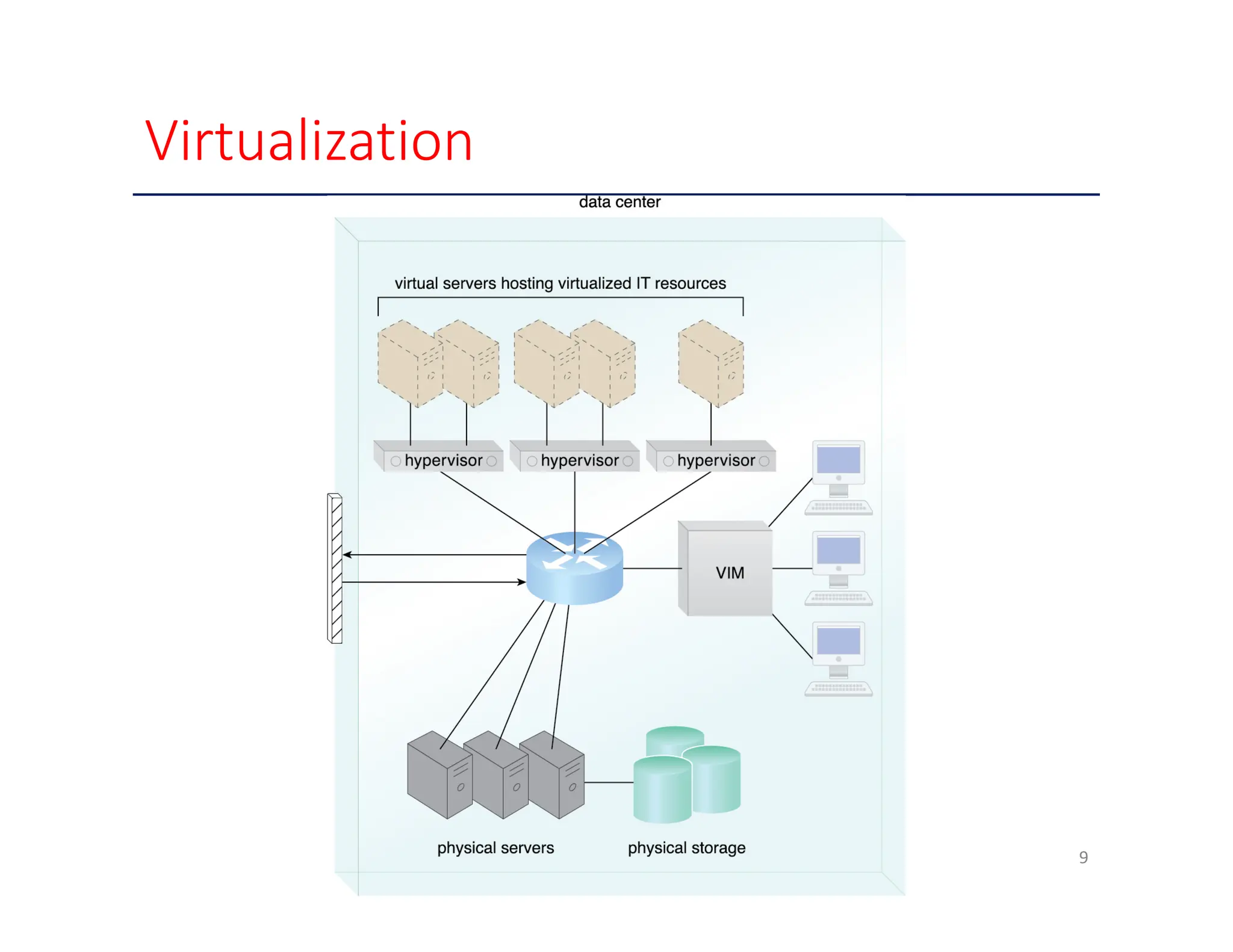
Virtualization
9
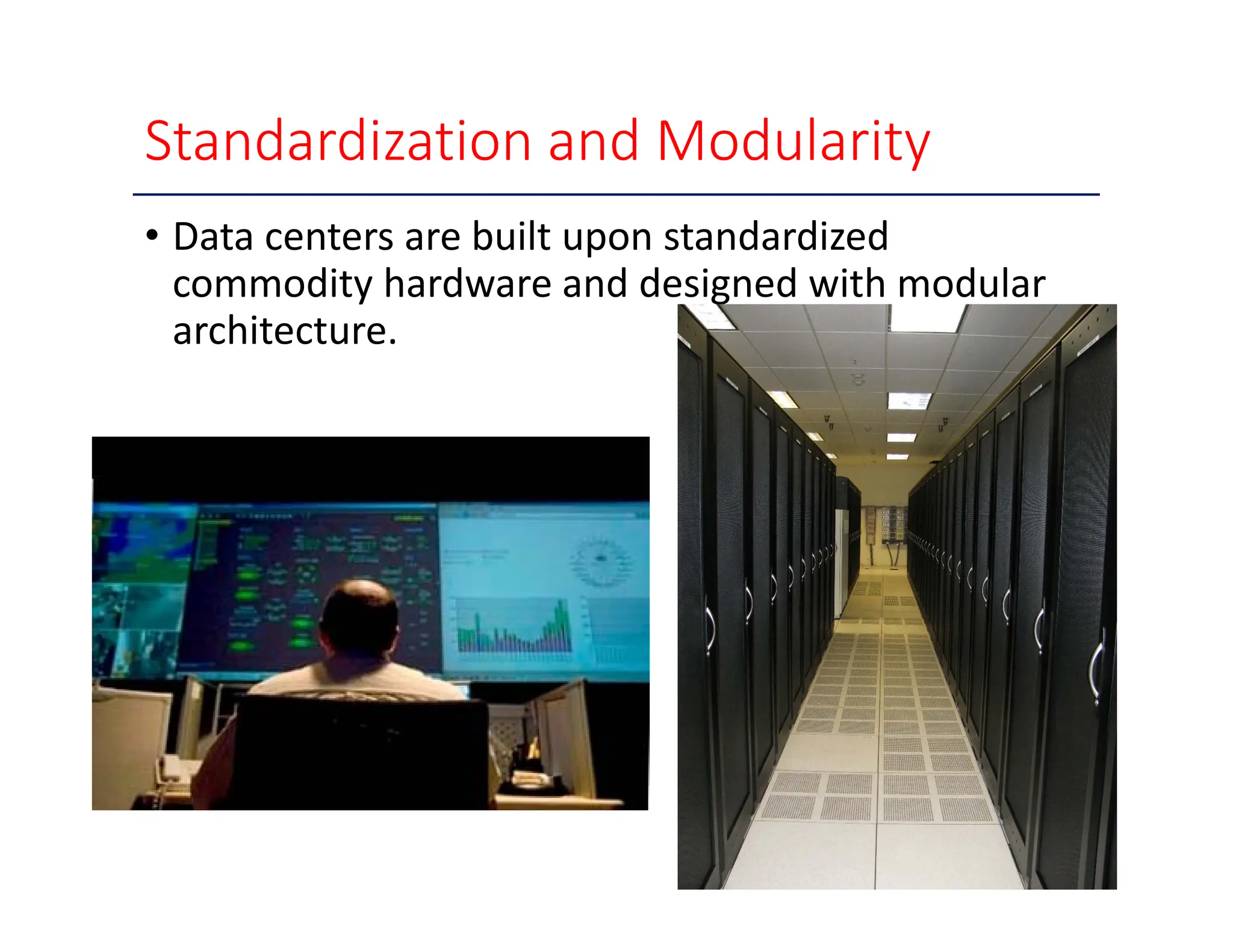
Standardization and Modularity
• Data centers are built upon standardized
commodity hardware and designed with modular
architecture.
10
Supercomputer vs. data center
• Handouts
11
3. Virtualization technology
• Virtualization is a process of converting a physical IT
resource into a virtual IT resource
 Server
 Virtual server ↔ virtual machine
 Storage
 Network
 Power
12
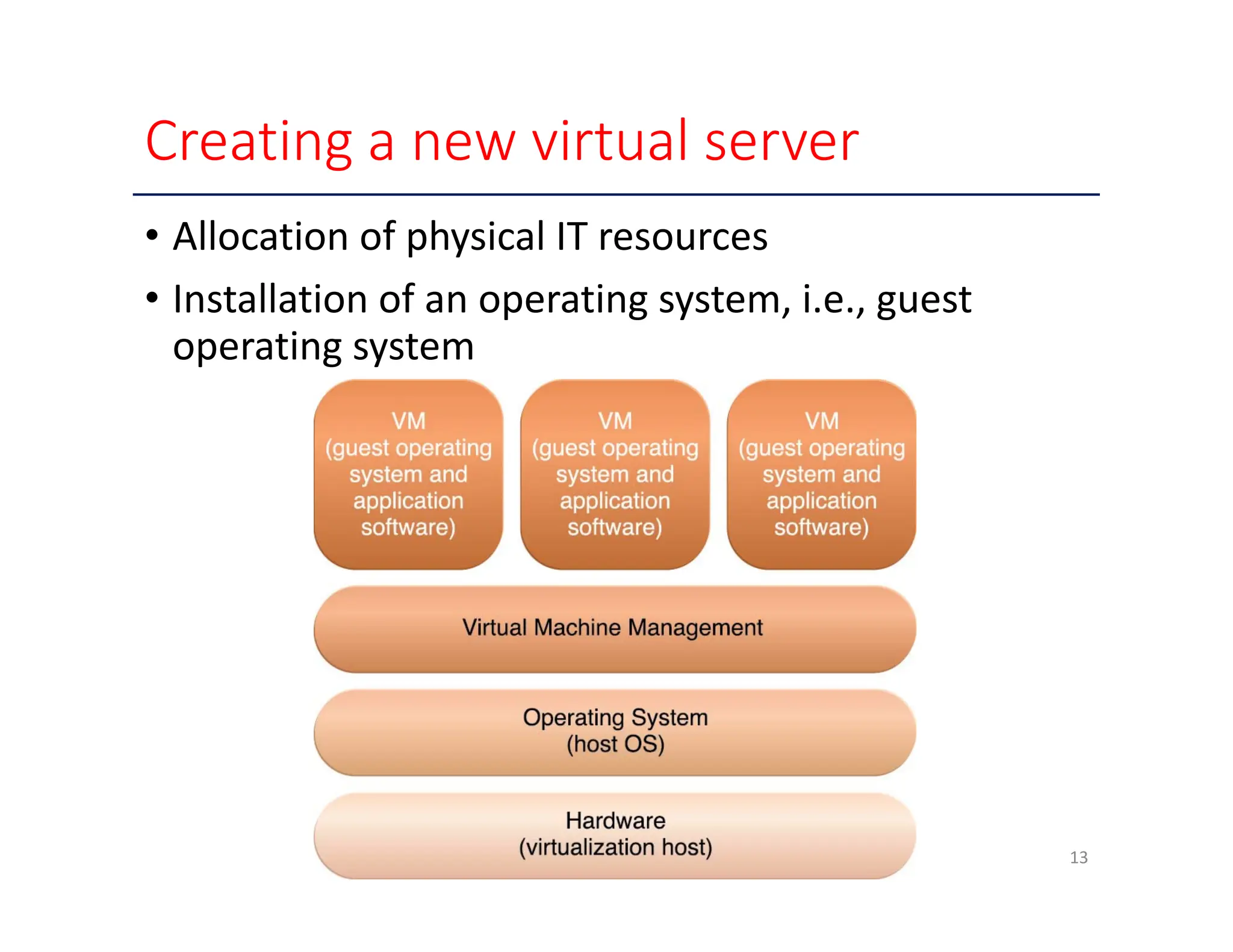
Creating a new virtual server
• Allocation of physical IT resources
• Installation of an operating system, i.e., guest
operating system
13
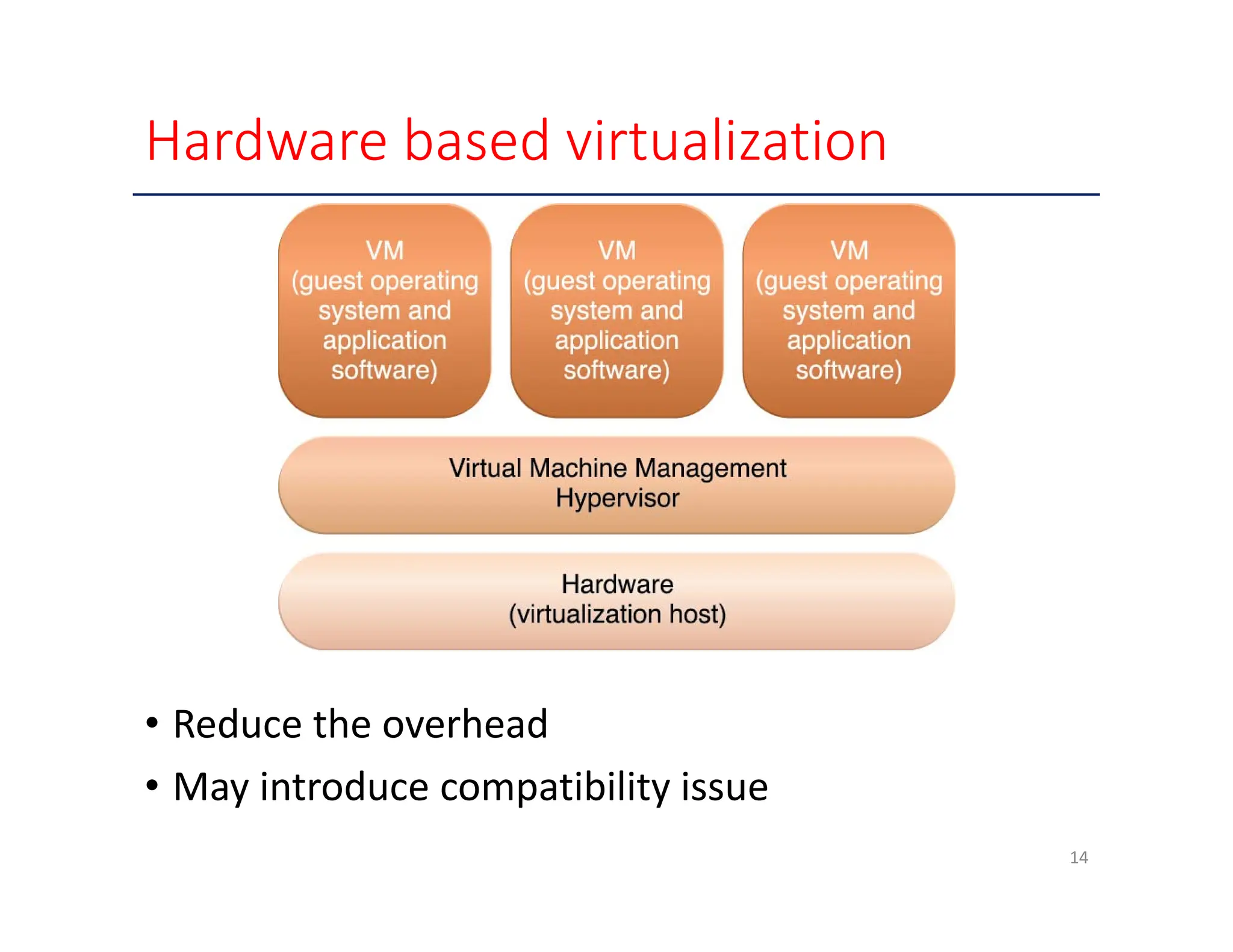
Hardware based virtualization
• Reduce the overhead
• May introduce compatibility issue
14
4. Web technology
• Cloud computing relies on internet.
• Web technology is generally used as both the
implementation medium and the management
interface for cloud services
15
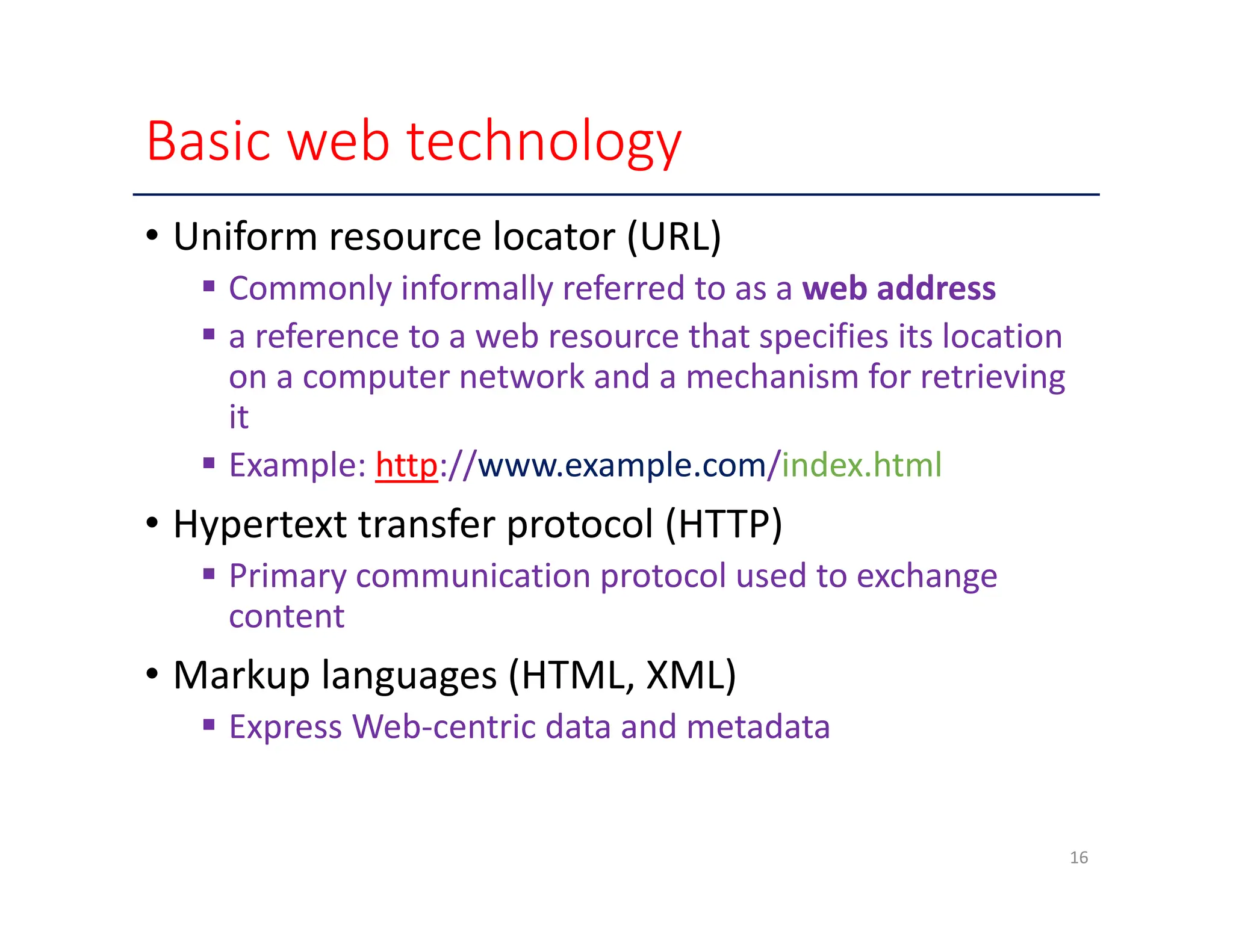
Basic web technology
• Uniform resource locator (URL)
 Commonly informally referred to as a web address
 a reference to a web resource that specifies its location
on a computer network and a mechanism for retrieving
it
 Example: http://www.example.com/index.html
• Hypertext transfer protocol (HTTP)
 Primary communication protocol used to exchange
content
• Markup languages (HTML, XML)
 Express Web‐centric data and metadata
16
Web applications
• Applications running in a web browser
 Rely on web browsers for the presentation of user‐
interfaces
17
5. Multitenant technology
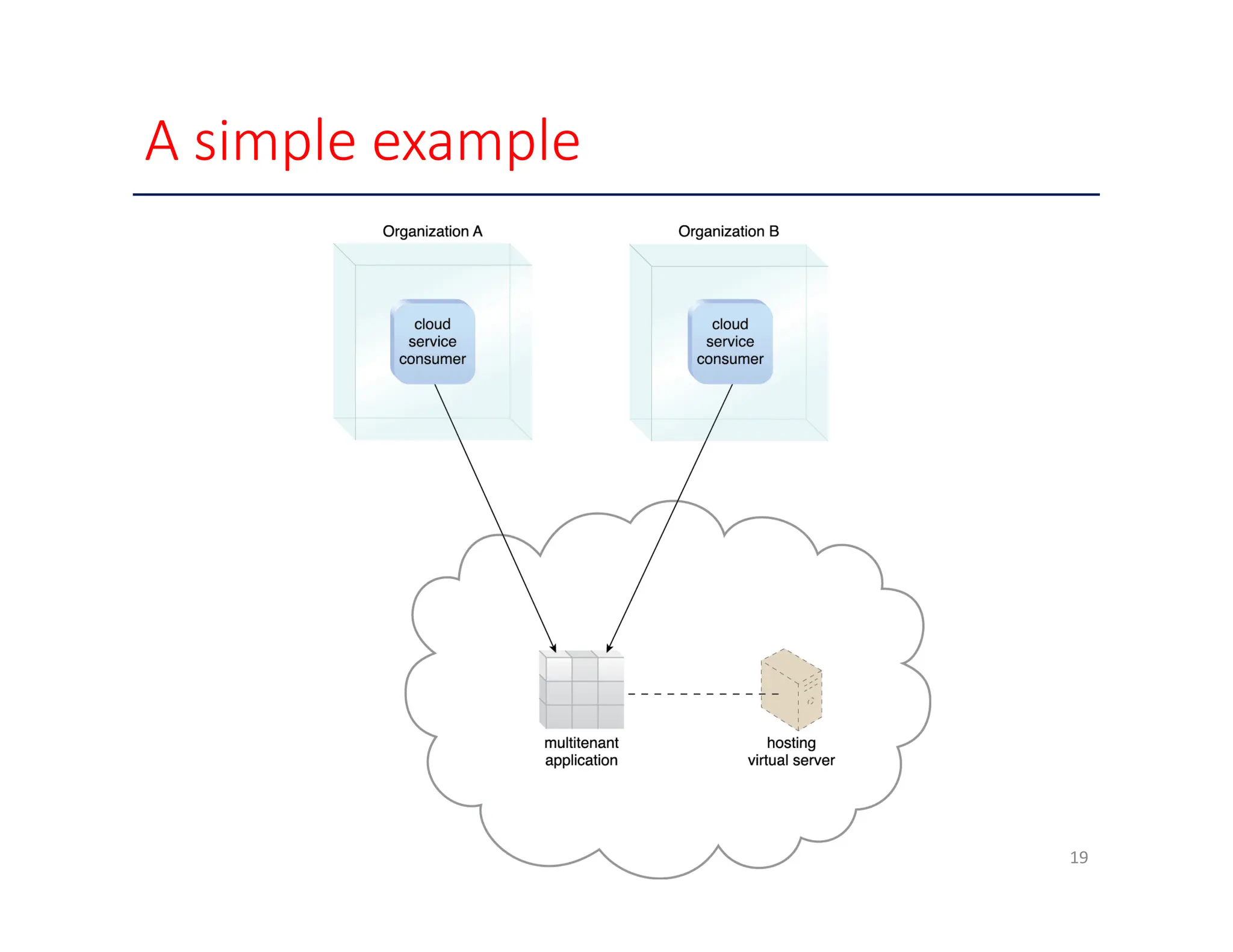
• Enable multiple users (tenants) to access the same
application simultaneously
• Multitenant applications ensure that tenants do
not have access to data and configuration
information that is not their own
18
A simple example
19

moThese platforms hide the complexity and details of the underlying infrastructure from users and applications by providing very simple graphical interface or API (Applications Programming Interface).

  • 1.
  • 2.
    Enabling technologies 1. Broadbandnetworks and internet architecture 2. Data center technology 3. Virtualization technology 4. Web technology 5. Multitenant technology 2
  • 3.
    1. Broadband networks& Internet architecture • All clouds must be connected to a network • Internet’s largest backbone networks, established and deployed by ISPs, are interconnected by core routers  ISP: internet service provider 3
  • 4.
  • 5.
    Two fundamental components •Connectionless packet switching  End‐to‐end (sender‐receiver pair) data flows are divided into packets of a limited size  Packets are processed through network switches and routers, then queued and forwarded from one intermediary node to the next • Router‐based interconnectivity  A router is a device that is connected to multiple networks through which it forwards packets  Each packet is individually processed  Use multiple alternative network routes 5
  • 6.
  • 7.
  • 8.
    2. Data CenterTechnology • A data center is a facility used to house computer systems and associated components, such as telecommunications and storage systems  Virtualization  Standardization and Modularity  Automation  Remote Operation and Management 8
  • 9.
  • 10.
    Standardization and Modularity •Data centers are built upon standardized commodity hardware and designed with modular architecture. 10
  • 11.
    Supercomputer vs. datacenter • Handouts 11
  • 12.
    3. Virtualization technology •Virtualization is a process of converting a physical IT resource into a virtual IT resource  Server  Virtual server ↔ virtual machine  Storage  Network  Power 12
  • 13.
    Creating a newvirtual server • Allocation of physical IT resources • Installation of an operating system, i.e., guest operating system 13
  • 14.
    Hardware based virtualization •Reduce the overhead • May introduce compatibility issue 14
  • 15.
    4. Web technology •Cloud computing relies on internet. • Web technology is generally used as both the implementation medium and the management interface for cloud services 15
  • 16.
    Basic web technology •Uniform resource locator (URL)  Commonly informally referred to as a web address  a reference to a web resource that specifies its location on a computer network and a mechanism for retrieving it  Example: http://www.example.com/index.html • Hypertext transfer protocol (HTTP)  Primary communication protocol used to exchange content • Markup languages (HTML, XML)  Express Web‐centric data and metadata 16
  • 17.
    Web applications • Applicationsrunning in a web browser  Rely on web browsers for the presentation of user‐ interfaces 17
  • 18.
    5. Multitenant technology •Enable multiple users (tenants) to access the same application simultaneously • Multitenant applications ensure that tenants do not have access to data and configuration information that is not their own 18
  • 19.