 Mosquitoes are members of a group of
almost 3,600 species of small flies within the
family Culicidae
 The word "mosquito" is Spanish and
Portuguese for "little fly"
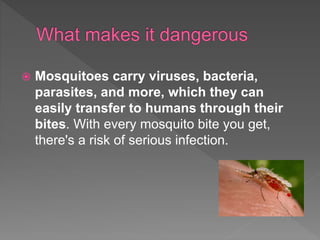
 Mosquitoes carry viruses, bacteria,
parasites, and more, which they can
easily transfer to humans through their
bites. With every mosquito bite you get,
there's a risk of serious infection.
 Mosquitoes have a slender segmented body,
one pair of wings, one pair of halteres, three
pairs of long hair-like legs, and elongated
mouthparts
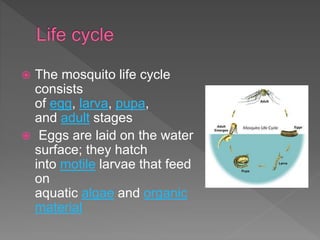
 The mosquito life cycle
consists
of egg, larva, pupa,
and adult stages
 Eggs are laid on the water
surface; they hatch
into motile larvae that feed
on
aquatic algae and organic
material
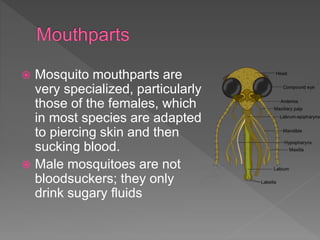
 Mosquito mouthparts are
very specialized, particularly
those of the females, which
in most species are adapted
to piercing skin and then
sucking blood.
 Male mosquitoes are not
bloodsuckers; they only
drink sugary fluids
 Many measures have been tried
for mosquito control, including the
elimination of breeding places, exclusion
via window screens and mosquito nets
 Insect repellents are applied on skin and
give short-term protection against mosquito
bites. The chemical DEET repels some
mosquitoes and other insects
mosquito.pptx

mosquito.pptx

  • 2.
     Mosquitoes aremembers of a group of almost 3,600 species of small flies within the family Culicidae  The word "mosquito" is Spanish and Portuguese for "little fly"
  • 3.
     Mosquitoes carryviruses, bacteria, parasites, and more, which they can easily transfer to humans through their bites. With every mosquito bite you get, there's a risk of serious infection.
  • 4.
     Mosquitoes havea slender segmented body, one pair of wings, one pair of halteres, three pairs of long hair-like legs, and elongated mouthparts
  • 5.
     The mosquitolife cycle consists of egg, larva, pupa, and adult stages  Eggs are laid on the water surface; they hatch into motile larvae that feed on aquatic algae and organic material
  • 6.
     Mosquito mouthpartsare very specialized, particularly those of the females, which in most species are adapted to piercing skin and then sucking blood.  Male mosquitoes are not bloodsuckers; they only drink sugary fluids
  • 7.
     Many measureshave been tried for mosquito control, including the elimination of breeding places, exclusion via window screens and mosquito nets  Insect repellents are applied on skin and give short-term protection against mosquito bites. The chemical DEET repels some mosquitoes and other insects