www.odd-e.com | steven@odd-e.com 
More with LeSS
2
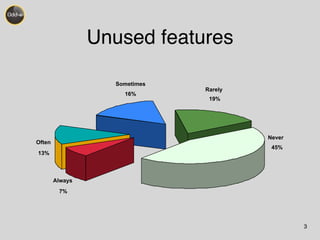
Unused features 
3 
Always 
7% 
Often 
13% 
Sometimes 
16% 
Rarely 
19% 
Never 
45%
4
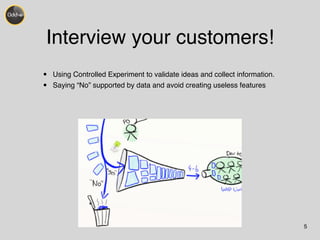
Interview your customers! 
• Using Controlled Experiment to validate ideas and collect information.! 
• Saying “No” supported by data and avoid creating useless features 
5
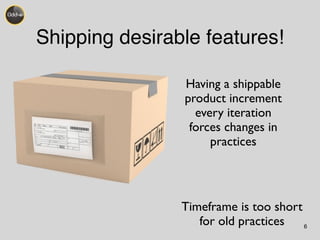
Shipping desirable features! 
6 
Having a shippable 
product increment 
every iteration 
forces changes in 
practices 
Timeframe is too short 
for old practices
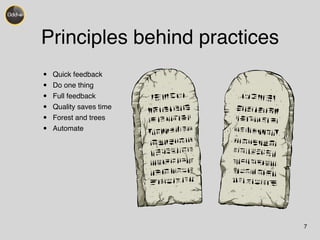
Principles behind practices 
• Quick feedback! 
• Do one thing! 
• Full feedback! 
• Quality saves time! 
• Forest and trees! 
• Automate 
7
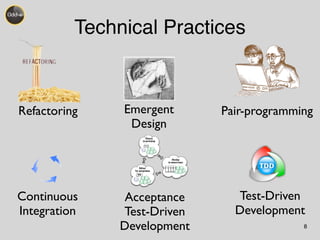
Technical Practices 
Emergent 
Design 
Refactoring Pair-programming 
Test-Driven 
Development 
8 
Continuous 
Integration 
Discuss 
in workshop 
Develop 
in concurrence 
Deliver 
for acceptance 
Acceptance 
Test-Driven 
Development
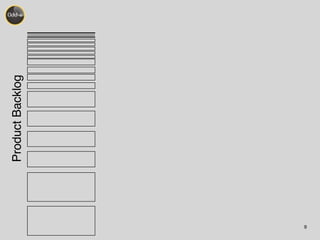
9 Product Backlog
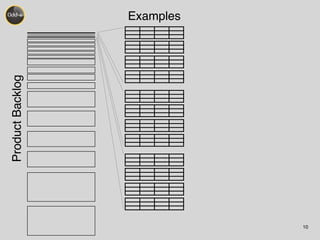
Examples 
10 Product Backlog
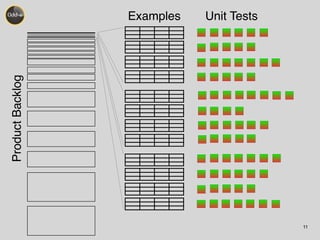
Examples Unit Tests 
11 Product Backlog
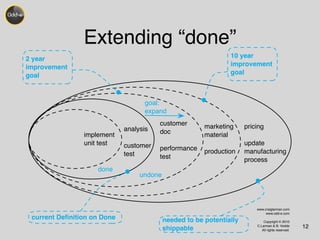
Extending “done” 
12 
implement 
unit test 
goal: 
expand 
analysis 
customer 
test 
customer 
doc 
performance 
test 
marketing 
material 
production 
pricing 
update 
manufacturing 
process 
current Definition on Done needed to be potentially 
shippable 
done 
undone 
2 year 
improvement 
goal 
10 year 
improvement 
goal 
www.craiglarman.com 
www.odd-e.com 
Copyright © 2010 
C.Larman & B. Vodde 
All rights reserved.
What’s worse than having a mess? 
13
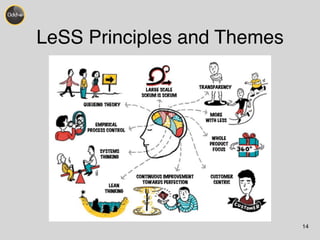
LeSS Principles and Themes 
14
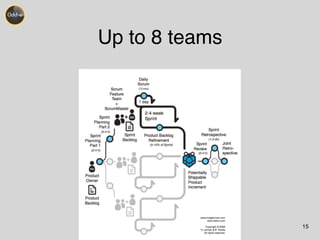
Up to 8 teams 
15
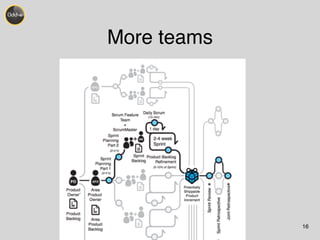
More teams 
16
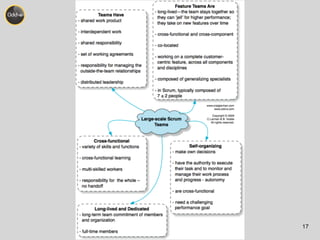
17
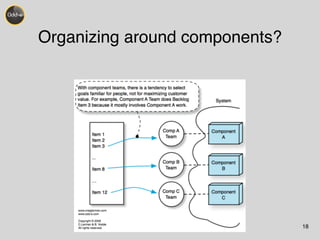
Organizing around components? 
18
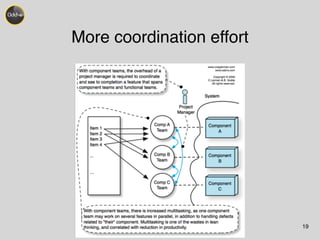
More coordination effort 
19
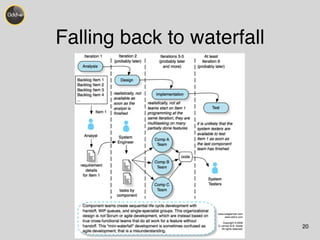
Falling back to waterfall 
20
21 
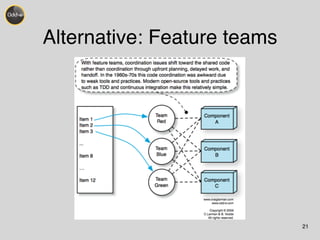
Alternative: Feature teams
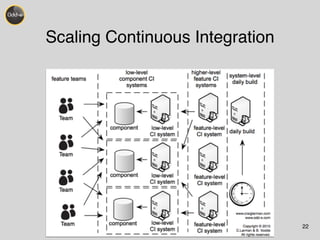
Scaling Continuous Integration 
22
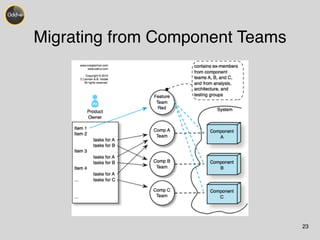
Migrating from Component Teams 
23
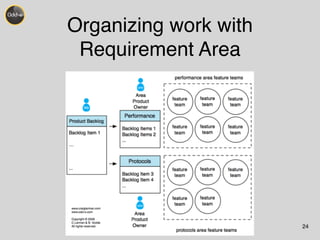
Organizing work with 
Requirement Area 
24
Larman’s Laws Of 
Organizational Behavior 
1. Organizations are implicitly optimized to avoid changing the status quo: 
middle- and first-level manager and “specialist” positions and power 
structures! 
2. As a corollary to (1), any change initiative will be reduced to redefining or 
overloading the new terminology to mean basically the same as status 
quo! 
3. As a corollary to (1) any change initiative will be derided as “purist”, 
“theoretical”, and “needing pragmatic customization for local concerns” -- 
which deflects from addressing weaknesses and manager / specialist 
status quo! 
4. Culture follows structure 
25
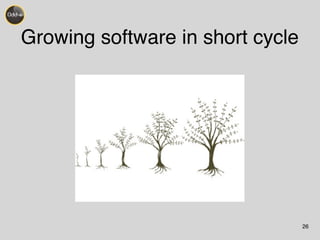
Growing software in short cycle 
26
Summary 
• Team work - long lived, self-organized, cross-functional, feature! 
• Optimize the whole - avoid hand off! 
• Quality saves you time, with lots of automation! 
• Only validated demands go into product backlog! 
• Culture follows structure 
27

More with Less - Agile Meetup 2014/9/18

  • 1.
  • 2.
  • 3.
    Unused features 3 Always 7% Often 13% Sometimes 16% Rarely 19% Never 45%
  • 4.
  • 5.
    Interview your customers! • Using Controlled Experiment to validate ideas and collect information.! • Saying “No” supported by data and avoid creating useless features 5
  • 6.
    Shipping desirable features! 6 Having a shippable product increment every iteration forces changes in practices Timeframe is too short for old practices
  • 7.
    Principles behind practices • Quick feedback! • Do one thing! • Full feedback! • Quality saves time! • Forest and trees! • Automate 7
  • 8.
    Technical Practices Emergent Design Refactoring Pair-programming Test-Driven Development 8 Continuous Integration Discuss in workshop Develop in concurrence Deliver for acceptance Acceptance Test-Driven Development
  • 9.
  • 10.
  • 11.
    Examples Unit Tests 11 Product Backlog
  • 12.
    Extending “done” 12 implement unit test goal: expand analysis customer test customer doc performance test marketing material production pricing update manufacturing process current Definition on Done needed to be potentially shippable done undone 2 year improvement goal 10 year improvement goal www.craiglarman.com www.odd-e.com Copyright © 2010 C.Larman & B. Vodde All rights reserved.
  • 13.
    What’s worse thanhaving a mess? 13
  • 14.
  • 15.
    Up to 8teams 15
  • 16.
  • 17.
  • 18.
  • 19.
  • 20.
    Falling back towaterfall 20
  • 21.
  • 22.
  • 23.
  • 24.
    Organizing work with Requirement Area 24
  • 25.
    Larman’s Laws Of Organizational Behavior 1. Organizations are implicitly optimized to avoid changing the status quo: middle- and first-level manager and “specialist” positions and power structures! 2. As a corollary to (1), any change initiative will be reduced to redefining or overloading the new terminology to mean basically the same as status quo! 3. As a corollary to (1) any change initiative will be derided as “purist”, “theoretical”, and “needing pragmatic customization for local concerns” -- which deflects from addressing weaknesses and manager / specialist status quo! 4. Culture follows structure 25
  • 26.
    Growing software inshort cycle 26
  • 27.
    Summary • Teamwork - long lived, self-organized, cross-functional, feature! • Optimize the whole - avoid hand off! • Quality saves you time, with lots of automation! • Only validated demands go into product backlog! • Culture follows structure 27