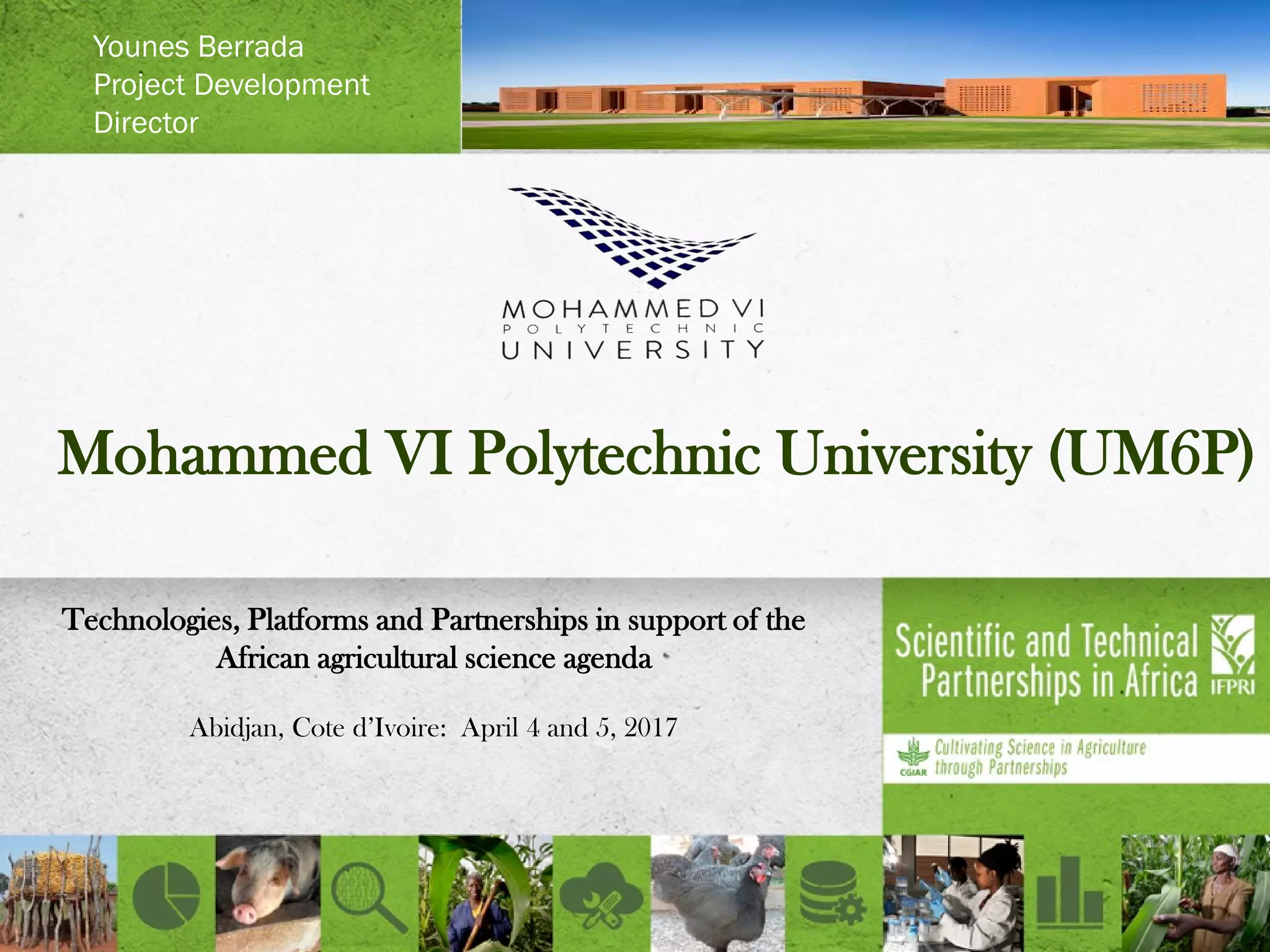
Mohammed VI Polytechnic University (UM6P)
Technologies, Platforms and Partnerships in support of the
African agricultural science agenda
Abidjan, Cote d’Ivoire: April 4 and 5, 2017
Younes Berrada
Project Development
Director
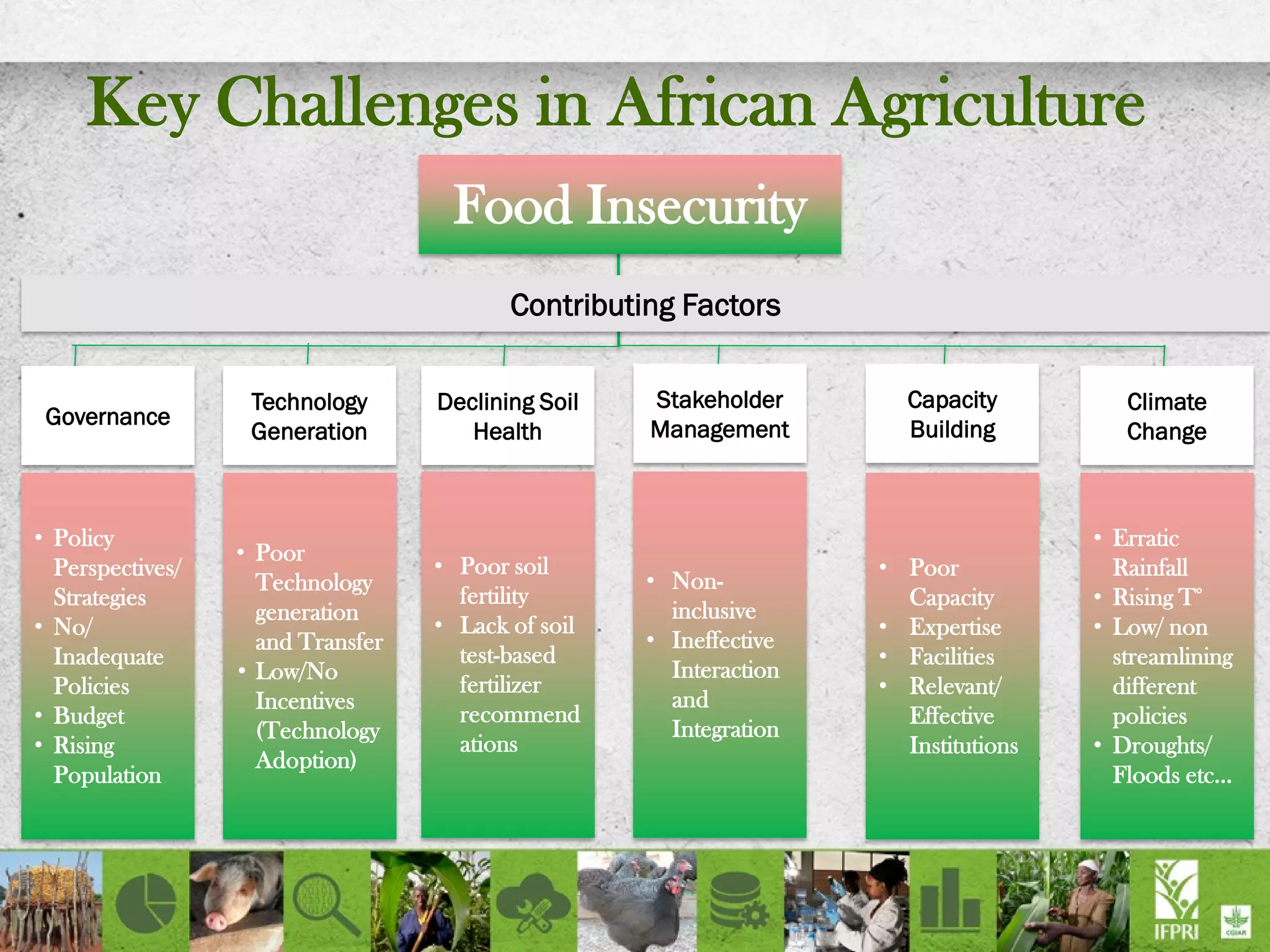
Key Challenges in African Agriculture
• Policy
Perspectives/
Strategies
• No/
Inadequate
Policies
• Budget
• Rising
Population
• Poor
Technology
generation
and Transfer
• Low/No
Incentives
(Technology
Adoption)
• Poor soil
fertility
• Lack of soil
test-based
fertilizer
recommend
ations
• Non-
inclusive
• Ineffective
Interaction
and
Integration
• Poor
Capacity
• Expertise
• Facilities
• Relevant/
Effective
Institutions
• Erratic
Rainfall
• Rising T°
• Low/ non
streamlining
different
policies
• Droughts/
Floods etc…
Contributing Factors
Food Insecurity
Governance
Technology
Generation
Declining Soil
Health
Stakeholder
Management
Capacity
Building
Climate
Change
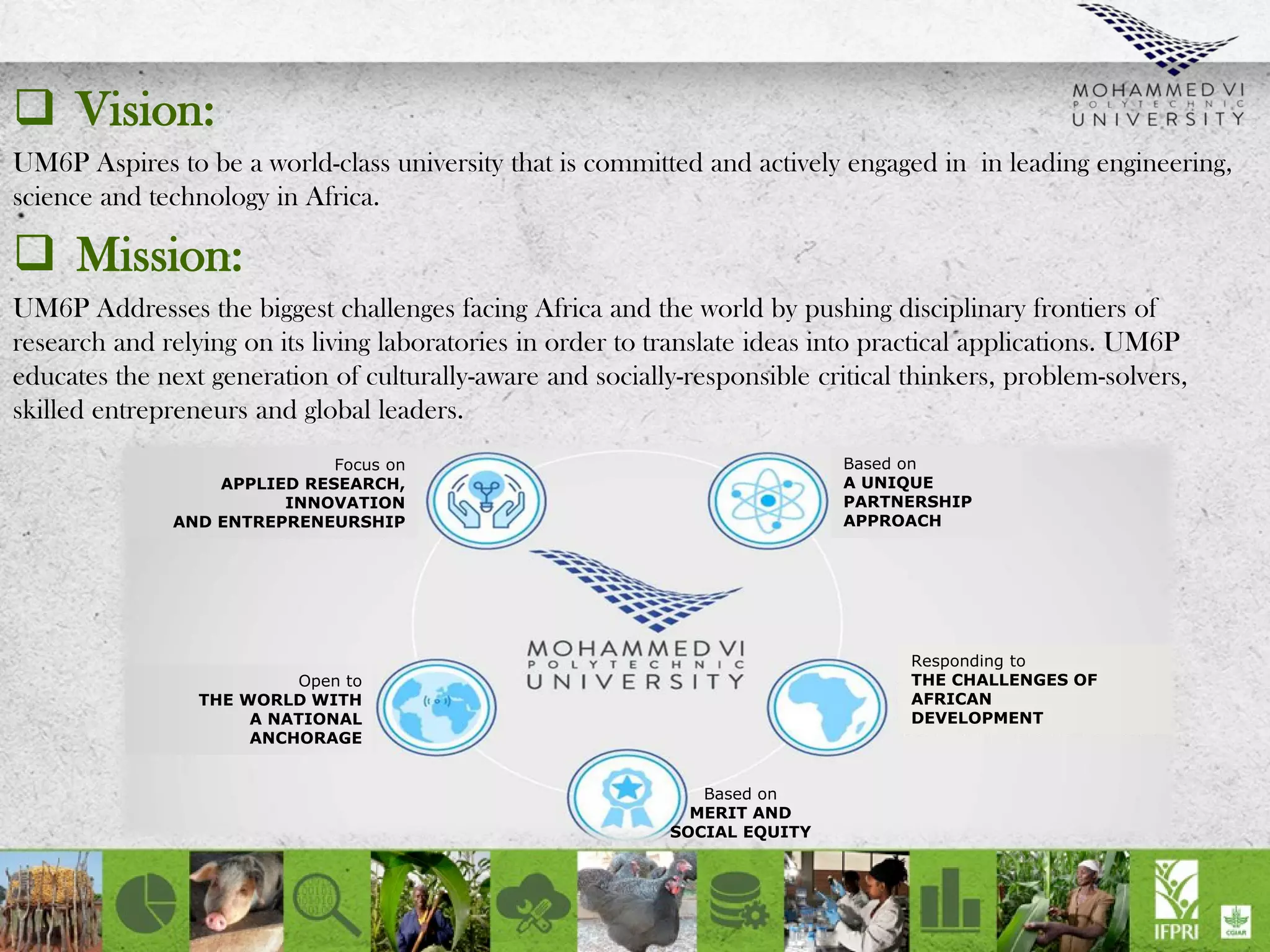
 Vision:
UM6P Aspires to be a world-class university that is committed and actively engaged in in leading engineering,
science and technology in Africa.
 Mission:
UM6P Addresses the biggest challenges facing Africa and the world by pushing disciplinary frontiers of
research and relying on its living laboratories in order to translate ideas into practical applications. UM6P
educates the next generation of culturally-aware and socially-responsible critical thinkers, problem-solvers,
skilled entrepreneurs and global leaders.
Focus on
APPLIED RESEARCH,
INNOVATION
AND ENTREPRENEURSHIP
Open to
THE WORLD WITH
A NATIONAL
ANCHORAGE
Responding to
THE CHALLENGES OF
AFRICAN
DEVELOPMENT
Based on
A UNIQUE
PARTNERSHIP
APPROACH
Based on
MERIT AND
SOCIAL EQUITY
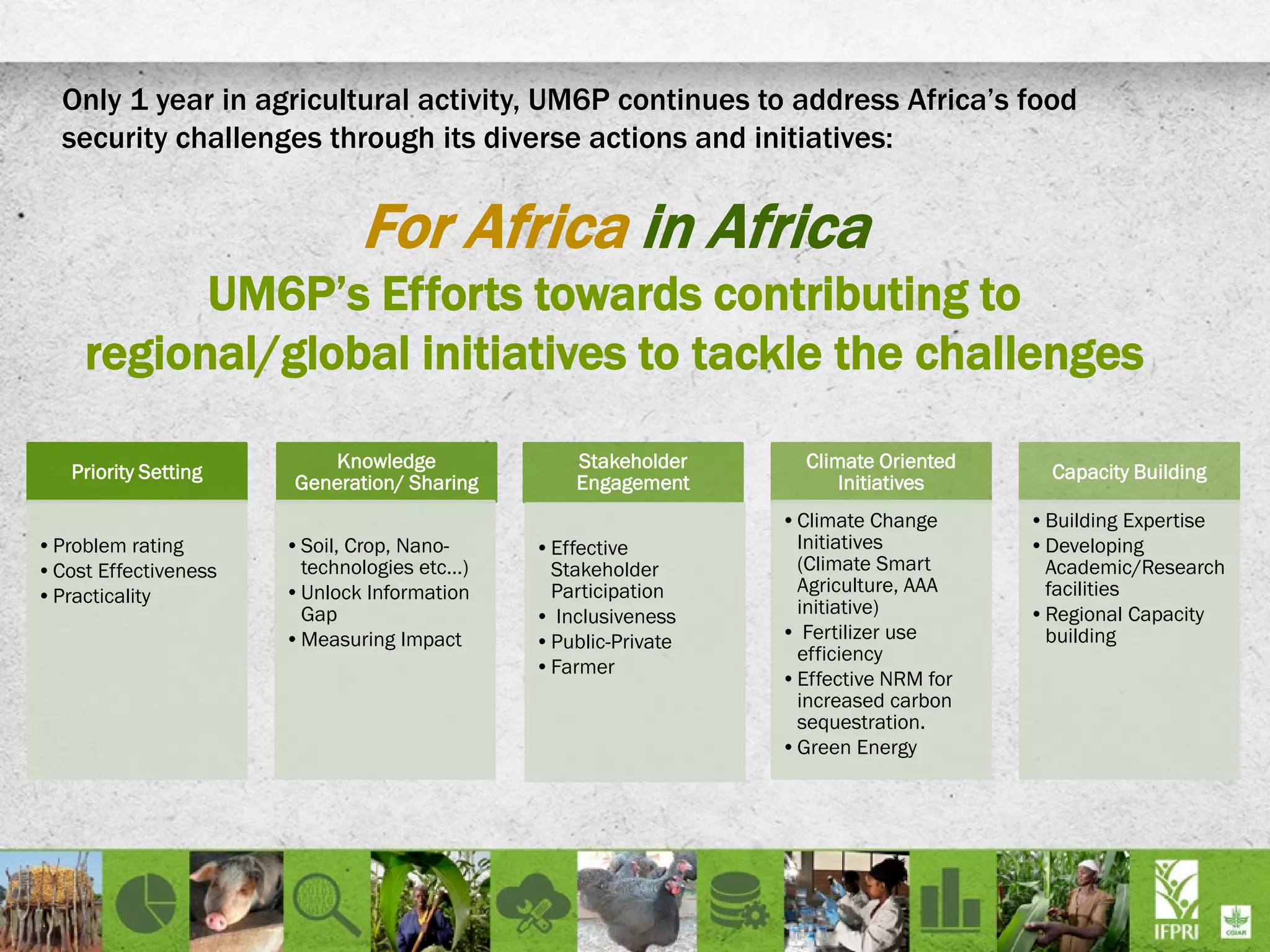
For Africa in Africa
UM6P’s Efforts towards contributing to
regional/global initiatives to tackle the challenges
Only 1 year in agricultural activity, UM6P continues to address Africa’s food
security challenges through its diverse actions and initiatives:
Priority Setting
•Problem rating
•Cost Effectiveness
•Practicality
Knowledge
Generation/ Sharing
•Soil, Crop, Nano-
technologies etc…)
•Unlock Information
Gap
•Measuring Impact
Stakeholder
Engagement
•Effective
Stakeholder
Participation
• Inclusiveness
•Public-Private
•Farmer
Climate Oriented
Initiatives
•Climate Change
Initiatives
(Climate Smart
Agriculture, AAA
initiative)
• Fertilizer use
efficiency
•Effective NRM for
increased carbon
sequestration.
•Green Energy
Capacity Building
•Building Expertise
•Developing
Academic/Research
facilities
•Regional Capacity
building
Training Approach
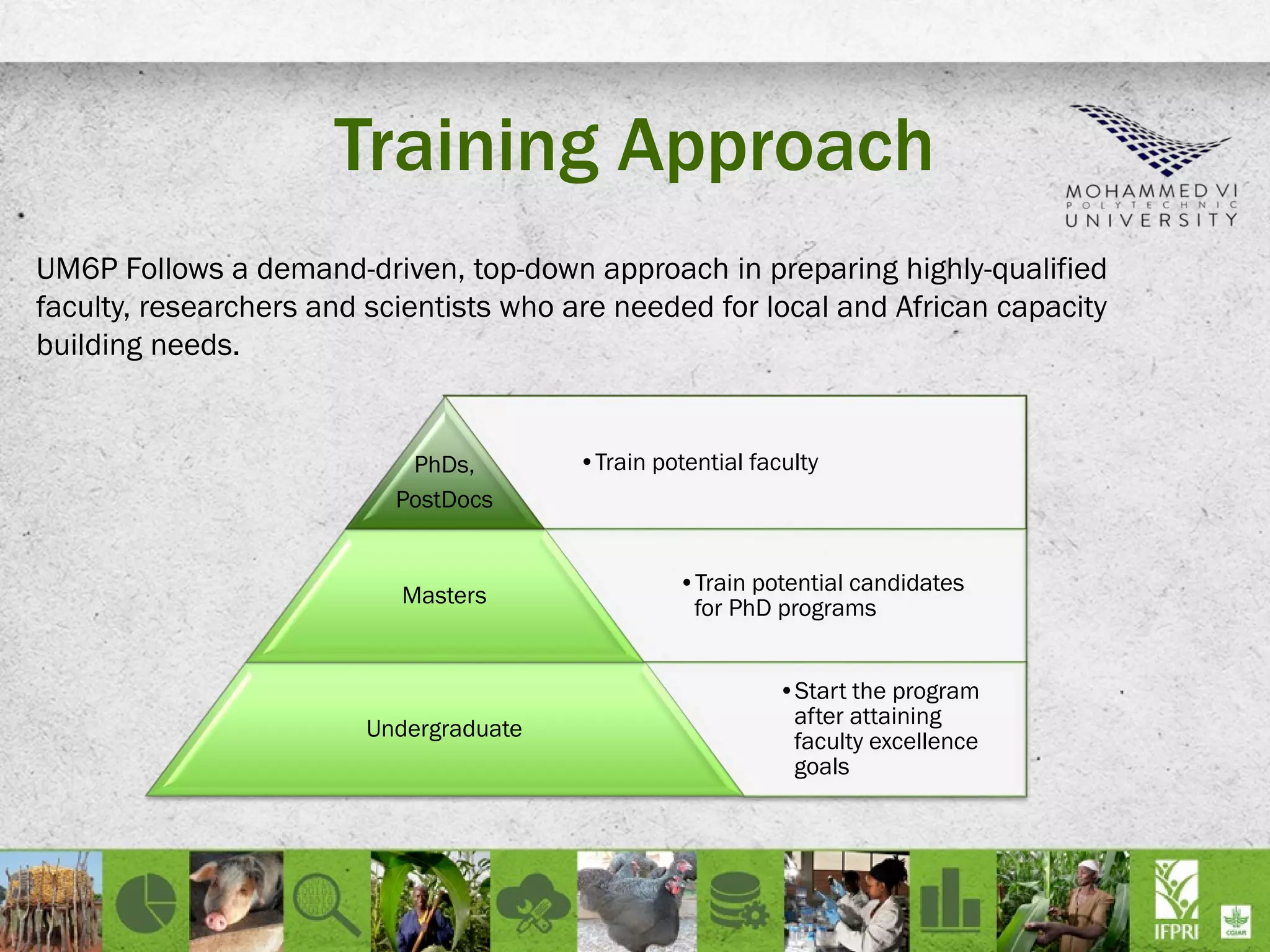
UM6P Follows a demand-driven, top-down approach in preparing highly-qualified
faculty, researchers and scientists who are needed for local and African capacity
building needs.
•Train potential facultyPhDs,
PostDocs
•Train potential candidates
for PhD programs
Masters
•Start the program
after attaining
faculty excellence
goals
Undergraduate

Mohammed VI Polytechnic University (UM6P)

  • 1.
    Mohammed VI PolytechnicUniversity (UM6P) Technologies, Platforms and Partnerships in support of the African agricultural science agenda Abidjan, Cote d’Ivoire: April 4 and 5, 2017 Younes Berrada Project Development Director
  • 2.
    Key Challenges inAfrican Agriculture • Policy Perspectives/ Strategies • No/ Inadequate Policies • Budget • Rising Population • Poor Technology generation and Transfer • Low/No Incentives (Technology Adoption) • Poor soil fertility • Lack of soil test-based fertilizer recommend ations • Non- inclusive • Ineffective Interaction and Integration • Poor Capacity • Expertise • Facilities • Relevant/ Effective Institutions • Erratic Rainfall • Rising T° • Low/ non streamlining different policies • Droughts/ Floods etc… Contributing Factors Food Insecurity Governance Technology Generation Declining Soil Health Stakeholder Management Capacity Building Climate Change
  • 3.
     Vision: UM6P Aspiresto be a world-class university that is committed and actively engaged in in leading engineering, science and technology in Africa.  Mission: UM6P Addresses the biggest challenges facing Africa and the world by pushing disciplinary frontiers of research and relying on its living laboratories in order to translate ideas into practical applications. UM6P educates the next generation of culturally-aware and socially-responsible critical thinkers, problem-solvers, skilled entrepreneurs and global leaders. Focus on APPLIED RESEARCH, INNOVATION AND ENTREPRENEURSHIP Open to THE WORLD WITH A NATIONAL ANCHORAGE Responding to THE CHALLENGES OF AFRICAN DEVELOPMENT Based on A UNIQUE PARTNERSHIP APPROACH Based on MERIT AND SOCIAL EQUITY
  • 4.
    For Africa inAfrica UM6P’s Efforts towards contributing to regional/global initiatives to tackle the challenges Only 1 year in agricultural activity, UM6P continues to address Africa’s food security challenges through its diverse actions and initiatives: Priority Setting •Problem rating •Cost Effectiveness •Practicality Knowledge Generation/ Sharing •Soil, Crop, Nano- technologies etc…) •Unlock Information Gap •Measuring Impact Stakeholder Engagement •Effective Stakeholder Participation • Inclusiveness •Public-Private •Farmer Climate Oriented Initiatives •Climate Change Initiatives (Climate Smart Agriculture, AAA initiative) • Fertilizer use efficiency •Effective NRM for increased carbon sequestration. •Green Energy Capacity Building •Building Expertise •Developing Academic/Research facilities •Regional Capacity building
  • 5.
    Training Approach UM6P Followsa demand-driven, top-down approach in preparing highly-qualified faculty, researchers and scientists who are needed for local and African capacity building needs. •Train potential facultyPhDs, PostDocs •Train potential candidates for PhD programs Masters •Start the program after attaining faculty excellence goals Undergraduate