This journal is c The Royal Society of Chemistry 2012 Mol. BioSyst., 2012, 8, 2153–2165 2153
Cite this: Mol. BioSyst., 2012, 8, 2153–2165
Differential accumulation of host mRNAs on polyribosomes during
obligate pathogen-plant interactionsw
Jackson R. Moeller,ab
Matthew J. Moscou,bc
Tim Bancroft,d
Ronald W. Skadsen,e
Roger P. Wisebcf
and Steven A. Whitham*ab
Received 11th January 2012, Accepted 3rd May 2012
DOI: 10.1039/c2mb25014d
Plant pathogens elicit dramatic changes in the expression of host genes during both compatible
and incompatible interactions. Gene expression profiling studies of plant-pathogen interactions
have only considered messenger RNAs (mRNAs) present in total RNA, which contains
subpopulations of actively translated mRNAs associated with polyribosomes (polysomes) and
non-translated mRNAs that are not associated with polysomes. The goal of this study was to
enhance previous gene expression analyses by identifying host mRNAs that become differentially
associated with polysomes following pathogen inoculation. Total and polysomal RNA were
extracted from barley (Hordeum vulgare) plants at 32 h after inoculation with Blumeria graminis f.
sp. hordei, and Arabidopsis thaliana plants at 10 days after inoculation with Turnip mosaic virus.
Gene expression profiles were obtained for each pathosystem, which represent diverse plant host-
obligate pathogen interactions. Using this approach, host mRNAs were identified that were
differentially associated with polysomes in response to pathogen treatment. Approximately 18%
and 26% of mRNAs represented by probe sets on the Affymetrix Barley1 and Arabidopsis ATH1
GeneChips, respectively, differentially accumulated in the two populations in one or more
combinations of treatment and genotype. Gene ontology analysis of mRNAs sharing the same
pattern of accumulation in total and polysomal RNA identified gene sets that contained a
significant number of functionally related annotations, suggesting both transcript accumulation
and recruitment to polyribosomes are coordinately regulated in these systems.
Introduction
In most messenger RNA (mRNA) profiling studies, expression
levels are quantified in total RNA or polyadenylated mRNA
isolated from total RNA. Such approaches do not address the
complication that gene expression may owe as much to
translational as to transcriptional regulation. Efficiently
translated mRNAs are well represented on polyribosomes
(polysomes), while non-translated mRNAs can be localized
to other sub-cellular structures such as processing bodies or
storage granules.1
Therefore, transcript levels in total RNA do
not always correlate with translation status. Messenger RNAs
in polysomal RNA are actively translated, and thus, expected
to be better correlated with gene expression. This idea has been
experimentally supported in yeast by the high-throughput
sequencing of ribosome-protected mRNA fragments, in which
the translation efficiency of some mRNAs was altered by up to
100 fold, and nearly one-third of the genes analyzed were trans-
lationally regulated in response to amino acid deprivation.2
Expression profiling studies in Arabidopsis thaliana and barley
that compared mRNA abundance in total and polysomal RNA
showed that mRNA translation is a selective process that is
influenced by environmental and endogenous cues.3–6
To investigate how infections by obligate plant pathogens
affect the association of mRNAs with polysomes, we used two
different pathosystems, barley-powdery mildew and Arabidopsis-
Turnip mosaic virus (TuMV), for which we have previously
conducted extensive expression profiling.7–10
Powdery mildew
disease of barley (Hordeum vulgare L.) is caused by the fungal
biotroph Blumeria graminis f. sp. hordei (Bgh). A number of
dominant race-specific resistance genes have been characterized.
These mediate recognition of Bgh isolates and activate defense
a
Interdepartmental Plant Biology, Iowa State University, Ames,
IA 50011, USA. E-mail: swhitham@iastate.edu; Fax: 515-294-9420;
Tel: 515-294-4952
b
Department of Plant Pathology and Microbiology,
Iowa State University, Ames, IA 50011, USA
c
Interdepartmental Bioinformatics and Computational Biology,
Iowa State University, Ames, IA 50011, USA
d
Department of Statistics, Iowa State University, Ames, IA 50011,
USA
e
Cereal Crops Research Unit, USDA-Agricultural Research Service,
Madison, WI 53726, USA
f
Crop and Insect Genetics, Genomics, and Informatics Research Unit,
USDA-Agricultural Research Service, Iowa State University, Ames,
IA 50011, USA
w Electronic supplementary information (ESI) available. See DOI:
10.1039/c2mb25014d
Molecular
BioSystems
Dynamic Article Links
www.rsc.org/molecularbiosystems PAPER
Publishedon04May2012.DownloadedbyUniversityofWisconsin-Madisonon12/03/201416:14:04. View Article Online / Journal Homepage / Table of Contents for this issue
2154 Mol. BioSyst., 2012, 8, 2153–2165 This journal is c The Royal Society of Chemistry 2012
responses that restrict pathogen ingress.11,12
These responses
include decreased hyphal growth and cell death,13,14
altered
gene expression,7,8,15
production of reactive oxygen species,16
and accumulation of antimicrobial secondary metabolites.17–19
DNA microarrays have been used to monitor mRNA expres-
sion in compatible (disease) and incompatible (little or no
disease) interactions between barley and Bgh isolates. These
analyses have identified a cohort of genes induced prior to
fungal secretion of effector proteins into the plant cell.7,8,15
At
32 h after inoculation (HAI) these genes were expressed at a
lower level in susceptible plants, while expression was main-
tained or increased in a resistant genotype.7,8
The steady or
increased expression of these genes from 16 to 32 HAI in
resistant genotypes suggests that resistance responses override
suppression of defense gene expression by Bgh.8
Subsequent
functional analyses have shown that barley genes possessing
this expression pattern play key roles in Bgh susceptibility and
resistance.17,20
Turnip mosaic virus (TuMV) is a potyvirus that causes
diseases on many vegetable crops, and it infects the model
plant Arabidopsis. DNA microarray studies have shown that
TuMV can cause considerable quantitative and qualitative
changes in host mRNA expression.9,10,21
Among the many
genes with altered expression are heat shock genes and defense-
related genes that are also induced in response to diverse
viruses.9
In addition, TuMV elicits changes in the mRNA
levels of a variety of genes related to other functions including
ribosome biogenesis, sulfur uptake and utilization, chloroplast
and photosynthetic function, and cell wall expansion.10
Nearly
all genes with altered transcript levels are induced or suppressed
in proportion to the level of virus accumulation in the infected
tissues.10
Recently, mRNA and protein encoded by Ribosomal
Protein S6 (RPS6), were shown to be induced in response to
TuMV and required for infection.22
With the exception of
RPS6, there is little understanding of how host mRNA levels
correlate with protein levels in TuMV-infected plants.
To investigate the effects of pathogen inoculation on
mRNA accumulation in polysomes, we quantified mRNAs
in polysomal and total RNA in the barley-Bgh and Arabidopsis-
TuMV pathosystems. Using these two RNA populations, we
were able to determine which transcripts are differentially
expressed as a result of pathogen inoculation, as well as
whether pathogen treatment affected the ability of individual
transcripts to associate with polysomes. We also found many
mRNAs that had consistently high or low association with
polysomes, regardless of pathogen treatment. For a smaller set
of mRNAs, their association with polysomes was affected by
pathogen treatment. Gene set enrichment analysis of gene
ontology (GO) functional categories demonstrated that expression
of functionally related mRNAs was coordinately regulated at
transcript accumulation and association with polysomes in
response to pathogen inoculation.
Results
Experimental concept and design
The barley-powdery mildew and Arabidopsis-TuMV pathosystems
have served as model systems for studying the responses of plants
to obligate biotrophic pathogens. Here, the goal was to enhance
previous gene expression studies by identifying host mRNAs
that become differentially associated with polysomes following
pathogen treatment. To accomplish this goal, the Barley1 and
Arabidopsis ATH1 GeneChips (Affymetrix) were used to profile
mRNA abundance in total and polysomal RNA. By comparing
mRNA abundance in these RNA populations, it was possible
to estimate the degree to which mRNAs were associated with
polysomes under control and inoculated conditions.
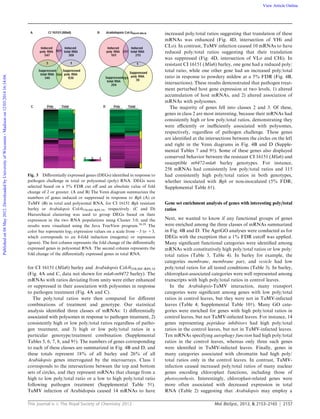
Total and polysomal RNAs were extracted from barley
seedling first leaves (PO:0007094) of both CI 16151 (Mla6)
and its fast-neutron deletion mutant, mla6-m9472,20,24
at 32
HAI with Bgh isolate 5874 (AVRa6) as well as from non-
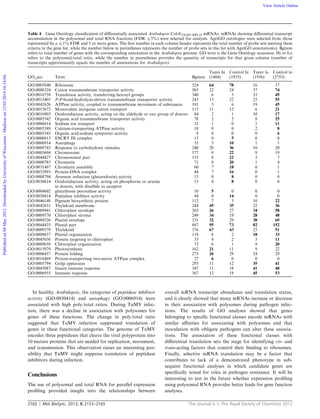
inoculated (control) plants of each genotype (Fig. 1A). Thirty-
two HAI was selected because a significant fraction of genes
are differentially expressed between resistant and susceptible
responses at this time point.7,8,24
Labeled copy RNA was pre-
pared from mRNAs in total and polysomal RNA. The analysis
herein presented is based on gene expression data collected from
2 genotypes Â2 treatments Â2 RNA fractions Â3 independent
biological replications using 24 Barley1 GeneChips.
Total and polysomal RNAs were extracted from rosette
leaves and flowers of transgenic Arabidopsis Columbia-0 (Col-0)
line, Col-035S:HF-RPL18,25
at 10 days after inoculation (DAI)
with TuMV-GFP as well as mock-inoculated control plants
(Fig. 1B). This transgenic line expresses Ribosomal Protein L
18 (RPL18) tagged with the 6x histidine and FLAG epitopes.
The FLAG epitope enables immunoprecipitation of complexes
containing the large ribosomal subunit, such as 80S ribosomes
and polysomes, with anti-FLAG antibodies.25
Messenger
RNAs that co-immunoprecipitate (co-IP) with these complexes
are associated with 80S ribosomes, and considered to be
actively translated.25
For simplicity, we hereafter refer to co-IP
RNA as polysomal RNA. The analysis presented herein is
based on gene expression data collected from 1 genotype Â2
treatments Â2 RNA fractions Â3 independent biological
replications using 12 Arabidopsis ATH1 GeneChips.
TuMV genomic RNA was expected to be actively translated
and associated with polysomes in the GFP-fluorescent leaves
that were sampled, and therefore, it was expected to co-IP with
HF-RPL18 in Col-035S:HF-RPL18 plants. Reverse transcriptase
(RT)-PCR of the polysomal RNA using primers to the TuMV
coat protein and an ACTIN8 (AT1G49240) control gene
showed that TuMV genomic RNA was associated with poly-
somes isolated from the infected samples (Fig. 1C).
Polysome content is similar in inoculated and control leaves
Before conducting microarray analyses, the effects of patho-
gen treatment on the overall polysome profiles were deter-
mined. This was done to determine if gene expression values
needed to be corrected for potential biases in the relative
mRNA abundance in the polysomal and total RNA popula-
tions. This correction would be necessary if the overall levels
of polysomes were significantly altered by pathogen treatment.5
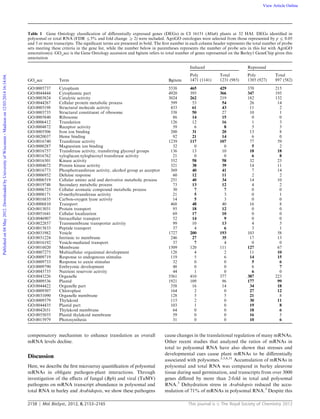
Barley and Arabidopsis Col-0 ribosome complexes were
fractionated on 10–40% sucrose-density gradients by ultra-
centrifugation and detected by absorbance at 254 nm (A254).
Representative profiles with peaks corresponding to the
Publishedon04May2012.DownloadedbyUniversityofWisconsin-Madisonon12/03/201416:14:04. View Article Online
This journal is c The Royal Society of Chemistry 2012 Mol. BioSyst., 2012, 8, 2153–2165 2155
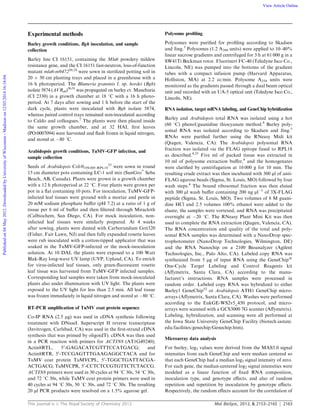
40S, 60S, 80S and polysome complexes are shown in Fig. 2A
and C. The average proportional areas under these profiles
were determined for the polysomal (dimer and larger) and
non-polysomal (40S, 60S, and 80S) RNA species from five
(barley) and seven (Arabidopsis) independent biological repli-
cations (Fig. 2B and D). The proportions of polysomal to
non-polysomal RNA were not significantly different between
pathogen-treated and control samples in either host species,
demonstrating that overall levels of polysomes were not
significantly altered.
Identification of differentially expressed genes (DEGs) in
response to pathogen treatment
DEGs were identified through the use of mixed linear models
that incorporated interactions between treatment and RNA
population. The mean log2 expression values arising from each
contrast statement were assessed for significance using the SAS
MIXED procedure to obtain p-values from which false dis-
covery rates (FDR; q-values) were derived.26,27
The mean log2
expression values for each gene and the associated statistics
from the contrast statements are provided in Supplemental
Table 1 (barley) and Supplemental Table 2 (Arabidopsis)w (see
Materials and Methods for details on the statistical analysis of
each data set). Probe sets were considered to represent DEGs
if they met a 5% FDR cutoff and changed by at least two-fold
in total RNA and/or polysomal RNA in response to pathogen
treatment.
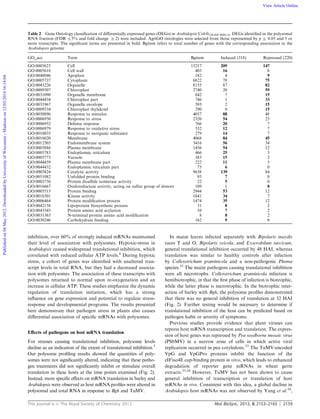
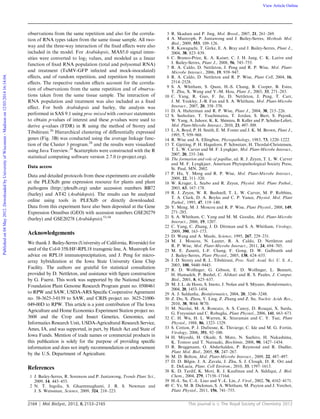
In resistant CI 16151 (Mla6) barley plants at 32 HAI with
Bgh, 3,505 probe sets detected DEGs in polysomal and total
RNA compared to non-inoculated controls (Fig. 3A).
However, no probe sets identified DEGs in the susceptible
mla6-m9472 plants at 32 HAI compared to the non-inoculated
control. In Arabidopsis Col-035S:HF-RPL18, 958 probe sets
identified DEGs in response to TuMV compared to the
mock-inoculated control (Fig. 3B). The majority of DEGs in
polysomal RNA shared the same profile of induction or
suppression as DEGs identified in total RNA in response to
pathogen treatment (Fig. 3A and B). However, four barley
and one Arabidopsis mRNAs are induced in one RNA
population and suppressed in the other (Fig. 3A and B).
Therefore, these data suggested that not all mRNAs responded
similarly to pathogen treatment in the two RNA populations.
Gene set enrichment analysis of DEGs
DEGs from resistant CI 16151 (Mla6) and Arabidopsis
Col-035S:HF-RPL18 were selected for gene ontology analysis
using AgriGO (http://bioinfo.cau.edu.cn/agriGO/).30
AgriGO
included 15 179 annotated H. vulgare genes represented on the
Barley1 GeneChip with an average of 1.37 annotations per
gene, and 22 479 annotations for the Arabidopsis ATH1
GeneChip with an average of 3.6 annotations each. Of barley
DEGs, 74% were associated with at least one annotation,
while over 99% of Arabidopsis DEGs had at least one annotation.
In these ontological classifications, DEGs were allowed to have
more than one annotation, and classes were considered signifi-
cantly overrepresented at a p-value cutoff of 0.05 and if repre-
sented by at least 5 DEGs (bold values in Table 1, Table 2).
The AgriGO analyses identified overrepresented functional
classes shared in common between the two pathosystems
(Table 1, Table 2, Supplemental Tables 3 and 4w). Major over-
represented GO categories among induced DEGs in CI 16151
Mla6 barley included defense response, ribosome, kinase activity,
and vesicle mediated transport. Overrepresented AgriGO categories
among down-regulated DEGs included response to auxin stimulus;
transferase activity, transferring glycosyl groups; and many
categories associated with nuclear genes encoding chloroplast
Fig. 1 Experimental systems. (A) The barley line CI 16151 carries the
Mla6 gene that confers resistance to Blumeria graminis f. sp. hordei
(Bgh) isolate 5874, which carries the corresponding avirulence gene
AVRa6. mla6-m9472 is a fast-neutron mla6 loss-of-function mutant
derived from CI 16151 susceptible to Bgh isolate 5874. The leaves of
inoculated and control plants were photographed at 7 DAI to illustrate
the resistant and susceptible phenotypes. (B) Transgenic Arabidopsis
Col-035S:HF-RPL18 plants were used in these experiments. Plants were
inoculated with TuMV-GFP (Infection) or mock-inoculated (Control)
and photographed under UV illumination at 10 DAI. Control plants
appear red due to chlorophyll fluorescence. Leaves from such plants
were used for extraction of total RNA and co-immunoprecipitation of
RNA with the anti-FLAG antibody (polysomal RNA). (C) RT-PCR
was used to detect Actin8 mRNA and TuMV coat protein (CP)
sequences in the co-immunoprecipitated (polysomal) RNA fraction
from infected and control Arabidopsis Col-035S:HF-RPL18.
Publishedon04May2012.DownloadedbyUniversityofWisconsin-Madisonon12/03/201416:14:04. View Article Online
2156 Mol. BioSyst., 2012, 8, 2153–2165 This journal is c The Royal Society of Chemistry 2012
functions such as photosynthesis (Table 1). AgriGO categories
that were shared with the Arabidopsis-TuMV pathosystem
included defense response and kinase activity among induced
DEGs and chloroplast-associated categories among down-
regulated DEGs (Table 2). In addition, the endomembrane system
and unfolded protein binding categories were overrepresented
among induced DEGs in response to TuMV. While many of
these processes have been previously implicated in host-pathogen
interactions, the addition of the polysomal RNA profiling data
suggests that many interesting gene expression responses that
occur in total RNA are correlated with polysomal RNA. These
data suggest that major groups of DEGs respond synchronously
in the transcriptome (total RNA) and translatome (polysomal
RNA) during attack by obligate pathogens.
Identification of mRNAs with poly/total ratios that were altered
by pathogen treatment
To further investigate the effects of pathogen treatment on
mRNA levels in total and polysomal RNA, hierarchical
clustering was performed to group the DEGs based on their
fold changes in the two RNA populations, and the results were
displayed as heatmaps (Fig. 3C and D).28,29
Most DEGs
had similar fold changes in polysomal and total RNA, demon-
strating that they were coordinately up or down regulated in
the RNA populations in response to pathogen treatment.
However, subsets of DEGs had altered expression in poly-
somal RNA and little or no change in total RNA and
vice-versa (highlighted with yellow bars in Fig. 3C and D).
The levels of the highlighted DEGs were compared in poly-
somal and total RNA. The observation that 16.9% of barley
DEGs and 9.5% of Arabidopsis Col-035S:HF-RPL18 DEGs
differed by 2-fold or more between the two RNA populations
suggested that some DEGs were also differentially associated
with polysomes.
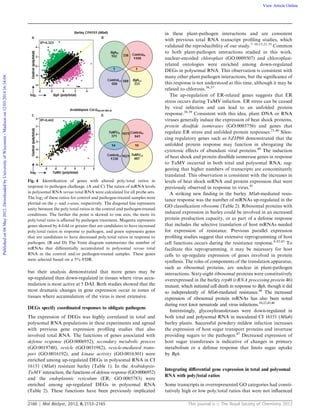
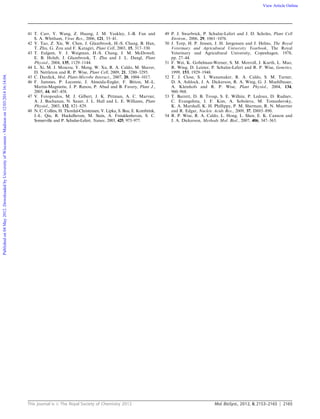
To determine the association of mRNAs with polysomes,
the ratio of mRNA abundance in the polysomal versus total
RNA (poly/total ratio) was calculated for each sample type.
The poly/total ratio of each gene under control conditions was
plotted against the poly/total ratio after pathogen treatment
Fig. 2 Polysome profiles of pathogen-treated and control barley and Arabidopsis plants. Profiles of polysomes isolated from CI 16151 (Mla6,
resistant) and mla6-m9472 (susceptible) barley at 32 HAI (A) or TuMV-GFP-infected and mock-inoculated Arabidopsis Col-035S:HF-RPL18 at
10 DAI (C). Representative polysome profiles are shown in A and C. Ribosome complexes were fractionated by centrifugation through a 10–40%
(w/v) sucrose density gradient and quantified by their absorbance at 254 nm (A254). (B and D) The ratios of polysomal (dimers and larger) to
non-polysomal (40S, 60S, 80S) complexes were calculated from the area under the profiles. The mean from independent biological replications is
presented (Æ standard error) for five independent barley replicates and seven independent Arabidopsis Col-035S:HF-RPL18 replicates.
Publishedon04May2012.DownloadedbyUniversityofWisconsin-Madisonon12/03/201416:14:04. View Article Online
This journal is c The Royal Society of Chemistry 2012 Mol. BioSyst., 2012, 8, 2153–2165 2157
for CI 16151 (Mla6) barley and Arabidopsis Col-035S:HF-RPL18
(Fig. 4A and C, data not shown for mla6-m9472 barley). The
mRNAs with ratios deviating from unity were either enhanced
or suppressed in their association with polysomes in response
to pathogen treatment (Fig. 4A and C).
The poly/total ratios were then compared for different
combinations of treatment and genotype. Our statistical
analysis identified three classes of mRNAs: 1) differentially
associated with polysomes in response to pathogen treatment, 2)
consistently high or low poly/total ratios regardless of patho-
gen treatment, and 3) high or low poly/total ratios in a
particular genotype/treatment combination (Supplemental
Tables 5, 6, 7, 8, and 9w). The numbers of genes corresponding
to each of these classes are summarized in Fig. 4B and D, and
these totals represent 18% of all barley and 26% of all
Arabidopsis genes interrogated by the microarrays. Class 1
corresponds to the intersections between the top and bottom
sets of circles, and they represent mRNAs that change from a
high to low poly/total ratio or a low to high poly/total ratio
following pathogen treatment (Supplemental Table 5w).
TuMV infection of Arabidopsis caused 14 mRNAs to have
increased poly/total ratios suggesting that translation of these
mRNAs was enhanced (Fig. 4D, intersection of VHi and
CLo). In contrast, TuMV infection caused 10 mRNAs to have
reduced poly/total ratios suggesting that their translation
was suppressed (Fig. 4D, intersection of VLo and CHi). In
resistant CI 16151 (Mla6) barley, one gene had a reduced poly/
total ratio, while one other gene had an increased poly/total
ratio in response to powdery mildew at a 5% FDR (Fig. 4B,
intersections). These results demonstrated that pathogen treat-
ment perturbed host gene expression at two levels, 1) altered
accumulation of host mRNAs, and 2) altered association of
mRNAs with polysomes.
The majority of genes fell into classes 2 and 3. Of these,
genes in class 2 are most interesting, because their mRNAs had
consistently high or low poly/total ratios, demonstrating they
were efficiently or inefficiently associated with polysomes,
respectively, regardless of pathogen challenge. These genes
are identified at the intersections between the circles on the left
and right in the Venn diagrams in Fig. 4B and D (Supple-
mental Tables 7 and 9w). Some of these genes also displayed
conserved behavior between the resistant CI 16151 (Mla6) and
susceptible m9472-mla6 barley genotypes. For instance,
258 mRNAs had consistently low poly/total ratios and 115
had consistently high poly/total ratios in both genotypes,
whether inoculated with Bgh or non-inoculated (5% FDR;
Supplemental Table 6w).
Gene set enrichment analysis of genes with interesting poly/total
ratios
Next, we wanted to know if any functional groups of genes
were enriched among the three classes of mRNAs summarized
in Fig. 4B and D. The AgriGO analyses were conducted as for
DEGs with the exception that a 1% FDR cutoff was applied.
Many significant functional categories were identified among
mRNAs with constitutively high poly/total ratios or low poly/
total ratios (Table 3, Table 4). In barley for example, the
categories membrane, membrane part, and vesicle had low
poly/total ratios for all tested conditions (Table 3). In barley,
chloroplast-associated categories were well represented among
transcripts with high poly/total ratios in control leaves.
In the Arabidopsis-TuMV interaction, many transport
categories were significant among genes with low poly/total
ratios in control leaves, but they were not in TuMV-infected
leaves (Table 4; Supplemental Table 10w). Many GO cate-
gories were enriched for genes with high poly/total ratios in
control leaves, but not TuMV-infected leaves. For instance, 14
genes representing peptidase inhibitors had high poly/total
ratios in the control leaves, but not in TuMV-infected leaves.
Ten mRNAs specifying autophagy function had high poly/total
ratios in the control leaves, whereas only three such genes
were identified in TuMV-infected leaves. Finally, genes in
many categories associated with chromatin had high poly/
total ratios only in the control leaves. In contrast, TuMV-
infection caused increased poly/total ratios of many nuclear
genes encoding chloroplast functions, including those of
photosynthesis. Interestingly, chloroplast-related genes were
more often associated with decreased expression in total
RNA (Table 2) suggesting that Arabidopsis may employ a
Fig. 3 Differentially expressed genes (DEGs) identified in response to
pathogen challenge in total or polysomal (poly) RNA. DEGs were
selected based on a 5% FDR cut off and an absolute value of fold
change of 2 or greater. (A and B) The Venn diagram summarizes the
numbers of genes induced or suppressed in response to Bgh (A) or
TuMV (B) in total and polysomal RNA, for CI 16151 Bgh resistant
barley or Arabidopsis Col-035S:HF-RPL18, respectively. (C and D)
Hierarchical clustering was used to group DEGs based on their
expression in the two RNA populations using Cluster 3.0, and the
results were visualized using the Java TreeView program.28,29
The
color bar represents log2 expression values on a scale from À3 to +3,
which corresponds to an 8-fold induction (magenta) or repression
(green). The first column represents the fold change of the differentially
expressed genes in polysomal RNA. The second column represents the
fold change of the differentially expressed genes in total RNA.
Publishedon04May2012.DownloadedbyUniversityofWisconsin-Madisonon12/03/201416:14:04. View Article Online
2158 Mol. BioSyst., 2012, 8, 2153–2165 This journal is c The Royal Society of Chemistry 2012
compensatory mechanism to enhance translation as overall
mRNA levels decline.
Discussion
Here, we describe the first microarray quantification of polysomal
mRNAs in obligate pathogen-plant interactions. Through
investigation of the effects of fungal (Bgh) and viral (TuMV)
pathogens on mRNA transcript abundance in polysomal and
total RNA in barley and Arabidopsis, we show these pathogens
cause changes in the translational regulation of many mRNAs.
Other recent studies that analyzed the ratios of mRNAs in
total to polysomal RNA have also shown that stresses and
developmental cues cause plant mRNAs to be differentially
associated with polysomes.3,5,6,31
Accumulation of mRNAs in
polysomal and total RNA was compared in barley aleurone
tissue during seed germination, and transcripts from over 3000
genes differed by more than 2-fold in total and polysomal
RNA.3
Dehydration stress in Arabidopsis reduced the accu-
mulation of 71% of mRNAs in polysomal RNA.5
Despite this
Table 1 Gene Ontology classification of differentially expressed genes (DEGs) in CI 16151 (Mla6) plants at 32 HAI. DEGs identified in
polysomal or total RNA (FDR r5% and fold change Z 2) were included. AgriGO ontologies were selected from those represented by p r 0.05
and 5 or more transcripts. The significant terms are presented in bold. The first number in each column header represents the total number of probe
sets meeting these criteria in the gene list, while the number below in parentheses represents the number of probe sets in this list with AgriGO
annotation(s). GO_acc is the Gene Ontology accession and bgitem refers to total number of genes represented on the Barley1 GeneChip given this
annotation
GO_acc Term Bgitem
Induced Repressed
Poly Total Poly Total
1471 (1141) 1231 (985) 1385 (927) 897 (582)
GO:0005737 Cytoplasm 5538 465 429 370 215
GO:0044444 Cytoplasmic part 4920 395 366 347 195
GO:0003824 Catalytic activity 3024 262 219 182 132
GO:0044267 Cellular protein metabolic process 599 53 54 26 14
GO:0005198 Structural molecule activity 433 61 43 11 2
GO:0003735 Structural constituent of ribosome 338 50 27 10 1
GO:0005840 Ribosome 86 14 15 0 0
GO:0006412 Translation 126 12 16 1 3
GO:0004872 Receptor activity 59 6 8 5 3
GO:0005506 Iron ion binding 200 31 20 13 8
GO:0020037 Heme binding 92 21 14 6 0
GO:0016740 Transferase activity 1239 117 107 77 59
GO:0000287 Magnesium ion binding 32 0 0 5 2
GO:0016757 Transferase activity, transferring glycosyl groups 136 13 10 18 18
GO:0016762 xyloglucan:xyloglucosyl transferase activity 21 0 0 6 8
GO:0016301 Kinase activity 552 58 58 32 23
GO:0004672 Protein kinase activity 321 38 39 14 11
GO:0016773 Phosphotransferase activity, alcohol group as acceptor 369 40 41 7 14
GO:0006952 Defense response 60 12 11 2 2
GO:0006519 Cellular amino acid and derivative metabolic process 251 40 34 14 10
GO:0019748 Secondary metabolic process 73 13 12 4 2
GO:0006725 Cellular aromatic compound metabolic process 30 7 7 0 0
GO:0008171 O-methyltransferase activity 21 5 3 0 1
GO:0016835 Carbon-oxygen lyase activity 14 5 3 0 0
GO:0006810 Transport 468 48 40 16 8
GO:0015031 Protein transport 95 18 12 0 0
GO:0051641 Cellular localization 69 17 10 0 0
GO:0046907 Intracellular transport 52 14 9 0 0
GO:0022857 Transmembrane transporter activity 99 10 13 4 5
GO:0015833 Peptide transport 37 4 6 3 1
GO:0031982 Vesicle 1727 200 193 103 58
GO:0031224 Intrinsic to membrane 246 27 35 17 13
GO:0016192 Vesicle-mediated transport 37 7 4 0 0
GO:0016020 Membrane 1509 120 111 127 67
GO:0007275 Multicellular organismal development 128 4 2 11 10
GO:0009719 Response to endogenous stimulus 119 5 6 14 15
GO:0009733 Response to auxin stimulus 32 0 0 5 6
GO:0009790 Embryonic development 48 0 0 6 7
GO:0045735 Nutrient reservoir activity 44 1 0 6 0
GO:0043226 Organelle 5561 410 377 387 223
GO:0009536 Plastid 1921 109 96 177 99
GO:0044422 Organelle part 358 16 14 34 18
GO:0009507 Chloroplast 164 2 0 27 12
GO:0031090 Organelle membrane 128 5 5 21 8
GO:0009579 Thylakoid 115 2 0 30 11
GO:0044435 Plastid part 103 1 0 19 8
GO:0042651 Thylakoid membrane 64 0 0 18 6
GO:0055035 Plastid thylakoid membrane 59 0 0 16 5
GO:0015979 Photosynthesis 31 0 0 10 6
Publishedon04May2012.DownloadedbyUniversityofWisconsin-Madisonon12/03/201416:14:04. View Article Online
This journal is c The Royal Society of Chemistry 2012 Mol. BioSyst., 2012, 8, 2153–2165 2159
inhibition, over 60% of strongly induced mRNAs maintained
their level of association with polysomes. Hypoxic-stress in
Arabidopsis caused widespread translational inhibition, which
correlated with reduced cellular ATP levels.6
During hypoxic
stress, a cohort of genes was identified with unaltered tran-
script levels in total RNA, but they had a decreased associa-
tion with polysomes. The association of these transcripts with
polysomes returned to normal upon re-oxygenation and an
increase in cellular ATP. These studies emphasize the dynamic
regulation of translation initiation, which has a strong
influence on gene expression and potential to regulate stress-
response and developmental programs. The results presented
here demonstrate that pathogen stress in plants also causes
differential association of specific mRNAs with polysomes.
Effects of pathogens on host mRNA translation
For stresses causing translational inhibition, polysome levels
decline as an indication of the extent of translational inhibition.5
Our polysome profiling results showed the quantities of poly-
somes were not significantly altered, indicating that these patho-
gen treatments did not significantly inhibit or stimulate overall
translation in these hosts at the time points examined (Fig. 2).
Instead, more specific effects on mRNA translation in barley and
Arabidopsis were observed as host mRNA profiles were altered in
polysomal and total RNA in response to Bgh and TuMV.
In maize leaves infected separately with Bipolaris maydis
races T and O, Bipolaris zeicola, and Exserohilum turcicum,
general translational inhibition occurred by 48 HAI, whereas
translation was similar to healthy controls after infection
by Colletotrichum graminicola and a non-pathogenic Phoma
species.32
The maize pathogens causing translational inhibition
were all necrotrophs. Colletotrichum graminicola infection is
hemibiotrophic, in that the first phase of infection is biotrophic,
while the latter phase is necrotrophic. In the biotrophic inter-
action of barley with Bgh, the polysome profiles demonstrated
that there was no general inhibition of translation at 32 HAI
(Fig. 2). Further testing would be necessary to determine if
translational inhibition of the host can be predicted based on
pathogen habit or severity of symptoms.
Previous studies provide evidence that plant viruses can
repress host mRNA transcription and translation. The expres-
sion of host genes was repressed by Pea seedborne mosaic virus
(PSbMV) in a narrow zone of cells in which active viral
replication occurred in pea cotyledons.23
The TuMV-encoded
VpG and VpGPro proteins inhibit the function of the
eIFiso4E cap-binding protein in vitro, which leads to enhanced
degradation of reporter gene mRNAs in wheat germ
extracts.33,34
However, TuMV has not been shown to cause
general inhibition of transcription or translation of host
mRNAs in vivo. Consistent with this idea, a global decline in
Arabidopsis host mRNAs was not observed by Yang et al.10
,
Table 2 Gene Ontology classification of differentially expressed genes (DEGs) in Arabidopsis Col-035S:HF-RPL18. DEGs identified in the polysomal
RNA fraction (FDR r5% and fold change Z 2) were included. AgriGO ontologies were selected from those represented by p r 0.05 and 5 or
more transcripts. The significant terms are presented in bold. Bgitem refers to total number of genes with the corresponding annotation in the
Arabidopsis genome
GO_acc Term Bgitem Induced (318) Repressed (220)
GO:0005623 Cell 15217 209 147
GO:0005618 Cell wall 403 16 8
GO:0048046 Apoplast 182 4 9
GO:0005737 Cytoplasm 6822 78 75
GO:0043226 Organelle 8155 87 82
GO:0009507 Chloroplast 2740 20 59
GO:0031090 Organelle membrane 842 7 15
GO:0044434 Chloroplast part 746 1 33
GO:0031967 Organelle envelope 595 2 15
GO:0009534 Chloroplast thylakoid 290 0 15
GO:0050896 Response to stimulus 4057 88 48
GO:0006950 Response to stress 2320 54 23
GO:0006952 Defense response 766 20 7
GO:0006979 Response to oxidative stress 332 12 7
GO:0010035 Response to inorganic substance 279 14 7
GO:0016020 Membrane 4068 84 45
GO:0012505 Endomembrane system 3416 56 34
GO:0005886 Plasma membrane 1456 54 12
GO:0005783 Endoplasmic reticulum 466 25 3
GO:0005773 Vacuole 383 15 2
GO:0044459 Plasma membrane part 222 11 5
GO:0044432 Endoplasmic reticulum part 75 6 0
GO:0003824 Catalytic activity 9638 139 84
GO:0051082 Unfolded protein binding 93 7 0
GO:0003756 Protein disulfide isomerase activity 22 5 0
GO:0016667 Oxidoreductase activity, acting on sulfur group of donors 109 1 8
GO:0005515 Protein binding 2944 53 12
GO:0016301 Kinase activity 1641 34 7
GO:0006464 Protein modification process 1474 35 12
GO:0042158 Lipoprotein biosynthetic process 31 8 2
GO:0043543 Protein amino acid acylation 10 7 2
GO:0031365 N-terminal protein amino acid modification 8 8 2
GO:0030246 Carbohydrate binding 162 9 0
Publishedon04May2012.DownloadedbyUniversityofWisconsin-Madisonon12/03/201416:14:04. View Article Online
2160 Mol. BioSyst., 2012, 8, 2153–2165 This journal is c The Royal Society of Chemistry 2012
but their analysis demonstrated that more genes may be
up-regulated than down-regulated in tissues where virus accu-
mulation is most active at 5 DAI. Both studies showed that the
most dramatic changes in gene expression occur in zones of
tissues where accumulation of the virus is most extensive.
DEGs specify coordinated responses to obligate pathogens
The expression of DEGs was highly correlated in total and
polysomal RNA populations in these experiments and agreed
with previous gene expression profiling studies that also
involved total RNA. The functions of genes associated with
defense response (GO:0006952), secondary metabolic process
(GO:0019748), vesicle (GO:0031982), vesicle-mediated trans-
port (GO:0016192), and kinase activity (GO:0016301) were
enriched among up-regulated DEGs in polysomal RNA in CI
16151 (Mla6) resistant barley (Table 1). In the Arabidopsis-
TuMV interaction, the functions of defense response (GO:0006952)
and the endoplasmic reticulum (ER; GO:0005783) were
enriched among up-regulated DEGs in polysomal RNA
(Table 2). These functions have been previously implicated
in these plant-pathogen interactions and are consistent
with previous total RNA transcript profiling studies, which
validated the reproducibility of our study.7–10,15,21,35
Common
to both plant-pathogen interactions studied in this work,
nuclear-encoded chloroplast (GO:0009507) and chloroplast-
related ontologies were enriched among down-regulated
DEGs in polysomal RNA. This observation is consistent with
many other plant pathogen interactions, but the significance of
this response is not understood at this time, although it may be
related to chlorosis.36,37
The up-regulation of ER-related genes suggests that ER
stress occurs during TuMV infection. ER stress can be caused
by viral infection and can lead to an unfolded protein
response.38,39
Consistent with this idea, plant DNA or RNA
viruses generally induce the expression of heat shock proteins,
protein disulfide isomerases (GO:0003756) and genes that
regulate ER stress and unfolded protein responses.21,40
Silen-
cing regulatory genes such as bZIP60 demonstrated that the
unfolded protein response may function in abrogating the
cytotoxic effects of abundant viral proteins.40
The induction
of heat shock and protein disulfide isomerase genes in response
to TuMV occurred in both total and polysomal RNA, sug-
gesting that higher numbers of transcripts are concomitantly
translated. This observation is consistent with the increases in
levels of heat shock mRNA and protein expression that were
previously observed in response to virus.41
A striking new finding in the barley Mla6-mediated resis-
tance response was the number of mRNAs up-regulated in the
GO classification ribosome (Table 2). Ribosomal proteins with
induced expression in barley could be involved in an increased
protein production capacity, or as part of a defense response
that includes the selective translation of host mRNAs needed
for expression of resistance. Previous parallel expression
profiling studies suggest that extensive reprogramming of host
cell functions occurs during the resistance response.8,42,43
To
facilitate this reprogramming, it may be necessary for host
cells to up-regulate expression of genes involved in protein
synthesis. The roles of components of the translation apparatus,
such as ribosomal proteins, are unclear in plant-pathogen
interactions. Sixty-eight ribosomal proteins were constitutively
overexpressed in the barley rrp46 (rRNA processing protein 46)
mutant, which initiated cell death in response to Bgh, though it did
so independently of Mla6-mediated resistance.44
The increased
expression of ribosomal protein mRNAs has also been noted
during root knot nematode and virus infections.10,22,45,46
Interestingly, glycosyltransferases were down-regulated in
both total and polysomal RNA in inoculated CI 16151 (Mla6)
barley plants. Successful powdery mildew infection increases
the expression of host sugar transport proteins and invertase
providing sugars to the pathogen.47
Decreased expression of
host sugar transferases is indicative of changes in primary
metabolism or a defense response that limits sugar uptake
by Bgh.
Integrating differential gene expression in total and polysomal
RNA with poly/total ratios
Some transcripts in overrepresented GO categories had consti-
tutively high or low poly/total ratios that were not influenced
Fig. 4 Identification of genes with altered poly/total ratios in
response to pathogen challenge. (A and C) The ratios of mRNA levels
in polysomal RNA versus total RNA were calculated for all probe sets.
The log2 of these ratios for control and pathogen-treated samples were
plotted on the y- and x-axes, respectively. The diagonal line represents
unity between the poly/total ratios in the control and pathogen-treated
conditions. The further the point is skewed to one axis, the more its
poly/total ratio is affected by pathogen treatment. Magenta represents
genes skewed by 4-fold or greater that are candidates to have increased
poly/total ratios in response to pathogen, and green represents genes
that are candidates to have decreased poly/total ratios in response to
pathogen. (B and D) The Venn diagram summarizes the number of
mRNAs that differentially accumulated in polysomal versus total
RNA in the control and/or pathogen-treated samples. These genes
were selected based on a 5% FDR.
Publishedon04May2012.DownloadedbyUniversityofWisconsin-Madisonon12/03/201416:14:04. View Article Online
This journal is c The Royal Society of Chemistry 2012 Mol. BioSyst., 2012, 8, 2153–2165 2161
by pathogen treatment at the time points examined. In
barley, the terms cytoplasm (GO:0005737), cytoplasmic part
(GO:0044444), vesicle (GO:0031982), intrinsic to membrane
(GO:0031224), and membrane (GO:0016020) were enriched
among genes that had low poly/total ratios in inoculated
and control leaves from both genotypes. These GO categories
were also significant among induced DEGs during the barley
resistance response. Interestingly, the terms endoplasmic
reticulum (GO:0005783) and Golgi apparatus (GO:0005794),
which is associated with vesicles and membrane functions,
also have a relatively low poly/total ratio although they are
not enriched in the barley DEG list. In barley, genes encoding
SNARE proteins that mediate vesicle transport are associated
with resistance through the delivery of antimicrobial com-
pounds at the sites of attempted fungal penetration.48
The
expression of genes, such as these, with consistent poly/total
ratios is expected to be controlled more at the transcriptional
level than at the translational level during plant defense
responses.
DEGs annotated with chloroplast-related terms were mostly
down-regulated in response to pathogen stress in these hosts. In
barley, genes with chloroplast function had a high poly/total
ratio in control leaves. The decreased mRNA in both RNA
populations coupled with a shift of these transcripts away from a
relatively high poly/total ratio (Table 3) would be expected to
lead to a sharp decrease in nuclear-encoded chloroplast proteins.
This response correlates with reduced photosynthetic activity
during the resistance response.49
The decreased accumulation
of transcripts encoding chloroplast functions was also apparent
in the Arabidopsis-TuMV interaction. Interestingly in that inter-
action, a significant number of chloroplast associated transcripts,
including those specifying photosynthesis (GO:0015979)
responded to TuMV infection by becoming more highly asso-
ciated with polysomal RNA. This suggests the host attempted to
compensate for the decreased accumulation of transcripts from
these genes during viral infection. Thus, the expression of genes
with chloroplast functions appears to be regulated at multiple
levels and in different ways depending on the interaction.
Table 3 Gene Ontology classification of differentially associated barley mRNAs among the different treatment and genotype combinations.
mRNAs showing differential transcript accumulation in the polysomal and total RNA fractions (FDR r5%) were selected for analysis. AgriGO
ontologies are included if represented by a r1% FDR and 5 or more genes. The first number in each column header represents the total number of
probe sets meeting these criteria in the gene list, while the number below in parentheses represents the number of probe sets in this list with AgriGO
annotation(s). GO term is the Gene Ontology accession, bgitem refers to total number of genes represented on the Barley1 GeneChip given this
annotation, and p/t is the polysomal/total ratio
GO_acc Term Bgitem
Susceptible (mla6-m9472) Resistant [CI 16151 (Mla6)]
Control Inoculated Control Inoculated
High p/t Low p/t High p/t Low p/t High p/t Low p/t High p/t Low p/t
1178
(897)
1204
(911)
424
(358)
458
(322)
1505
(1256)
1098
(797)
529
(445)
923
(717)
GO:0009536 Plastid 1921 195 52 80 19 288 38 100 34
GO:0009507 Chloroplast 164 25 2 7 0 37 2 13 0
GO:0009579 Thylakoid 115 20 0 7 0 36 0 10 0
GO:0042651 Thylakoid membrane 64 14 0 0 0 23 0 7 0
GO:0044422 Organelle part 358 42 9 10 0 56 4 15 0
GO:0044435 Plastid part 103 19 1 5 0 28 1 9 0
GO:0031090 Organelle membrane 128 16 5 5 0 28 0 8 0
GO:0043234 Protein complex 223 19 7 10 0 34 3 15 0
GO:0005996 Monosaccharide metabolic process 12 3 1 2 0 6 0 5 2
GO:0006006 glucose metabolic process 10 3 0 2 0 6 0 5 0
GO:0006066 Alcohol metabolic process 16 3 3 2 0 6 0 5 0
GO:0044262 Cellular carbohydrate metabolic process 25 5 3 2 0 7 0 6 0
GO:0016469 Proton-transporting two-sector ATPase
complex
33 6 2 3 0 11 0 6 0
GO:0033178 Proton-transporting two-sector ATPase
complex, catalytic domain
19 5 1 2 0 7 0 5 0
GO:0045259 Proton-transporting ATP synthase
complex
24 5 0 3 0 9 0 6 0
GO:0045261 Proton-transporting ATP synthase
complex, catalytic core F(1)
14 4 0 2 0 6 0 5 0
GO:0016020 Membrane 1509 78 175 21 74 107 176 32 199
GO:0031224 Intrinsic to membrane 246 8 32 1 18 11 33 1 31
GO:0044425 Membrane part 318 15 38 5 18 24 33 7 32
GO:0031982 Vesicle 1727 44 252 13 89 54 221 15 194
GO:0005623 Cell 7408 432 580 190 198 615 496 221 476
GO:0044444 Cytoplasmic part 4920 294 383 137 133 429 318 152 290
GO:0005737 Cytoplasm 5538 322 427 161 139 483 348 178 321
GO:0016757 Transferase activity, transferring glycosyl
groups
136 5 12 3 13 6 20 1 18
GO:0016762 xyloglucan:xyloglucosyl transferase
activity
21 0 7 0 7 0 8 0 5
GO:0006810 Transport 468 14 41 8 16 27 39 8 42
GO:0005215 Transporter activity 362 15 36 6 17 20 31 3 42
GO:0005783 Endoplasmic reticulum 68 0 19 1 5 1 10 0 12
GO:0005794 Golgi apparatus 75 2 11 2 4 4 13 0 10
Publishedon04May2012.DownloadedbyUniversityofWisconsin-Madisonon12/03/201416:14:04. View Article Online
2162 Mol. BioSyst., 2012, 8, 2153–2165 This journal is c The Royal Society of Chemistry 2012
In healthy Arabidopsis, the categories of peptidase inhibitor
activity (GO:0030414) and autophagy (GO:0006914) were
associated with high poly/total ratios. During TuMV infec-
tion, there was a decline in association with polysomes for
genes of these functions. The change in poly/total ratio
suggested that TuMV infection suppressed translation of
genes in these functional categories. The genome of TuMV
encodes three peptidases that cleave the viral polyprotein into
10 mature proteins that are needed for replication, movement,
and transmission. This observation raises an interesting pos-
sibility that TuMV might suppress translation of peptidase
inhibitors during infection.
Conclusions
The use of polysomal and total RNA for parallel expression
profiling provided insight into the relationships between
overall mRNA transcript abundance and translation status,
and it clearly showed that many mRNAs increase or decrease
in their association with polysomes during pathogen infec-
tions. The results of GO analyses showed that genes
belonging to specific functional classes encode mRNAs with
similar affinities for associating with polysomes and that
inoculation with obligate pathogens can alter these associa-
tions. The association of these functional classes with
differential translation sets the stage for identifying cis- and
trans-acting factors that control their binding to ribosomes.
Finally, selective mRNA translation may be a factor that
contributes to lack of a demonstrated phenotype in sub-
sequent functional analyses in which candidate genes are
specifically tested for roles in pathogen resistance. It will be
interesting to test in the future whether expression profiling
using polysomal RNA provides better leads for gene function
analyses.
Table 4 Gene Ontology classification of differentially associated Arabidopsis Col-035S:HF-RPL18 mRNAs. mRNAs showing differential transcript
accumulation in the polysomal and total RNA fractions (FDR r5%) were selected for analysis. AgriGO ontologies were selected from those
represented by a r1% FDR and 5 or more genes. The first number in each column header represents the total number of probe sets meeting these
criteria in the gene list, while the number below in parentheses represents the number of probe sets in this list with AgriGO annotation(s). Bgitem
refers to total number of genes with the corresponding annotation in the Arabidopsis genome. GO term is the Gene Ontology accession. Hi or Lo
refers to the polysomal/total ratio, while the number in parentheses provides the quantity of transcripts for that given column (number of
transcripts approximately equals the number of annotations for Arabidopsis)
GO_acc Term Bgitem
Tumv hi
(1404)
Control hi
(1935)
Tumv lo
(1936)
Control lo
(2753)
GO:0005840 Ribosome 524 64 78 16 17
GO:0008324 Cation transmembrane transporter activity 503 22 24 37 74
GO:0016758 Transferase activity, transferring hexosyl groups 340 6 3 33 45
GO:0015405 P-P-bond-hydrolysis-driven transmembrane transporter activity 243 15 22 25 55
GO:0042626 ATPase activity, coupled to transmembrane movement of substances 181 5 6 19 45
GO:0015672 Monovalent inorganic cation transport 115 11 12 6 21
GO:0016903 Oxidoreductase activity, acting on the aldehyde or oxo group of donors 84 2 1 10 17
GO:0005342 Organic acid transmembrane transporter activity 78 2 2 8 25
GO:0006814 Sodium ion transport 21 1 0 1 11
GO:0005388 Calcium-transporting ATPase activity 18 0 0 2 8
GO:0005343 Organic acid:sodium symporter activity 8 0 0 0 6
GO:0000815 ESCRT III complex 13 0 5 0 0
GO:0006914 Autophagy 35 3 10 1 1
GO:0009743 Response to carbohydrate stimulus 240 20 36 10 20
GO:0005694 Chromosome 177 8 22 9 19
GO:0044427 Chromosomal part 133 8 22 3 7
GO:0000785 Chromatin 71 8 20 1 4
GO:0031497 Chromatin assembly 60 7 18 0 1
GO:0032993 Protein-DNA complex 44 7 16 0 1
GO:0008794 Arsenate reductase (glutaredoxin) activity 15 0 8 0 0
GO:0030614 Oxidoreductase activity, acting on phosphorus or arsenic
in donors, with disulfide as acceptor
15 0 8 0 0
GO:0004602 glutathione peroxidase activity 10 5 0 0 0
GO:0030414 Peptidase inhibitor activity 44 0 14 0 0
GO:0046148 Pigment biosynthetic process 112 7 3 10 22
GO:0042651 Thylakoid membrane 244 45 35 22 36
GO:0009941 Chloroplast envelope 265 26 27 34 58
GO:0009570 Chloroplast stroma 249 34 19 28 48
GO:0009526 Plastid envelope 331 32 29 38 69
GO:0044435 Plastid part 867 95 73 82 152
GO:0009579 Thylakoid 376 67 43 25 51
GO:0009657 Plastid organization 119 8 2 18 33
GO:0045036 Protein targeting to chloroplast 33 4 2 5 11
GO:0009658 Chloroplast organization 73 6 1 9 20
GO:0015979 Photosynthesis 162 21 11 9 22
GO:0006457 Protein folding 275 26 29 24 29
GO:0016469 Proton-transporting two-sector ATPase complex 27 6 0 0 0
GO:0005794 Golgi apparatus 293 11 12 35 41
GO:0045087 Innate immune response 347 11 18 41 48
GO:0006955 Immune response 367 12 19 45 53
Publishedon04May2012.DownloadedbyUniversityofWisconsin-Madisonon12/03/201416:14:04. View Article Online
This journal is c The Royal Society of Chemistry 2012 Mol. BioSyst., 2012, 8, 2153–2165 2163
Experimental methods
Barley growth conditions, Bgh inoculation, and sample
collection
Barley line CI 16151, containing the Mla6 powdery mildew
resistance gene, and the CI 16151 fast-neutron, loss-of-function
mutant mla6-m947220,24
were sown in sterilized potting soil in
20 Â 30 cm planting trays and placed in a greenhouse with a
16 h photoperiod. The Blumeria graminis f. sp. hordei (Bgh)
isolate 5874 (AVRa6)50,51
was propagated on barley cv. Manchuria
(CI 2330) in a growth chamber at 18 1C with a 16 h photo-
period. At 7 days after sowing and 1 h before the start of the
dark cycle, plants were inoculated with Bgh isolate 5874,
whereas paired control trays remained non-inoculated according
to Caldo and colleagues.7
The plants were then placed inside
the same growth chamber, and at 32 HAI, first leaves
(PO:0007094) were harvested and flash frozen in liquid nitrogen,
and stored at À80 1C.
Arabidopsis growth conditions, TuMV-GFP infection, and
sample collection
Seeds of Arabidopsis Col-035S:HF-RPL18
25
were sown in round
15 cm diameter pots containing LC-1 soil mix (SunGro
s
Seba
Beach, AB, Canada). Plants were grown in a growth chamber
with a 12 h photoperiod at 22 1C. Four plants were grown per
pot in a flat containing 10 pots. For inoculation, TuMV-GFP-
infected leaf tissues were ground with a mortar and pestle in
20 mM sodium phosphate buffer (pH 7.2) at a ratio of 1 g of
tissue per 6 ml of buffer and then filtered through Miracloth
(Calbiochem, San Diego, CA). For mock inoculation, non-
infected leaf tissues were similarly prepared. At 4 weeks
after sowing, plants were dusted with Carborundum Grit320
(Fisher, Fair Lawn, NJ) and then fully expanded rosette leaves
were rub inoculated with a cotton-tipped applicator that was
soaked in the TuMV-GFP-infected or the mock-inoculation
solution. At 10 DAI, the plants were exposed to a 100 Watt
Blak-Ray long-wave UV lamp (UVP, Upland, CA). To enrich
for virus-infected leaf tissues, only green-fluorescent rosette
leaf tissue was harvested from TuMV-GFP infected samples.
Corresponding leaf samples were taken from mock-inoculated
plants also under illumination with UV light. The plants were
exposed to the UV light for less than 2.5 min. All leaf tissue
was frozen immediately in liquid nitrogen and stored at À80 1C.
RT-PCR amplification of TuMV coat protein sequence
Co-IP RNA (2.5 mg) was used in cDNA synthesis following
treatment with DNaseI. Superscript II reverse transcriptase
(Invitrogen, Carlsbad, CA) was used in the first-strand cDNA
synthesis that was primed by oligo(dT). cDNA was then used
in a PCR reaction with primers for ACTIN8 (AT1G49240);
Actin8RTL, 50
-GAGACATCGTTTCCATGACG; and
Actin8RTR, 50
-TCCGAGTTTGAAGAGGCTACA and for
TuMV coat protein TuMVCPL, 50
-TGGCTGATTACGA-
ACTGACG; TuMVCPR, 50
-CCTCTCCGTGTTCTCTACCG.
ACTIN8 primers were used in 30 cycles at 94 1C 30s, 54 1C 30s,
and 72 1C 30s, while TuMV coat protein primers were used in
40 cycles at 94 1C 30s, 50 1C 30s, and 72 1C 30s. The resulting
20 ml PCR products were resolved on a 1.5% agarose gel.
Polysome profiling
Polysomes were purified for profiling according to Skadsen
and Jing.3
Polysomes (1.2 A260 units) were applied to 10–40%
linear sucrose gradients and centrifuged for 3 h at 61 000 g in a
SW41Ti Beckman rotor. Fluorinert FC-40 (Teledyne Isco Co.,
Lincoln, NE) was pumped into the bottoms of the gradient
tubes with a compact infusion pump (Harvard Apparatus,
Holliston, MA) at 2.2 cc/min. Polysome A254 units were
monitored as the gradients passed through a dual beam optical
unit and recorded with an UA-5 optical unit (Teledyne Isco Co.,
Lincoln, NE).
RNA isolation, target mRNA labeling, and GeneChip hybridization
Barley and Arabidopsis total RNA was isolated using a hot
(60 1C) phenol/guanidine thiocyanate method.8
Barley poly-
somal RNA was isolated according to Skadsen and Jing.3
RNAs were purified further using the RNeasy Midi kit
(Qiagen, Valencia, CA). The Arabidopsis polysomal RNA
fraction was isolated via the FLAG epitope fused to RPL18
as described.4,25
Five ml of packed tissue was extracted in
10 ml of polysome extraction buffer,4
and the homogenates
were clarified by centrifugation at 16 000 g for 10 min. The
resulting crude extract was then incubated with 300 ml of anti-
FLAG agarose beads (Sigma, St. Louis, MO) followed by four
wash steps.4
The bound ribosomal fraction was then eluted
with 300 ml wash buffer containing 200 ng mlÀ1
of 3X-FLAG
peptide (Sigma, St. Louis, MO). Two volumes of 8 M guani-
dine HCl and 2.5 volumes 100% ethanol were added to the
eluate, the samples were vortexed, and RNA was precipitated
overnight at À20 1C. The RNeasy Plant Mini Kit was then
used to complete the RNA extraction (Qiagen, Valencia, CA).
The RNA concentration and quality of the total and poly-
somal RNA samples was determined with a NanoDrop spec-
trophotometer (NanoDrop Technologies, Wilmington, DE)
and the RNA Nanochip on a 2100 Bioanalyzer (Agilent
Technologies, Inc., Palo Alto, CA). Labeled copy RNA was
synthesized from 5 mg of input RNA using the GeneChips
One-Cycle Target Labeling and Control Reagents kit
(Affymetrix, Santa Clara, CA) according to the manu-
facturer’s instructions. RNA samples were processed in
random order. Labeled copy RNA was hybridized to either
Barley1 GeneChip52
or Arabidopsis ATH1 GeneChip micro-
arrays (Affymetrix, Santa Clara, CA). Washes were performed
according to the EukGE-WS2v5_450 protocol, and micro-
arrays were scanned with a GCS3000 7G scanner (Affymetrix).
Labeling, hybridization, and scanning were all performed at
the Iowa State University GeneChip Facility (biotech.iastate.
edu/facilities/genechip/Genechip.htm).
Microarray data analysis
For barley, log2 values were derived from the MAS5.0 signal
intensities from each GeneChip and were median centered so
that each GeneChip had a median log2 signal intensity of zero.
For each gene, the median-centered log2 signal intensities were
modeled as a linear function of fixed RNA composition,
inoculation type, and genotype effects, and also of random
repetition and repetition by inoculation by genotype effects.
Respectively, the random effects account for the correlation of
Publishedon04May2012.DownloadedbyUniversityofWisconsin-Madisonon12/03/201416:14:04. View Article Online
2164 Mol. BioSyst., 2012, 8, 2153–2165 This journal is c The Royal Society of Chemistry 2012
observations from the same repetition and also for the correla-
tion of RNA types taken from the same tissue sample. All two-
way and the three-way interaction of the fixed effects were also
included in the model. For Arabidopsis, MAS5.0 signal inten-
sities were converted to log2 values, and modeled as a linear
function of fixed RNA population (total and polysomal RNA)
and treatment (TuMV-GFP infected and mock-inoculated)
effects, and of random repetition, and repetition by treatment
effects. The respective random effects account for the correla-
tion of observations from the same repetition and of observa-
tions taken from the same tissue sample. The interaction of
RNA population and treatment was also included as a fixed
effect. For both Arabidopsis and barley, the analysis was
performed in SAS 9.1 using proc mixed with contrast statements
to obtain p-values of interest and these p-values were used to
derive q-values (FDR) in R using the method of Storey and
Tibshirani.26
Hierarchical clustering of differentially expressed
genes (Fig. 3B) was conducted using the average linkage func-
tion of the Cluster 3 program.28
and the results were visualized
using Java Treeview.29
Scatterplots were constructed with the R
statistical computing software version 2.7.0 (r-project.org).
Data access
Data and detailed protocols from these experiments are available
at the PLEXdb gene expression resource for plants and plant
pathogens (http://plexdb.org) under accession numbers BB72
(barley) and AT42 (Arabidopsis). The results can be analyzed
online using tools in PLEXdb or directly downloaded.
Data from this experiment have also been deposited at the Gene
Expression Omnibus (GEO) with accession numbers GSE20279
(barley) and GSE20278 (Arabidopsis).53,54
Acknowledgements
We thank J. Bailey-Serres (University of California, Riverside) for
seed of the Col-0 35S:HF-RPL18 transgenic line, A. Mustroph for
advice on RPL18 immunoprecipitation, and J. Peng for micro-
array hybridization at the Iowa State University Gene Chip
Facility. The authors are grateful for statistical consultation
provided by D. Nettleton, and assistance with figure construction
by G. Fuerst. This work was supported by the National Science
Foundation Plant Genome Research Program grant no. 0500461
to RPW and SAW, USDA-ARS Specific Cooperative Agreement
no. 58-3625-3-0159 to SAW, and CRIS project no. 3625-21000-
049-00D to RPW. This article is a joint contribution of The Iowa
Agriculture and Home Economics Experiment Station project no.
3608 and the Crop and Insect Genetics, Genomics, and
Informatics Research Unit, USDA-Agricultural Research Service,
Ames, IA, and was supported, in part, by Hatch Act and State of
Iowa Funds. Mention of trade names or commercial products in
this publication is solely for the purpose of providing specific
information and does not imply recommendation or endorsement
by the U.S. Department of Agriculture.
References
1 J. Bailey-Serres, R. Sorenson and P. Juntawong, Trends Plant Sci.,
2009, 14, 443–453.
2 N. T. Ingolia, S. Ghaemmaghami, J. R. S. Newman and
J. S. Weissman, Science, 2009, 324, 218–223.
3 R. Skadsen and P. Jing, Mol. Breed., 2007, 21, 261–269.
4 A. Mustroph, P. Juntawong and J. Bailey-Serres, Methods Mol.
Biol., 2009, 553, 109–126.
5 R. Kawaguchi, T. Girke, E. A. Bray and J. Bailey-Serres, Plant J.,
2004, 38, 823–839.
6 C. Branco-Price, K. A. Kaiser, C. J. H. Jang, C. K. Larive and
J. Bailey-Serres, Plant J., 2008, 56, 743–755.
7 R. A. Caldo, D. Nettleton, J. Peng and R. P. Wise, Mol. Plant-
Microbe Interact., 2006, 19, 939–947.
8 R. A. Caldo, D. Nettleton and R. P. Wise, Plant Cell, 2004, 16,
2514–2528.
9 S. A. Whitham, S. Quan, H.-S. Chang, B. Cooper, B. Estes,
T. Zhu, X. Wang and Y.-M. Hou, Plant J., 2003, 33, 271–283.
10 C. Yang, R. Guo, F. Jie, D. Nettleton, J. Peng, T. Carr,
J. M. Yeakley, J.-B. Fan and S. A. Whitham, Mol. Plant-Microbe
Interact., 2007, 20, 358–370.
11 D. A. Halterman and R. P. Wise, Plant J., 2004, 38, 215–226.
12 S. Seeholzer, T. Tsuchimatsu, T. Jordan, S. Bieri, S. Pajonk,
W. Yang, A. Jahoor, K. K. Shimizu, B. Keller and P. Schulze-Lefert,
Mol. Plant-Microbe Interact., 2010, 23, 497–509.
13 L. A. Boyd, P. H. Smith, E. M. Foster and J. K. M. Brown, Plant J.,
1995, 7, 959–968.
14 R. Wise and A. Ellingboe, Phytopathology, 1983, 73, 1220–1222.
15 T. Gjetting, P. H. Hagedorn, P. Schweizer, H. Thordal-Christensen,
T. L. W. Carver and M. F. Lyngkjær, Mol. Plant-Microbe Interact.,
2007, 20, 235–246.
16 The formation and role of papillae, ed. R. J. Zeyen, T. L. W. Carver
and M. F. Lyngkjaer, American Phytopathological Society Press,
St. Paul, MN, 2002.
17 P. Hu, Y. Meng and R. P. Wise, Mol. Plant-Microbe Interact.,
2009, 22, 311–320.
18 W. Kruger, L. Szabo and R. Zeyen, Physiol. Mol. Plant Pathol.,
2003, 63, 167–178.
19 R. J. Zeyen, W. R. Bushnell, T. L. W. Carver, M. P. Robbins,
T. A. Clark, D. A. Boyles and C. P. Vance, Physiol. Mol. Plant
Pathol., 1995, 47, 119–140.
20 Y. Meng, M. J. Moscou and R. P. Wise, Plant Physiol., 2008, 149,
271–285.
21 S. A. Whitham, C. Yang and M. M. Goodin, Mol. Plant-Microbe
Interact., 2006, 19, 1207.
22 C. Yang, C. Zhang, J. D. Dittman and S. A. Whitham, Virology,
2009, 390, 163–173.
23 D. Wang and A. Maule, Science, 1995, 267, 229–231.
24 M. J. Moscou, N. Lauter, R. A. Caldo, D. Nettleton and
R. P. Wise, Mol. Plant-Microbe Interact., 2011, 24, 694–705.
25 M. E. Zanetti, I.-F. Chang, F. Gong, D. W. Galbraith and
J. Bailey-Serres, Plant Physiol., 2005, 138, 624–635.
26 J. D. Storey and R. L. Tibshirani, Proc. Natl. Acad. Sci. U. S. A.,
2003, 100, 9440–9445.
27 R. D. Wolfinger, G. Gibson, E. D. Wolfinger, L. Bennett,
H. Hamadeh, P. Bushel, C. Afshari and R. S. Paules, J. Comput.
Biol., 2001, 8, 625–637.
28 M. J. L. de Hoon, S. Imoto, J. Nolan and S. Miyano, Bioinformatics,
2004, 20, 1453–1454.
29 A. J. Saldanha, Bioinformatics, 2004, 20, 3246–3248.
30 Z. Du, X. Zhou, Y. Ling, Z. Zhang and Z. Su, Nucleic Acids Res.,
2010, 38, W64–W70.
31 M. Nicolai, M. A. Roncato, A. S. Canoy, D. Rouqui, X. Sarda,
G. Freyssinet and C. Robaglia, Plant Physiol., 2006, 141, 663–673.
32 C. H. Wu, H. L. Warren, K. Sitaraman and C. Y. Tsai, Plant
Physiol., 1988, 86, 1323–1329.
33 S. Cotton, P. J. Dufresne, K. Thivierge, C. Ide and M. G. Fortin,
Virology, 2006, 351, 92–100.
34 H. Miyoshi, H. Okade, S. Muto, N. Suehiro, H. Nakashima,
K. Tomoo and T. Natsuaki, Biochimie, 2008, 90, 1427–1434.
35 R. Bruggmann, O. Abderhalden, P. Reymond and R. Dudler,
Plant Mol. Biol., 2005, 58, 247–267.
36 M. D. Bolton, Mol. Plant-Microbe Interact., 2009, 22, 487–497.
37 D. D. Bilgin, J. A. Zavala, J. Zhu, S. J. Clough, D. R. Ort and
E. DeLucia, Plant, Cell Environ., 2010, 33, 1597–1613.
38 K. D. Tardif, K. Mori, R. J. Kaufman and A. Siddiqui, J. Biol.
Chem., 2004, 279, 17158–17164.
39 H.-L. Su, C.-L. Liao and Y.-L. Lin, J. Virol., 2002, 76, 4162–4171.
40 C. Ye, M. B. Dickman, S. A. Whitham, M. Payton and J. Verchot,
Plant Physiol., 2011, 156, 741–755.
Publishedon04May2012.DownloadedbyUniversityofWisconsin-Madisonon12/03/201416:14:04. View Article Online
This journal is c The Royal Society of Chemistry 2012 Mol. BioSyst., 2012, 8, 2153–2165 2165
41 T. Carr, Y. Wang, Z. Huang, J. M. Yeakley, J.-B. Fan and
S. A. Whitham, Virus Res., 2006, 121, 33–41.
42 Y. Tao, Z. Xie, W. Chen, J. Glazebrook, H.-S. Chang, B. Han,
T. Zhu, G. Zou and F. Katagiri, Plant Cell, 2003, 15, 317–330.
43 T. Eulgem, V. J. Weigman, H.-S. Chang, J. M. McDowell,
E. B. Holub, J. Glazebrook, T. Zhu and J. L. Dangl, Plant
Physiol., 2004, 135, 1129–1144.
44 L. Xi, M. J. Moscou, Y. Meng, W. Xu, R. A. Caldo, M. Shaver,
D. Nettleton and R. P. Wise, Plant Cell, 2009, 21, 3280–3295.
45 C. Dardick, Mol. Plant-Microbe Interact., 2007, 20, 1004–1017.
46 F. Jammes, P. Lecomte, J. Almeida-Engler, F. Bitton, M.-L.
Martin-Magniette, J. P. Renou, P. Abad and B. Favery, Plant J.,
2005, 44, 447–458.
47 V. Fotopoulos, M. J. Gilbert, J. K. Pittman, A. C. Marvier,
A. J. Buchanan, N. Sauer, J. L. Hall and L. E. Williams, Plant
Physiol., 2003, 132, 821–829.
48 N. C. Collins, H. Thordal-Christensen, V. Lipka, S. Bau, E. Kombrink,
J.-L. Qiu, R. Huckelhoven, M. Stein, A. Freialdenhoven, S. C.
Somerville and P. Schulze-Lefert, Nature, 2003, 425, 973–977.
49 P. J. Swarbrick, P. Schulze-Lefert and J. D. Scholes, Plant Cell
Environ., 2006, 29, 1061–1076.
50 J. Torp, H. P. Jensen, J. H. Jørgensen and J. Helms, The Royal
Veterinary and Agricultural University Yearbook, The Royal
Veterinary and Agricultural University, Copenhagen, 1978,
pp. 27–44.
51 F. Wei, K. Gobelman-Werner, S. M. Morroll, J. Kurth, L. Mao,
R. Wing, D. Leister, P. Schulze-Lefert and R. P. Wise, Genetics,
1999, 153, 1929–1948.
52 T. J. Close, S. I. Wanamaker, R. A. Caldo, S. M. Turner,
D. A. Ashlock, J. A. Dickerson, R. A. Wing, G. J. Muehlbauer,
A. Kleinhofs and R. P. Wise, Plant Physiol., 2004, 134,
960–968.
53 T. Barrett, D. B. Troup, S. E. Wilhite, P. Ledoux, D. Rudnev,
C. Evangelista, I. F. Kim, A. Soboleva, M. Tomashevsky,
K. A. Marshall, K. H. Phillippy, P. M. Sherman, R. N. Muertter
and R. Edgar, Nucleic Acids Res., 2009, 37, D885–890.
54 R. P. Wise, R. A. Caldo, L. Hong, L. Shen, E. K. Cannon and
J. A. Dickerson, Methods Mol. Biol., 2007, 406, 347–363.
Publishedon04May2012.DownloadedbyUniversityofWisconsin-Madisonon12/03/201416:14:04. View Article Online

Moeller-2012pub

  • 1.
    This journal isc The Royal Society of Chemistry 2012 Mol. BioSyst., 2012, 8, 2153–2165 2153 Cite this: Mol. BioSyst., 2012, 8, 2153–2165 Differential accumulation of host mRNAs on polyribosomes during obligate pathogen-plant interactionsw Jackson R. Moeller,ab Matthew J. Moscou,bc Tim Bancroft,d Ronald W. Skadsen,e Roger P. Wisebcf and Steven A. Whitham*ab Received 11th January 2012, Accepted 3rd May 2012 DOI: 10.1039/c2mb25014d Plant pathogens elicit dramatic changes in the expression of host genes during both compatible and incompatible interactions. Gene expression profiling studies of plant-pathogen interactions have only considered messenger RNAs (mRNAs) present in total RNA, which contains subpopulations of actively translated mRNAs associated with polyribosomes (polysomes) and non-translated mRNAs that are not associated with polysomes. The goal of this study was to enhance previous gene expression analyses by identifying host mRNAs that become differentially associated with polysomes following pathogen inoculation. Total and polysomal RNA were extracted from barley (Hordeum vulgare) plants at 32 h after inoculation with Blumeria graminis f. sp. hordei, and Arabidopsis thaliana plants at 10 days after inoculation with Turnip mosaic virus. Gene expression profiles were obtained for each pathosystem, which represent diverse plant host- obligate pathogen interactions. Using this approach, host mRNAs were identified that were differentially associated with polysomes in response to pathogen treatment. Approximately 18% and 26% of mRNAs represented by probe sets on the Affymetrix Barley1 and Arabidopsis ATH1 GeneChips, respectively, differentially accumulated in the two populations in one or more combinations of treatment and genotype. Gene ontology analysis of mRNAs sharing the same pattern of accumulation in total and polysomal RNA identified gene sets that contained a significant number of functionally related annotations, suggesting both transcript accumulation and recruitment to polyribosomes are coordinately regulated in these systems. Introduction In most messenger RNA (mRNA) profiling studies, expression levels are quantified in total RNA or polyadenylated mRNA isolated from total RNA. Such approaches do not address the complication that gene expression may owe as much to translational as to transcriptional regulation. Efficiently translated mRNAs are well represented on polyribosomes (polysomes), while non-translated mRNAs can be localized to other sub-cellular structures such as processing bodies or storage granules.1 Therefore, transcript levels in total RNA do not always correlate with translation status. Messenger RNAs in polysomal RNA are actively translated, and thus, expected to be better correlated with gene expression. This idea has been experimentally supported in yeast by the high-throughput sequencing of ribosome-protected mRNA fragments, in which the translation efficiency of some mRNAs was altered by up to 100 fold, and nearly one-third of the genes analyzed were trans- lationally regulated in response to amino acid deprivation.2 Expression profiling studies in Arabidopsis thaliana and barley that compared mRNA abundance in total and polysomal RNA showed that mRNA translation is a selective process that is influenced by environmental and endogenous cues.3–6 To investigate how infections by obligate plant pathogens affect the association of mRNAs with polysomes, we used two different pathosystems, barley-powdery mildew and Arabidopsis- Turnip mosaic virus (TuMV), for which we have previously conducted extensive expression profiling.7–10 Powdery mildew disease of barley (Hordeum vulgare L.) is caused by the fungal biotroph Blumeria graminis f. sp. hordei (Bgh). A number of dominant race-specific resistance genes have been characterized. These mediate recognition of Bgh isolates and activate defense a Interdepartmental Plant Biology, Iowa State University, Ames, IA 50011, USA. E-mail: swhitham@iastate.edu; Fax: 515-294-9420; Tel: 515-294-4952 b Department of Plant Pathology and Microbiology, Iowa State University, Ames, IA 50011, USA c Interdepartmental Bioinformatics and Computational Biology, Iowa State University, Ames, IA 50011, USA d Department of Statistics, Iowa State University, Ames, IA 50011, USA e Cereal Crops Research Unit, USDA-Agricultural Research Service, Madison, WI 53726, USA f Crop and Insect Genetics, Genomics, and Informatics Research Unit, USDA-Agricultural Research Service, Iowa State University, Ames, IA 50011, USA w Electronic supplementary information (ESI) available. See DOI: 10.1039/c2mb25014d Molecular BioSystems Dynamic Article Links www.rsc.org/molecularbiosystems PAPER Publishedon04May2012.DownloadedbyUniversityofWisconsin-Madisonon12/03/201416:14:04. View Article Online / Journal Homepage / Table of Contents for this issue
  • 2.
    2154 Mol. BioSyst.,2012, 8, 2153–2165 This journal is c The Royal Society of Chemistry 2012 responses that restrict pathogen ingress.11,12 These responses include decreased hyphal growth and cell death,13,14 altered gene expression,7,8,15 production of reactive oxygen species,16 and accumulation of antimicrobial secondary metabolites.17–19 DNA microarrays have been used to monitor mRNA expres- sion in compatible (disease) and incompatible (little or no disease) interactions between barley and Bgh isolates. These analyses have identified a cohort of genes induced prior to fungal secretion of effector proteins into the plant cell.7,8,15 At 32 h after inoculation (HAI) these genes were expressed at a lower level in susceptible plants, while expression was main- tained or increased in a resistant genotype.7,8 The steady or increased expression of these genes from 16 to 32 HAI in resistant genotypes suggests that resistance responses override suppression of defense gene expression by Bgh.8 Subsequent functional analyses have shown that barley genes possessing this expression pattern play key roles in Bgh susceptibility and resistance.17,20 Turnip mosaic virus (TuMV) is a potyvirus that causes diseases on many vegetable crops, and it infects the model plant Arabidopsis. DNA microarray studies have shown that TuMV can cause considerable quantitative and qualitative changes in host mRNA expression.9,10,21 Among the many genes with altered expression are heat shock genes and defense- related genes that are also induced in response to diverse viruses.9 In addition, TuMV elicits changes in the mRNA levels of a variety of genes related to other functions including ribosome biogenesis, sulfur uptake and utilization, chloroplast and photosynthetic function, and cell wall expansion.10 Nearly all genes with altered transcript levels are induced or suppressed in proportion to the level of virus accumulation in the infected tissues.10 Recently, mRNA and protein encoded by Ribosomal Protein S6 (RPS6), were shown to be induced in response to TuMV and required for infection.22 With the exception of RPS6, there is little understanding of how host mRNA levels correlate with protein levels in TuMV-infected plants. To investigate the effects of pathogen inoculation on mRNA accumulation in polysomes, we quantified mRNAs in polysomal and total RNA in the barley-Bgh and Arabidopsis- TuMV pathosystems. Using these two RNA populations, we were able to determine which transcripts are differentially expressed as a result of pathogen inoculation, as well as whether pathogen treatment affected the ability of individual transcripts to associate with polysomes. We also found many mRNAs that had consistently high or low association with polysomes, regardless of pathogen treatment. For a smaller set of mRNAs, their association with polysomes was affected by pathogen treatment. Gene set enrichment analysis of gene ontology (GO) functional categories demonstrated that expression of functionally related mRNAs was coordinately regulated at transcript accumulation and association with polysomes in response to pathogen inoculation. Results Experimental concept and design The barley-powdery mildew and Arabidopsis-TuMV pathosystems have served as model systems for studying the responses of plants to obligate biotrophic pathogens. Here, the goal was to enhance previous gene expression studies by identifying host mRNAs that become differentially associated with polysomes following pathogen treatment. To accomplish this goal, the Barley1 and Arabidopsis ATH1 GeneChips (Affymetrix) were used to profile mRNA abundance in total and polysomal RNA. By comparing mRNA abundance in these RNA populations, it was possible to estimate the degree to which mRNAs were associated with polysomes under control and inoculated conditions. Total and polysomal RNAs were extracted from barley seedling first leaves (PO:0007094) of both CI 16151 (Mla6) and its fast-neutron deletion mutant, mla6-m9472,20,24 at 32 HAI with Bgh isolate 5874 (AVRa6) as well as from non- inoculated (control) plants of each genotype (Fig. 1A). Thirty- two HAI was selected because a significant fraction of genes are differentially expressed between resistant and susceptible responses at this time point.7,8,24 Labeled copy RNA was pre- pared from mRNAs in total and polysomal RNA. The analysis herein presented is based on gene expression data collected from 2 genotypes Â2 treatments Â2 RNA fractions Â3 independent biological replications using 24 Barley1 GeneChips. Total and polysomal RNAs were extracted from rosette leaves and flowers of transgenic Arabidopsis Columbia-0 (Col-0) line, Col-035S:HF-RPL18,25 at 10 days after inoculation (DAI) with TuMV-GFP as well as mock-inoculated control plants (Fig. 1B). This transgenic line expresses Ribosomal Protein L 18 (RPL18) tagged with the 6x histidine and FLAG epitopes. The FLAG epitope enables immunoprecipitation of complexes containing the large ribosomal subunit, such as 80S ribosomes and polysomes, with anti-FLAG antibodies.25 Messenger RNAs that co-immunoprecipitate (co-IP) with these complexes are associated with 80S ribosomes, and considered to be actively translated.25 For simplicity, we hereafter refer to co-IP RNA as polysomal RNA. The analysis presented herein is based on gene expression data collected from 1 genotype Â2 treatments Â2 RNA fractions Â3 independent biological replications using 12 Arabidopsis ATH1 GeneChips. TuMV genomic RNA was expected to be actively translated and associated with polysomes in the GFP-fluorescent leaves that were sampled, and therefore, it was expected to co-IP with HF-RPL18 in Col-035S:HF-RPL18 plants. Reverse transcriptase (RT)-PCR of the polysomal RNA using primers to the TuMV coat protein and an ACTIN8 (AT1G49240) control gene showed that TuMV genomic RNA was associated with poly- somes isolated from the infected samples (Fig. 1C). Polysome content is similar in inoculated and control leaves Before conducting microarray analyses, the effects of patho- gen treatment on the overall polysome profiles were deter- mined. This was done to determine if gene expression values needed to be corrected for potential biases in the relative mRNA abundance in the polysomal and total RNA popula- tions. This correction would be necessary if the overall levels of polysomes were significantly altered by pathogen treatment.5 Barley and Arabidopsis Col-0 ribosome complexes were fractionated on 10–40% sucrose-density gradients by ultra- centrifugation and detected by absorbance at 254 nm (A254). Representative profiles with peaks corresponding to the Publishedon04May2012.DownloadedbyUniversityofWisconsin-Madisonon12/03/201416:14:04. View Article Online
  • 3.
    This journal isc The Royal Society of Chemistry 2012 Mol. BioSyst., 2012, 8, 2153–2165 2155 40S, 60S, 80S and polysome complexes are shown in Fig. 2A and C. The average proportional areas under these profiles were determined for the polysomal (dimer and larger) and non-polysomal (40S, 60S, and 80S) RNA species from five (barley) and seven (Arabidopsis) independent biological repli- cations (Fig. 2B and D). The proportions of polysomal to non-polysomal RNA were not significantly different between pathogen-treated and control samples in either host species, demonstrating that overall levels of polysomes were not significantly altered. Identification of differentially expressed genes (DEGs) in response to pathogen treatment DEGs were identified through the use of mixed linear models that incorporated interactions between treatment and RNA population. The mean log2 expression values arising from each contrast statement were assessed for significance using the SAS MIXED procedure to obtain p-values from which false dis- covery rates (FDR; q-values) were derived.26,27 The mean log2 expression values for each gene and the associated statistics from the contrast statements are provided in Supplemental Table 1 (barley) and Supplemental Table 2 (Arabidopsis)w (see Materials and Methods for details on the statistical analysis of each data set). Probe sets were considered to represent DEGs if they met a 5% FDR cutoff and changed by at least two-fold in total RNA and/or polysomal RNA in response to pathogen treatment. In resistant CI 16151 (Mla6) barley plants at 32 HAI with Bgh, 3,505 probe sets detected DEGs in polysomal and total RNA compared to non-inoculated controls (Fig. 3A). However, no probe sets identified DEGs in the susceptible mla6-m9472 plants at 32 HAI compared to the non-inoculated control. In Arabidopsis Col-035S:HF-RPL18, 958 probe sets identified DEGs in response to TuMV compared to the mock-inoculated control (Fig. 3B). The majority of DEGs in polysomal RNA shared the same profile of induction or suppression as DEGs identified in total RNA in response to pathogen treatment (Fig. 3A and B). However, four barley and one Arabidopsis mRNAs are induced in one RNA population and suppressed in the other (Fig. 3A and B). Therefore, these data suggested that not all mRNAs responded similarly to pathogen treatment in the two RNA populations. Gene set enrichment analysis of DEGs DEGs from resistant CI 16151 (Mla6) and Arabidopsis Col-035S:HF-RPL18 were selected for gene ontology analysis using AgriGO (http://bioinfo.cau.edu.cn/agriGO/).30 AgriGO included 15 179 annotated H. vulgare genes represented on the Barley1 GeneChip with an average of 1.37 annotations per gene, and 22 479 annotations for the Arabidopsis ATH1 GeneChip with an average of 3.6 annotations each. Of barley DEGs, 74% were associated with at least one annotation, while over 99% of Arabidopsis DEGs had at least one annotation. In these ontological classifications, DEGs were allowed to have more than one annotation, and classes were considered signifi- cantly overrepresented at a p-value cutoff of 0.05 and if repre- sented by at least 5 DEGs (bold values in Table 1, Table 2). The AgriGO analyses identified overrepresented functional classes shared in common between the two pathosystems (Table 1, Table 2, Supplemental Tables 3 and 4w). Major over- represented GO categories among induced DEGs in CI 16151 Mla6 barley included defense response, ribosome, kinase activity, and vesicle mediated transport. Overrepresented AgriGO categories among down-regulated DEGs included response to auxin stimulus; transferase activity, transferring glycosyl groups; and many categories associated with nuclear genes encoding chloroplast Fig. 1 Experimental systems. (A) The barley line CI 16151 carries the Mla6 gene that confers resistance to Blumeria graminis f. sp. hordei (Bgh) isolate 5874, which carries the corresponding avirulence gene AVRa6. mla6-m9472 is a fast-neutron mla6 loss-of-function mutant derived from CI 16151 susceptible to Bgh isolate 5874. The leaves of inoculated and control plants were photographed at 7 DAI to illustrate the resistant and susceptible phenotypes. (B) Transgenic Arabidopsis Col-035S:HF-RPL18 plants were used in these experiments. Plants were inoculated with TuMV-GFP (Infection) or mock-inoculated (Control) and photographed under UV illumination at 10 DAI. Control plants appear red due to chlorophyll fluorescence. Leaves from such plants were used for extraction of total RNA and co-immunoprecipitation of RNA with the anti-FLAG antibody (polysomal RNA). (C) RT-PCR was used to detect Actin8 mRNA and TuMV coat protein (CP) sequences in the co-immunoprecipitated (polysomal) RNA fraction from infected and control Arabidopsis Col-035S:HF-RPL18. Publishedon04May2012.DownloadedbyUniversityofWisconsin-Madisonon12/03/201416:14:04. View Article Online
  • 4.
    2156 Mol. BioSyst.,2012, 8, 2153–2165 This journal is c The Royal Society of Chemistry 2012 functions such as photosynthesis (Table 1). AgriGO categories that were shared with the Arabidopsis-TuMV pathosystem included defense response and kinase activity among induced DEGs and chloroplast-associated categories among down- regulated DEGs (Table 2). In addition, the endomembrane system and unfolded protein binding categories were overrepresented among induced DEGs in response to TuMV. While many of these processes have been previously implicated in host-pathogen interactions, the addition of the polysomal RNA profiling data suggests that many interesting gene expression responses that occur in total RNA are correlated with polysomal RNA. These data suggest that major groups of DEGs respond synchronously in the transcriptome (total RNA) and translatome (polysomal RNA) during attack by obligate pathogens. Identification of mRNAs with poly/total ratios that were altered by pathogen treatment To further investigate the effects of pathogen treatment on mRNA levels in total and polysomal RNA, hierarchical clustering was performed to group the DEGs based on their fold changes in the two RNA populations, and the results were displayed as heatmaps (Fig. 3C and D).28,29 Most DEGs had similar fold changes in polysomal and total RNA, demon- strating that they were coordinately up or down regulated in the RNA populations in response to pathogen treatment. However, subsets of DEGs had altered expression in poly- somal RNA and little or no change in total RNA and vice-versa (highlighted with yellow bars in Fig. 3C and D). The levels of the highlighted DEGs were compared in poly- somal and total RNA. The observation that 16.9% of barley DEGs and 9.5% of Arabidopsis Col-035S:HF-RPL18 DEGs differed by 2-fold or more between the two RNA populations suggested that some DEGs were also differentially associated with polysomes. To determine the association of mRNAs with polysomes, the ratio of mRNA abundance in the polysomal versus total RNA (poly/total ratio) was calculated for each sample type. The poly/total ratio of each gene under control conditions was plotted against the poly/total ratio after pathogen treatment Fig. 2 Polysome profiles of pathogen-treated and control barley and Arabidopsis plants. Profiles of polysomes isolated from CI 16151 (Mla6, resistant) and mla6-m9472 (susceptible) barley at 32 HAI (A) or TuMV-GFP-infected and mock-inoculated Arabidopsis Col-035S:HF-RPL18 at 10 DAI (C). Representative polysome profiles are shown in A and C. Ribosome complexes were fractionated by centrifugation through a 10–40% (w/v) sucrose density gradient and quantified by their absorbance at 254 nm (A254). (B and D) The ratios of polysomal (dimers and larger) to non-polysomal (40S, 60S, 80S) complexes were calculated from the area under the profiles. The mean from independent biological replications is presented (Æ standard error) for five independent barley replicates and seven independent Arabidopsis Col-035S:HF-RPL18 replicates. Publishedon04May2012.DownloadedbyUniversityofWisconsin-Madisonon12/03/201416:14:04. View Article Online
  • 5.
    This journal isc The Royal Society of Chemistry 2012 Mol. BioSyst., 2012, 8, 2153–2165 2157 for CI 16151 (Mla6) barley and Arabidopsis Col-035S:HF-RPL18 (Fig. 4A and C, data not shown for mla6-m9472 barley). The mRNAs with ratios deviating from unity were either enhanced or suppressed in their association with polysomes in response to pathogen treatment (Fig. 4A and C). The poly/total ratios were then compared for different combinations of treatment and genotype. Our statistical analysis identified three classes of mRNAs: 1) differentially associated with polysomes in response to pathogen treatment, 2) consistently high or low poly/total ratios regardless of patho- gen treatment, and 3) high or low poly/total ratios in a particular genotype/treatment combination (Supplemental Tables 5, 6, 7, 8, and 9w). The numbers of genes corresponding to each of these classes are summarized in Fig. 4B and D, and these totals represent 18% of all barley and 26% of all Arabidopsis genes interrogated by the microarrays. Class 1 corresponds to the intersections between the top and bottom sets of circles, and they represent mRNAs that change from a high to low poly/total ratio or a low to high poly/total ratio following pathogen treatment (Supplemental Table 5w). TuMV infection of Arabidopsis caused 14 mRNAs to have increased poly/total ratios suggesting that translation of these mRNAs was enhanced (Fig. 4D, intersection of VHi and CLo). In contrast, TuMV infection caused 10 mRNAs to have reduced poly/total ratios suggesting that their translation was suppressed (Fig. 4D, intersection of VLo and CHi). In resistant CI 16151 (Mla6) barley, one gene had a reduced poly/ total ratio, while one other gene had an increased poly/total ratio in response to powdery mildew at a 5% FDR (Fig. 4B, intersections). These results demonstrated that pathogen treat- ment perturbed host gene expression at two levels, 1) altered accumulation of host mRNAs, and 2) altered association of mRNAs with polysomes. The majority of genes fell into classes 2 and 3. Of these, genes in class 2 are most interesting, because their mRNAs had consistently high or low poly/total ratios, demonstrating they were efficiently or inefficiently associated with polysomes, respectively, regardless of pathogen challenge. These genes are identified at the intersections between the circles on the left and right in the Venn diagrams in Fig. 4B and D (Supple- mental Tables 7 and 9w). Some of these genes also displayed conserved behavior between the resistant CI 16151 (Mla6) and susceptible m9472-mla6 barley genotypes. For instance, 258 mRNAs had consistently low poly/total ratios and 115 had consistently high poly/total ratios in both genotypes, whether inoculated with Bgh or non-inoculated (5% FDR; Supplemental Table 6w). Gene set enrichment analysis of genes with interesting poly/total ratios Next, we wanted to know if any functional groups of genes were enriched among the three classes of mRNAs summarized in Fig. 4B and D. The AgriGO analyses were conducted as for DEGs with the exception that a 1% FDR cutoff was applied. Many significant functional categories were identified among mRNAs with constitutively high poly/total ratios or low poly/ total ratios (Table 3, Table 4). In barley for example, the categories membrane, membrane part, and vesicle had low poly/total ratios for all tested conditions (Table 3). In barley, chloroplast-associated categories were well represented among transcripts with high poly/total ratios in control leaves. In the Arabidopsis-TuMV interaction, many transport categories were significant among genes with low poly/total ratios in control leaves, but they were not in TuMV-infected leaves (Table 4; Supplemental Table 10w). Many GO cate- gories were enriched for genes with high poly/total ratios in control leaves, but not TuMV-infected leaves. For instance, 14 genes representing peptidase inhibitors had high poly/total ratios in the control leaves, but not in TuMV-infected leaves. Ten mRNAs specifying autophagy function had high poly/total ratios in the control leaves, whereas only three such genes were identified in TuMV-infected leaves. Finally, genes in many categories associated with chromatin had high poly/ total ratios only in the control leaves. In contrast, TuMV- infection caused increased poly/total ratios of many nuclear genes encoding chloroplast functions, including those of photosynthesis. Interestingly, chloroplast-related genes were more often associated with decreased expression in total RNA (Table 2) suggesting that Arabidopsis may employ a Fig. 3 Differentially expressed genes (DEGs) identified in response to pathogen challenge in total or polysomal (poly) RNA. DEGs were selected based on a 5% FDR cut off and an absolute value of fold change of 2 or greater. (A and B) The Venn diagram summarizes the numbers of genes induced or suppressed in response to Bgh (A) or TuMV (B) in total and polysomal RNA, for CI 16151 Bgh resistant barley or Arabidopsis Col-035S:HF-RPL18, respectively. (C and D) Hierarchical clustering was used to group DEGs based on their expression in the two RNA populations using Cluster 3.0, and the results were visualized using the Java TreeView program.28,29 The color bar represents log2 expression values on a scale from À3 to +3, which corresponds to an 8-fold induction (magenta) or repression (green). The first column represents the fold change of the differentially expressed genes in polysomal RNA. The second column represents the fold change of the differentially expressed genes in total RNA. Publishedon04May2012.DownloadedbyUniversityofWisconsin-Madisonon12/03/201416:14:04. View Article Online
  • 6.
    2158 Mol. BioSyst.,2012, 8, 2153–2165 This journal is c The Royal Society of Chemistry 2012 compensatory mechanism to enhance translation as overall mRNA levels decline. Discussion Here, we describe the first microarray quantification of polysomal mRNAs in obligate pathogen-plant interactions. Through investigation of the effects of fungal (Bgh) and viral (TuMV) pathogens on mRNA transcript abundance in polysomal and total RNA in barley and Arabidopsis, we show these pathogens cause changes in the translational regulation of many mRNAs. Other recent studies that analyzed the ratios of mRNAs in total to polysomal RNA have also shown that stresses and developmental cues cause plant mRNAs to be differentially associated with polysomes.3,5,6,31 Accumulation of mRNAs in polysomal and total RNA was compared in barley aleurone tissue during seed germination, and transcripts from over 3000 genes differed by more than 2-fold in total and polysomal RNA.3 Dehydration stress in Arabidopsis reduced the accu- mulation of 71% of mRNAs in polysomal RNA.5 Despite this Table 1 Gene Ontology classification of differentially expressed genes (DEGs) in CI 16151 (Mla6) plants at 32 HAI. DEGs identified in polysomal or total RNA (FDR r5% and fold change Z 2) were included. AgriGO ontologies were selected from those represented by p r 0.05 and 5 or more transcripts. The significant terms are presented in bold. The first number in each column header represents the total number of probe sets meeting these criteria in the gene list, while the number below in parentheses represents the number of probe sets in this list with AgriGO annotation(s). GO_acc is the Gene Ontology accession and bgitem refers to total number of genes represented on the Barley1 GeneChip given this annotation GO_acc Term Bgitem Induced Repressed Poly Total Poly Total 1471 (1141) 1231 (985) 1385 (927) 897 (582) GO:0005737 Cytoplasm 5538 465 429 370 215 GO:0044444 Cytoplasmic part 4920 395 366 347 195 GO:0003824 Catalytic activity 3024 262 219 182 132 GO:0044267 Cellular protein metabolic process 599 53 54 26 14 GO:0005198 Structural molecule activity 433 61 43 11 2 GO:0003735 Structural constituent of ribosome 338 50 27 10 1 GO:0005840 Ribosome 86 14 15 0 0 GO:0006412 Translation 126 12 16 1 3 GO:0004872 Receptor activity 59 6 8 5 3 GO:0005506 Iron ion binding 200 31 20 13 8 GO:0020037 Heme binding 92 21 14 6 0 GO:0016740 Transferase activity 1239 117 107 77 59 GO:0000287 Magnesium ion binding 32 0 0 5 2 GO:0016757 Transferase activity, transferring glycosyl groups 136 13 10 18 18 GO:0016762 xyloglucan:xyloglucosyl transferase activity 21 0 0 6 8 GO:0016301 Kinase activity 552 58 58 32 23 GO:0004672 Protein kinase activity 321 38 39 14 11 GO:0016773 Phosphotransferase activity, alcohol group as acceptor 369 40 41 7 14 GO:0006952 Defense response 60 12 11 2 2 GO:0006519 Cellular amino acid and derivative metabolic process 251 40 34 14 10 GO:0019748 Secondary metabolic process 73 13 12 4 2 GO:0006725 Cellular aromatic compound metabolic process 30 7 7 0 0 GO:0008171 O-methyltransferase activity 21 5 3 0 1 GO:0016835 Carbon-oxygen lyase activity 14 5 3 0 0 GO:0006810 Transport 468 48 40 16 8 GO:0015031 Protein transport 95 18 12 0 0 GO:0051641 Cellular localization 69 17 10 0 0 GO:0046907 Intracellular transport 52 14 9 0 0 GO:0022857 Transmembrane transporter activity 99 10 13 4 5 GO:0015833 Peptide transport 37 4 6 3 1 GO:0031982 Vesicle 1727 200 193 103 58 GO:0031224 Intrinsic to membrane 246 27 35 17 13 GO:0016192 Vesicle-mediated transport 37 7 4 0 0 GO:0016020 Membrane 1509 120 111 127 67 GO:0007275 Multicellular organismal development 128 4 2 11 10 GO:0009719 Response to endogenous stimulus 119 5 6 14 15 GO:0009733 Response to auxin stimulus 32 0 0 5 6 GO:0009790 Embryonic development 48 0 0 6 7 GO:0045735 Nutrient reservoir activity 44 1 0 6 0 GO:0043226 Organelle 5561 410 377 387 223 GO:0009536 Plastid 1921 109 96 177 99 GO:0044422 Organelle part 358 16 14 34 18 GO:0009507 Chloroplast 164 2 0 27 12 GO:0031090 Organelle membrane 128 5 5 21 8 GO:0009579 Thylakoid 115 2 0 30 11 GO:0044435 Plastid part 103 1 0 19 8 GO:0042651 Thylakoid membrane 64 0 0 18 6 GO:0055035 Plastid thylakoid membrane 59 0 0 16 5 GO:0015979 Photosynthesis 31 0 0 10 6 Publishedon04May2012.DownloadedbyUniversityofWisconsin-Madisonon12/03/201416:14:04. View Article Online
  • 7.
    This journal isc The Royal Society of Chemistry 2012 Mol. BioSyst., 2012, 8, 2153–2165 2159 inhibition, over 60% of strongly induced mRNAs maintained their level of association with polysomes. Hypoxic-stress in Arabidopsis caused widespread translational inhibition, which correlated with reduced cellular ATP levels.6 During hypoxic stress, a cohort of genes was identified with unaltered tran- script levels in total RNA, but they had a decreased associa- tion with polysomes. The association of these transcripts with polysomes returned to normal upon re-oxygenation and an increase in cellular ATP. These studies emphasize the dynamic regulation of translation initiation, which has a strong influence on gene expression and potential to regulate stress- response and developmental programs. The results presented here demonstrate that pathogen stress in plants also causes differential association of specific mRNAs with polysomes. Effects of pathogens on host mRNA translation For stresses causing translational inhibition, polysome levels decline as an indication of the extent of translational inhibition.5 Our polysome profiling results showed the quantities of poly- somes were not significantly altered, indicating that these patho- gen treatments did not significantly inhibit or stimulate overall translation in these hosts at the time points examined (Fig. 2). Instead, more specific effects on mRNA translation in barley and Arabidopsis were observed as host mRNA profiles were altered in polysomal and total RNA in response to Bgh and TuMV. In maize leaves infected separately with Bipolaris maydis races T and O, Bipolaris zeicola, and Exserohilum turcicum, general translational inhibition occurred by 48 HAI, whereas translation was similar to healthy controls after infection by Colletotrichum graminicola and a non-pathogenic Phoma species.32 The maize pathogens causing translational inhibition were all necrotrophs. Colletotrichum graminicola infection is hemibiotrophic, in that the first phase of infection is biotrophic, while the latter phase is necrotrophic. In the biotrophic inter- action of barley with Bgh, the polysome profiles demonstrated that there was no general inhibition of translation at 32 HAI (Fig. 2). Further testing would be necessary to determine if translational inhibition of the host can be predicted based on pathogen habit or severity of symptoms. Previous studies provide evidence that plant viruses can repress host mRNA transcription and translation. The expres- sion of host genes was repressed by Pea seedborne mosaic virus (PSbMV) in a narrow zone of cells in which active viral replication occurred in pea cotyledons.23 The TuMV-encoded VpG and VpGPro proteins inhibit the function of the eIFiso4E cap-binding protein in vitro, which leads to enhanced degradation of reporter gene mRNAs in wheat germ extracts.33,34 However, TuMV has not been shown to cause general inhibition of transcription or translation of host mRNAs in vivo. Consistent with this idea, a global decline in Arabidopsis host mRNAs was not observed by Yang et al.10 , Table 2 Gene Ontology classification of differentially expressed genes (DEGs) in Arabidopsis Col-035S:HF-RPL18. DEGs identified in the polysomal RNA fraction (FDR r5% and fold change Z 2) were included. AgriGO ontologies were selected from those represented by p r 0.05 and 5 or more transcripts. The significant terms are presented in bold. Bgitem refers to total number of genes with the corresponding annotation in the Arabidopsis genome GO_acc Term Bgitem Induced (318) Repressed (220) GO:0005623 Cell 15217 209 147 GO:0005618 Cell wall 403 16 8 GO:0048046 Apoplast 182 4 9 GO:0005737 Cytoplasm 6822 78 75 GO:0043226 Organelle 8155 87 82 GO:0009507 Chloroplast 2740 20 59 GO:0031090 Organelle membrane 842 7 15 GO:0044434 Chloroplast part 746 1 33 GO:0031967 Organelle envelope 595 2 15 GO:0009534 Chloroplast thylakoid 290 0 15 GO:0050896 Response to stimulus 4057 88 48 GO:0006950 Response to stress 2320 54 23 GO:0006952 Defense response 766 20 7 GO:0006979 Response to oxidative stress 332 12 7 GO:0010035 Response to inorganic substance 279 14 7 GO:0016020 Membrane 4068 84 45 GO:0012505 Endomembrane system 3416 56 34 GO:0005886 Plasma membrane 1456 54 12 GO:0005783 Endoplasmic reticulum 466 25 3 GO:0005773 Vacuole 383 15 2 GO:0044459 Plasma membrane part 222 11 5 GO:0044432 Endoplasmic reticulum part 75 6 0 GO:0003824 Catalytic activity 9638 139 84 GO:0051082 Unfolded protein binding 93 7 0 GO:0003756 Protein disulfide isomerase activity 22 5 0 GO:0016667 Oxidoreductase activity, acting on sulfur group of donors 109 1 8 GO:0005515 Protein binding 2944 53 12 GO:0016301 Kinase activity 1641 34 7 GO:0006464 Protein modification process 1474 35 12 GO:0042158 Lipoprotein biosynthetic process 31 8 2 GO:0043543 Protein amino acid acylation 10 7 2 GO:0031365 N-terminal protein amino acid modification 8 8 2 GO:0030246 Carbohydrate binding 162 9 0 Publishedon04May2012.DownloadedbyUniversityofWisconsin-Madisonon12/03/201416:14:04. View Article Online
  • 8.
    2160 Mol. BioSyst.,2012, 8, 2153–2165 This journal is c The Royal Society of Chemistry 2012 but their analysis demonstrated that more genes may be up-regulated than down-regulated in tissues where virus accu- mulation is most active at 5 DAI. Both studies showed that the most dramatic changes in gene expression occur in zones of tissues where accumulation of the virus is most extensive. DEGs specify coordinated responses to obligate pathogens The expression of DEGs was highly correlated in total and polysomal RNA populations in these experiments and agreed with previous gene expression profiling studies that also involved total RNA. The functions of genes associated with defense response (GO:0006952), secondary metabolic process (GO:0019748), vesicle (GO:0031982), vesicle-mediated trans- port (GO:0016192), and kinase activity (GO:0016301) were enriched among up-regulated DEGs in polysomal RNA in CI 16151 (Mla6) resistant barley (Table 1). In the Arabidopsis- TuMV interaction, the functions of defense response (GO:0006952) and the endoplasmic reticulum (ER; GO:0005783) were enriched among up-regulated DEGs in polysomal RNA (Table 2). These functions have been previously implicated in these plant-pathogen interactions and are consistent with previous total RNA transcript profiling studies, which validated the reproducibility of our study.7–10,15,21,35 Common to both plant-pathogen interactions studied in this work, nuclear-encoded chloroplast (GO:0009507) and chloroplast- related ontologies were enriched among down-regulated DEGs in polysomal RNA. This observation is consistent with many other plant pathogen interactions, but the significance of this response is not understood at this time, although it may be related to chlorosis.36,37 The up-regulation of ER-related genes suggests that ER stress occurs during TuMV infection. ER stress can be caused by viral infection and can lead to an unfolded protein response.38,39 Consistent with this idea, plant DNA or RNA viruses generally induce the expression of heat shock proteins, protein disulfide isomerases (GO:0003756) and genes that regulate ER stress and unfolded protein responses.21,40 Silen- cing regulatory genes such as bZIP60 demonstrated that the unfolded protein response may function in abrogating the cytotoxic effects of abundant viral proteins.40 The induction of heat shock and protein disulfide isomerase genes in response to TuMV occurred in both total and polysomal RNA, sug- gesting that higher numbers of transcripts are concomitantly translated. This observation is consistent with the increases in levels of heat shock mRNA and protein expression that were previously observed in response to virus.41 A striking new finding in the barley Mla6-mediated resis- tance response was the number of mRNAs up-regulated in the GO classification ribosome (Table 2). Ribosomal proteins with induced expression in barley could be involved in an increased protein production capacity, or as part of a defense response that includes the selective translation of host mRNAs needed for expression of resistance. Previous parallel expression profiling studies suggest that extensive reprogramming of host cell functions occurs during the resistance response.8,42,43 To facilitate this reprogramming, it may be necessary for host cells to up-regulate expression of genes involved in protein synthesis. The roles of components of the translation apparatus, such as ribosomal proteins, are unclear in plant-pathogen interactions. Sixty-eight ribosomal proteins were constitutively overexpressed in the barley rrp46 (rRNA processing protein 46) mutant, which initiated cell death in response to Bgh, though it did so independently of Mla6-mediated resistance.44 The increased expression of ribosomal protein mRNAs has also been noted during root knot nematode and virus infections.10,22,45,46 Interestingly, glycosyltransferases were down-regulated in both total and polysomal RNA in inoculated CI 16151 (Mla6) barley plants. Successful powdery mildew infection increases the expression of host sugar transport proteins and invertase providing sugars to the pathogen.47 Decreased expression of host sugar transferases is indicative of changes in primary metabolism or a defense response that limits sugar uptake by Bgh. Integrating differential gene expression in total and polysomal RNA with poly/total ratios Some transcripts in overrepresented GO categories had consti- tutively high or low poly/total ratios that were not influenced Fig. 4 Identification of genes with altered poly/total ratios in response to pathogen challenge. (A and C) The ratios of mRNA levels in polysomal RNA versus total RNA were calculated for all probe sets. The log2 of these ratios for control and pathogen-treated samples were plotted on the y- and x-axes, respectively. The diagonal line represents unity between the poly/total ratios in the control and pathogen-treated conditions. The further the point is skewed to one axis, the more its poly/total ratio is affected by pathogen treatment. Magenta represents genes skewed by 4-fold or greater that are candidates to have increased poly/total ratios in response to pathogen, and green represents genes that are candidates to have decreased poly/total ratios in response to pathogen. (B and D) The Venn diagram summarizes the number of mRNAs that differentially accumulated in polysomal versus total RNA in the control and/or pathogen-treated samples. These genes were selected based on a 5% FDR. Publishedon04May2012.DownloadedbyUniversityofWisconsin-Madisonon12/03/201416:14:04. View Article Online
  • 9.
    This journal isc The Royal Society of Chemistry 2012 Mol. BioSyst., 2012, 8, 2153–2165 2161 by pathogen treatment at the time points examined. In barley, the terms cytoplasm (GO:0005737), cytoplasmic part (GO:0044444), vesicle (GO:0031982), intrinsic to membrane (GO:0031224), and membrane (GO:0016020) were enriched among genes that had low poly/total ratios in inoculated and control leaves from both genotypes. These GO categories were also significant among induced DEGs during the barley resistance response. Interestingly, the terms endoplasmic reticulum (GO:0005783) and Golgi apparatus (GO:0005794), which is associated with vesicles and membrane functions, also have a relatively low poly/total ratio although they are not enriched in the barley DEG list. In barley, genes encoding SNARE proteins that mediate vesicle transport are associated with resistance through the delivery of antimicrobial com- pounds at the sites of attempted fungal penetration.48 The expression of genes, such as these, with consistent poly/total ratios is expected to be controlled more at the transcriptional level than at the translational level during plant defense responses. DEGs annotated with chloroplast-related terms were mostly down-regulated in response to pathogen stress in these hosts. In barley, genes with chloroplast function had a high poly/total ratio in control leaves. The decreased mRNA in both RNA populations coupled with a shift of these transcripts away from a relatively high poly/total ratio (Table 3) would be expected to lead to a sharp decrease in nuclear-encoded chloroplast proteins. This response correlates with reduced photosynthetic activity during the resistance response.49 The decreased accumulation of transcripts encoding chloroplast functions was also apparent in the Arabidopsis-TuMV interaction. Interestingly in that inter- action, a significant number of chloroplast associated transcripts, including those specifying photosynthesis (GO:0015979) responded to TuMV infection by becoming more highly asso- ciated with polysomal RNA. This suggests the host attempted to compensate for the decreased accumulation of transcripts from these genes during viral infection. Thus, the expression of genes with chloroplast functions appears to be regulated at multiple levels and in different ways depending on the interaction. Table 3 Gene Ontology classification of differentially associated barley mRNAs among the different treatment and genotype combinations. mRNAs showing differential transcript accumulation in the polysomal and total RNA fractions (FDR r5%) were selected for analysis. AgriGO ontologies are included if represented by a r1% FDR and 5 or more genes. The first number in each column header represents the total number of probe sets meeting these criteria in the gene list, while the number below in parentheses represents the number of probe sets in this list with AgriGO annotation(s). GO term is the Gene Ontology accession, bgitem refers to total number of genes represented on the Barley1 GeneChip given this annotation, and p/t is the polysomal/total ratio GO_acc Term Bgitem Susceptible (mla6-m9472) Resistant [CI 16151 (Mla6)] Control Inoculated Control Inoculated High p/t Low p/t High p/t Low p/t High p/t Low p/t High p/t Low p/t 1178 (897) 1204 (911) 424 (358) 458 (322) 1505 (1256) 1098 (797) 529 (445) 923 (717) GO:0009536 Plastid 1921 195 52 80 19 288 38 100 34 GO:0009507 Chloroplast 164 25 2 7 0 37 2 13 0 GO:0009579 Thylakoid 115 20 0 7 0 36 0 10 0 GO:0042651 Thylakoid membrane 64 14 0 0 0 23 0 7 0 GO:0044422 Organelle part 358 42 9 10 0 56 4 15 0 GO:0044435 Plastid part 103 19 1 5 0 28 1 9 0 GO:0031090 Organelle membrane 128 16 5 5 0 28 0 8 0 GO:0043234 Protein complex 223 19 7 10 0 34 3 15 0 GO:0005996 Monosaccharide metabolic process 12 3 1 2 0 6 0 5 2 GO:0006006 glucose metabolic process 10 3 0 2 0 6 0 5 0 GO:0006066 Alcohol metabolic process 16 3 3 2 0 6 0 5 0 GO:0044262 Cellular carbohydrate metabolic process 25 5 3 2 0 7 0 6 0 GO:0016469 Proton-transporting two-sector ATPase complex 33 6 2 3 0 11 0 6 0 GO:0033178 Proton-transporting two-sector ATPase complex, catalytic domain 19 5 1 2 0 7 0 5 0 GO:0045259 Proton-transporting ATP synthase complex 24 5 0 3 0 9 0 6 0 GO:0045261 Proton-transporting ATP synthase complex, catalytic core F(1) 14 4 0 2 0 6 0 5 0 GO:0016020 Membrane 1509 78 175 21 74 107 176 32 199 GO:0031224 Intrinsic to membrane 246 8 32 1 18 11 33 1 31 GO:0044425 Membrane part 318 15 38 5 18 24 33 7 32 GO:0031982 Vesicle 1727 44 252 13 89 54 221 15 194 GO:0005623 Cell 7408 432 580 190 198 615 496 221 476 GO:0044444 Cytoplasmic part 4920 294 383 137 133 429 318 152 290 GO:0005737 Cytoplasm 5538 322 427 161 139 483 348 178 321 GO:0016757 Transferase activity, transferring glycosyl groups 136 5 12 3 13 6 20 1 18 GO:0016762 xyloglucan:xyloglucosyl transferase activity 21 0 7 0 7 0 8 0 5 GO:0006810 Transport 468 14 41 8 16 27 39 8 42 GO:0005215 Transporter activity 362 15 36 6 17 20 31 3 42 GO:0005783 Endoplasmic reticulum 68 0 19 1 5 1 10 0 12 GO:0005794 Golgi apparatus 75 2 11 2 4 4 13 0 10 Publishedon04May2012.DownloadedbyUniversityofWisconsin-Madisonon12/03/201416:14:04. View Article Online
  • 10.
    2162 Mol. BioSyst.,2012, 8, 2153–2165 This journal is c The Royal Society of Chemistry 2012 In healthy Arabidopsis, the categories of peptidase inhibitor activity (GO:0030414) and autophagy (GO:0006914) were associated with high poly/total ratios. During TuMV infec- tion, there was a decline in association with polysomes for genes of these functions. The change in poly/total ratio suggested that TuMV infection suppressed translation of genes in these functional categories. The genome of TuMV encodes three peptidases that cleave the viral polyprotein into 10 mature proteins that are needed for replication, movement, and transmission. This observation raises an interesting pos- sibility that TuMV might suppress translation of peptidase inhibitors during infection. Conclusions The use of polysomal and total RNA for parallel expression profiling provided insight into the relationships between overall mRNA transcript abundance and translation status, and it clearly showed that many mRNAs increase or decrease in their association with polysomes during pathogen infec- tions. The results of GO analyses showed that genes belonging to specific functional classes encode mRNAs with similar affinities for associating with polysomes and that inoculation with obligate pathogens can alter these associa- tions. The association of these functional classes with differential translation sets the stage for identifying cis- and trans-acting factors that control their binding to ribosomes. Finally, selective mRNA translation may be a factor that contributes to lack of a demonstrated phenotype in sub- sequent functional analyses in which candidate genes are specifically tested for roles in pathogen resistance. It will be interesting to test in the future whether expression profiling using polysomal RNA provides better leads for gene function analyses. Table 4 Gene Ontology classification of differentially associated Arabidopsis Col-035S:HF-RPL18 mRNAs. mRNAs showing differential transcript accumulation in the polysomal and total RNA fractions (FDR r5%) were selected for analysis. AgriGO ontologies were selected from those represented by a r1% FDR and 5 or more genes. The first number in each column header represents the total number of probe sets meeting these criteria in the gene list, while the number below in parentheses represents the number of probe sets in this list with AgriGO annotation(s). Bgitem refers to total number of genes with the corresponding annotation in the Arabidopsis genome. GO term is the Gene Ontology accession. Hi or Lo refers to the polysomal/total ratio, while the number in parentheses provides the quantity of transcripts for that given column (number of transcripts approximately equals the number of annotations for Arabidopsis) GO_acc Term Bgitem Tumv hi (1404) Control hi (1935) Tumv lo (1936) Control lo (2753) GO:0005840 Ribosome 524 64 78 16 17 GO:0008324 Cation transmembrane transporter activity 503 22 24 37 74 GO:0016758 Transferase activity, transferring hexosyl groups 340 6 3 33 45 GO:0015405 P-P-bond-hydrolysis-driven transmembrane transporter activity 243 15 22 25 55 GO:0042626 ATPase activity, coupled to transmembrane movement of substances 181 5 6 19 45 GO:0015672 Monovalent inorganic cation transport 115 11 12 6 21 GO:0016903 Oxidoreductase activity, acting on the aldehyde or oxo group of donors 84 2 1 10 17 GO:0005342 Organic acid transmembrane transporter activity 78 2 2 8 25 GO:0006814 Sodium ion transport 21 1 0 1 11 GO:0005388 Calcium-transporting ATPase activity 18 0 0 2 8 GO:0005343 Organic acid:sodium symporter activity 8 0 0 0 6 GO:0000815 ESCRT III complex 13 0 5 0 0 GO:0006914 Autophagy 35 3 10 1 1 GO:0009743 Response to carbohydrate stimulus 240 20 36 10 20 GO:0005694 Chromosome 177 8 22 9 19 GO:0044427 Chromosomal part 133 8 22 3 7 GO:0000785 Chromatin 71 8 20 1 4 GO:0031497 Chromatin assembly 60 7 18 0 1 GO:0032993 Protein-DNA complex 44 7 16 0 1 GO:0008794 Arsenate reductase (glutaredoxin) activity 15 0 8 0 0 GO:0030614 Oxidoreductase activity, acting on phosphorus or arsenic in donors, with disulfide as acceptor 15 0 8 0 0 GO:0004602 glutathione peroxidase activity 10 5 0 0 0 GO:0030414 Peptidase inhibitor activity 44 0 14 0 0 GO:0046148 Pigment biosynthetic process 112 7 3 10 22 GO:0042651 Thylakoid membrane 244 45 35 22 36 GO:0009941 Chloroplast envelope 265 26 27 34 58 GO:0009570 Chloroplast stroma 249 34 19 28 48 GO:0009526 Plastid envelope 331 32 29 38 69 GO:0044435 Plastid part 867 95 73 82 152 GO:0009579 Thylakoid 376 67 43 25 51 GO:0009657 Plastid organization 119 8 2 18 33 GO:0045036 Protein targeting to chloroplast 33 4 2 5 11 GO:0009658 Chloroplast organization 73 6 1 9 20 GO:0015979 Photosynthesis 162 21 11 9 22 GO:0006457 Protein folding 275 26 29 24 29 GO:0016469 Proton-transporting two-sector ATPase complex 27 6 0 0 0 GO:0005794 Golgi apparatus 293 11 12 35 41 GO:0045087 Innate immune response 347 11 18 41 48 GO:0006955 Immune response 367 12 19 45 53 Publishedon04May2012.DownloadedbyUniversityofWisconsin-Madisonon12/03/201416:14:04. View Article Online
  • 11.
    This journal isc The Royal Society of Chemistry 2012 Mol. BioSyst., 2012, 8, 2153–2165 2163 Experimental methods Barley growth conditions, Bgh inoculation, and sample collection Barley line CI 16151, containing the Mla6 powdery mildew resistance gene, and the CI 16151 fast-neutron, loss-of-function mutant mla6-m947220,24 were sown in sterilized potting soil in 20 Â 30 cm planting trays and placed in a greenhouse with a 16 h photoperiod. The Blumeria graminis f. sp. hordei (Bgh) isolate 5874 (AVRa6)50,51 was propagated on barley cv. Manchuria (CI 2330) in a growth chamber at 18 1C with a 16 h photo- period. At 7 days after sowing and 1 h before the start of the dark cycle, plants were inoculated with Bgh isolate 5874, whereas paired control trays remained non-inoculated according to Caldo and colleagues.7 The plants were then placed inside the same growth chamber, and at 32 HAI, first leaves (PO:0007094) were harvested and flash frozen in liquid nitrogen, and stored at À80 1C. Arabidopsis growth conditions, TuMV-GFP infection, and sample collection Seeds of Arabidopsis Col-035S:HF-RPL18 25 were sown in round 15 cm diameter pots containing LC-1 soil mix (SunGro s Seba Beach, AB, Canada). Plants were grown in a growth chamber with a 12 h photoperiod at 22 1C. Four plants were grown per pot in a flat containing 10 pots. For inoculation, TuMV-GFP- infected leaf tissues were ground with a mortar and pestle in 20 mM sodium phosphate buffer (pH 7.2) at a ratio of 1 g of tissue per 6 ml of buffer and then filtered through Miracloth (Calbiochem, San Diego, CA). For mock inoculation, non- infected leaf tissues were similarly prepared. At 4 weeks after sowing, plants were dusted with Carborundum Grit320 (Fisher, Fair Lawn, NJ) and then fully expanded rosette leaves were rub inoculated with a cotton-tipped applicator that was soaked in the TuMV-GFP-infected or the mock-inoculation solution. At 10 DAI, the plants were exposed to a 100 Watt Blak-Ray long-wave UV lamp (UVP, Upland, CA). To enrich for virus-infected leaf tissues, only green-fluorescent rosette leaf tissue was harvested from TuMV-GFP infected samples. Corresponding leaf samples were taken from mock-inoculated plants also under illumination with UV light. The plants were exposed to the UV light for less than 2.5 min. All leaf tissue was frozen immediately in liquid nitrogen and stored at À80 1C. RT-PCR amplification of TuMV coat protein sequence Co-IP RNA (2.5 mg) was used in cDNA synthesis following treatment with DNaseI. Superscript II reverse transcriptase (Invitrogen, Carlsbad, CA) was used in the first-strand cDNA synthesis that was primed by oligo(dT). cDNA was then used in a PCR reaction with primers for ACTIN8 (AT1G49240); Actin8RTL, 50 -GAGACATCGTTTCCATGACG; and Actin8RTR, 50 -TCCGAGTTTGAAGAGGCTACA and for TuMV coat protein TuMVCPL, 50 -TGGCTGATTACGA- ACTGACG; TuMVCPR, 50 -CCTCTCCGTGTTCTCTACCG. ACTIN8 primers were used in 30 cycles at 94 1C 30s, 54 1C 30s, and 72 1C 30s, while TuMV coat protein primers were used in 40 cycles at 94 1C 30s, 50 1C 30s, and 72 1C 30s. The resulting 20 ml PCR products were resolved on a 1.5% agarose gel. Polysome profiling Polysomes were purified for profiling according to Skadsen and Jing.3 Polysomes (1.2 A260 units) were applied to 10–40% linear sucrose gradients and centrifuged for 3 h at 61 000 g in a SW41Ti Beckman rotor. Fluorinert FC-40 (Teledyne Isco Co., Lincoln, NE) was pumped into the bottoms of the gradient tubes with a compact infusion pump (Harvard Apparatus, Holliston, MA) at 2.2 cc/min. Polysome A254 units were monitored as the gradients passed through a dual beam optical unit and recorded with an UA-5 optical unit (Teledyne Isco Co., Lincoln, NE). RNA isolation, target mRNA labeling, and GeneChip hybridization Barley and Arabidopsis total RNA was isolated using a hot (60 1C) phenol/guanidine thiocyanate method.8 Barley poly- somal RNA was isolated according to Skadsen and Jing.3 RNAs were purified further using the RNeasy Midi kit (Qiagen, Valencia, CA). The Arabidopsis polysomal RNA fraction was isolated via the FLAG epitope fused to RPL18 as described.4,25 Five ml of packed tissue was extracted in 10 ml of polysome extraction buffer,4 and the homogenates were clarified by centrifugation at 16 000 g for 10 min. The resulting crude extract was then incubated with 300 ml of anti- FLAG agarose beads (Sigma, St. Louis, MO) followed by four wash steps.4 The bound ribosomal fraction was then eluted with 300 ml wash buffer containing 200 ng mlÀ1 of 3X-FLAG peptide (Sigma, St. Louis, MO). Two volumes of 8 M guani- dine HCl and 2.5 volumes 100% ethanol were added to the eluate, the samples were vortexed, and RNA was precipitated overnight at À20 1C. The RNeasy Plant Mini Kit was then used to complete the RNA extraction (Qiagen, Valencia, CA). The RNA concentration and quality of the total and poly- somal RNA samples was determined with a NanoDrop spec- trophotometer (NanoDrop Technologies, Wilmington, DE) and the RNA Nanochip on a 2100 Bioanalyzer (Agilent Technologies, Inc., Palo Alto, CA). Labeled copy RNA was synthesized from 5 mg of input RNA using the GeneChips One-Cycle Target Labeling and Control Reagents kit (Affymetrix, Santa Clara, CA) according to the manu- facturer’s instructions. RNA samples were processed in random order. Labeled copy RNA was hybridized to either Barley1 GeneChip52 or Arabidopsis ATH1 GeneChip micro- arrays (Affymetrix, Santa Clara, CA). Washes were performed according to the EukGE-WS2v5_450 protocol, and micro- arrays were scanned with a GCS3000 7G scanner (Affymetrix). Labeling, hybridization, and scanning were all performed at the Iowa State University GeneChip Facility (biotech.iastate. edu/facilities/genechip/Genechip.htm). Microarray data analysis For barley, log2 values were derived from the MAS5.0 signal intensities from each GeneChip and were median centered so that each GeneChip had a median log2 signal intensity of zero. For each gene, the median-centered log2 signal intensities were modeled as a linear function of fixed RNA composition, inoculation type, and genotype effects, and also of random repetition and repetition by inoculation by genotype effects. Respectively, the random effects account for the correlation of Publishedon04May2012.DownloadedbyUniversityofWisconsin-Madisonon12/03/201416:14:04. View Article Online
  • 12.
    2164 Mol. BioSyst.,2012, 8, 2153–2165 This journal is c The Royal Society of Chemistry 2012 observations from the same repetition and also for the correla- tion of RNA types taken from the same tissue sample. All two- way and the three-way interaction of the fixed effects were also included in the model. For Arabidopsis, MAS5.0 signal inten- sities were converted to log2 values, and modeled as a linear function of fixed RNA population (total and polysomal RNA) and treatment (TuMV-GFP infected and mock-inoculated) effects, and of random repetition, and repetition by treatment effects. The respective random effects account for the correla- tion of observations from the same repetition and of observa- tions taken from the same tissue sample. The interaction of RNA population and treatment was also included as a fixed effect. For both Arabidopsis and barley, the analysis was performed in SAS 9.1 using proc mixed with contrast statements to obtain p-values of interest and these p-values were used to derive q-values (FDR) in R using the method of Storey and Tibshirani.26 Hierarchical clustering of differentially expressed genes (Fig. 3B) was conducted using the average linkage func- tion of the Cluster 3 program.28 and the results were visualized using Java Treeview.29 Scatterplots were constructed with the R statistical computing software version 2.7.0 (r-project.org). Data access Data and detailed protocols from these experiments are available at the PLEXdb gene expression resource for plants and plant pathogens (http://plexdb.org) under accession numbers BB72 (barley) and AT42 (Arabidopsis). The results can be analyzed online using tools in PLEXdb or directly downloaded. Data from this experiment have also been deposited at the Gene Expression Omnibus (GEO) with accession numbers GSE20279 (barley) and GSE20278 (Arabidopsis).53,54 Acknowledgements We thank J. Bailey-Serres (University of California, Riverside) for seed of the Col-0 35S:HF-RPL18 transgenic line, A. Mustroph for advice on RPL18 immunoprecipitation, and J. Peng for micro- array hybridization at the Iowa State University Gene Chip Facility. The authors are grateful for statistical consultation provided by D. Nettleton, and assistance with figure construction by G. Fuerst. This work was supported by the National Science Foundation Plant Genome Research Program grant no. 0500461 to RPW and SAW, USDA-ARS Specific Cooperative Agreement no. 58-3625-3-0159 to SAW, and CRIS project no. 3625-21000- 049-00D to RPW. This article is a joint contribution of The Iowa Agriculture and Home Economics Experiment Station project no. 3608 and the Crop and Insect Genetics, Genomics, and Informatics Research Unit, USDA-Agricultural Research Service, Ames, IA, and was supported, in part, by Hatch Act and State of Iowa Funds. Mention of trade names or commercial products in this publication is solely for the purpose of providing specific information and does not imply recommendation or endorsement by the U.S. Department of Agriculture. References 1 J. Bailey-Serres, R. Sorenson and P. Juntawong, Trends Plant Sci., 2009, 14, 443–453. 2 N. T. Ingolia, S. Ghaemmaghami, J. R. S. Newman and J. S. Weissman, Science, 2009, 324, 218–223. 3 R. Skadsen and P. Jing, Mol. Breed., 2007, 21, 261–269. 4 A. Mustroph, P. Juntawong and J. Bailey-Serres, Methods Mol. Biol., 2009, 553, 109–126. 5 R. Kawaguchi, T. Girke, E. A. Bray and J. Bailey-Serres, Plant J., 2004, 38, 823–839. 6 C. Branco-Price, K. A. Kaiser, C. J. H. Jang, C. K. Larive and J. Bailey-Serres, Plant J., 2008, 56, 743–755. 7 R. A. Caldo, D. Nettleton, J. Peng and R. P. Wise, Mol. Plant- Microbe Interact., 2006, 19, 939–947. 8 R. A. Caldo, D. Nettleton and R. P. Wise, Plant Cell, 2004, 16, 2514–2528. 9 S. A. Whitham, S. Quan, H.-S. Chang, B. Cooper, B. Estes, T. Zhu, X. Wang and Y.-M. Hou, Plant J., 2003, 33, 271–283. 10 C. Yang, R. Guo, F. Jie, D. Nettleton, J. Peng, T. Carr, J. M. Yeakley, J.-B. Fan and S. A. Whitham, Mol. Plant-Microbe Interact., 2007, 20, 358–370. 11 D. A. Halterman and R. P. Wise, Plant J., 2004, 38, 215–226. 12 S. Seeholzer, T. Tsuchimatsu, T. Jordan, S. Bieri, S. Pajonk, W. Yang, A. Jahoor, K. K. Shimizu, B. Keller and P. Schulze-Lefert, Mol. Plant-Microbe Interact., 2010, 23, 497–509. 13 L. A. Boyd, P. H. Smith, E. M. Foster and J. K. M. Brown, Plant J., 1995, 7, 959–968. 14 R. Wise and A. Ellingboe, Phytopathology, 1983, 73, 1220–1222. 15 T. Gjetting, P. H. Hagedorn, P. Schweizer, H. Thordal-Christensen, T. L. W. Carver and M. F. Lyngkjær, Mol. Plant-Microbe Interact., 2007, 20, 235–246. 16 The formation and role of papillae, ed. R. J. Zeyen, T. L. W. Carver and M. F. Lyngkjaer, American Phytopathological Society Press, St. Paul, MN, 2002. 17 P. Hu, Y. Meng and R. P. Wise, Mol. Plant-Microbe Interact., 2009, 22, 311–320. 18 W. Kruger, L. Szabo and R. Zeyen, Physiol. Mol. Plant Pathol., 2003, 63, 167–178. 19 R. J. Zeyen, W. R. Bushnell, T. L. W. Carver, M. P. Robbins, T. A. Clark, D. A. Boyles and C. P. Vance, Physiol. Mol. Plant Pathol., 1995, 47, 119–140. 20 Y. Meng, M. J. Moscou and R. P. Wise, Plant Physiol., 2008, 149, 271–285. 21 S. A. Whitham, C. Yang and M. M. Goodin, Mol. Plant-Microbe Interact., 2006, 19, 1207. 22 C. Yang, C. Zhang, J. D. Dittman and S. A. Whitham, Virology, 2009, 390, 163–173. 23 D. Wang and A. Maule, Science, 1995, 267, 229–231. 24 M. J. Moscou, N. Lauter, R. A. Caldo, D. Nettleton and R. P. Wise, Mol. Plant-Microbe Interact., 2011, 24, 694–705. 25 M. E. Zanetti, I.-F. Chang, F. Gong, D. W. Galbraith and J. Bailey-Serres, Plant Physiol., 2005, 138, 624–635. 26 J. D. Storey and R. L. Tibshirani, Proc. Natl. Acad. Sci. U. S. A., 2003, 100, 9440–9445. 27 R. D. Wolfinger, G. Gibson, E. D. Wolfinger, L. Bennett, H. Hamadeh, P. Bushel, C. Afshari and R. S. Paules, J. Comput. Biol., 2001, 8, 625–637. 28 M. J. L. de Hoon, S. Imoto, J. Nolan and S. Miyano, Bioinformatics, 2004, 20, 1453–1454. 29 A. J. Saldanha, Bioinformatics, 2004, 20, 3246–3248. 30 Z. Du, X. Zhou, Y. Ling, Z. Zhang and Z. Su, Nucleic Acids Res., 2010, 38, W64–W70. 31 M. Nicolai, M. A. Roncato, A. S. Canoy, D. Rouqui, X. Sarda, G. Freyssinet and C. Robaglia, Plant Physiol., 2006, 141, 663–673. 32 C. H. Wu, H. L. Warren, K. Sitaraman and C. Y. Tsai, Plant Physiol., 1988, 86, 1323–1329. 33 S. Cotton, P. J. Dufresne, K. Thivierge, C. Ide and M. G. Fortin, Virology, 2006, 351, 92–100. 34 H. Miyoshi, H. Okade, S. Muto, N. Suehiro, H. Nakashima, K. Tomoo and T. Natsuaki, Biochimie, 2008, 90, 1427–1434. 35 R. Bruggmann, O. Abderhalden, P. Reymond and R. Dudler, Plant Mol. Biol., 2005, 58, 247–267. 36 M. D. Bolton, Mol. Plant-Microbe Interact., 2009, 22, 487–497. 37 D. D. Bilgin, J. A. Zavala, J. Zhu, S. J. Clough, D. R. Ort and E. DeLucia, Plant, Cell Environ., 2010, 33, 1597–1613. 38 K. D. Tardif, K. Mori, R. J. Kaufman and A. Siddiqui, J. Biol. Chem., 2004, 279, 17158–17164. 39 H.-L. Su, C.-L. Liao and Y.-L. Lin, J. Virol., 2002, 76, 4162–4171. 40 C. Ye, M. B. Dickman, S. A. Whitham, M. Payton and J. Verchot, Plant Physiol., 2011, 156, 741–755. Publishedon04May2012.DownloadedbyUniversityofWisconsin-Madisonon12/03/201416:14:04. View Article Online
  • 13.
    This journal isc The Royal Society of Chemistry 2012 Mol. BioSyst., 2012, 8, 2153–2165 2165 41 T. Carr, Y. Wang, Z. Huang, J. M. Yeakley, J.-B. Fan and S. A. Whitham, Virus Res., 2006, 121, 33–41. 42 Y. Tao, Z. Xie, W. Chen, J. Glazebrook, H.-S. Chang, B. Han, T. Zhu, G. Zou and F. Katagiri, Plant Cell, 2003, 15, 317–330. 43 T. Eulgem, V. J. Weigman, H.-S. Chang, J. M. McDowell, E. B. Holub, J. Glazebrook, T. Zhu and J. L. Dangl, Plant Physiol., 2004, 135, 1129–1144. 44 L. Xi, M. J. Moscou, Y. Meng, W. Xu, R. A. Caldo, M. Shaver, D. Nettleton and R. P. Wise, Plant Cell, 2009, 21, 3280–3295. 45 C. Dardick, Mol. Plant-Microbe Interact., 2007, 20, 1004–1017. 46 F. Jammes, P. Lecomte, J. Almeida-Engler, F. Bitton, M.-L. Martin-Magniette, J. P. Renou, P. Abad and B. Favery, Plant J., 2005, 44, 447–458. 47 V. Fotopoulos, M. J. Gilbert, J. K. Pittman, A. C. Marvier, A. J. Buchanan, N. Sauer, J. L. Hall and L. E. Williams, Plant Physiol., 2003, 132, 821–829. 48 N. C. Collins, H. Thordal-Christensen, V. Lipka, S. Bau, E. Kombrink, J.-L. Qiu, R. Huckelhoven, M. Stein, A. Freialdenhoven, S. C. Somerville and P. Schulze-Lefert, Nature, 2003, 425, 973–977. 49 P. J. Swarbrick, P. Schulze-Lefert and J. D. Scholes, Plant Cell Environ., 2006, 29, 1061–1076. 50 J. Torp, H. P. Jensen, J. H. Jørgensen and J. Helms, The Royal Veterinary and Agricultural University Yearbook, The Royal Veterinary and Agricultural University, Copenhagen, 1978, pp. 27–44. 51 F. Wei, K. Gobelman-Werner, S. M. Morroll, J. Kurth, L. Mao, R. Wing, D. Leister, P. Schulze-Lefert and R. P. Wise, Genetics, 1999, 153, 1929–1948. 52 T. J. Close, S. I. Wanamaker, R. A. Caldo, S. M. Turner, D. A. Ashlock, J. A. Dickerson, R. A. Wing, G. J. Muehlbauer, A. Kleinhofs and R. P. Wise, Plant Physiol., 2004, 134, 960–968. 53 T. Barrett, D. B. Troup, S. E. Wilhite, P. Ledoux, D. Rudnev, C. Evangelista, I. F. Kim, A. Soboleva, M. Tomashevsky, K. A. Marshall, K. H. Phillippy, P. M. Sherman, R. N. Muertter and R. Edgar, Nucleic Acids Res., 2009, 37, D885–890. 54 R. P. Wise, R. A. Caldo, L. Hong, L. Shen, E. K. Cannon and J. A. Dickerson, Methods Mol. Biol., 2007, 406, 347–363. Publishedon04May2012.DownloadedbyUniversityofWisconsin-Madisonon12/03/201416:14:04. View Article Online