MODULE 1: LESSON 3
ROLES OF
TECHNOLOGY FOR
LEARNING AND
TEACHING
Submitted by: Jessa Sanchez Boteros
(BEEd 2-A)
Submitted to: Prof Jay Falagne
(INSTRUCTOR)
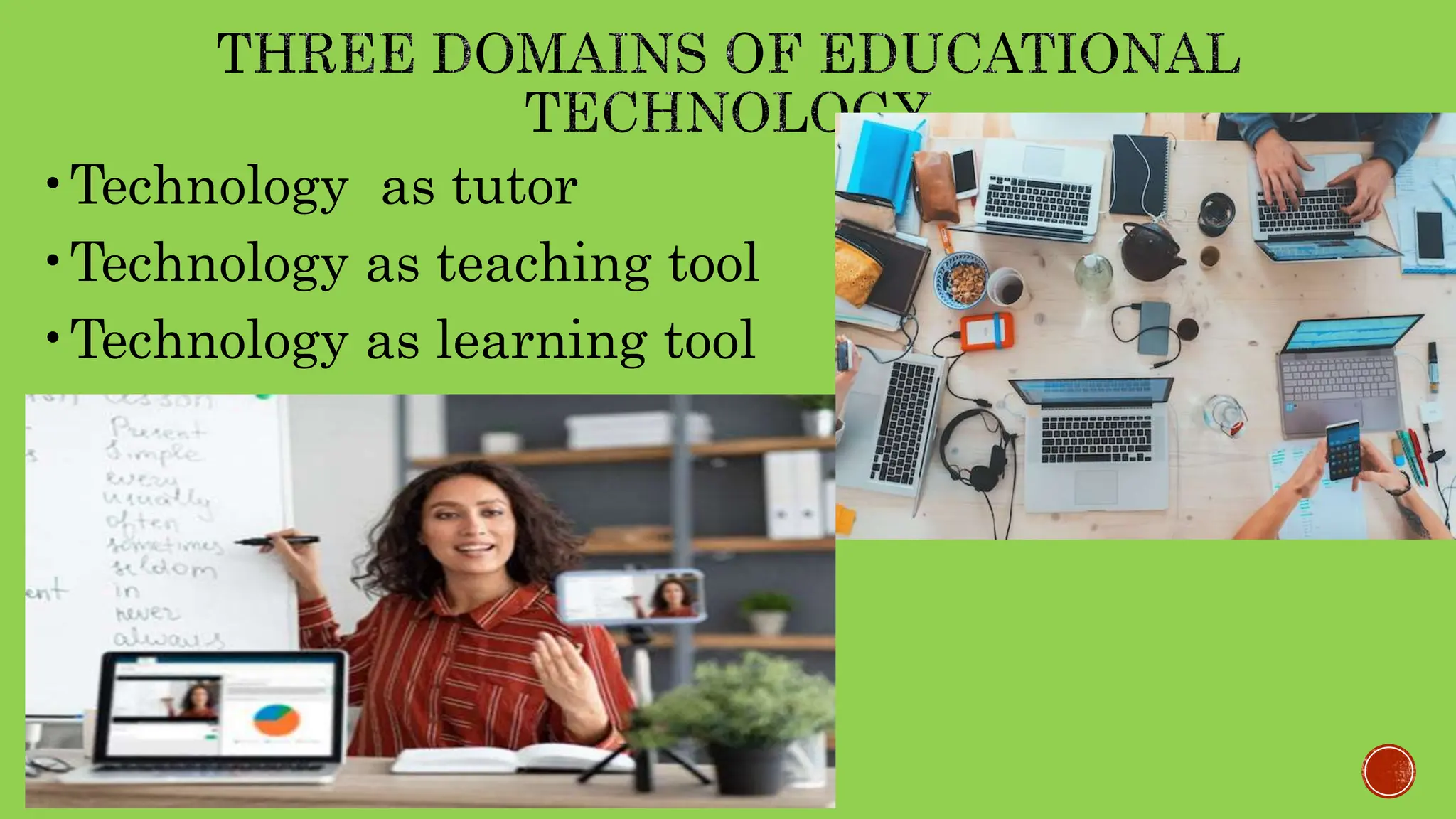
•Technology as tutor
•Technology as teaching tool
•Technology as learning tool
•Technology provides enormous support to the teacher as
the facilitator of learning
•Technology has modernized the teaching-learning
environment
•Technology improves teaching-learning process and
ways of teaching
•Technology opens new fields
in educational research
•Technology adds to the
competence of teachers and
inculcates scientific outlook
•Technology supports teacher
professional development
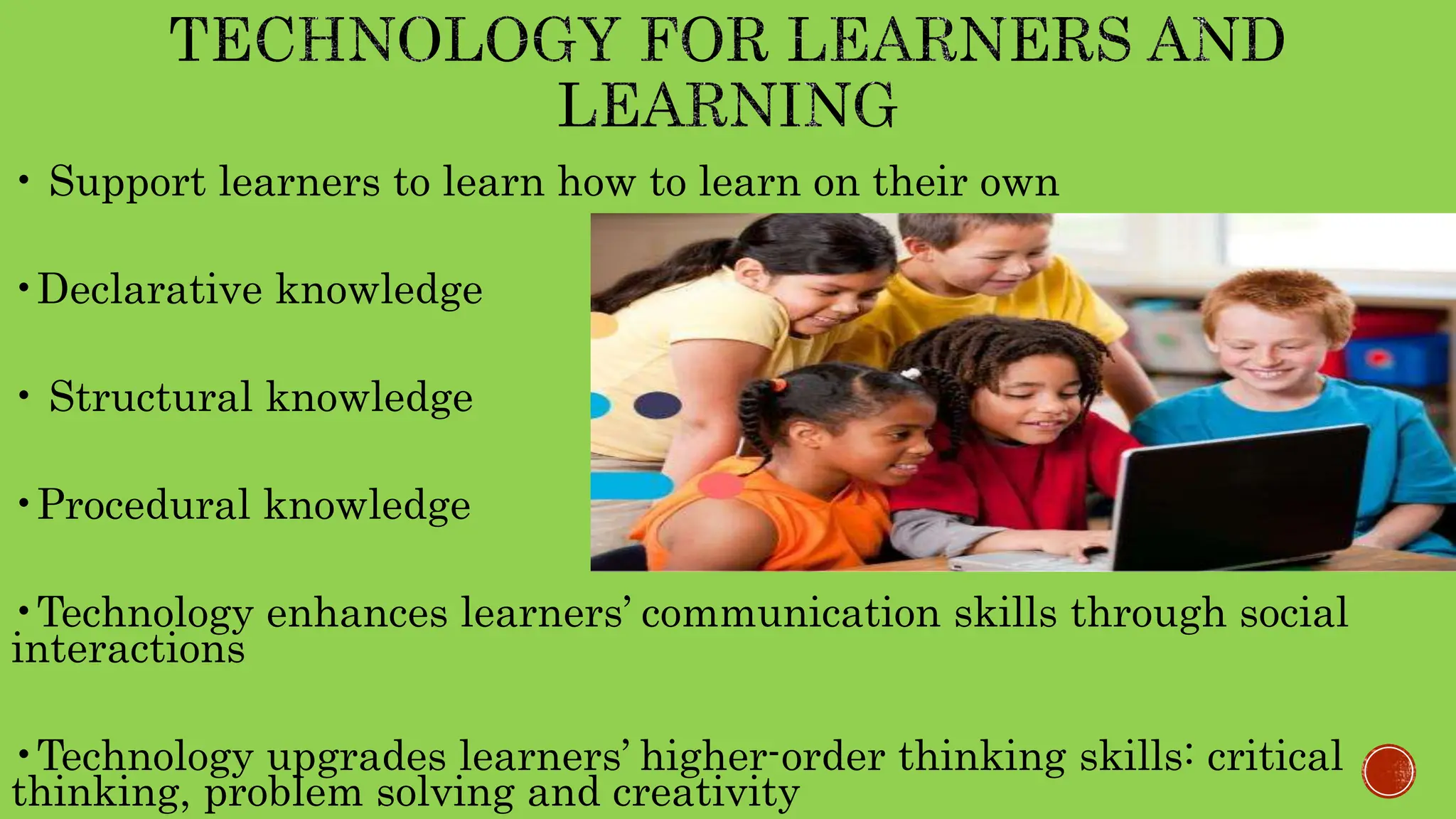
• Support learners to learn how to learn on their own
•Declarative knowledge
• Structural knowledge
•Procedural knowledge
•Technology enhances learners’ communication skills through social
interactions
•Technology upgrades learners’ higher-order thinking skills: critical
thinking, problem solving and creativity
•Critical thinking is a part of the cluster of higher order
thinking skills. It refers to the ability to interpret,
explain, analyze, evaluate, infer and self-regulate in
order to make good decisions.
•Teachers play a significant role in supporting learners
with technology. As a role model, teachers should display
and practice critical thinking processes, so that the
learners can imitate them. Here are the ways:
• Ask the right questions: Critical thinking
questions should ask for clarity, accuracy, precision,
relevance, depth, breadth and logic.
•For clarity: can you give examples of.
•For accuracy: what pieces of evidence
support your claim?
•For precision; exactly how much…
• Breadth: What do you think will the other
group say about the issue
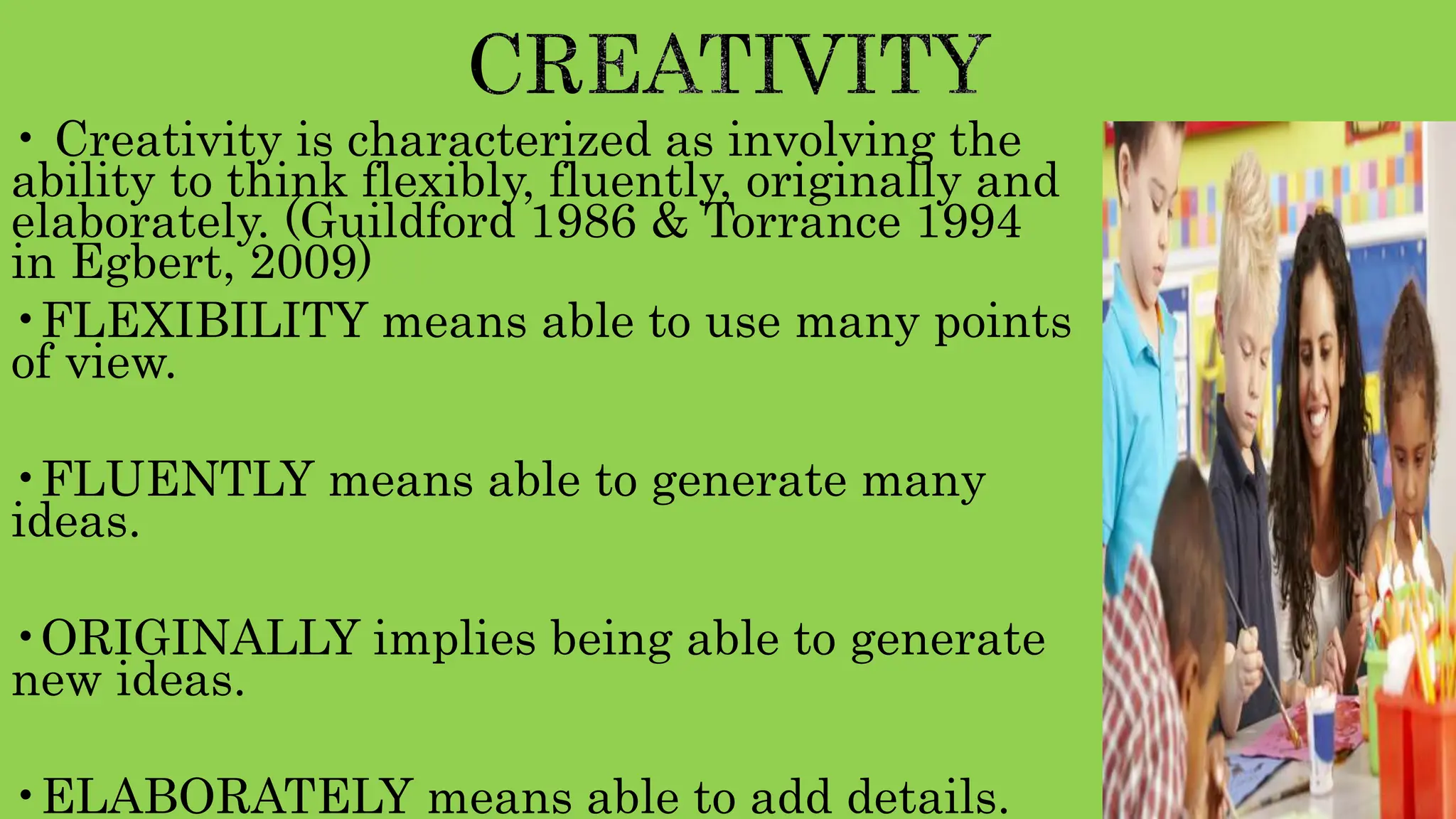
What are the some simple ways the teachers should do?
1. Vary the questions asked.
2.Introduce new technologies
3. Modify the learners’ grouping
4. Modify the critical thinking task
5. Encourage curiosity
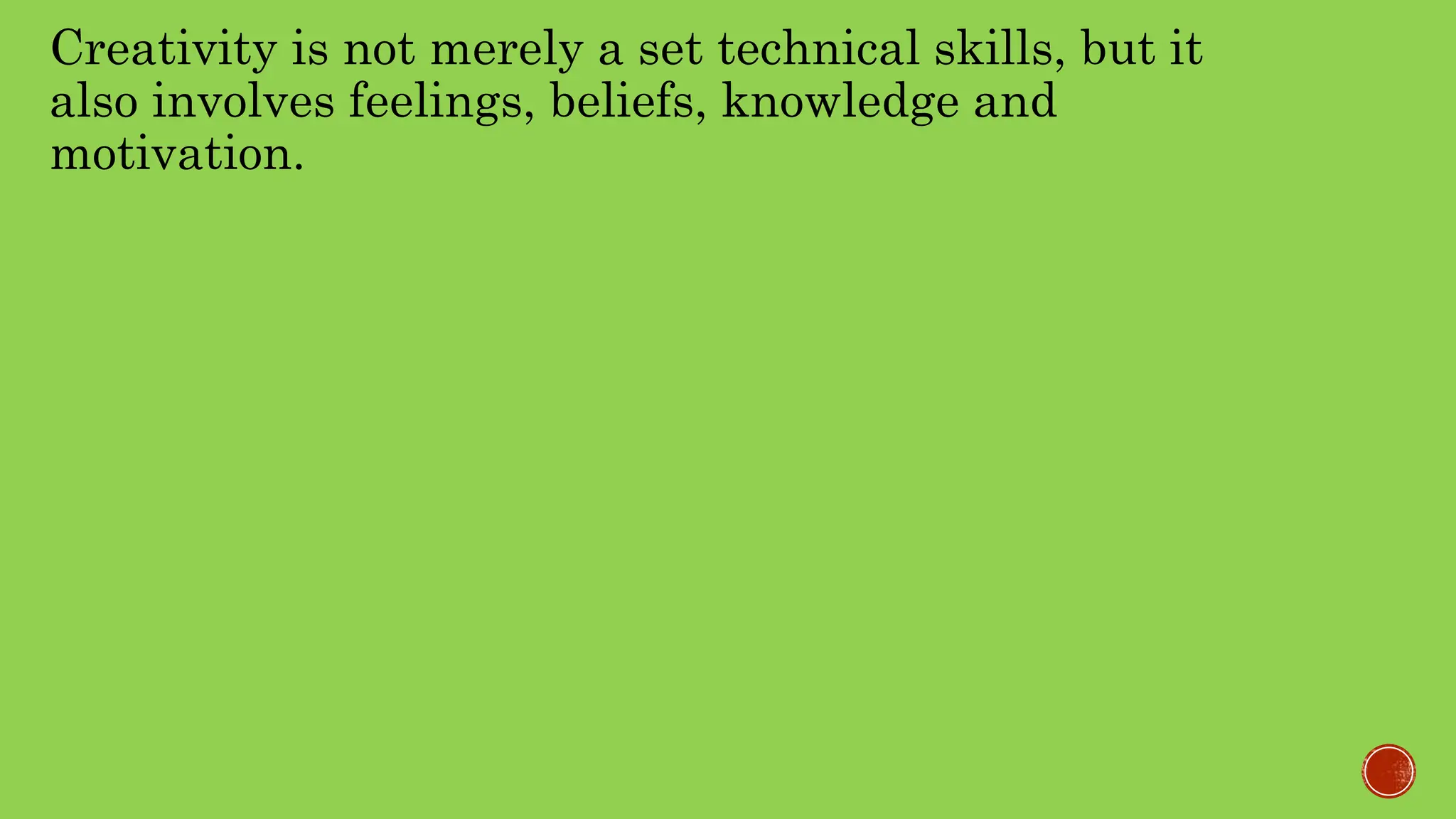
• Creativity is characterized as involving the
ability to think flexibly, fluently, originally and
elaborately. (Guildford 1986 & Torrance 1994
in Egbert, 2009)
•FLEXIBILITY means able to use many points
of view.
•FLUENTLY means able to generate many
ideas.
•ORIGINALLY implies being able to generate
new ideas.
•ELABORATELY means able to add details.
Creativity is not merely a set technical skills, but it
also involves feelings, beliefs, knowledge and
motivation.
• SUBSTITUTE –Find something else to replace to do
what it does.
•COMBINE – Blend two things that do not usually go
together.
•ADAPT – look for other ways this can be used.
•MODIFY/MAGNIFY/MINIFY – Make a change, enlarge,
decrease
•PUT – to another use. Find other uses.
•ELIMINATE – reduce, remove.
• REVERSE – Turn upside-down, inside out, front side back
All together, the strategies will be labelled as SCAMPER
AND ENHANCE CRITICAL THINKING,
PROBLEM SOLVING AND CREATIVITY OF
YOUR STUDENTS, HERE ARE SOME
SUGGESTIONS:
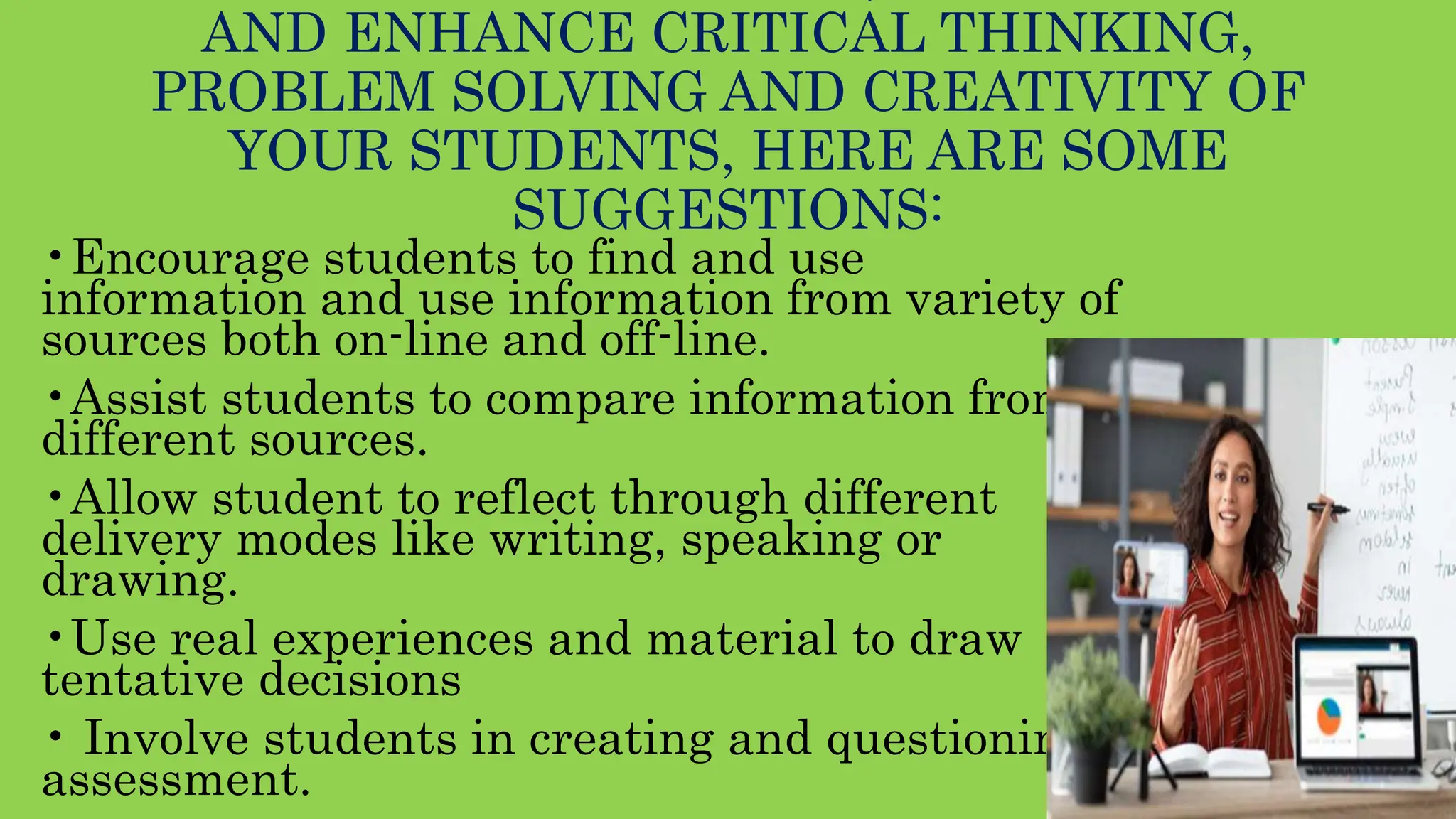
•Encourage students to find and use
information and use information from variety of
sources both on-line and off-line.
•Assist students to compare information from
different sources.
•Allow student to reflect through different
delivery modes like writing, speaking or
drawing.
•Use real experiences and material to draw
tentative decisions
• Involve students in creating and questioning
assessment.
https://www.slideshare.net/erwinmarlonsario/roles-of-
technology-for-teaching-and-learning

MODULES 1 :LESSONS 3 ROLES OF TECHNOLOGY

  • 1.
    MODULE 1: LESSON3 ROLES OF TECHNOLOGY FOR LEARNING AND TEACHING Submitted by: Jessa Sanchez Boteros (BEEd 2-A) Submitted to: Prof Jay Falagne (INSTRUCTOR)
  • 2.
    •Technology as tutor •Technologyas teaching tool •Technology as learning tool
  • 3.
    •Technology provides enormoussupport to the teacher as the facilitator of learning •Technology has modernized the teaching-learning environment •Technology improves teaching-learning process and ways of teaching
  • 4.
    •Technology opens newfields in educational research •Technology adds to the competence of teachers and inculcates scientific outlook •Technology supports teacher professional development
  • 5.
    • Support learnersto learn how to learn on their own •Declarative knowledge • Structural knowledge •Procedural knowledge •Technology enhances learners’ communication skills through social interactions •Technology upgrades learners’ higher-order thinking skills: critical thinking, problem solving and creativity
  • 6.
    •Critical thinking isa part of the cluster of higher order thinking skills. It refers to the ability to interpret, explain, analyze, evaluate, infer and self-regulate in order to make good decisions. •Teachers play a significant role in supporting learners with technology. As a role model, teachers should display and practice critical thinking processes, so that the learners can imitate them. Here are the ways:
  • 7.
    • Ask theright questions: Critical thinking questions should ask for clarity, accuracy, precision, relevance, depth, breadth and logic. •For clarity: can you give examples of. •For accuracy: what pieces of evidence support your claim? •For precision; exactly how much… • Breadth: What do you think will the other group say about the issue
  • 8.
    What are thesome simple ways the teachers should do? 1. Vary the questions asked. 2.Introduce new technologies 3. Modify the learners’ grouping 4. Modify the critical thinking task 5. Encourage curiosity
  • 9.
    • Creativity ischaracterized as involving the ability to think flexibly, fluently, originally and elaborately. (Guildford 1986 & Torrance 1994 in Egbert, 2009) •FLEXIBILITY means able to use many points of view. •FLUENTLY means able to generate many ideas. •ORIGINALLY implies being able to generate new ideas. •ELABORATELY means able to add details.
  • 10.
    Creativity is notmerely a set technical skills, but it also involves feelings, beliefs, knowledge and motivation.
  • 11.
    • SUBSTITUTE –Findsomething else to replace to do what it does. •COMBINE – Blend two things that do not usually go together. •ADAPT – look for other ways this can be used. •MODIFY/MAGNIFY/MINIFY – Make a change, enlarge, decrease
  • 12.
    •PUT – toanother use. Find other uses. •ELIMINATE – reduce, remove. • REVERSE – Turn upside-down, inside out, front side back All together, the strategies will be labelled as SCAMPER
  • 13.
    AND ENHANCE CRITICALTHINKING, PROBLEM SOLVING AND CREATIVITY OF YOUR STUDENTS, HERE ARE SOME SUGGESTIONS: •Encourage students to find and use information and use information from variety of sources both on-line and off-line. •Assist students to compare information from different sources. •Allow student to reflect through different delivery modes like writing, speaking or drawing. •Use real experiences and material to draw tentative decisions • Involve students in creating and questioning assessment.
  • 14.