Importance of Due
Diligence Before In-
Licensing Technology
Origiin IP Solutions LLP
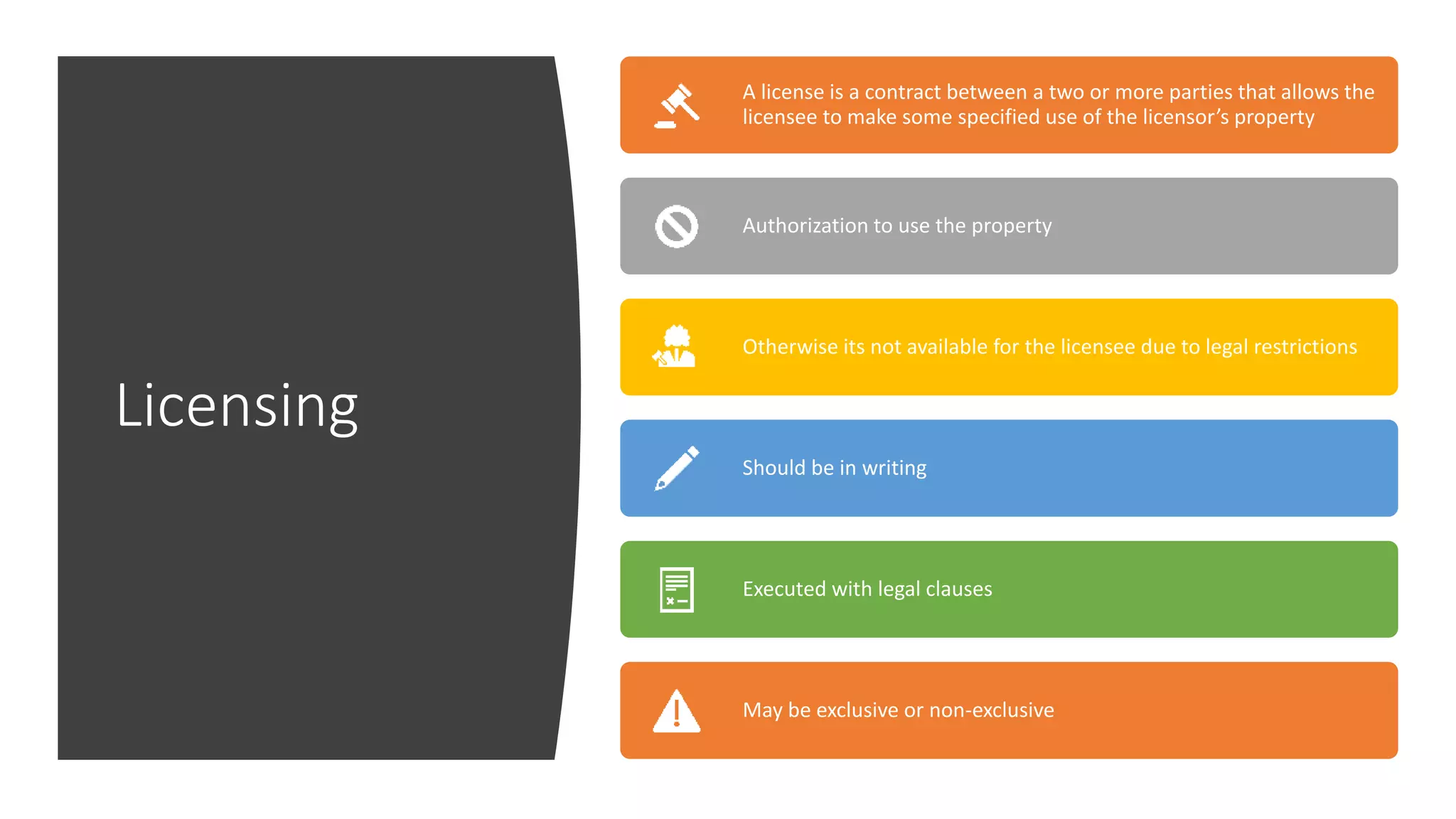
Licensing
A license is a contract between a two or more parties that allows the
licensee to make some specified use of the licensor’s property
Authorization to use the property
Otherwise its not available for the licensee due to legal restrictions
Should be in writing
Executed with legal clauses
May be exclusive or non-exclusive
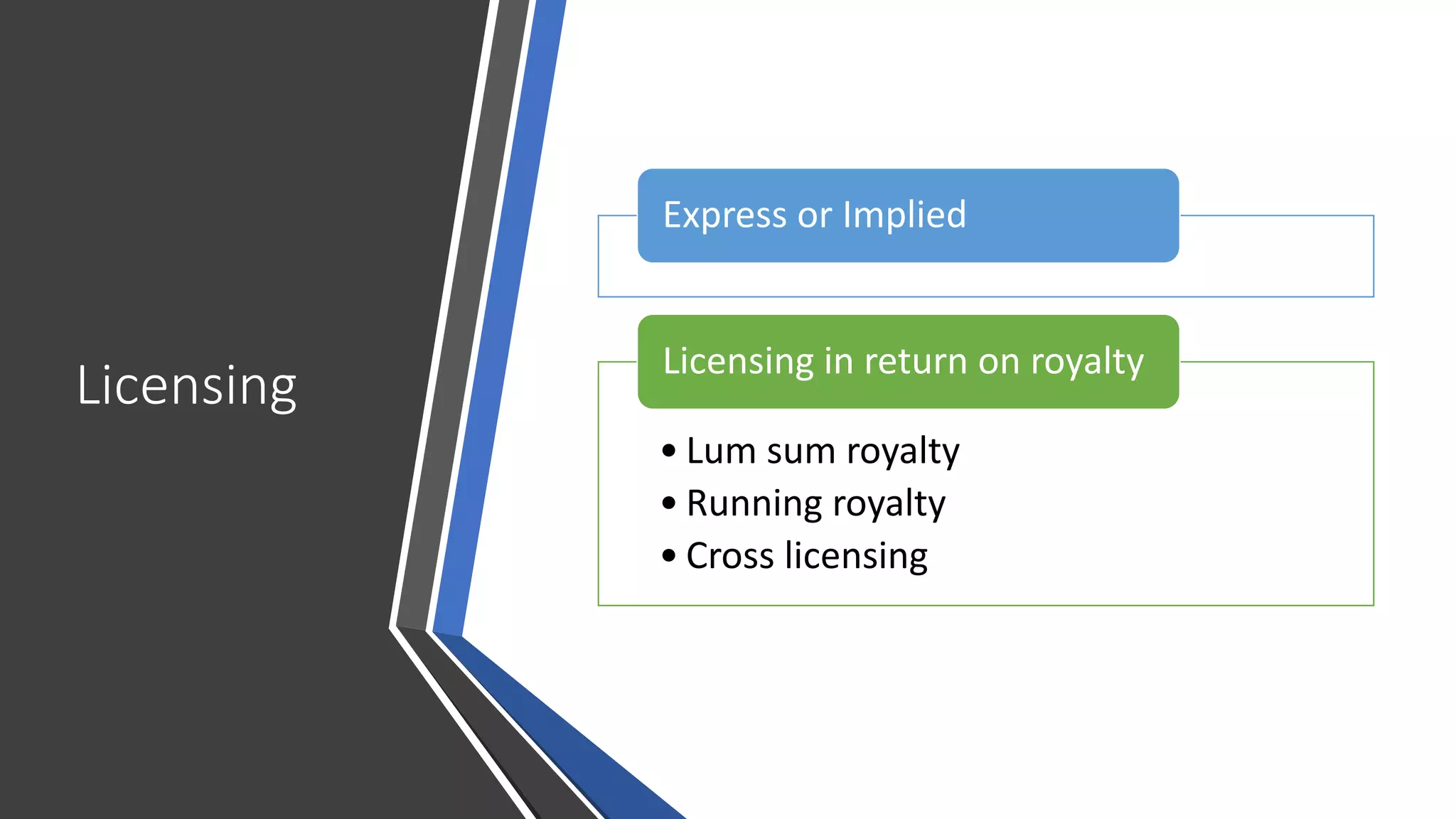
Licensing
Express or Implied
• Lum sum royalty
• Running royalty
• Cross licensing
Licensing in return on royalty
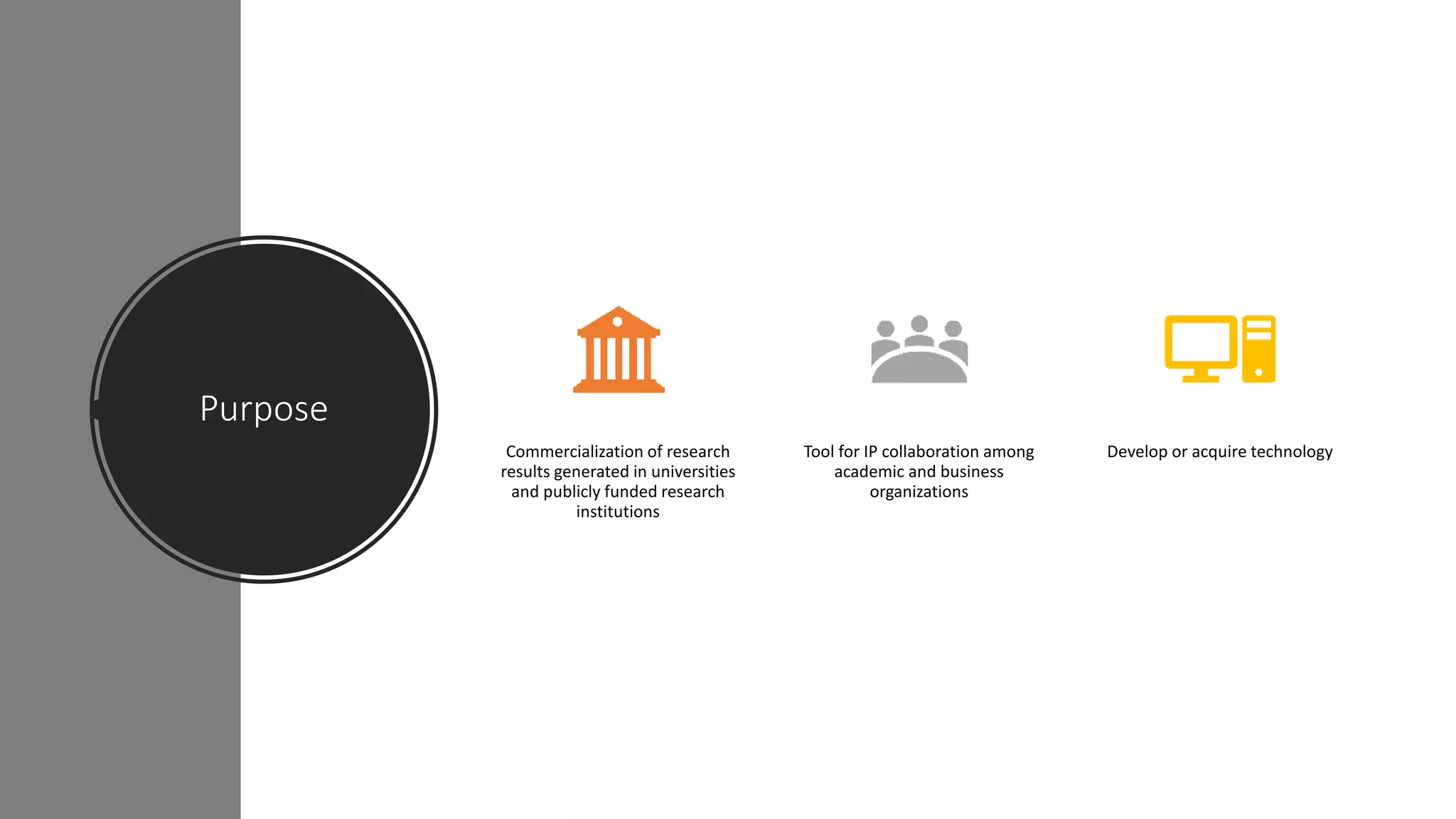
Purpose
Commercialization of research
results generated in universities
and publicly funded research
institutions
Tool for IP collaboration among
academic and business
organizations
Develop or acquire technology
Technology
• Technology status can also be classified:
• Base technology - is ageing technology
which is available or known to all industry
participants; it cannot provide competitive
advantage because of its widespread use.
• Key technology - a proprietary product or
process technology already well embodied
in the processes and products on the
market; is critical to the basis of
competition - it is used by its owners to
differentiate products and services from
those of their competitors.
Technology
• Pacing technology - those emerging
technologies which already
demonstrated their ability to change
the basis of competition and as a result
are now moved to the development
stage at many companies; these will
probably become a key technology in
the near future.
• Emerging technology - forward looking
technologies sometimes under
development in substantially different
industries; at an early research stage
with unknown potential, but promising
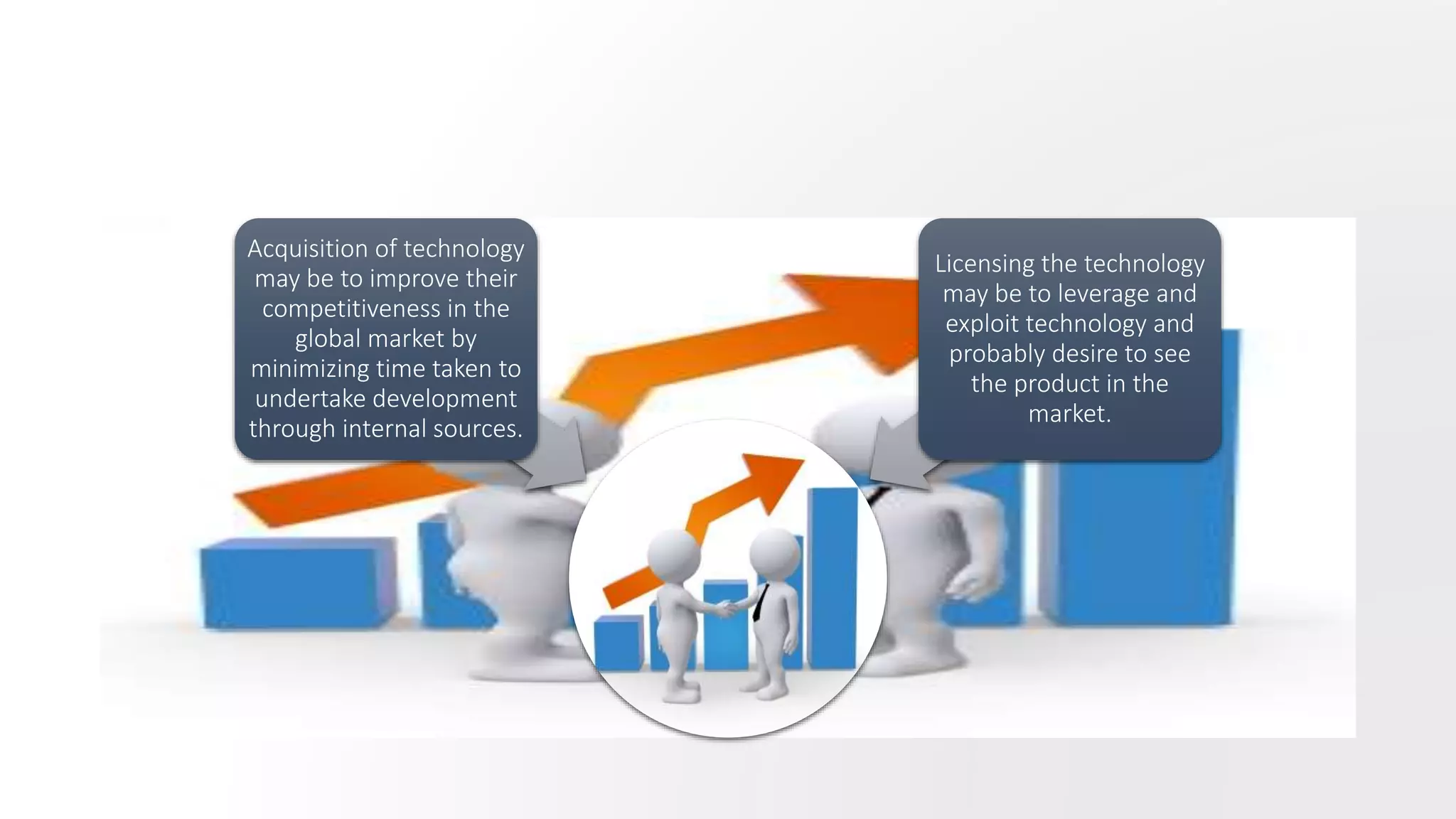
Acquisition of technology
may be to improve their
competitiveness in the
global market by
minimizing time taken to
undertake development
through internal sources.
Licensing the technology
may be to leverage and
exploit technology and
probably desire to see
the product in the
market.
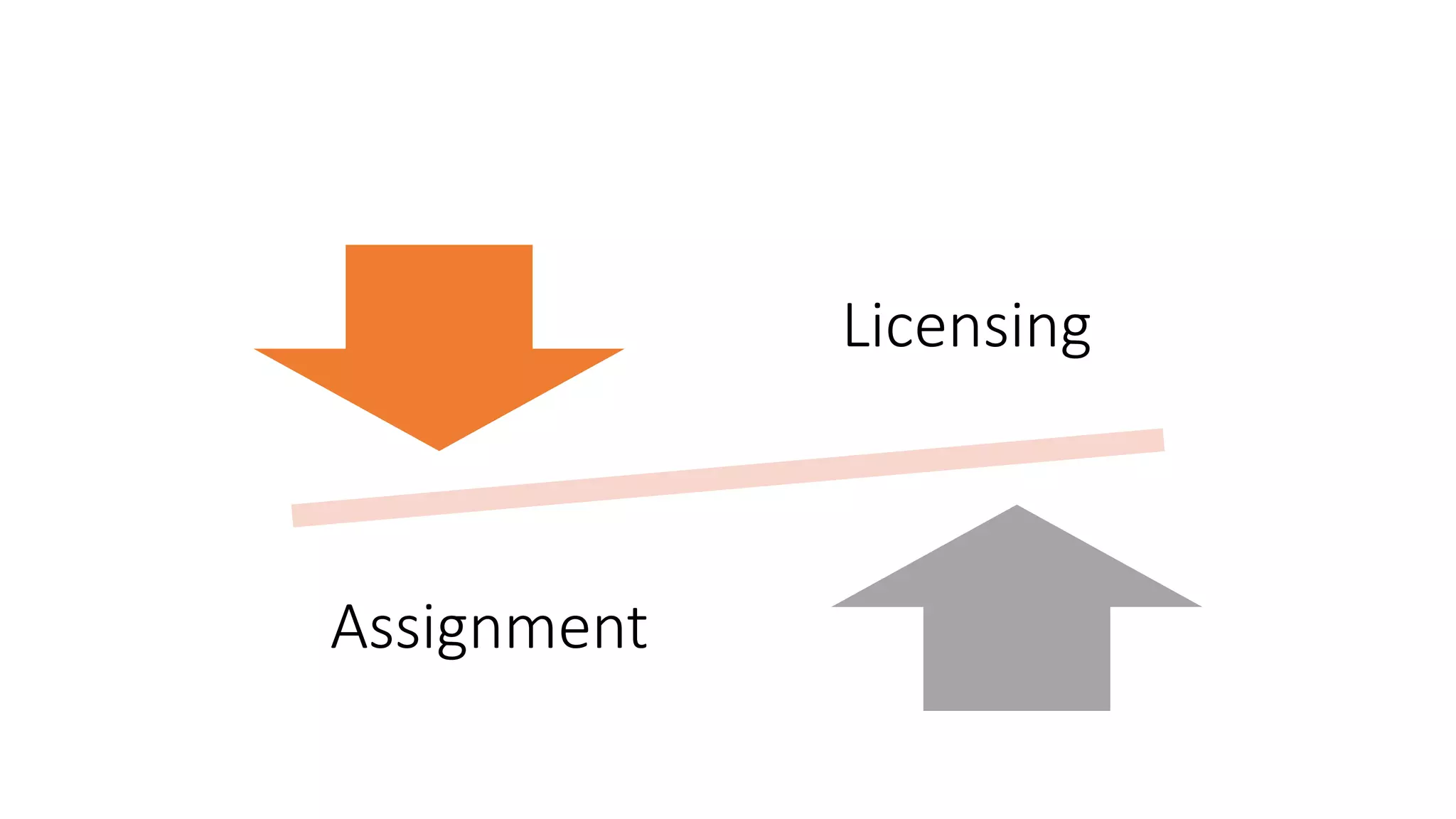
Licensing
Assignment
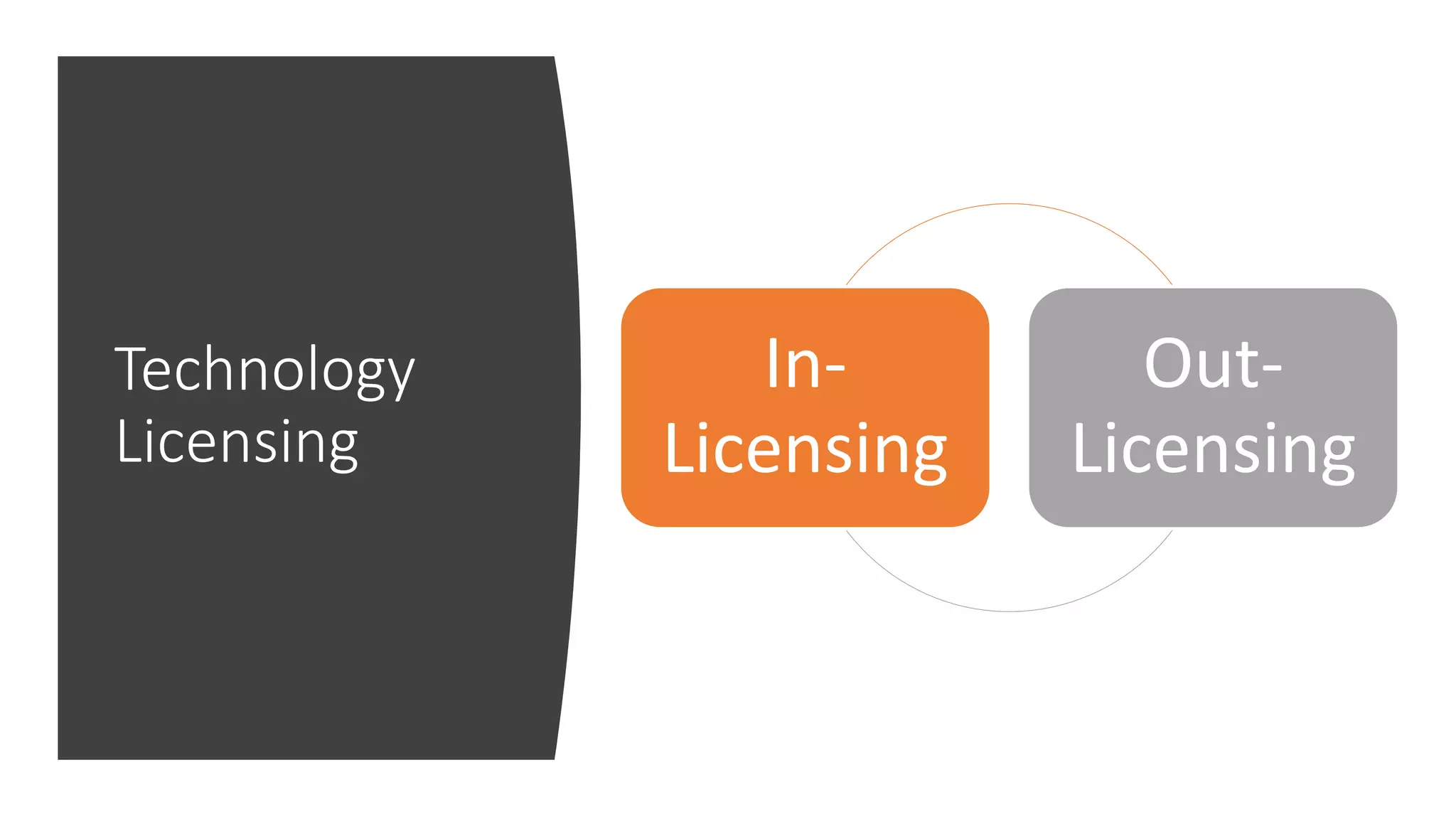
Technology
Licensing
In-
Licensing
Out-
Licensing
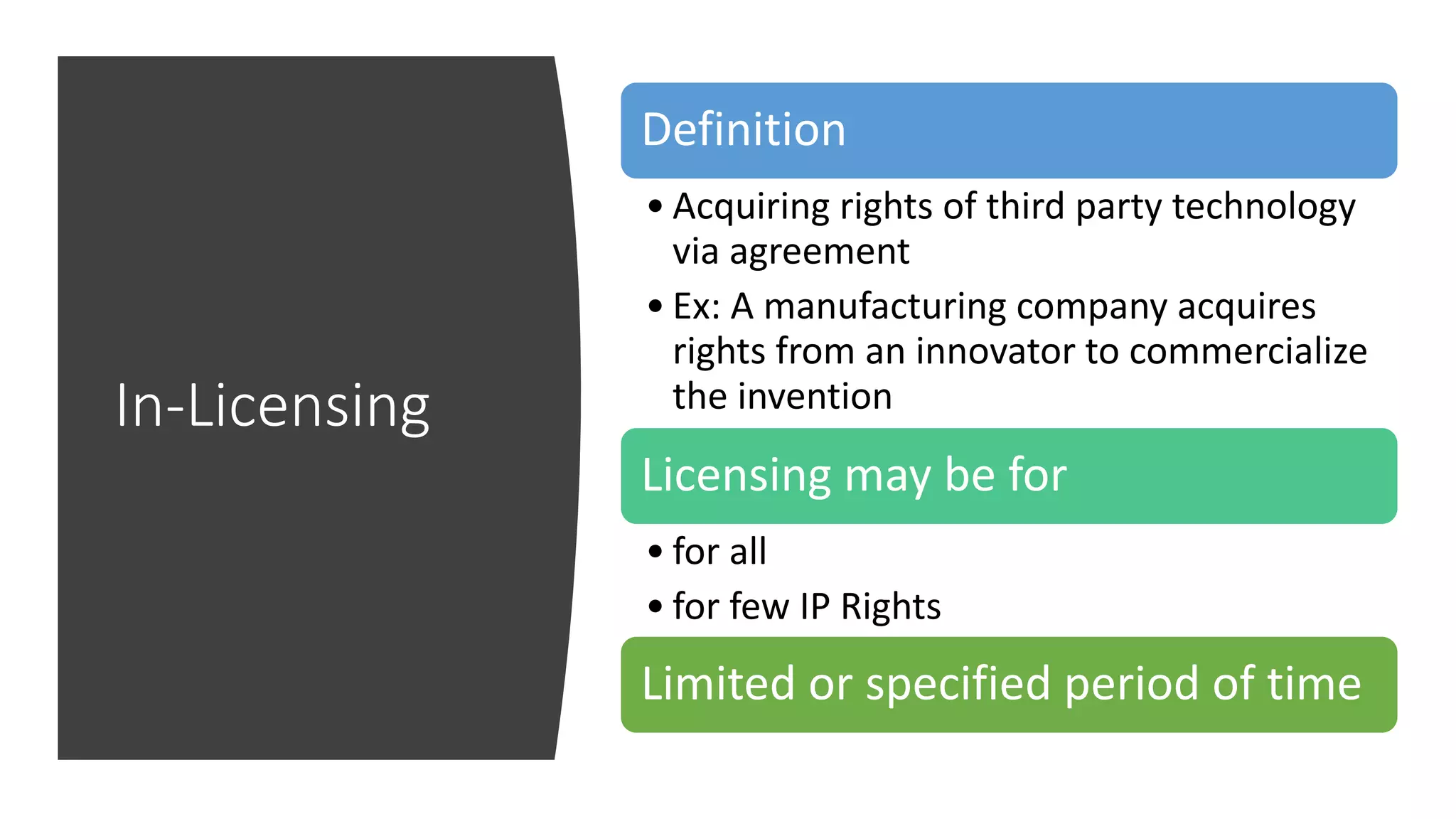
In-Licensing
Definition
• Acquiring rights of third party technology
via agreement
• Ex: A manufacturing company acquires
rights from an innovator to commercialize
the invention
Licensing may be for
• for all
• for few IP Rights
Limited or specified period of time
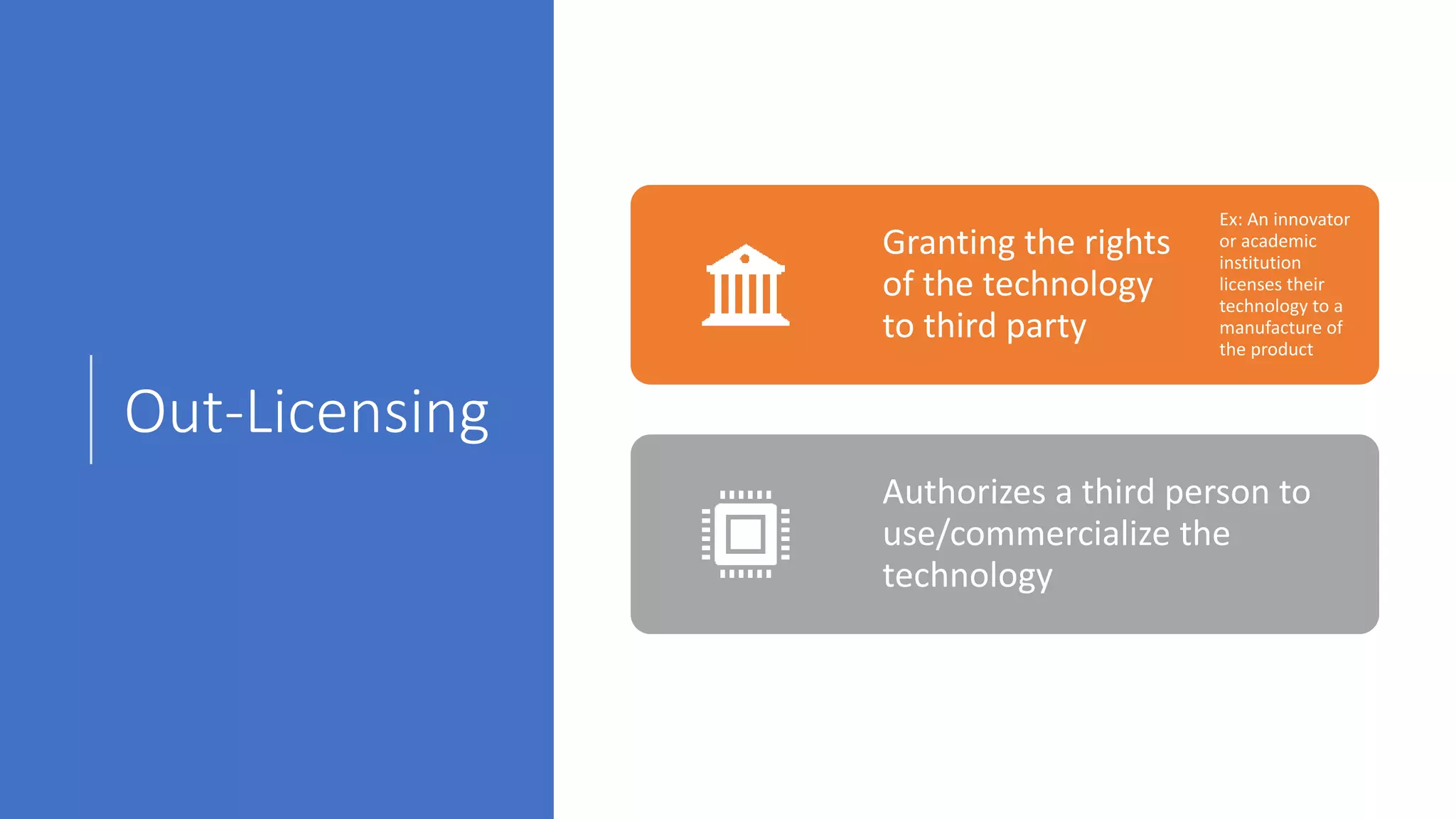
Out-Licensing
Granting the rights
of the technology
to third party
Ex: An innovator
or academic
institution
licenses their
technology to a
manufacture of
the product
Authorizes a third person to
use/commercialize the
technology
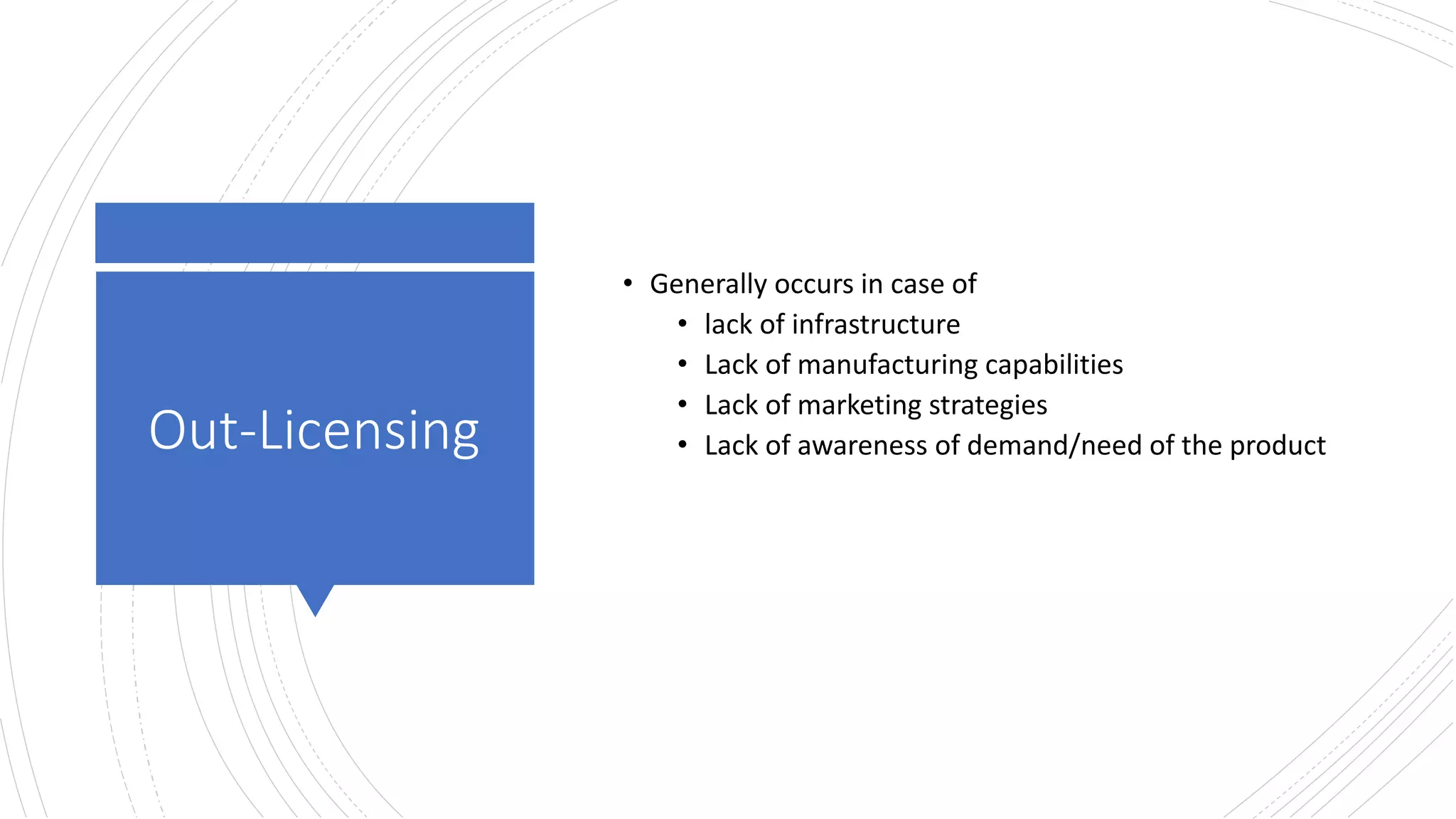
Out-Licensing
• Generally occurs in case of
• lack of infrastructure
• Lack of manufacturing capabilities
• Lack of marketing strategies
• Lack of awareness of demand/need of the product
What to in-license
• Technology licensing occurs only when one of the parties
owns valuable intangible assets i.e Intellectual Property
(IP)
• Patents
• Know-how
• Trade secrets
• Copyrights
• Industrial Designs
• Semi conductors circuits
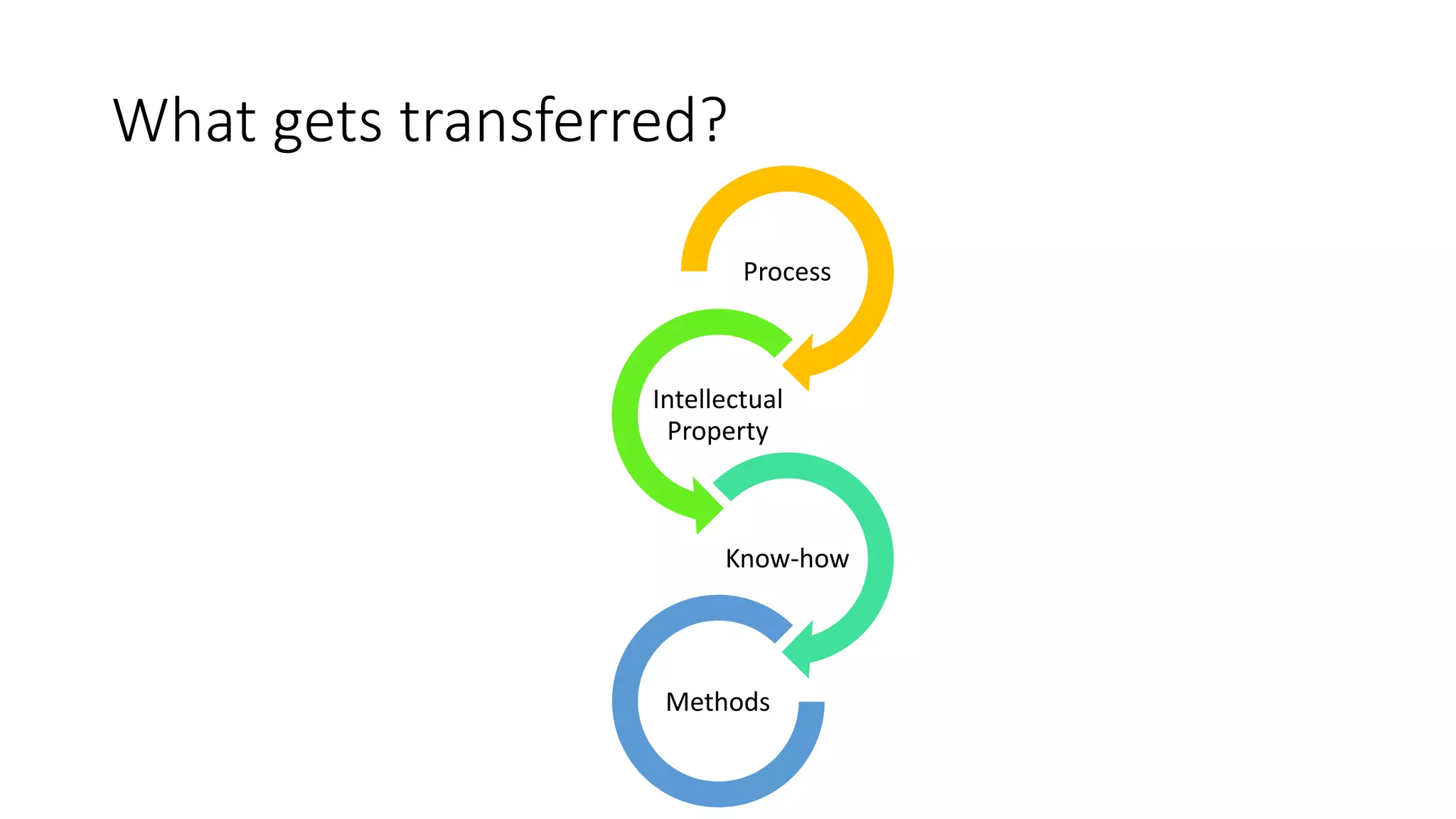
What gets transferred?
Process
Intellectual
Property
Know-how
Methods
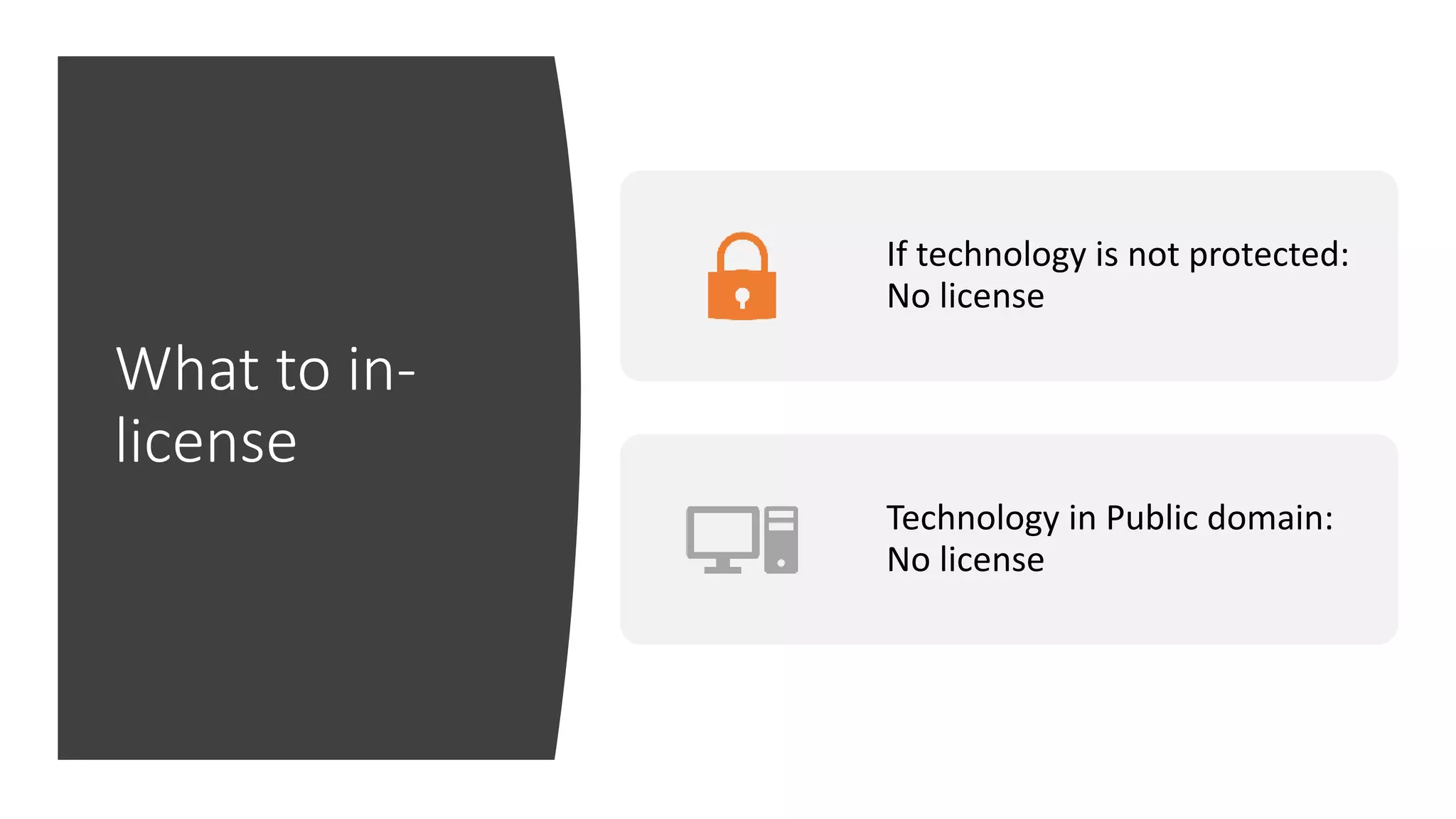
What to in-
license
If technology is not protected:
No license
Technology in Public domain:
No license
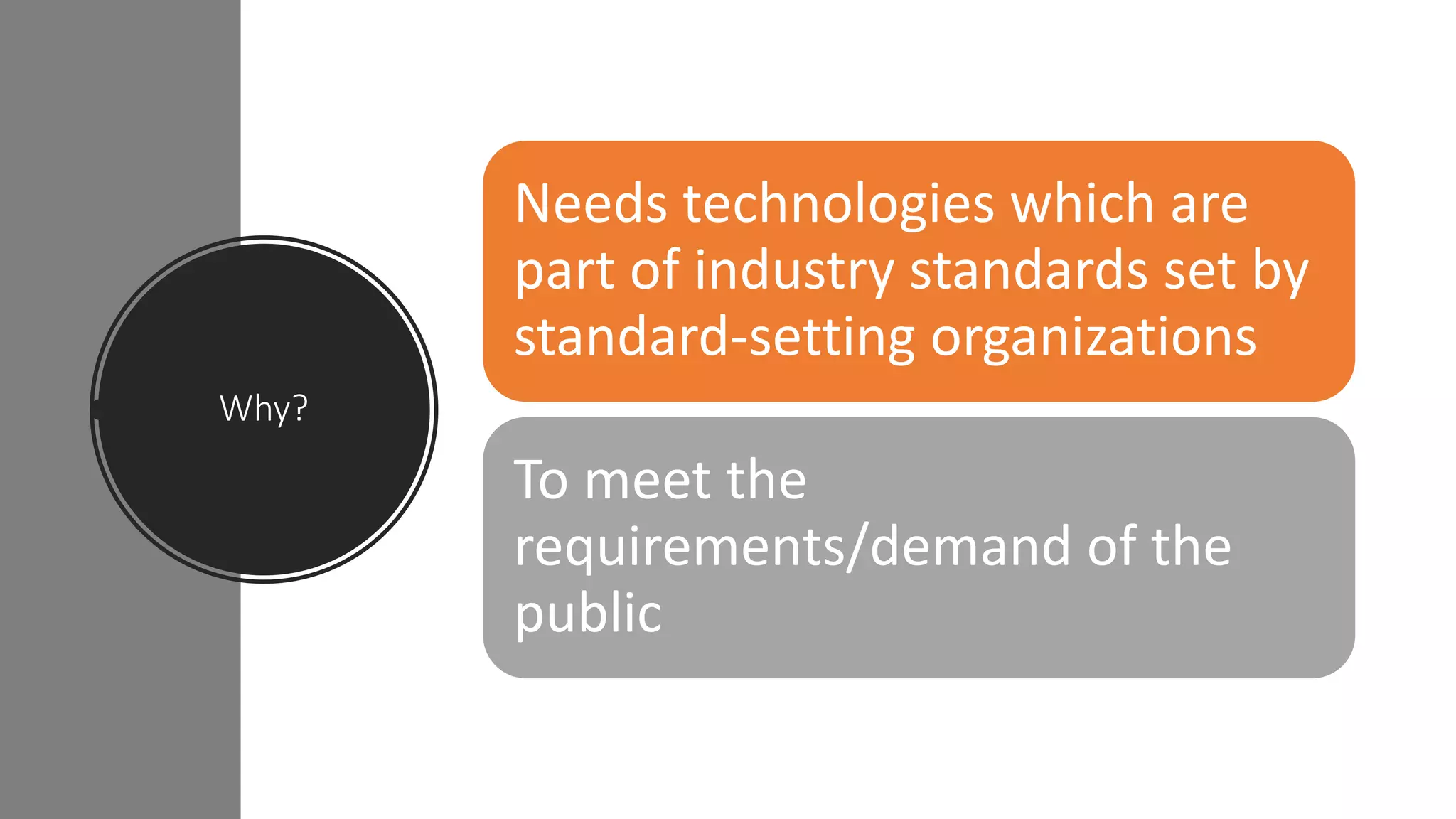
Why?
• Alternative to invest in technology creation or R&D
• Saves time
• To bring new products into market
• To balance the competition
• Lack of resources
Human or
Financial
Why?
Needs technologies which are
part of industry standards set by
standard-setting organizations
To meet the
requirements/demand of the
public
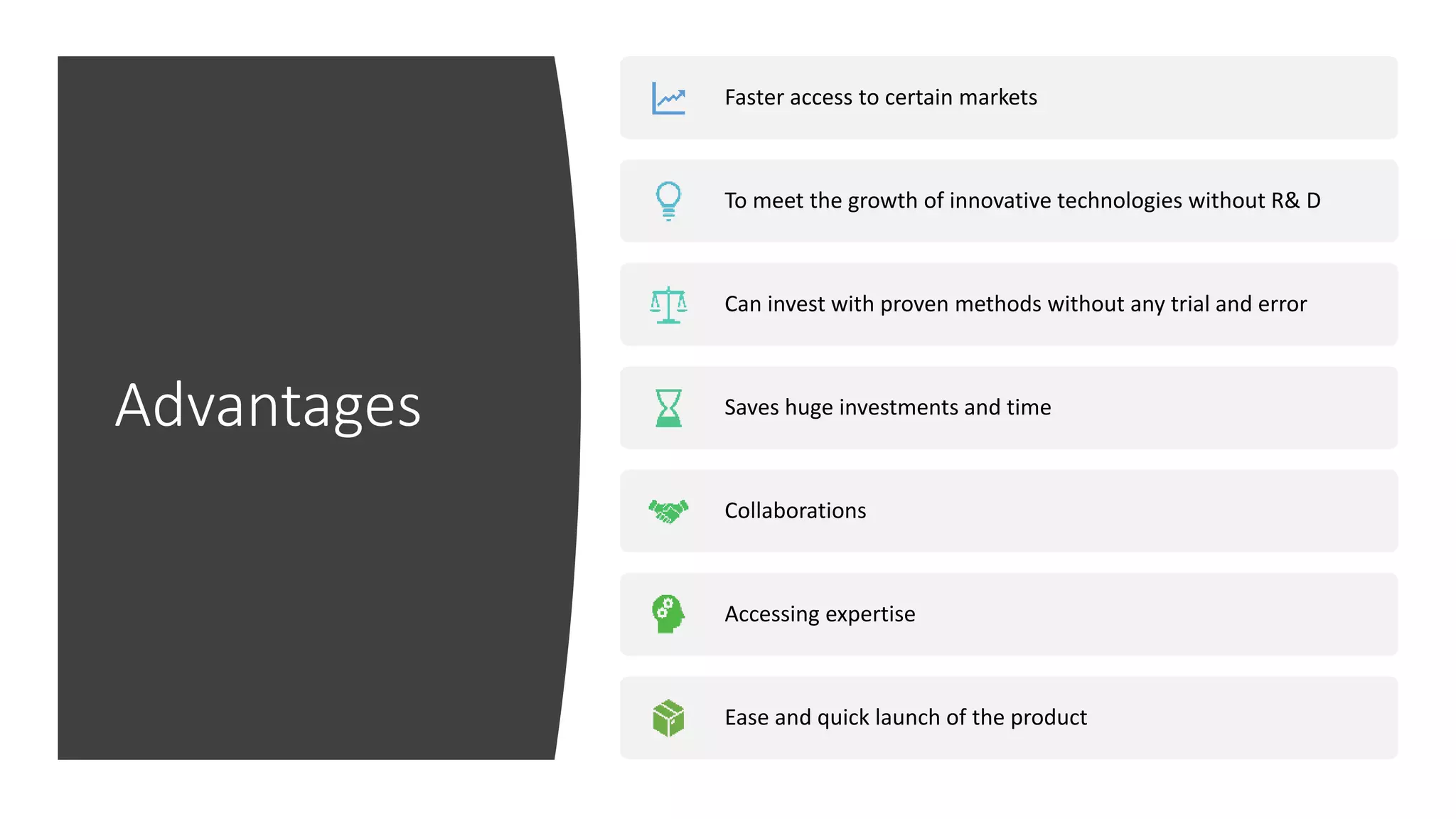
Advantages
Faster access to certain markets
To meet the growth of innovative technologies without R& D
Can invest with proven methods without any trial and error
Saves huge investments and time
Collaborations
Accessing expertise
Ease and quick launch of the product
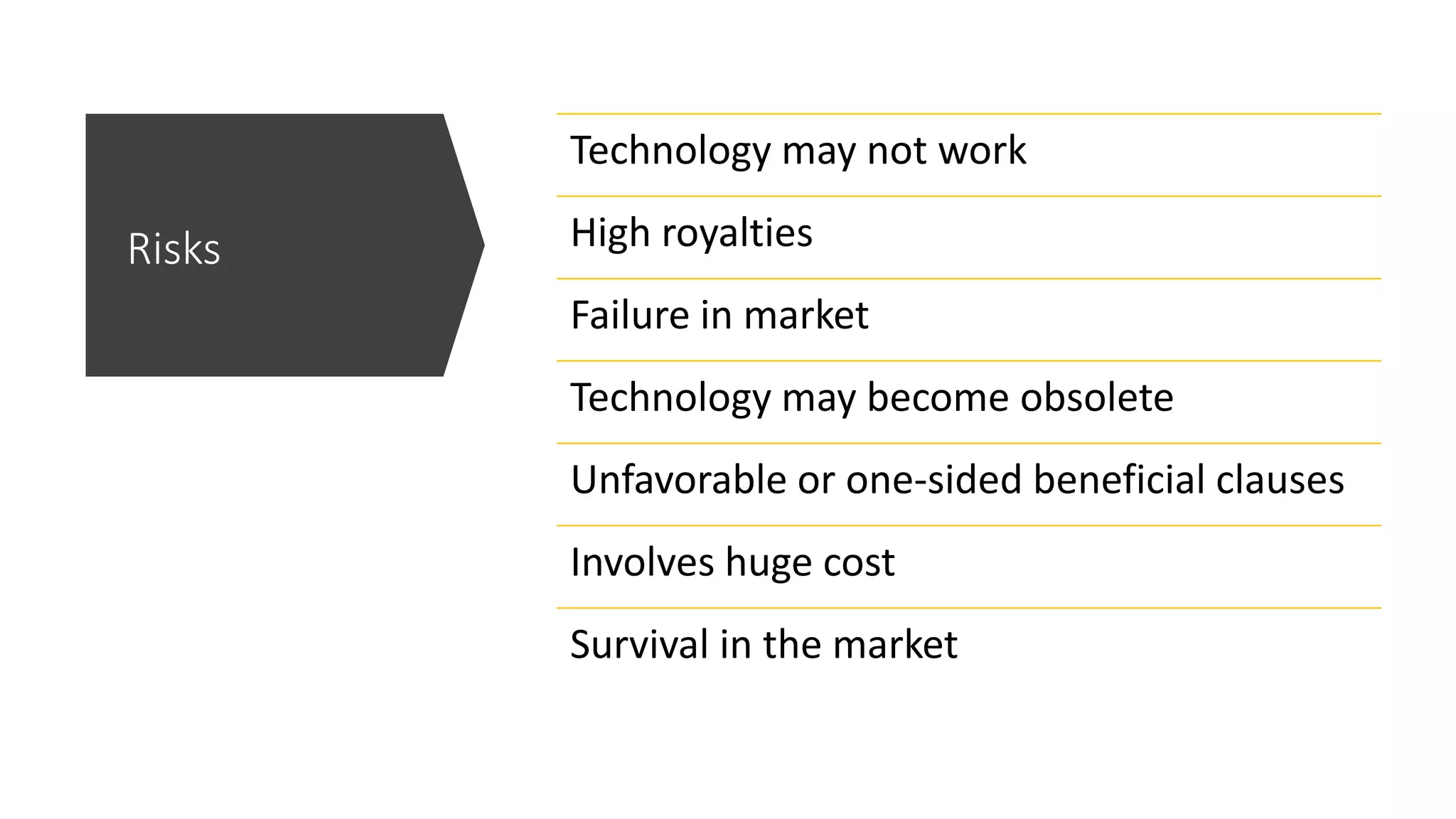
Risks
Technology may not work
High royalties
Failure in market
Technology may become obsolete
Unfavorable or one-sided beneficial clauses
Involves huge cost
Survival in the market
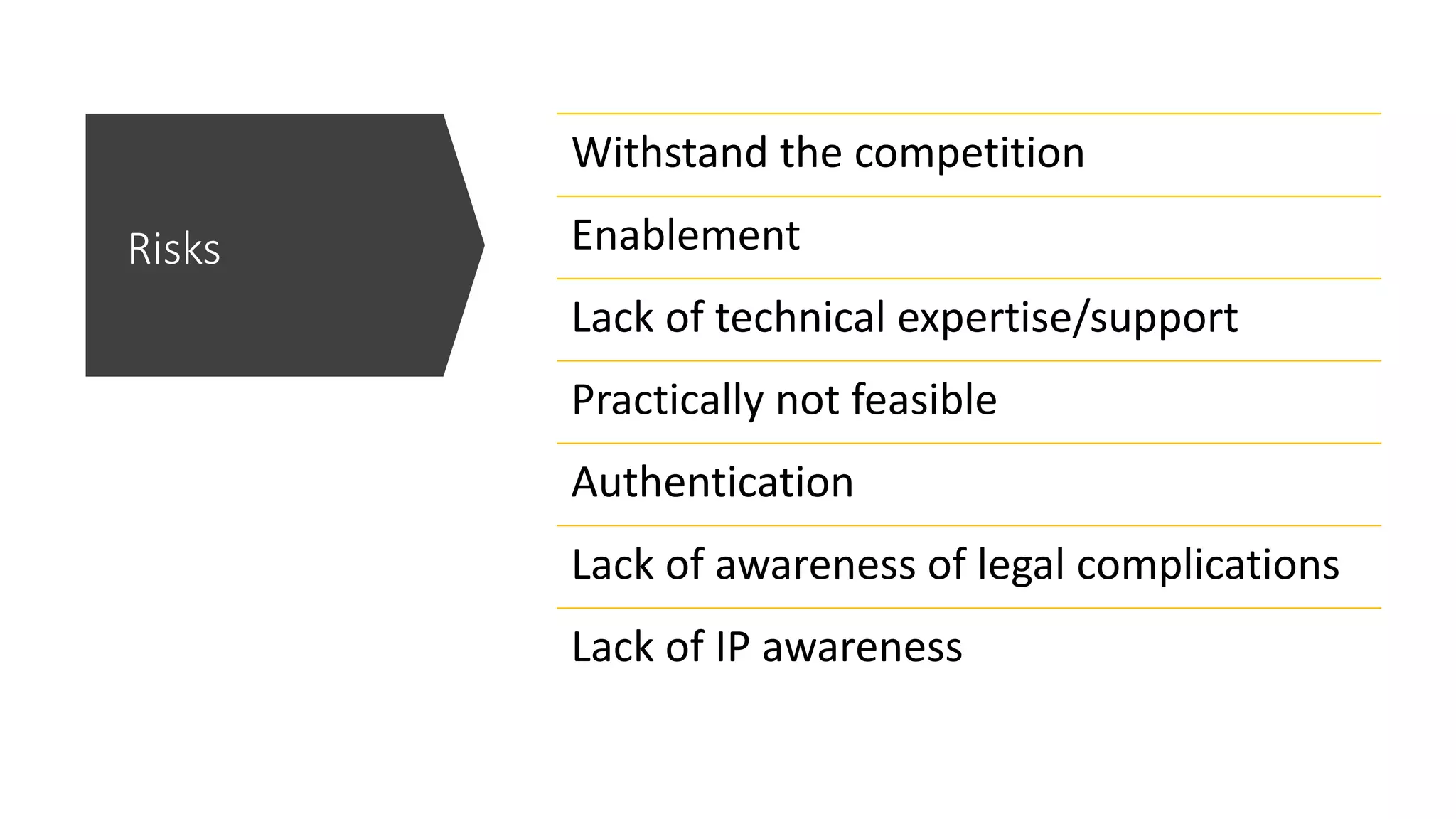
Risks
Withstand the competition
Enablement
Lack of technical expertise/support
Practically not feasible
Authentication
Lack of awareness of legal complications
Lack of IP awareness
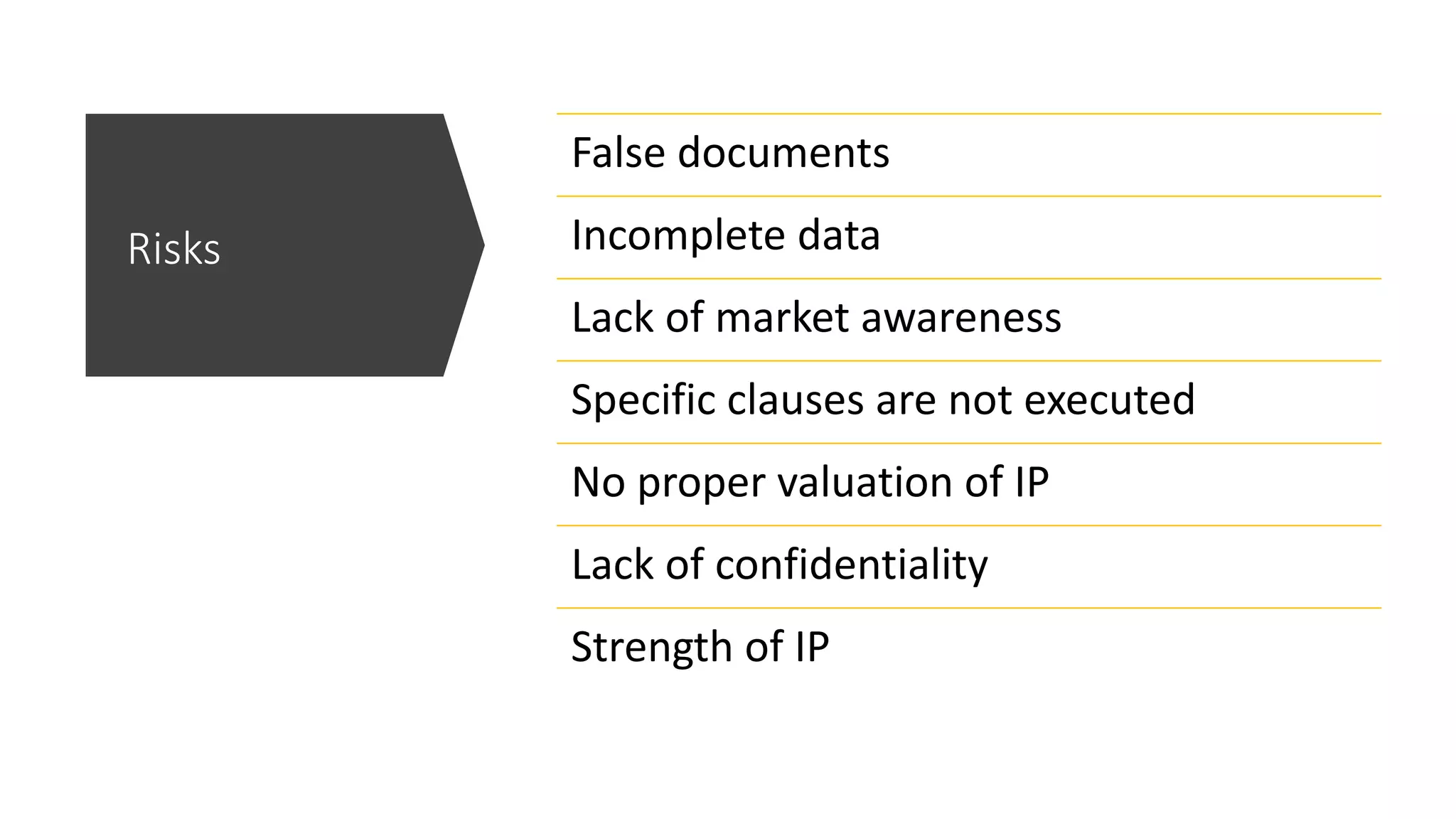
Risks
False documents
Incomplete data
Lack of market awareness
Specific clauses are not executed
No proper valuation of IP
Lack of confidentiality
Strength of IP
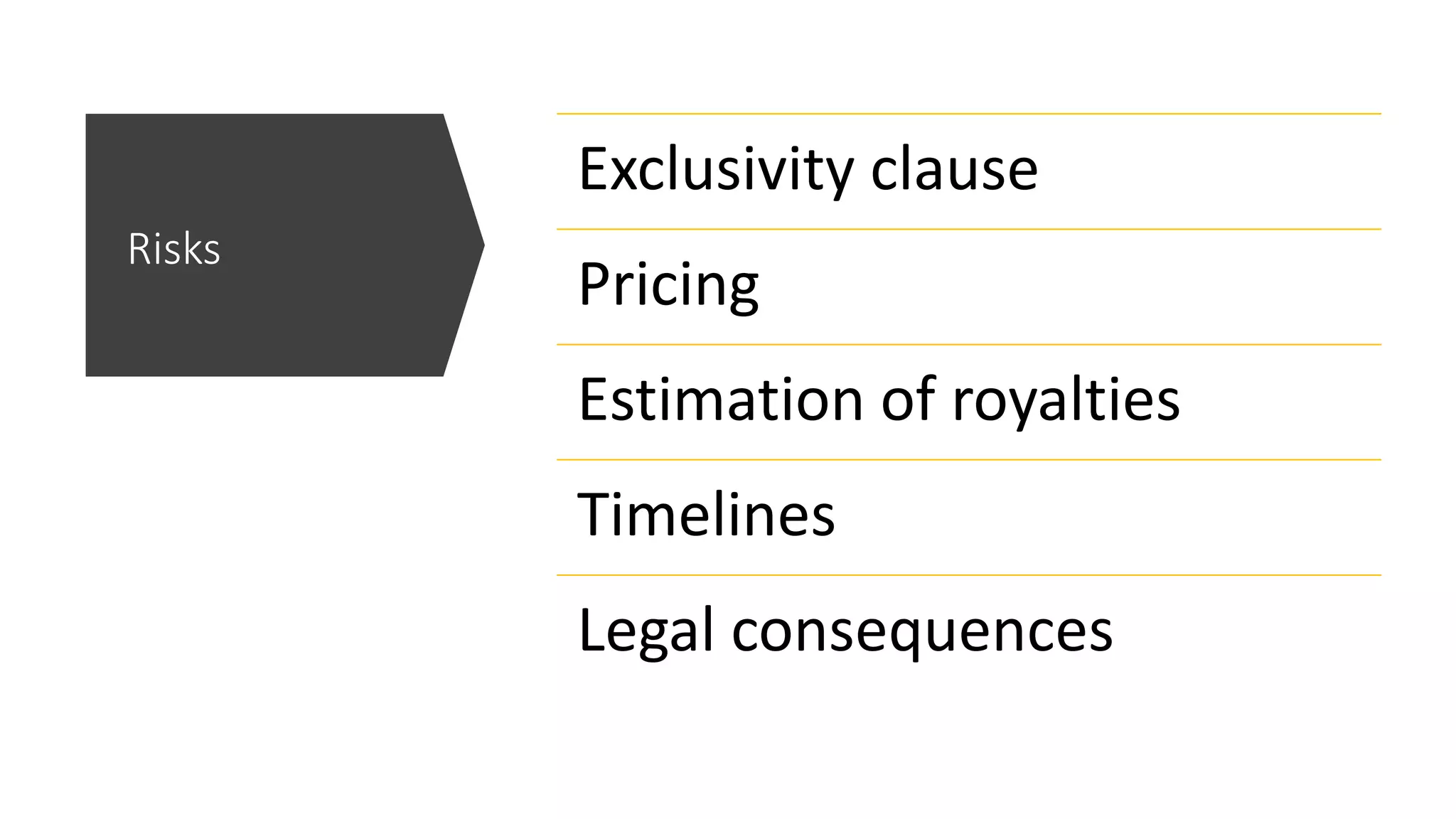
Risks
Exclusivity clause
Pricing
Estimation of royalties
Timelines
Legal consequences
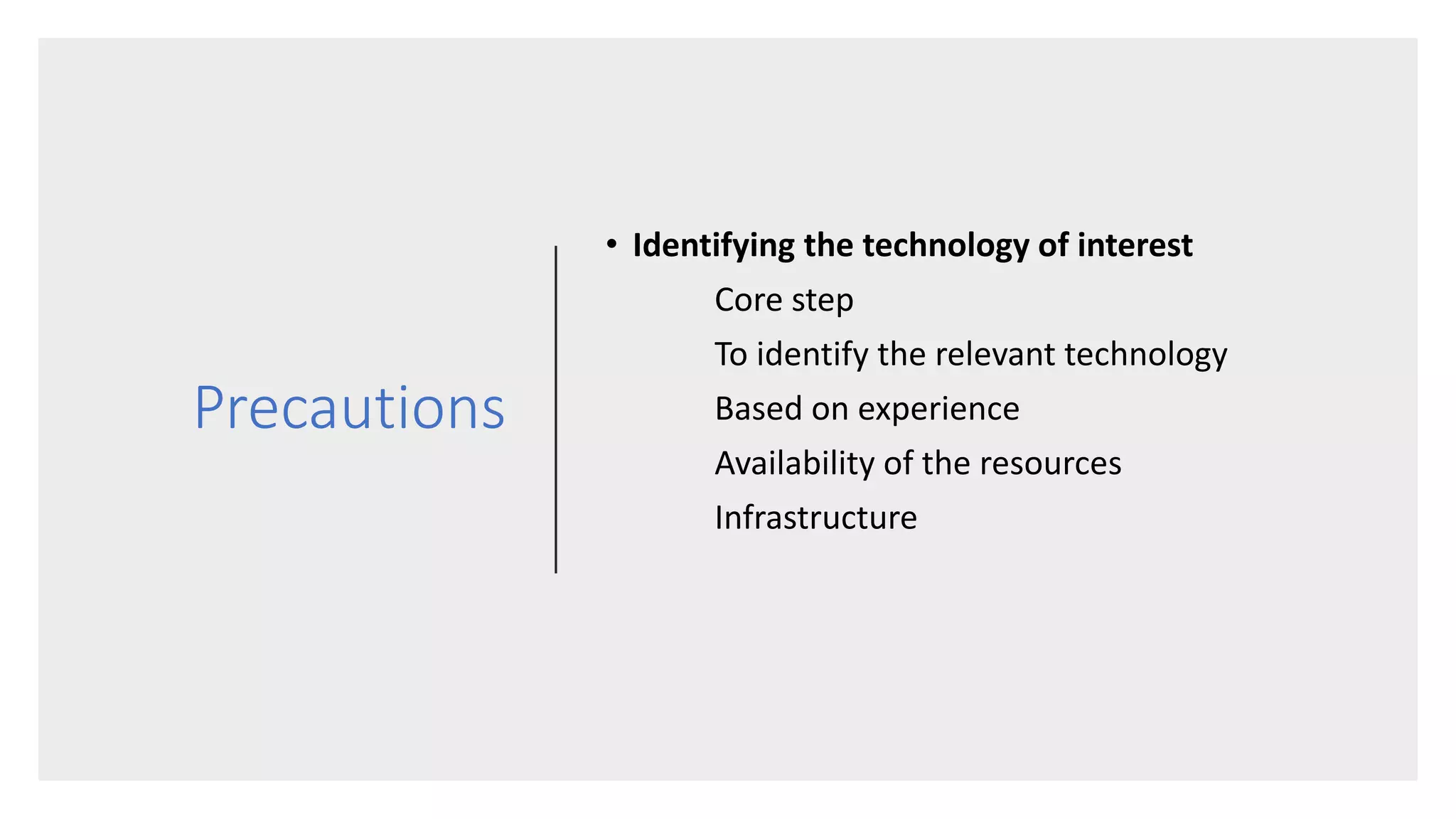
Precautions
• Identifying the technology of interest
Core step
To identify the relevant technology
Based on experience
Availability of the resources
Infrastructure
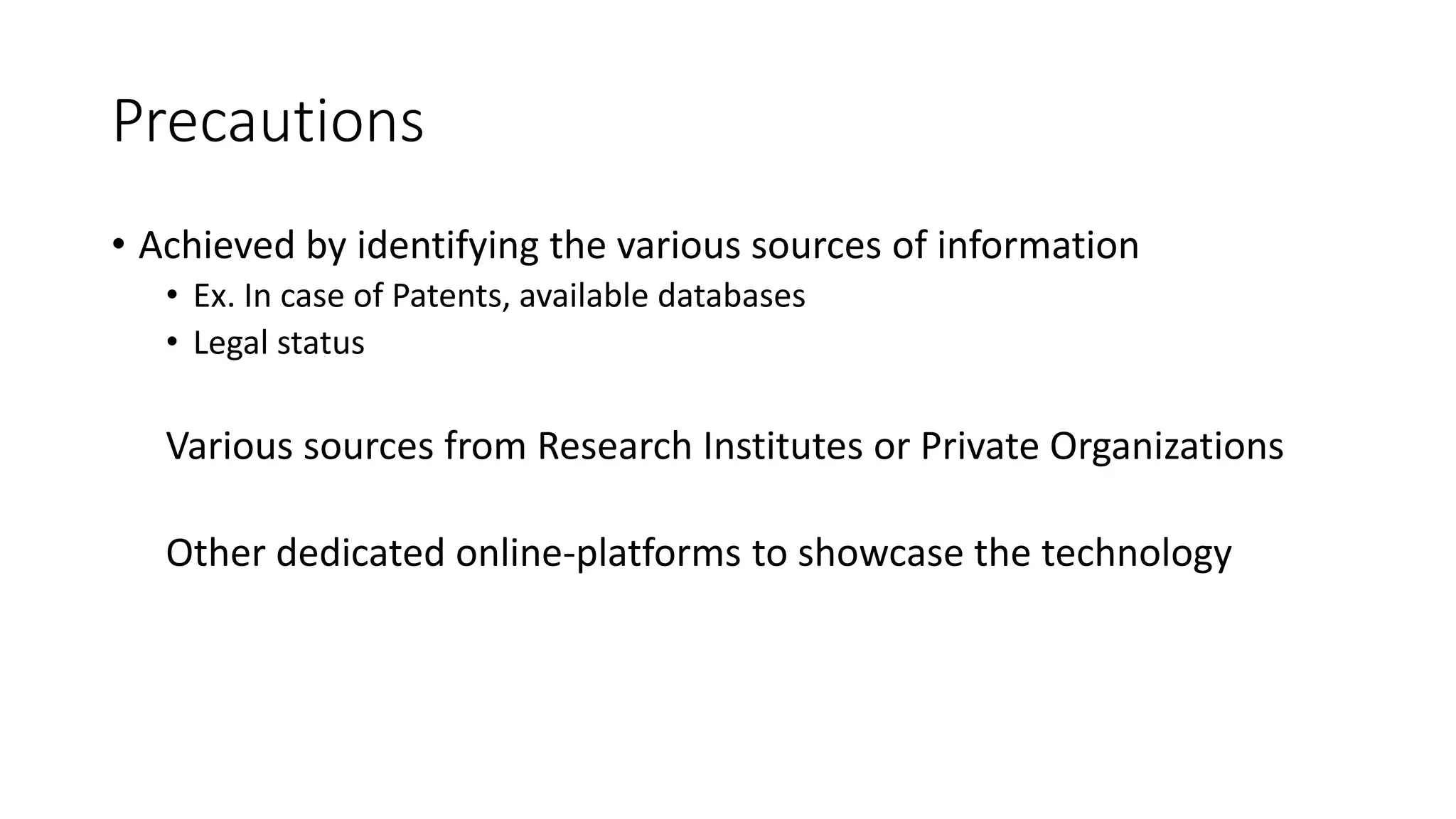
Precautions
• Achieved by identifying the various sources of information
• Ex. In case of Patents, available databases
• Legal status
Various sources from Research Institutes or Private Organizations
Other dedicated online-platforms to showcase the technology
Precautions
• Identify the specific field of interest
• Check if already licensed to any other party which blocks the use of
technology
• Consider industrial applicability of the technology
• Whether licensor is sole owner of IP
• Ownership of improvements over the licensed technology
Precautions
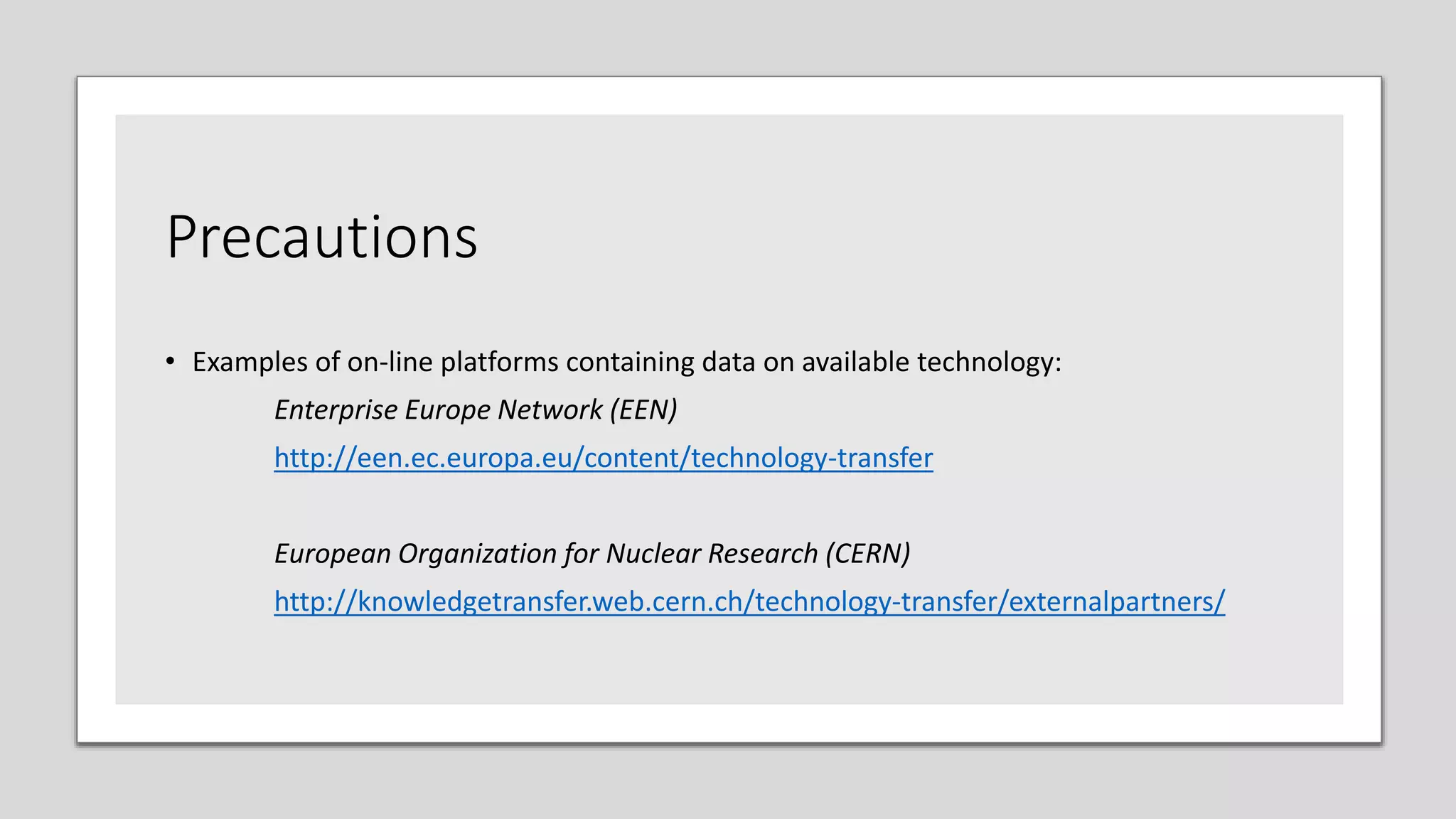
• Examples of on-line platforms containing data on available technology:
Enterprise Europe Network (EEN)
http://een.ec.europa.eu/content/technology-transfer
European Organization for Nuclear Research (CERN)
http://knowledgetransfer.web.cern.ch/technology-transfer/externalpartners/
Precautions
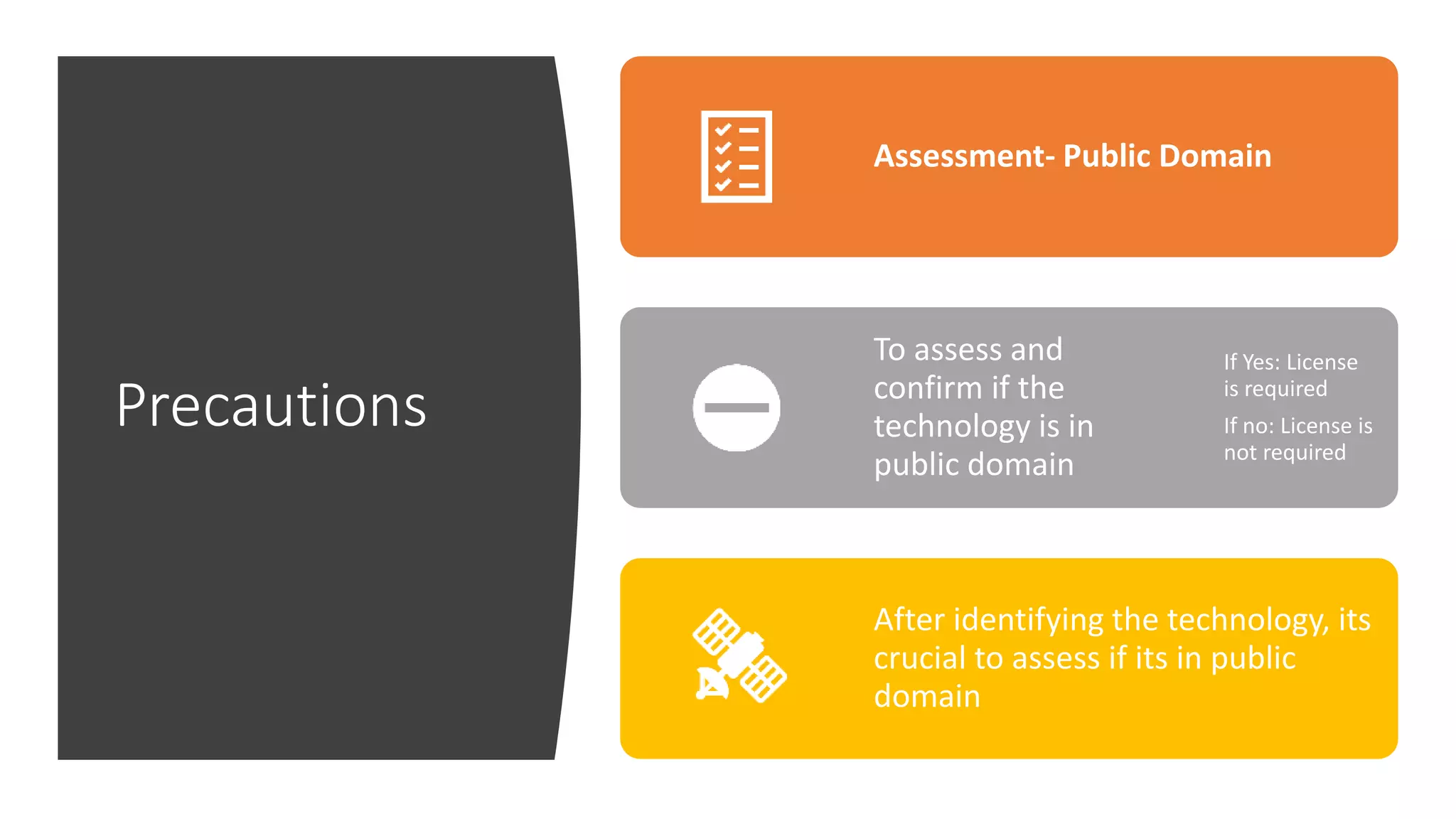
Assessment- Public Domain
To assess and
confirm if the
technology is in
public domain
If Yes: License
is required
If no: License is
not required
After identifying the technology, its
crucial to assess if its in public
domain
Precautions
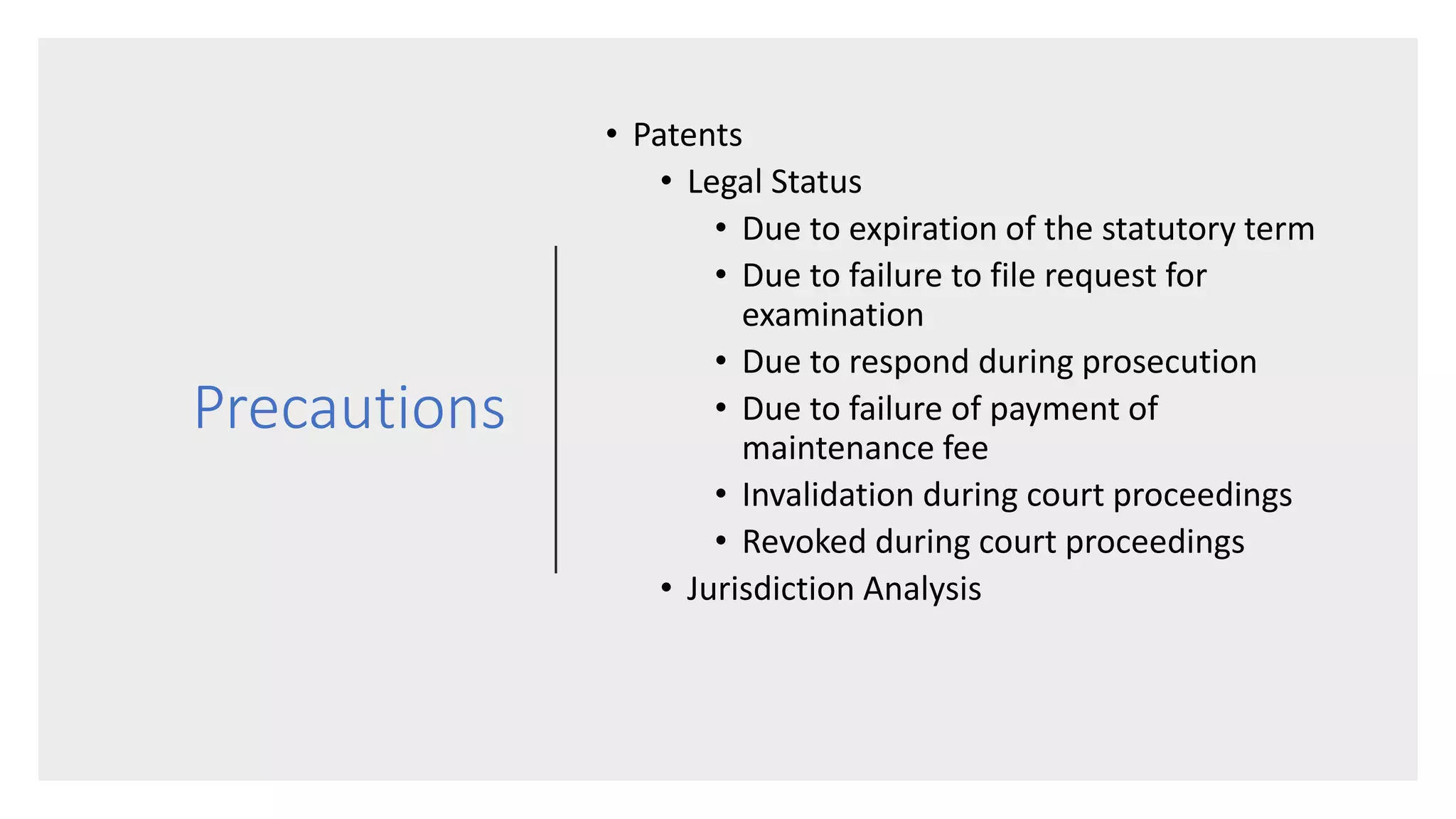
• Patents
• Legal Status
• Due to expiration of the statutory term
• Due to failure to file request for
examination
• Due to respond during prosecution
• Due to failure of payment of
maintenance fee
• Invalidation during court proceedings
• Revoked during court proceedings
• Jurisdiction Analysis
Precautions
• Copyright
• If the source code of software is protected
• Check the status of the Copyright
• Whether author has given this public domain
• Notice to public to use the work
Precautions
Software contains the contact
information i.e Name, email ID,
website etc
Advisable to check the public
status of the work
To check if free source or open
source license
6 Steps
Due
Diligence
Difficult to
invalidate
Timelines Jurisdiction
Phase of the
Technology
Risk of
infringement
Patent
Valuation
Due Diligence
• To identify the distance from the
prior art
• How strong the invention is
• Is it owned by the licensor
• Are the rights are properly assigned
by the inventors
• If already licensed to any
competitors
• Jurisdiction of interest
• The phase of the technology
Difficult to
Invalidate
• The strength of the Patent
• Risk of invalidation
• Any history of litigation
• Current validation of the patent
Timelines
• Actual life of the patent
• Feasibility of using the existing life of the patent
• Whether all statutory timeless are fulfilled
• Legal consequences of timelines
Jurisdiction
• IP rights are territorial
• Due care should be taken while in-licensing
to check the status of IP rights in region of
interest
• Check for status of Patent in each
jurisdiction
• Legal status of family patents is crucial
• Freedom-to-operate in specific jurisdiction
• Based on commercial interest
• Patentable subject matter
Phase of the
Technology
• Concept/Idea
• Prototype
• Practical feasibility
• Enablement with minimal supervision
• Technical assistance
• Field of use
• Advancement in technology
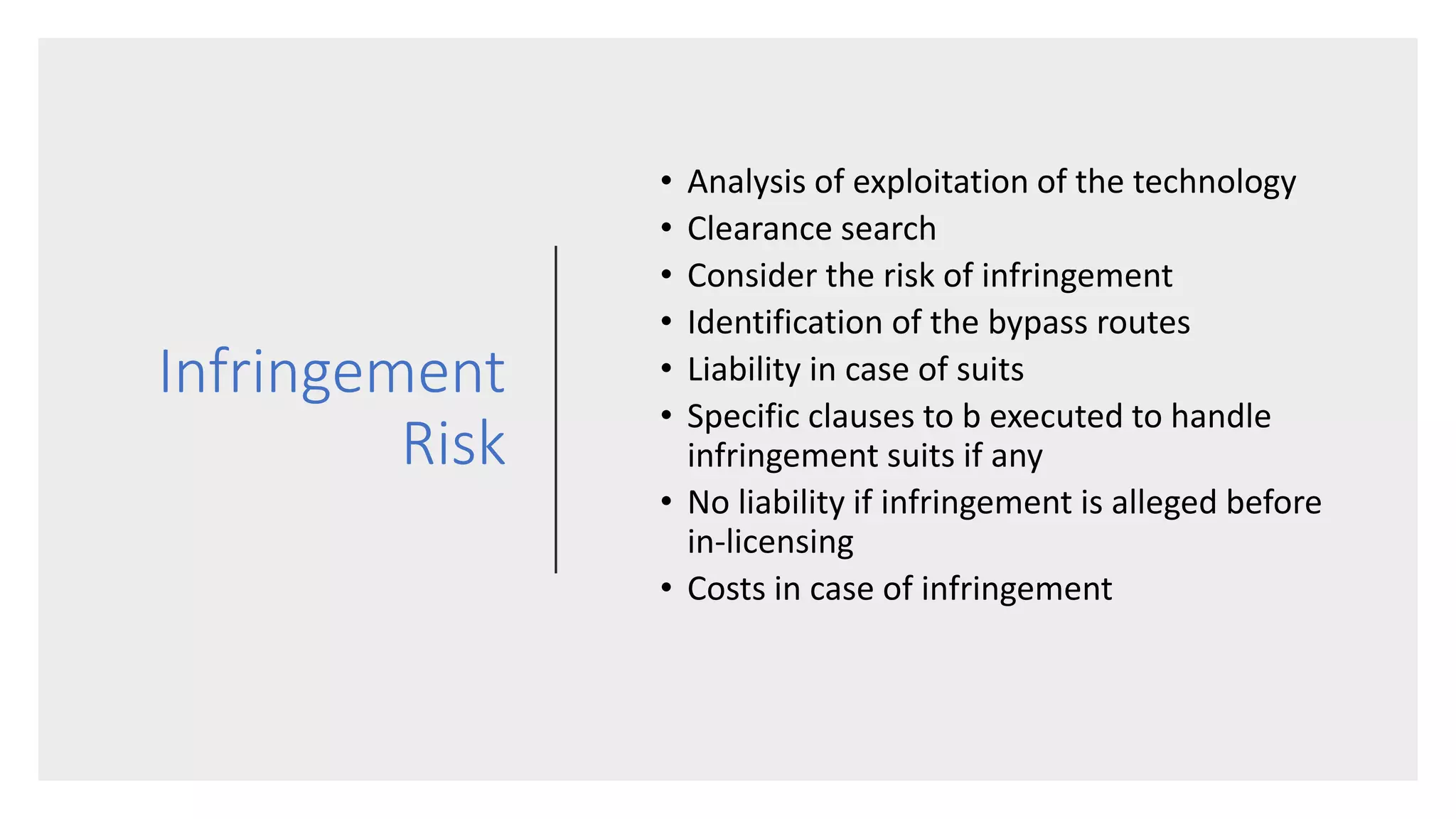
Infringement
Risk
• Analysis of exploitation of the technology
• Clearance search
• Consider the risk of infringement
• Identification of the bypass routes
• Liability in case of suits
• Specific clauses to b executed to handle
infringement suits if any
• No liability if infringement is alleged before
in-licensing
• Costs in case of infringement
Patent
Valuation
• Royalties is based on the value of the patent
• Valuation is very critical
• If you don’t know value of your technology you will
never be able to sell it at right price
• Commercial exploitation is based on value of the
patent
• Consider intended use of the technology
• How different or valuable is your technology?
• Measure strength of the technology/patent
• Distance from prior art (novelty search)
• Ability to sustain a litigation (invalidation/validation
search)
• Market analysis
• Is market ready?
• Market size
• Existing product price and USP
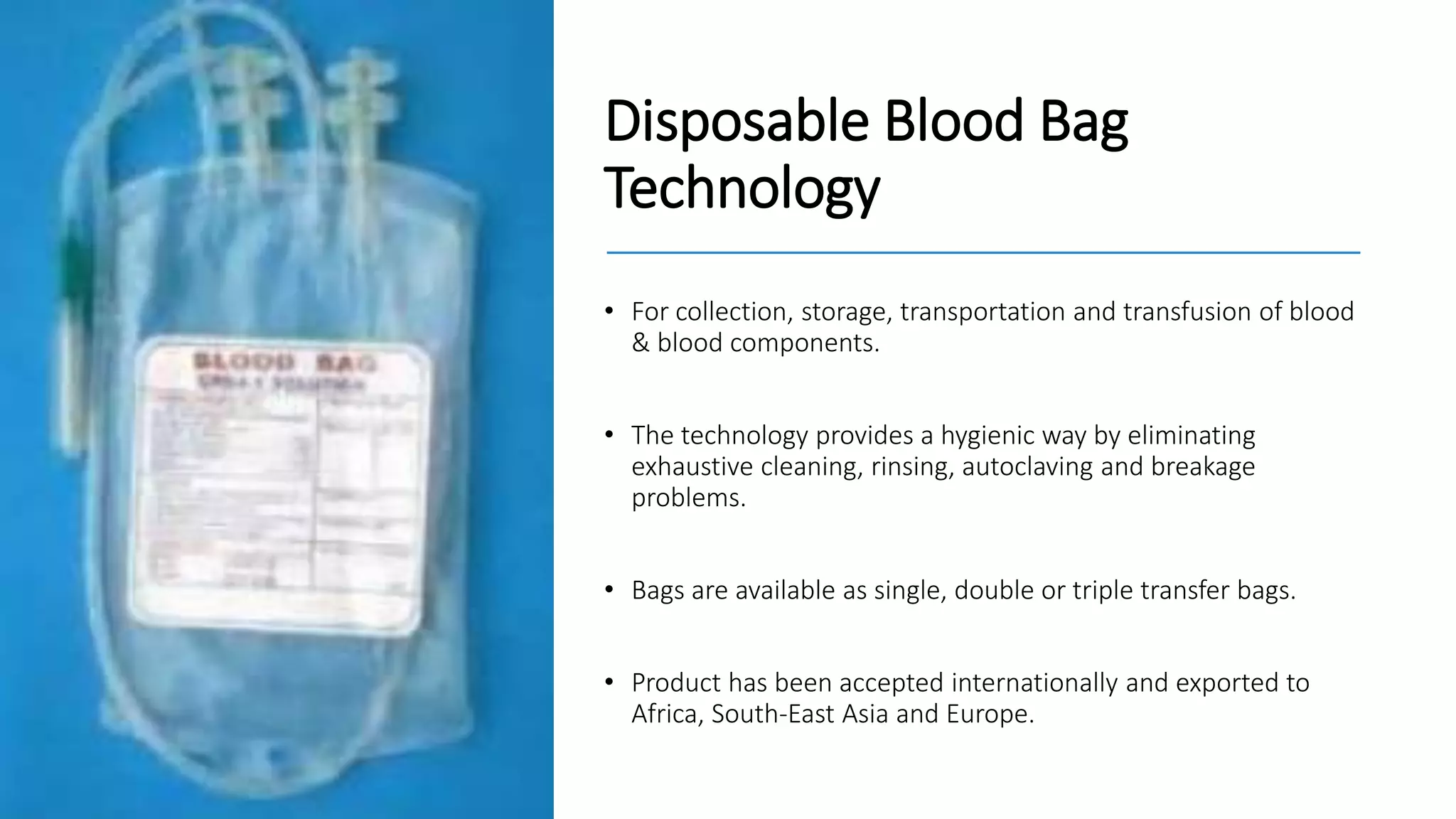
Disposable Blood Bag
Technology
• For collection, storage, transportation and transfusion of blood
& blood components.
• The technology provides a hygienic way by eliminating
exhaustive cleaning, rinsing, autoclaving and breakage
problems.
• Bags are available as single, double or triple transfer bags.
• Product has been accepted internationally and exported to
Africa, South-East Asia and Europe.
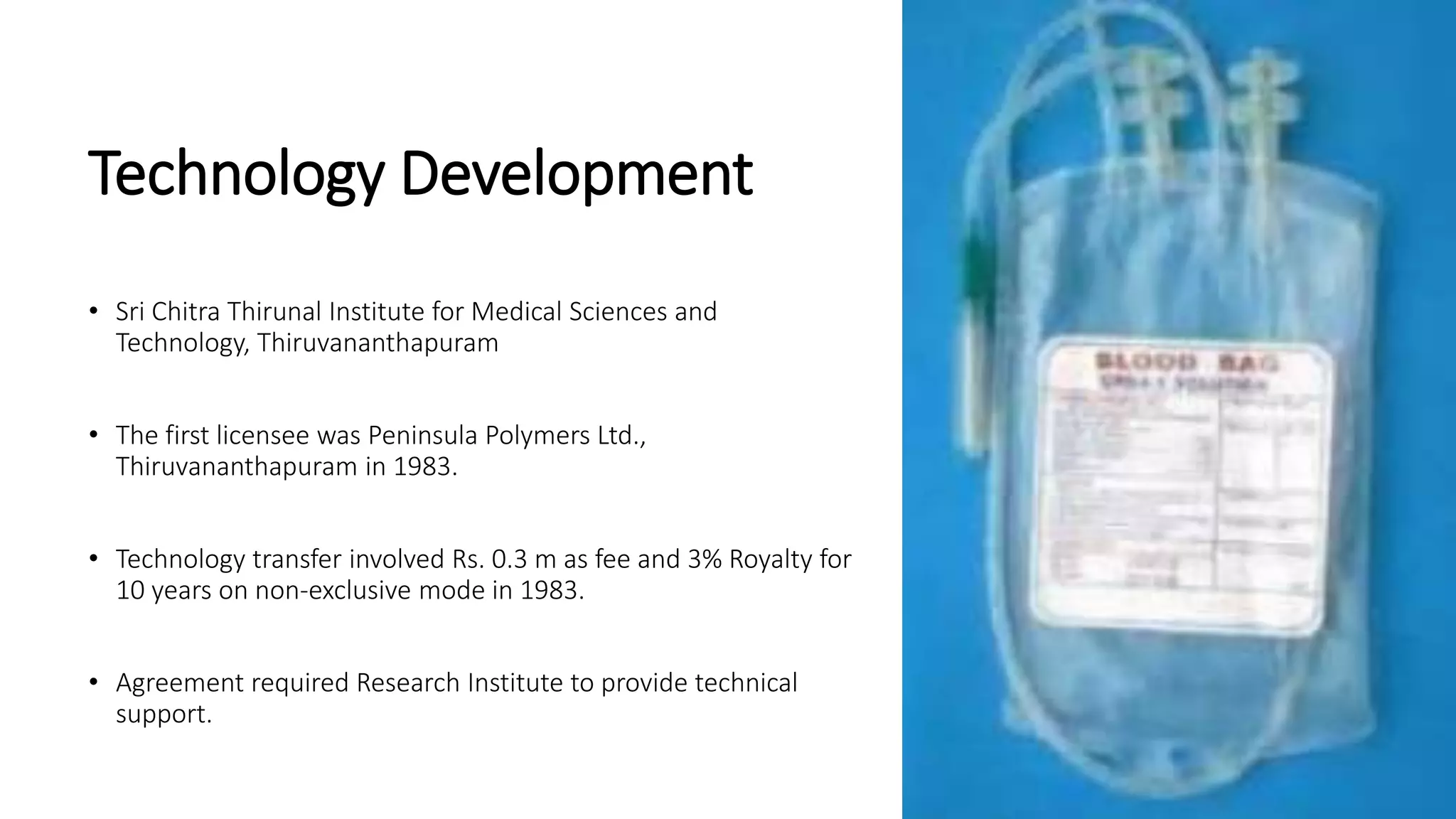
Technology Development
• Sri Chitra Thirunal Institute for Medical Sciences and
Technology, Thiruvananthapuram
• The first licensee was Peninsula Polymers Ltd.,
Thiruvananthapuram in 1983.
• Technology transfer involved Rs. 0.3 m as fee and 3% Royalty for
10 years on non-exclusive mode in 1983.
• Agreement required Research Institute to provide technical
support.
Technology Development
• Product introduced in the market at Rs. 10 a bag compared to Rs. 30 a bag of Japanese origin.
• The licensee started marketing the product successfully & it has been an excellent export to other
countries including Europe.
• As a second licensee, technology was transferred to M/s Hindustan Latex Ltd in 1991.
• Rs. 1.65 m as fee and 3 % royalty for 10 years on non-exclusive mode.
• The plant was completed in 3 years and since then has been exporting.
• During 1994, two other licensees were J Mitra & Company and Electro- medical and Allied
Industries. Each paid Rs. 4.5 m as fee and 3 % royalty for 10 years on non-exclusive mode to both
companies.
THANK YOU

Importance of Due Diligence Before In-Licensing Technology

  • 1.
    Importance of Due DiligenceBefore In- Licensing Technology Origiin IP Solutions LLP
  • 2.
    Licensing A license isa contract between a two or more parties that allows the licensee to make some specified use of the licensor’s property Authorization to use the property Otherwise its not available for the licensee due to legal restrictions Should be in writing Executed with legal clauses May be exclusive or non-exclusive
  • 3.
    Licensing Express or Implied •Lum sum royalty • Running royalty • Cross licensing Licensing in return on royalty
  • 4.
    Purpose Commercialization of research resultsgenerated in universities and publicly funded research institutions Tool for IP collaboration among academic and business organizations Develop or acquire technology
  • 5.
    Technology • Technology statuscan also be classified: • Base technology - is ageing technology which is available or known to all industry participants; it cannot provide competitive advantage because of its widespread use. • Key technology - a proprietary product or process technology already well embodied in the processes and products on the market; is critical to the basis of competition - it is used by its owners to differentiate products and services from those of their competitors.
  • 6.
    Technology • Pacing technology- those emerging technologies which already demonstrated their ability to change the basis of competition and as a result are now moved to the development stage at many companies; these will probably become a key technology in the near future. • Emerging technology - forward looking technologies sometimes under development in substantially different industries; at an early research stage with unknown potential, but promising
  • 7.
    Acquisition of technology maybe to improve their competitiveness in the global market by minimizing time taken to undertake development through internal sources. Licensing the technology may be to leverage and exploit technology and probably desire to see the product in the market.
  • 8.
  • 9.
  • 10.
    In-Licensing Definition • Acquiring rightsof third party technology via agreement • Ex: A manufacturing company acquires rights from an innovator to commercialize the invention Licensing may be for • for all • for few IP Rights Limited or specified period of time
  • 11.
    Out-Licensing Granting the rights ofthe technology to third party Ex: An innovator or academic institution licenses their technology to a manufacture of the product Authorizes a third person to use/commercialize the technology
  • 12.
    Out-Licensing • Generally occursin case of • lack of infrastructure • Lack of manufacturing capabilities • Lack of marketing strategies • Lack of awareness of demand/need of the product
  • 13.
    What to in-license •Technology licensing occurs only when one of the parties owns valuable intangible assets i.e Intellectual Property (IP) • Patents • Know-how • Trade secrets • Copyrights • Industrial Designs • Semi conductors circuits
  • 14.
  • 15.
    What to in- license Iftechnology is not protected: No license Technology in Public domain: No license
  • 16.
    Why? • Alternative toinvest in technology creation or R&D • Saves time • To bring new products into market • To balance the competition • Lack of resources Human or Financial
  • 17.
    Why? Needs technologies whichare part of industry standards set by standard-setting organizations To meet the requirements/demand of the public
  • 18.
    Advantages Faster access tocertain markets To meet the growth of innovative technologies without R& D Can invest with proven methods without any trial and error Saves huge investments and time Collaborations Accessing expertise Ease and quick launch of the product
  • 19.
    Risks Technology may notwork High royalties Failure in market Technology may become obsolete Unfavorable or one-sided beneficial clauses Involves huge cost Survival in the market
  • 20.
    Risks Withstand the competition Enablement Lackof technical expertise/support Practically not feasible Authentication Lack of awareness of legal complications Lack of IP awareness
  • 21.
    Risks False documents Incomplete data Lackof market awareness Specific clauses are not executed No proper valuation of IP Lack of confidentiality Strength of IP
  • 22.
    Risks Exclusivity clause Pricing Estimation ofroyalties Timelines Legal consequences
  • 23.
    Precautions • Identifying thetechnology of interest Core step To identify the relevant technology Based on experience Availability of the resources Infrastructure
  • 24.
    Precautions • Achieved byidentifying the various sources of information • Ex. In case of Patents, available databases • Legal status Various sources from Research Institutes or Private Organizations Other dedicated online-platforms to showcase the technology
  • 25.
    Precautions • Identify thespecific field of interest • Check if already licensed to any other party which blocks the use of technology • Consider industrial applicability of the technology • Whether licensor is sole owner of IP • Ownership of improvements over the licensed technology
  • 26.
    Precautions • Examples ofon-line platforms containing data on available technology: Enterprise Europe Network (EEN) http://een.ec.europa.eu/content/technology-transfer European Organization for Nuclear Research (CERN) http://knowledgetransfer.web.cern.ch/technology-transfer/externalpartners/
  • 27.
    Precautions Assessment- Public Domain Toassess and confirm if the technology is in public domain If Yes: License is required If no: License is not required After identifying the technology, its crucial to assess if its in public domain
  • 28.
    Precautions • Patents • LegalStatus • Due to expiration of the statutory term • Due to failure to file request for examination • Due to respond during prosecution • Due to failure of payment of maintenance fee • Invalidation during court proceedings • Revoked during court proceedings • Jurisdiction Analysis
  • 29.
    Precautions • Copyright • Ifthe source code of software is protected • Check the status of the Copyright • Whether author has given this public domain • Notice to public to use the work
  • 30.
    Precautions Software contains thecontact information i.e Name, email ID, website etc Advisable to check the public status of the work To check if free source or open source license
  • 31.
    6 Steps Due Diligence Difficult to invalidate TimelinesJurisdiction Phase of the Technology Risk of infringement Patent Valuation
  • 32.
    Due Diligence • Toidentify the distance from the prior art • How strong the invention is • Is it owned by the licensor • Are the rights are properly assigned by the inventors • If already licensed to any competitors • Jurisdiction of interest • The phase of the technology
  • 33.
    Difficult to Invalidate • Thestrength of the Patent • Risk of invalidation • Any history of litigation • Current validation of the patent
  • 34.
    Timelines • Actual lifeof the patent • Feasibility of using the existing life of the patent • Whether all statutory timeless are fulfilled • Legal consequences of timelines
  • 35.
    Jurisdiction • IP rightsare territorial • Due care should be taken while in-licensing to check the status of IP rights in region of interest • Check for status of Patent in each jurisdiction • Legal status of family patents is crucial • Freedom-to-operate in specific jurisdiction • Based on commercial interest • Patentable subject matter
  • 36.
    Phase of the Technology •Concept/Idea • Prototype • Practical feasibility • Enablement with minimal supervision • Technical assistance • Field of use • Advancement in technology
  • 37.
    Infringement Risk • Analysis ofexploitation of the technology • Clearance search • Consider the risk of infringement • Identification of the bypass routes • Liability in case of suits • Specific clauses to b executed to handle infringement suits if any • No liability if infringement is alleged before in-licensing • Costs in case of infringement
  • 38.
    Patent Valuation • Royalties isbased on the value of the patent • Valuation is very critical • If you don’t know value of your technology you will never be able to sell it at right price • Commercial exploitation is based on value of the patent • Consider intended use of the technology
  • 39.
    • How differentor valuable is your technology? • Measure strength of the technology/patent • Distance from prior art (novelty search) • Ability to sustain a litigation (invalidation/validation search)
  • 40.
    • Market analysis •Is market ready? • Market size • Existing product price and USP
  • 41.
    Disposable Blood Bag Technology •For collection, storage, transportation and transfusion of blood & blood components. • The technology provides a hygienic way by eliminating exhaustive cleaning, rinsing, autoclaving and breakage problems. • Bags are available as single, double or triple transfer bags. • Product has been accepted internationally and exported to Africa, South-East Asia and Europe.
  • 42.
    Technology Development • SriChitra Thirunal Institute for Medical Sciences and Technology, Thiruvananthapuram • The first licensee was Peninsula Polymers Ltd., Thiruvananthapuram in 1983. • Technology transfer involved Rs. 0.3 m as fee and 3% Royalty for 10 years on non-exclusive mode in 1983. • Agreement required Research Institute to provide technical support.
  • 43.
    Technology Development • Productintroduced in the market at Rs. 10 a bag compared to Rs. 30 a bag of Japanese origin. • The licensee started marketing the product successfully & it has been an excellent export to other countries including Europe. • As a second licensee, technology was transferred to M/s Hindustan Latex Ltd in 1991. • Rs. 1.65 m as fee and 3 % royalty for 10 years on non-exclusive mode. • The plant was completed in 3 years and since then has been exporting. • During 1994, two other licensees were J Mitra & Company and Electro- medical and Allied Industries. Each paid Rs. 4.5 m as fee and 3 % royalty for 10 years on non-exclusive mode to both companies.
  • 44.