2nd
Semester MBA
Human Resource Management
Dr.Anindita Das
Assistant Prof. -HR
Topic :Introduction to HRM
Class-1
Today’s Learning
• To understand the meaning of HRM.
• To discuss the nature and functions of HRM
• Human: refers to the skilled workforce in an organization.
• Resource: refers to limited availability or scarce.
• Management: refers how to optimize and make best use of such
limited or scarce resource so as to meet the organization goals and
objectives.
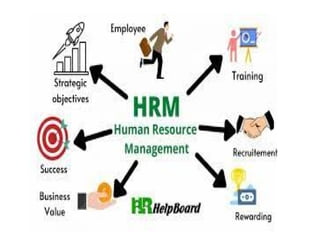
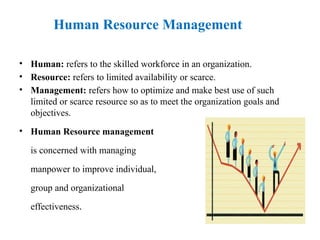
• Human Resource management
is concerned with managing
manpower to improve individual,
group and organizational
effectiveness.
Human Resource Management
Definition of HRM
• HRM is the planning, organizing, directing and
controlling of the procurement, development,
compensation, integration, maintenance and
separation of human resources to the end that
individual, organizational and social objectives
are accomplished.
- Edwin B. Flippo
Scope of HRM
• Personnel Aspect : Such as manpower planning, recruitment,
selection, placement, transfer, promotion, T&D, Layoff &
retrenchment, remuneration, incentives, productivity, etc.
• Welfare aspect: It Deals with working conditions and
amenities such as canteen, rest and lunch rooms, housing,
transport, medical assistance, education, health & safety,
recreation facilities etc.
• Industrial Relation aspect: This covers union-management
relations, joint consultation, collective bargaining, grievance
and disciplinary procedures, settlement of disputes, etc.
• Development Aspect : Training & development of the
employee, succession & career planning, identification of
special talents etc.
Objectives of HRM
• To help the organization reach its goal
• To employ the skills and abilities of the workforce efficiently
• To provide the organization with well-trained and well –
motivated employee
• To increase to the fullest the employee’s job satisfaction and self-
actualization
• To develop and maintain a quality of work life
• To communicate HR policies to all employees
• To be ethically and socially responsive to the needs of society
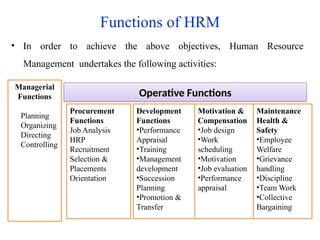
Functions of HRM
• In order to achieve the above objectives, Human Resource
Management undertakes the following activities:
Procurement
Functions
Job Analysis
HRP
Recruitment
Selection &
Placements
Orientation
Managerial
Functions
Planning
Organizing
Directing
Controlling
Development
Functions
•Performance
Appraisal
•Training
•Management
development
•Succession
Planning
•Promotion &
Transfer
Motivation &
Compensation
•Job design
•Work
scheduling
•Motivation
•Job evaluation
•Performance
appraisal
Maintenance
Health &
Safety
•Employee
Welfare
•Grievance
handling
•Discipline
•Team Work
•Collective
Bargaining
Operative Functions
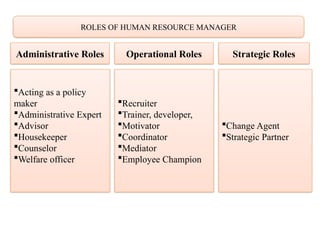
Administrative Roles Operational Roles Strategic Roles
Acting as a policy
maker
Administrative Expert
Advisor
Housekeeper
Counselor
Welfare officer
Recruiter
Trainer, developer,
Motivator
Coordinator
Mediator
Employee Champion
Change Agent
Strategic Partner
ROLES OF HUMAN RESOURCE MANAGER
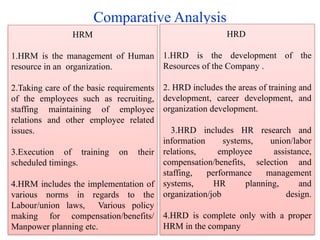
Comparative Analysis
HRM
1.HRM is the management of Human
resource in an organization.
2.Taking care of the basic requirements
of the employees such as recruiting,
staffing maintaining of employee
relations and other employee related
issues.
3.Execution of training on their
scheduled timings.
4.HRM includes the implementation of
various norms in regards to the
Labour/union laws, Various policy
making for compensation/benefits/
Manpower planning etc.
HRD
1.HRD is the development of the
Resources of the Company .
2. HRD includes the areas of training and
development, career development, and
organization development.
3.HRD includes HR research and
information systems, union/labor
relations, employee assistance,
compensation/benefits, selection and
staffing, performance management
systems, HR planning, and
organization/job design.
4.HRD is complete only with a proper
HRM in the company
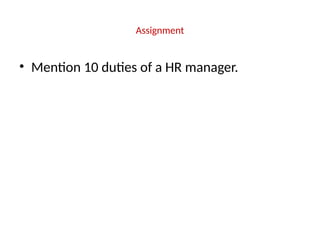
Assignment
• Mention 10 duties of a HR manager.
Thank you

MODULE-1.HRM.Class-1.pptx Human researching management

  • 1.
    2nd Semester MBA Human ResourceManagement Dr.Anindita Das Assistant Prof. -HR Topic :Introduction to HRM Class-1
  • 3.
    Today’s Learning • Tounderstand the meaning of HRM. • To discuss the nature and functions of HRM
  • 4.
    • Human: refersto the skilled workforce in an organization. • Resource: refers to limited availability or scarce. • Management: refers how to optimize and make best use of such limited or scarce resource so as to meet the organization goals and objectives. • Human Resource management is concerned with managing manpower to improve individual, group and organizational effectiveness. Human Resource Management
  • 5.
    Definition of HRM •HRM is the planning, organizing, directing and controlling of the procurement, development, compensation, integration, maintenance and separation of human resources to the end that individual, organizational and social objectives are accomplished. - Edwin B. Flippo
  • 6.
    Scope of HRM •Personnel Aspect : Such as manpower planning, recruitment, selection, placement, transfer, promotion, T&D, Layoff & retrenchment, remuneration, incentives, productivity, etc. • Welfare aspect: It Deals with working conditions and amenities such as canteen, rest and lunch rooms, housing, transport, medical assistance, education, health & safety, recreation facilities etc. • Industrial Relation aspect: This covers union-management relations, joint consultation, collective bargaining, grievance and disciplinary procedures, settlement of disputes, etc. • Development Aspect : Training & development of the employee, succession & career planning, identification of special talents etc.
  • 7.
    Objectives of HRM •To help the organization reach its goal • To employ the skills and abilities of the workforce efficiently • To provide the organization with well-trained and well – motivated employee • To increase to the fullest the employee’s job satisfaction and self- actualization • To develop and maintain a quality of work life • To communicate HR policies to all employees • To be ethically and socially responsive to the needs of society
  • 8.
    Functions of HRM •In order to achieve the above objectives, Human Resource Management undertakes the following activities: Procurement Functions Job Analysis HRP Recruitment Selection & Placements Orientation Managerial Functions Planning Organizing Directing Controlling Development Functions •Performance Appraisal •Training •Management development •Succession Planning •Promotion & Transfer Motivation & Compensation •Job design •Work scheduling •Motivation •Job evaluation •Performance appraisal Maintenance Health & Safety •Employee Welfare •Grievance handling •Discipline •Team Work •Collective Bargaining Operative Functions
  • 9.
    Administrative Roles OperationalRoles Strategic Roles Acting as a policy maker Administrative Expert Advisor Housekeeper Counselor Welfare officer Recruiter Trainer, developer, Motivator Coordinator Mediator Employee Champion Change Agent Strategic Partner ROLES OF HUMAN RESOURCE MANAGER
  • 10.
    Comparative Analysis HRM 1.HRM isthe management of Human resource in an organization. 2.Taking care of the basic requirements of the employees such as recruiting, staffing maintaining of employee relations and other employee related issues. 3.Execution of training on their scheduled timings. 4.HRM includes the implementation of various norms in regards to the Labour/union laws, Various policy making for compensation/benefits/ Manpower planning etc. HRD 1.HRD is the development of the Resources of the Company . 2. HRD includes the areas of training and development, career development, and organization development. 3.HRD includes HR research and information systems, union/labor relations, employee assistance, compensation/benefits, selection and staffing, performance management systems, HR planning, and organization/job design. 4.HRD is complete only with a proper HRM in the company
  • 11.
    Assignment • Mention 10duties of a HR manager.
  • 12.