AN OVERVIEW OF DIGITAL MEDIA STRATEGY
 Basic terms
 Current digital environment
 Inbound marketing
 Owned, earned, paid media
TERMS
 Public Relations
 Build a hospitable, supportive environment for an organization,
using two-way communication
 Advertising
 Impersonal, one-way, paid communication in which the sponsor
is identified
 Marketing communication
 Focus on products and services that respond to customers’
wants and needs for economic objectives
TERMS
 Integrated communication
 Blending of these communication functions
 Use PR, advertising, marketing communication holistically to
achieve goals for an organization
 Strategic communication
 Planned/intentional communication activities that grow out of
informed, research-based understanding of current situations,
goals/objectives, and target audiences
 Not random activity
INBOUND MARKETING
 A key principle in today’s digital marketing environment
BACKGROUND
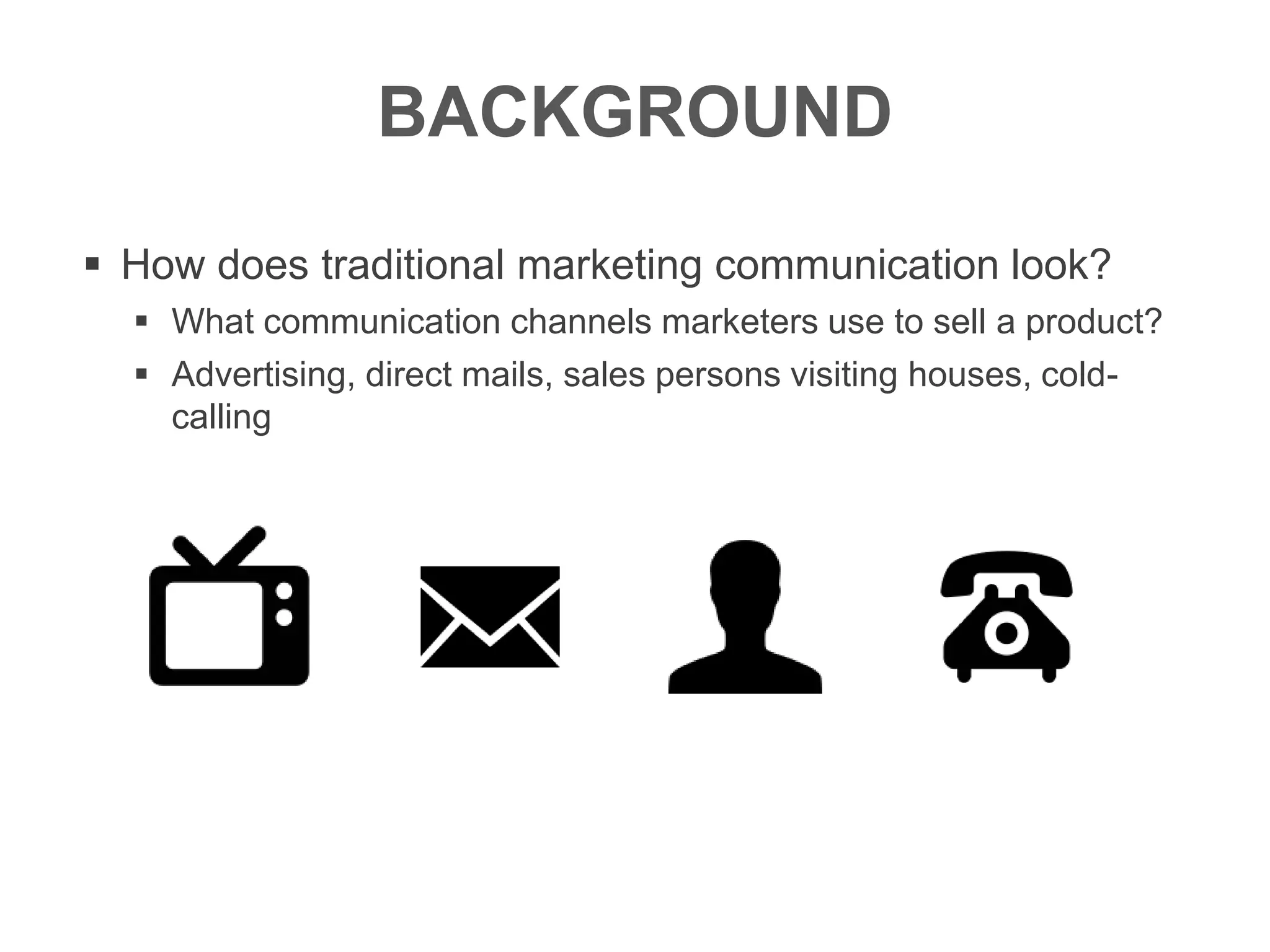
 How does traditional marketing communication look?
 What communication channels marketers use to sell a product?
 Advertising, direct mails, sales persons visiting houses, cold-
calling
BACKGROUND
 What do you do when you have questions to answer,
problems to solve, or items to purchase?
 Typically go online and actively gather information
 In this process, you may not encounter brand-centered sales
messages
BACKGROUND
 Inbound marketing captures this shift in consumer
behavior and decision-making
BACKGROUND
 Traditionally before the Internet
 Marketers focused on outbound marketing – push sales
messages outward as far as possible (direct mail, cold-calling,
advertising etc.)
 Interruption, organization-centered, passive consumers
 Interruption marketing: marketers purchase the right to interrupt
consumers’ activity and demand their attention (e.g., TV ads),
forcing them to listen to brand/organization-centered messages
 Consumers primarily relied on information distributed by brands
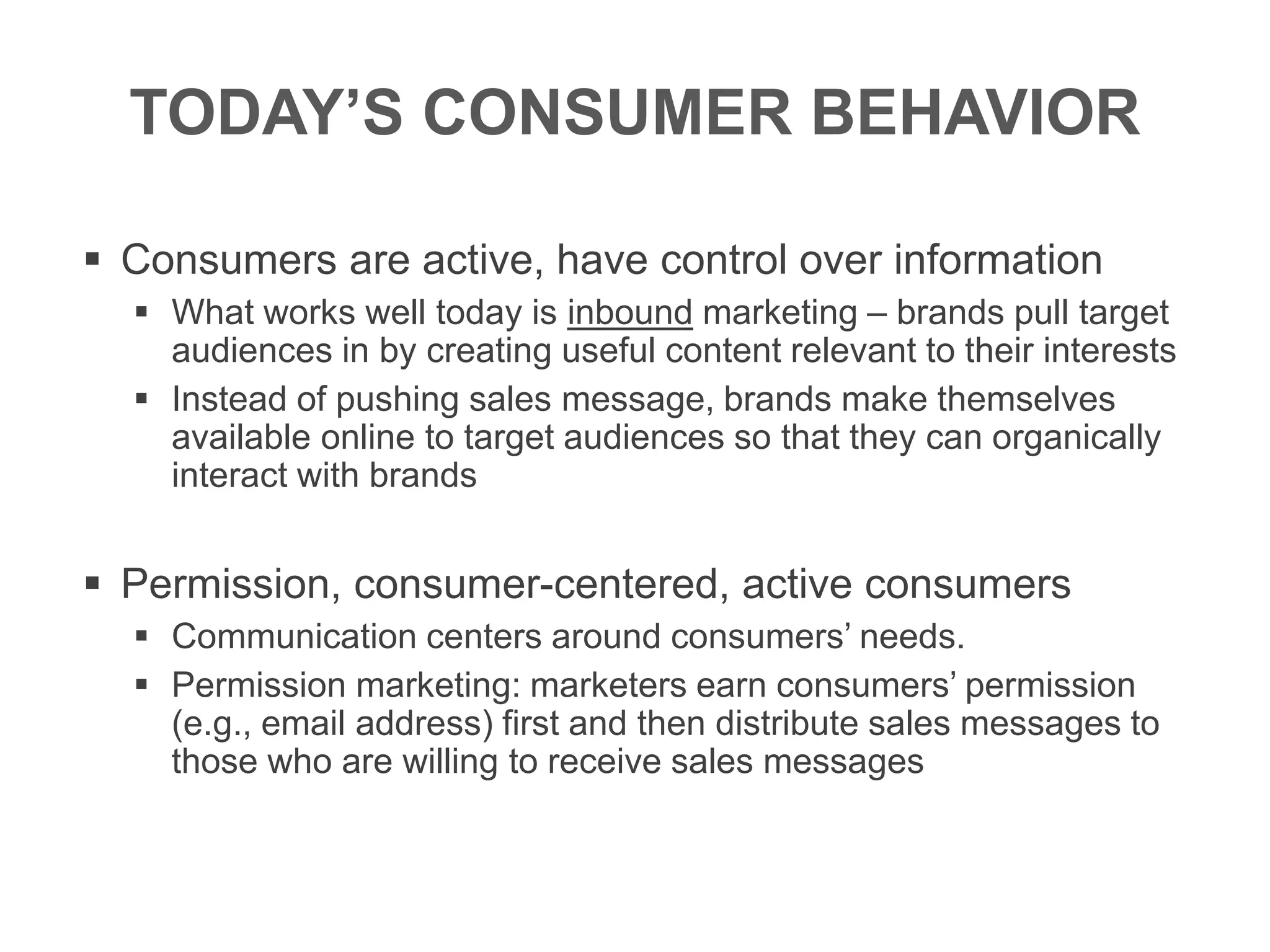
TODAY’S CONSUMER BEHAVIOR
 Consumers are active, have control over information
 What works well today is inbound marketing – brands pull target
audiences in by creating useful content relevant to their interests
 Instead of pushing sales message, brands make themselves
available online to target audiences so that they can organically
interact with brands
 Permission, consumer-centered, active consumers
 Communication centers around consumers’ needs.
 Permission marketing: marketers earn consumers’ permission
(e.g., email address) first and then distribute sales messages to
those who are willing to receive sales messages
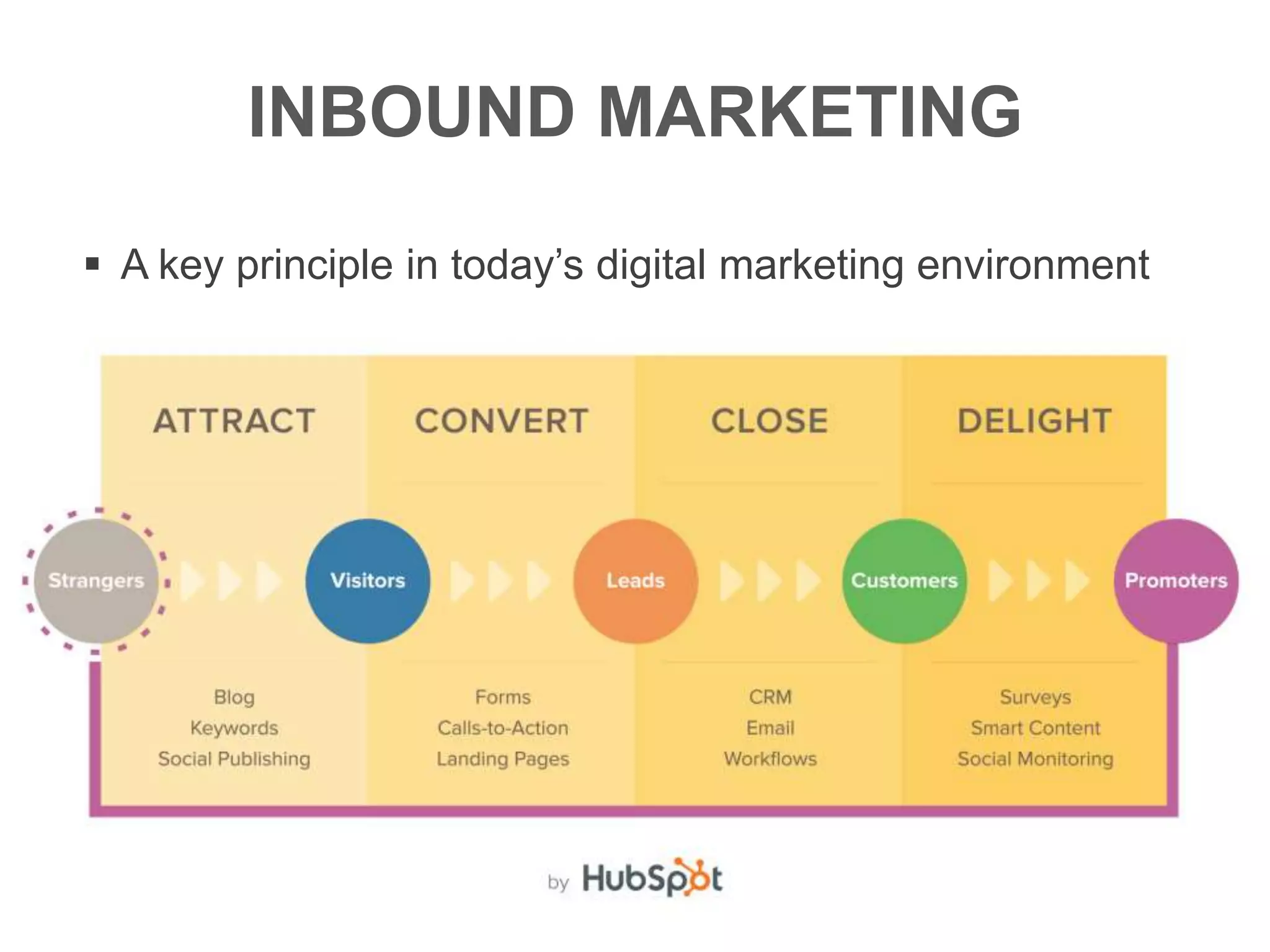
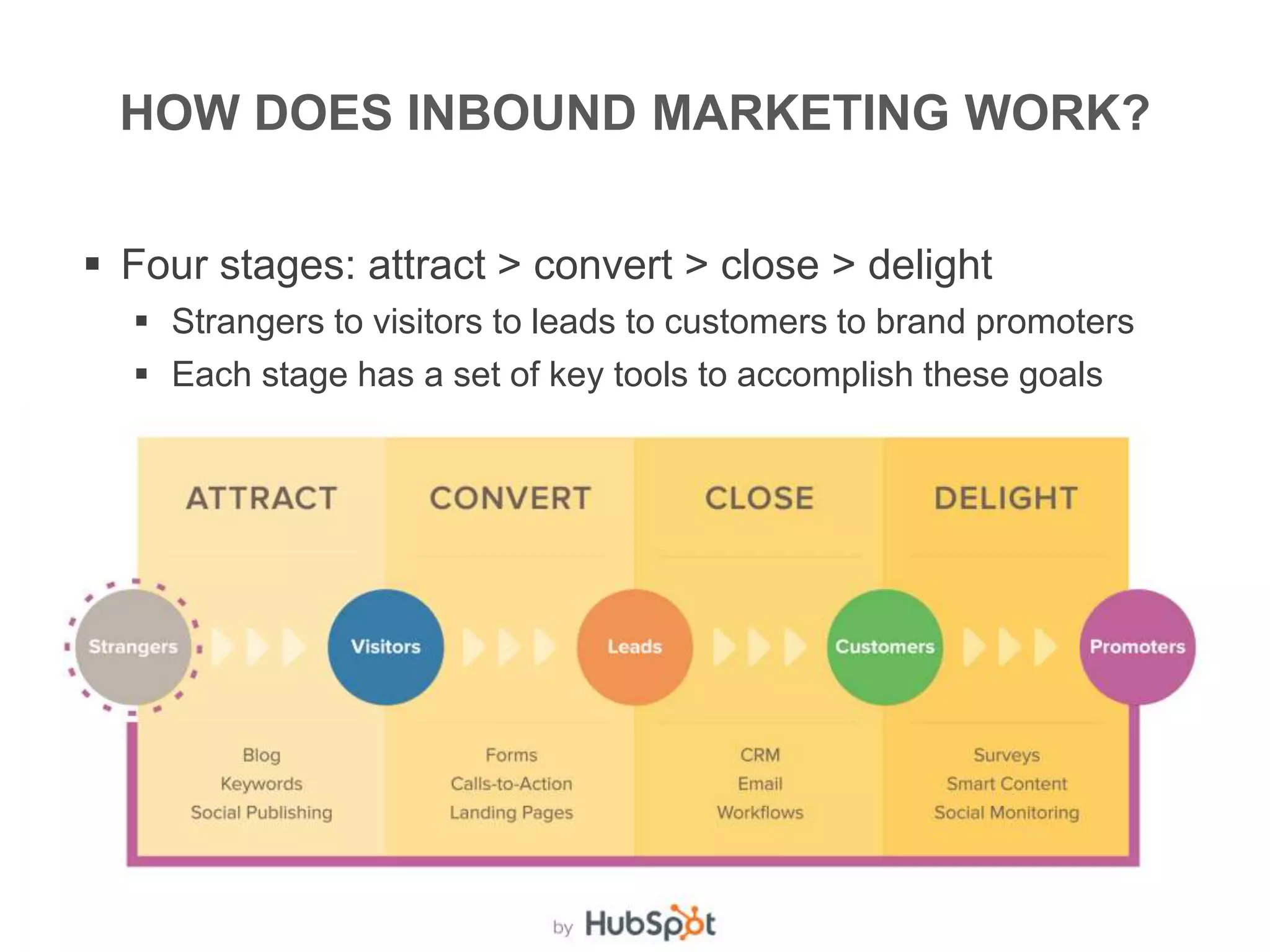
HOW DOES INBOUND MARKETING WORK?
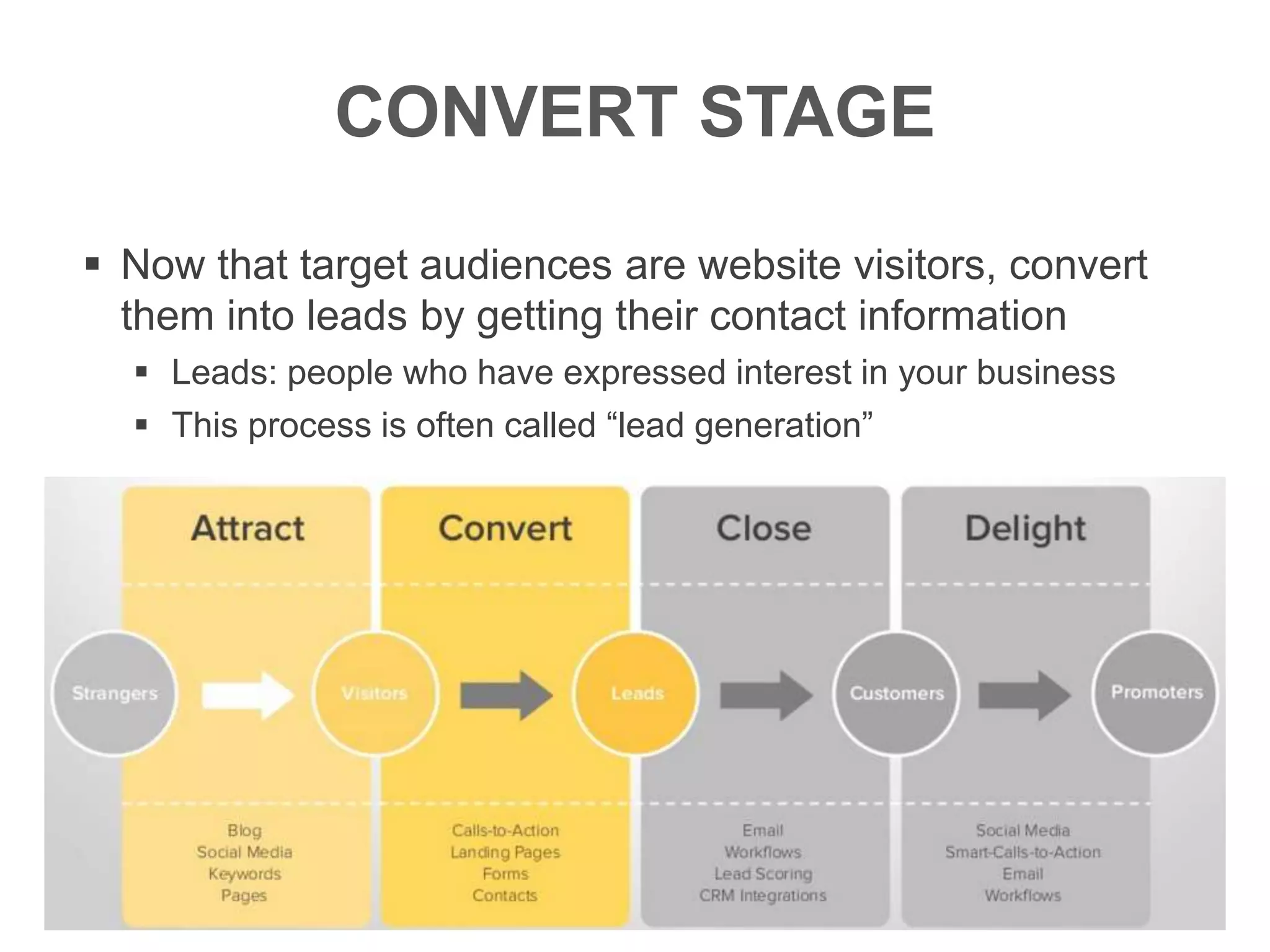
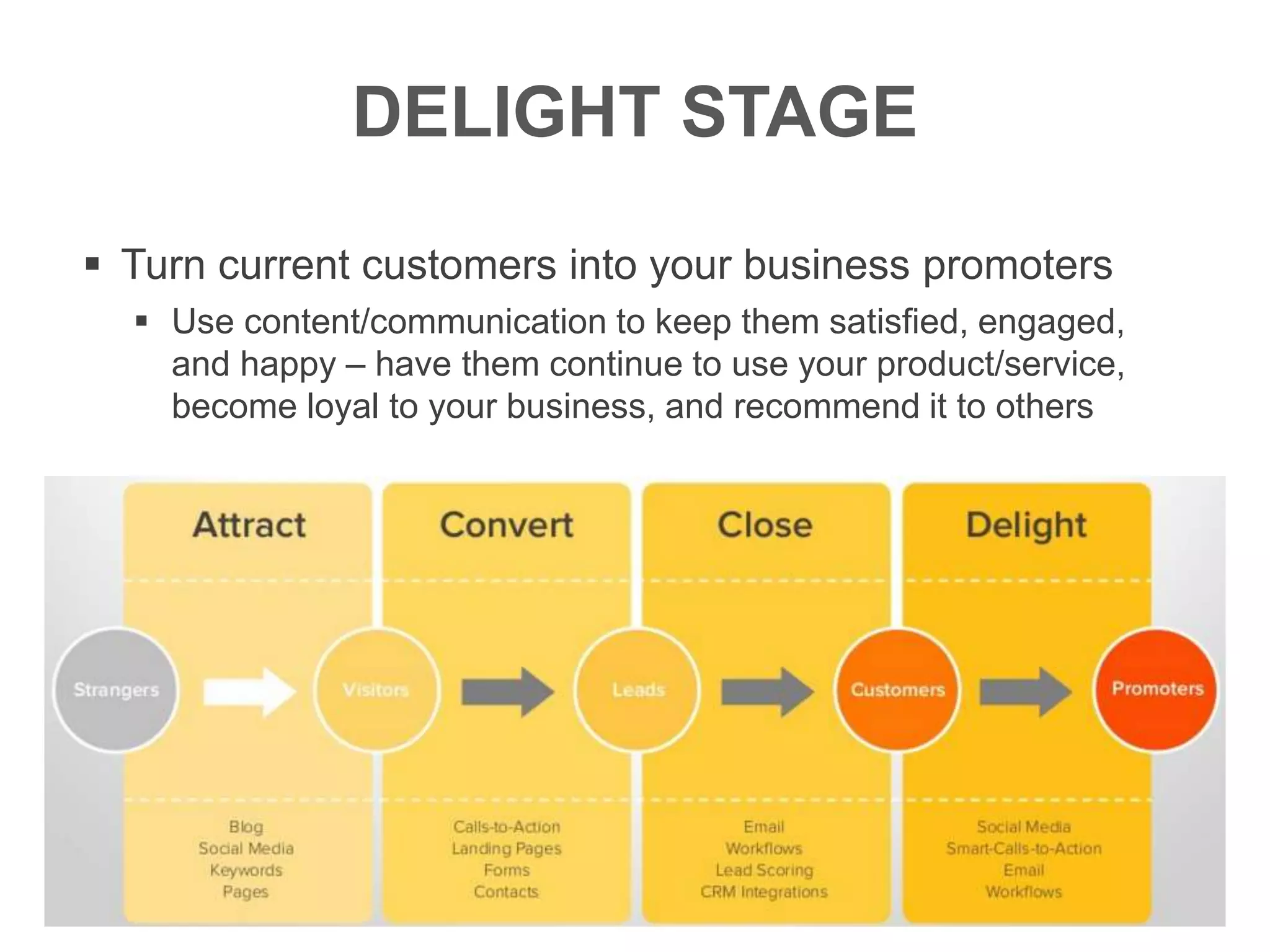
 Four stages: attract > convert > close > delight
 Strangers to visitors to leads to customers to brand promoters
 Each stage has a set of key tools to accomplish these goals
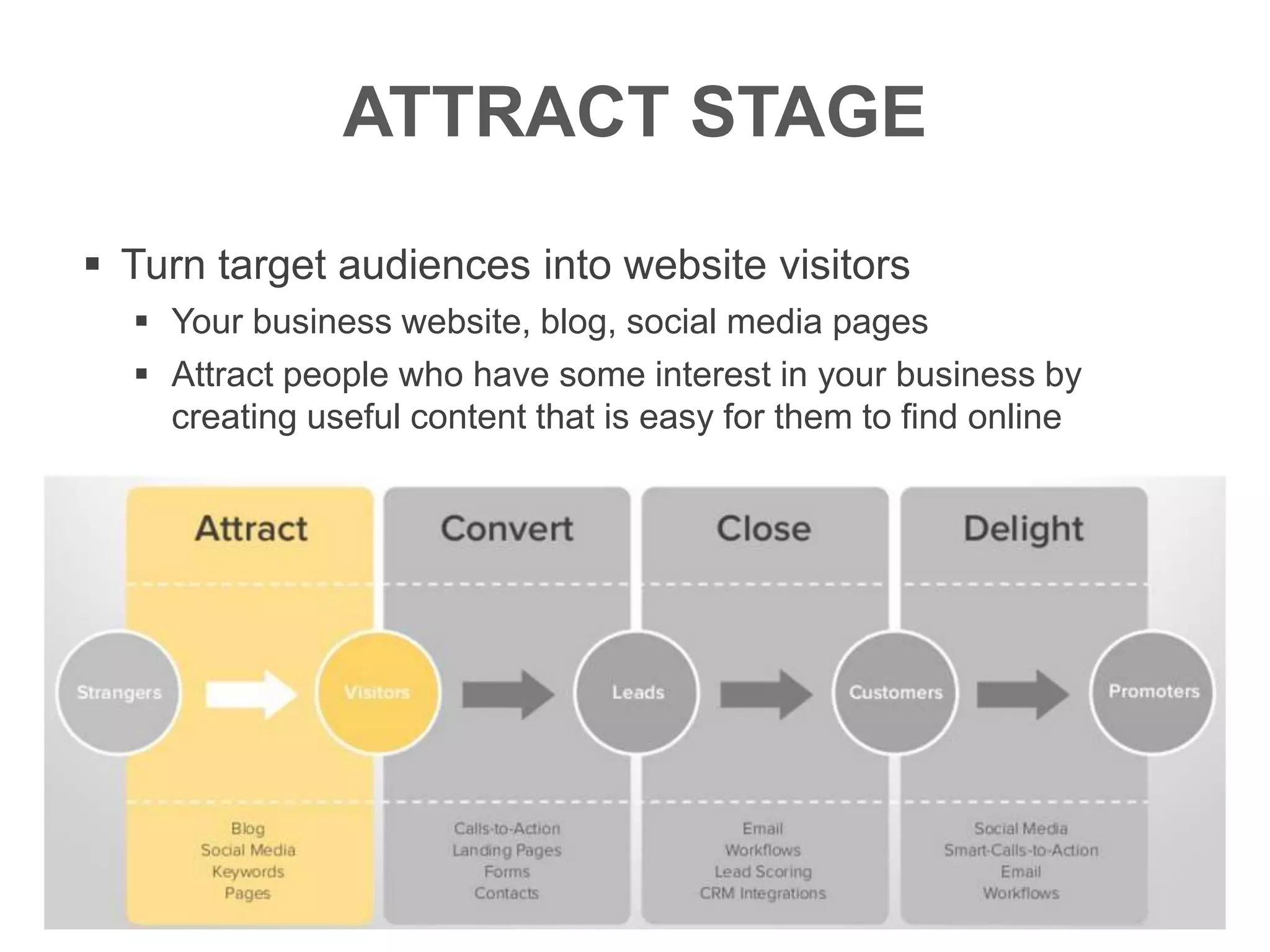
ATTRACT STAGE
 Turn target audiences into website visitors
 Your business website, blog, social media pages
 Attract people who have some interest in your business by
creating useful content that is easy for them to find online
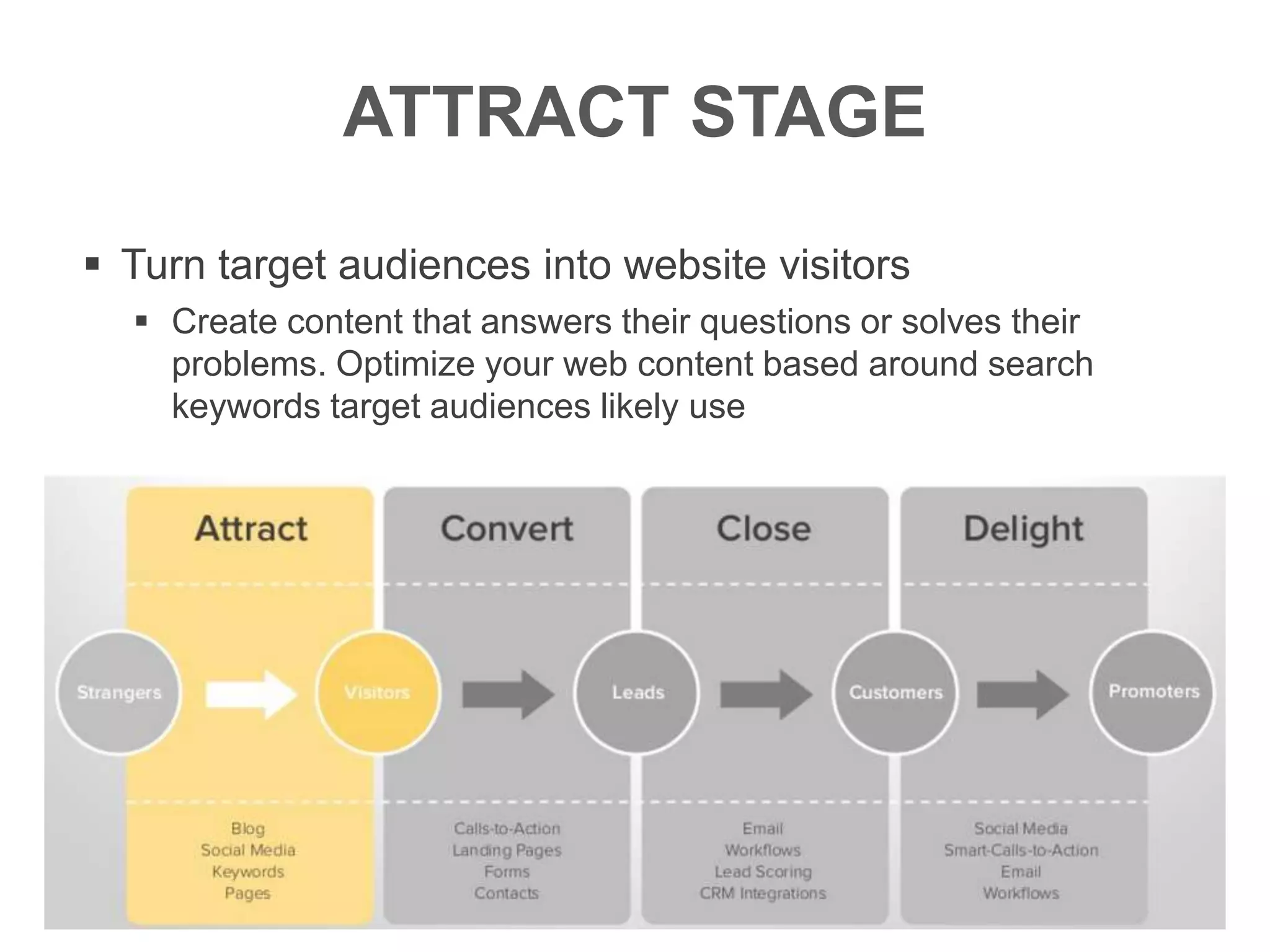
ATTRACT STAGE
 Turn target audiences into website visitors
 Create content that answers their questions or solves their
problems. Optimize your web content based around search
keywords target audiences likely use
CONVERT STAGE
 Now that target audiences are website visitors, convert
them into leads by getting their contact information
 Leads: people who have expressed interest in your business
 This process is often called “lead generation”
CONVERT STAGE
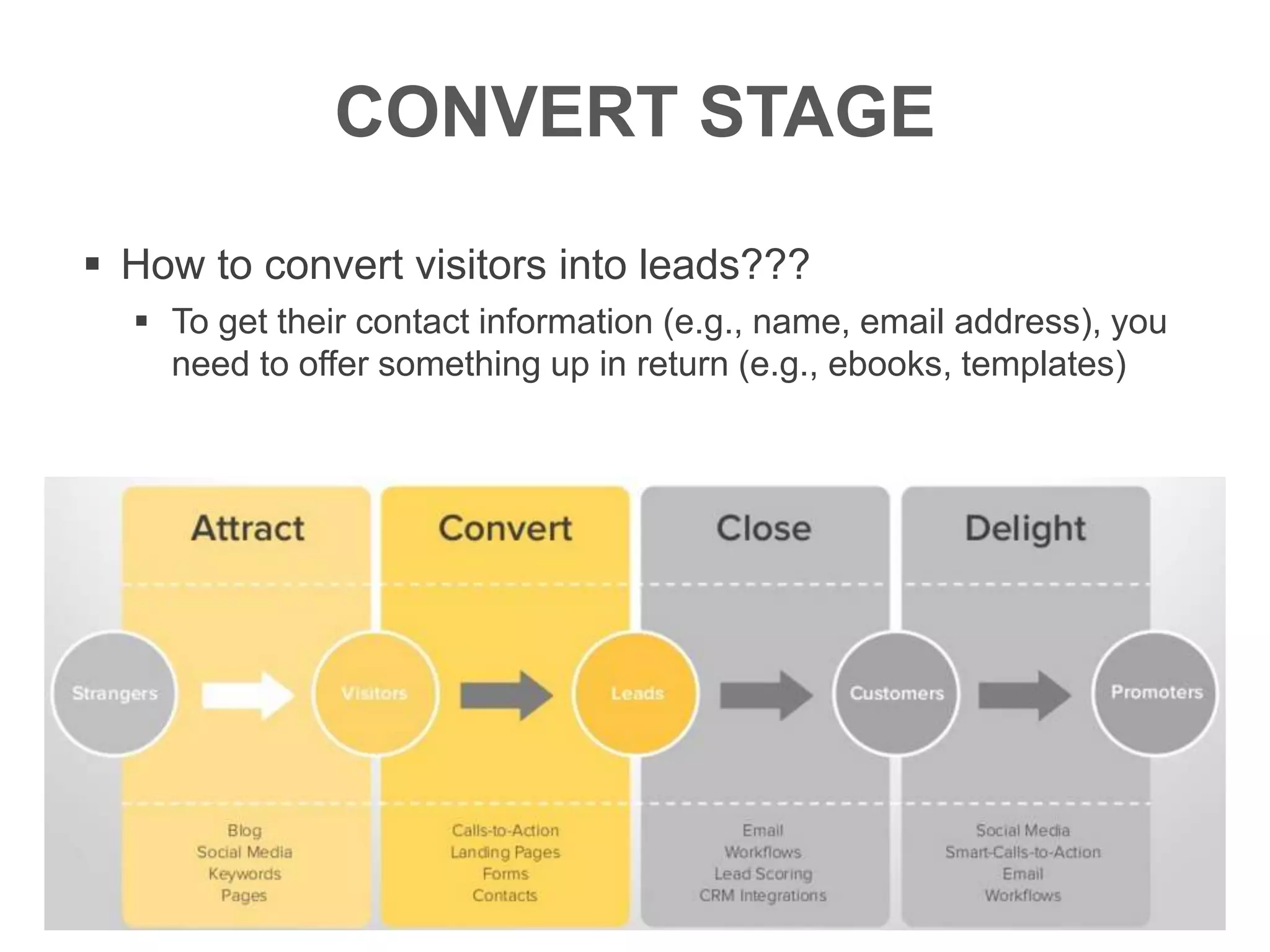
 How to convert visitors into leads???
 To get their contact information (e.g., name, email address), you
need to offer something up in return (e.g., ebooks, templates)
CLOSE STAGE
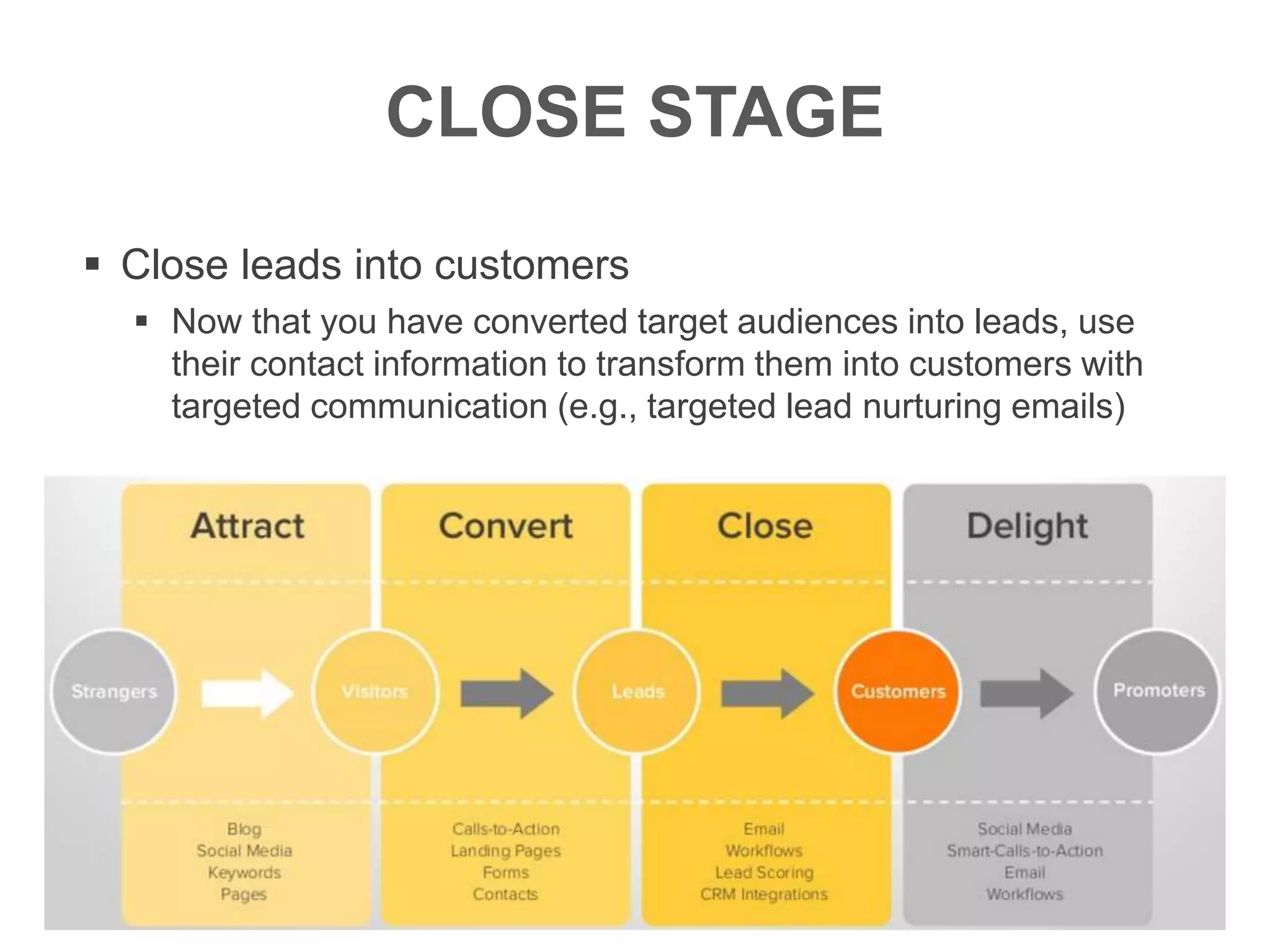
 Close leads into customers
 Now that you have converted target audiences into leads, use
their contact information to transform them into customers with
targeted communication (e.g., targeted lead nurturing emails)
CLOSE STAGE
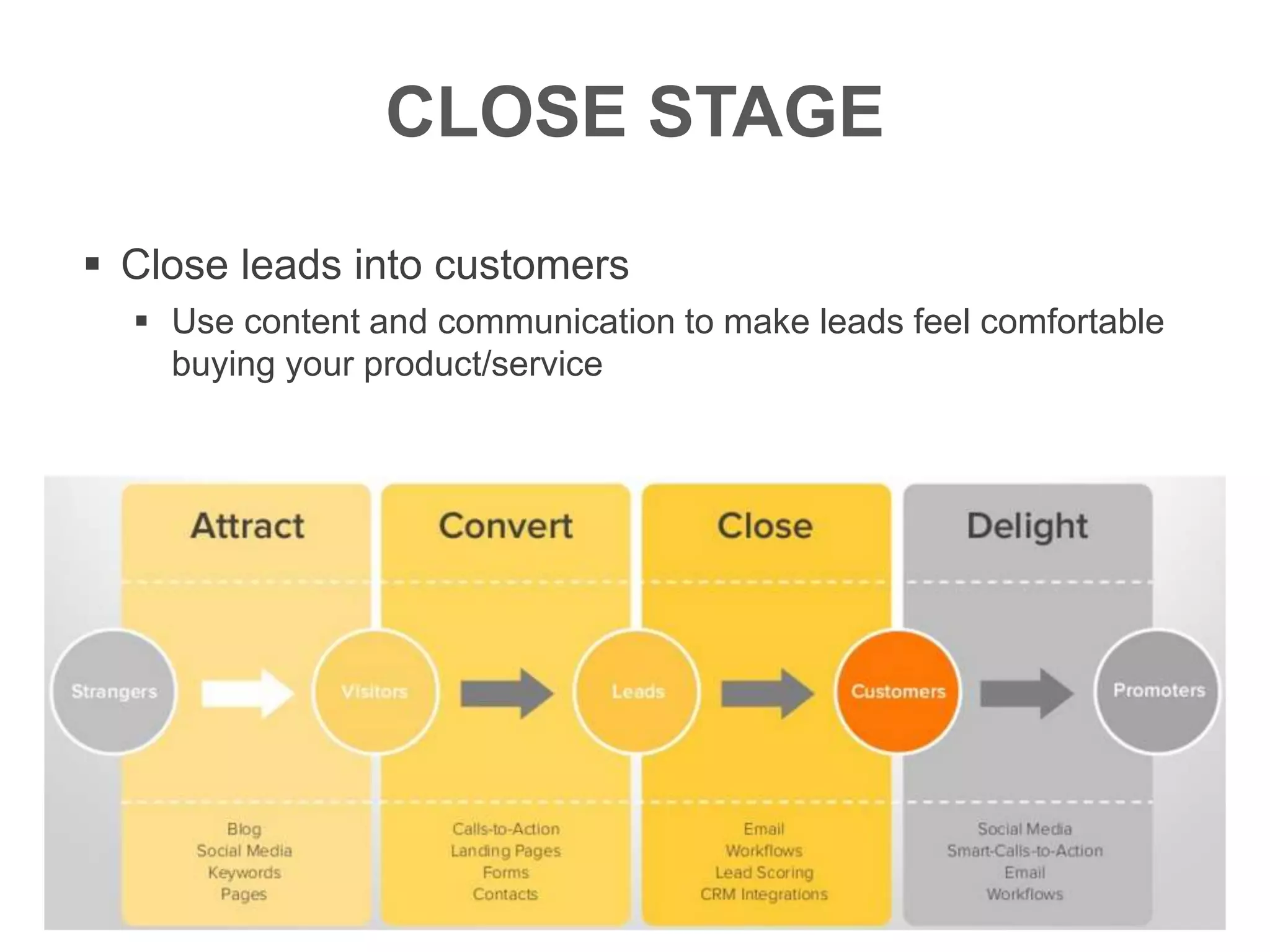
 Close leads into customers
 Use content and communication to make leads feel comfortable
buying your product/service
DELIGHT STAGE
 Turn current customers into your business promoters
 Use content/communication to keep them satisfied, engaged,
and happy – have them continue to use your product/service,
become loyal to your business, and recommend it to others
EXAMPLE
 Business communication service
 Let’s say you have a business communication service – help
clients prepare well-crafted resumes, cover letters, etc.
 What would your target audiences want to know?
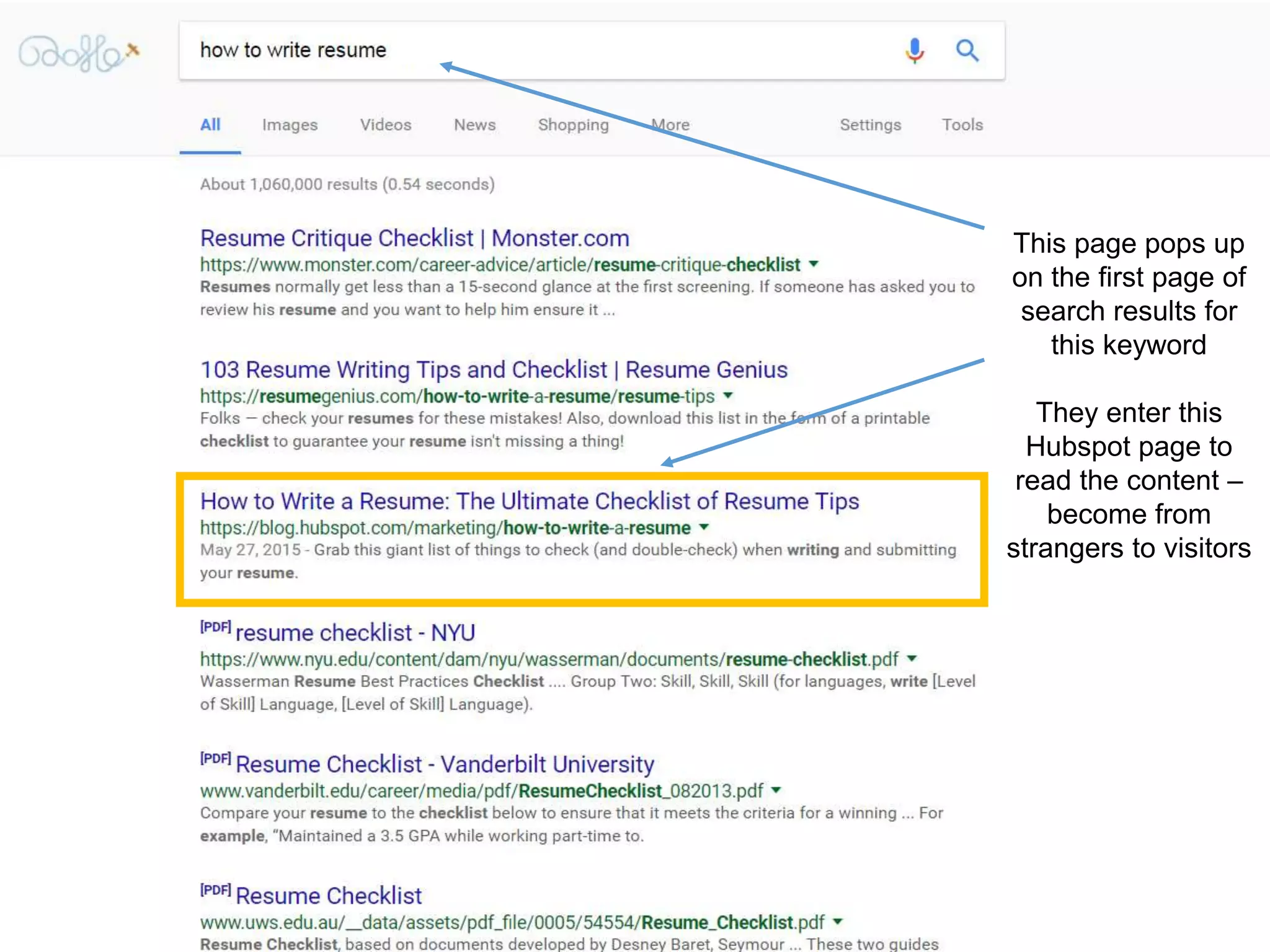
 One question they likely have: “How to write a resume”
 They may type this keyword phrase into a search engine (e.g.,
Google)
This page pops up
on the first page of
search results for
this keyword
They enter this
Hubspot page to
read the content –
become from
strangers to visitors
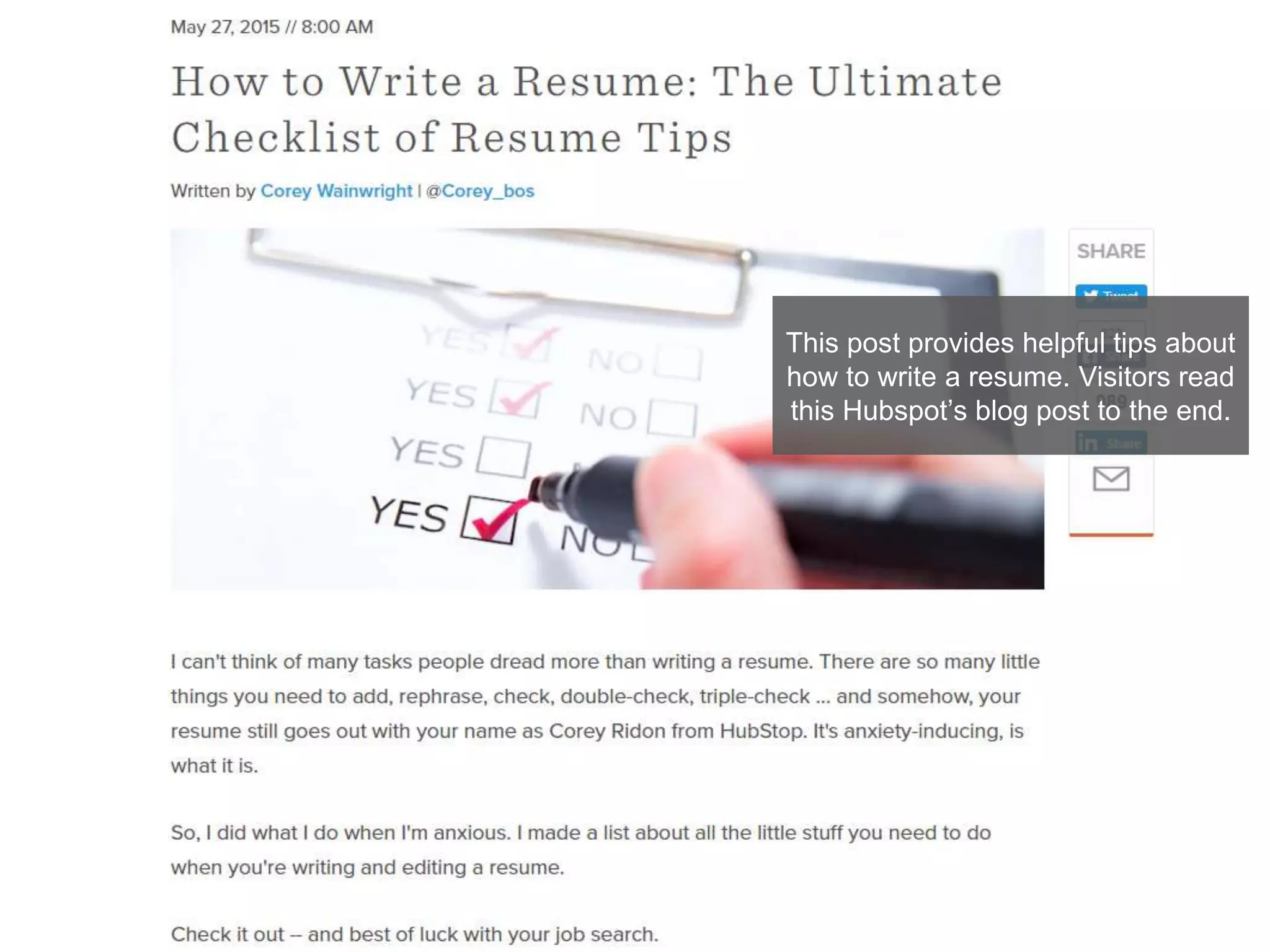
This post provides helpful tips about
how to write a resume. Visitors read
this Hubspot’s blog post to the end.
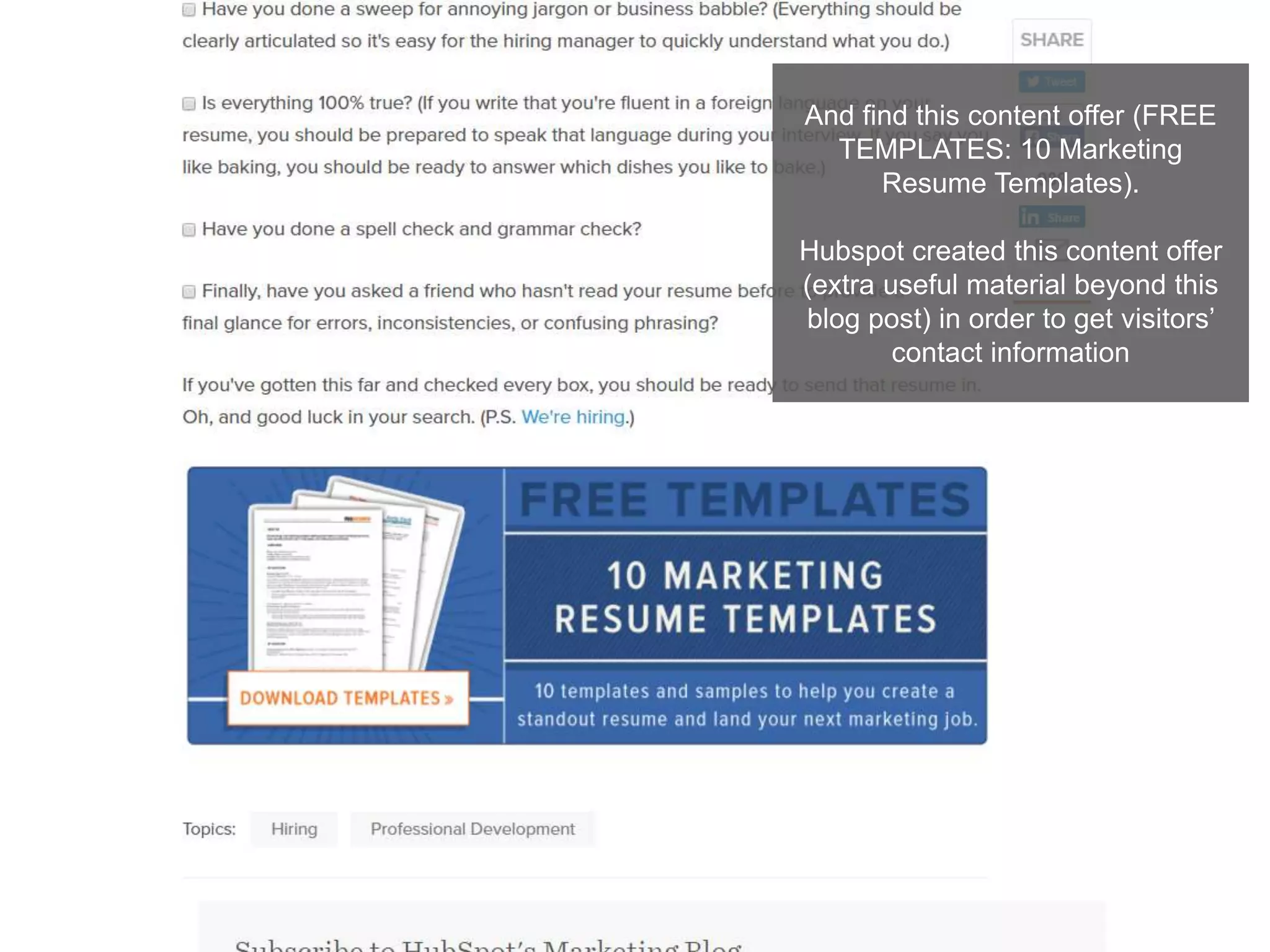
And find this content offer (FREE
TEMPLATES: 10 Marketing
Resume Templates).
Hubspot created this content offer
(extra useful material beyond this
blog post) in order to get visitors’
contact information
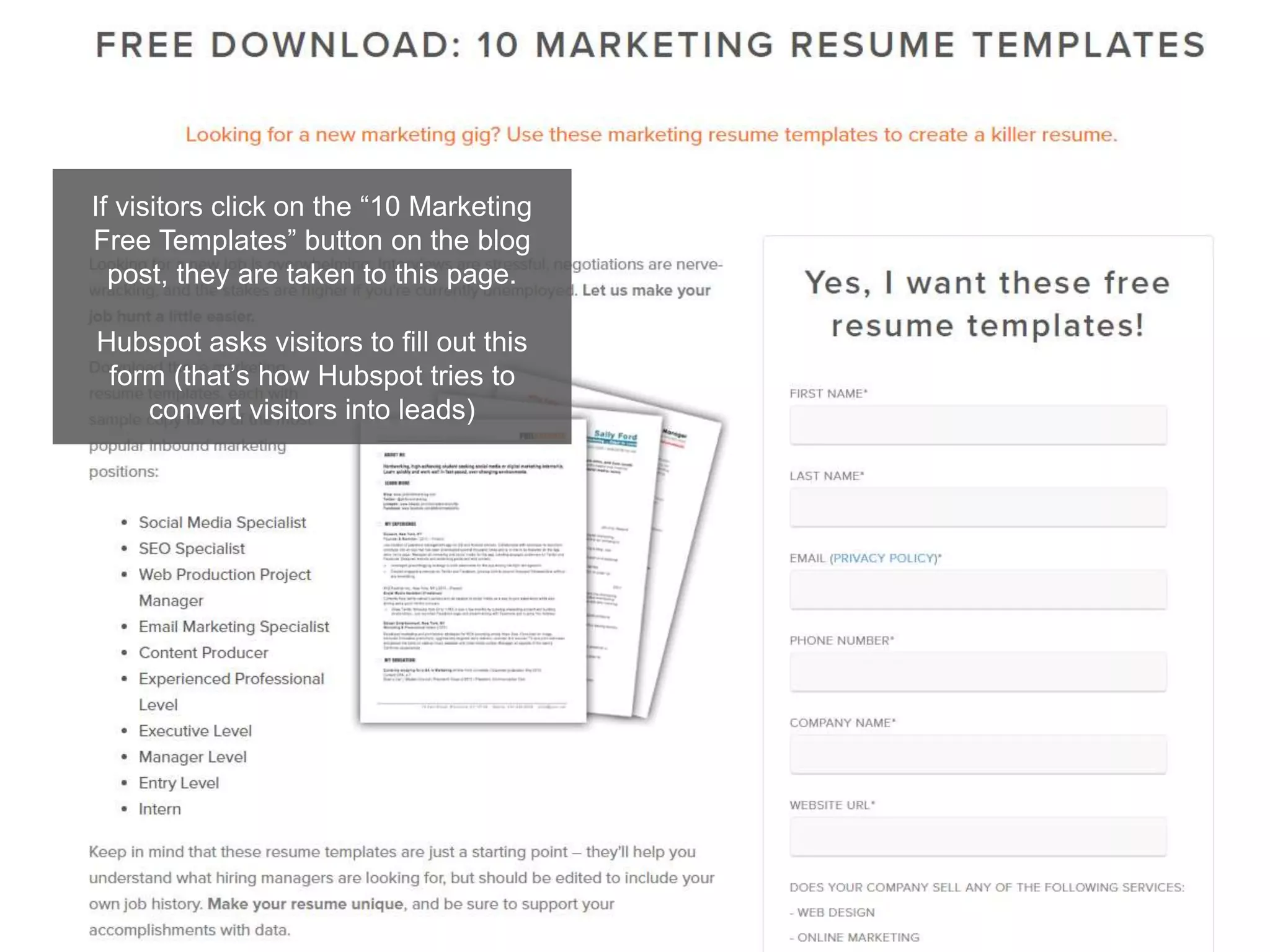
If visitors click on the “10 Marketing
Free Templates” button on the blog
post, they are taken to this page.
Hubspot asks visitors to fill out this
form (that’s how Hubspot tries to
convert visitors into leads)
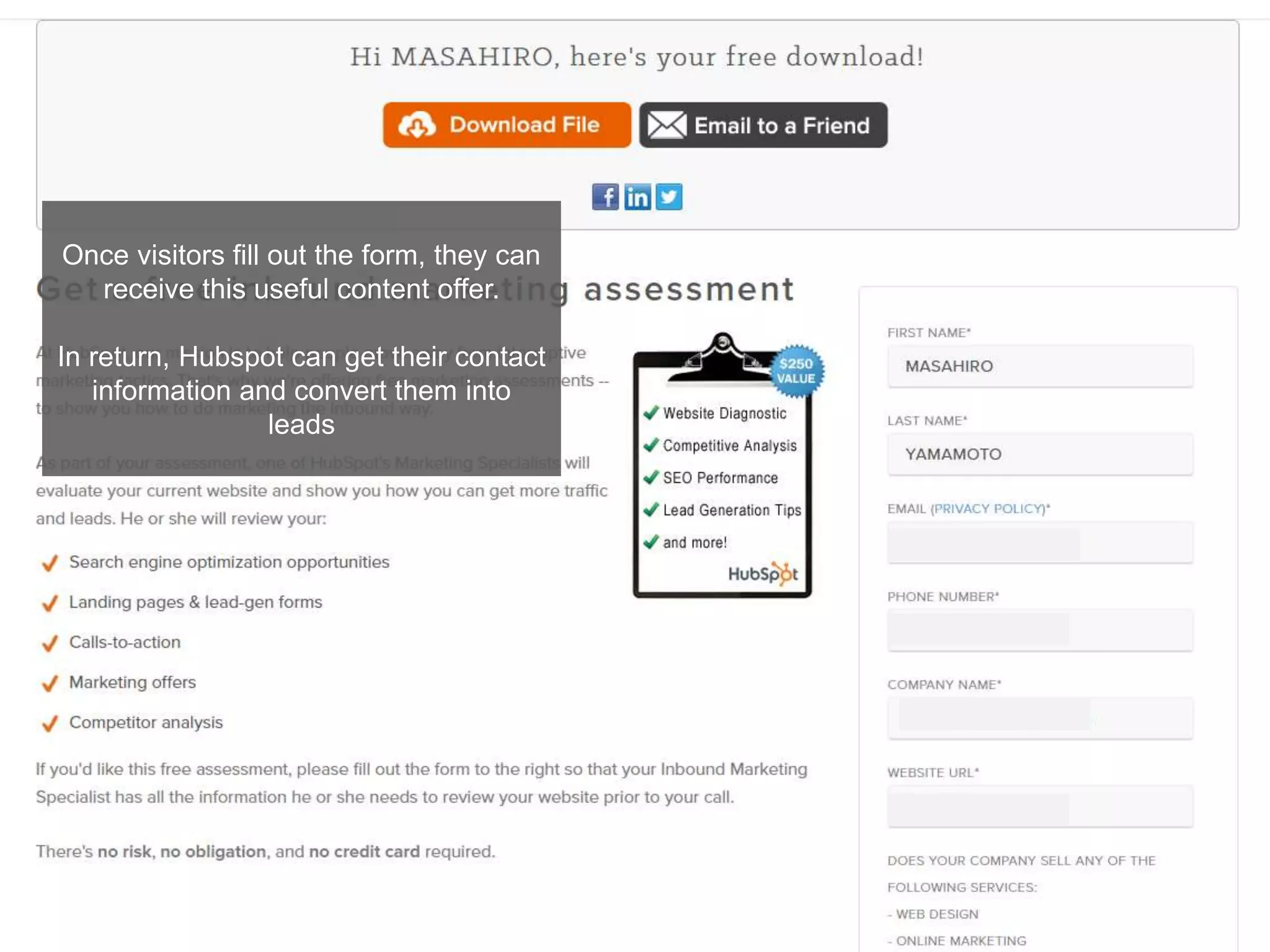
Once visitors fill out the form, they can
receive this useful content offer.
In return, Hubspot can get their contact
information and convert them into
leads
EXAMPLE
 Using the contact information, you can send personalized emails to
persuade these leads to hire your business communication service.
 For example…
 Hi xxx,
 Thanks for downloading our 10 Marketing Resume Templates! We hope you
found them helpful!
 Crafting a resume and cover letter that attract hiring mangers’ interest is difficult.
Over the years, we developed effective writing and self-branding techniques that
have helped our clients successfully land jobs they desired.
 If you want to know more about what we do, go to this page [link] and schedule a
30 minute video chat. Don’t hesitate to ask anything. We would be happy to
answer any questions you might have!
 Best wishes,
EXAMPLE
 Delight clients by, for example,…
 Email tips and information useful to current clients
 Answer questions current clients have to further their careers,
 Spotlight them on your social media page as successful clients
 Offer them special deals exclusive to current clients
INBOUND MARKETING
 Draw people in to the sales process organically
 Create useful and educational content that is relevant to target
audiences’ information needs (answer their questions/solve their
problems). By doing so, you try to earn target audiences’ trust
 Content in each stage has a specific purpose
 Attract: get target audiences to come to your website
 Convert: get them to give up their contact information by creating
extra useful content offers and giving them away for free
 Close: persuade them to become actual customers
 Delight: engage them to become brand promoters/advoates
CONTENT STRATEGY
 The growing role of inbound marketing in today’s
marketing does not mean outbound marketing is useless
– outbound marketing does have a role to play
 Sometimes, we buy something based totally on paid
advertisements or other forms of outbound marketing
(without going through the inbound process)
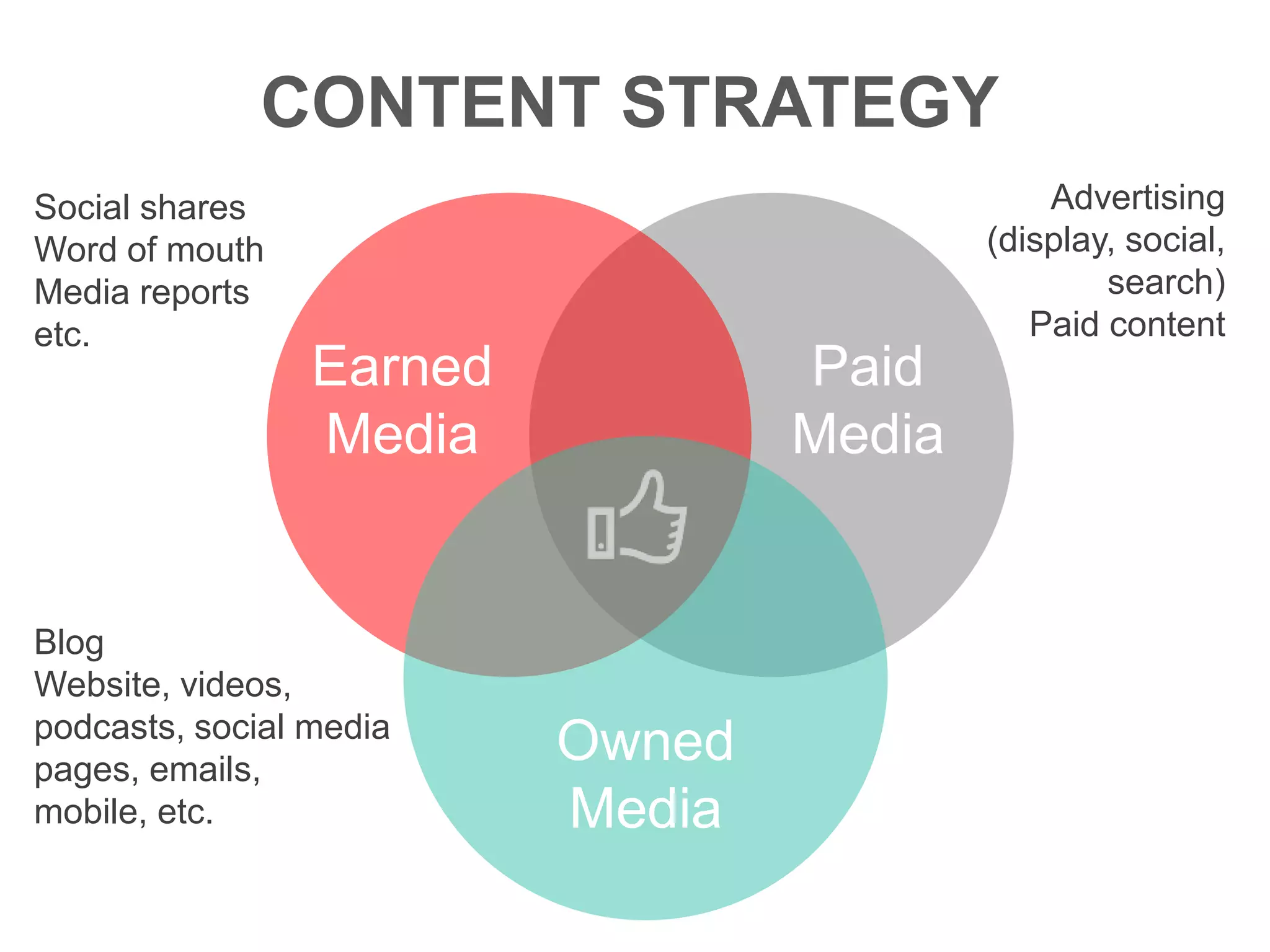
 Look at the next slide – this is how we can think of
different types of digital content
Owned
Media
Earned
Media
Paid
Media
Blog
Website, videos,
podcasts, social media
pages, emails,
mobile, etc.
Social shares
Word of mouth
Media reports
etc.
Advertising
(display, social,
search)
Paid content
CONTENT STRATEGY
CONTENT STRATEGY
 Integrate owned, earned, and paid media into your
content/communication repertoires to achieve an
organization’s goals and objectives

Module 1: An Overview of Digital Media Strategy

  • 1.
    AN OVERVIEW OFDIGITAL MEDIA STRATEGY  Basic terms  Current digital environment  Inbound marketing  Owned, earned, paid media
  • 2.
    TERMS  Public Relations Build a hospitable, supportive environment for an organization, using two-way communication  Advertising  Impersonal, one-way, paid communication in which the sponsor is identified  Marketing communication  Focus on products and services that respond to customers’ wants and needs for economic objectives
  • 3.
    TERMS  Integrated communication Blending of these communication functions  Use PR, advertising, marketing communication holistically to achieve goals for an organization  Strategic communication  Planned/intentional communication activities that grow out of informed, research-based understanding of current situations, goals/objectives, and target audiences  Not random activity
  • 4.
    INBOUND MARKETING  Akey principle in today’s digital marketing environment
  • 5.
    BACKGROUND  How doestraditional marketing communication look?  What communication channels marketers use to sell a product?  Advertising, direct mails, sales persons visiting houses, cold- calling
  • 6.
    BACKGROUND  What doyou do when you have questions to answer, problems to solve, or items to purchase?  Typically go online and actively gather information  In this process, you may not encounter brand-centered sales messages
  • 7.
    BACKGROUND  Inbound marketingcaptures this shift in consumer behavior and decision-making
  • 8.
    BACKGROUND  Traditionally beforethe Internet  Marketers focused on outbound marketing – push sales messages outward as far as possible (direct mail, cold-calling, advertising etc.)  Interruption, organization-centered, passive consumers  Interruption marketing: marketers purchase the right to interrupt consumers’ activity and demand their attention (e.g., TV ads), forcing them to listen to brand/organization-centered messages  Consumers primarily relied on information distributed by brands
  • 9.
    TODAY’S CONSUMER BEHAVIOR Consumers are active, have control over information  What works well today is inbound marketing – brands pull target audiences in by creating useful content relevant to their interests  Instead of pushing sales message, brands make themselves available online to target audiences so that they can organically interact with brands  Permission, consumer-centered, active consumers  Communication centers around consumers’ needs.  Permission marketing: marketers earn consumers’ permission (e.g., email address) first and then distribute sales messages to those who are willing to receive sales messages
  • 10.
    HOW DOES INBOUNDMARKETING WORK?  Four stages: attract > convert > close > delight  Strangers to visitors to leads to customers to brand promoters  Each stage has a set of key tools to accomplish these goals
  • 11.
    ATTRACT STAGE  Turntarget audiences into website visitors  Your business website, blog, social media pages  Attract people who have some interest in your business by creating useful content that is easy for them to find online
  • 12.
    ATTRACT STAGE  Turntarget audiences into website visitors  Create content that answers their questions or solves their problems. Optimize your web content based around search keywords target audiences likely use
  • 13.
    CONVERT STAGE  Nowthat target audiences are website visitors, convert them into leads by getting their contact information  Leads: people who have expressed interest in your business  This process is often called “lead generation”
  • 14.
    CONVERT STAGE  Howto convert visitors into leads???  To get their contact information (e.g., name, email address), you need to offer something up in return (e.g., ebooks, templates)
  • 15.
    CLOSE STAGE  Closeleads into customers  Now that you have converted target audiences into leads, use their contact information to transform them into customers with targeted communication (e.g., targeted lead nurturing emails)
  • 16.
    CLOSE STAGE  Closeleads into customers  Use content and communication to make leads feel comfortable buying your product/service
  • 17.
    DELIGHT STAGE  Turncurrent customers into your business promoters  Use content/communication to keep them satisfied, engaged, and happy – have them continue to use your product/service, become loyal to your business, and recommend it to others
  • 18.
    EXAMPLE  Business communicationservice  Let’s say you have a business communication service – help clients prepare well-crafted resumes, cover letters, etc.  What would your target audiences want to know?  One question they likely have: “How to write a resume”  They may type this keyword phrase into a search engine (e.g., Google)
  • 19.
    This page popsup on the first page of search results for this keyword They enter this Hubspot page to read the content – become from strangers to visitors
  • 20.
    This post provideshelpful tips about how to write a resume. Visitors read this Hubspot’s blog post to the end.
  • 21.
    And find thiscontent offer (FREE TEMPLATES: 10 Marketing Resume Templates). Hubspot created this content offer (extra useful material beyond this blog post) in order to get visitors’ contact information
  • 22.
    If visitors clickon the “10 Marketing Free Templates” button on the blog post, they are taken to this page. Hubspot asks visitors to fill out this form (that’s how Hubspot tries to convert visitors into leads)
  • 23.
    Once visitors fillout the form, they can receive this useful content offer. In return, Hubspot can get their contact information and convert them into leads
  • 24.
    EXAMPLE  Using thecontact information, you can send personalized emails to persuade these leads to hire your business communication service.  For example…  Hi xxx,  Thanks for downloading our 10 Marketing Resume Templates! We hope you found them helpful!  Crafting a resume and cover letter that attract hiring mangers’ interest is difficult. Over the years, we developed effective writing and self-branding techniques that have helped our clients successfully land jobs they desired.  If you want to know more about what we do, go to this page [link] and schedule a 30 minute video chat. Don’t hesitate to ask anything. We would be happy to answer any questions you might have!  Best wishes,
  • 25.
    EXAMPLE  Delight clientsby, for example,…  Email tips and information useful to current clients  Answer questions current clients have to further their careers,  Spotlight them on your social media page as successful clients  Offer them special deals exclusive to current clients
  • 26.
    INBOUND MARKETING  Drawpeople in to the sales process organically  Create useful and educational content that is relevant to target audiences’ information needs (answer their questions/solve their problems). By doing so, you try to earn target audiences’ trust  Content in each stage has a specific purpose  Attract: get target audiences to come to your website  Convert: get them to give up their contact information by creating extra useful content offers and giving them away for free  Close: persuade them to become actual customers  Delight: engage them to become brand promoters/advoates
  • 27.
    CONTENT STRATEGY  Thegrowing role of inbound marketing in today’s marketing does not mean outbound marketing is useless – outbound marketing does have a role to play  Sometimes, we buy something based totally on paid advertisements or other forms of outbound marketing (without going through the inbound process)  Look at the next slide – this is how we can think of different types of digital content
  • 28.
    Owned Media Earned Media Paid Media Blog Website, videos, podcasts, socialmedia pages, emails, mobile, etc. Social shares Word of mouth Media reports etc. Advertising (display, social, search) Paid content CONTENT STRATEGY
  • 29.
    CONTENT STRATEGY  Integrateowned, earned, and paid media into your content/communication repertoires to achieve an organization’s goals and objectives