Geeta Gohil 
Modern Postmodern 
Master Narratives and Metanarratives of history, culture 
and national identity as accepted before WWII. 
Suspicion and rejection of Master Narratives for history, 
culture; local narratives, ironic deconstruction od master 
narratives. 
Faith in the Grand Theory (totalising explanations in history, 
science and culture) to represent to all knowledge and 
explain everything 
Rejection of totalising theories: pursuit of localising and 
contingent theories. 
Faith in and myths of social and cultural unity, hierarchies of 
social-class and ethnic/national values. 
Social and cultural pluralism, disunity, unclear bases for 
social/national/ethnic unity. 
Faith in ‘real’ beyond media, language, symbols and 
representations; authenticity of ‘originals’. 
Hyper-reality, image saturations, simulacra see more 
powerful than ‘real’ images and texts with no prior to 
‘original’. ‘As seem on TV’ and ‘as seen on MTV’ are more 
powerful than unmediated experience. 
Art as unique object and finished work authenticated by 
artist and validated by agreed upon standards. 
Art as process, performance, production and intertextuality. 
Art as recycling of culture authenticated by audience and 
validated in subcultures sharing identity with the artist. 
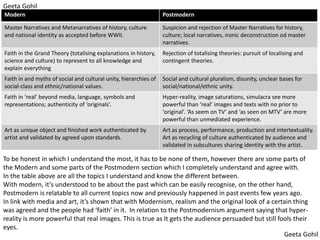
To be honest in which I understand the most, it has to be none of them, however there are some parts of 
the Modern and some parts of the Postmodern section which I completely understand and agree with. 
In the table above are all the topics I understand and know the different between. 
With modern, it’s understood to be about the past which can be easily recognise, on the other hand, 
Postmodern is relatable to all current topics now and previously happened in past events few years ago. 
In link with media and art, it’s shown that with Modernism, realism and the original look of a certain thing 
was agreed and the people had ‘faith’ in it. In relation to the Postmodernism argument saying that hyper-reality 
is more powerful that real images. This is true as It gets the audience persuaded but still fools their 
eyes. 
Geeta Gohil

Modern vs Postmodern

  • 1.
    Geeta Gohil ModernPostmodern Master Narratives and Metanarratives of history, culture and national identity as accepted before WWII. Suspicion and rejection of Master Narratives for history, culture; local narratives, ironic deconstruction od master narratives. Faith in the Grand Theory (totalising explanations in history, science and culture) to represent to all knowledge and explain everything Rejection of totalising theories: pursuit of localising and contingent theories. Faith in and myths of social and cultural unity, hierarchies of social-class and ethnic/national values. Social and cultural pluralism, disunity, unclear bases for social/national/ethnic unity. Faith in ‘real’ beyond media, language, symbols and representations; authenticity of ‘originals’. Hyper-reality, image saturations, simulacra see more powerful than ‘real’ images and texts with no prior to ‘original’. ‘As seem on TV’ and ‘as seen on MTV’ are more powerful than unmediated experience. Art as unique object and finished work authenticated by artist and validated by agreed upon standards. Art as process, performance, production and intertextuality. Art as recycling of culture authenticated by audience and validated in subcultures sharing identity with the artist. To be honest in which I understand the most, it has to be none of them, however there are some parts of the Modern and some parts of the Postmodern section which I completely understand and agree with. In the table above are all the topics I understand and know the different between. With modern, it’s understood to be about the past which can be easily recognise, on the other hand, Postmodern is relatable to all current topics now and previously happened in past events few years ago. In link with media and art, it’s shown that with Modernism, realism and the original look of a certain thing was agreed and the people had ‘faith’ in it. In relation to the Postmodernism argument saying that hyper-reality is more powerful that real images. This is true as It gets the audience persuaded but still fools their eyes. Geeta Gohil