Download to read offline

![JavaScript often abbreviated as JS, is a high-level, interpreted programming
language that conforms to the ECMAScript specification. JavaScript has curly-bracket
syntax, dynamic typing, prototype-basedobject-orientation, and first-class functions.
Alongside HTML and CSS, JavaScript is one of the core technologies of the World
Wide Web.[9] JavaScript enables interactive web pages and is an essential part of web
applications. The vast majority of websites use it,[10]and major web browsers have a
dedicated JavaScript engine to execute it.
Initially only implemented client-side in web browsers, JavaScript engines are now
embedded in many other types of host software, including server-side in web servers
and databases, and in non-web programs such as word processors and PDF software,
and in runtime environments that make JavaScript available for writing mobile and
desktop applications, including desktop widgets.
The terms Vanilla JavaScript and Vanilla JS refer to JavaScript not extended by any
frameworks or additional libraries. Scripts written in Vanilla JS are plain JavaScript
code.[11][12]](https://image.slidesharecdn.com/js-200212213222/85/Modern-Javascript-2-320.jpg)
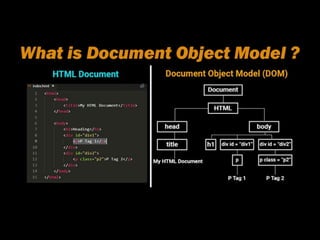
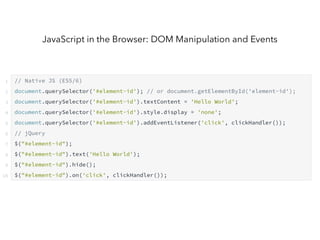

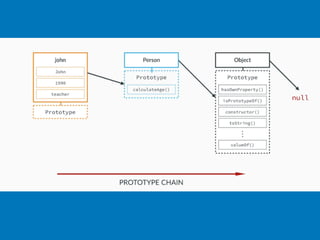
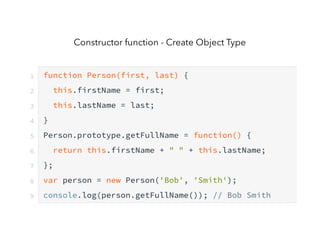
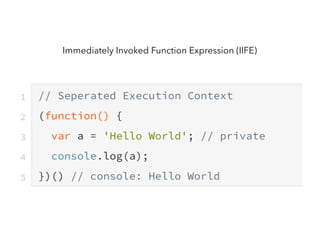
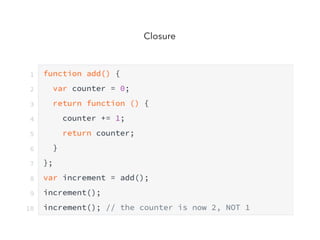

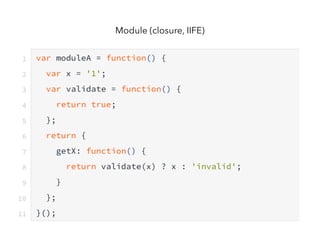
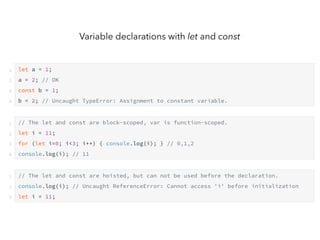
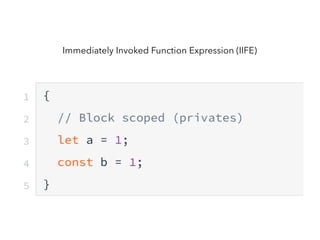
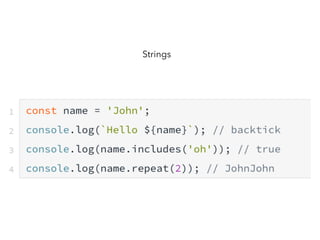
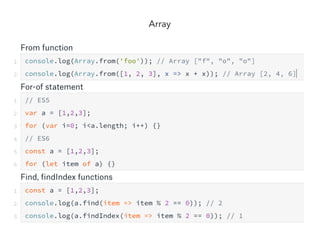
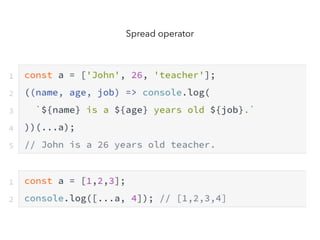
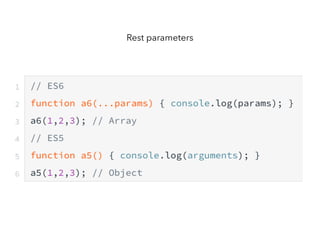
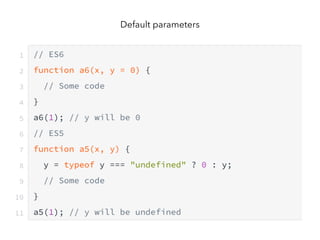
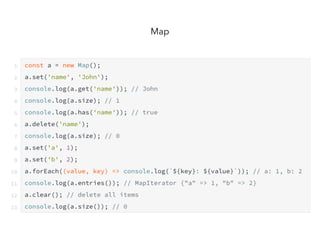
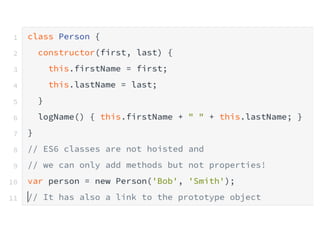
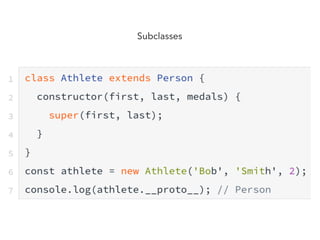
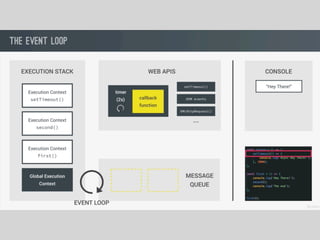

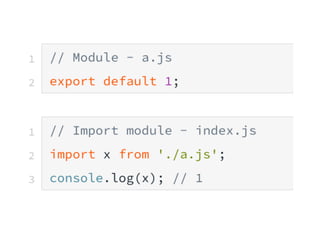
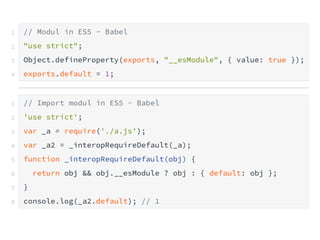

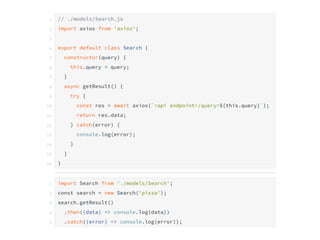
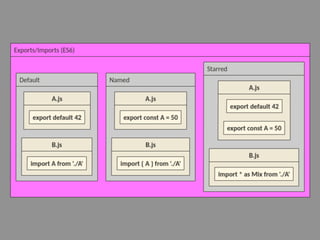




JavaScript is a high-level, interpreted programming language that is used for client-side web development. It allows for interactive web pages and is essential for web applications. JavaScript can be used both client-side in web browsers and server-side in web servers and databases. Vanilla JavaScript refers to plain JavaScript code without any additional frameworks or libraries. The document then lists various JavaScript concepts and features including DOM manipulation, events, object constructors, closures, modules, variables, strings, arrays, promises, and asynchronous programming.


