MODELS FOR
READING
Prepared by: Patricia Joy Belleza BSEd-ENGLISH 2A
explore various models for
reading comprehension and their
implications for teaching
practices
examine different theoretical
frameworks and strategies
LEARNING
OBJECTIVES
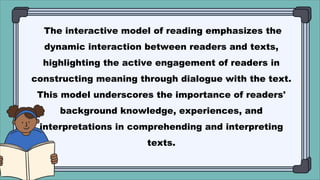
The interactive model of reading emphasizes the
dynamic interaction between readers and texts,
highlighting the active engagement of readers in
constructing meaning through dialogue with the text.
This model underscores the importance of readers'
background knowledge, experiences, and
interpretations in comprehending and interpreting
texts.
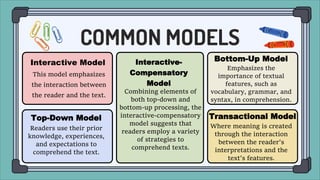
COMMON MODELS
Top-Down Model
Interactive Model
This model emphasizes
the interaction between
the reader and the text.
Where meaning is created
through the interaction
between the reader's
interpretations and the
text's features.
Transactional Model
Readers use their prior
knowledge, experiences,
and expectations to
comprehend the text.
Interactive-
Compensatory
Model
Combining elements of
both top-down and
bottom-up processing, the
interactive-compensatory
model suggests that
readers employ a variety
of strategies to
comprehend texts.
Bottom-Up Model
Emphasizes the
importance of textual
features, such as
vocabulary, grammar, and
syntax, in comprehension.
These models provide frameworks for
understanding how readers engage with
texts and construct meaning. Depending on
the text, reader, and context, different
models may be more applicable or effective
i n g u i d i n g r e a d i n g i n s t r u c t i o n a n d
comprehension strategies.
Understanding various models for reading comprehension is essential for
effective teaching practices. By incorporating these models into our teaching
strategies, we can better support students in developing their reading skills and
comprehension abilities. Whether it's encouraging active engagement with texts
through the interactive model or fostering schema activation and prediction-
making with the top-down model, these approaches can enhance students'
reading experiences and promote deeper understanding of texts in the
classroom. As future language teachers, applying these models can help us
create engaging and effective learning environments where students can
develop their reading proficiency and critical thinking skills.
CONCLUSION
THANK YOU!

Models-for-Reading.pdf presented by an English Major

  • 1.
    MODELS FOR READING Prepared by:Patricia Joy Belleza BSEd-ENGLISH 2A
  • 2.
    explore various modelsfor reading comprehension and their implications for teaching practices examine different theoretical frameworks and strategies LEARNING OBJECTIVES
  • 3.
    The interactive modelof reading emphasizes the dynamic interaction between readers and texts, highlighting the active engagement of readers in constructing meaning through dialogue with the text. This model underscores the importance of readers' background knowledge, experiences, and interpretations in comprehending and interpreting texts.
  • 4.
    COMMON MODELS Top-Down Model InteractiveModel This model emphasizes the interaction between the reader and the text. Where meaning is created through the interaction between the reader's interpretations and the text's features. Transactional Model Readers use their prior knowledge, experiences, and expectations to comprehend the text. Interactive- Compensatory Model Combining elements of both top-down and bottom-up processing, the interactive-compensatory model suggests that readers employ a variety of strategies to comprehend texts. Bottom-Up Model Emphasizes the importance of textual features, such as vocabulary, grammar, and syntax, in comprehension.
  • 5.
    These models provideframeworks for understanding how readers engage with texts and construct meaning. Depending on the text, reader, and context, different models may be more applicable or effective i n g u i d i n g r e a d i n g i n s t r u c t i o n a n d comprehension strategies.
  • 6.
    Understanding various modelsfor reading comprehension is essential for effective teaching practices. By incorporating these models into our teaching strategies, we can better support students in developing their reading skills and comprehension abilities. Whether it's encouraging active engagement with texts through the interactive model or fostering schema activation and prediction- making with the top-down model, these approaches can enhance students' reading experiences and promote deeper understanding of texts in the classroom. As future language teachers, applying these models can help us create engaging and effective learning environments where students can develop their reading proficiency and critical thinking skills. CONCLUSION
  • 7.