Fraser Henderson
Stuart McFarlane
Technology enabled
mobility
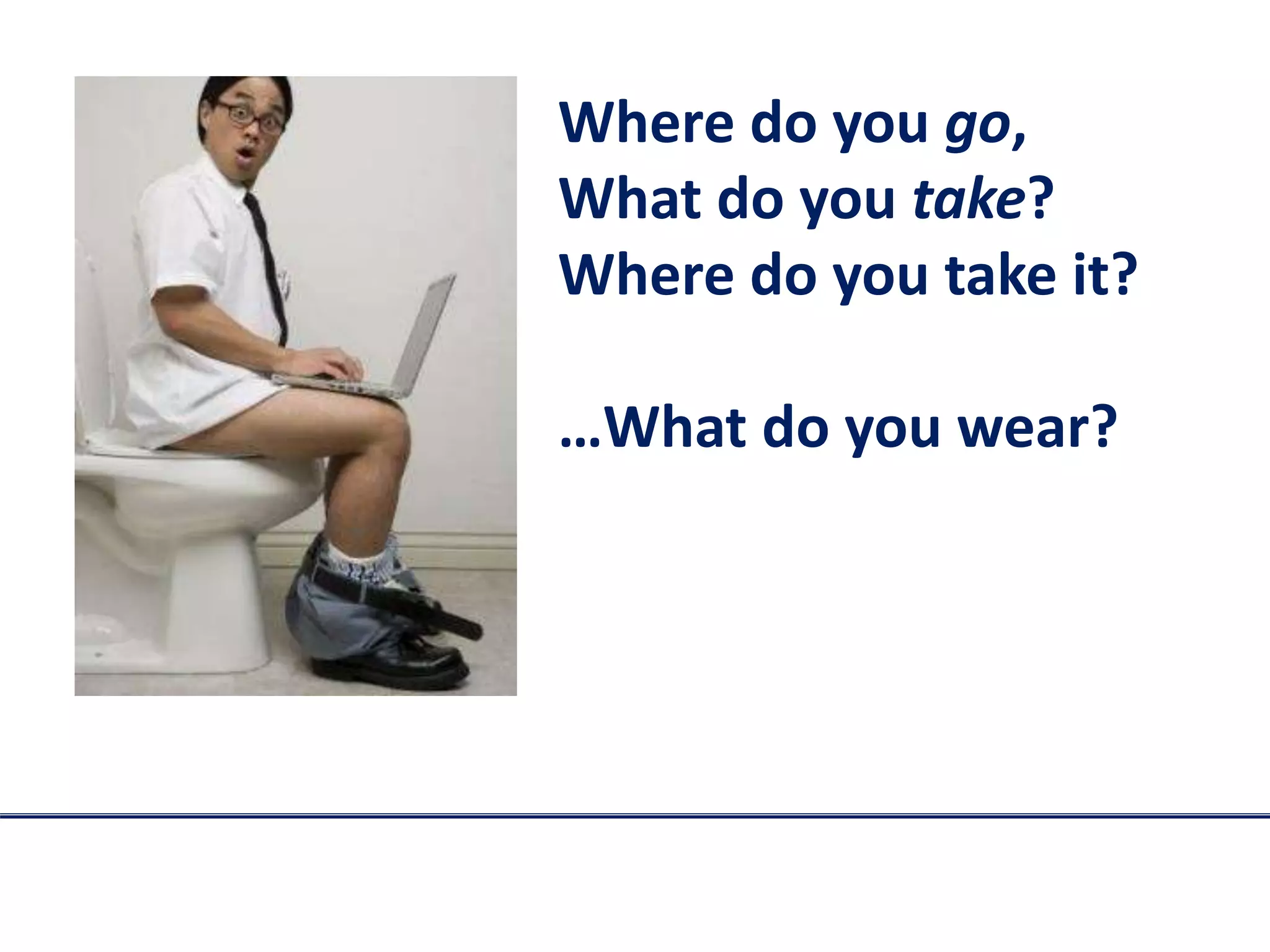
Where do you go,
What do you take?
Where do you take it?
…What do you wear?
Why now?
Because now you can with
reliable technologies!
Employees with more than 26
weeks service are now able to
submit one flexible working
request per year
Necessity (competitive advantage,
economic drivers)
Public WiFi
•Average British worker £160 per month on
commute
•Workplace flexibility good for businesses
•Better work life balance
•Cheaper (less office space needed)
•People are more productive
•24/7 contact with customers if needed
•Resilience
•No more multiple devices!
Downsides
•Connectivity & licensing
•Health and safety
•Always ‘on call’
•Privacy
•Personal safety
•Never eyeball?
•Visibility for
career progression?
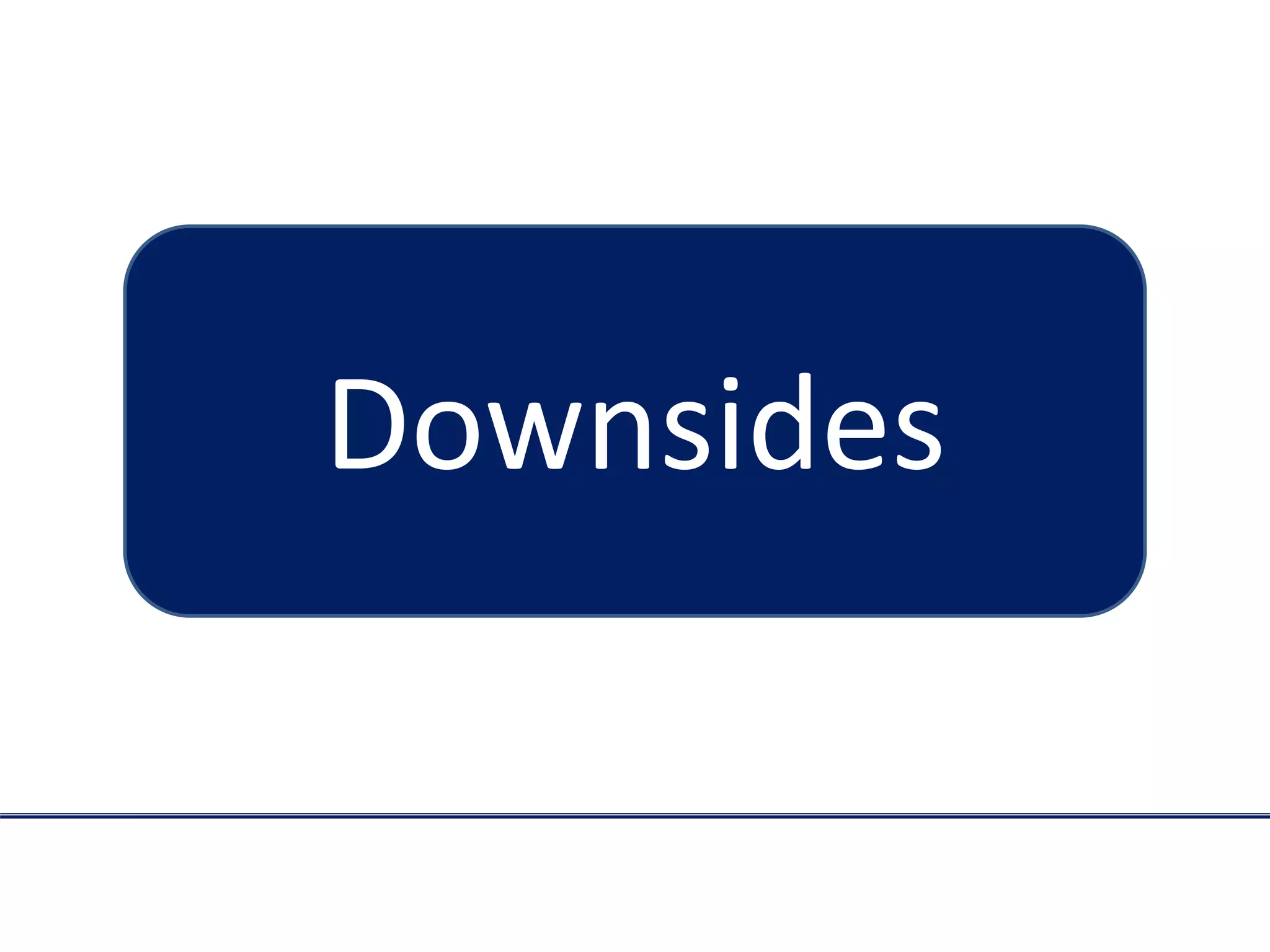
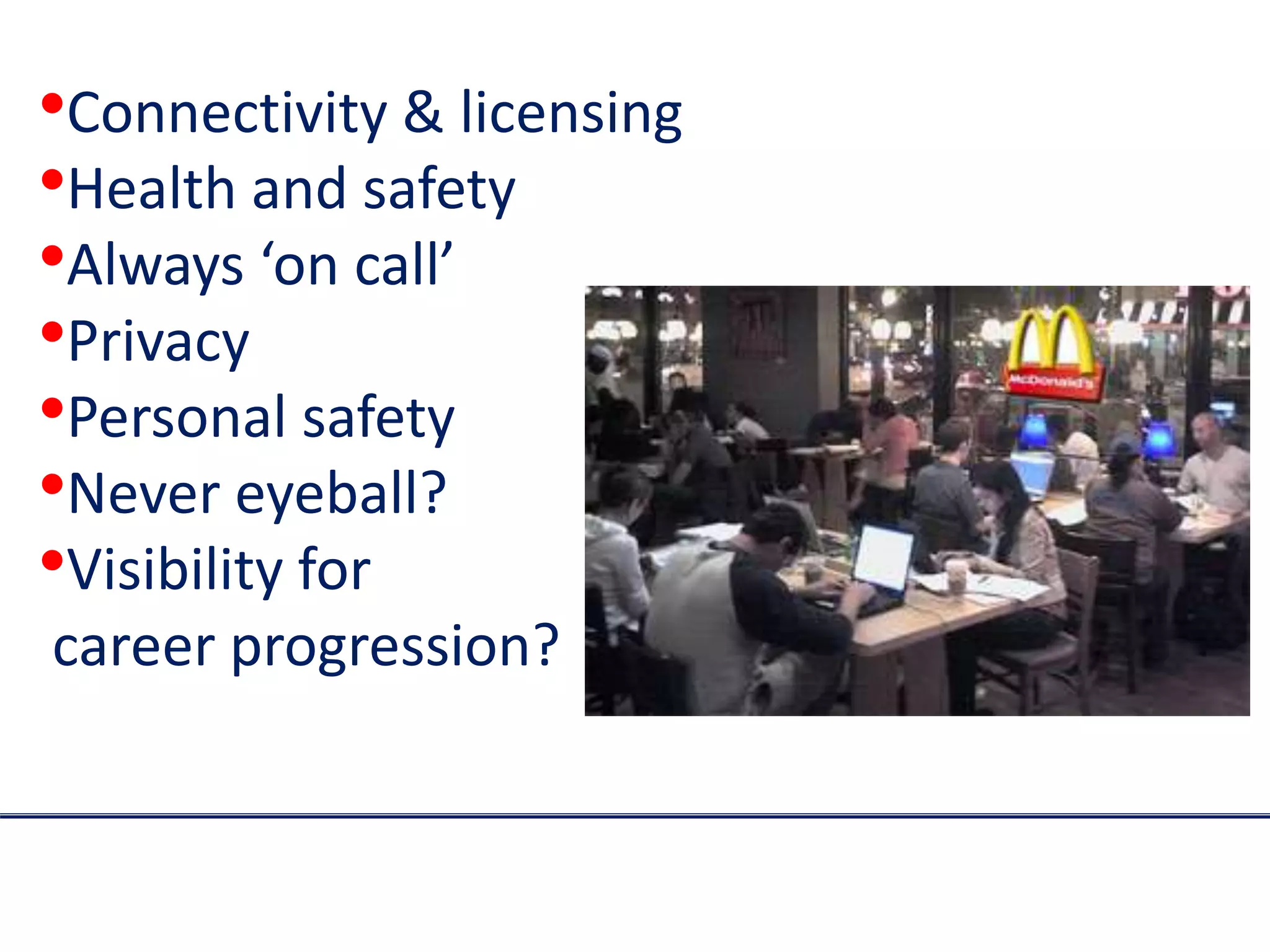
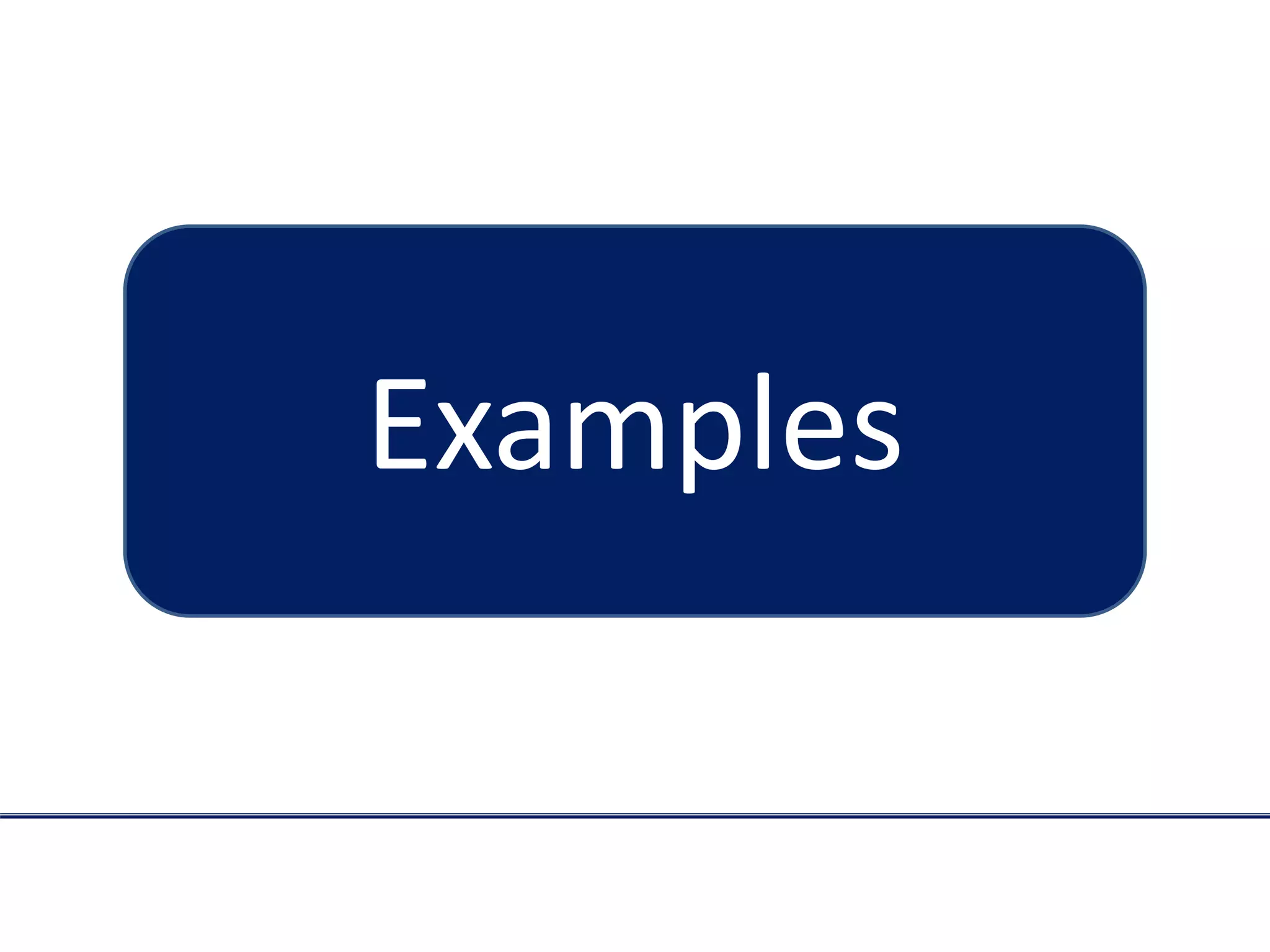
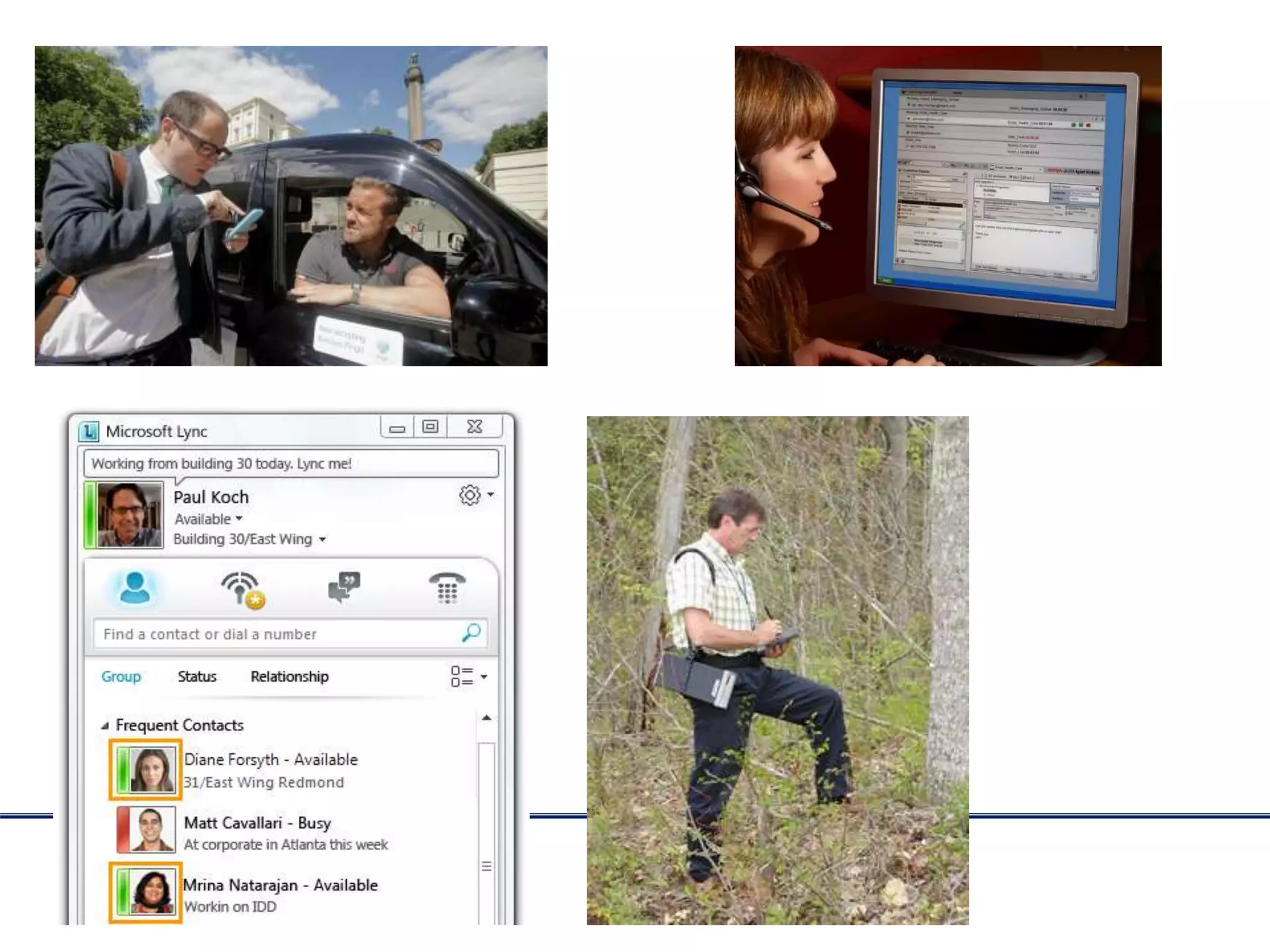
Examples
The Technology
•Telephony e.g.
http://vivotelecommunications.co.uk/hoste
d-voice-services/
•BYOD software & MDM (e.g. good.com)
•Portable Devices
•Presence
•Instant Messaging (e.g. IM)
•Batteries and power sources
•Teleconferencing (e.g. GoToMeeting)
•Mobile payments
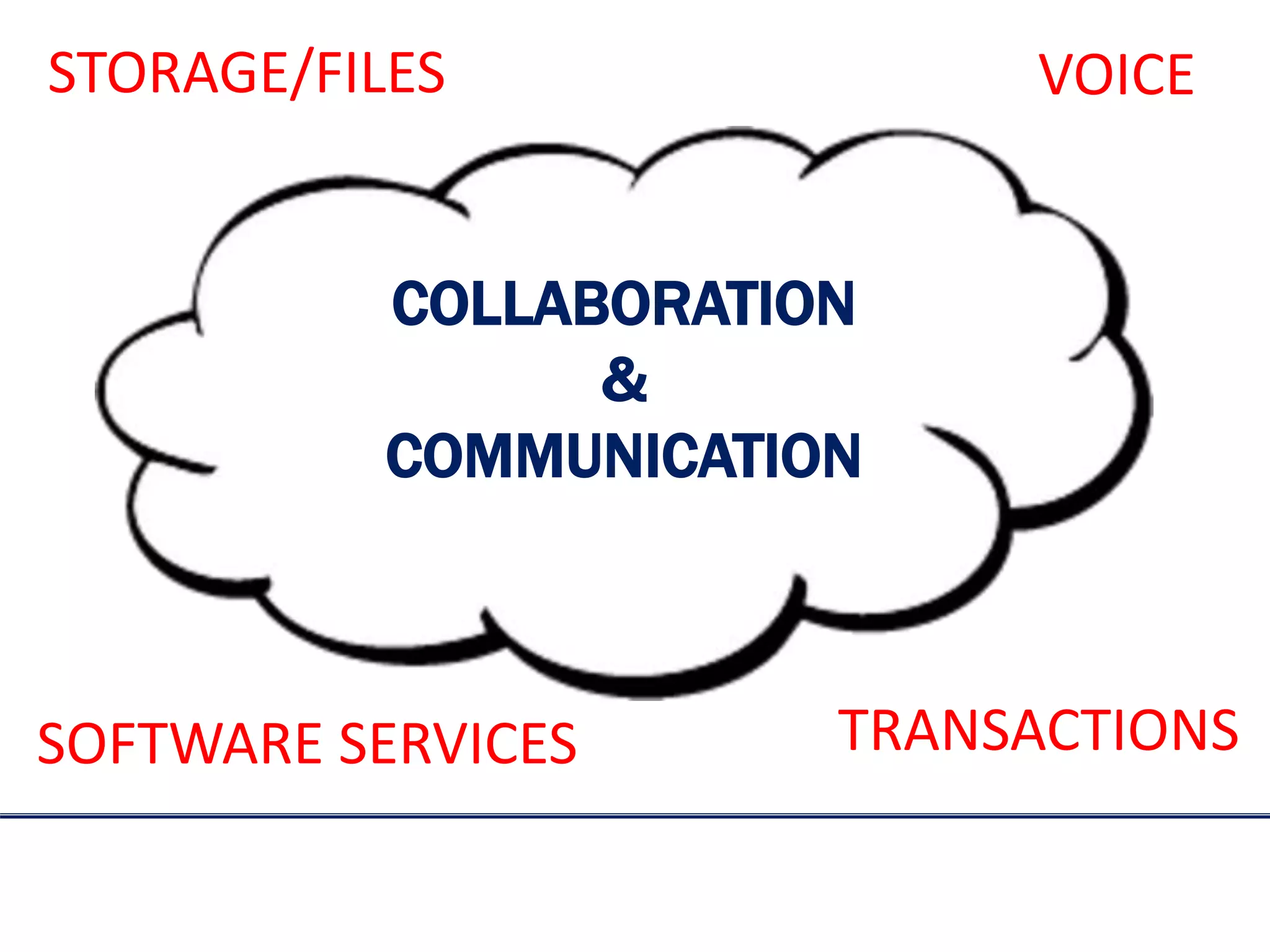
STORAGE/FILES
COLLABORATION
&
COMMUNICATION
SOFTWARE SERVICES
VOICE
TRANSACTIONS
Barriers to
change
•Up-front investment cost
•Integration problems / legacy
•Culture change
•Security concerns
•Need to update IT infrastructure
•Scalability
•Resistance
The future
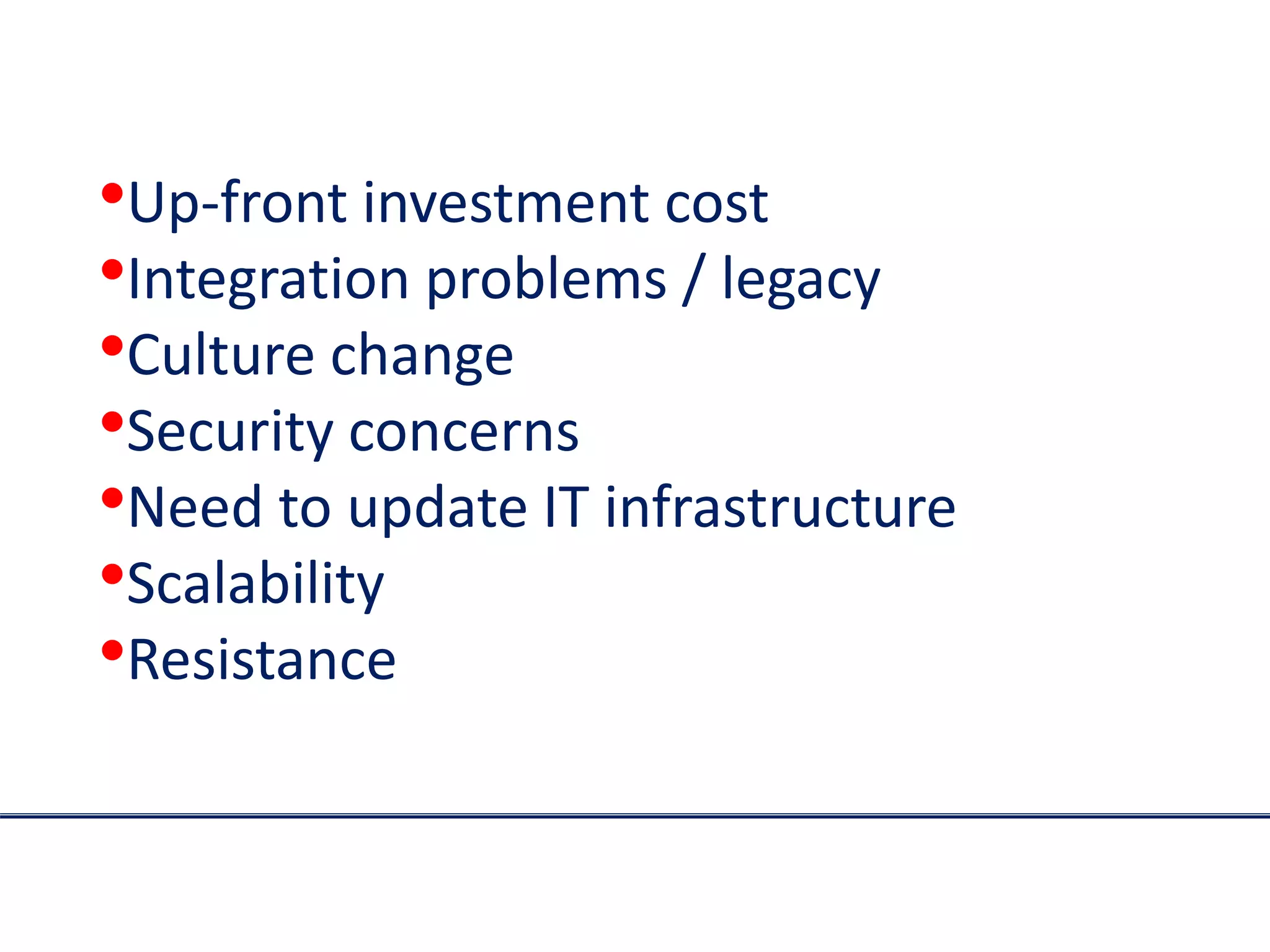
•The office is the coffee
shop
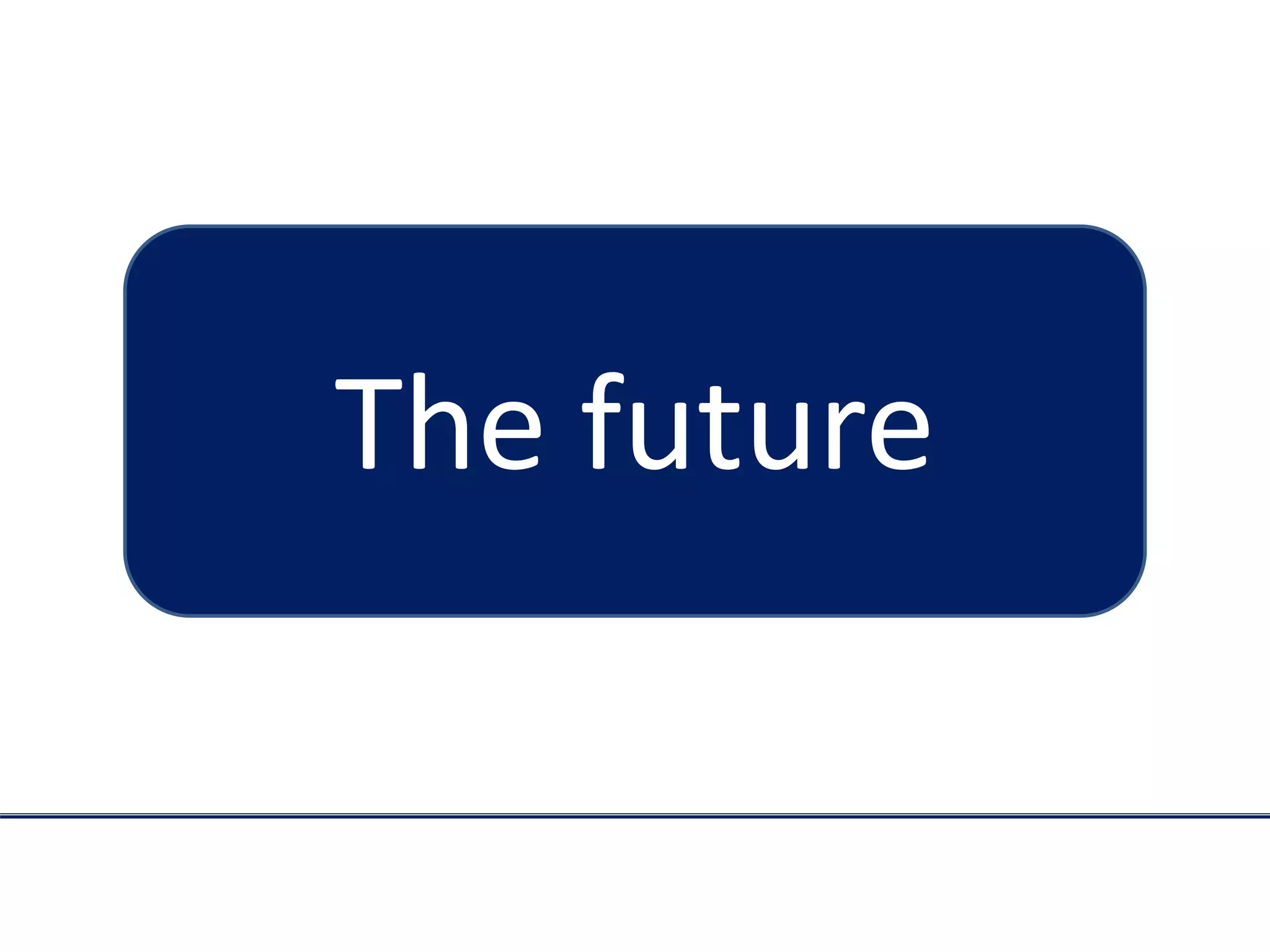
•No more paper/forms
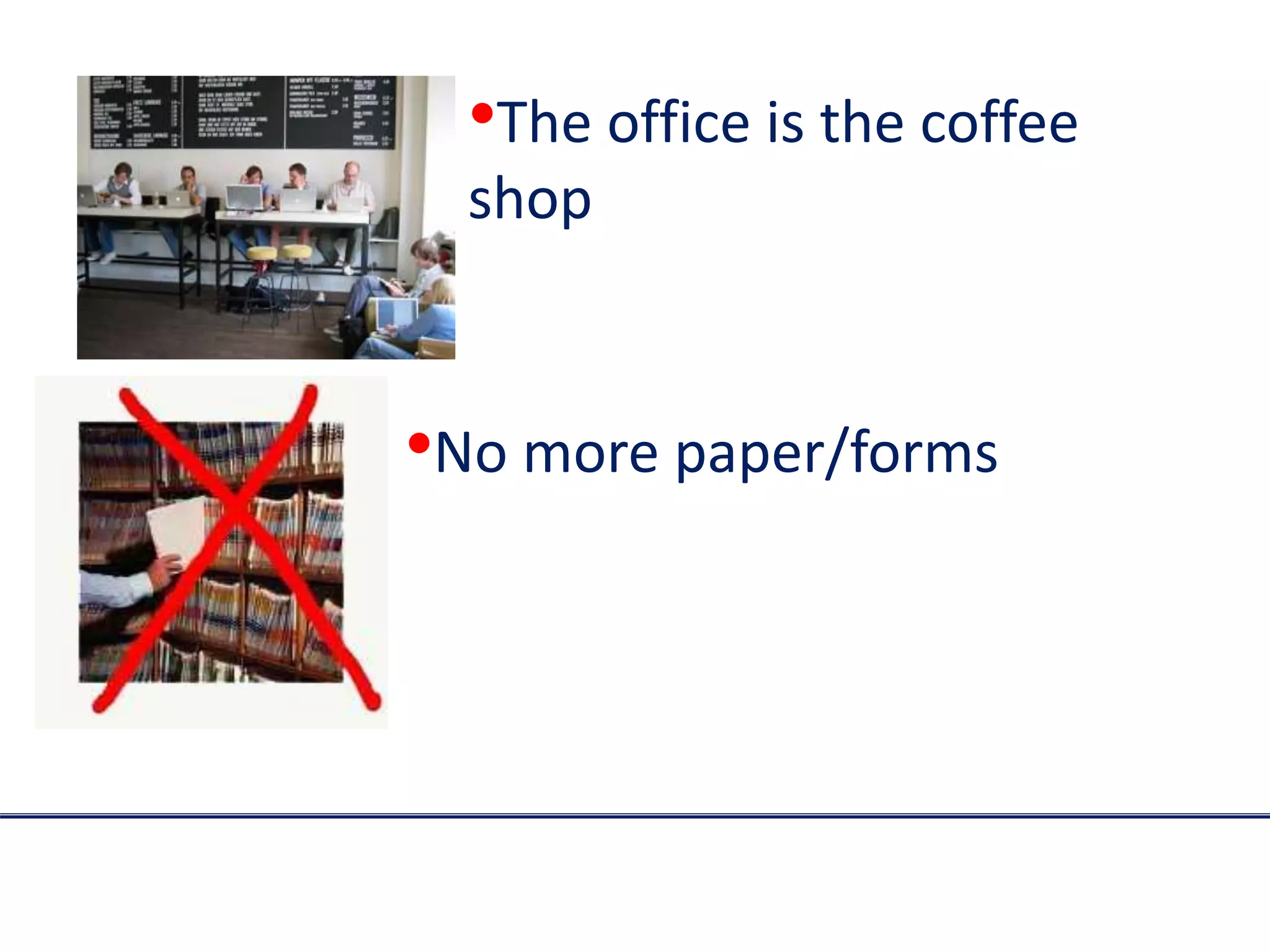
•Immersive environments /
digital whiteboards
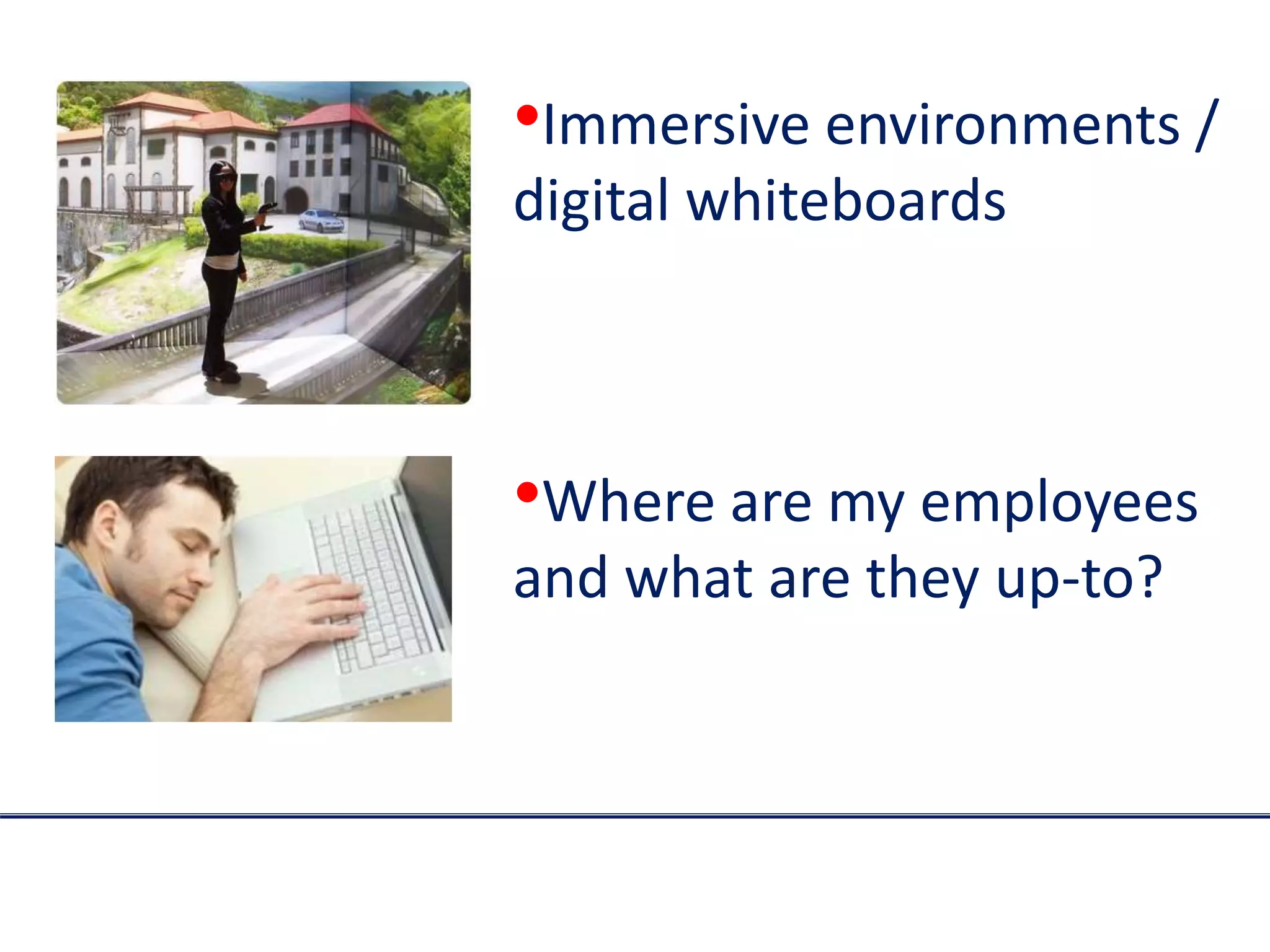
•Where are my employees
and what are they up-to?
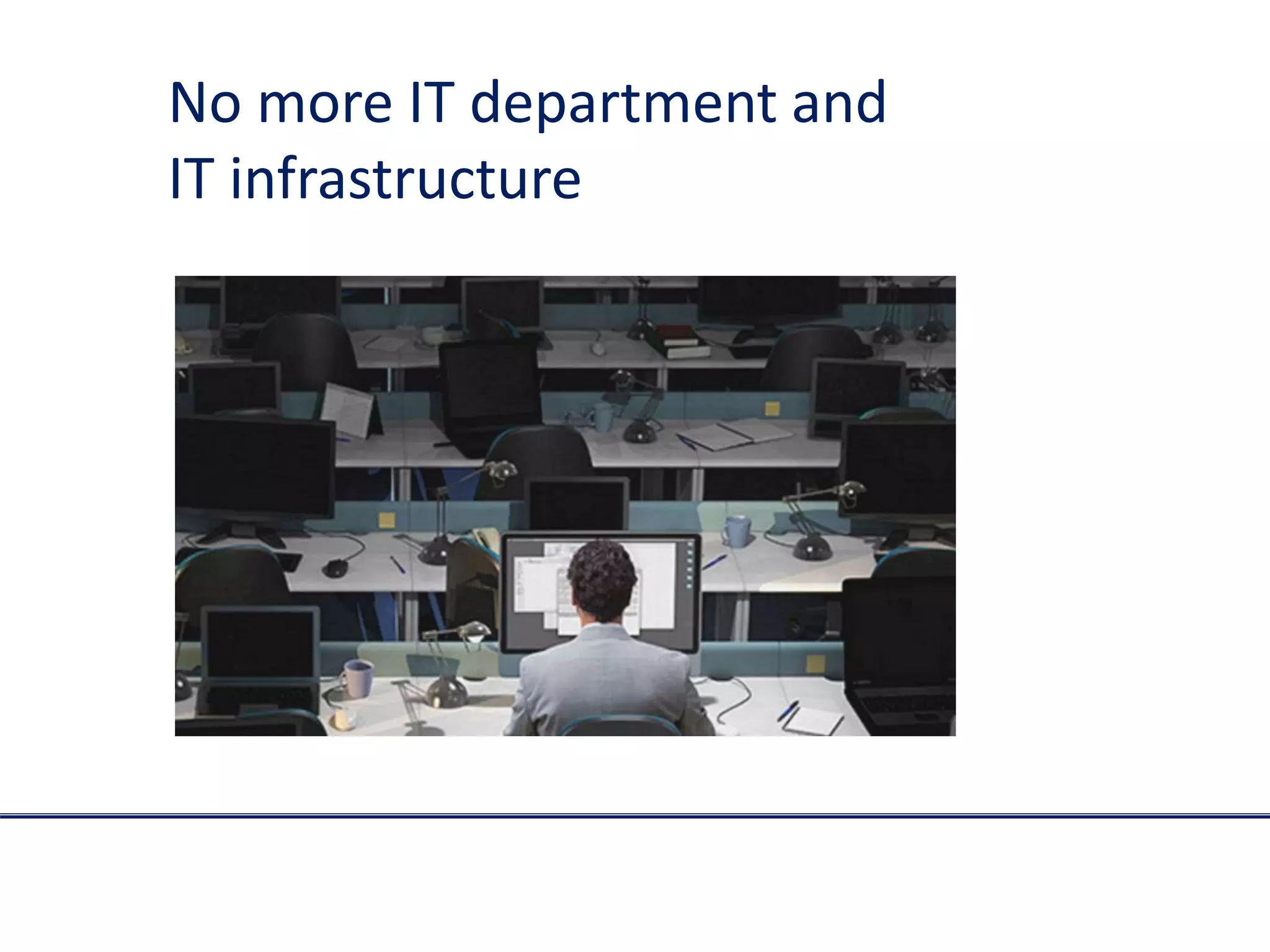
No more IT department and
IT infrastructure
Hi/Low Game
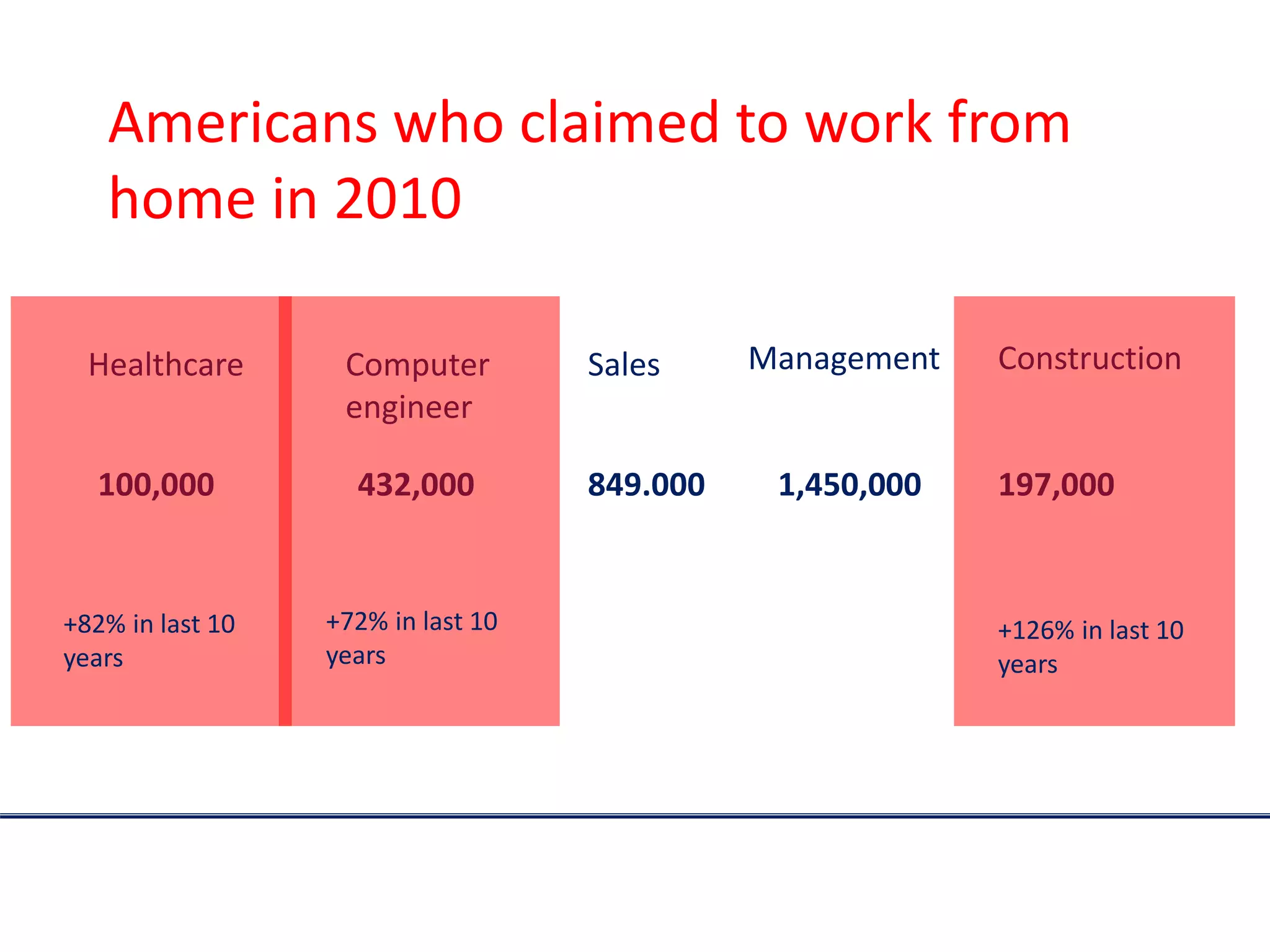
Healthcare
100,000
Americans who claimed to work from
home in 2010
Sales
849.000
Management
1,450,000
Computer
engineer
432,000
Construction
197,000
+126% in last 10
years
+72% in last 10
years
+82% in last 10
years
Fraser Henderson
Stuart McFarlane
Technology enabled
mobility

Technology enabled mobiilty