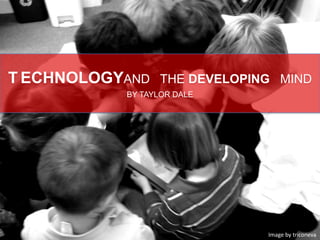


T ECHNOLOGYAND THE DEVELOPING MIND
BY TAYLOR DALE
Image by triconeva
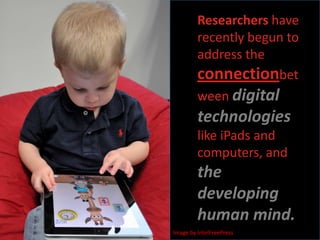
Researchers have
recently begun to
address the
connectionbet
ween digital
technologies
like iPads and
computers, and
the
developing
human mind.
Image by IntelFreePress
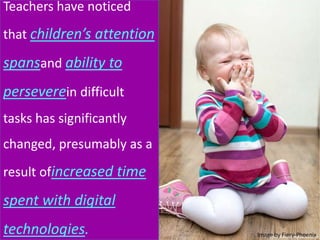
Teachers have noticed
that children’s attention
spansand ability to
perseverein difficult
tasks has significantly
changed, presumably as a
result ofincreased time
spent with digital
technologies. Image by Fiery-Phoenix
… and they
are also
struggling to
capture
and hold
the attention
of their
class.Image by cybrarian77
In a recent survey…
60% of teachers said
technology was hindering their
student’s ability to
writeandcommunicat
eface to face…
Image by Clint Hamada
think critically and do their homework…
… 50% said it affected their ability to
Image by __Jens__
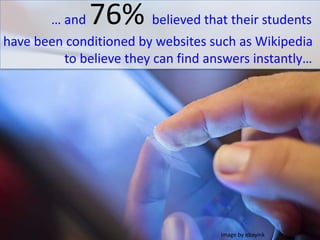
… and 76% believed that their students
have been conditioned by websites such as Wikipedia
to believe they can find answers instantly…
Image by ebayink
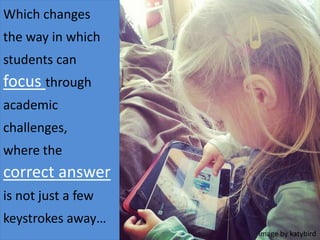
Which changes
the way in which
students can
focus through
academic
challenges,
where the
correct answer
is not just a few
keystrokes away…
Image by katybird
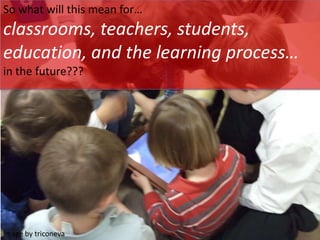
So what will this mean for…
classrooms, teachers, students,
education, and the learning process…
in the future???
Image by triconeva
Where some teachers believe that technology has a
negativeeffect on student learning ability in the
classroom, other teachers have taken a different
approach…
Image by Thomas Favre-Bulle
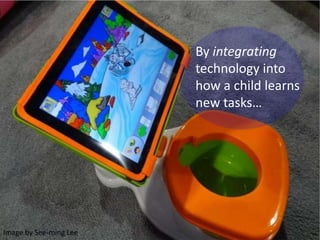
By integrating
technology into
how a child learns
new tasks…
Image by See-ming Lee
Image by abstrakone
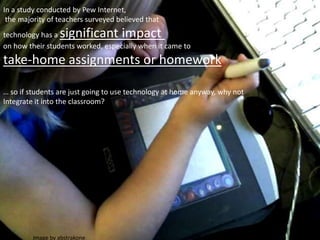
In a study conducted by Pew Internet,
the majority of teachers surveyed believed that
technology has a significant impact
on how their students worked, especially when it came to
take-home assignments or homework
… so if students are just going to use technology at home anyway, why not
Integrate it into the classroom?
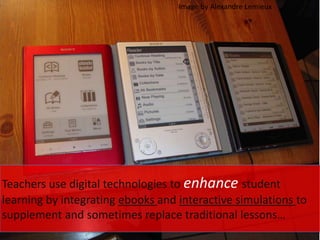
Teachers use digital technologies to enhance student
learning by integrating ebooks and interactive simulations to
supplement and sometimes replace traditional lessons…
Image by Alexandre Lemieux
Image by Jody Roberts
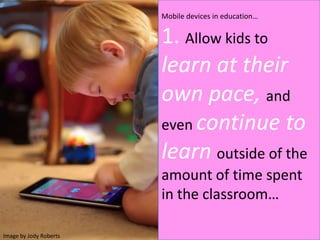
Mobile devices in education…
1. Allow kids to
learn at their
own pace, and
even continue to
learn outside of the
amount of time spent
in the classroom…
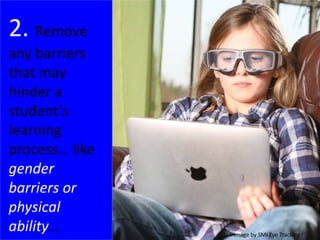
2. Remove
any barriers
that may
hinder a
student’s
learning
process… like
gender
barriers or
physical
ability… Image by SMI Eye Tracking
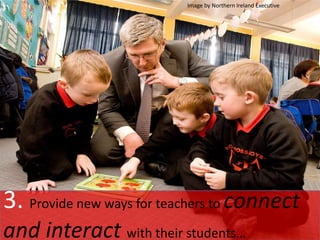
3. Provide new ways for teachers to connect
and interact with their students…
Image by Northern Ireland Executive
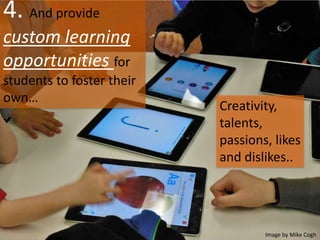
4. And provide
custom learning
opportunities for
students to foster their
own…
Creativity,
talents,
passions, likes
and dislikes..
Image by Mike Cogh
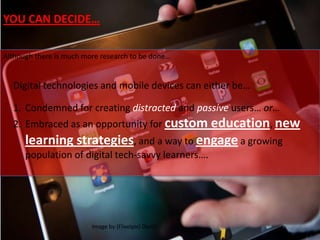
Although there is much more research to be done…
Digital technologies and mobile devices can either be…
1. Condemned for creating distracted and passive users… or…
2. Embraced as an opportunity for custom education, new
learning strategies, and a way to engage a growing
population of digital tech-savvy learners….
Image by {Flixelpix} David
YOU CAN DECIDE…
Images…
All images are licensed under the Creative Commons Non-
Commercial Share-Alike 3.0 agreement and sourced from Flickr
Image by {Flixelpix} David
Sources and Articles
• http://www.pewinternet.org/Reports/2013/Teachers-and-
technology.aspx
• http://www.nielsen.com/us/en/newswire/2012/american-families-
see-tablets-as-playmate-teacher-and-babysitter.html
• http://www.theatlantic.com/magazine/archive/2013/04/the-touch-
screen-generation/309250/2/
• http://bits.blogs.nytimes.com/2013/03/31/disruptions-what-does-
a-tablet-do-to-the-childs-mind/
• http://www.nytimes.com/2012/11/01/education/technology-is-
changing-how-students-learn-teachers-say.html?_r=0
• http://www.fastcodesign.com/1669896/10-ways-that-mobile-
learning-will-revolutionize-education
• http://mashable.com/2010/11/22/technology-in-education/
Image by {Flixelpix} David

Mobile Technology in Education

  • 1.
    T ECHNOLOGYAND THEDEVELOPING MIND BY TAYLOR DALE Image by triconeva
  • 2.
    Researchers have recently begunto address the connectionbet ween digital technologies like iPads and computers, and the developing human mind. Image by IntelFreePress
  • 3.
    Teachers have noticed thatchildren’s attention spansand ability to perseverein difficult tasks has significantly changed, presumably as a result ofincreased time spent with digital technologies. Image by Fiery-Phoenix
  • 4.
    … and they arealso struggling to capture and hold the attention of their class.Image by cybrarian77
  • 5.
    In a recentsurvey… 60% of teachers said technology was hindering their student’s ability to writeandcommunicat eface to face… Image by Clint Hamada
  • 6.
    think critically anddo their homework… … 50% said it affected their ability to Image by __Jens__
  • 7.
    … and 76%believed that their students have been conditioned by websites such as Wikipedia to believe they can find answers instantly… Image by ebayink
  • 8.
    Which changes the wayin which students can focus through academic challenges, where the correct answer is not just a few keystrokes away… Image by katybird
  • 9.
    So what willthis mean for… classrooms, teachers, students, education, and the learning process… in the future??? Image by triconeva
  • 10.
    Where some teachersbelieve that technology has a negativeeffect on student learning ability in the classroom, other teachers have taken a different approach… Image by Thomas Favre-Bulle
  • 11.
    By integrating technology into howa child learns new tasks… Image by See-ming Lee
  • 12.
    Image by abstrakone Ina study conducted by Pew Internet, the majority of teachers surveyed believed that technology has a significant impact on how their students worked, especially when it came to take-home assignments or homework … so if students are just going to use technology at home anyway, why not Integrate it into the classroom?
  • 13.
    Teachers use digitaltechnologies to enhance student learning by integrating ebooks and interactive simulations to supplement and sometimes replace traditional lessons… Image by Alexandre Lemieux
  • 14.
    Image by JodyRoberts Mobile devices in education… 1. Allow kids to learn at their own pace, and even continue to learn outside of the amount of time spent in the classroom…
  • 15.
    2. Remove any barriers thatmay hinder a student’s learning process… like gender barriers or physical ability… Image by SMI Eye Tracking
  • 16.
    3. Provide newways for teachers to connect and interact with their students… Image by Northern Ireland Executive
  • 17.
    4. And provide customlearning opportunities for students to foster their own… Creativity, talents, passions, likes and dislikes.. Image by Mike Cogh
  • 18.
    Although there ismuch more research to be done… Digital technologies and mobile devices can either be… 1. Condemned for creating distracted and passive users… or… 2. Embraced as an opportunity for custom education, new learning strategies, and a way to engage a growing population of digital tech-savvy learners…. Image by {Flixelpix} David YOU CAN DECIDE…
  • 19.
    Images… All images arelicensed under the Creative Commons Non- Commercial Share-Alike 3.0 agreement and sourced from Flickr Image by {Flixelpix} David
  • 20.
    Sources and Articles •http://www.pewinternet.org/Reports/2013/Teachers-and- technology.aspx • http://www.nielsen.com/us/en/newswire/2012/american-families- see-tablets-as-playmate-teacher-and-babysitter.html • http://www.theatlantic.com/magazine/archive/2013/04/the-touch- screen-generation/309250/2/ • http://bits.blogs.nytimes.com/2013/03/31/disruptions-what-does- a-tablet-do-to-the-childs-mind/ • http://www.nytimes.com/2012/11/01/education/technology-is- changing-how-students-learn-teachers-say.html?_r=0 • http://www.fastcodesign.com/1669896/10-ways-that-mobile- learning-will-revolutionize-education • http://mashable.com/2010/11/22/technology-in-education/ Image by {Flixelpix} David