Mobile Payment Security
Trends for the Future
• 2015 was a notable year for mobile payments, as new
mobile wallets emerged causing more competition for
Apple Pay®.
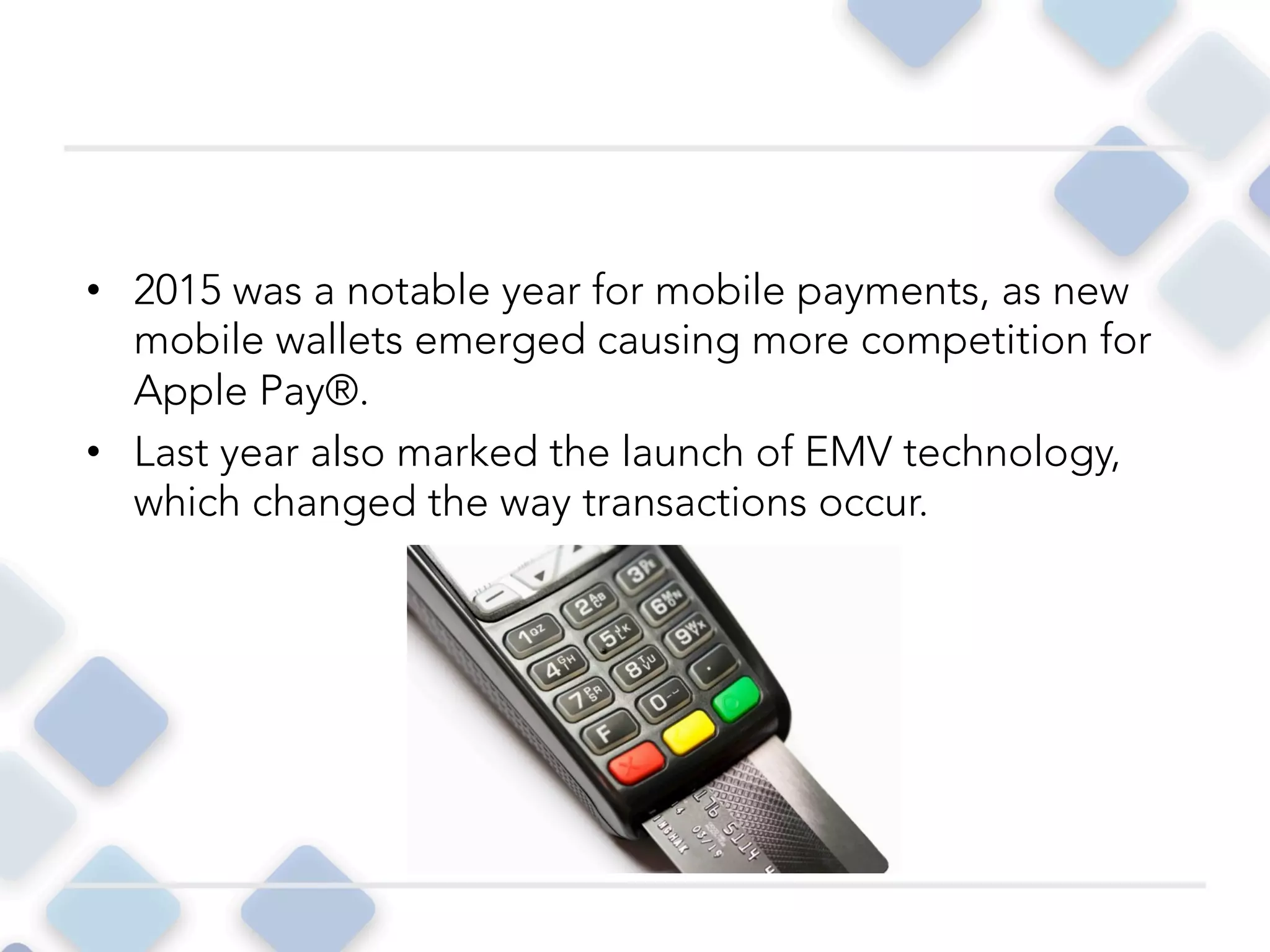
• Last year also marked the launch of EMV technology,
which changed the way transactions occur.
• With technology rapidly progressing, it is vital that the
payments industry continues to enhance fraud
prevention and intensify security measures to prevent
criminals from attacking.
• Now that 2016 is halfway through, several mobile
payment trends have begun to surface.
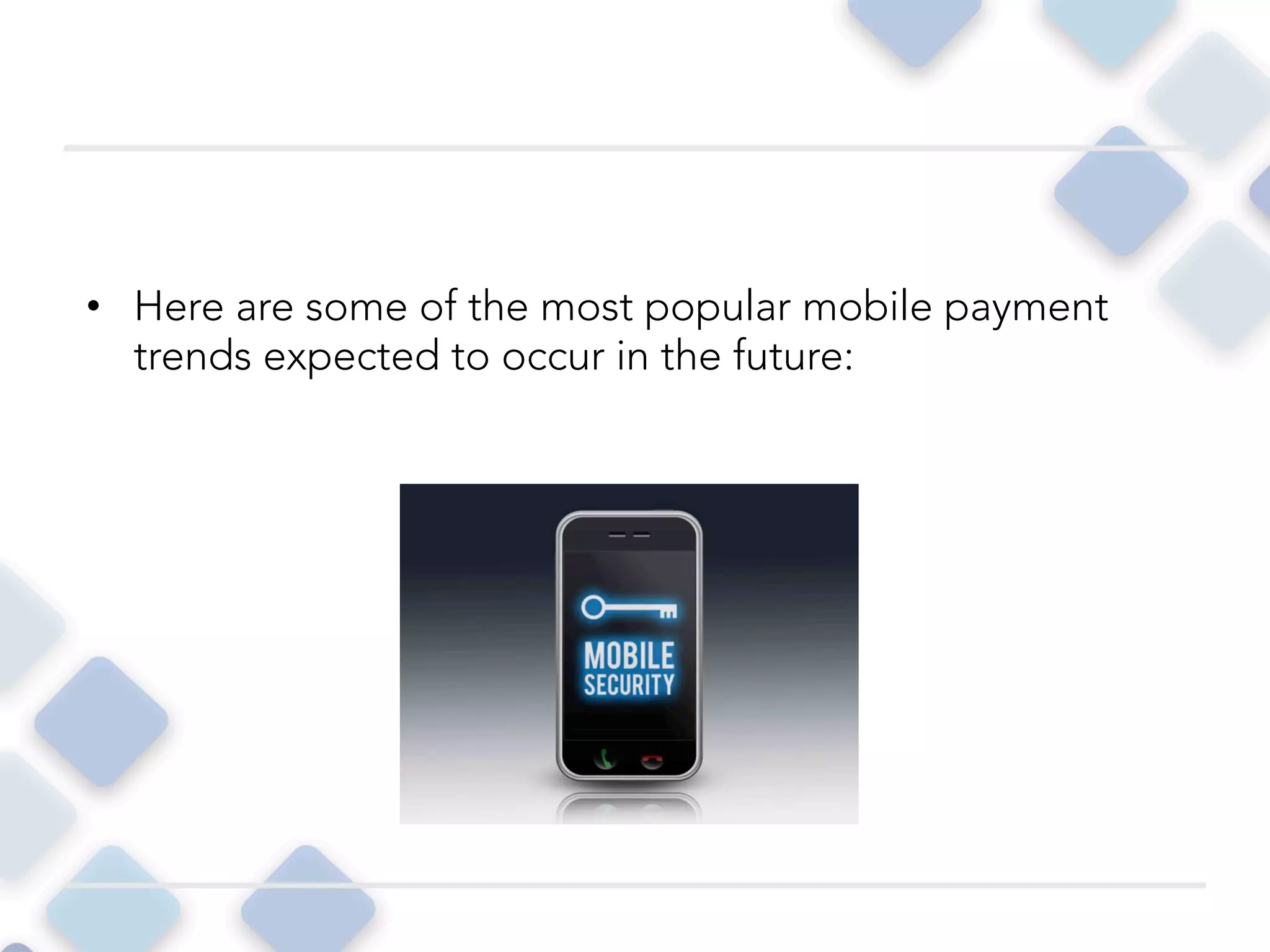
• Here are some of the most popular mobile payment
trends expected to occur in the future:
• With many businesses now accepting a variety of
payment methods, it is crucial for businesses to
incorporate both pre and post tokenization to help
safeguard against costly data breaches.
• Using both pre and post tokenization is also vital for
businesses that store card information on file to help
prevent fraud from occurring.
Pre/Post Authorization Tokens Will Expand
•  Pre authorization tokens, (otherwise referred as EMV
tokens), come in handy for businesses that use mobile e-
commerce or mobile payments.
•  Before a transaction occurs, these tokens are sent to a
consumer’s mobile Internet browser or mobile device and
offer a fast and secure way for consumers to make a
purchase utilizing a stored mobile payment solution.
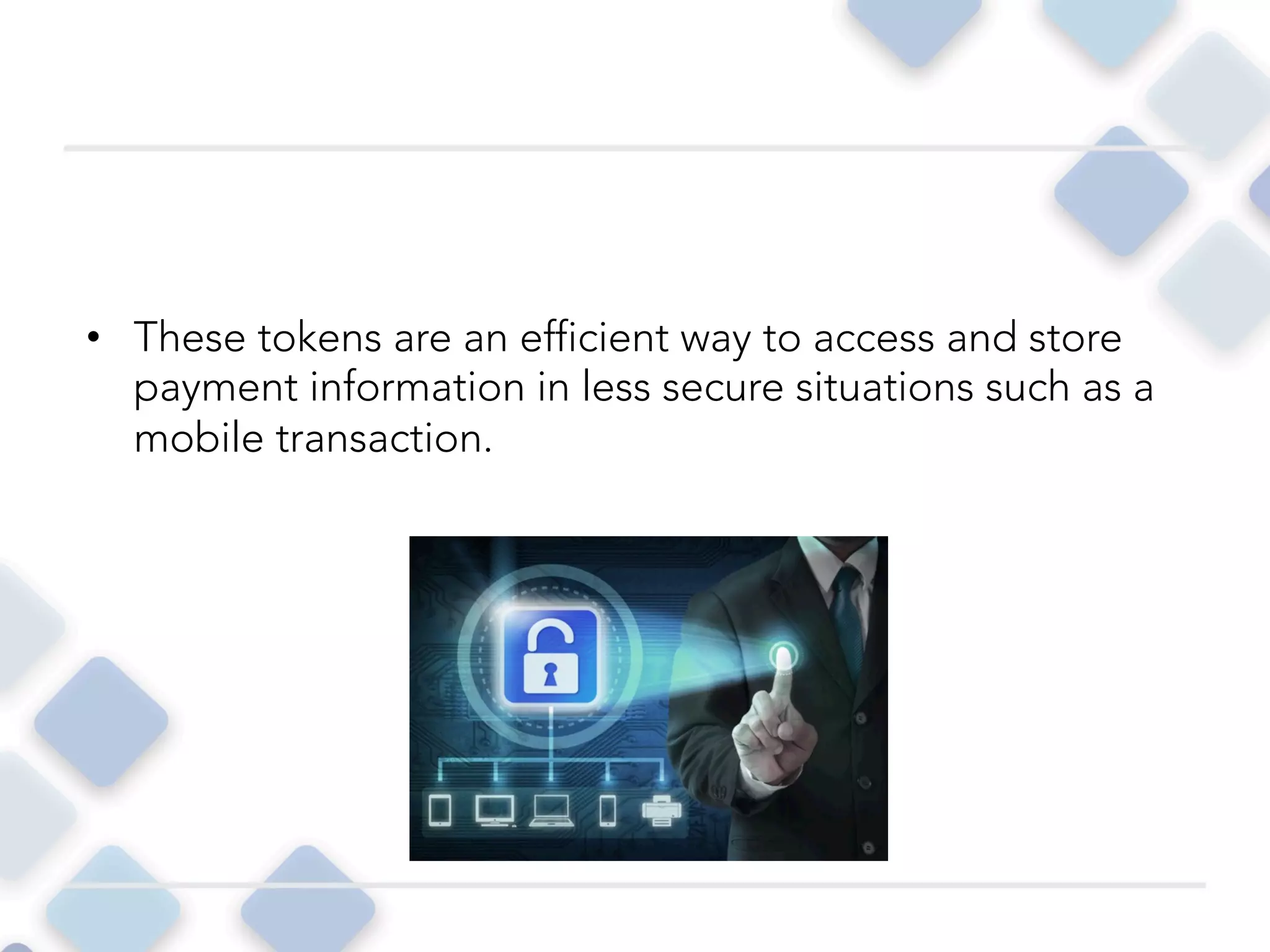
•  These tokens are an efficient way to access and store
payment information in less secure situations such as a
mobile transaction. 
•  Post authorization tokens, known as security tokens, are
also useful for merchants.
•  For businesses that store confidential payment
information within their database, post tokenization
enables them to securely collect the card information for
future payments in a PCI-compliant manner.
•  This stored information comes in handy for merchandise
returns, future transactions, and loyalty solutions for
businesses. 
•  According to a study conducted by Gemalto, nearly 72
percent of retailers feel that mobile payments and
mobile wallets could place payment data at risk and 54
percent are uncertain if their current security measures
are able to support these mobile platforms.
Security Will Remain an Issue
•  This same study revealed that mobile payments add up
to just 9 percent of all payments currently, but within two
years time this ratio is expected to increase significantly.
•  Although the total usage and adoption rates for mobile
payments are small in comparison to traditional card
rates, mobile payments are predicted to triple within the
U.S. during 2016 – this means almost one in five
smartphone users plan to use mobile payments this year.
•  With mobile payments on the rise, cyber criminals have
now begun to target their motives toward mobile
opportunities. 
Cyber Criminals Will Follow Mobile Payments
•  Since many businesses are gearing up to accept a variety
of alternative payments, it is important companies
conduct an in-depth security assessment, become alert
of the possible increased amount of attacks they may
experience, and have a plan prepared to help cut down
these threats. 
•  It is clear that mobile payment technology has
substantial benefits and will help bring in additional
revenue.
•  However, businesses need to make sure to prepare for
the possibility of a data breach and what proactive steps
need to be put in place to help prevent a breach from
happening.
•  It is crucial for businesses to incorporate pre and post
authorization tokenization, make security a top priority,
and take note of cyber criminal’s patterns in relation to
mobile payments.
Looking to incorporate mobile payments?
Contact First American Payment Systems today and get started

Mobile Payment Security Trends for the Future

  • 1.
  • 2.
    • 2015 wasa notable year for mobile payments, as new mobile wallets emerged causing more competition for Apple Pay®. • Last year also marked the launch of EMV technology, which changed the way transactions occur.
  • 3.
    • With technologyrapidly progressing, it is vital that the payments industry continues to enhance fraud prevention and intensify security measures to prevent criminals from attacking. • Now that 2016 is halfway through, several mobile payment trends have begun to surface.
  • 4.
    • Here aresome of the most popular mobile payment trends expected to occur in the future:
  • 5.
    • With manybusinesses now accepting a variety of payment methods, it is crucial for businesses to incorporate both pre and post tokenization to help safeguard against costly data breaches. • Using both pre and post tokenization is also vital for businesses that store card information on file to help prevent fraud from occurring. Pre/Post Authorization Tokens Will Expand
  • 6.
    •  Pre authorizationtokens, (otherwise referred as EMV tokens), come in handy for businesses that use mobile e- commerce or mobile payments. •  Before a transaction occurs, these tokens are sent to a consumer’s mobile Internet browser or mobile device and offer a fast and secure way for consumers to make a purchase utilizing a stored mobile payment solution.
  • 7.
    •  These tokensare an efficient way to access and store payment information in less secure situations such as a mobile transaction. 
  • 8.
    •  Post authorizationtokens, known as security tokens, are also useful for merchants. •  For businesses that store confidential payment information within their database, post tokenization enables them to securely collect the card information for future payments in a PCI-compliant manner. •  This stored information comes in handy for merchandise returns, future transactions, and loyalty solutions for businesses. 
  • 9.
    •  According toa study conducted by Gemalto, nearly 72 percent of retailers feel that mobile payments and mobile wallets could place payment data at risk and 54 percent are uncertain if their current security measures are able to support these mobile platforms. Security Will Remain an Issue
  • 10.
    •  This samestudy revealed that mobile payments add up to just 9 percent of all payments currently, but within two years time this ratio is expected to increase significantly.
  • 11.
    •  Although thetotal usage and adoption rates for mobile payments are small in comparison to traditional card rates, mobile payments are predicted to triple within the U.S. during 2016 – this means almost one in five smartphone users plan to use mobile payments this year. •  With mobile payments on the rise, cyber criminals have now begun to target their motives toward mobile opportunities.  Cyber Criminals Will Follow Mobile Payments
  • 12.
    •  Since manybusinesses are gearing up to accept a variety of alternative payments, it is important companies conduct an in-depth security assessment, become alert of the possible increased amount of attacks they may experience, and have a plan prepared to help cut down these threats. 
  • 13.
    •  It isclear that mobile payment technology has substantial benefits and will help bring in additional revenue. •  However, businesses need to make sure to prepare for the possibility of a data breach and what proactive steps need to be put in place to help prevent a breach from happening. •  It is crucial for businesses to incorporate pre and post authorization tokenization, make security a top priority, and take note of cyber criminal’s patterns in relation to mobile payments.
  • 14.
    Looking to incorporatemobile payments? Contact First American Payment Systems today and get started