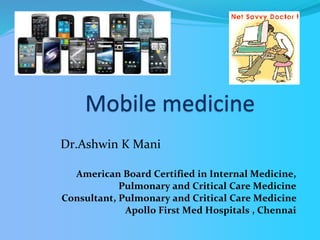
Mobile medicine
American Board Certified in Internal Medicine,
Pulmonary and Critical Care Medicine
Consultant, Pulmonary and Critical Care Medicine
Apollo First Med Hospitals , Chennai
Dr.Ashwin K Mani
Disclaimer
4
5
6
7
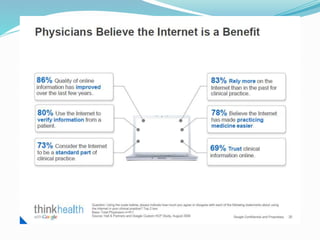
Internet use by doctors
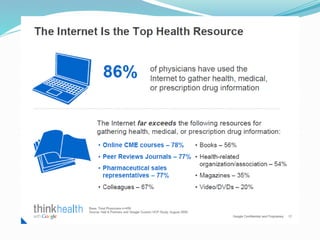
 86% of U.S. physicians use the Internet to gather
health, medical or prescription drug information
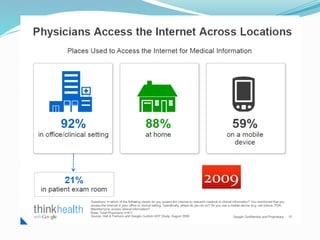
 92% -accessed it from their office
 21% - in the patients room
 88% said they looked for health information online
from home
 59% reported doing so from a mobile device
American Medical News 2010
Doctors using the net
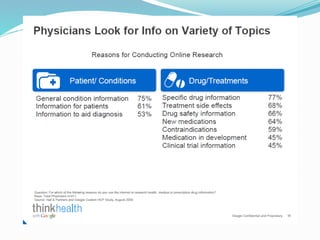
 92% started with Google
 57% use terms related to conditions,
 36% use terms related to treatments and trials
 33% look for branded medication.
 About a third of physicians made a treatment change
after their net search
2009
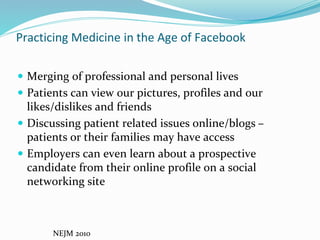
Practicing Medicine in the Age of Facebook
 Merging of professional and personal lives
 Patients can view our pictures, profiles and our
likes/dislikes and friends
 Discussing patient related issues online/blogs –
patients or their families may have access
 Employers can even learn about a prospective
candidate from their online profile on a social
networking site
NEJM 2010
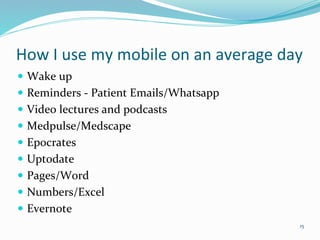
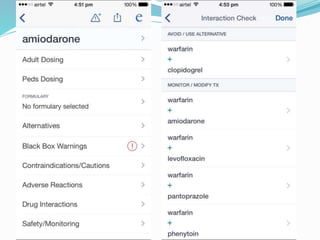
How I use my mobile on an average day
 Wake up
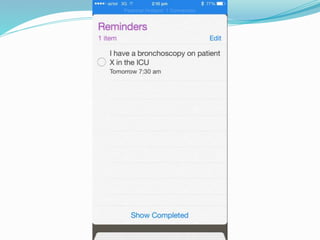
 Reminders - Patient Emails/Whatsapp
 Video lectures and podcasts
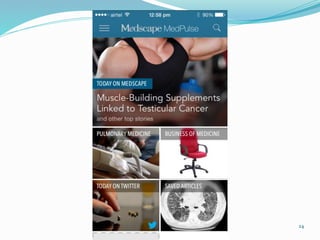
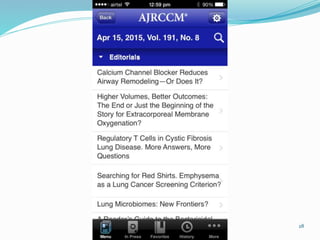
 Medpulse/Medscape
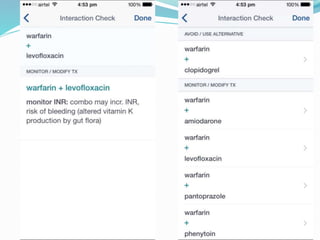
 Epocrates
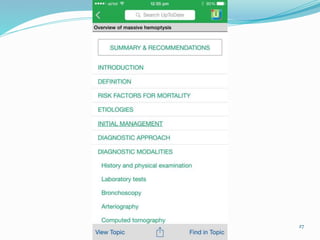
 Uptodate
 Pages/Word
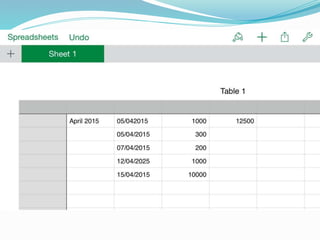
 Numbers/Excel
 Evernote
15
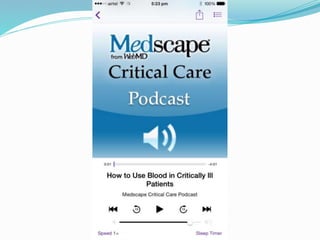
Podcasts
 Mediafiles from the net which can be played on
computers or mediaplayers or mobile phones
 Good to have a quick review by experts while driving,
walking, jogging
 Easily accessible from any mobile device
 Effective way for busy doctors to keep uptodate
 More reliable than info from “medical reps!!”
22
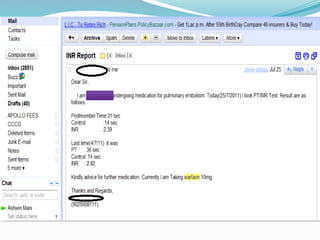
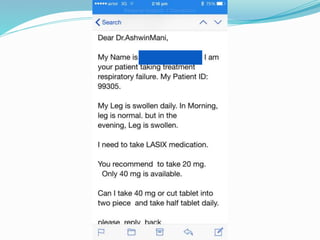
Potential advantages of email in delivering
health care
 Convenience and time saving
 Unlimited length
 Useful to clarify doubts
 Better than oral phone orders , especially for
medications
 Patients can access from anyplace (especially on
mobile phones)
 Written record, avoids illegibility
 Improved quality of care
24
27
28
29
30
31
32
33
34
35
36
38
40
41
42
43
44
45
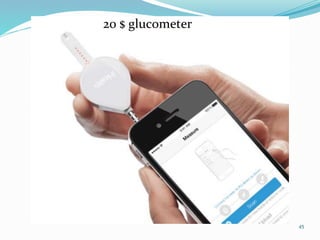
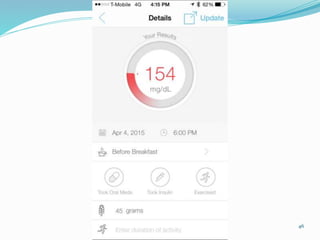
20 $ glucometer
46
47
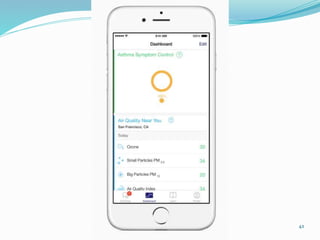
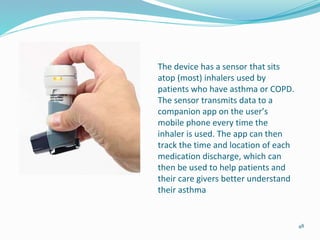
The device has a sensor that sits
atop (most) inhalers used by
patients who have asthma or COPD.
The sensor transmits data to a
companion app on the user’s
mobile phone every time the
inhaler is used. The app can then
track the time and location of each
medication discharge, which can
then be used to help patients and
their care givers better understand
their asthma
48
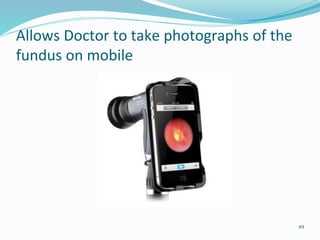
Allows Doctor to take photographs of the
fundus on mobile
49
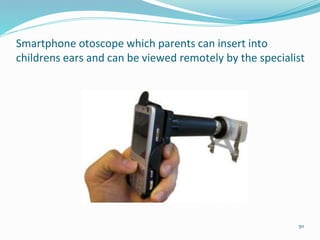
Smartphone otoscope which parents can insert into
childrens ears and can be viewed remotely by the specialist
50
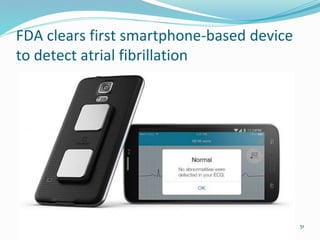
FDA clears first smartphone-based device
to detect atrial fibrillation
51
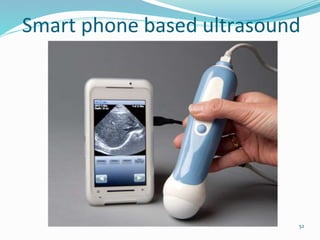
Smart phone based ultrasound
52
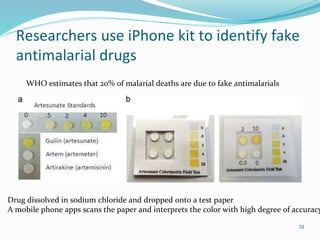
Researchers use iPhone kit to identify fake
antimalarial drugs
53
WHO estimates that 20% of malarial deaths are due to fake antimalarials
Drug dissolved in sodium chloride and dropped onto a test paper
A mobile phone apps scans the paper and interprets the color with high degree of accuracy
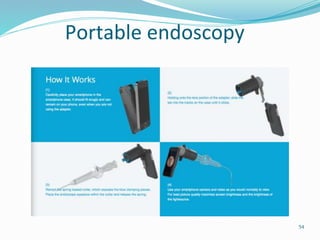
Portable endoscopy
54
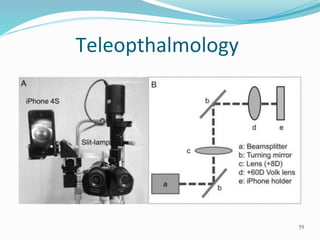
Teleopthalmology
55
Thanks
59
60
61
62
63
66
67
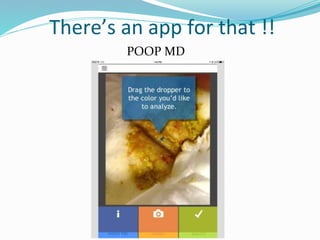
There’s an app for that !!
POOP MD
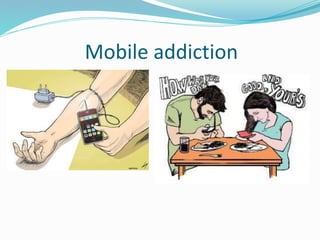
Mobile addiction
Thanks for your attention

Mobile medicine

  • 1.
    Mobile medicine American BoardCertified in Internal Medicine, Pulmonary and Critical Care Medicine Consultant, Pulmonary and Critical Care Medicine Apollo First Med Hospitals , Chennai Dr.Ashwin K Mani
  • 4.
  • 5.
  • 6.
  • 7.
  • 8.
    Internet use bydoctors  86% of U.S. physicians use the Internet to gather health, medical or prescription drug information  92% -accessed it from their office  21% - in the patients room  88% said they looked for health information online from home  59% reported doing so from a mobile device American Medical News 2010
  • 9.
    Doctors using thenet  92% started with Google  57% use terms related to conditions,  36% use terms related to treatments and trials  33% look for branded medication.  About a third of physicians made a treatment change after their net search
  • 11.
  • 14.
    Practicing Medicine inthe Age of Facebook  Merging of professional and personal lives  Patients can view our pictures, profiles and our likes/dislikes and friends  Discussing patient related issues online/blogs – patients or their families may have access  Employers can even learn about a prospective candidate from their online profile on a social networking site NEJM 2010
  • 15.
    How I usemy mobile on an average day  Wake up  Reminders - Patient Emails/Whatsapp  Video lectures and podcasts  Medpulse/Medscape  Epocrates  Uptodate  Pages/Word  Numbers/Excel  Evernote 15
  • 17.
    Podcasts  Mediafiles fromthe net which can be played on computers or mediaplayers or mobile phones  Good to have a quick review by experts while driving, walking, jogging  Easily accessible from any mobile device  Effective way for busy doctors to keep uptodate  More reliable than info from “medical reps!!”
  • 22.
  • 23.
    Potential advantages ofemail in delivering health care  Convenience and time saving  Unlimited length  Useful to clarify doubts  Better than oral phone orders , especially for medications  Patients can access from anyplace (especially on mobile phones)  Written record, avoids illegibility  Improved quality of care
  • 24.
  • 27.
  • 28.
  • 29.
  • 30.
  • 31.
  • 32.
  • 33.
  • 34.
  • 35.
  • 36.
  • 38.
  • 40.
  • 41.
  • 42.
  • 43.
  • 44.
  • 45.
  • 46.
  • 47.
  • 48.
    The device hasa sensor that sits atop (most) inhalers used by patients who have asthma or COPD. The sensor transmits data to a companion app on the user’s mobile phone every time the inhaler is used. The app can then track the time and location of each medication discharge, which can then be used to help patients and their care givers better understand their asthma 48
  • 49.
    Allows Doctor totake photographs of the fundus on mobile 49
  • 50.
    Smartphone otoscope whichparents can insert into childrens ears and can be viewed remotely by the specialist 50
  • 51.
    FDA clears firstsmartphone-based device to detect atrial fibrillation 51
  • 52.
    Smart phone basedultrasound 52
  • 53.
    Researchers use iPhonekit to identify fake antimalarial drugs 53 WHO estimates that 20% of malarial deaths are due to fake antimalarials Drug dissolved in sodium chloride and dropped onto a test paper A mobile phone apps scans the paper and interprets the color with high degree of accuracy
  • 54.
  • 55.
  • 58.
  • 59.
  • 60.
  • 61.
  • 62.
  • 63.
  • 66.
  • 67.
  • 68.
    There’s an appfor that !! POOP MD
  • 69.
  • 71.
    Thanks for yourattention

Editor's Notes

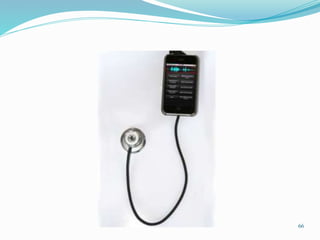
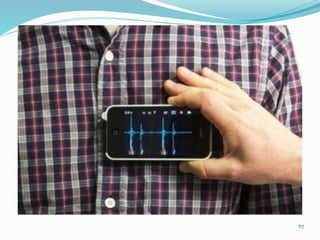
  • #68  2.2K 385 GET OUR TOP STORIES AND MORE Delivered to your inbox for free! RELATED NEWS MakerBot lays off 20 percent of its staff and closes its three retail locations <div class="date"> Posted <span>April 18, 2015</span> </div> Meet the tinkerer-turned-prosthetic pioneer who 3D printed a working hand <div class="date"> Posted <span>February 14, 2013</span> </div> 5 awesome desktop 3D printers that bring your ideas to life <div class="date"> Posted <span>July 31, 2013</span> </div> Inside Stanford’s science fair on steroids: 10 brilliant student inventions <div class="date"> Posted <span>May 20, 2011</span> </div> When high school student Suman Mulumudi got his hands on a 3D printer, he decided to make an iPhone case, but one which really stood out from the crowd. It’s not covered in bizarre shapes, it’s not compatible with Lego, and it doesn’t have an unusual picture burned into it. No, it does something not only useful, but also unique. It’s called the Steth IO, and it’s a stethoscope for the smartphone generation. Slot an iPhone into the case, and thanks to a diaphragm on the back, low frequency sound is channeled through a network of tubes leading to the microphone. It can then hear, visualize, and record the sound of a heart beat. The final product is the result of several prototypes, and have led to Mulumudi forming his own company, called Stratoscientific, and submitting the Steth IO for FDA approval. Oh, did we mention he’s only 15 years-old? So how did the Steth IO come about? According to a story on Mulumudi published on the 3D printing firm MakerBot’s website, his father is a cardiologist, so he’s no stranger to the medical world and the heart in particular. A student at The Lakeside School in Seattle – well-known for bringing Bill Gates and Paul Allen together – he says the first version of the case took around two weeks to design, and that previous experience with 3D printing made it the obvious choice for developing the prototype. Read more: http://www.digitaltrends.com/mobile/steth-io-case-turns-your-iphone-into-a-stethoscope/#ixzz3Y8Nnwqo2 Follow us: @digitaltrends on Twitter | digitaltrendsftw on Facebook Read more: http://www.digitaltrends.com/mobile/steth-io-case-turns-your-iphone-into-a-stethoscope/#ixzz3Y8NkMDAy Follow us: @digitaltrends on Twitter | digitaltrendsftw on Facebook