Nadar Saraswathi College Of Arts & Science,
Theni.
Mobile computing,
Signals , antennas.
By,
R.Preethi.
SIGNALS.
 Physical representation of data.
 Function of time and location.
 Signal parameters: parameters representing the value of data
 Classification:
 continuous time/discrete time
 continuous values/discrete values
 analog signal = continuous time and continuous values
 digital signal = discrete time and discrete values
 signal parameters of periodic signals: period T, frequency
f=1/T, amplitude A, phase shift φ
 sine wave as special periodic signal for a carrier: s(t) = At
sin(2 πft t + φt)
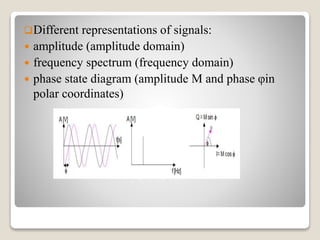
Different representations of signals:
 amplitude (amplitude domain)
 frequency spectrum (frequency domain)
 phase state diagram (amplitude M and phase φin
polar coordinates)
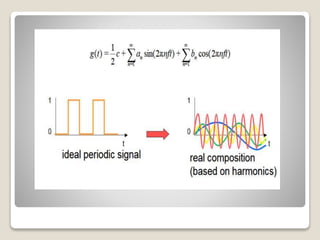
 Composed signals transferred into frequency domain
using Fourier transformation
 Digital signals need
 infinite frequencies for perfect transmission
 modulation with a carrier frequency for transmission
(analog signal!)
ANTENNAS.
Isotropic radiator:
 Radiation and reception of electromagnetic waves, coupling of
wires to space for radio transmission.
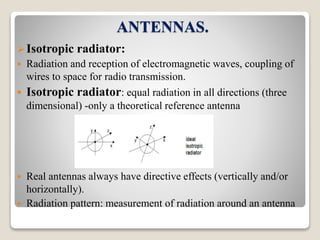
 Isotropic radiator: equal radiation in all directions (three
dimensional) -only a theoretical reference antenna
 Real antennas always have directive effects (vertically and/or
horizontally).
 Radiation pattern: measurement of radiation around an antenna
Simple dipoles:
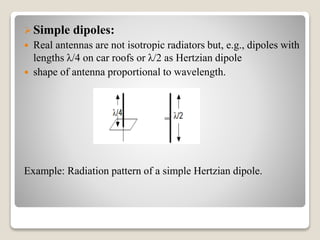
 Real antennas are not isotropic radiators but, e.g., dipoles with
lengths λ/4 on car roofs or λ/2 as Hertzian dipole
 shape of antenna proportional to wavelength.
Example: Radiation pattern of a simple Hertzian dipole.
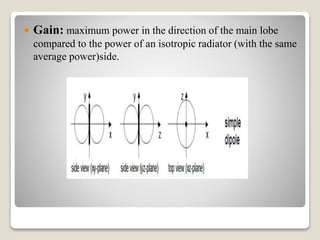
 Gain: maximum power in the direction of the main lobe
compared to the power of an isotropic radiator (with the same
average power)side.
:
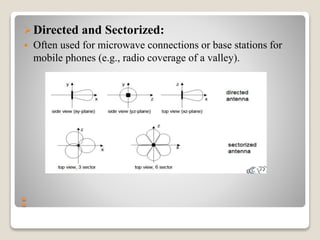
Directed and Sectorized:
 Often used for microwave connections or base stations for
mobile phones (e.g., radio coverage of a valley).
Diversity:
 Grouping of 2 or more antennas.
 multi-element antenna arrays
 Antenna diversity:
 switched diversity, selection diversity l receiver chooses
antenna with largest output.
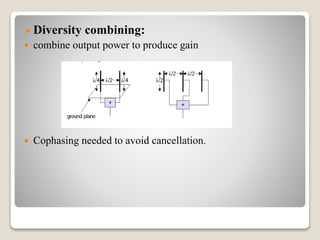
Diversity combining:
 combine output power to produce gain
 Cophasing needed to avoid cancellation.
Mobile Computing

Mobile Computing

  • 1.
    Nadar Saraswathi CollegeOf Arts & Science, Theni. Mobile computing, Signals , antennas. By, R.Preethi.
  • 2.
    SIGNALS.  Physical representationof data.  Function of time and location.  Signal parameters: parameters representing the value of data  Classification:  continuous time/discrete time  continuous values/discrete values  analog signal = continuous time and continuous values  digital signal = discrete time and discrete values  signal parameters of periodic signals: period T, frequency f=1/T, amplitude A, phase shift φ  sine wave as special periodic signal for a carrier: s(t) = At sin(2 πft t + φt)
  • 5.
    Different representations ofsignals:  amplitude (amplitude domain)  frequency spectrum (frequency domain)  phase state diagram (amplitude M and phase φin polar coordinates)
  • 6.
     Composed signalstransferred into frequency domain using Fourier transformation  Digital signals need  infinite frequencies for perfect transmission  modulation with a carrier frequency for transmission (analog signal!)
  • 7.
    ANTENNAS. Isotropic radiator:  Radiationand reception of electromagnetic waves, coupling of wires to space for radio transmission.  Isotropic radiator: equal radiation in all directions (three dimensional) -only a theoretical reference antenna  Real antennas always have directive effects (vertically and/or horizontally).  Radiation pattern: measurement of radiation around an antenna
  • 8.
    Simple dipoles:  Realantennas are not isotropic radiators but, e.g., dipoles with lengths λ/4 on car roofs or λ/2 as Hertzian dipole  shape of antenna proportional to wavelength. Example: Radiation pattern of a simple Hertzian dipole.
  • 9.
     Gain: maximumpower in the direction of the main lobe compared to the power of an isotropic radiator (with the same average power)side.
  • 10.
    : Directed and Sectorized: Often used for microwave connections or base stations for mobile phones (e.g., radio coverage of a valley).
  • 11.
    Diversity:  Grouping of2 or more antennas.  multi-element antenna arrays  Antenna diversity:  switched diversity, selection diversity l receiver chooses antenna with largest output.
  • 12.
    Diversity combining:  combineoutput power to produce gain  Cophasing needed to avoid cancellation.