HOW TO KICKSTART IT CAREER
WITHOUT IT BACKGROUND?
Department of Mechanical Engineering
University of Engineering & Technology, Taxila.
01
Presented by:
22-ME-04 Muhammad Qasim
22-ME-52 Khizer Aftab
22-ME-64 Muhammad Shahmeer Arshad
22-ME-68 Abdullah Rashid
02
TABLE OF
CONTENT
01
02
04
05
Introduction
Why we go for IT?
Emerging Trends in
IT
Skills in demand
03
06
Kickstarting your IT
career
Skills to leverage
07 Networking &
Community
08
09
Building a Portfolio
10
Action Plan
Conclusion
03
1. Introduction
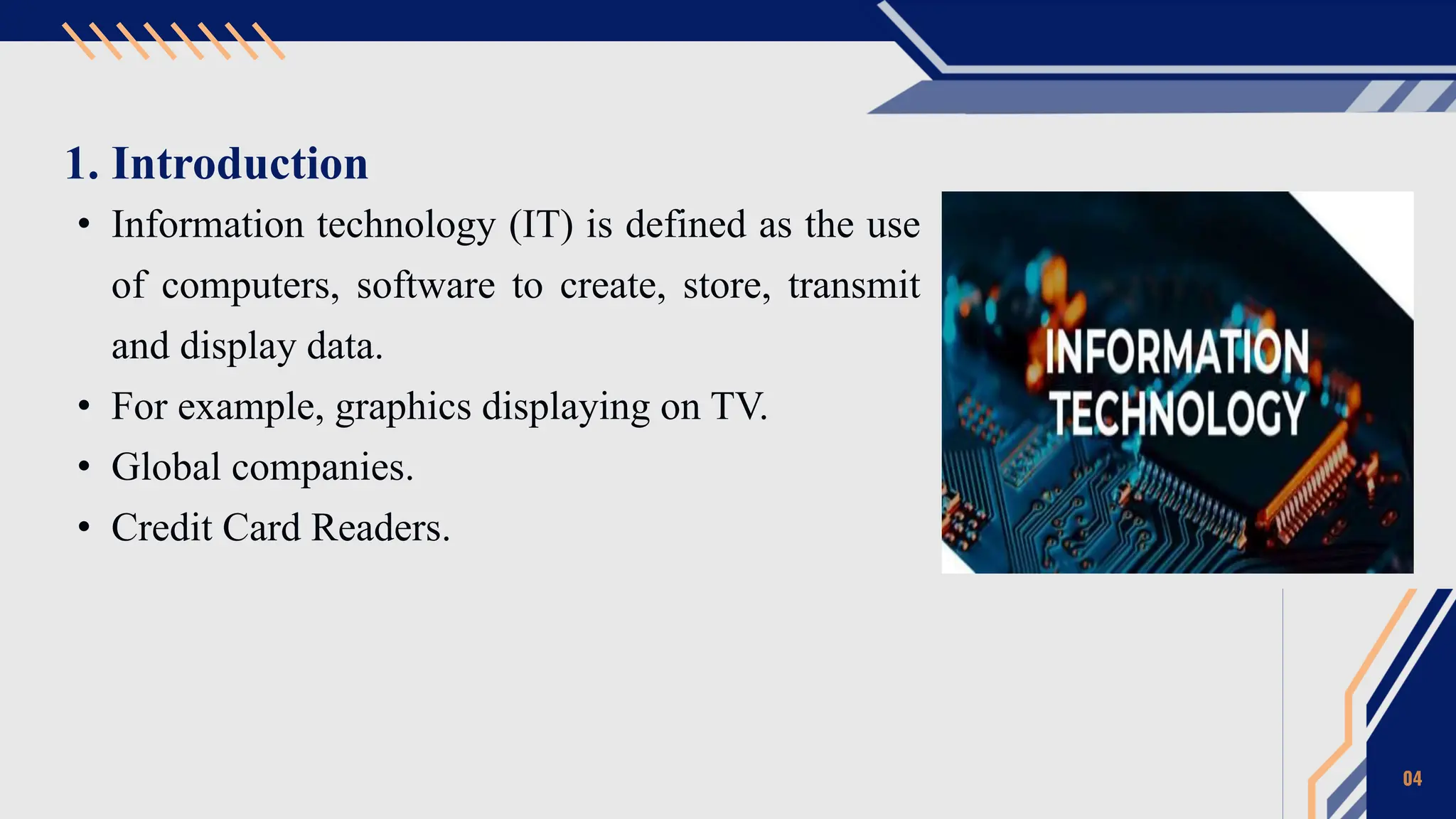
• Information technology (IT) is defined as the use
of computers, software to create, store, transmit
and display data.
• For example, graphics displaying on TV.
• Global companies.
• Credit Card Readers.
04
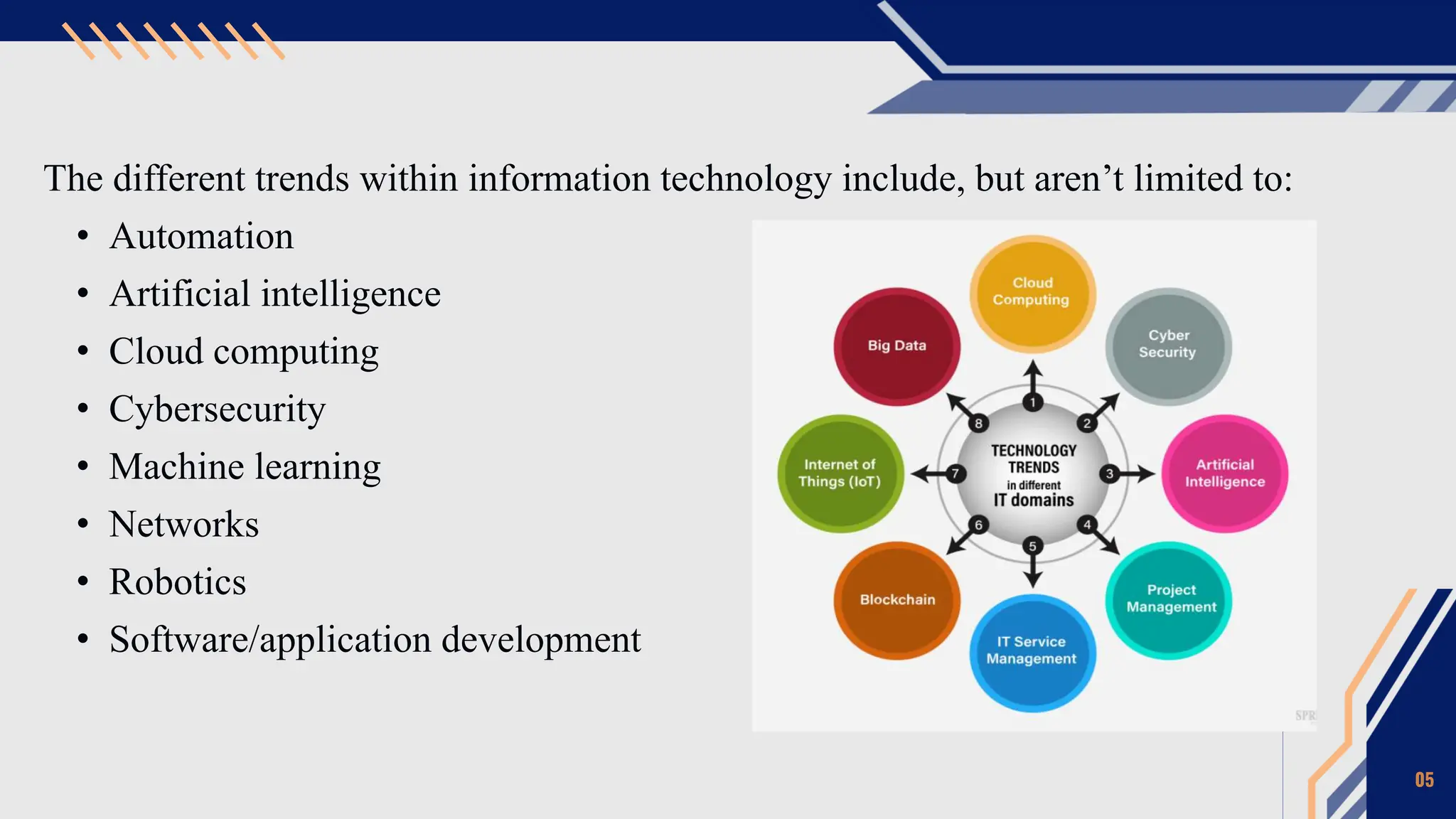
The different trends within information technology include, but aren’t limited to:
• Automation
• Artificial intelligence
• Cloud computing
• Cybersecurity
• Machine learning
• Networks
• Robotics
• Software/application development
05
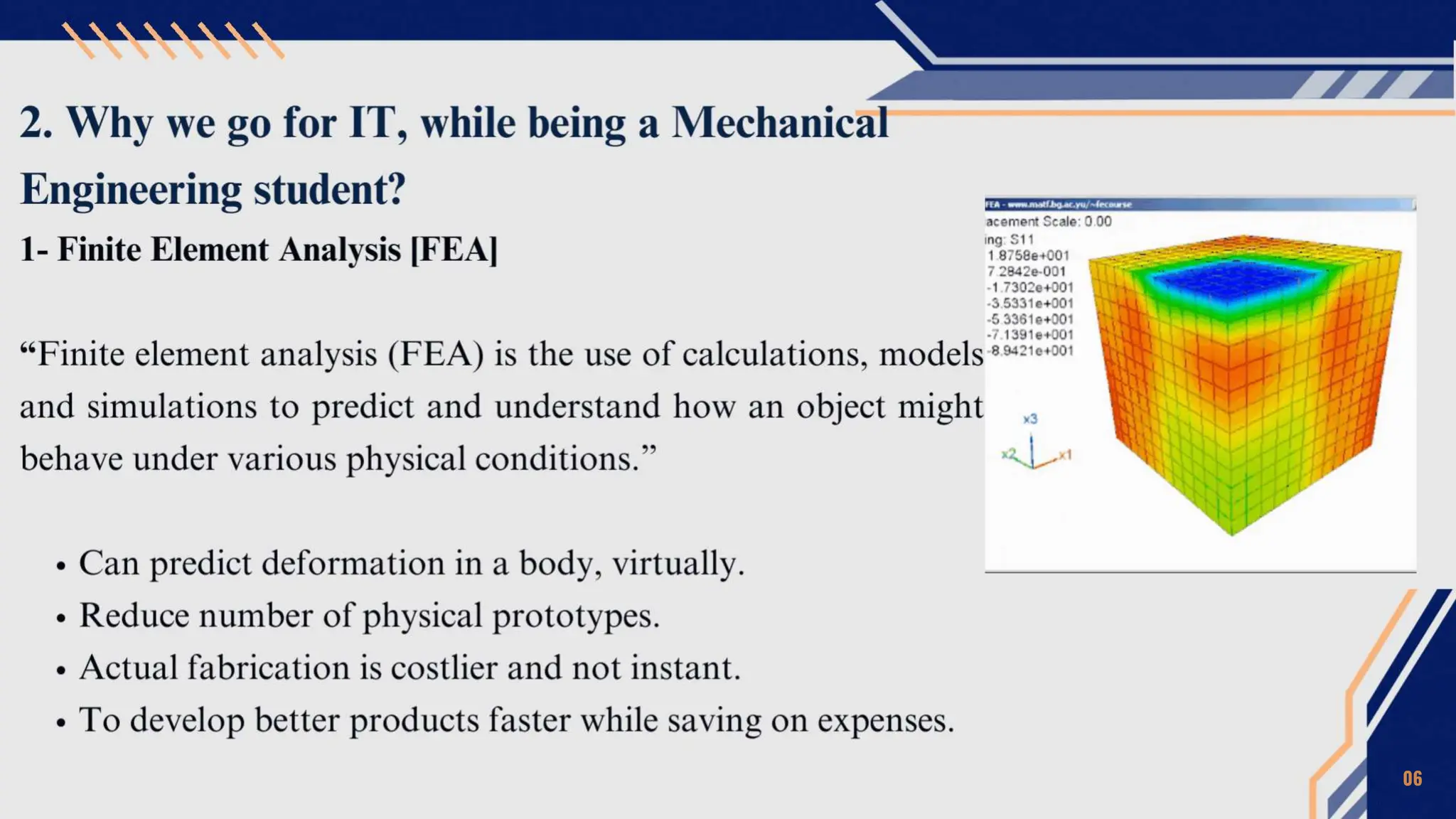
06
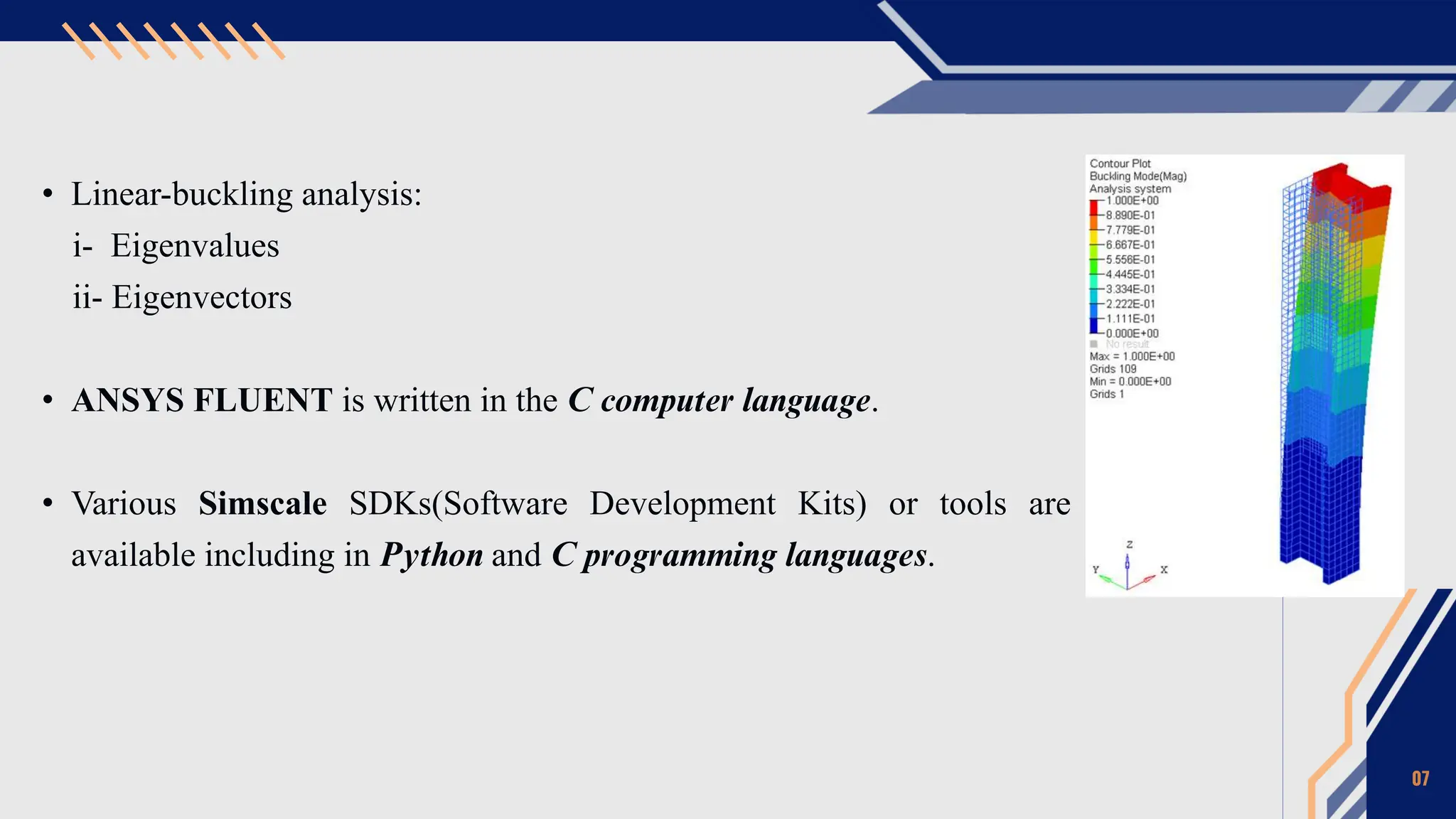
• Linear-buckling analysis:
i- Eigenvalues
ii- Eigenvectors
• ANSYS FLUENT is written in the C computer language.
• Various Simscale SDKs(Software Development Kits) or tools are
available including in Python and C programming languages.
07
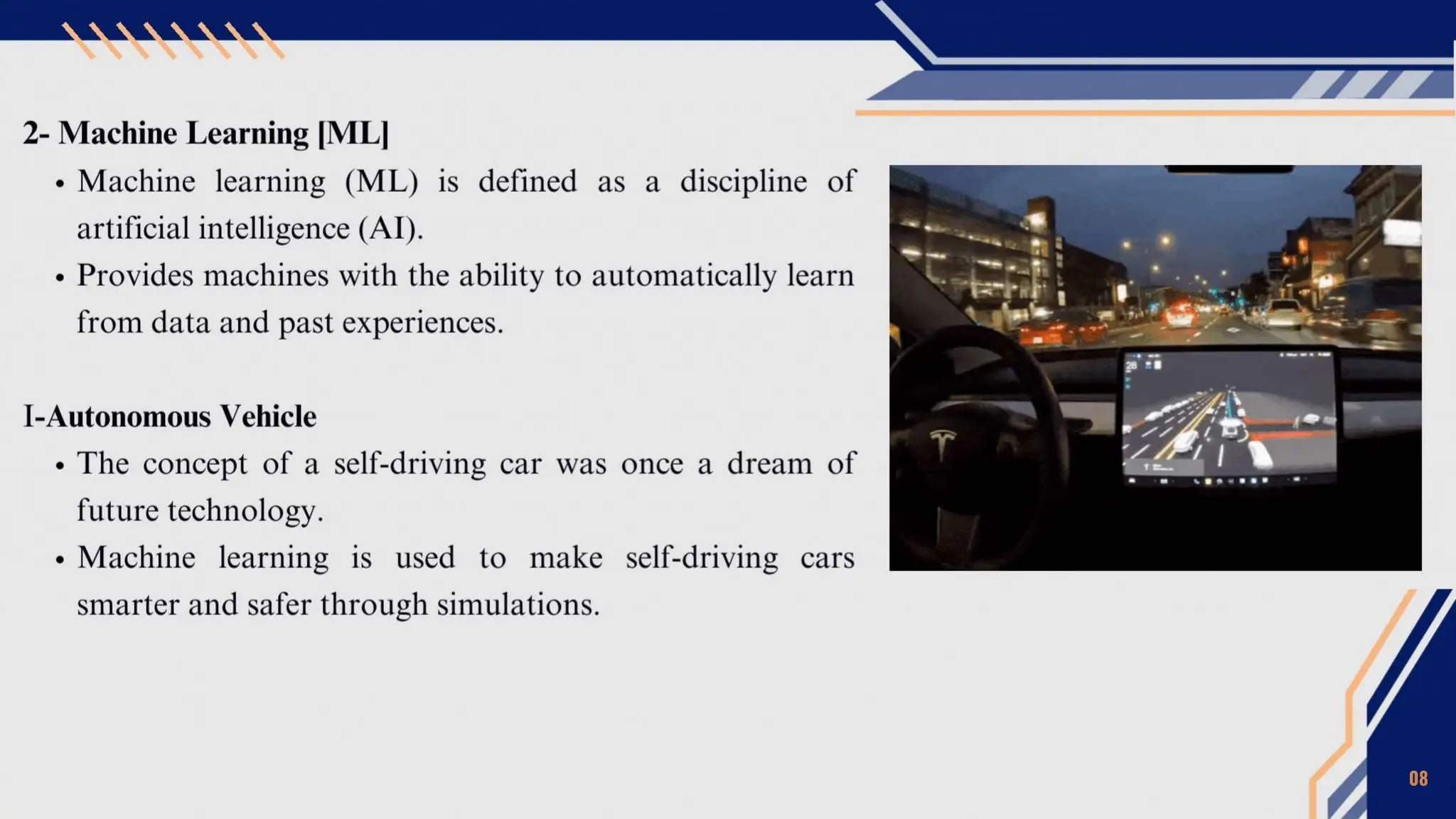
08
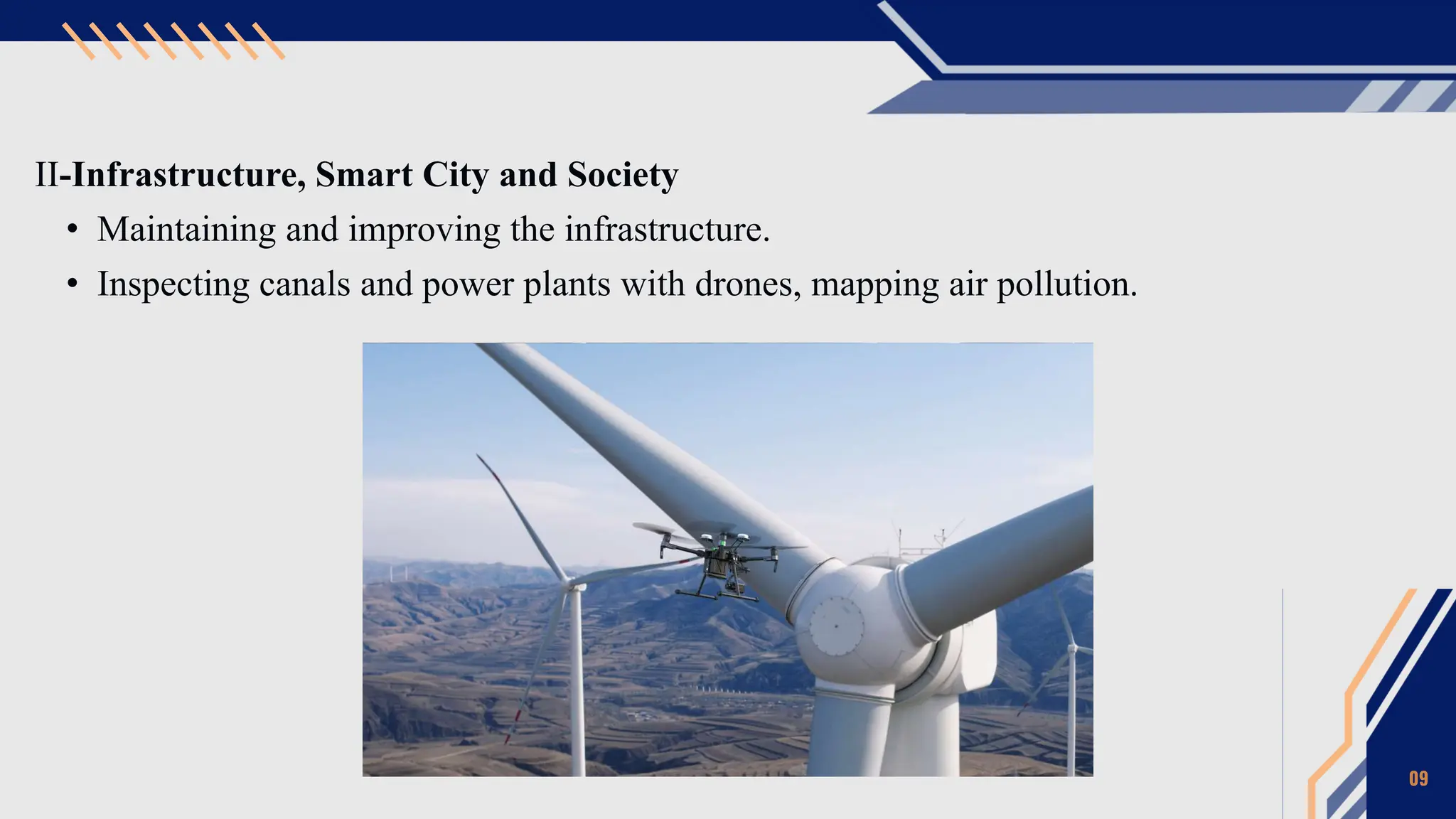
II-Infrastructure, Smart City and Society
• Maintaining and improving the infrastructure.
• Inspecting canals and power plants with drones, mapping air pollution.
09
3. Kickstarting your IT career
Starting an IT career without any background experience can be challenging, but it is possible.
i- START BY IDENTIFYING YOUR INTERESTS
• Vast field.
• Take time to identify passions.
ii- GET A CERTIFICATION
MIT is going to launch a course on Machine Learning starting from 28th Day of May, 2024
through edX.
There are other platforms as:
• Coursera
• Udemy
• Codeacademy 10
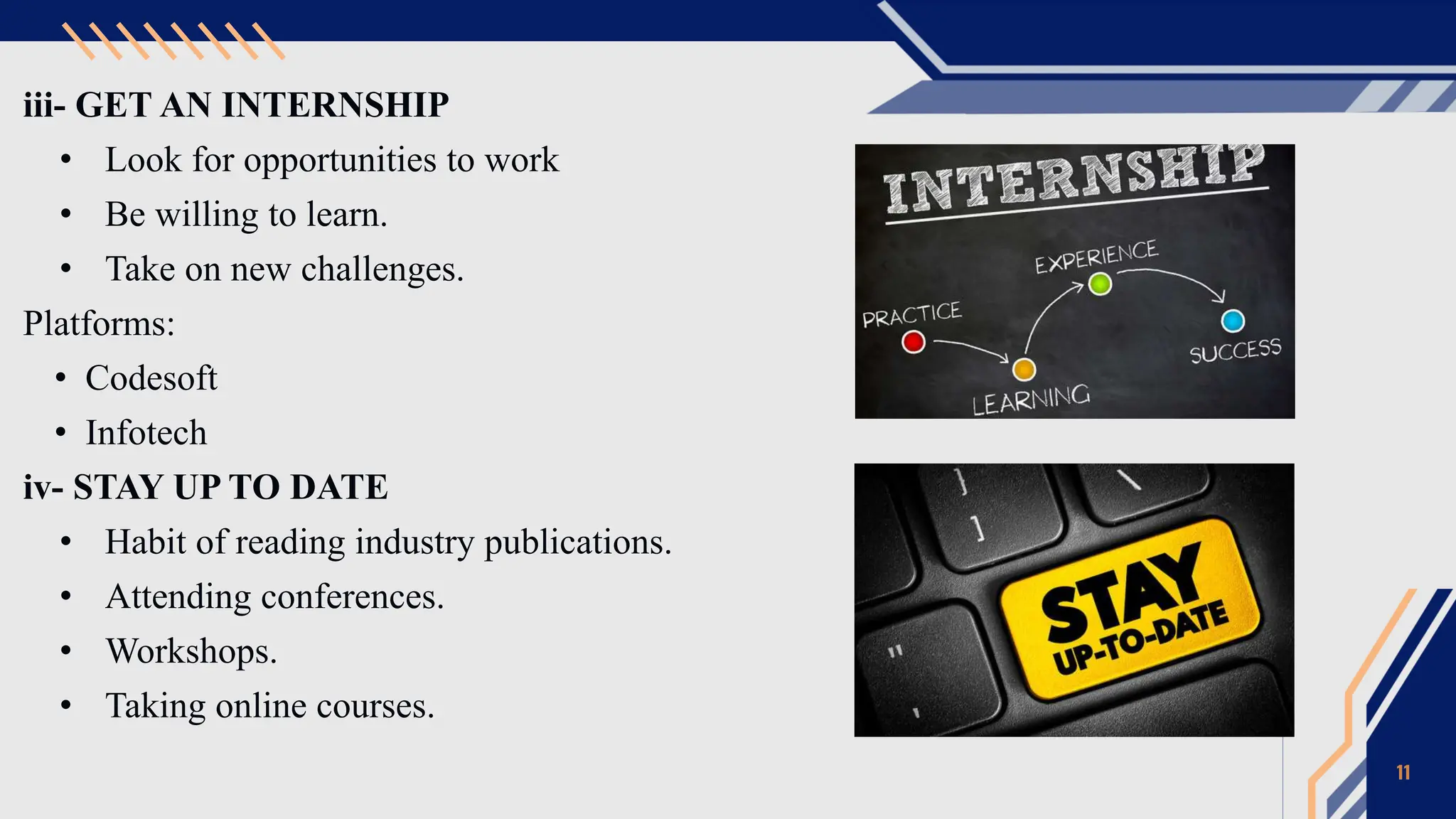
iii- GET AN INTERNSHIP
• Look for opportunities to work
• Be willing to learn.
• Take on new challenges.
Platforms:
• Codesoft
• Infotech
iv- STAY UP TO DATE
• Habit of reading industry publications.
• Attending conferences.
• Workshops.
• Taking online courses.
11
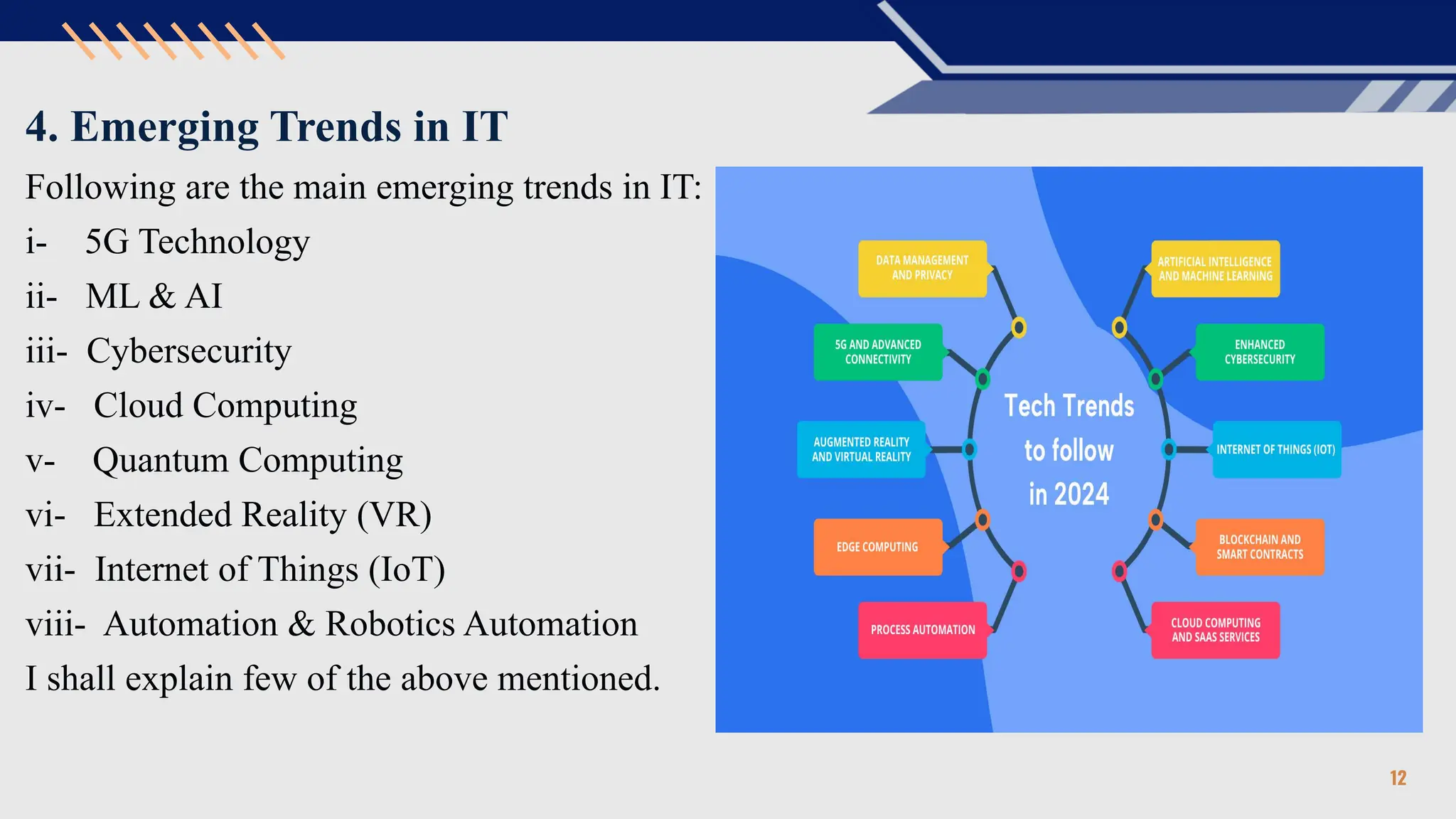
4. Emerging Trends in IT
Following are the main emerging trends in IT:
i- 5G Technology
ii- ML & AI
iii- Cybersecurity
iv- Cloud Computing
v- Quantum Computing
vi- Extended Reality (VR)
vii- Internet of Things (IoT)
viii- Automation & Robotics Automation
I shall explain few of the above mentioned.
12
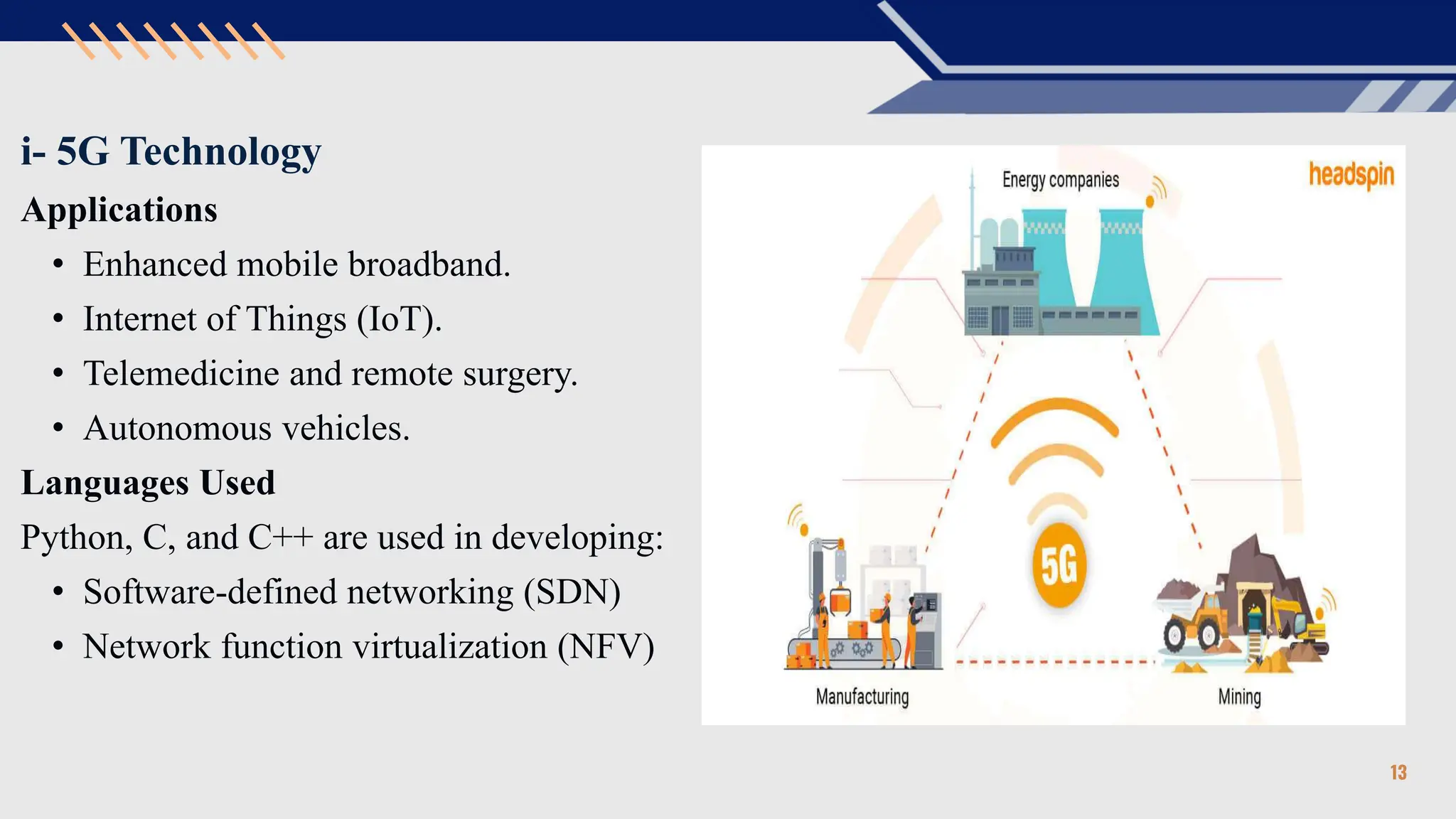
i- 5G Technology
Applications
• Enhanced mobile broadband.
• Internet of Things (IoT).
• Telemedicine and remote surgery.
• Autonomous vehicles.
Languages Used
Python, C, and C++ are used in developing:
• Software-defined networking (SDN)
• Network function virtualization (NFV)
13
14
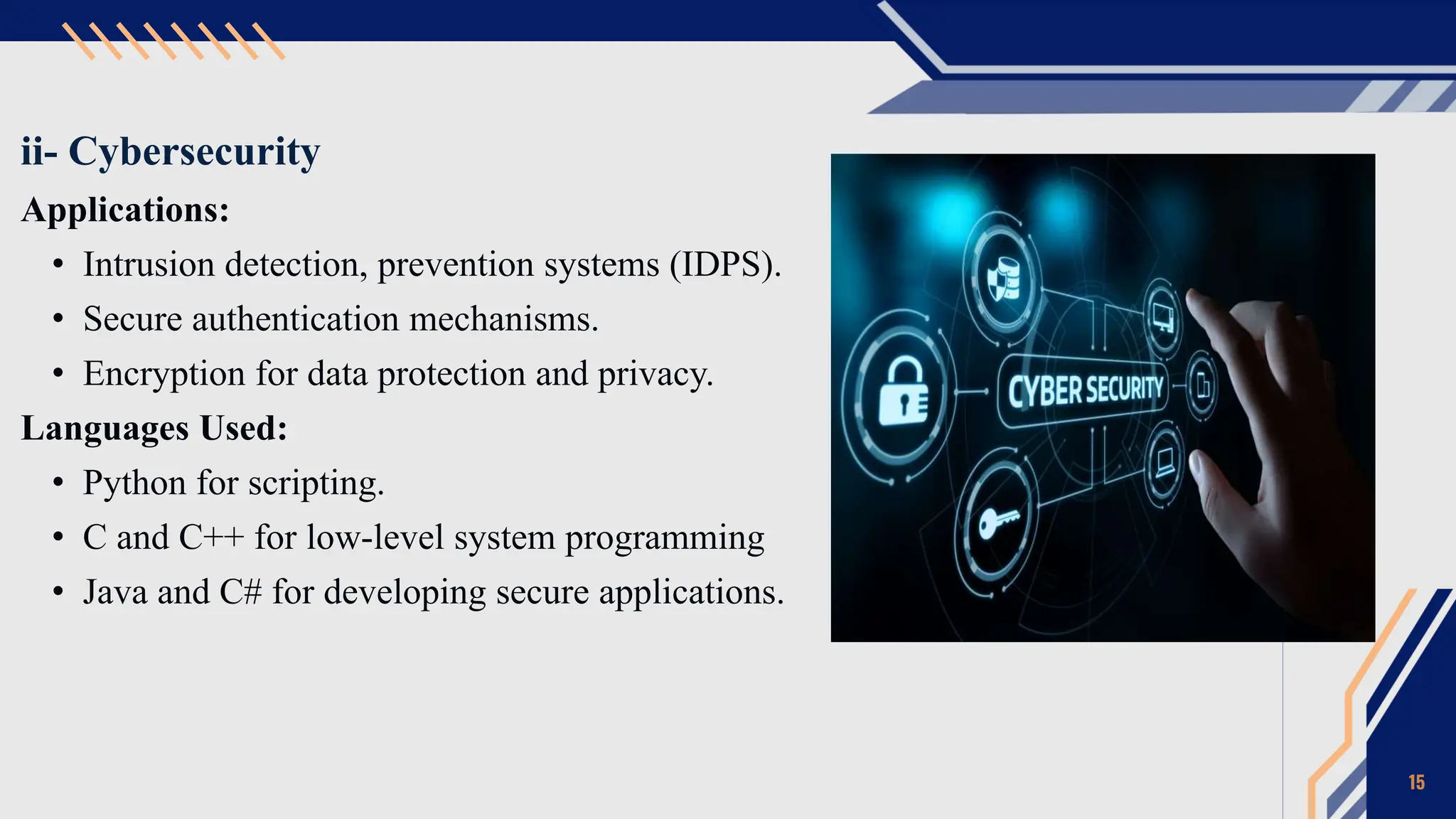
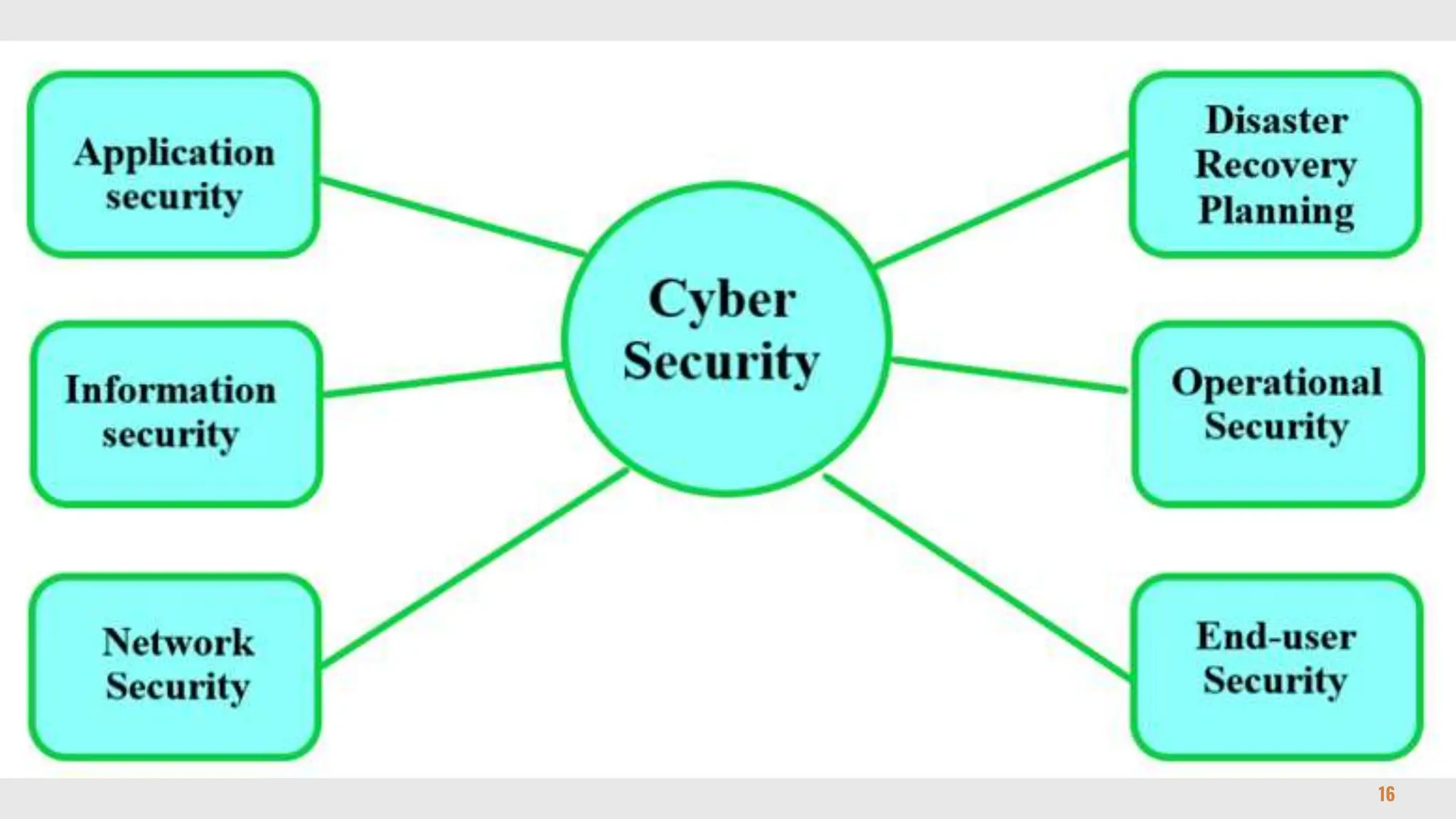
ii- Cybersecurity
Applications:
• Intrusion detection, prevention systems (IDPS).
• Secure authentication mechanisms.
• Encryption for data protection and privacy.
Languages Used:
• Python for scripting.
• C and C++ for low-level system programming
• Java and C# for developing secure applications.
15
16
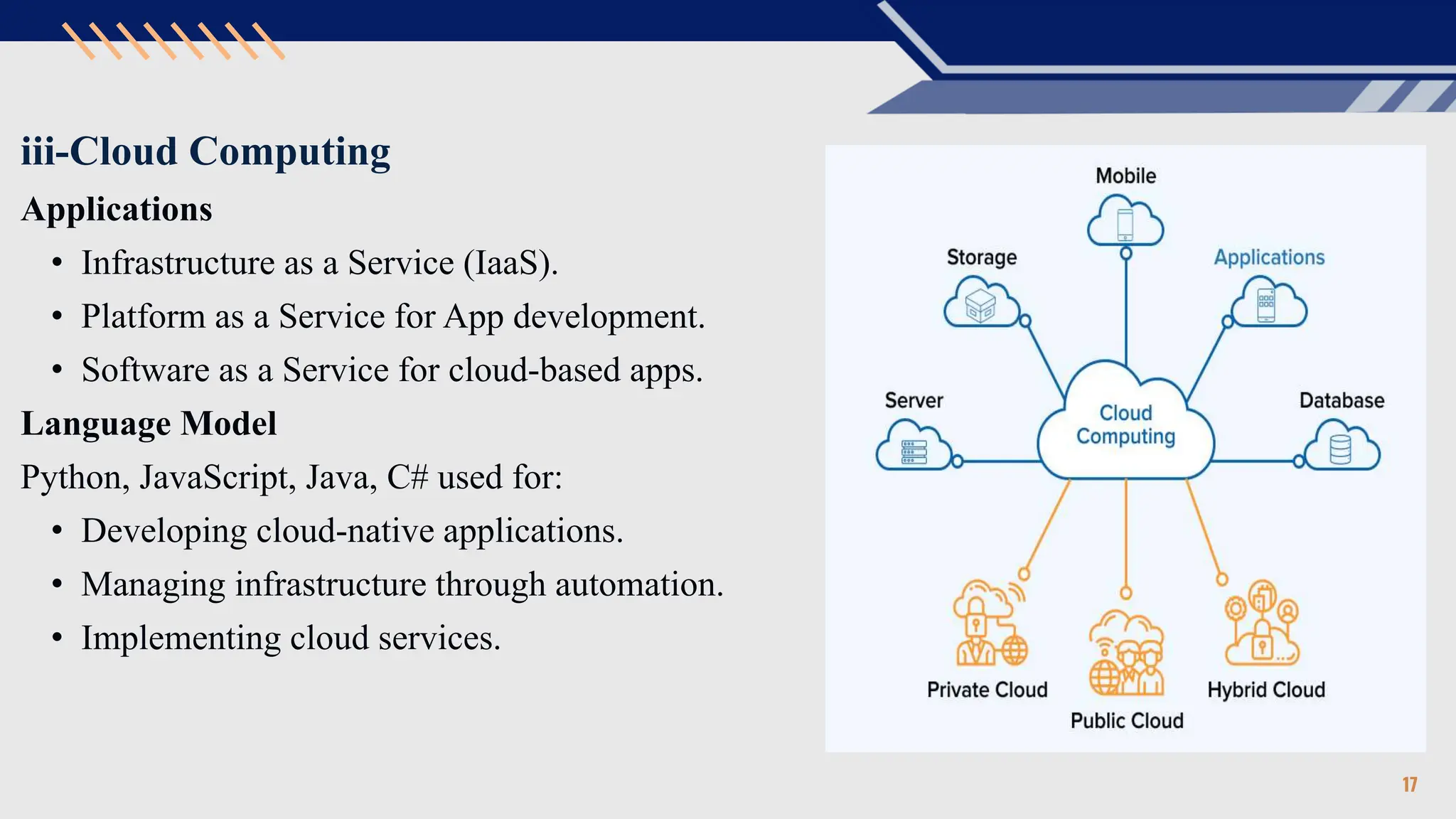
iii-Cloud Computing
Applications
• Infrastructure as a Service (IaaS).
• Platform as a Service for App development.
• Software as a Service for cloud-based apps.
Language Model
Python, JavaScript, Java, C# used for:
• Developing cloud-native applications.
• Managing infrastructure through automation.
• Implementing cloud services.
17
5. Skills in Demand
• Programming Languages
• Data Science and Analytics
• DevOps
• Blockchain
• User Experience (UX) Design
• Soft Skills
18
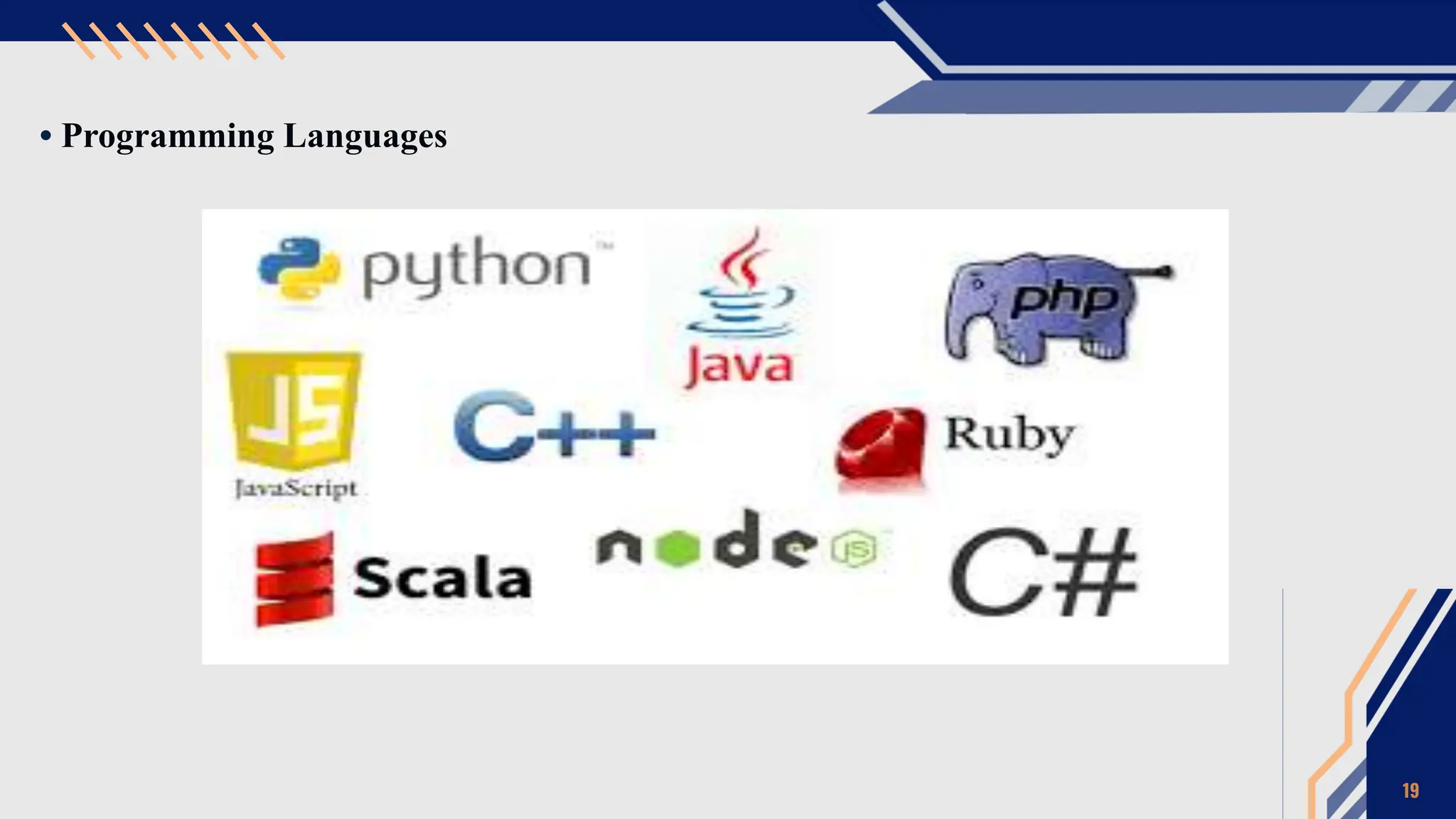
• Programming Languages
19
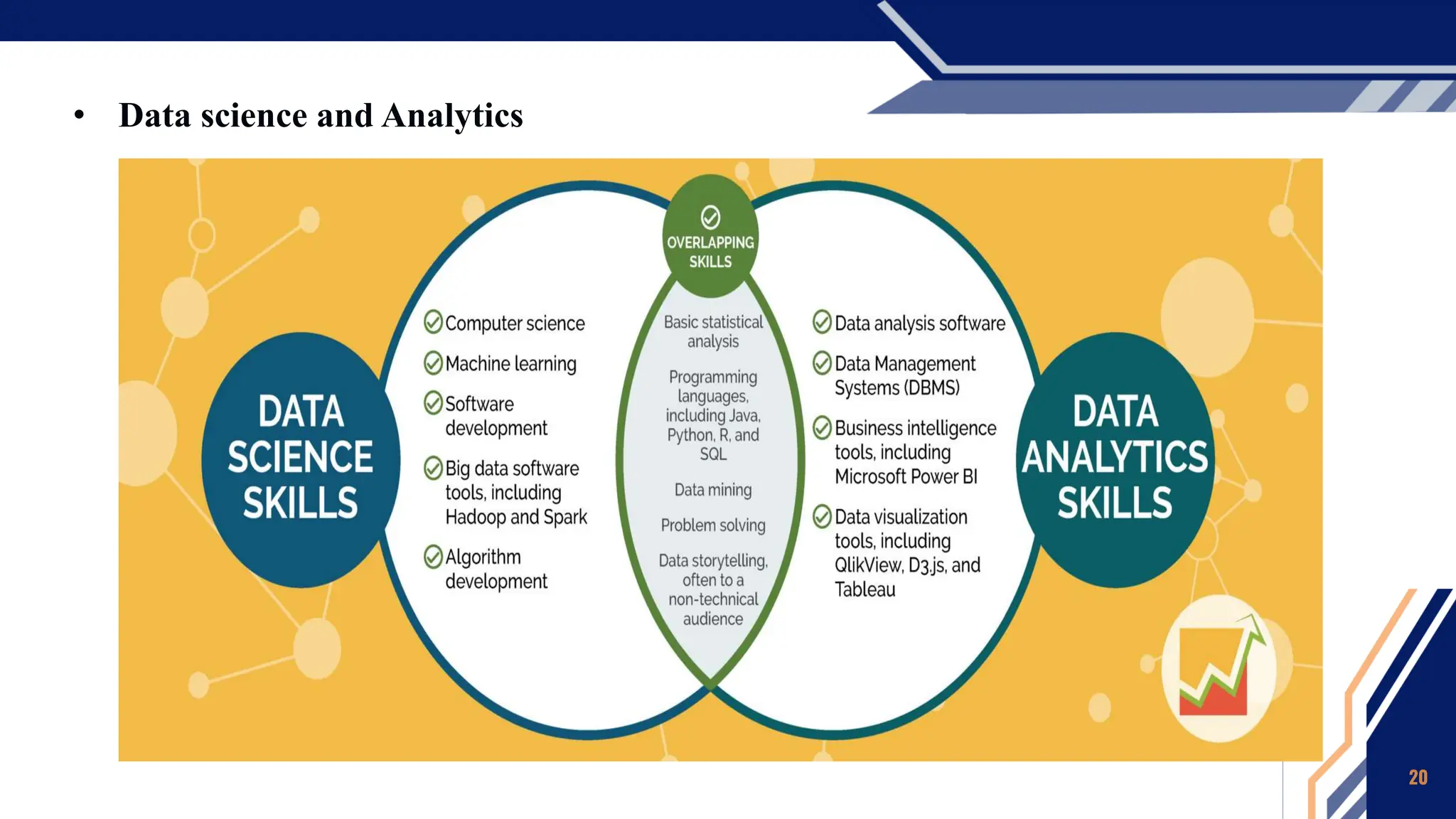
• Data science and Analytics
20
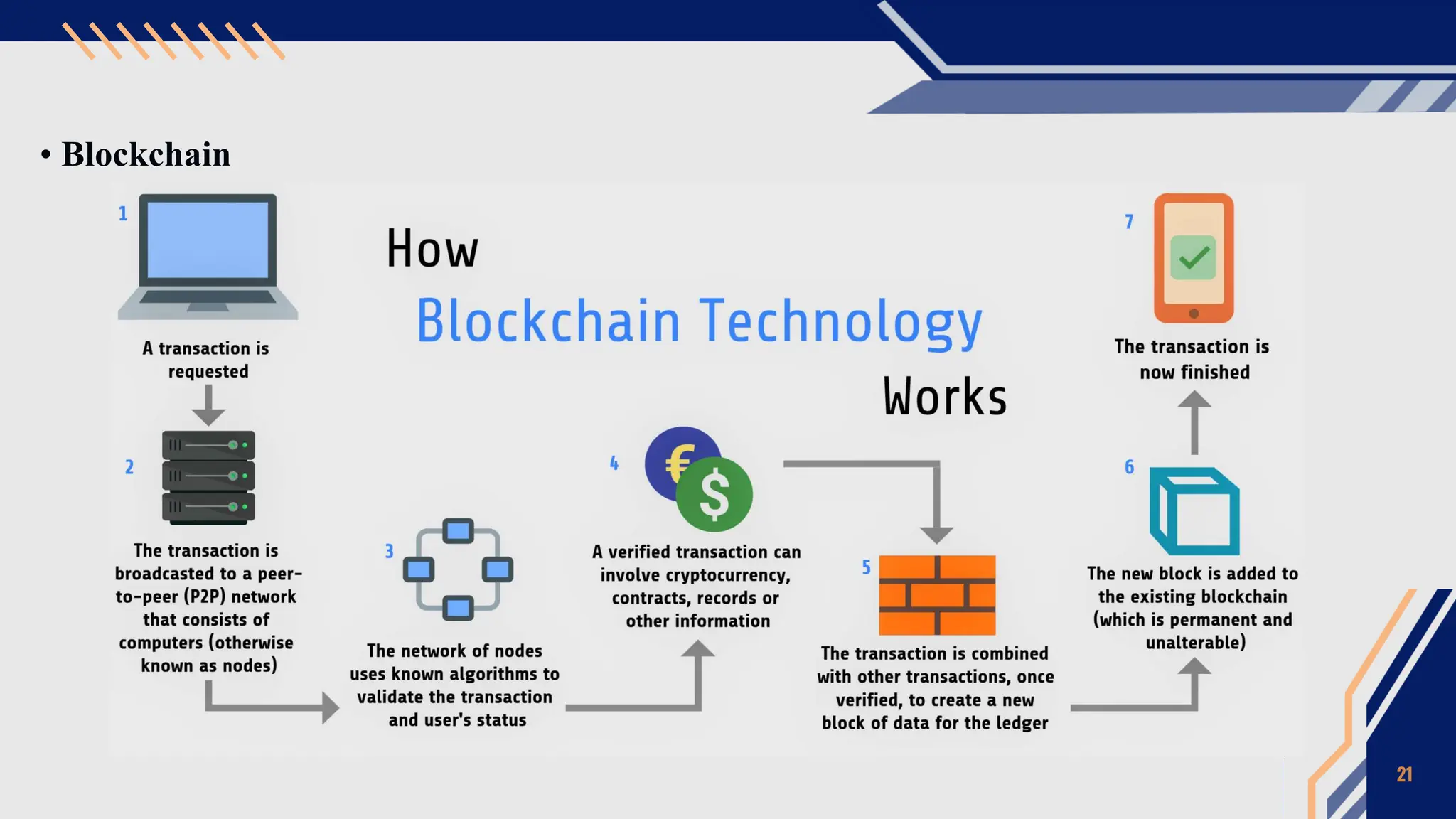
• Blockchain
21
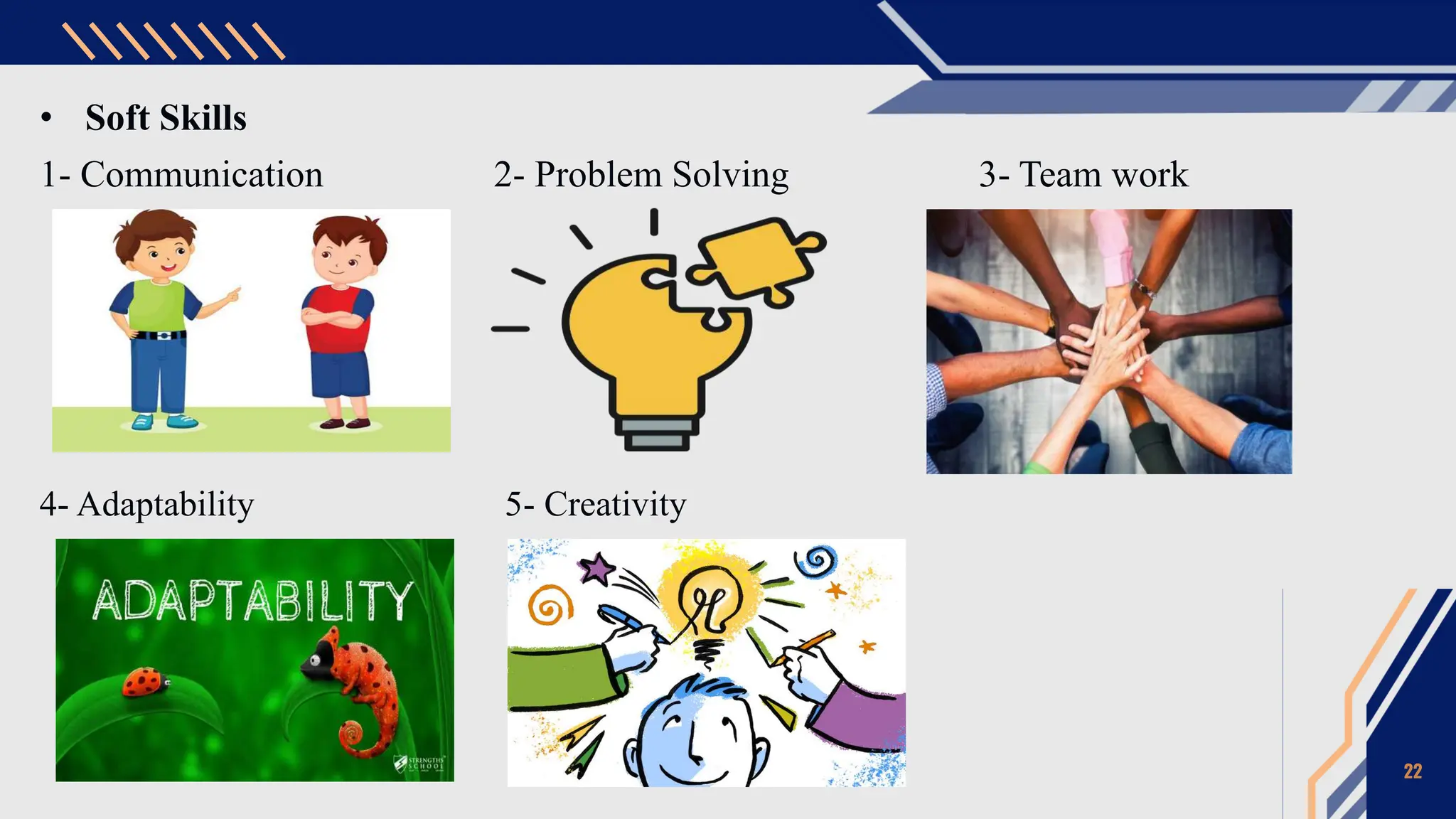
• Soft Skills
1- Communication 2- Problem Solving 3- Team work
4- Adaptability 5- Creativity
22
6. Skills to Leverage
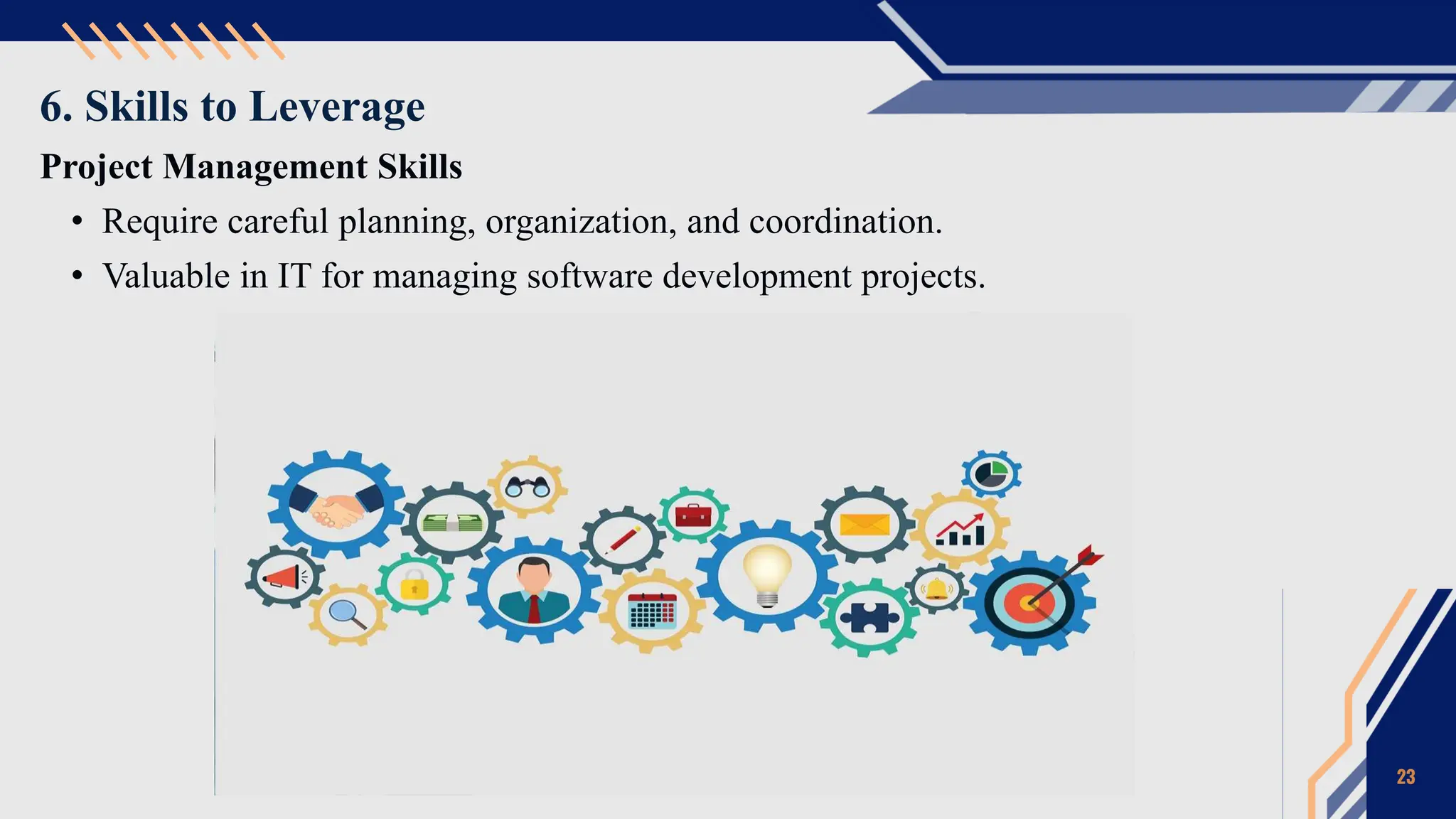
Project Management Skills
• Require careful planning, organization, and coordination.
• Valuable in IT for managing software development projects.
23
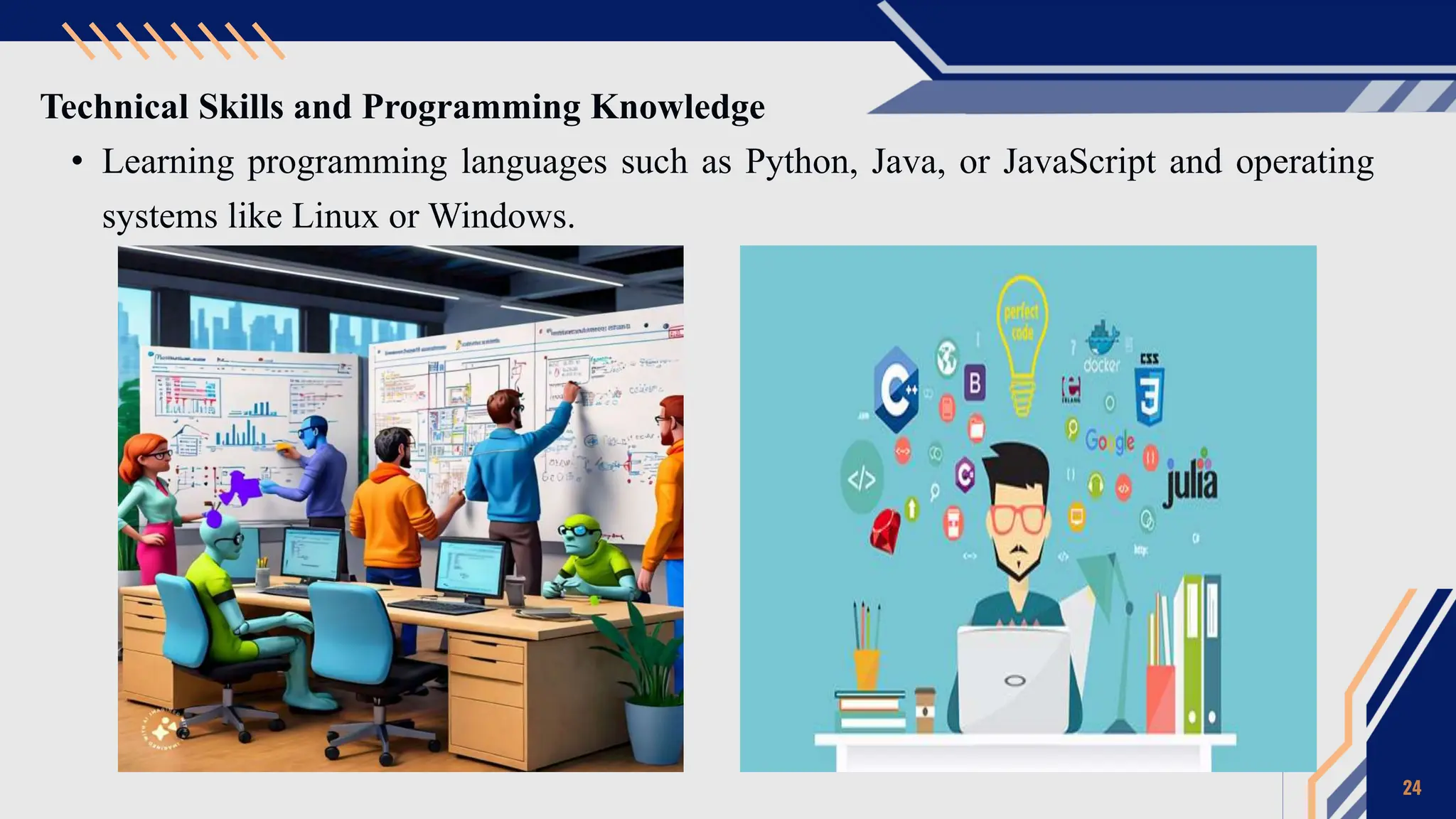
Technical Skills and Programming Knowledge
• Learning programming languages such as Python, Java, or JavaScript and operating
systems like Linux or Windows.
24
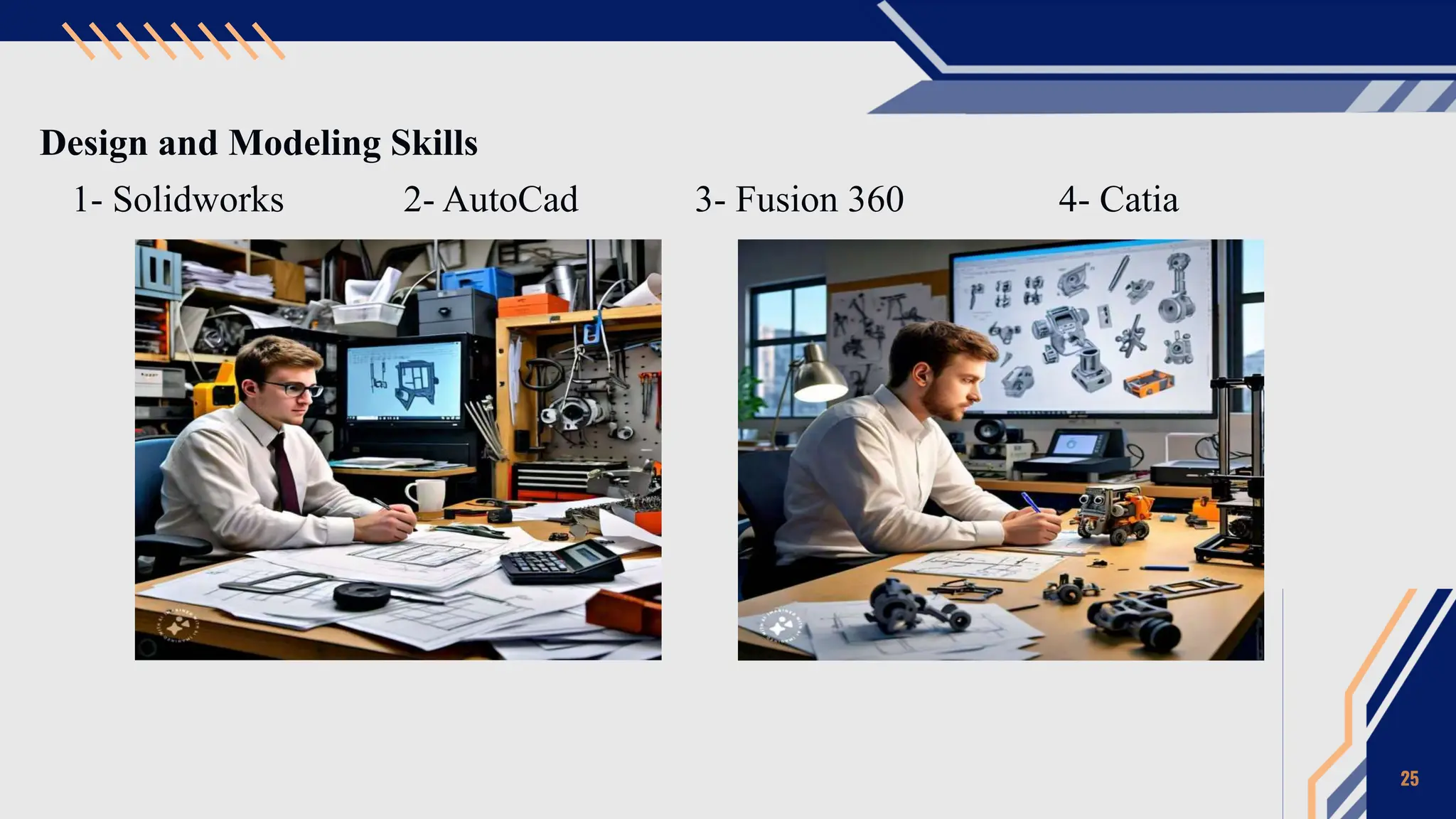
Design and Modeling Skills
1- Solidworks 2- AutoCad 3- Fusion 360 4- Catia
25
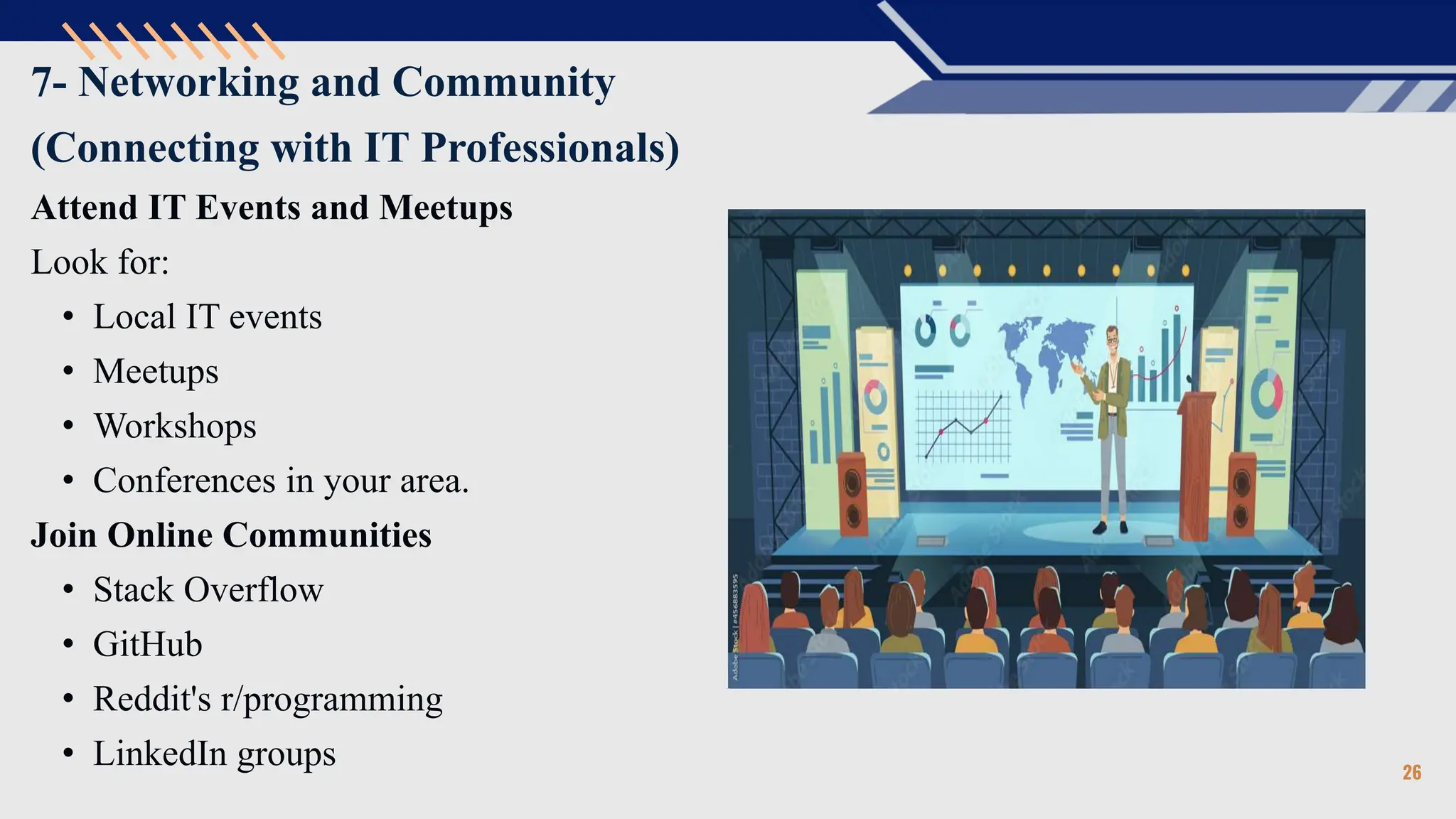
7- Networking and Community
(Connecting with IT Professionals)
Attend IT Events and Meetups
Look for:
• Local IT events
• Meetups
• Workshops
• Conferences in your area.
Join Online Communities
• Stack Overflow
• GitHub
• Reddit's r/programming
• LinkedIn groups 26
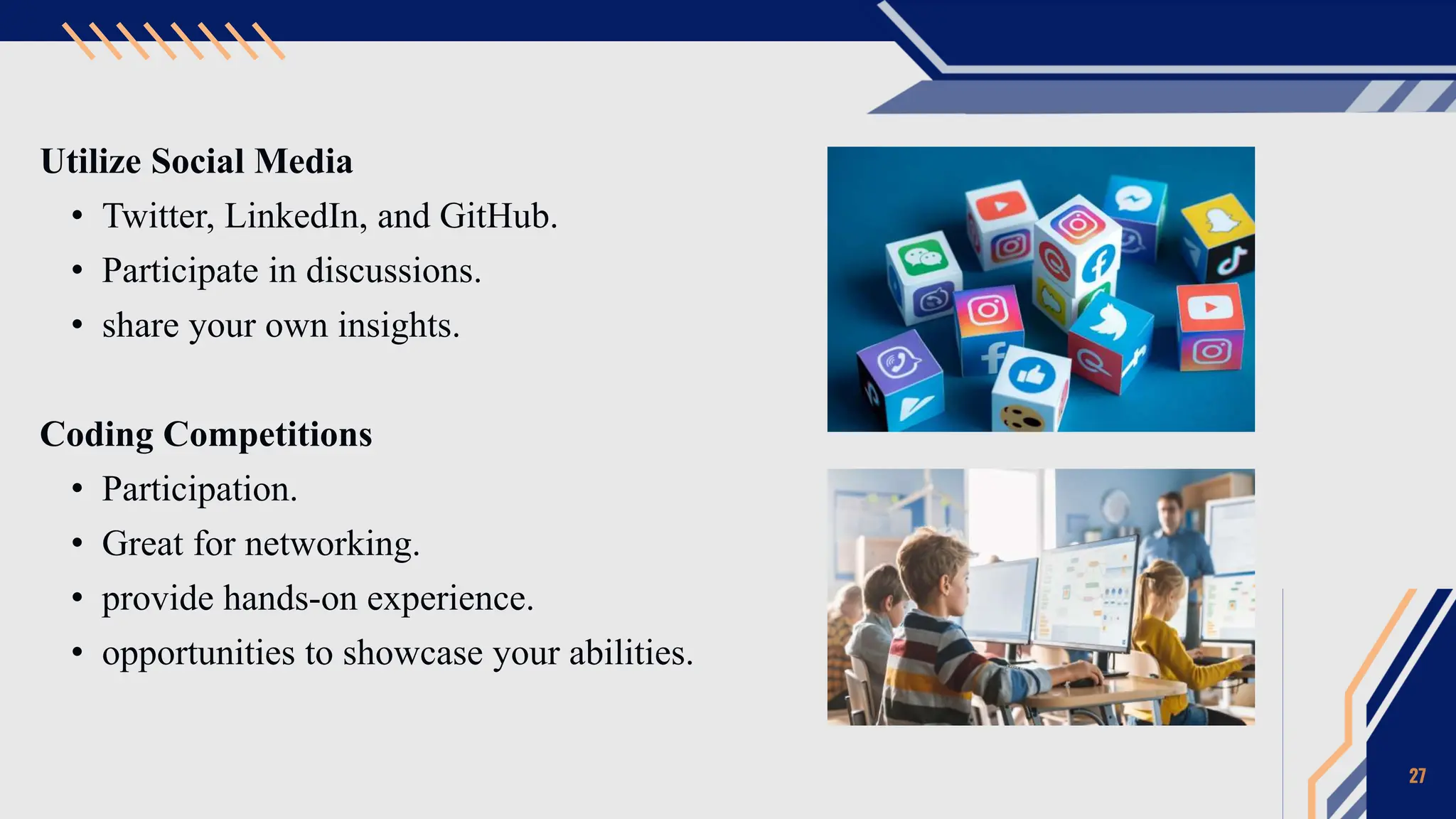
Utilize Social Media
• Twitter, LinkedIn, and GitHub.
• Participate in discussions.
• share your own insights.
Coding Competitions
• Participation.
• Great for networking.
• provide hands-on experience.
• opportunities to showcase your abilities.
27
Be Genuine and Build Relationships
• Networking is not just about collecting contacts; it's about building genuine
relationships with people who share your interests and values.
By actively engaging with the IT community, seeking out networking opportunities, and
building meaningful relationships with professionals in the industry, you can enhance your
chances of success in transitioning to an IT career from a non-IT background.
28
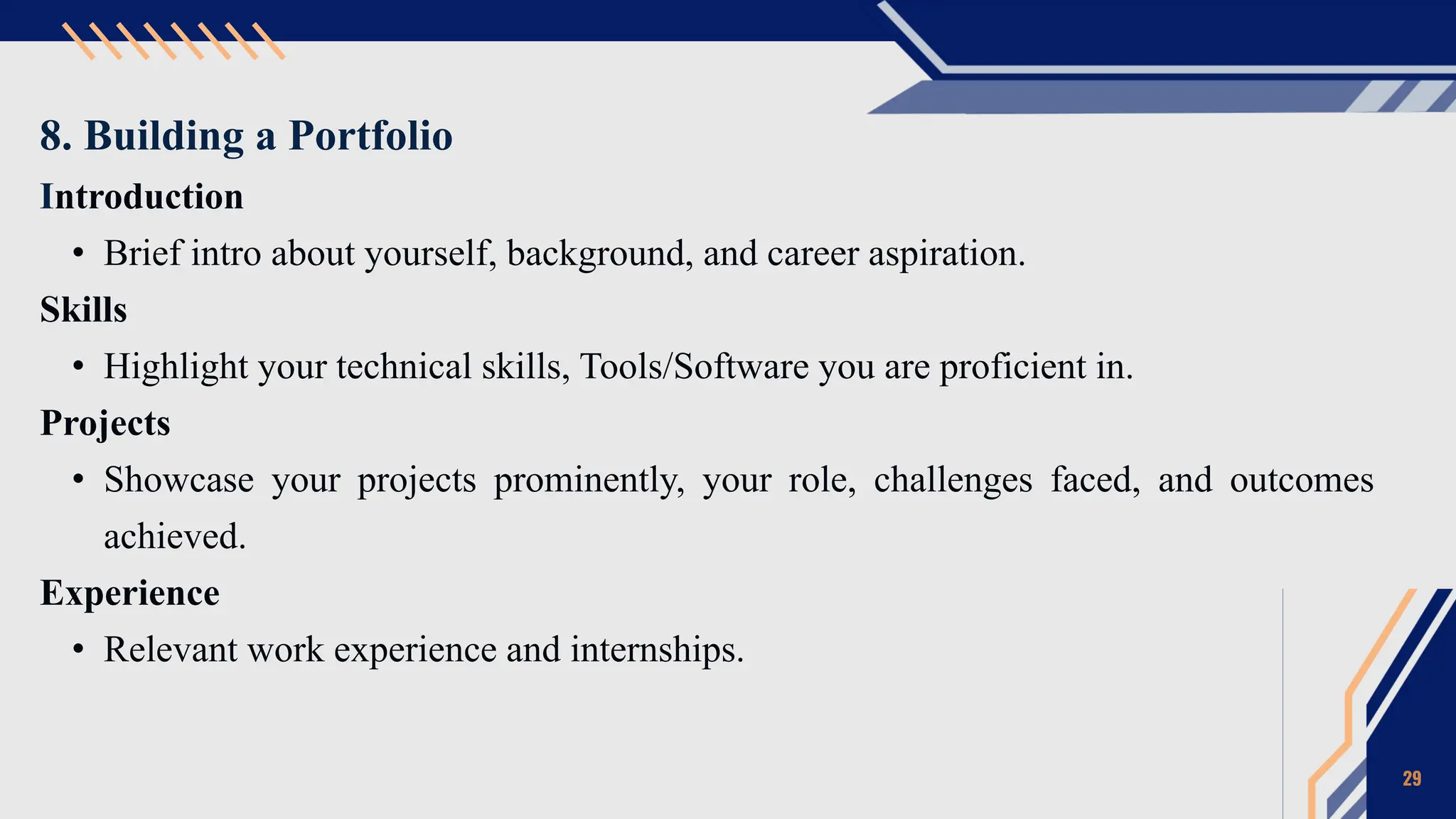
8. Building a Portfolio
Introduction
• Brief intro about yourself, background, and career aspiration.
Skills
• Highlight your technical skills, Tools/Software you are proficient in.
Projects
• Showcase your projects prominently, your role, challenges faced, and outcomes
achieved.
Experience
• Relevant work experience and internships.
29
Certifications
• List any relevant certifications you have obtained.
Education
• Mention your educational background, degree earned and any relevant
academic experience.
Contact Information
• Provide clear contact information, including your email address, LinkedIn
profile and similar information.
30
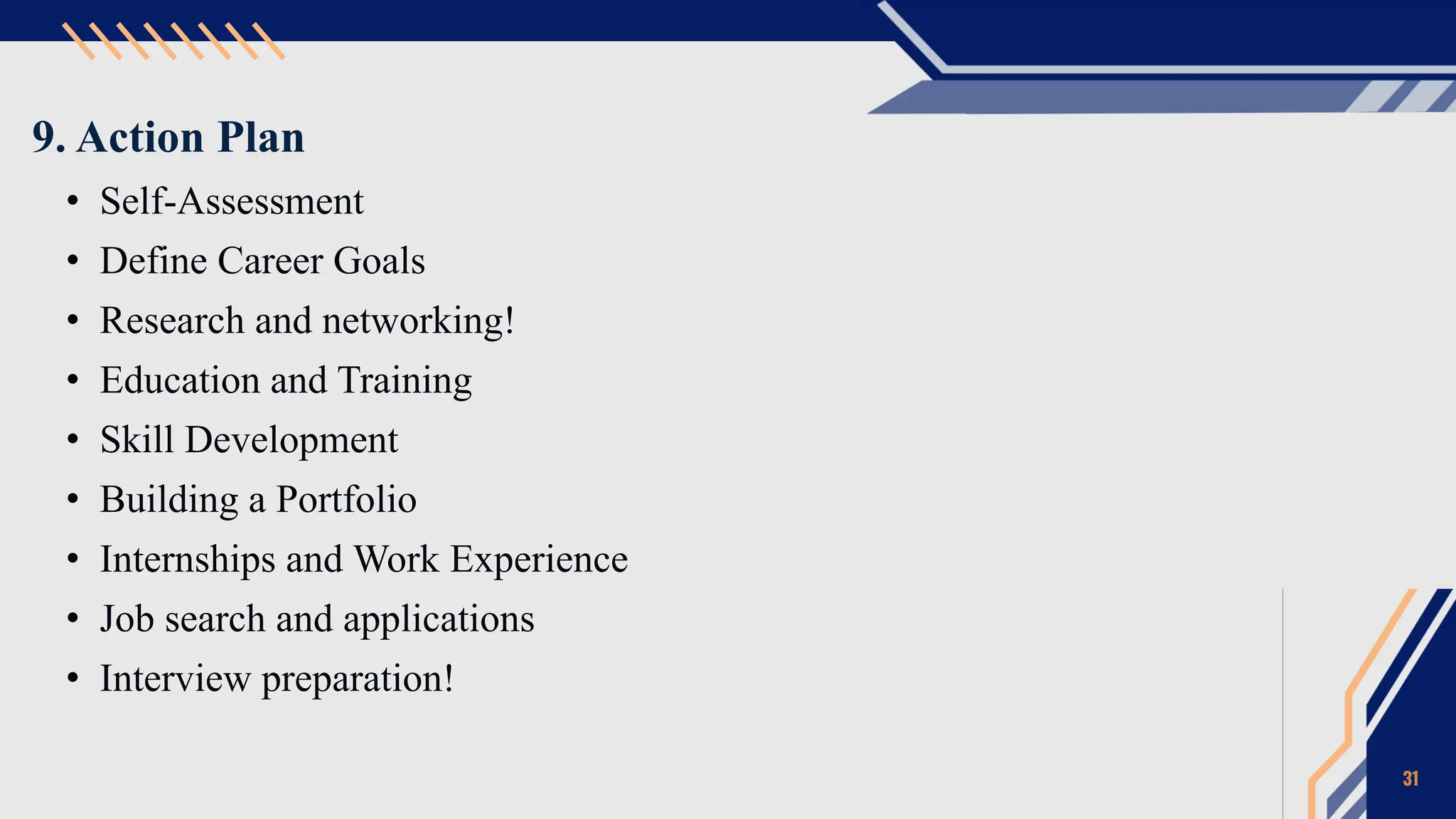
9. Action Plan
• Self-Assessment
• Define Career Goals
• Research and networking!
• Education and Training
• Skill Development
• Building a Portfolio
• Internships and Work Experience
• Job search and applications
• Interview preparation!
31
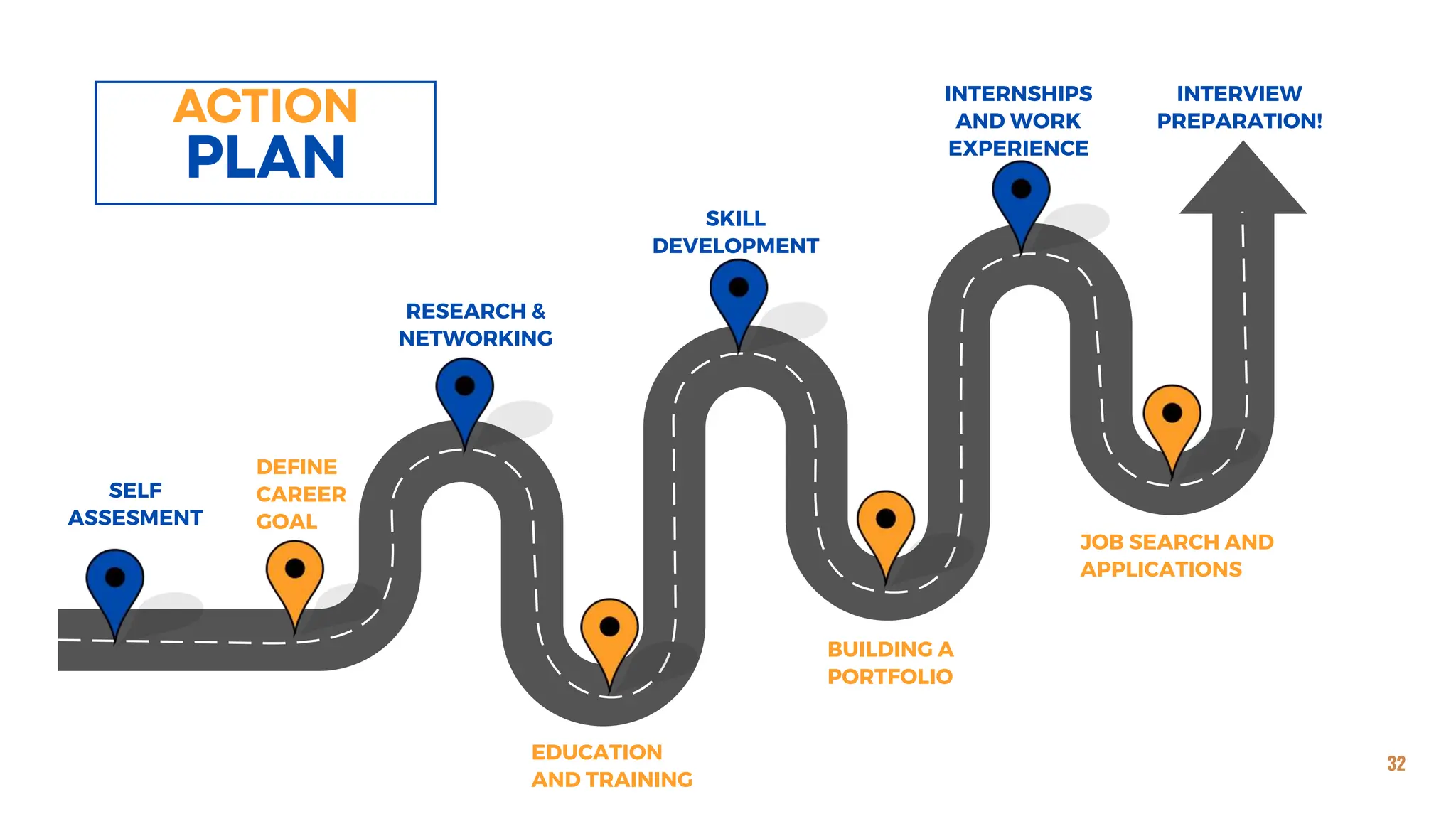
SELF
ASSESMENT
RESEARCH &
NETWORKING
INTERNSHIPS
AND WORK
EXPERIENCE
DEFINE
CAREER
GOAL
EDUCATION
AND TRAINING
BUILDING A
PORTFOLIO
SKILL
DEVELOPMENT
JOB SEARCH AND
APPLICATIONS
INTERVIEW
PREPARATION!
32
10. Conclusion
Embarking on an IT career without a traditional background is challenging but entirely
achievable. By leveraging self-directed learning, online resources, networking, and
demonstrating a passion for technology, individuals can successfully transition into
lucrative IT roles. Remember, it's not where you start, but the determination and drive to
succeed that truly matter in the journey towards a fulfilling IT career.
“We’re already cyborgs. Your phone and your computer are extensions of you, but
the interface is through finger movements or speech, which are very slow.”
- Elon
Musk
Any Query???
33
THANK YOU
34

MMT Presentation 2 mechanics of maetroals

  • 1.
    HOW TO KICKSTARTIT CAREER WITHOUT IT BACKGROUND? Department of Mechanical Engineering University of Engineering & Technology, Taxila. 01
  • 2.
    Presented by: 22-ME-04 MuhammadQasim 22-ME-52 Khizer Aftab 22-ME-64 Muhammad Shahmeer Arshad 22-ME-68 Abdullah Rashid 02
  • 3.
    TABLE OF CONTENT 01 02 04 05 Introduction Why wego for IT? Emerging Trends in IT Skills in demand 03 06 Kickstarting your IT career Skills to leverage 07 Networking & Community 08 09 Building a Portfolio 10 Action Plan Conclusion 03
  • 4.
    1. Introduction • Informationtechnology (IT) is defined as the use of computers, software to create, store, transmit and display data. • For example, graphics displaying on TV. • Global companies. • Credit Card Readers. 04
  • 5.
    The different trendswithin information technology include, but aren’t limited to: • Automation • Artificial intelligence • Cloud computing • Cybersecurity • Machine learning • Networks • Robotics • Software/application development 05
  • 6.
  • 7.
    • Linear-buckling analysis: i-Eigenvalues ii- Eigenvectors • ANSYS FLUENT is written in the C computer language. • Various Simscale SDKs(Software Development Kits) or tools are available including in Python and C programming languages. 07
  • 8.
  • 9.
    II-Infrastructure, Smart Cityand Society • Maintaining and improving the infrastructure. • Inspecting canals and power plants with drones, mapping air pollution. 09
  • 10.
    3. Kickstarting yourIT career Starting an IT career without any background experience can be challenging, but it is possible. i- START BY IDENTIFYING YOUR INTERESTS • Vast field. • Take time to identify passions. ii- GET A CERTIFICATION MIT is going to launch a course on Machine Learning starting from 28th Day of May, 2024 through edX. There are other platforms as: • Coursera • Udemy • Codeacademy 10
  • 11.
    iii- GET ANINTERNSHIP • Look for opportunities to work • Be willing to learn. • Take on new challenges. Platforms: • Codesoft • Infotech iv- STAY UP TO DATE • Habit of reading industry publications. • Attending conferences. • Workshops. • Taking online courses. 11
  • 12.
    4. Emerging Trendsin IT Following are the main emerging trends in IT: i- 5G Technology ii- ML & AI iii- Cybersecurity iv- Cloud Computing v- Quantum Computing vi- Extended Reality (VR) vii- Internet of Things (IoT) viii- Automation & Robotics Automation I shall explain few of the above mentioned. 12
  • 13.
    i- 5G Technology Applications •Enhanced mobile broadband. • Internet of Things (IoT). • Telemedicine and remote surgery. • Autonomous vehicles. Languages Used Python, C, and C++ are used in developing: • Software-defined networking (SDN) • Network function virtualization (NFV) 13
  • 14.
  • 15.
    ii- Cybersecurity Applications: • Intrusiondetection, prevention systems (IDPS). • Secure authentication mechanisms. • Encryption for data protection and privacy. Languages Used: • Python for scripting. • C and C++ for low-level system programming • Java and C# for developing secure applications. 15
  • 16.
  • 17.
    iii-Cloud Computing Applications • Infrastructureas a Service (IaaS). • Platform as a Service for App development. • Software as a Service for cloud-based apps. Language Model Python, JavaScript, Java, C# used for: • Developing cloud-native applications. • Managing infrastructure through automation. • Implementing cloud services. 17
  • 18.
    5. Skills inDemand • Programming Languages • Data Science and Analytics • DevOps • Blockchain • User Experience (UX) Design • Soft Skills 18
  • 19.
  • 20.
    • Data scienceand Analytics 20
  • 21.
  • 22.
    • Soft Skills 1-Communication 2- Problem Solving 3- Team work 4- Adaptability 5- Creativity 22
  • 23.
    6. Skills toLeverage Project Management Skills • Require careful planning, organization, and coordination. • Valuable in IT for managing software development projects. 23
  • 24.
    Technical Skills andProgramming Knowledge • Learning programming languages such as Python, Java, or JavaScript and operating systems like Linux or Windows. 24
  • 25.
    Design and ModelingSkills 1- Solidworks 2- AutoCad 3- Fusion 360 4- Catia 25
  • 26.
    7- Networking andCommunity (Connecting with IT Professionals) Attend IT Events and Meetups Look for: • Local IT events • Meetups • Workshops • Conferences in your area. Join Online Communities • Stack Overflow • GitHub • Reddit's r/programming • LinkedIn groups 26
  • 27.
    Utilize Social Media •Twitter, LinkedIn, and GitHub. • Participate in discussions. • share your own insights. Coding Competitions • Participation. • Great for networking. • provide hands-on experience. • opportunities to showcase your abilities. 27
  • 28.
    Be Genuine andBuild Relationships • Networking is not just about collecting contacts; it's about building genuine relationships with people who share your interests and values. By actively engaging with the IT community, seeking out networking opportunities, and building meaningful relationships with professionals in the industry, you can enhance your chances of success in transitioning to an IT career from a non-IT background. 28
  • 29.
    8. Building aPortfolio Introduction • Brief intro about yourself, background, and career aspiration. Skills • Highlight your technical skills, Tools/Software you are proficient in. Projects • Showcase your projects prominently, your role, challenges faced, and outcomes achieved. Experience • Relevant work experience and internships. 29
  • 30.
    Certifications • List anyrelevant certifications you have obtained. Education • Mention your educational background, degree earned and any relevant academic experience. Contact Information • Provide clear contact information, including your email address, LinkedIn profile and similar information. 30
  • 31.
    9. Action Plan •Self-Assessment • Define Career Goals • Research and networking! • Education and Training • Skill Development • Building a Portfolio • Internships and Work Experience • Job search and applications • Interview preparation! 31
  • 32.
    SELF ASSESMENT RESEARCH & NETWORKING INTERNSHIPS AND WORK EXPERIENCE DEFINE CAREER GOAL EDUCATION ANDTRAINING BUILDING A PORTFOLIO SKILL DEVELOPMENT JOB SEARCH AND APPLICATIONS INTERVIEW PREPARATION! 32
  • 33.
    10. Conclusion Embarking onan IT career without a traditional background is challenging but entirely achievable. By leveraging self-directed learning, online resources, networking, and demonstrating a passion for technology, individuals can successfully transition into lucrative IT roles. Remember, it's not where you start, but the determination and drive to succeed that truly matter in the journey towards a fulfilling IT career. “We’re already cyborgs. Your phone and your computer are extensions of you, but the interface is through finger movements or speech, which are very slow.” - Elon Musk Any Query??? 33
  • 34.