Mise-en-scene
What does mise-en-scene mean?
It means “placed in scene” and was first used in theatre and is referred to the way
the director organises the stage. Within media its used to describe everything that
can be seen in one shot .
What are the 6 key areas of mise-en-scene?
Lighting
Costume
Props
Set/location
Blockingandperformance
Colour
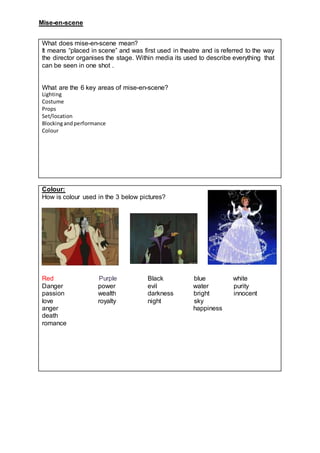
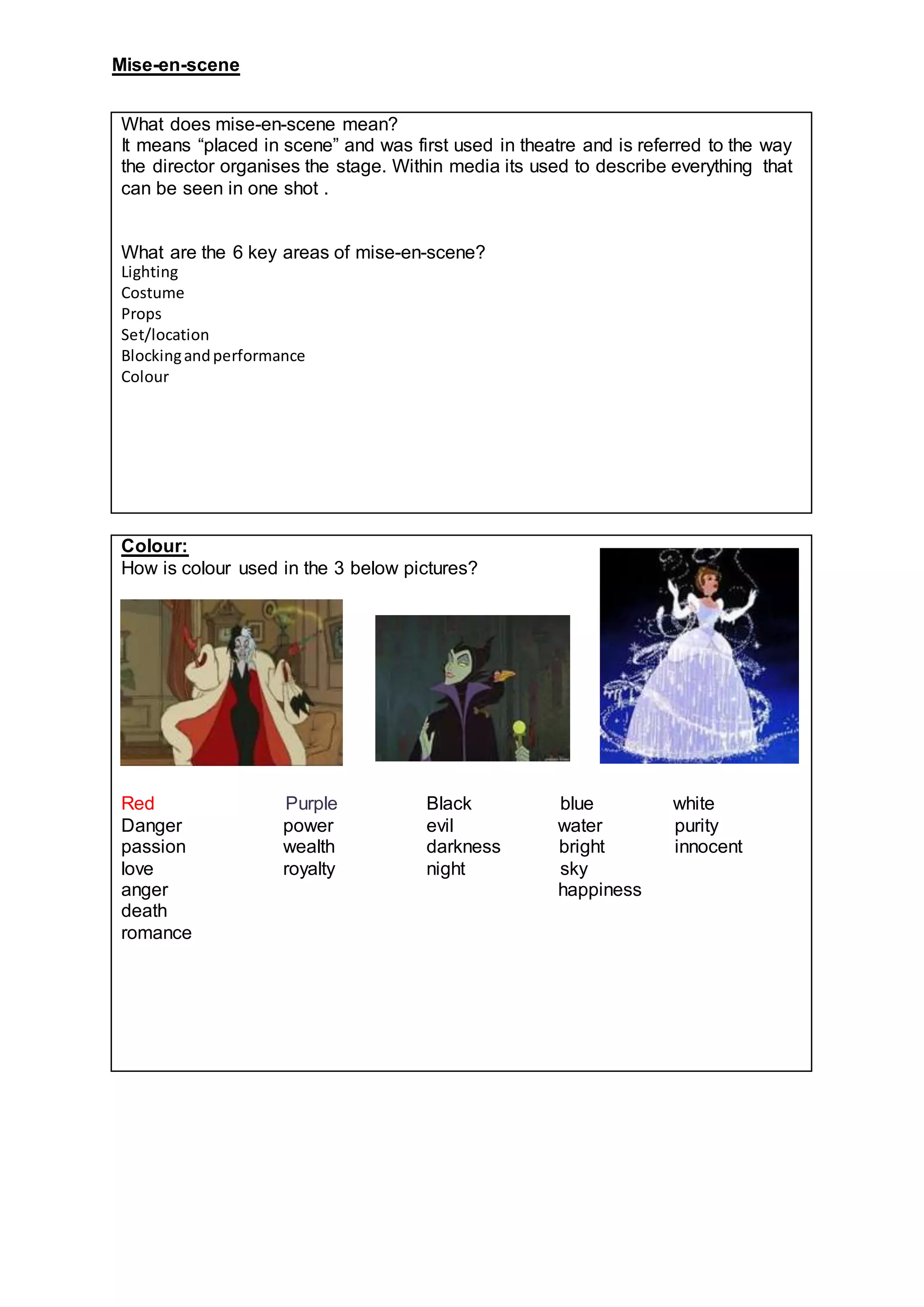
Colour:
How is colour used in the 3 below pictures?
Red Purple Black blue white
Danger power evil water purity
passion wealth darkness bright innocent
love royalty night sky
anger happiness
death
romance
Mise-en-scene
Props:
Option 1 - You have to provide props for a tense police interview between two
officers and one suspected murderer. Decide what props you would incorporate
and how the actors should be directed to use them.
Option 2 – You have to provide props for a romantic meal between two characters
on their first date. Decide what props you would incorporate and how the actors
should be directed to use them.
Props needed:
How would actors be directed to use them:
Blocking/Performance:
 Blocking refers to the positioning and movement of actors within the frame,
both in relation to each other and in relation to the camera (which
represents us, the audience)
 Performance covers all aspects of the actual acting – gesture, expression,
accent etc
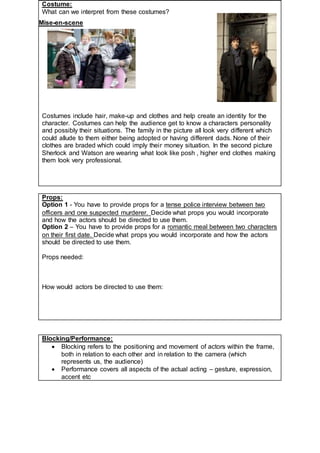
Costume:
What can we interpret from these costumes?
Costumes include hair, make-up and clothes and help create an identity for the
character. Costumes can help the audience get to know a characters personality
and possibly their situations. The family in the picture all look very different which
could allude to them either being adopted or having different dads. None of their
clothes are braded which could imply their money situation. In the second picture
Sherlock and Watson are wearing what look like posh , higher end clothes making
them look very professional.
Mise-en-scene
Location:
Can be a purpose built set or a real location
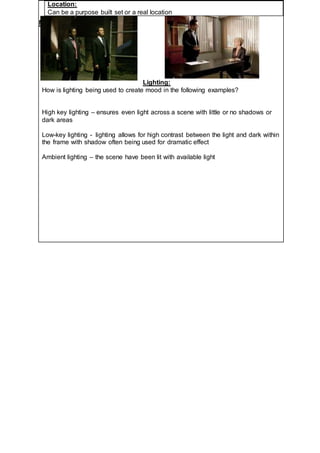
Lighting:
How is lighting being used to create mood in the following examples?
High key lighting – ensures even light across a scene with little or no shadows or
dark areas
Low-key lighting - lighting allows for high contrast between the light and dark within
the frame with shadow often being used for dramatic effect
Ambient lighting – the scene have been lit with available light

Mis en-scene

  • 1.
    Mise-en-scene What does mise-en-scenemean? It means “placed in scene” and was first used in theatre and is referred to the way the director organises the stage. Within media its used to describe everything that can be seen in one shot . What are the 6 key areas of mise-en-scene? Lighting Costume Props Set/location Blockingandperformance Colour Colour: How is colour used in the 3 below pictures? Red Purple Black blue white Danger power evil water purity passion wealth darkness bright innocent love royalty night sky anger happiness death romance
  • 2.
    Mise-en-scene Props: Option 1 -You have to provide props for a tense police interview between two officers and one suspected murderer. Decide what props you would incorporate and how the actors should be directed to use them. Option 2 – You have to provide props for a romantic meal between two characters on their first date. Decide what props you would incorporate and how the actors should be directed to use them. Props needed: How would actors be directed to use them: Blocking/Performance:  Blocking refers to the positioning and movement of actors within the frame, both in relation to each other and in relation to the camera (which represents us, the audience)  Performance covers all aspects of the actual acting – gesture, expression, accent etc Costume: What can we interpret from these costumes? Costumes include hair, make-up and clothes and help create an identity for the character. Costumes can help the audience get to know a characters personality and possibly their situations. The family in the picture all look very different which could allude to them either being adopted or having different dads. None of their clothes are braded which could imply their money situation. In the second picture Sherlock and Watson are wearing what look like posh , higher end clothes making them look very professional.
  • 3.
    Mise-en-scene Location: Can be apurpose built set or a real location Lighting: How is lighting being used to create mood in the following examples? High key lighting – ensures even light across a scene with little or no shadows or dark areas Low-key lighting - lighting allows for high contrast between the light and dark within the frame with shadow often being used for dramatic effect Ambient lighting – the scene have been lit with available light