Medication Adherence
Solution
Team Members
Michael Ingram Jr, Heather Makwinski,
Joshua Michalik, Samantha Taylor Talarico
02
03
01
BACKGROUND: The Business Case
Health
Insurance
Companies
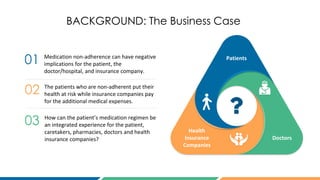
Medication non-adherence can have negative
implications for the patient, the
doctor/hospital, and insurance company.
The patients who are non-adherent put their
health at risk while insurance companies pay
for the additional medical expenses.
How can the patient’s medication regimen be
an integrated experience for the patient,
caretakers, pharmacies, doctors and health
insurance companies? Doctors
Patients
NON-ADHERENCE: A Multi Billion Dollar Problem
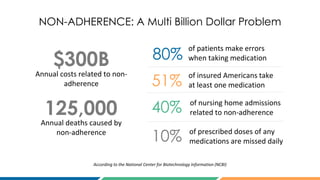
125,000
Annual deaths caused by
non-adherence
$300B
Annual costs related to non-
adherence
40%
10%
51%
of insured Americans take
at least one medication
of nursing home admissions
related to non-adherence
of prescribed doses of any
medications are missed daily
80%
of patients make errors
when taking medication
According to the National Center for Biotechnology Information (NCBI)
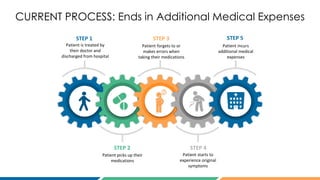
CURRENT PROCESS: Ends in Additional Medical Expenses
Patient is treated by
their doctor and
discharged from hospital
STEP 1
Patient forgets to or
makes errors when
taking their medications
STEP 3
Patient picks up their
medications
STEP 2
Patient starts to
experience original
symptoms
STEP 4
Patient incurs
additional medical
expenses
STEP 5
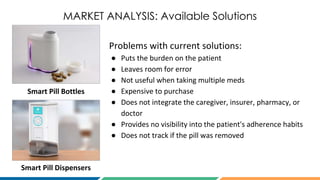
MARKET ANALYSIS: Available Solutions
Smart Pill Bottles
Problems with current solutions:
● Puts the burden on the patient
● Leaves room for error
● Not useful when taking multiple meds
● Expensive to purchase
● Does not integrate the caregiver, insurer, pharmacy, or
doctor
● Provides no visibility into the patient's adherence habits
● Does not track if the pill was removed
Smart Pill Dispensers
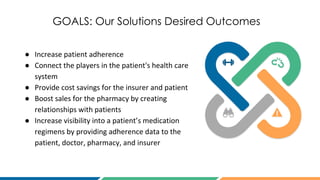
GOALS: Our Solutions Desired Outcomes
● Increase patient adherence
● Connect the players in the patient's health care
system
● Provide cost savings for the insurer and patient
● Boost sales for the pharmacy by creating
relationships with patients
● Increase visibility into a patient’s medication
regimens by providing adherence data to the
patient, doctor, pharmacy, and insurer
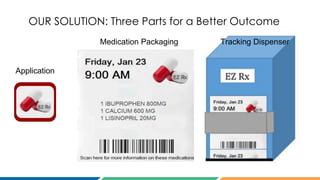
OUR SOLUTION: Three Parts for a Better Outcome
Application
Medication Packaging Tracking Dispenser
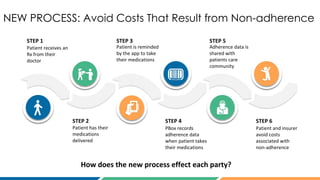
NEW PROCESS: Avoid Costs That Result from Non-adherence
STEP 1
Patient receives an
Rx from their
doctor
STEP 2
Patient has their
medications
delivered
STEP 3
Patient is reminded
by the app to take
their medications
STEP 4
PBox records
adherence data
when patient takes
their medications
STEP 5
Adherence data is
shared with
patients care
community
STEP 6
Patient and insurer
avoid costs
associated with
non-adherence
How does the new process effect each party?
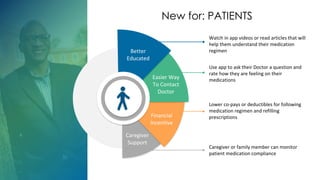
New for: PATIENTS
Better
Educated
Caregiver
Support
Watch in app videos or read articles that will
help them understand their medication
regimen
Financial
Incentive
Easier Way
To Contact
Doctor
Use app to ask their Doctor a question and
rate how they are feeling on their
medications
Lower co-pays or deductibles for following
medication regimen and refilling
prescriptions
Caregiver or family member can monitor
patient medication compliance
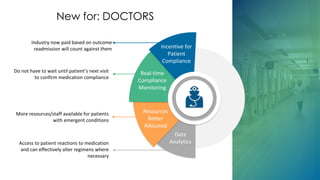
Do not have to wait until patient’s next visit
to confirm medication compliance
New for: DOCTORS
Higher
Reimbursements
Real-time
Compliance
Tracking
Resources
Better
Allocated
Real-time
Compliance
Monitoring
Data
Analytics
Resources
Better
Allocated
More resources/staff available for patients
with emergent conditions
Access to patient reactions to medication
and can effectively alter regimens where
necessary
Incentive for
Patient
Compliance
Industry now paid based on outcome
readmission will count against them
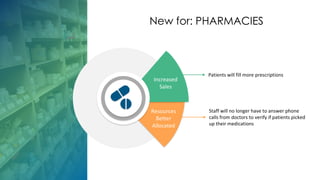
New for: PHARMACIES
Patients will fill more prescriptions
Staff will no longer have to answer phone
calls from doctors to verify if patients picked
up their medications
Resources
Better
Allocated
Increased
Sales
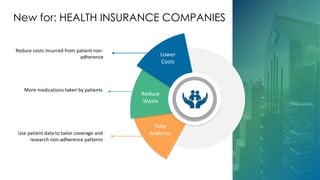
New for: HEALTH INSURANCE COMPANIES
Lower
Costs
Reduce costs incurred from patient non-
adherence
More medications taken by patients
Reduce
Waste
Data
AnalyticsUse patient data to tailor coverage and
research non-adherence patterns
Questions?
http://www.medscape.com/viewarticle/409940 [1] http://www.pharmacytimes.com/news/increased-
medication-adherence-reduces-health-care-costs [2] http://www.healthworkscollective.com/ashish-
varshneya/300471/medication-non-adherence-290-billion-unnecessary-expenditure [3]
http://www.acpm.org/?MedAdherTT_ClinRef[4]
http://www.pharmatherapist.com/articles/4-key-reasons-for-medication-non-compliance[5]
https://intermountainphysician.org/intermountaincme/Documents/13.%20Olson,%20Winter,%20Rickard
%20(use%20at%20all%20conferences)Medication%20Adherence%20Workshop_final.pdf[6]
http://www.medscape.com/viewarticle/409940 [7]
http://phrma-
docs.phrma.org/sites/default/files/pdf/PhRMA_Improving%20Medication%20Adherence_Issue%20Brief
.pdf [8] https://www.ncbi.nlm.nih.gov/pmc/articles/PMC3234383/ [9]
SOURCES

MIS Capstone Presentation

  • 1.
    Medication Adherence Solution Team Members MichaelIngram Jr, Heather Makwinski, Joshua Michalik, Samantha Taylor Talarico
  • 2.
    02 03 01 BACKGROUND: The BusinessCase Health Insurance Companies Medication non-adherence can have negative implications for the patient, the doctor/hospital, and insurance company. The patients who are non-adherent put their health at risk while insurance companies pay for the additional medical expenses. How can the patient’s medication regimen be an integrated experience for the patient, caretakers, pharmacies, doctors and health insurance companies? Doctors Patients
  • 3.
    NON-ADHERENCE: A MultiBillion Dollar Problem 125,000 Annual deaths caused by non-adherence $300B Annual costs related to non- adherence 40% 10% 51% of insured Americans take at least one medication of nursing home admissions related to non-adherence of prescribed doses of any medications are missed daily 80% of patients make errors when taking medication According to the National Center for Biotechnology Information (NCBI)
  • 4.
    CURRENT PROCESS: Endsin Additional Medical Expenses Patient is treated by their doctor and discharged from hospital STEP 1 Patient forgets to or makes errors when taking their medications STEP 3 Patient picks up their medications STEP 2 Patient starts to experience original symptoms STEP 4 Patient incurs additional medical expenses STEP 5
  • 5.
    MARKET ANALYSIS: AvailableSolutions Smart Pill Bottles Problems with current solutions: ● Puts the burden on the patient ● Leaves room for error ● Not useful when taking multiple meds ● Expensive to purchase ● Does not integrate the caregiver, insurer, pharmacy, or doctor ● Provides no visibility into the patient's adherence habits ● Does not track if the pill was removed Smart Pill Dispensers
  • 6.
    GOALS: Our SolutionsDesired Outcomes ● Increase patient adherence ● Connect the players in the patient's health care system ● Provide cost savings for the insurer and patient ● Boost sales for the pharmacy by creating relationships with patients ● Increase visibility into a patient’s medication regimens by providing adherence data to the patient, doctor, pharmacy, and insurer
  • 7.
    OUR SOLUTION: ThreeParts for a Better Outcome Application Medication Packaging Tracking Dispenser
  • 8.
    NEW PROCESS: AvoidCosts That Result from Non-adherence STEP 1 Patient receives an Rx from their doctor STEP 2 Patient has their medications delivered STEP 3 Patient is reminded by the app to take their medications STEP 4 PBox records adherence data when patient takes their medications STEP 5 Adherence data is shared with patients care community STEP 6 Patient and insurer avoid costs associated with non-adherence How does the new process effect each party?
  • 9.
    New for: PATIENTS Better Educated Caregiver Support Watchin app videos or read articles that will help them understand their medication regimen Financial Incentive Easier Way To Contact Doctor Use app to ask their Doctor a question and rate how they are feeling on their medications Lower co-pays or deductibles for following medication regimen and refilling prescriptions Caregiver or family member can monitor patient medication compliance
  • 10.
    Do not haveto wait until patient’s next visit to confirm medication compliance New for: DOCTORS Higher Reimbursements Real-time Compliance Tracking Resources Better Allocated Real-time Compliance Monitoring Data Analytics Resources Better Allocated More resources/staff available for patients with emergent conditions Access to patient reactions to medication and can effectively alter regimens where necessary Incentive for Patient Compliance Industry now paid based on outcome readmission will count against them
  • 11.
    New for: PHARMACIES Patientswill fill more prescriptions Staff will no longer have to answer phone calls from doctors to verify if patients picked up their medications Resources Better Allocated Increased Sales
  • 12.
    New for: HEALTHINSURANCE COMPANIES Lower Costs Reduce costs incurred from patient non- adherence More medications taken by patients Reduce Waste Data AnalyticsUse patient data to tailor coverage and research non-adherence patterns
  • 13.
  • 14.
    http://www.medscape.com/viewarticle/409940 [1] http://www.pharmacytimes.com/news/increased- medication-adherence-reduces-health-care-costs[2] http://www.healthworkscollective.com/ashish- varshneya/300471/medication-non-adherence-290-billion-unnecessary-expenditure [3] http://www.acpm.org/?MedAdherTT_ClinRef[4] http://www.pharmatherapist.com/articles/4-key-reasons-for-medication-non-compliance[5] https://intermountainphysician.org/intermountaincme/Documents/13.%20Olson,%20Winter,%20Rickard %20(use%20at%20all%20conferences)Medication%20Adherence%20Workshop_final.pdf[6] http://www.medscape.com/viewarticle/409940 [7] http://phrma- docs.phrma.org/sites/default/files/pdf/PhRMA_Improving%20Medication%20Adherence_Issue%20Brief .pdf [8] https://www.ncbi.nlm.nih.gov/pmc/articles/PMC3234383/ [9] SOURCES