Technical Writing &
Presentation Skills: Minute-
Taking
Alipur College, Alipur
What we’ll cover this evening…
The minute taker’s role
Listening
Capturing what’s said
Writing up and structuring minutes
The weird language of meetings
Formal
Informal
Everyday
The Minute Taker’s role
• In small groups,
identify the key
tasks of an SSCC
minute taker.
• What skills will you
need to complete
these task?
The Minute-Taker’s Responsibilities
Taking down notes accurately
Writing the notes with
responsibility and ownership
Distributing the minutes and
filing them for future reference
The Minute-Taker’s Task
Before Meeting
• Preparation
During Meeting
• Writing down
actions and
conclusions
After Meeting
• Distributing
the minutes
Meeting Preparation
• Organising the meetings
• Inviting participants
• Setting the agenda
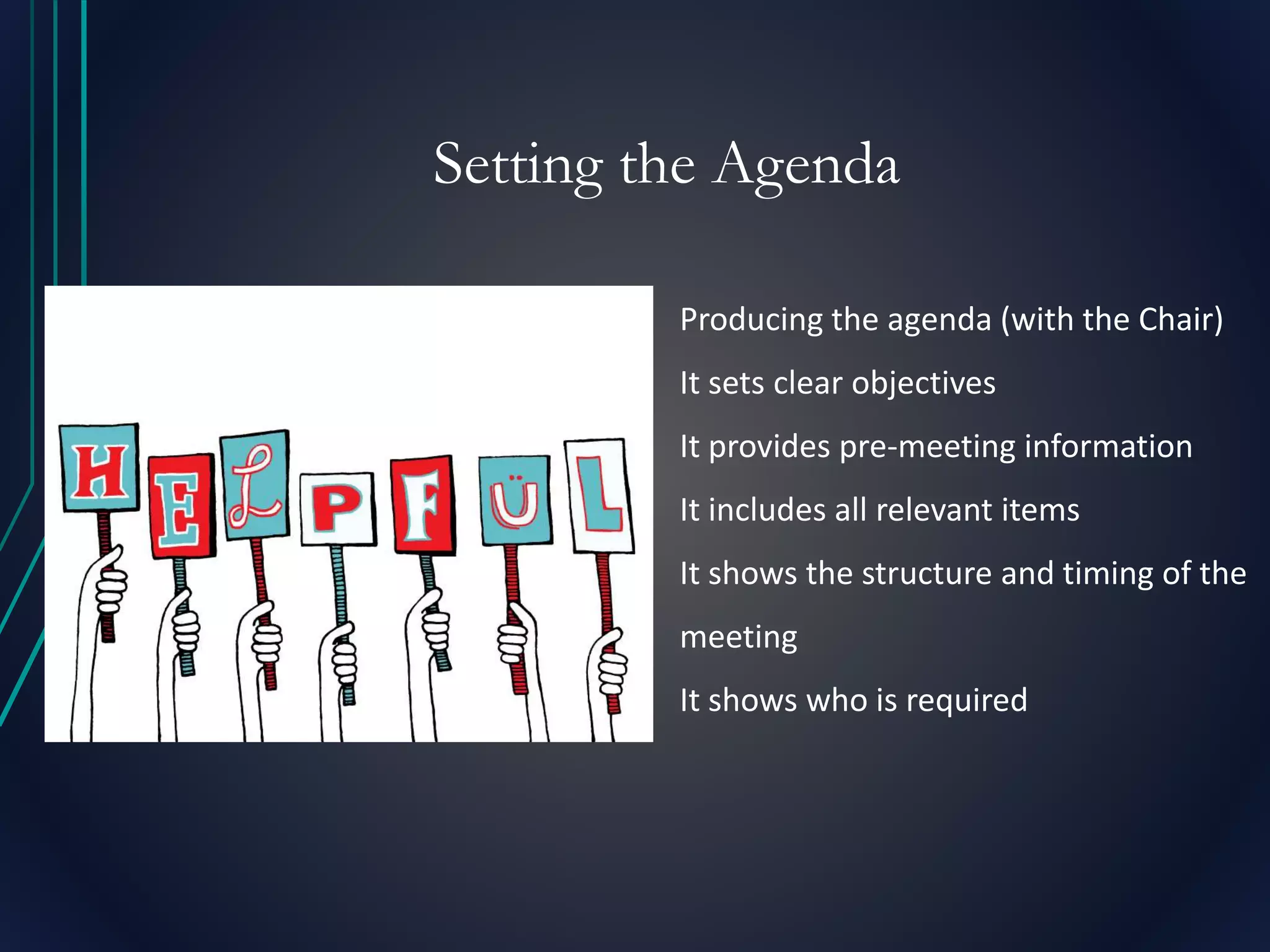
Setting the Agenda
Producing the agenda (with the Chair)
It sets clear objectives
It provides pre-meeting information
It includes all relevant items
It shows the structure and timing of the
meeting
It shows who is required
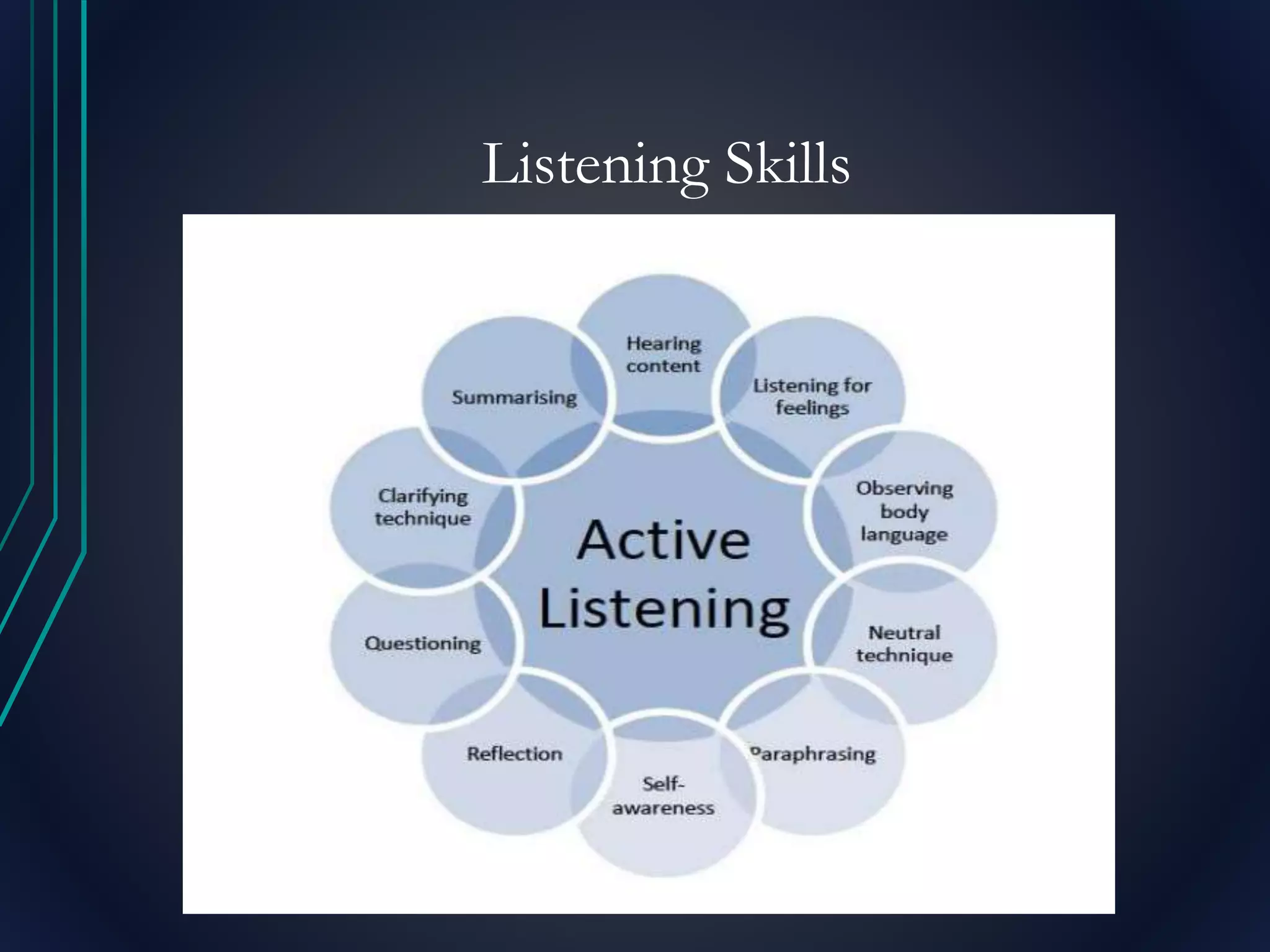
Listening Skills
The importance of listening
• Stay focused on the speaker
• Don’t tune out dry-sounding information
• Try not to evaluate as you are listening
• Show you are ‘actively’ listening
• Ask clarifying questions
• Don’t interrupt
• Brain Vs Ears
Tips for taking notes
• Draw up a table plan
• Print off an agenda for
you to write notes
against with big spaces
• Record the action to be
taken clearly and the
date when it’s to be
done by
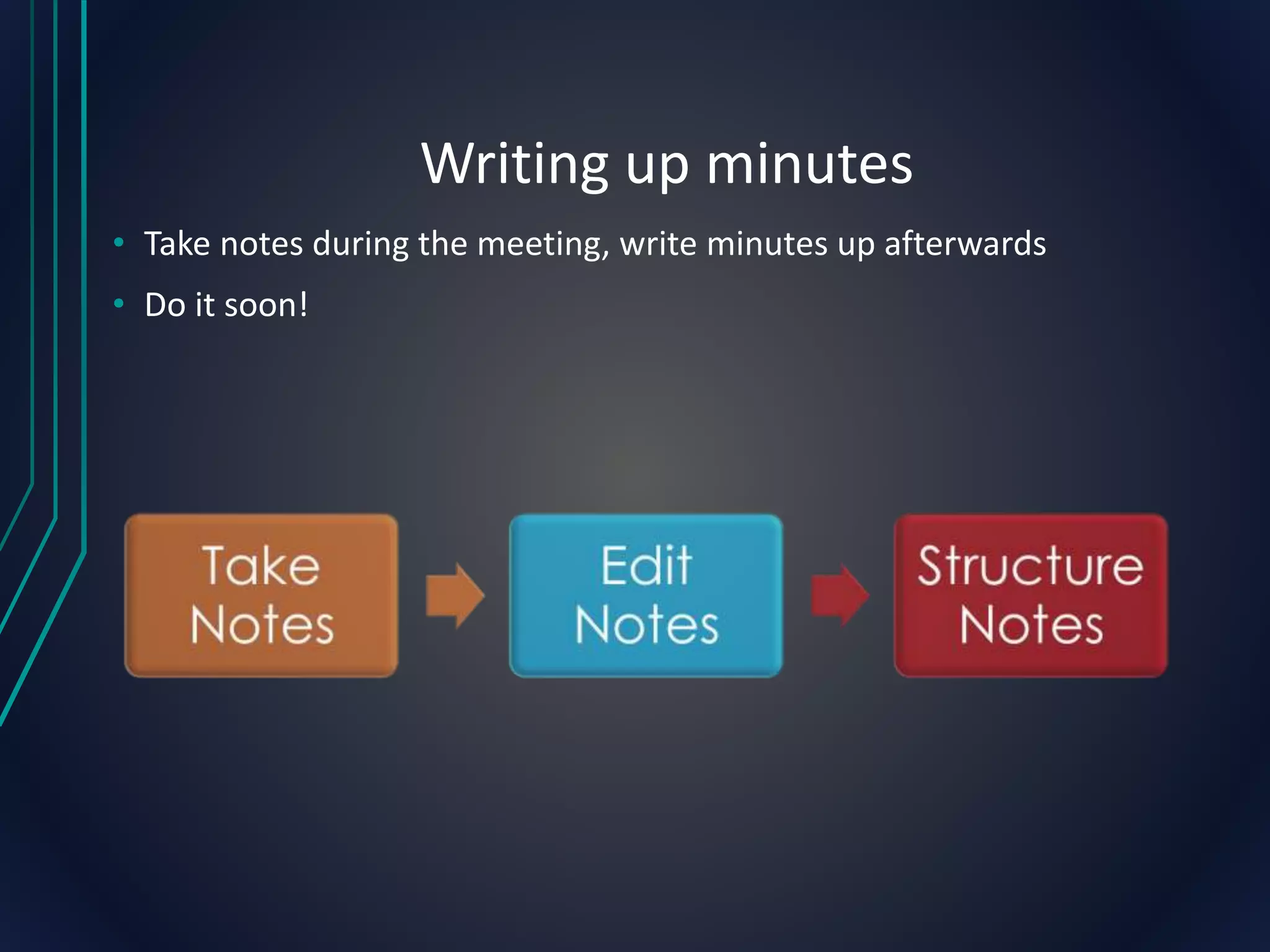
Writing up minutes
• Take notes during the meeting, write minutes up afterwards
• Do it soon!
What you’re aiming for
1. Background
2. Discussion
3. Decision
4. Action
• Whilst being: authentic, complete, concise, free from ambiguity,
in the past tense
The structure of minutes
• Beginning
• Middle
• End
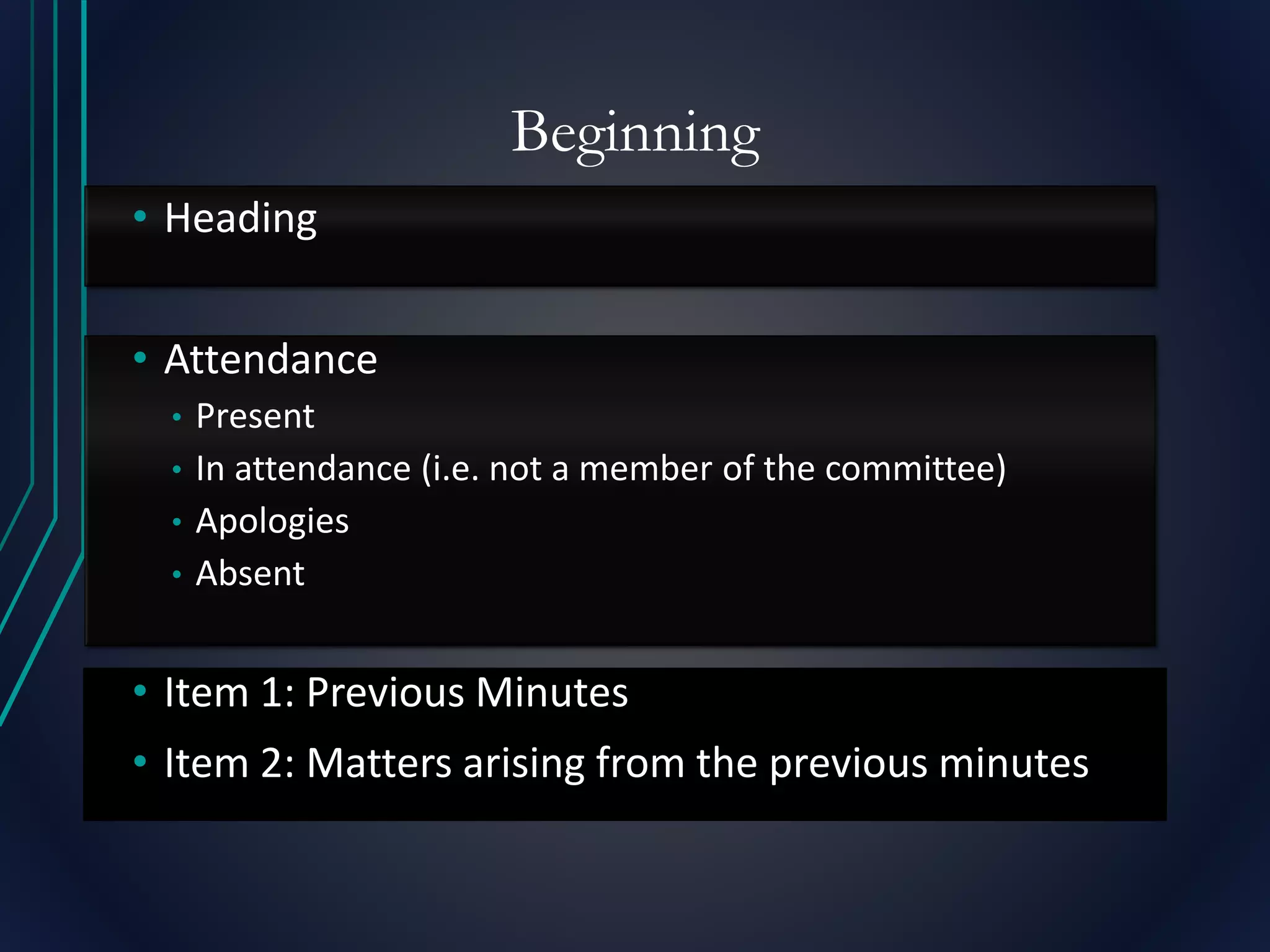
Beginning
• Heading
• Attendance
• Present
• In attendance (i.e. not a member of the committee)
• Apologies
• Absent
• Item 1: Previous Minutes
• Item 2: Matters arising from the previous minutes
Middle
• Item 3. Business
• Go through in order of the agenda (keep the same
numbering)
• Make a record of what was said
• E.g. a brief outline of the discussion and actions agreed or…
• Just a record of the actions [in bold, with initials of who is
responsible]
End
• 4. AOCB
• 5. Date of next meeting
• Chairperson’s name and date
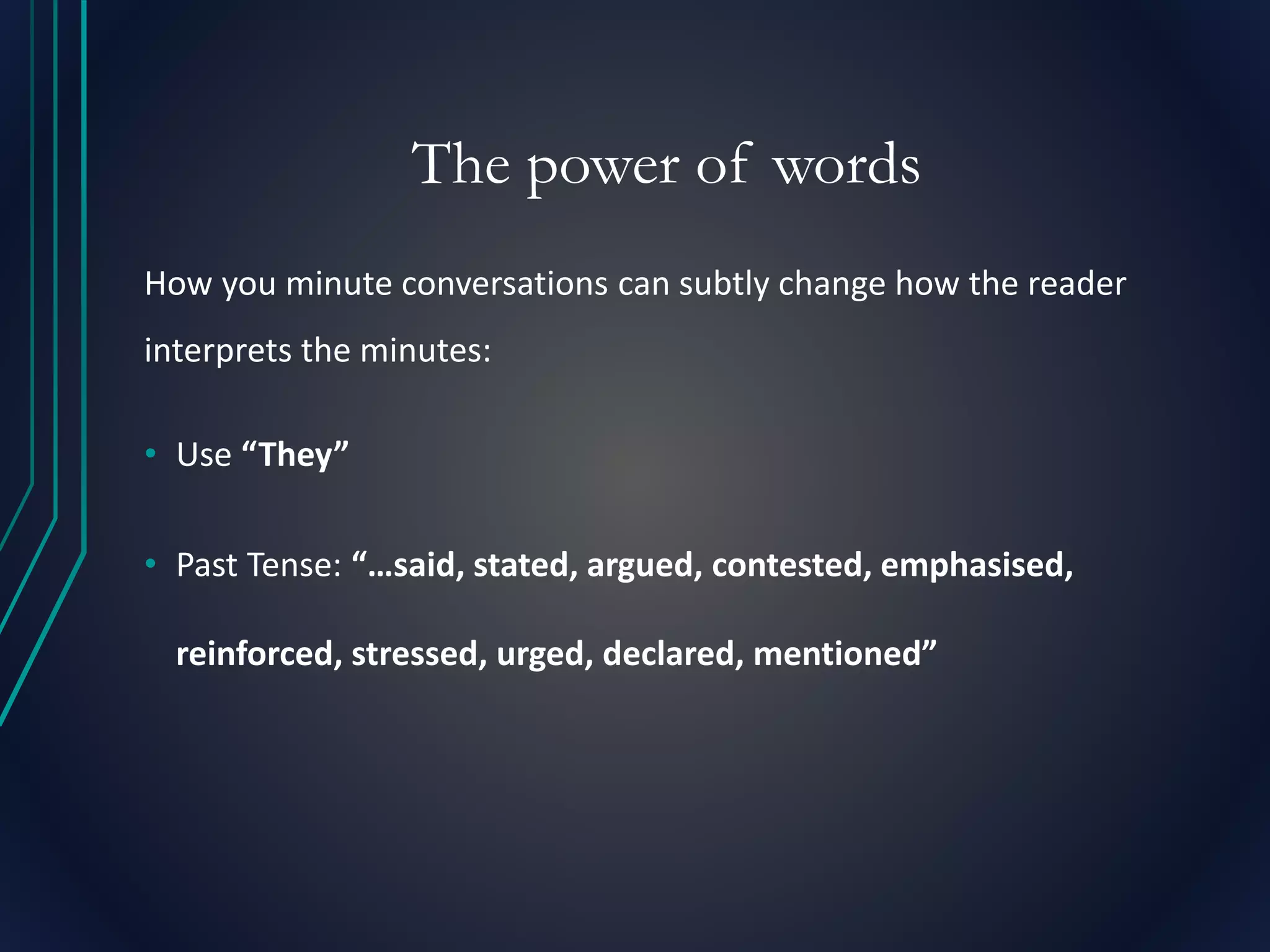
The power of words
How you minute conversations can subtly change how the reader
interprets the minutes:
• Use “They”
• Past Tense: “…said, stated, argued, contested, emphasised,
reinforced, stressed, urged, declared, mentioned”
Once minutes completed
• Distribute quickly: 80:20 rule
• File them safely somewhere – paper and electronic?
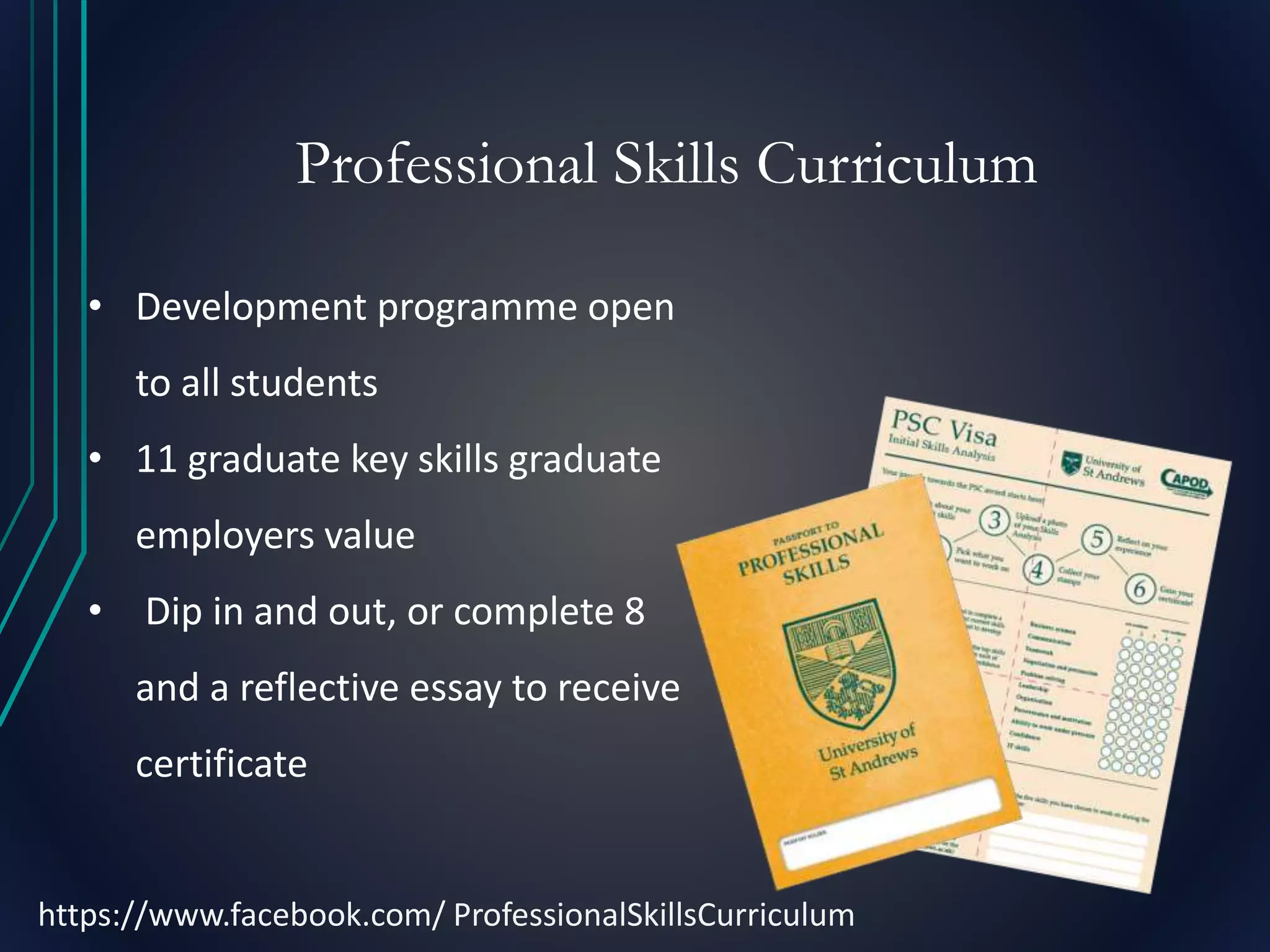
Professional Skills Curriculum
• Development programme open
to all students
• 11 graduate key skills graduate
employers value
• Dip in and out, or complete 8
and a reflective essay to receive
certificate
https://www.facebook.com/ ProfessionalSkillsCurriculum

Minutes of Meeting.pptx

  • 1.
    Technical Writing & PresentationSkills: Minute- Taking Alipur College, Alipur
  • 2.
    What we’ll coverthis evening… The minute taker’s role Listening Capturing what’s said Writing up and structuring minutes
  • 3.
    The weird languageof meetings Formal Informal Everyday
  • 4.
    The Minute Taker’srole • In small groups, identify the key tasks of an SSCC minute taker. • What skills will you need to complete these task?
  • 5.
    The Minute-Taker’s Responsibilities Takingdown notes accurately Writing the notes with responsibility and ownership Distributing the minutes and filing them for future reference
  • 6.
    The Minute-Taker’s Task BeforeMeeting • Preparation During Meeting • Writing down actions and conclusions After Meeting • Distributing the minutes
  • 7.
    Meeting Preparation • Organisingthe meetings • Inviting participants • Setting the agenda
  • 8.
    Setting the Agenda Producingthe agenda (with the Chair) It sets clear objectives It provides pre-meeting information It includes all relevant items It shows the structure and timing of the meeting It shows who is required
  • 9.
  • 10.
    The importance oflistening • Stay focused on the speaker • Don’t tune out dry-sounding information • Try not to evaluate as you are listening • Show you are ‘actively’ listening • Ask clarifying questions • Don’t interrupt • Brain Vs Ears
  • 11.
    Tips for takingnotes • Draw up a table plan • Print off an agenda for you to write notes against with big spaces • Record the action to be taken clearly and the date when it’s to be done by
  • 12.
    Writing up minutes •Take notes during the meeting, write minutes up afterwards • Do it soon!
  • 13.
    What you’re aimingfor 1. Background 2. Discussion 3. Decision 4. Action • Whilst being: authentic, complete, concise, free from ambiguity, in the past tense
  • 14.
    The structure ofminutes • Beginning • Middle • End
  • 15.
    Beginning • Heading • Attendance •Present • In attendance (i.e. not a member of the committee) • Apologies • Absent • Item 1: Previous Minutes • Item 2: Matters arising from the previous minutes
  • 16.
    Middle • Item 3.Business • Go through in order of the agenda (keep the same numbering) • Make a record of what was said • E.g. a brief outline of the discussion and actions agreed or… • Just a record of the actions [in bold, with initials of who is responsible]
  • 17.
    End • 4. AOCB •5. Date of next meeting • Chairperson’s name and date
  • 18.
    The power ofwords How you minute conversations can subtly change how the reader interprets the minutes: • Use “They” • Past Tense: “…said, stated, argued, contested, emphasised, reinforced, stressed, urged, declared, mentioned”
  • 19.
    Once minutes completed •Distribute quickly: 80:20 rule • File them safely somewhere – paper and electronic?
  • 20.
    Professional Skills Curriculum •Development programme open to all students • 11 graduate key skills graduate employers value • Dip in and out, or complete 8 and a reflective essay to receive certificate https://www.facebook.com/ ProfessionalSkillsCurriculum