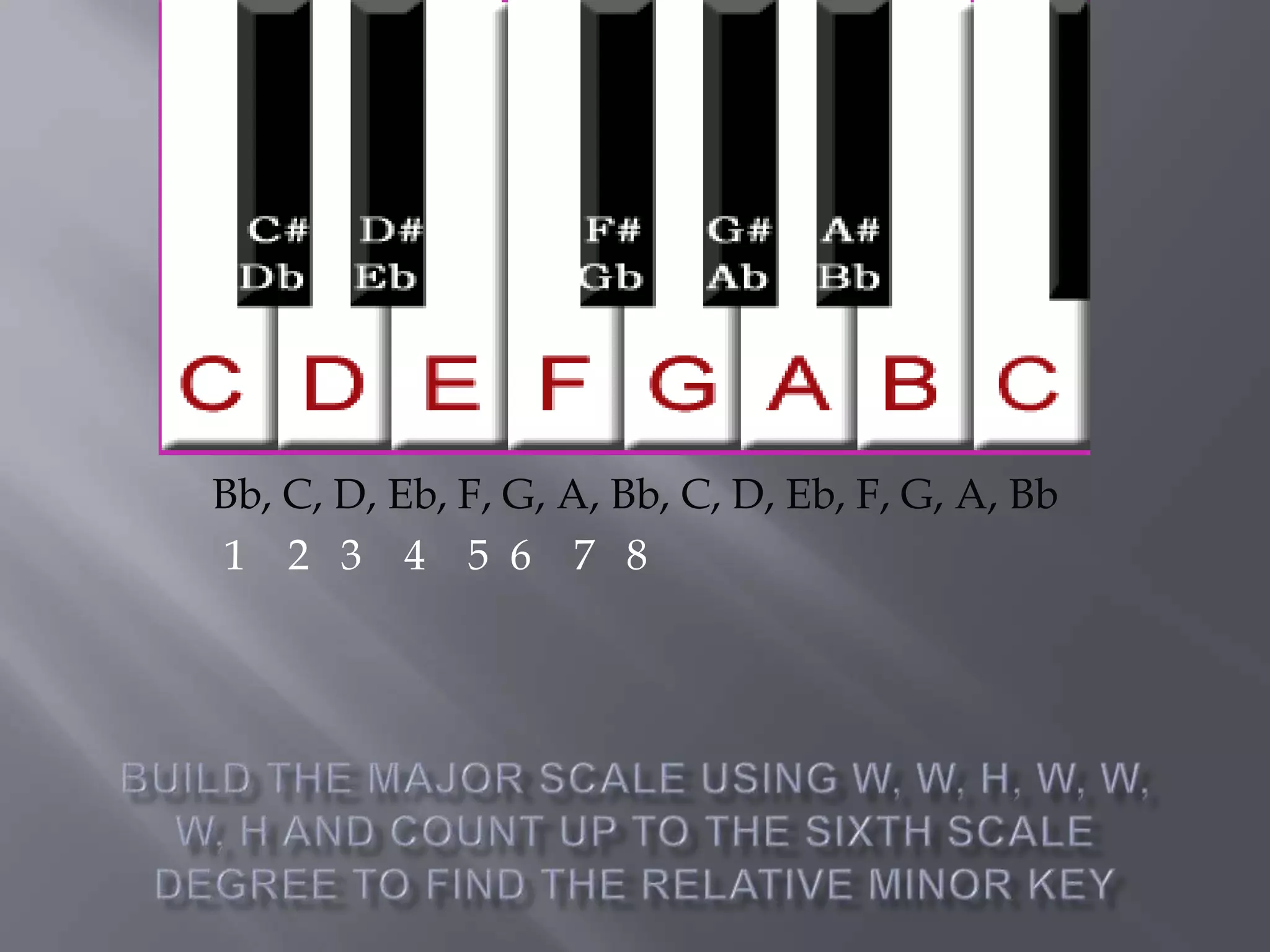
Bb, C, D, Eb, F, G, A, Bb, C, D, Eb, F, G, A, Bb 
1 2 3 4 5 6 7 8
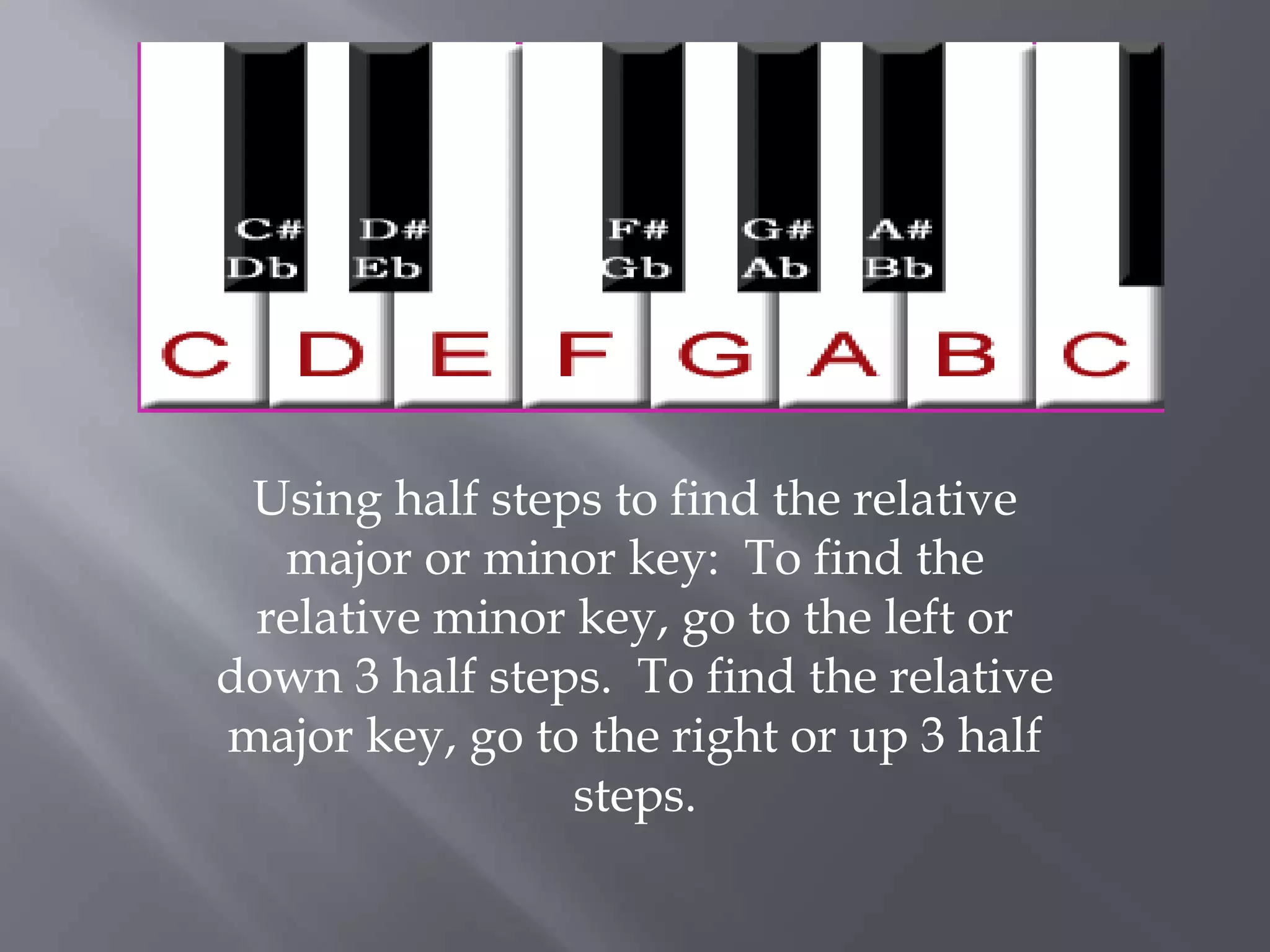
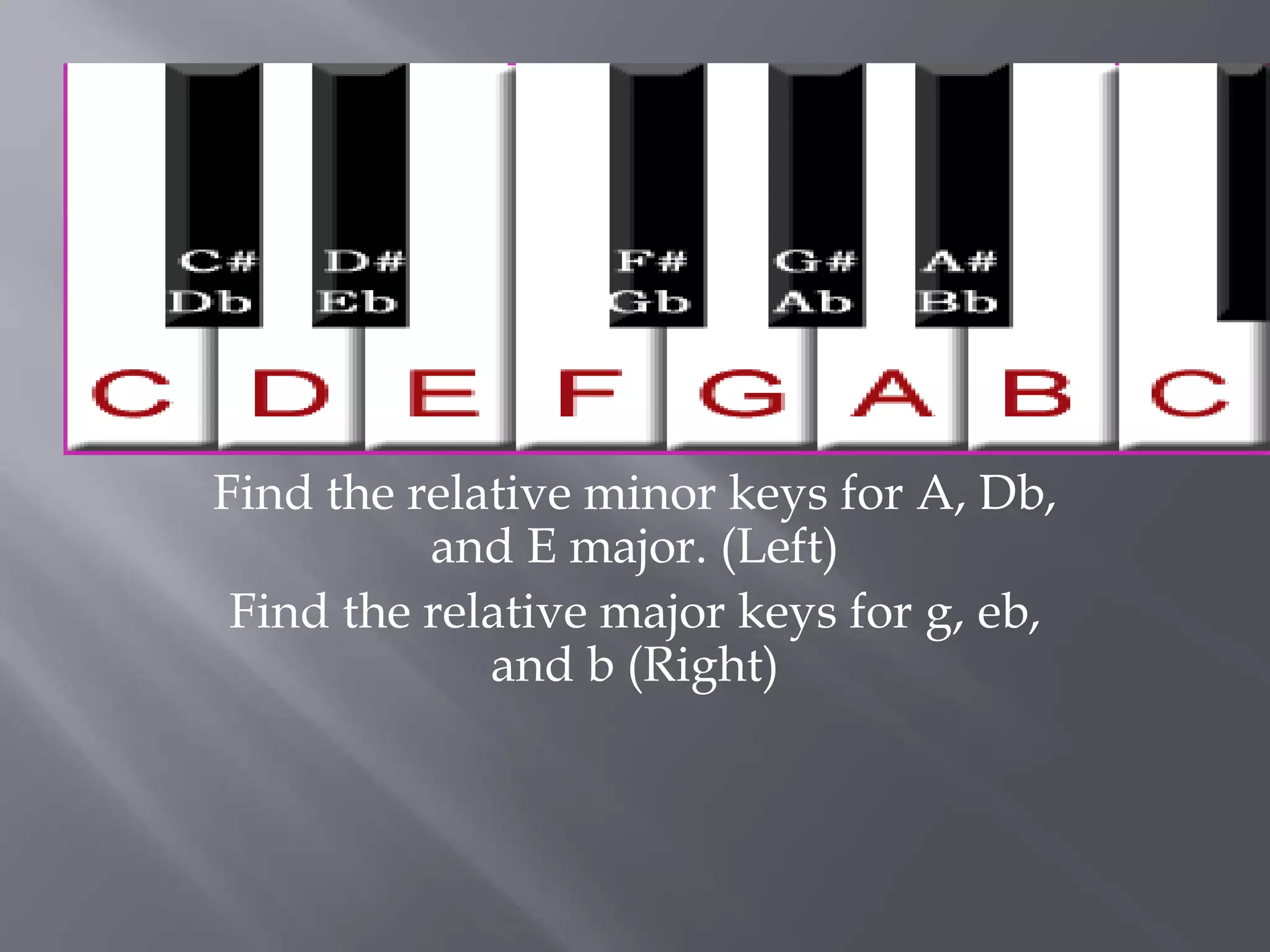
Using half steps to find the relative 
major or minor key: To find the 
relative minor key, go to the left or 
down 3 half steps. To find the relative 
major key, go to the right or up 3 half 
steps.
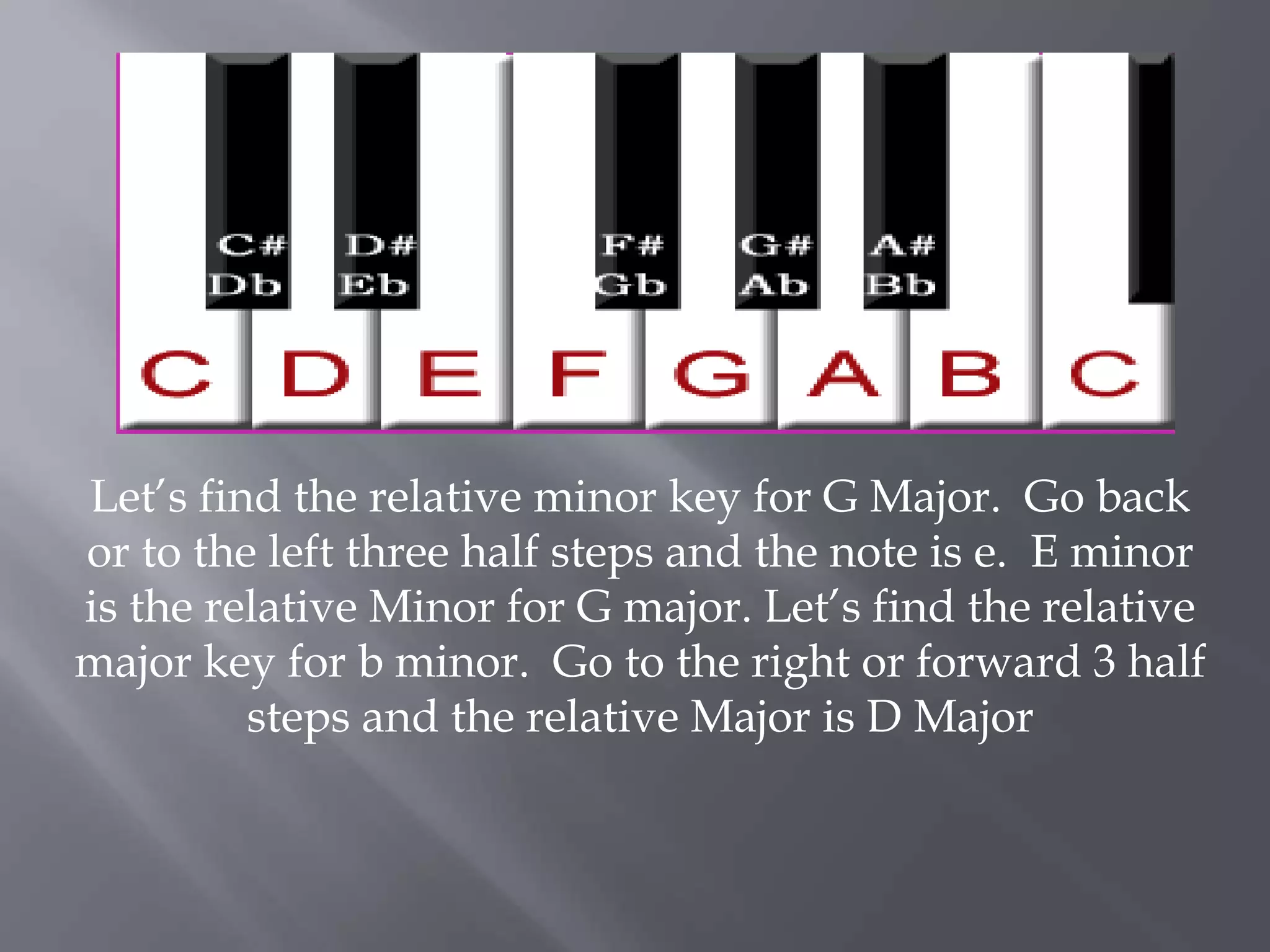
Let’s find the relative minor key for G Major. Go back 
or to the left three half steps and the note is e. E minor 
is the relative Minor for G major. Let’s find the relative 
major key for b minor. Go to the right or forward 3 half 
steps and the relative Major is D Major
Find the relative minor keys for A, Db, 
and E major. (Left) 
Find the relative major keys for g, eb, 
and b (Right)
Find the Major Second above F. Major 
second is another name for whole step, 
so find the whole step above F. Find 
the minor second above F. Minor 
second is another name for half step, so 
find the half step above f
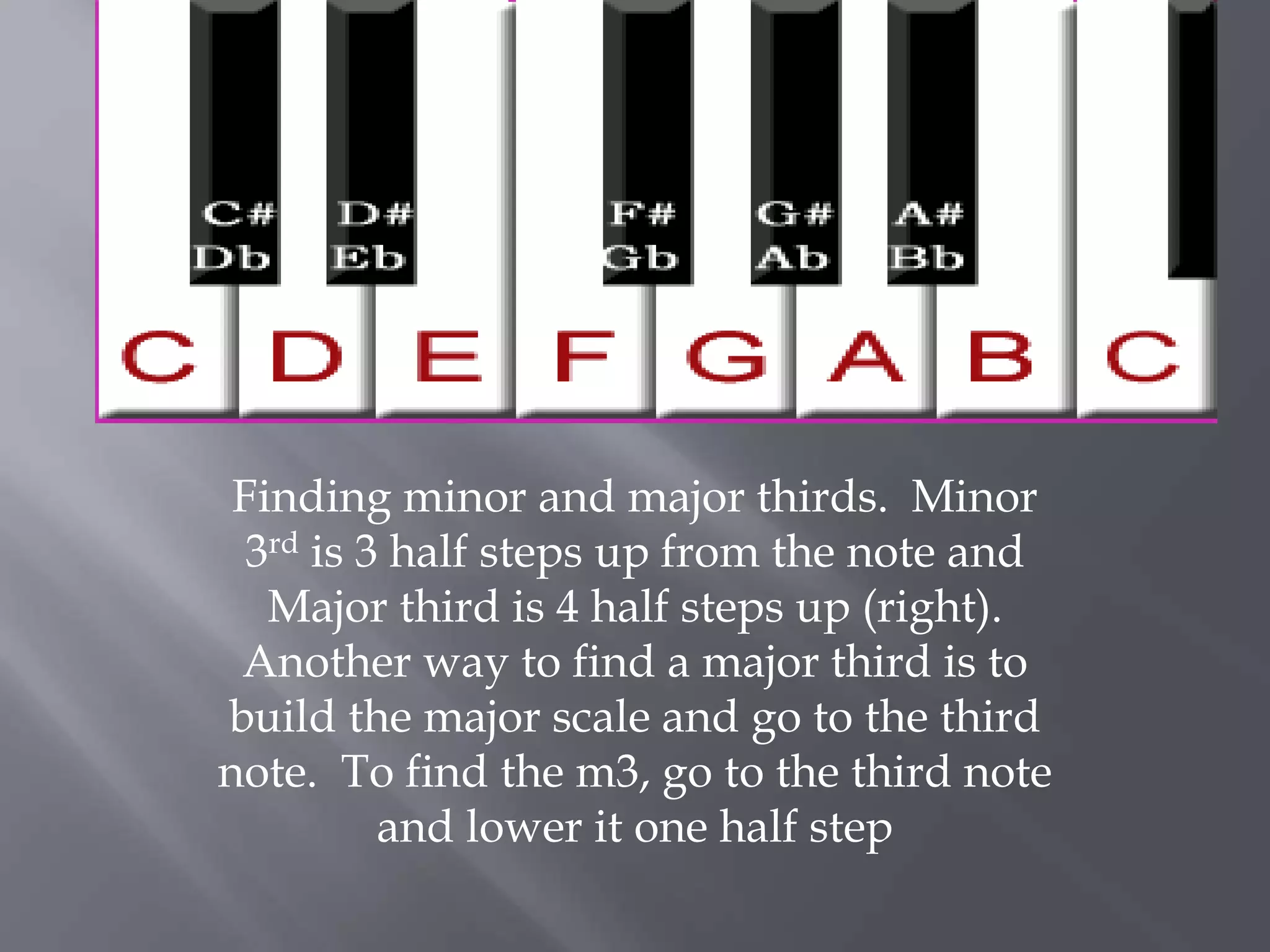
Finding minor and major thirds. Minor 
3rd is 3 half steps up from the note and 
Major third is 4 half steps up (right). 
Another way to find a major third is to 
build the major scale and go to the third 
note. To find the m3, go to the third note 
and lower it one half step
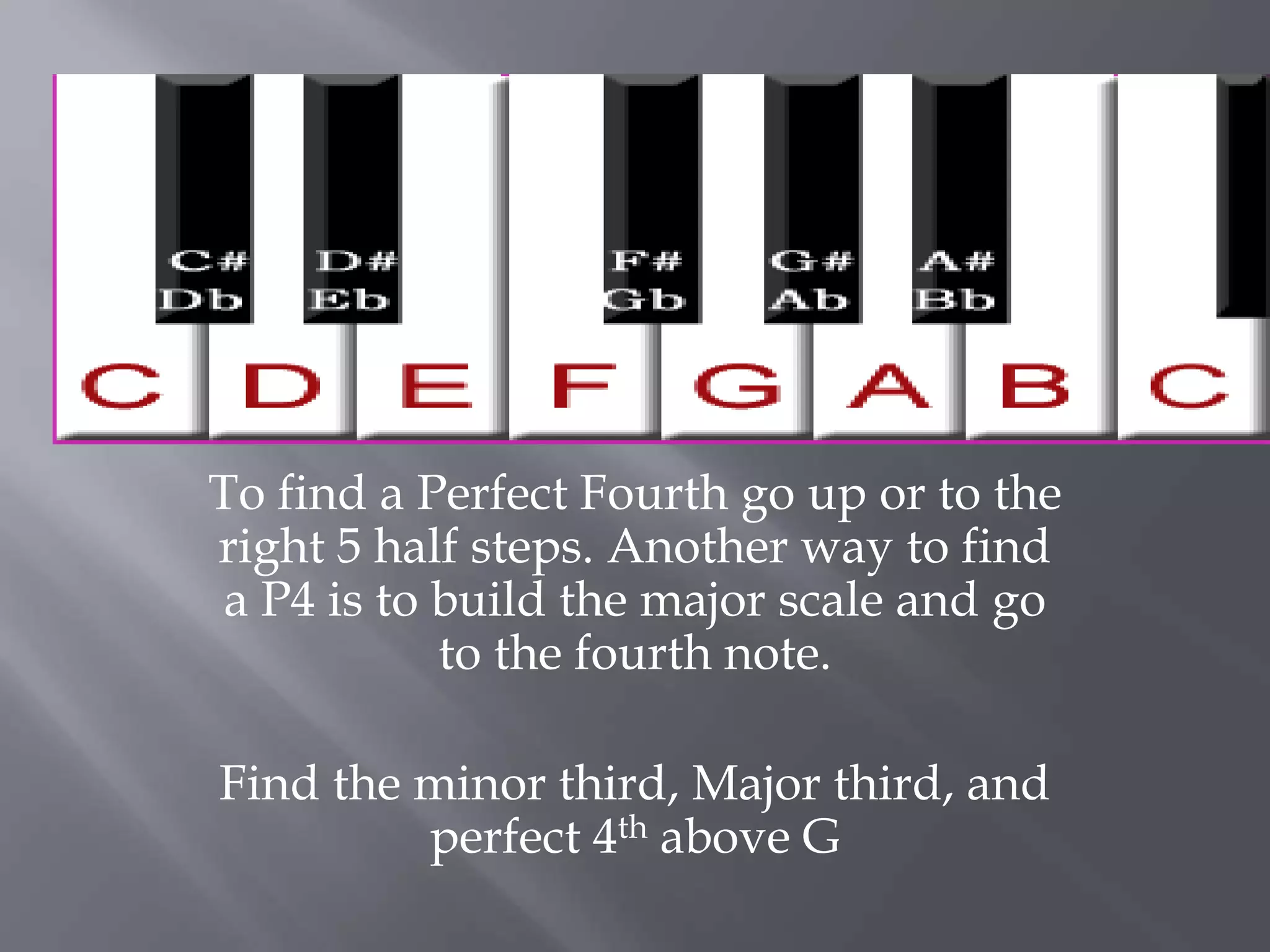
To find a Perfect Fourth go up or to the 
right 5 half steps. Another way to find 
a P4 is to build the major scale and go 
to the fourth note. 
Find the minor third, Major third, and 
perfect 4th above G
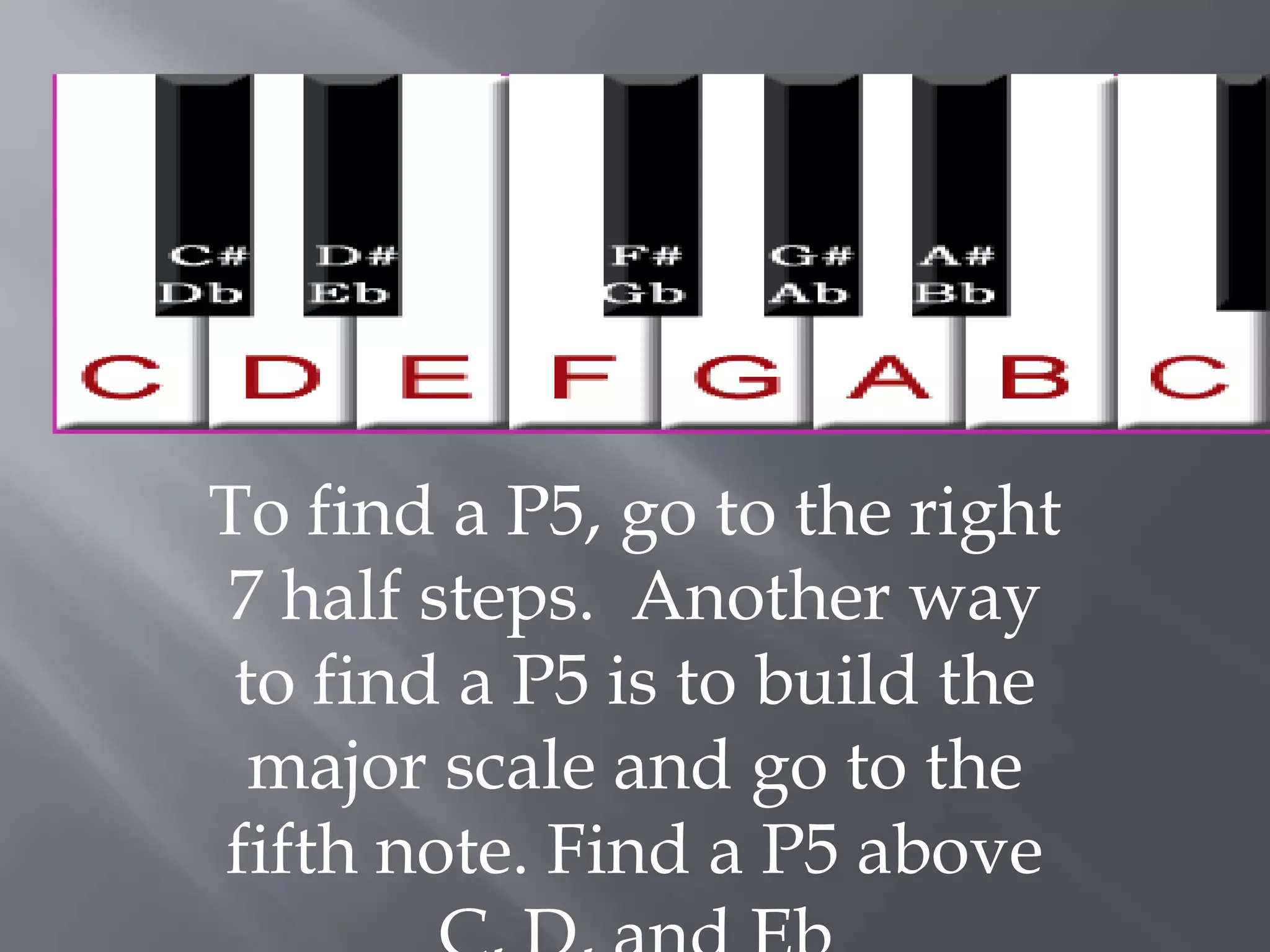
To find a P5, go to the right 
7 half steps. Another way 
to find a P5 is to build the 
major scale and go to the 
fifth note. Find a P5 above 
C, D, and Eb
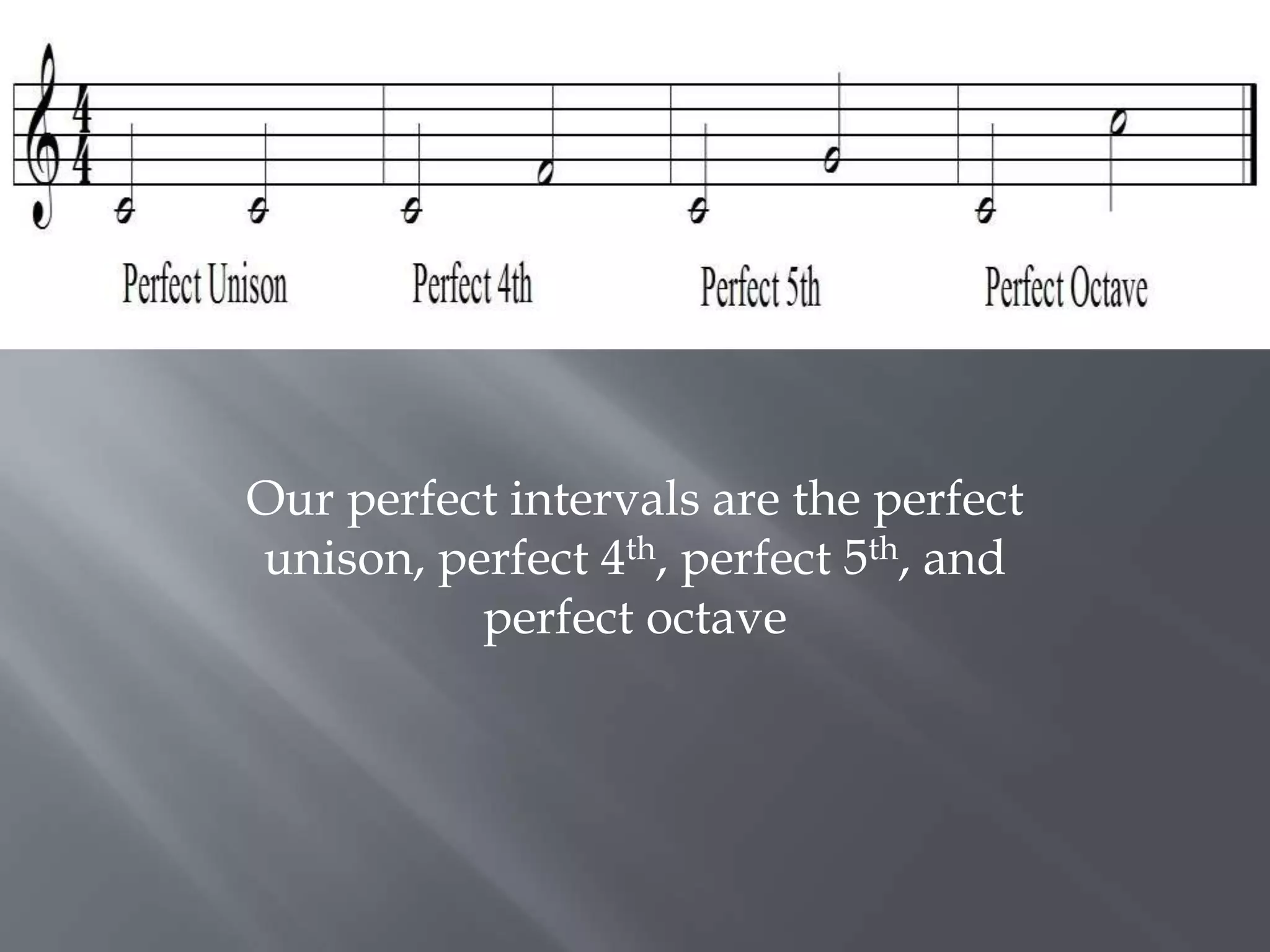
Our perfect intervals are the perfect 
unison, perfect 4th, perfect 5th, and 
perfect octave
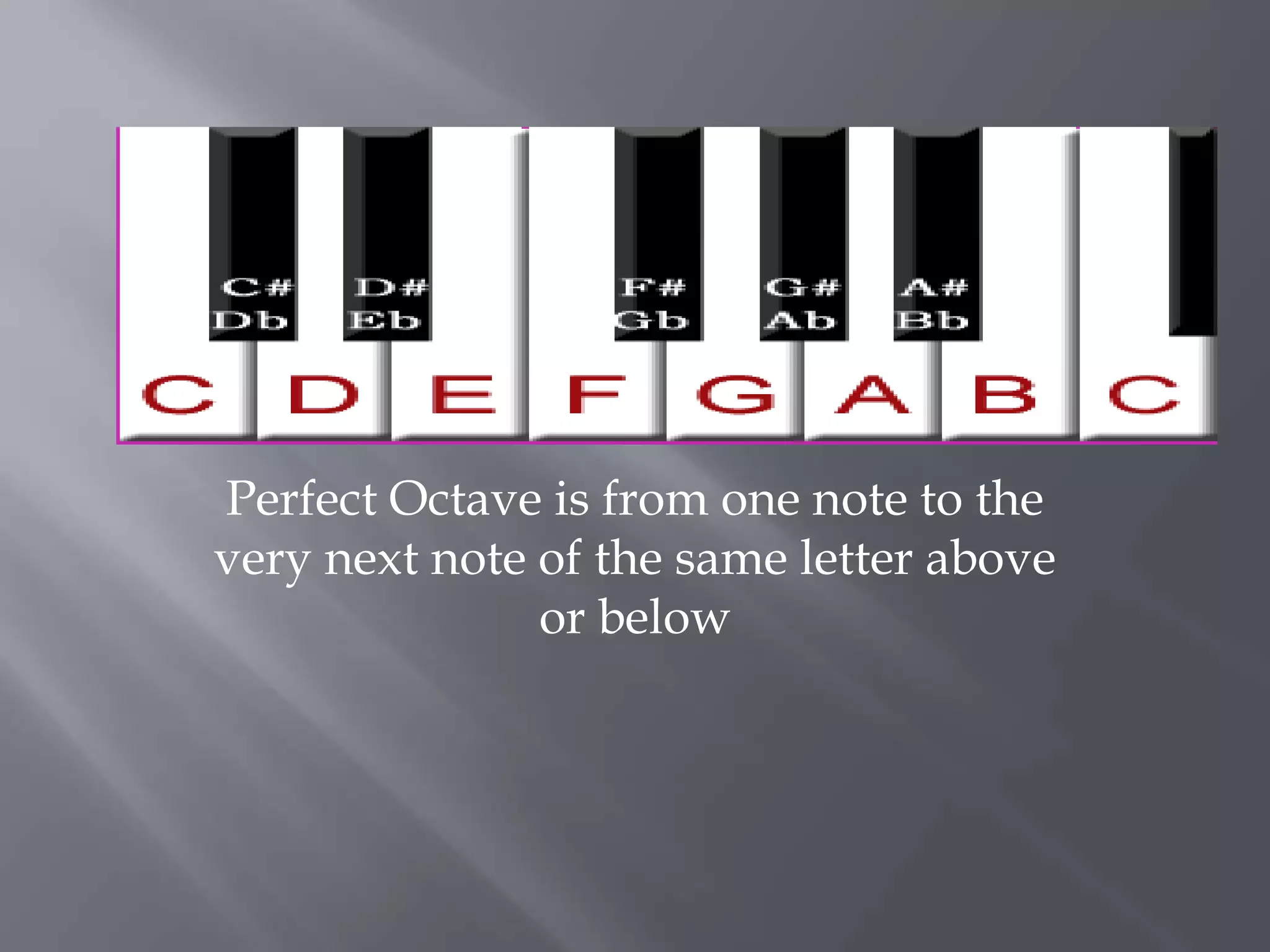
Perfect Octave is from one note to the 
very next note of the same letter above 
or below
*Know your keyboard and 
know how to build your 
major scales-Know the 
difference between a whole 
and a half step and how to 
find them, up or down, left or 
right

Minor key signatures 2

  • 2.
    Bb, C, D,Eb, F, G, A, Bb, C, D, Eb, F, G, A, Bb 1 2 3 4 5 6 7 8
  • 3.
    Using half stepsto find the relative major or minor key: To find the relative minor key, go to the left or down 3 half steps. To find the relative major key, go to the right or up 3 half steps.
  • 4.
    Let’s find therelative minor key for G Major. Go back or to the left three half steps and the note is e. E minor is the relative Minor for G major. Let’s find the relative major key for b minor. Go to the right or forward 3 half steps and the relative Major is D Major
  • 5.
    Find the relativeminor keys for A, Db, and E major. (Left) Find the relative major keys for g, eb, and b (Right)
  • 6.
    Find the MajorSecond above F. Major second is another name for whole step, so find the whole step above F. Find the minor second above F. Minor second is another name for half step, so find the half step above f
  • 7.
    Finding minor andmajor thirds. Minor 3rd is 3 half steps up from the note and Major third is 4 half steps up (right). Another way to find a major third is to build the major scale and go to the third note. To find the m3, go to the third note and lower it one half step
  • 8.
    To find aPerfect Fourth go up or to the right 5 half steps. Another way to find a P4 is to build the major scale and go to the fourth note. Find the minor third, Major third, and perfect 4th above G
  • 9.
    To find aP5, go to the right 7 half steps. Another way to find a P5 is to build the major scale and go to the fifth note. Find a P5 above C, D, and Eb
  • 10.
    Our perfect intervalsare the perfect unison, perfect 4th, perfect 5th, and perfect octave
  • 11.
    Perfect Octave isfrom one note to the very next note of the same letter above or below
  • 12.
    *Know your keyboardand know how to build your major scales-Know the difference between a whole and a half step and how to find them, up or down, left or right