Dave
Brubeck
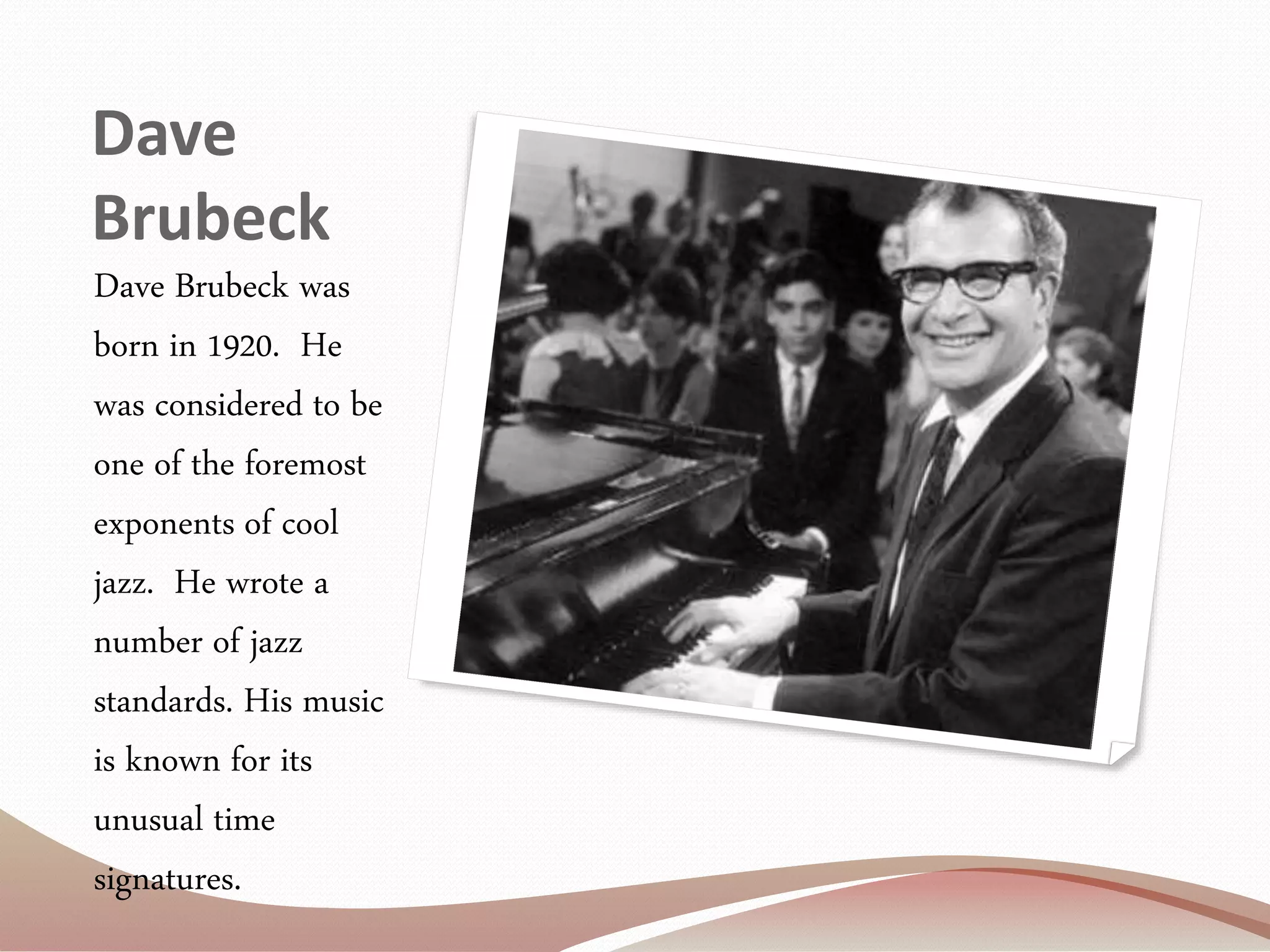
Dave Brubeck was
born in 1920. He
was considered to be
one of the foremost
exponents of cool
jazz. He wrote a
number of jazz
standards. His music
is known for its
unusual time
signatures.
College and
Professional
Career
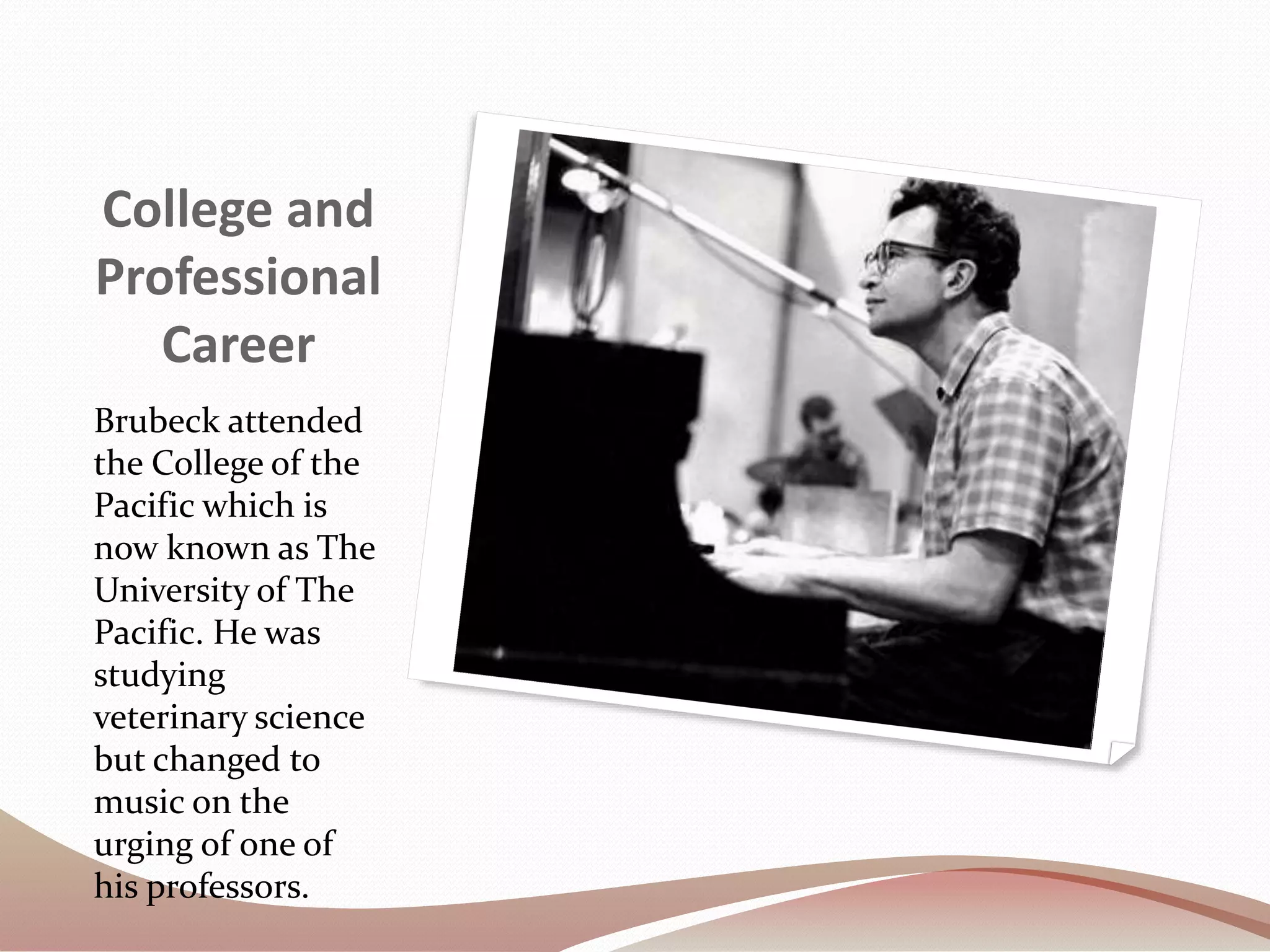
Brubeck attended
the College of the
Pacific which is
now known as The
University of The
Pacific. He was
studying
veterinary science
but changed to
music on the
urging of one of
his professors.
He was nearly
expelled when
one of his
professors
discovered he
couldn’t read
music.
Several other
professors argued
that his ability for
counterpoint and
harmony
compensated. They
agreed to let him
graduate. After
graduating, he was
drafted into the U.S.
Army and created
one of the first
racially integrated
bands, “The
Wolfpack”
Take Five
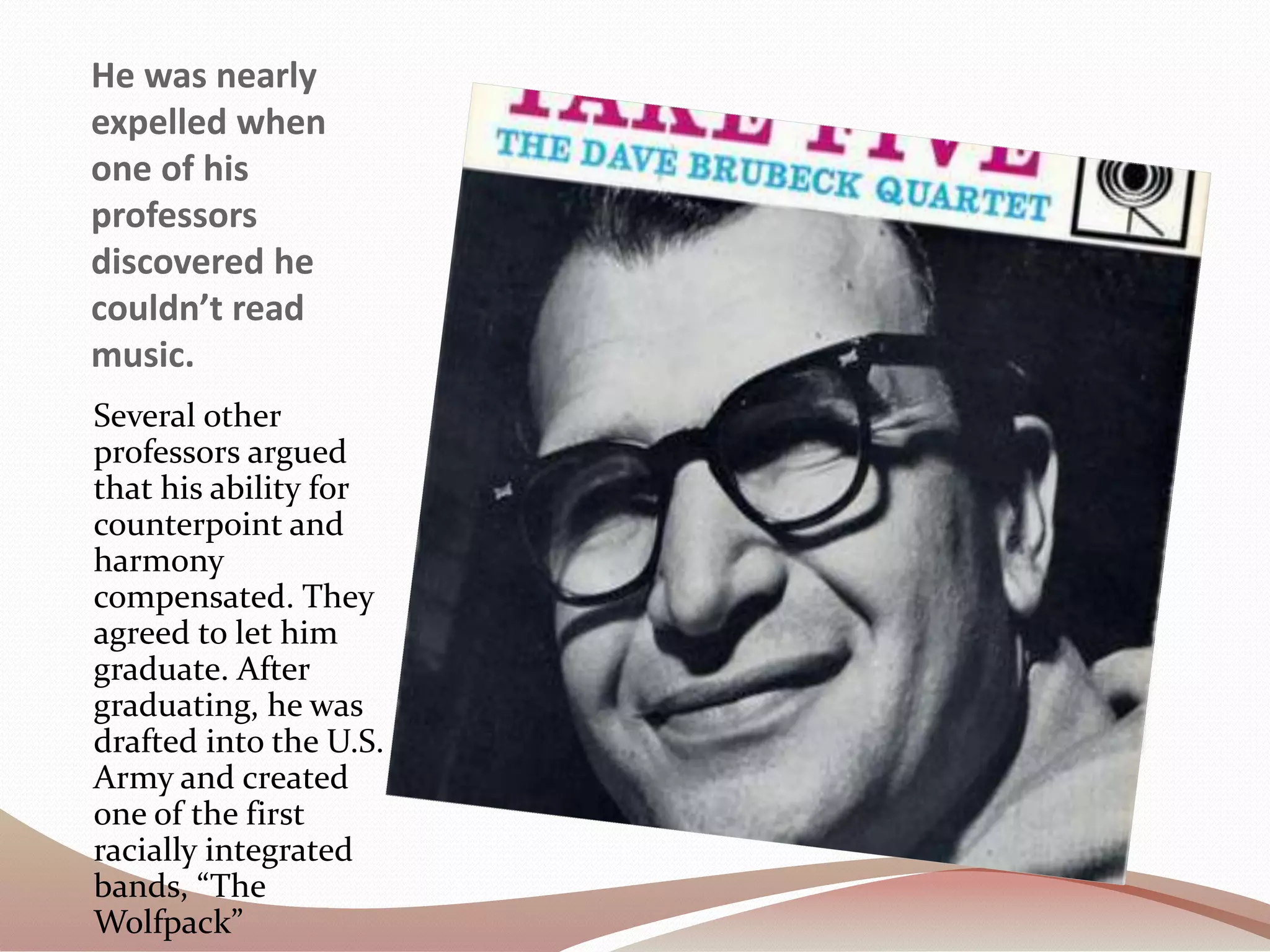
 Composed by Paul Desmond,
the Dave Brubeck Quarter
performed this on the 1959
album “Time Out”. Two years
later it became an unlikely one
hit wonder and the best-selling
jazz single of all time. Written
in the key of Eb minor it is
famous for it’s distinctive two
chord piano vamp, catchy blues-
scale saxophone melody,
imaginative drum solo and use
of the unusual quintuple (5/4)
time from which its name is
derived
 While Take Five was not
the first jazz composition
to use quintuple meter, it
was one of the first that did
and achieved mainstream
significance in the U.S. It
was re-recorded and
performed live multiple
times by the Dave Brubeck
quarter through their
career. It’s been included
in numerous movies and
television soundtracks.
Blue
Rondo
Ala Turk
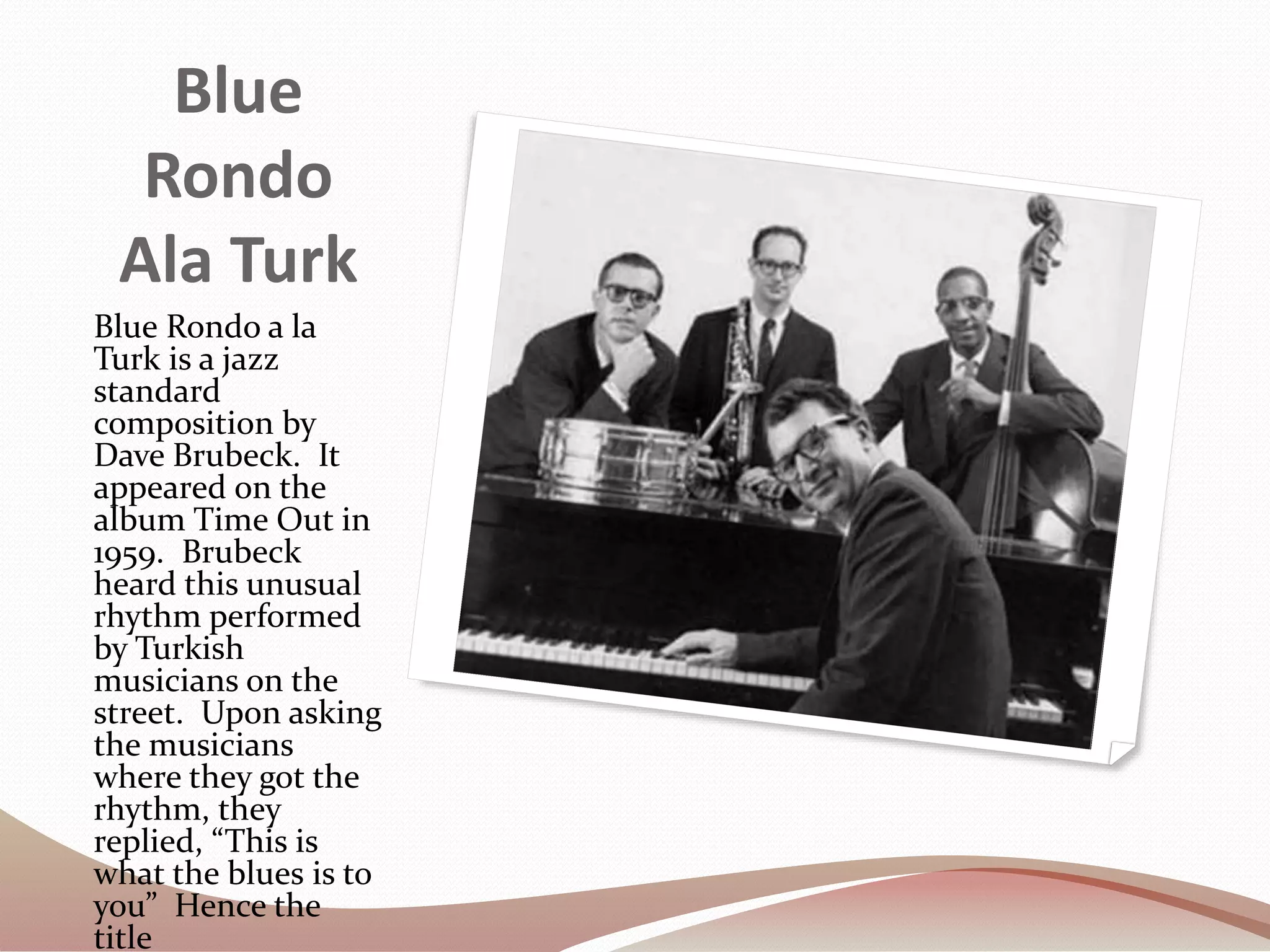
Blue Rondo a la
Turk is a jazz
standard
composition by
Dave Brubeck. It
appeared on the
album Time Out in
1959. Brubeck
heard this unusual
rhythm performed
by Turkish
musicians on the
street. Upon asking
the musicians
where they got the
rhythm, they
replied, “This is
what the blues is to
you” Hence the
title
Meter, rhythm in Blue
Rondo
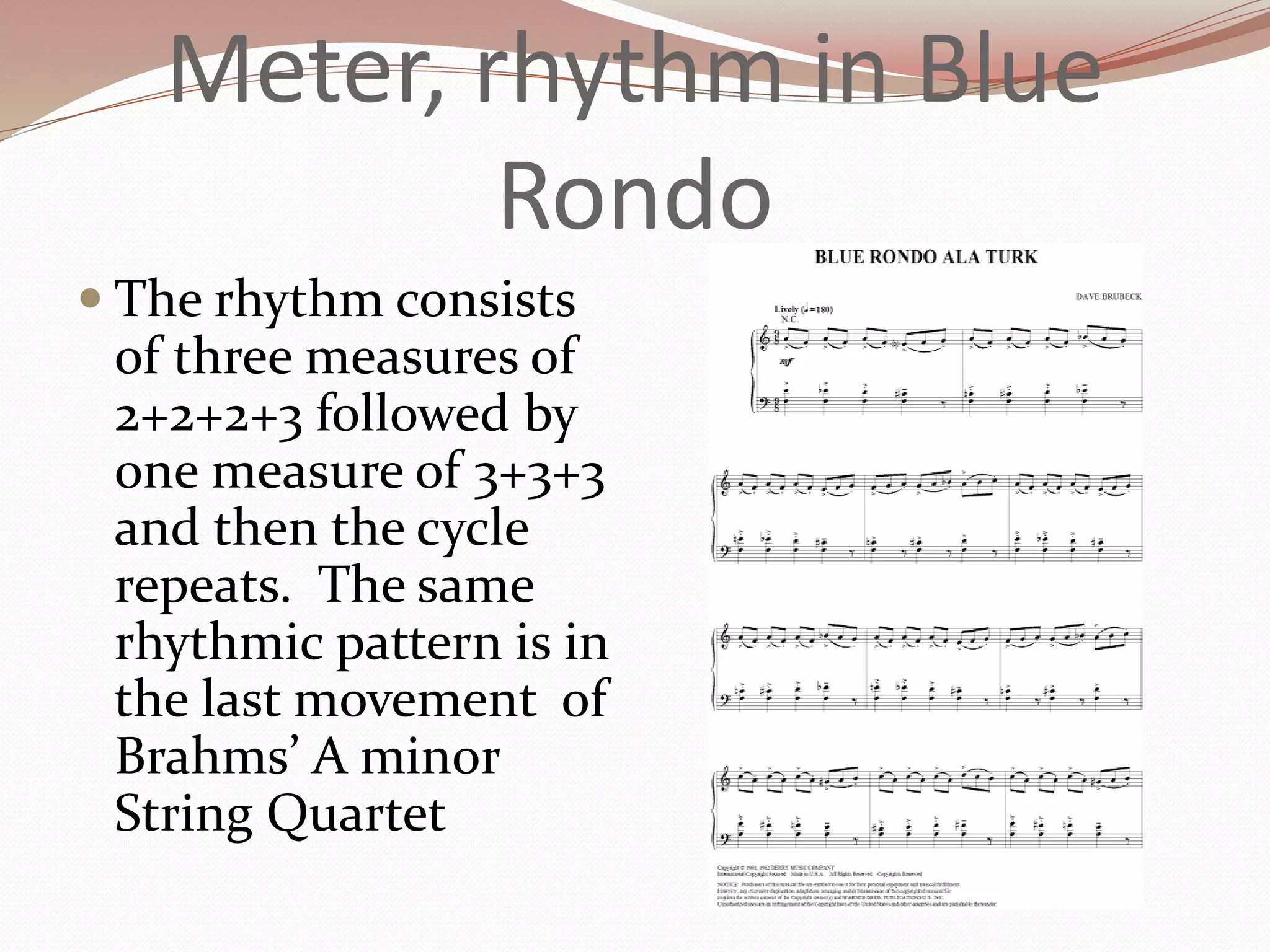
 The rhythm consists
of three measures of
2+2+2+3 followed by
one measure of 3+3+3
and then the cycle
repeats. The same
rhythmic pattern is in
the last movement of
Brahms’ A minor
String Quartet
Wynton
Marsalis
Wynton Marsalis
was born in 1961.
He’s been
awarded 9
grammys in both
classical and jazz
genres and a jazz
recording of his
was the first to
win the Pullitzer
Prize for Music
Education
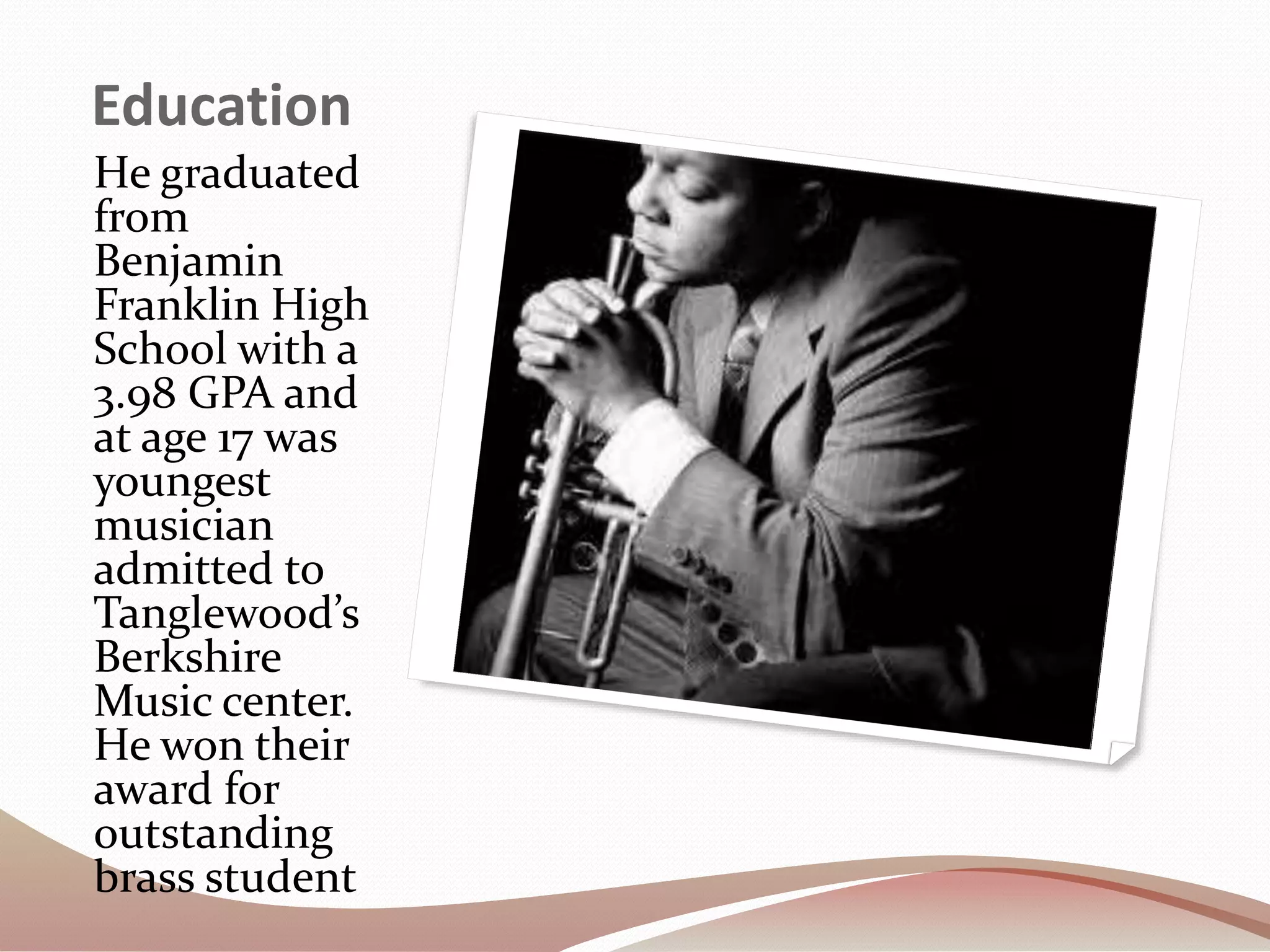
He graduated
from
Benjamin
Franklin High
School with a
3.98 GPA and
at age 17 was
youngest
musician
admitted to
Tanglewood’s
Berkshire
Music center.
He won their
award for
outstanding
brass student
 In 1979 he moved to NY
to attend Juilliard and
picked up gigs around
town.. He received a
grant from the National
Endowment of the Arts
to spend time and study
with trumpet innovator
Woody Shaw, one of his
major influences.
 In the years that followed
he performed with Sarah
Vaughan, Dizzy
Gillespie, Sweets Edison,
Clark Terry, Ron Carter,
Herbie Hancock, and
countless other jazz
musicians.

Jazz powerpoint 2

  • 2.
    Dave Brubeck Dave Brubeck was bornin 1920. He was considered to be one of the foremost exponents of cool jazz. He wrote a number of jazz standards. His music is known for its unusual time signatures.
  • 3.
    College and Professional Career Brubeck attended theCollege of the Pacific which is now known as The University of The Pacific. He was studying veterinary science but changed to music on the urging of one of his professors.
  • 4.
    He was nearly expelledwhen one of his professors discovered he couldn’t read music. Several other professors argued that his ability for counterpoint and harmony compensated. They agreed to let him graduate. After graduating, he was drafted into the U.S. Army and created one of the first racially integrated bands, “The Wolfpack”
  • 5.
    Take Five  Composedby Paul Desmond, the Dave Brubeck Quarter performed this on the 1959 album “Time Out”. Two years later it became an unlikely one hit wonder and the best-selling jazz single of all time. Written in the key of Eb minor it is famous for it’s distinctive two chord piano vamp, catchy blues- scale saxophone melody, imaginative drum solo and use of the unusual quintuple (5/4) time from which its name is derived  While Take Five was not the first jazz composition to use quintuple meter, it was one of the first that did and achieved mainstream significance in the U.S. It was re-recorded and performed live multiple times by the Dave Brubeck quarter through their career. It’s been included in numerous movies and television soundtracks.
  • 6.
    Blue Rondo Ala Turk Blue Rondoa la Turk is a jazz standard composition by Dave Brubeck. It appeared on the album Time Out in 1959. Brubeck heard this unusual rhythm performed by Turkish musicians on the street. Upon asking the musicians where they got the rhythm, they replied, “This is what the blues is to you” Hence the title
  • 7.
    Meter, rhythm inBlue Rondo  The rhythm consists of three measures of 2+2+2+3 followed by one measure of 3+3+3 and then the cycle repeats. The same rhythmic pattern is in the last movement of Brahms’ A minor String Quartet
  • 8.
    Wynton Marsalis Wynton Marsalis was bornin 1961. He’s been awarded 9 grammys in both classical and jazz genres and a jazz recording of his was the first to win the Pullitzer Prize for Music
  • 9.
    Education He graduated from Benjamin Franklin High Schoolwith a 3.98 GPA and at age 17 was youngest musician admitted to Tanglewood’s Berkshire Music center. He won their award for outstanding brass student
  • 10.
     In 1979he moved to NY to attend Juilliard and picked up gigs around town.. He received a grant from the National Endowment of the Arts to spend time and study with trumpet innovator Woody Shaw, one of his major influences.  In the years that followed he performed with Sarah Vaughan, Dizzy Gillespie, Sweets Edison, Clark Terry, Ron Carter, Herbie Hancock, and countless other jazz musicians.