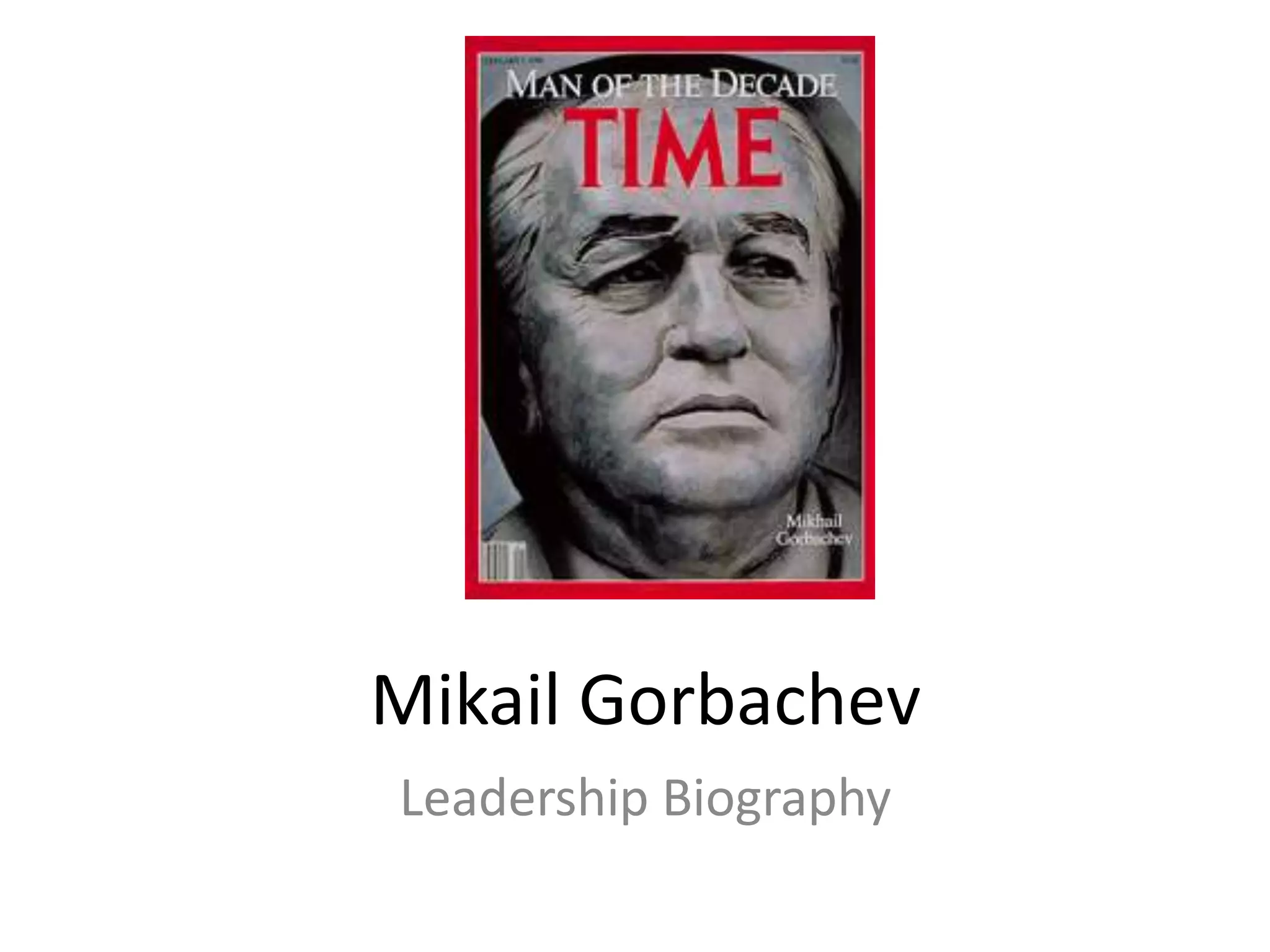
Mikail Gorbachev
Leadership Biography
Major accomplishments
• Reform of the Soviet agricultural economy
   – improved worker conditions
• Reform of the Soviet political
   – openness and transparency
• Achieved significant nuclear disarmament
   – ended the Cold War
• Democratic and private ownership model in Russia
• Dismantled the soviet block
   – independence in Warsaw pact states
• Has founded four global not for profit foundations
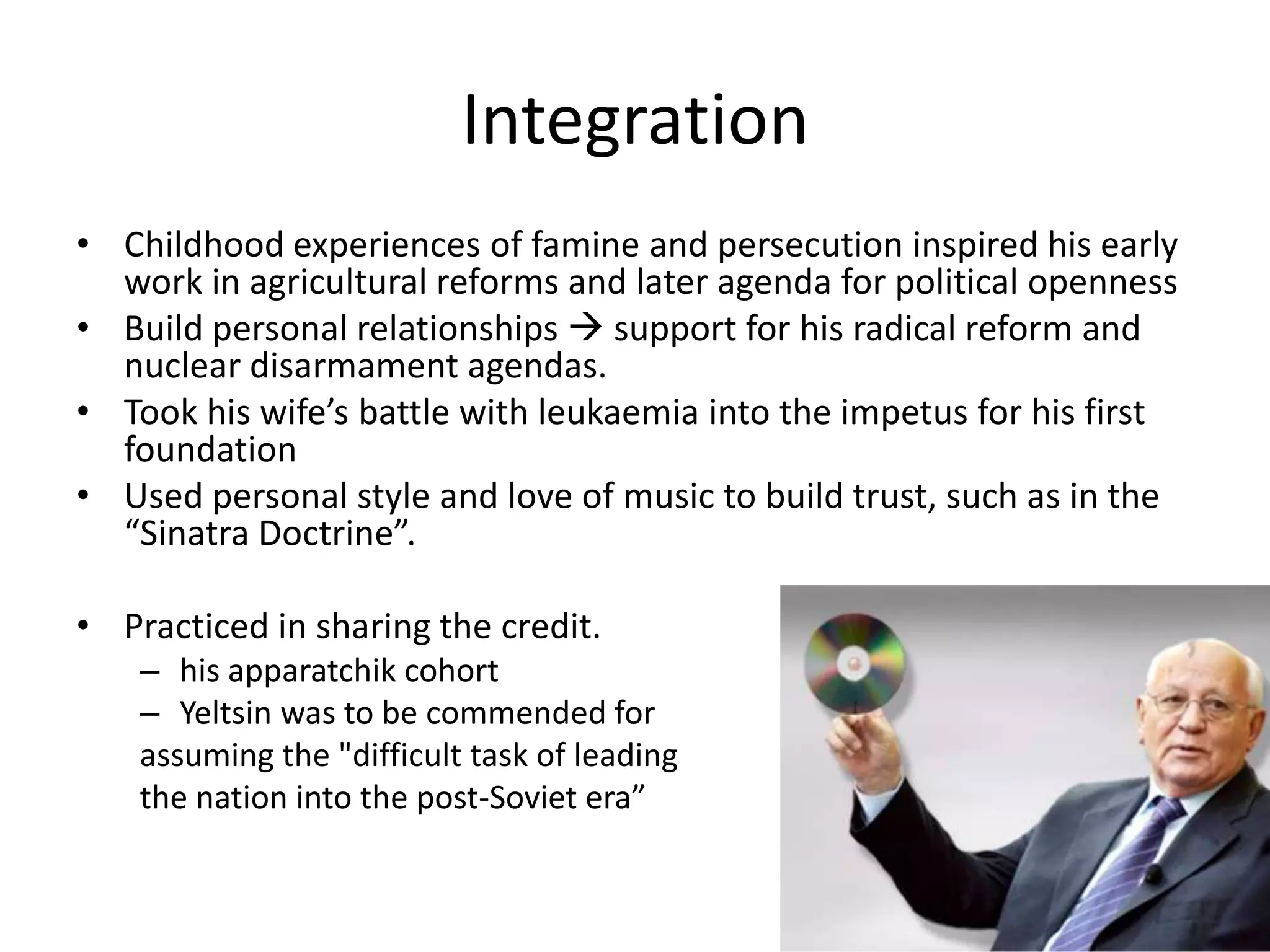
• Recorded a surprisingly good album of love songs
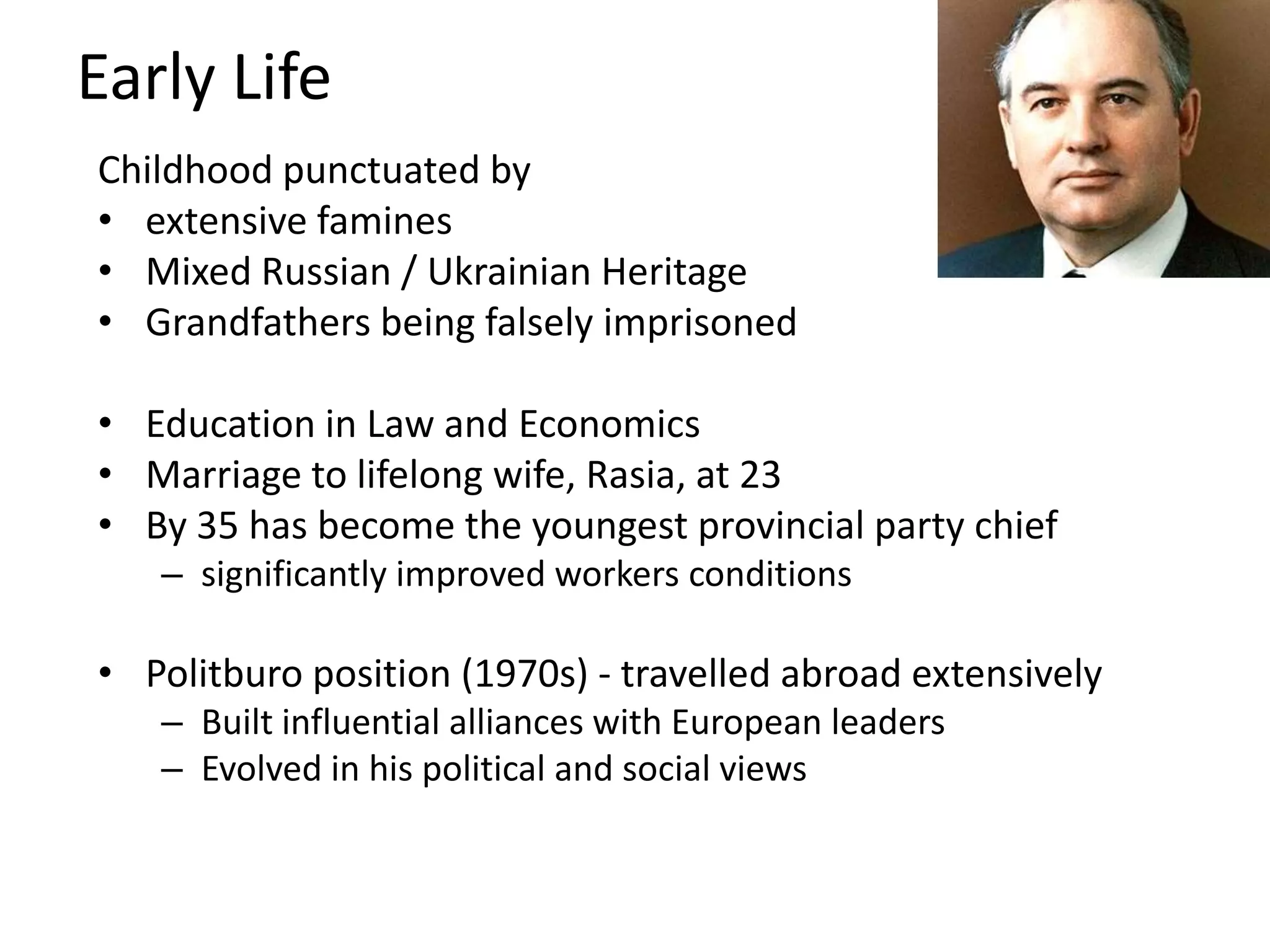
Early Life
Childhood punctuated by
• extensive famines
• Mixed Russian / Ukrainian Heritage
• Grandfathers being falsely imprisoned

• Education in Law and Economics
• Marriage to lifelong wife, Rasia, at 23
• By 35 has become the youngest provincial party chief
   – significantly improved workers conditions

• Politburo position (1970s) - travelled abroad extensively
   – Built influential alliances with European leaders
   – Evolved in his political and social views
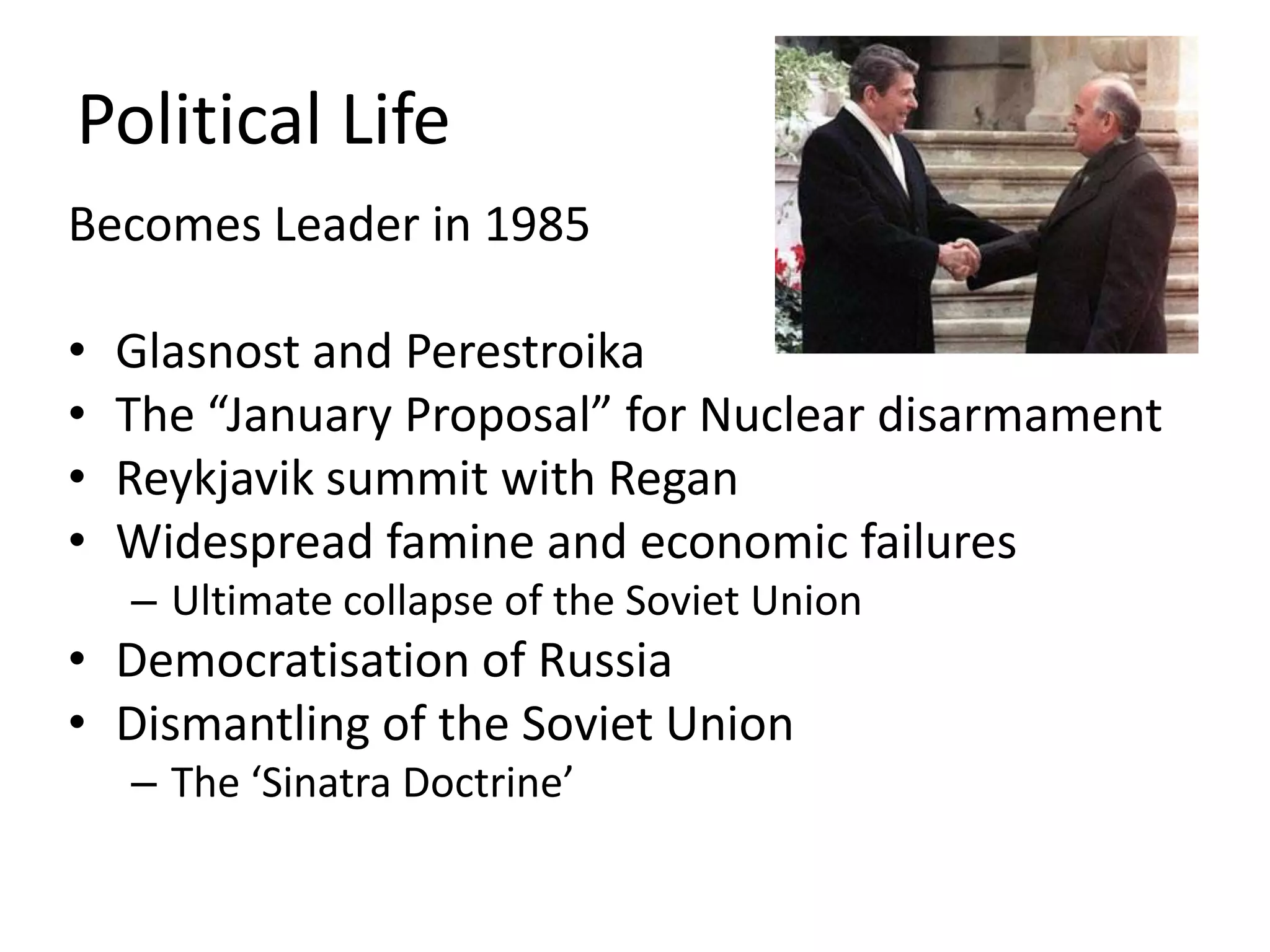
Political Life
Becomes Leader in 1985

•   Glasnost and Perestroika
•   The “January Proposal” for Nuclear disarmament
•   Reykjavik summit with Regan
•   Widespread famine and economic failures
    – Ultimate collapse of the Soviet Union
• Democratisation of Russia
• Dismantling of the Soviet Union
    – The ‘Sinatra Doctrine’
After Politics
• Raisa his wife of 45 years dies from Leukemia.
  – RaisaFund – Leukemia Cancer Foundation
  – Songs for Raisa, an album dedicated to his late
    wife.
• Gorbachev foundation for Political research
• Green Cross International, a sustainability and
  environmental foundation
• Earth Charter a foundation to promote human
  rights.
Integration
• Childhood experiences of famine and persecution inspired his early
  work in agricultural reforms and later agenda for political openness
• Build personal relationships  support for his radical reform and
  nuclear disarmament agendas.
• Took his wife’s battle with leukaemia into the impetus for his first
  foundation
• Used personal style and love of music to build trust, such as in the
  “Sinatra Doctrine”.

• Practiced in sharing the credit.
    – his apparatchik cohort
    – Yeltsin was to be commended for
    assuming the "difficult task of leading
    the nation into the post-Soviet era”
Leadership Lessons
• Constantly try new things, and evolve your
  ideas when experiments fail
• Draw from your personal experiences to build
  a consensus around your vision
• Build a network of allies, even among those
  with different agendas
• That throughout the phases of your life a
  consistent vision can manifest in different
  activities

Mikhail Gorbachev by Anthony Noble

  • 1.
  • 2.
    Major accomplishments • Reformof the Soviet agricultural economy – improved worker conditions • Reform of the Soviet political – openness and transparency • Achieved significant nuclear disarmament – ended the Cold War • Democratic and private ownership model in Russia • Dismantled the soviet block – independence in Warsaw pact states • Has founded four global not for profit foundations • Recorded a surprisingly good album of love songs
  • 3.
    Early Life Childhood punctuatedby • extensive famines • Mixed Russian / Ukrainian Heritage • Grandfathers being falsely imprisoned • Education in Law and Economics • Marriage to lifelong wife, Rasia, at 23 • By 35 has become the youngest provincial party chief – significantly improved workers conditions • Politburo position (1970s) - travelled abroad extensively – Built influential alliances with European leaders – Evolved in his political and social views
  • 4.
    Political Life Becomes Leaderin 1985 • Glasnost and Perestroika • The “January Proposal” for Nuclear disarmament • Reykjavik summit with Regan • Widespread famine and economic failures – Ultimate collapse of the Soviet Union • Democratisation of Russia • Dismantling of the Soviet Union – The ‘Sinatra Doctrine’
  • 5.
    After Politics • Raisahis wife of 45 years dies from Leukemia. – RaisaFund – Leukemia Cancer Foundation – Songs for Raisa, an album dedicated to his late wife. • Gorbachev foundation for Political research • Green Cross International, a sustainability and environmental foundation • Earth Charter a foundation to promote human rights.
  • 6.
    Integration • Childhood experiencesof famine and persecution inspired his early work in agricultural reforms and later agenda for political openness • Build personal relationships  support for his radical reform and nuclear disarmament agendas. • Took his wife’s battle with leukaemia into the impetus for his first foundation • Used personal style and love of music to build trust, such as in the “Sinatra Doctrine”. • Practiced in sharing the credit. – his apparatchik cohort – Yeltsin was to be commended for assuming the "difficult task of leading the nation into the post-Soviet era”
  • 7.
    Leadership Lessons • Constantlytry new things, and evolve your ideas when experiments fail • Draw from your personal experiences to build a consensus around your vision • Build a network of allies, even among those with different agendas • That throughout the phases of your life a consistent vision can manifest in different activities