Muhammad Ali
(1942-2016)
Elizabeth Tang
MGMT 671
April 11, 2017
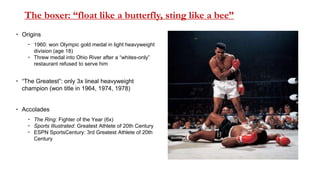
The boxer: “float like a butterfly, sting like a bee”
 Origins
 1960: won Olympic gold medal in light heavyweight
division (age 18)
 Threw medal into Ohio River after a “whites-only”
restaurant refused to serve him
 “The Greatest”: only 3x lineal heavyweight
champion (won title in 1964, 1974, 1978)
 Accolades
 The Ring: Fighter of the Year (6x)
 Sports Illustrated: Greatest Athlete of 20th Century
 ESPN SportsCentury: 3rd Greatest Athlete of 20th
Century
The Civil Rights activist: “I am America”
 Born Cassius Clay
 1964: joined Elijah Muhammad’s Nation of Islam
(separatist group)
 Converted to Islam + replaced his "slave name“ with
“Cassius X” + later “Muhammad Ali”
 Later: followed teachings of the late Malcolm X
 X had left NOI after criticizing [Elijah] Muhammad’s
religious and sexual failings
 Ali later disavowed NOI + supported X’s vision of racial
integration
 Integrated religious and political beliefs into his
professional persona
"I am America. I am the part you won't recognize. But get
used to me. Black, confident, cocky; my name, not yours;
my religion, not yours; my goals, my own; get used to me."
The conscientious objector: “no Viet Cong never called me n****r”
 1966: refused to join draft for Vietnam War (2 years after
winning heavyweight title)
 Courage: willingly gave up 4 years of success, fame,
and wealth at his athletic peak to stand up for his beliefs
 Arrested + found guilty of draft evasion charges
 Penalty: 5 years prison (not served), $10k fine, stripped of
boxing title, denied boxing license in every state
 Appeal: Supreme Court unanimously overturned his conviction
in 1971
 Punishment for not being obedient: “Overnight he became a n--
--r again” (one of his managers)
“I ain't got nothing against no Viet Cong; no Viet Cong never called me
n****r. . . . My enemy is the white people, not Viet Cong or Chinese or
Japanese. . . . You won't even stand up for me in America for my
religious beliefs — and you want me to go somewhere and fight, but
you won't even stand up for me here at home?”
The global icon: “Part of Muhammad's greatness was his ability to be
different things to different people”
 Other activism during + after boxing career
 Supported rights of Palestinian refugees, Native Americans,
Sudanese famine victims
 Opposed Soviet invasion of Afghanistan
 Negotiated successfully with Saddam Hussein for release of
American hostages
 Inspired a generation of counterculture activism,
especially among athletes
 When Billie Jean King fought for gender equality in sports, he told her:
“Billie Jean King! YOU ARE THE QUEEN!”
 When Martin Luther King, Jr., was criticized for anti-war activism, he said:
“Like Muhammad Ali puts it, we are all—black and brown and poor—
victims of the same system of oppression.”
 When Nelson Mandela was imprisoned on Robben Island, he said Ali
gave him hope
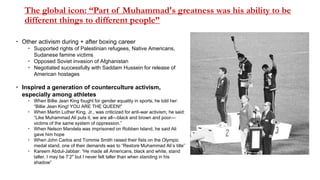
 When John Carlos and Tommie Smith raised their fists on the Olympic
medal stand, one of their demands was to “Restore Muhammad Ali’s title”
 Kareem Abdul-Jabbar: “He made all Americans, black and white, stand
taller. I may be 7’2" but I never felt taller than when standing in his
shadow”
The artist inside + outside the ring
 Integrated his love of art into his boxing career + non-
boxing career
 Freestyled with rhyme schemes + spoken word
 Including freestyling when trashtalking his opponents
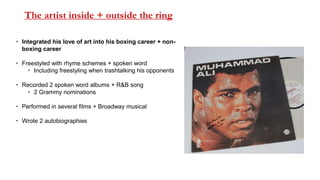
 Recorded 2 spoken word albums + R&B song
 2 Grammy nominations
 Performed in several films + Broadway musical
 Wrote 2 autobiographies
Failures
 Academics: ranked 376 / 391 in high school
 Arrogance + trashtalking
 "I am the greatest! I shook up the world. I'm the prettiest thing
that ever lived.”
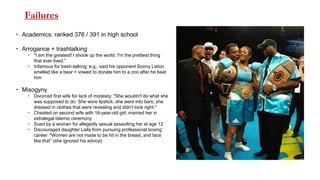
 Infamous for trash-talking: e.g., said his opponent Sonny Liston
smelled like a bear + vowed to donate him to a zoo after he beat
him
 Misogyny
 Divorced first wife for lack of modesty: "She wouldn't do what she
was supposed to do. She wore lipstick; she went into bars; she
dressed in clothes that were revealing and didn't look right."
 Cheated on second wife with 16-year-old girl; married her in
extralegal Islamic ceremony
 Sued by a woman for allegedly sexual assaulting her at age 12
 Discouraged daughter Laila from pursuing professional boxing
career: "Women are not made to be hit in the breast, and face
like that” (she ignored his advice)
Takeaways
 From his successes
 Be flexible: “float like a butterfly, sting like a bee”
 True courage = willingly giving up what is valuable to you for what is right
 Always ask questions. Use empathy to identify injustices that do not affect you personally
 A single act of courage can help spark a movement
 There are many ways to integrate your love of art into your professional career and personal
 From his failures
 Be humble
 Be kind to your opponents
 Make sure your public ethics and private ethics are aligned. Make sure you have moral
consistency in your conduct and values.

Muhammad Ali by Elizabeth Tang

  • 1.
  • 2.
    The boxer: “floatlike a butterfly, sting like a bee”  Origins  1960: won Olympic gold medal in light heavyweight division (age 18)  Threw medal into Ohio River after a “whites-only” restaurant refused to serve him  “The Greatest”: only 3x lineal heavyweight champion (won title in 1964, 1974, 1978)  Accolades  The Ring: Fighter of the Year (6x)  Sports Illustrated: Greatest Athlete of 20th Century  ESPN SportsCentury: 3rd Greatest Athlete of 20th Century
  • 3.
    The Civil Rightsactivist: “I am America”  Born Cassius Clay  1964: joined Elijah Muhammad’s Nation of Islam (separatist group)  Converted to Islam + replaced his "slave name“ with “Cassius X” + later “Muhammad Ali”  Later: followed teachings of the late Malcolm X  X had left NOI after criticizing [Elijah] Muhammad’s religious and sexual failings  Ali later disavowed NOI + supported X’s vision of racial integration  Integrated religious and political beliefs into his professional persona "I am America. I am the part you won't recognize. But get used to me. Black, confident, cocky; my name, not yours; my religion, not yours; my goals, my own; get used to me."
  • 4.
    The conscientious objector:“no Viet Cong never called me n****r”  1966: refused to join draft for Vietnam War (2 years after winning heavyweight title)  Courage: willingly gave up 4 years of success, fame, and wealth at his athletic peak to stand up for his beliefs  Arrested + found guilty of draft evasion charges  Penalty: 5 years prison (not served), $10k fine, stripped of boxing title, denied boxing license in every state  Appeal: Supreme Court unanimously overturned his conviction in 1971  Punishment for not being obedient: “Overnight he became a n-- --r again” (one of his managers) “I ain't got nothing against no Viet Cong; no Viet Cong never called me n****r. . . . My enemy is the white people, not Viet Cong or Chinese or Japanese. . . . You won't even stand up for me in America for my religious beliefs — and you want me to go somewhere and fight, but you won't even stand up for me here at home?”
  • 5.
    The global icon:“Part of Muhammad's greatness was his ability to be different things to different people”  Other activism during + after boxing career  Supported rights of Palestinian refugees, Native Americans, Sudanese famine victims  Opposed Soviet invasion of Afghanistan  Negotiated successfully with Saddam Hussein for release of American hostages  Inspired a generation of counterculture activism, especially among athletes  When Billie Jean King fought for gender equality in sports, he told her: “Billie Jean King! YOU ARE THE QUEEN!”  When Martin Luther King, Jr., was criticized for anti-war activism, he said: “Like Muhammad Ali puts it, we are all—black and brown and poor— victims of the same system of oppression.”  When Nelson Mandela was imprisoned on Robben Island, he said Ali gave him hope  When John Carlos and Tommie Smith raised their fists on the Olympic medal stand, one of their demands was to “Restore Muhammad Ali’s title”  Kareem Abdul-Jabbar: “He made all Americans, black and white, stand taller. I may be 7’2" but I never felt taller than when standing in his shadow”
  • 6.
    The artist inside+ outside the ring  Integrated his love of art into his boxing career + non- boxing career  Freestyled with rhyme schemes + spoken word  Including freestyling when trashtalking his opponents  Recorded 2 spoken word albums + R&B song  2 Grammy nominations  Performed in several films + Broadway musical  Wrote 2 autobiographies
  • 7.
    Failures  Academics: ranked376 / 391 in high school  Arrogance + trashtalking  "I am the greatest! I shook up the world. I'm the prettiest thing that ever lived.”  Infamous for trash-talking: e.g., said his opponent Sonny Liston smelled like a bear + vowed to donate him to a zoo after he beat him  Misogyny  Divorced first wife for lack of modesty: "She wouldn't do what she was supposed to do. She wore lipstick; she went into bars; she dressed in clothes that were revealing and didn't look right."  Cheated on second wife with 16-year-old girl; married her in extralegal Islamic ceremony  Sued by a woman for allegedly sexual assaulting her at age 12  Discouraged daughter Laila from pursuing professional boxing career: "Women are not made to be hit in the breast, and face like that” (she ignored his advice)
  • 8.
    Takeaways  From hissuccesses  Be flexible: “float like a butterfly, sting like a bee”  True courage = willingly giving up what is valuable to you for what is right  Always ask questions. Use empathy to identify injustices that do not affect you personally  A single act of courage can help spark a movement  There are many ways to integrate your love of art into your professional career and personal  From his failures  Be humble  Be kind to your opponents  Make sure your public ethics and private ethics are aligned. Make sure you have moral consistency in your conduct and values.