Connecting with Patients to Prepare for Care: The Partners HealthCare Patient Gateway  Blackford Middleton, MD, MPH, MSc Chairman, Center for IT Leadership Corporate Director, Clinical Informatics R&D Partners HealthCare System, Inc. Harvard Medical School The Many Faces of Person-Centric Electronic Health Systems
Overview The HealthCare Crisis The Provider’s Dilemma The Purchaser’s Dilemma The Consumer’s Dilemma What is the Personal Health Record? A Snapshot of the Current State Harvard-Kaiser PHR Survey 2005 Future Directions  Partners HealthCare Patient Gateway
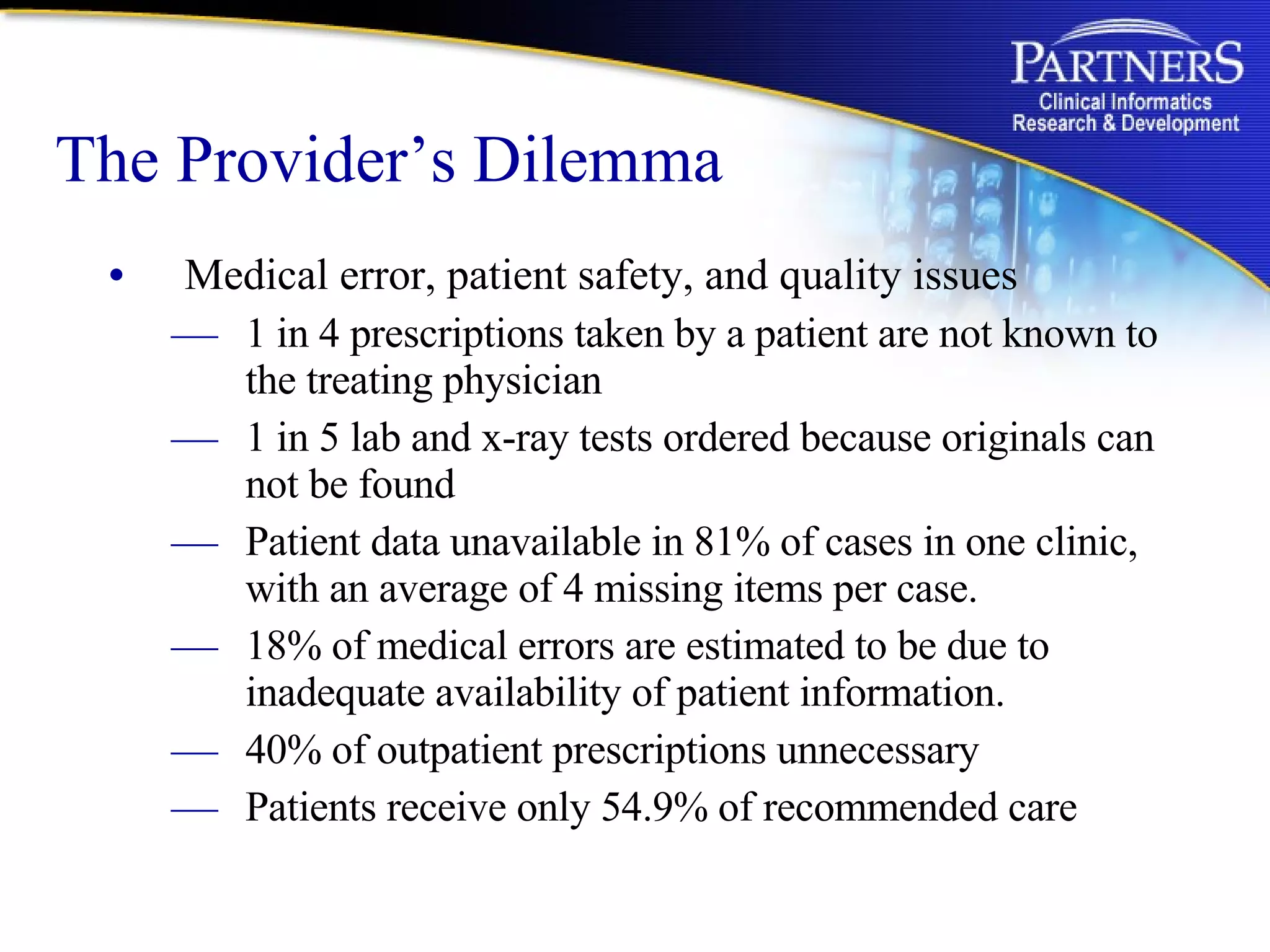
The Provider’s Dilemma Medical error, patient safety, and quality issues  1 in 4 prescriptions taken by a patient are not known to the treating physician 1 in 5 lab and x-ray tests ordered because originals can not be found Patient data unavailable in 81% of cases in one clinic, with an average of 4 missing items per case.  18% of medical errors are estimated to be due to inadequate availability of patient information. 40% of outpatient prescriptions unnecessary  Patients receive only 54.9% of recommended care
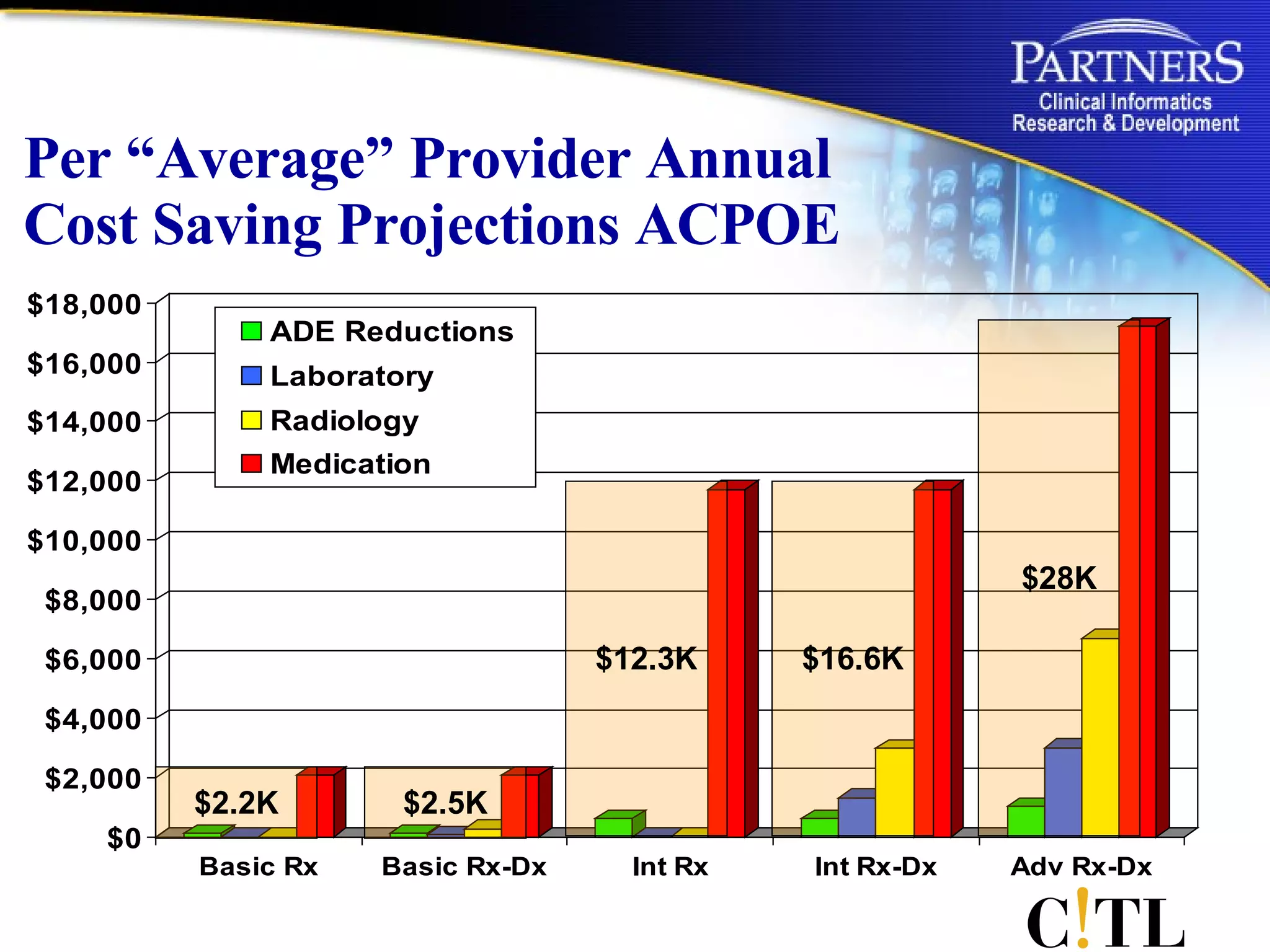
Per “Average” Provider Annual  Cost Saving Projections ACPOE $28K $16.6K $12.3K $2.5K $2.2K
US Healthcare System Will Benefit National adoption of Advanced ACPOE systems would prevent… 2 million ADE/yr 190,000 ADE admission/yr 130,000 life-threatening ADE/yr Nationwide implementation of advanced ACPOE could:  Save the US $44 billion annually
Value of Healthcare Information Exchange and Interoperability Provider-centric encounter-based model of clinical information exchange Provider Public  Health Laboratory Pharmacy Payer Radiology Other  Provider Clinical and administrative transactions and data exchange Between providers and other providers Between providers and labs, pharmacies, payers, radiology centers, and public health departments Secondary (out of scope)
US Would Benefit from Healthcare Information Exchange Nationwide implementation of standardized healthcare information exchange would:  Save $337B over 10 years Save the US $78B annually at steady state Cumulative breakeven during year five of implementation  There is a  business case  for standardized healthcare information exchange and interoperability
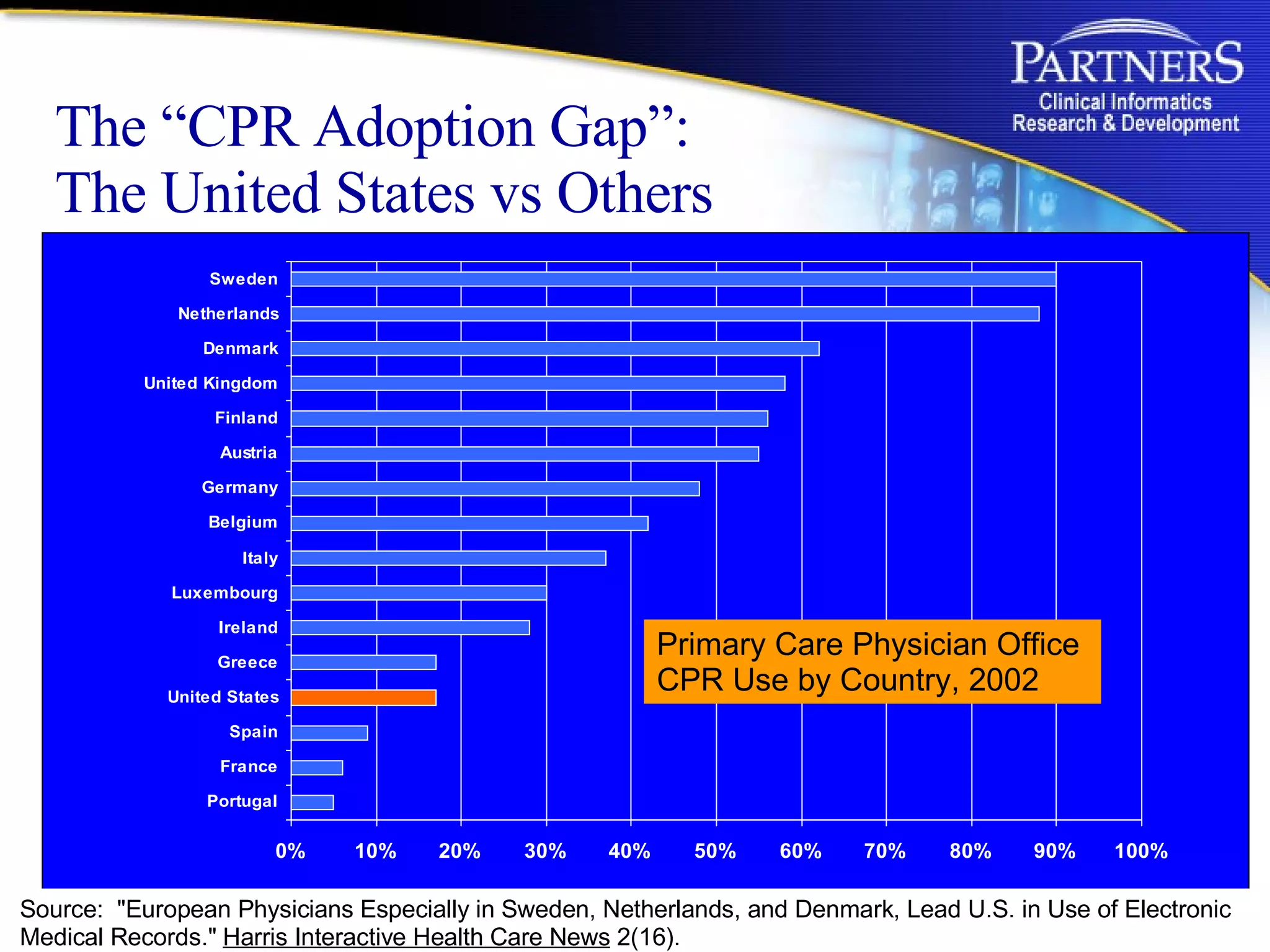
The “CPR Adoption Gap”: The United States vs Others Primary Care Physician Office  CPR Use by Country, 2002 Source:  "European Physicians Especially in Sweden, Netherlands, and Denmark, Lead U.S. in Use of Electronic  Medical Records."  Harris Interactive Health Care News  2(16).
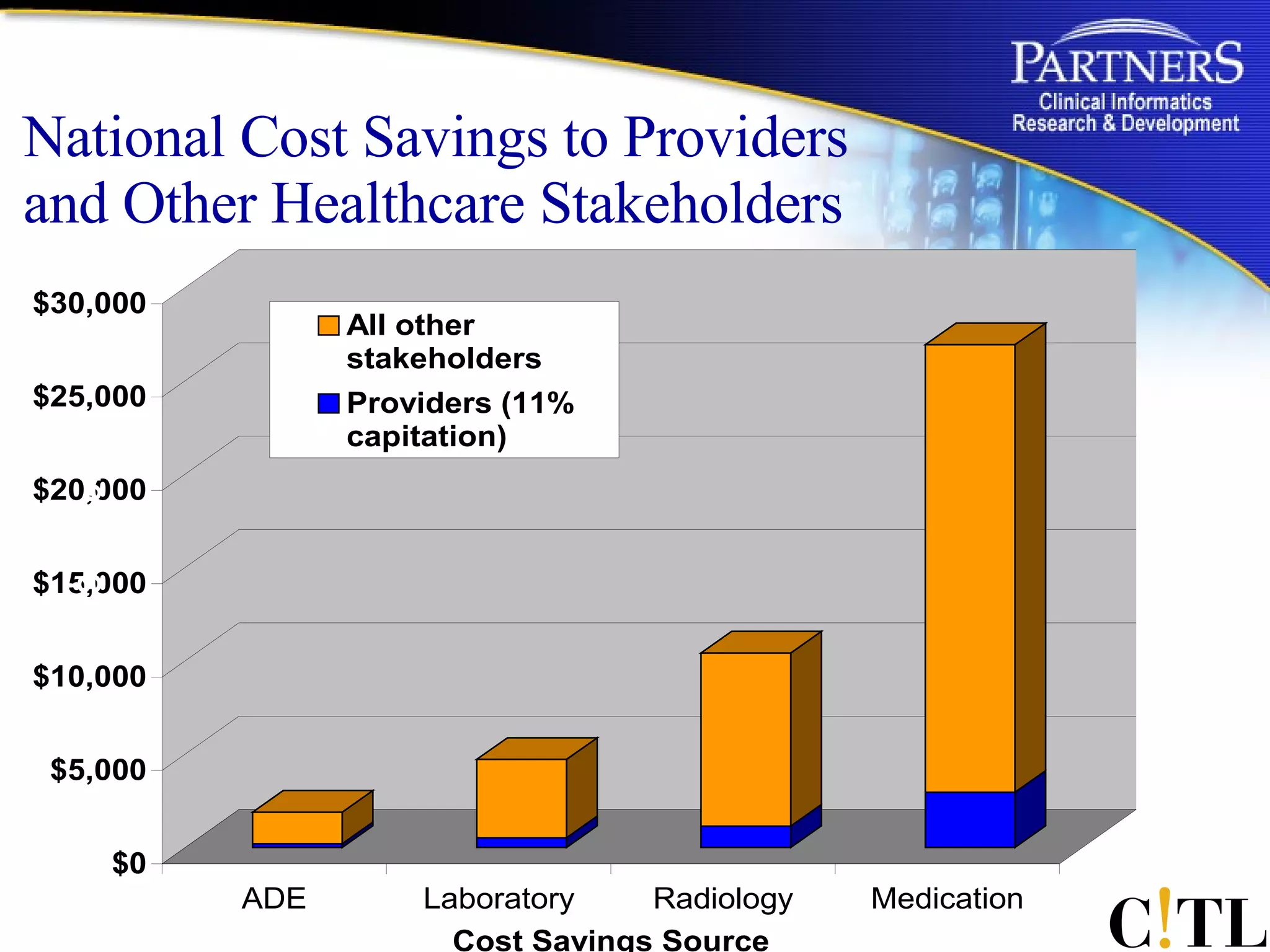
National Cost Savings to Providers  and Other Healthcare Stakeholders In US Millions
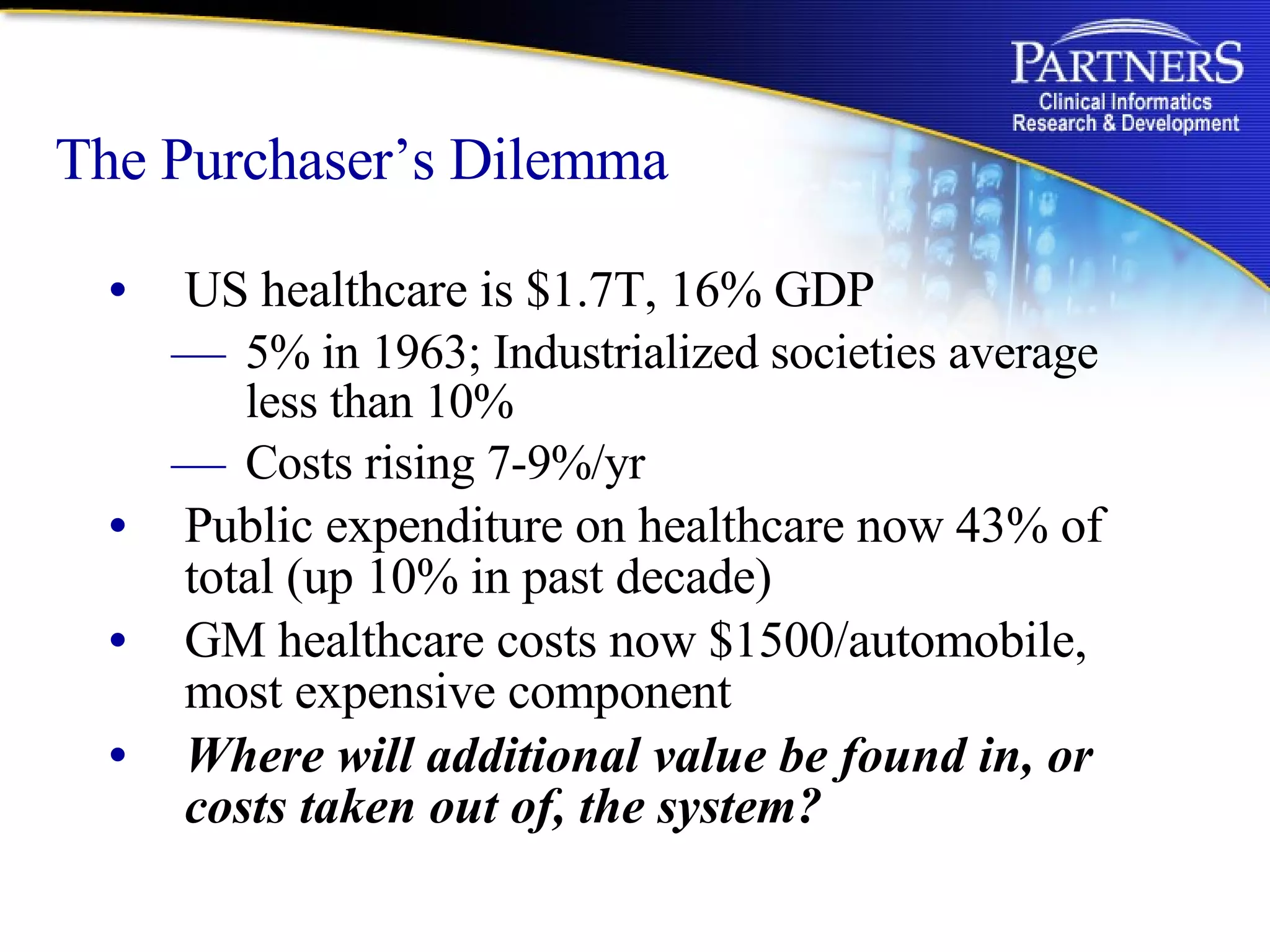
The Purchaser’s Dilemma US healthcare is $1.7T, 16% GDP  5% in 1963; Industrialized societies average less than 10% Costs rising 7-9%/yr  Public expenditure on healthcare now 43% of total (up 10% in past decade) GM healthcare costs now $1500/automobile, most expensive component Where will additional value be found in, or costs taken out of, the system?
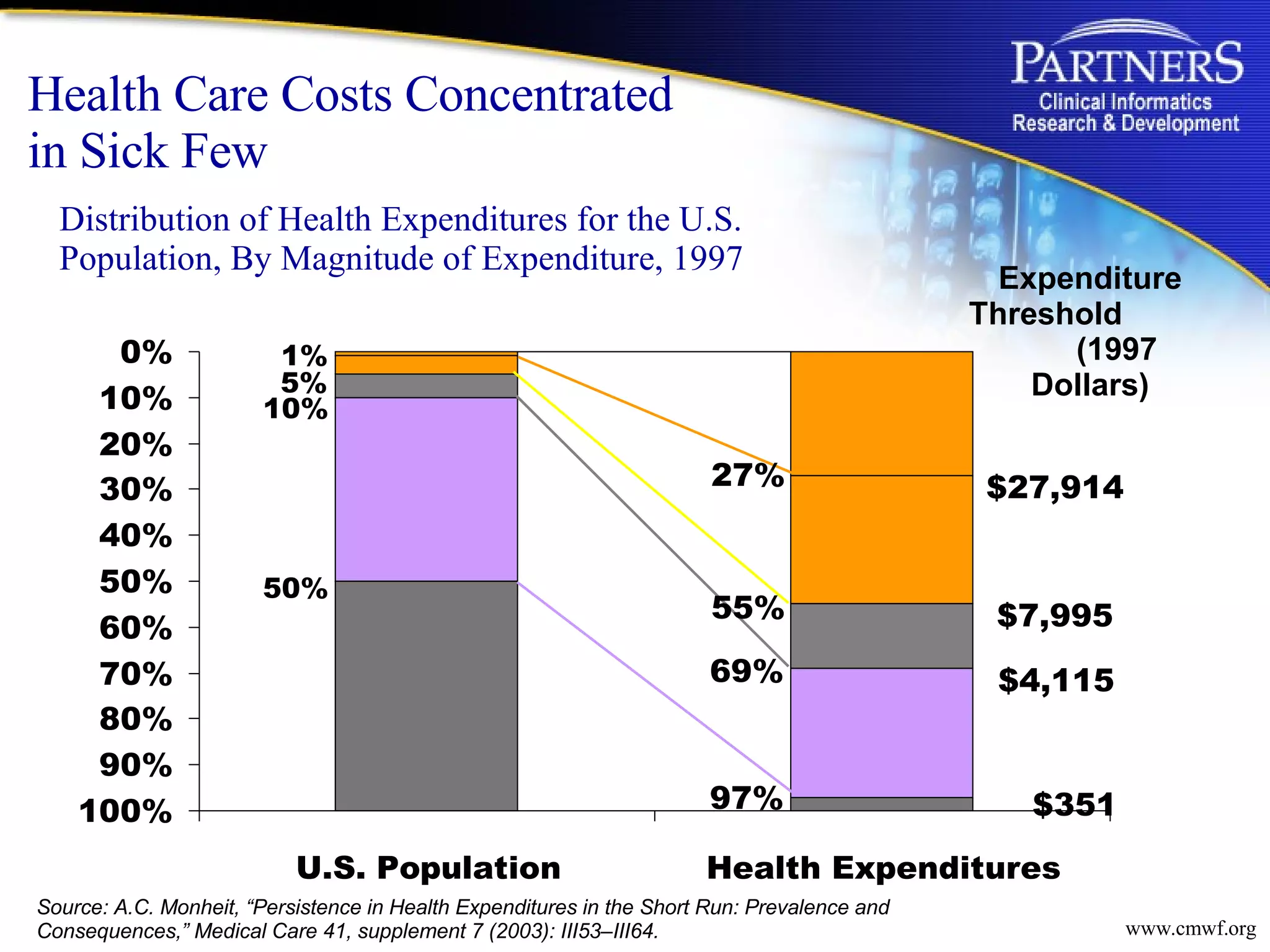
Health Care Costs Concentrated  in Sick Few Source: A.C. Monheit, “Persistence in Health Expenditures in the Short Run: Prevalence and Consequences,” Medical Care 41, supplement 7 (2003): III53–III64.   Distribution of Health Expenditures for the U.S. Population, By Magnitude of Expenditure, 1997 1% 5% 10% 55% 69% 27% 50% 97% $27,914 $7,995 $4,115 $351 Expenditure Threshold  (1997 Dollars) www.cmwf.org
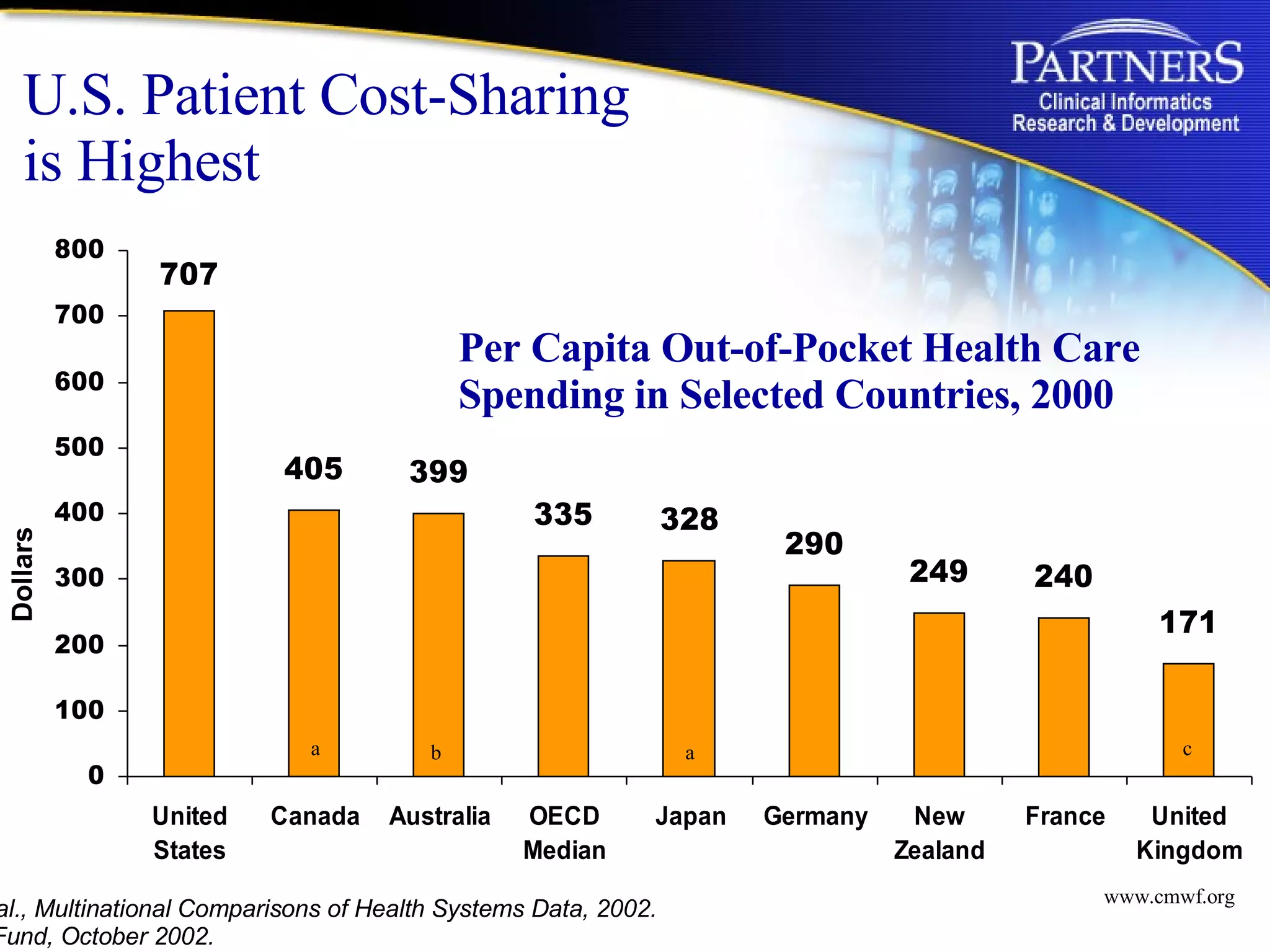
U.S. Patient Cost-Sharing  is Highest c b a a a  1999,  b  1998,  c  1996 Source: Anderson et al., Multinational Comparisons of Health Systems Data, 2002. The Commonwealth Fund, October 2002. Dollars Per Capita Out-of-Pocket Health Care  Spending in Selected Countries, 2000 www.cmwf.org
Cost Sharing Reduces Both  Appropriate and Inappropriate Hospital Admissions Percent reduction in number of hospital  admissions per 1000 person-years Source: A.L. Siu et al., “Inappropriate Use of Hospitals in a Randomized Trial of Health Insurance Plans,” New England Journal of Medicine 315, no. 20 (1986): 1259–1266.  *Based on Appropriateness Evaluation Protocol (AEP) instrument developed by Boston University researchers in consultation with Massachusetts physicians www.cmwf.org
The Consumer’s Dilemma Average American consumers $6240/yr of healthcare, or $12,200 for the ave. family 45M Americans lack Healthcare insurance 80M lack at some time during each year A fractured and ‘unwired’ healthcare system Medicare beneficiaries see 1.3 – 13.8 unique providers annually, On average 6.4 different providers/yr 90% of the >30B healthcare transactions in the US every year are conducted via mail, fax, or phone Increasing exposure to tiered pharmacy plans, consumer directed care Absent reliable quality data to make informed choices
Dilbert Wisdom…
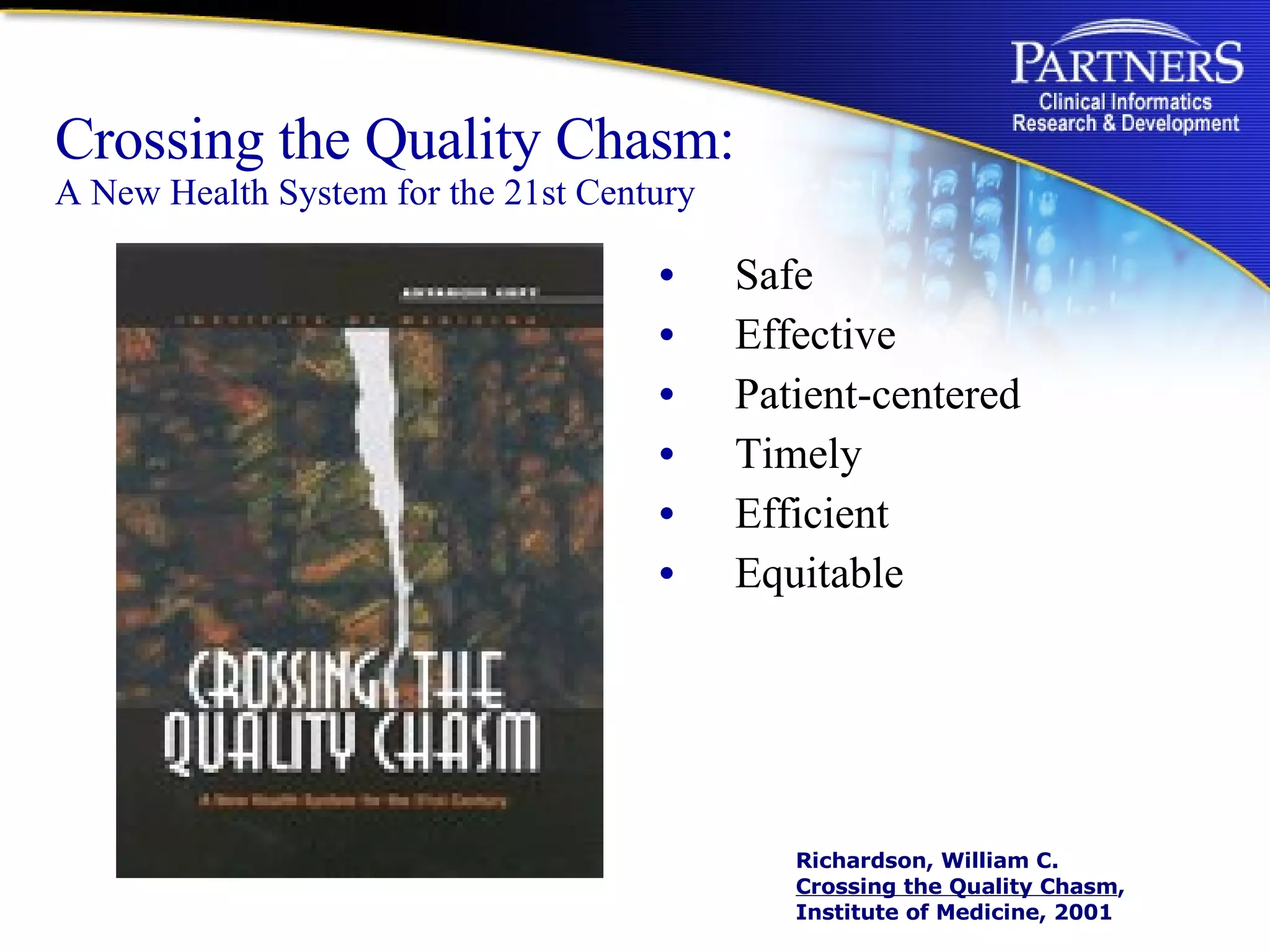
Crossing the Quality Chasm:  A New Health System for the 21st Century Safe Effective  Patient-centered  Timely  Efficient  Equitable Richardson, William C. Crossing the Quality Chasm , Institute of Medicine, 2001             
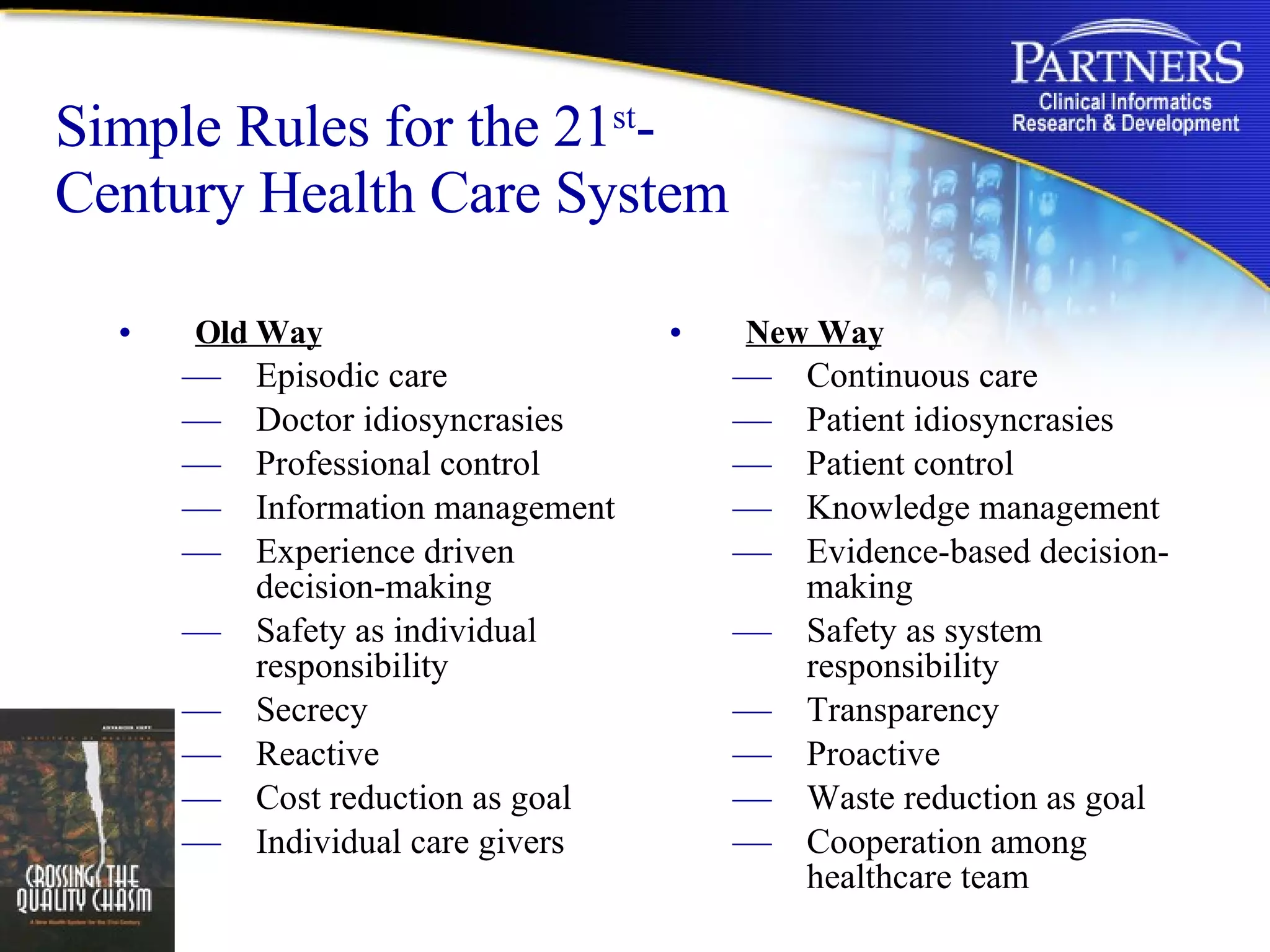
Simple Rules for the 21 st -Century Health Care System Old Way Episodic care Doctor idiosyncrasies Professional control Information management Experience driven decision-making Safety as individual responsibility Secrecy Reactive Cost reduction as goal Individual care givers New Way Continuous care Patient idiosyncrasies Patient control Knowledge management Evidence-based decision-making Safety as system responsibility Transparency Proactive Waste reduction as goal Cooperation among healthcare team
Markle 2002: Asked 800 people about the role of EHRs in health care  72% of respondents believe EHRs have the potential to improve health care 80% of respondents believe that if physicians kept EHRs on their patients, health care quality would improve and medical errors would be reduced 81% believe the ability of researchers to review millions of records anonymously to determine best treatment practices would help all physicians improve the quality of medical care.
A majority of Americans believe that doctors keeping electronic medical records of their patients would: Allow physicians to access medical information at a moment’s notice  (93% Agree); Allow physicians to determine what treatments work best for different diseases  (81% Agree); Improve health care quality  (80% Agree); Be secure and private  (66% Agree); and Decrease health care costs  (60% Agree).
Six out of 10 Americans (60%) support the creation of a secure online "personal health record" service that would allow consumers to: Check and refill prescriptions; Get results over the Internet; Check for mistakes in your medical record; and Conduct secure and private e-mail communication with your doctor or doctors.
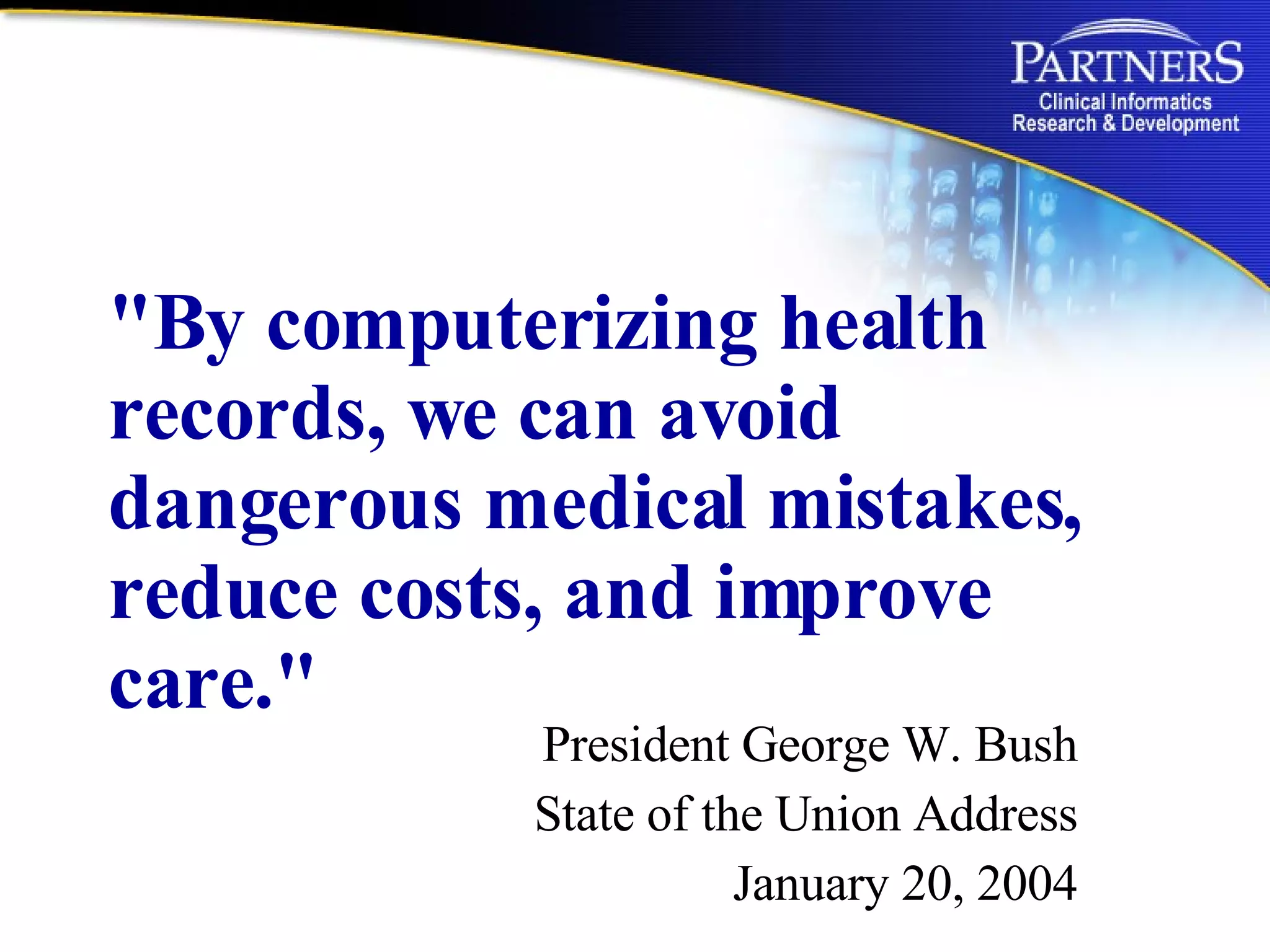
"By computerizing health records, we can avoid dangerous medical mistakes, reduce costs, and improve care." President George W. Bush State of the Union Address January 20, 2004
US Health Information  Technology Framework: a Model Informing clinical practice Providing incentives for EHR adoption Reducing the risk of EHR investment Promoting EHR diffusion in rural and underserved areas Interconnecting clinicians Enhancing regional collaborations Developing a national health information network Coordinating federal health information systems Personalizing care Encouraging the use of personal health records Enhancing informed consumer choice Promoting the use of telehealth systems Improving population health Unifying public health surveillance architectures Streamlining quality and health status monitoring Accelerating research and dissemination of evidence Thompson T, Brailer D  DHHS July 21, 2004
Framework for Strategic Action Presidential Goal #3: Personalize Care.  “ Consumer-centric information helps individuals manage their own wellness and assists with their personal health decisions.” Strategy #1:  Encourage use of PHRs:  “ Consumers are increasingly seeking information about their care as a means of getting better control over their health care experience, and PHRs that provide customized facts and guidance to them are needed.”
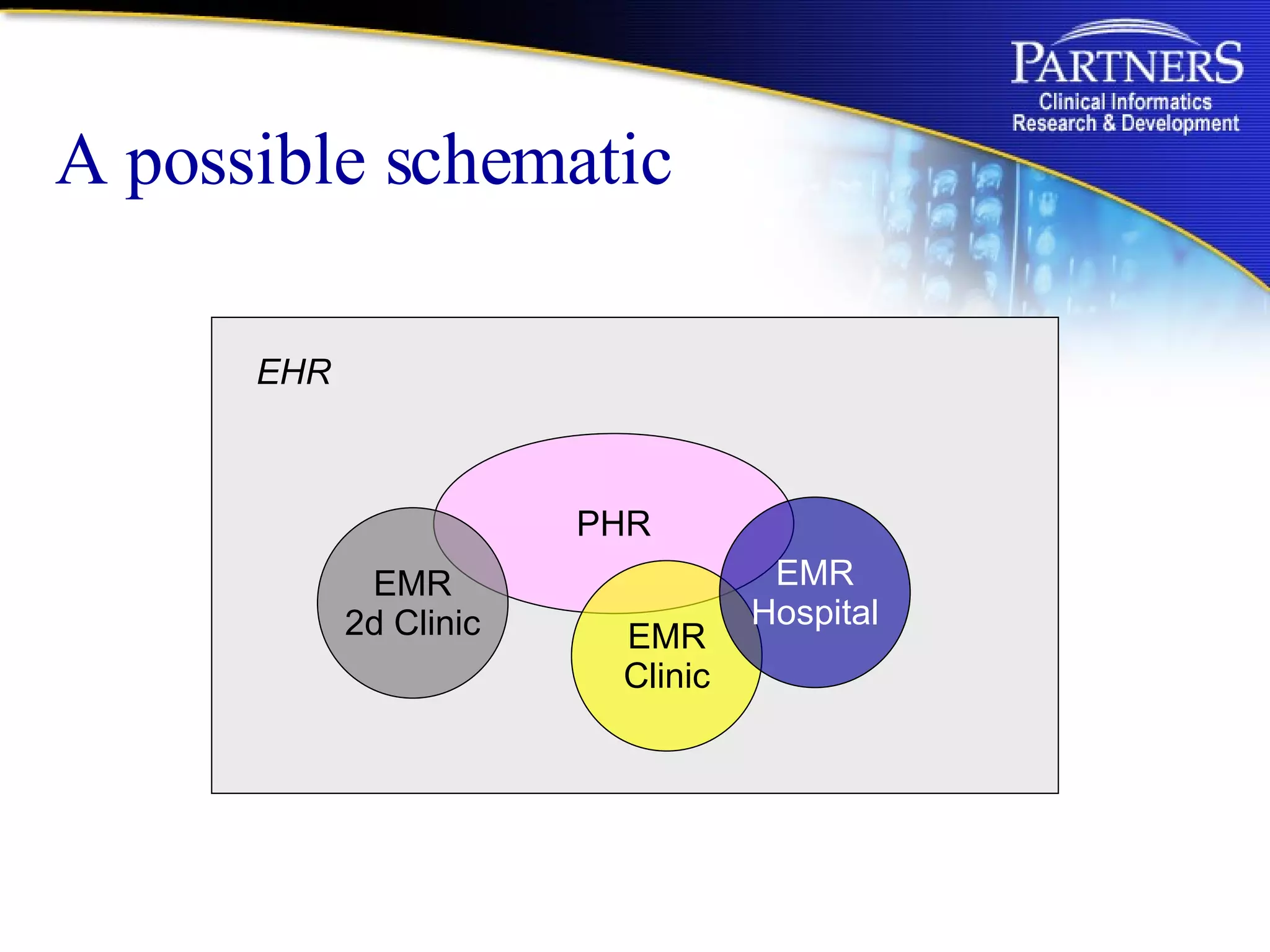
PHR vs EHR PHR : “An electronic application through which individuals can access, manage and share their health information in a secure and confidential environment.  It allows people to access and coordinate their lifelong health information and make appropriate parts of it available to those who need it.” Source:  Connecting for Health  ( Connecting Americans To Their Healthcare  – Final Report, 7/04, chapter 2, p.13)
PHR vs EHR EHR : “An electronic version of the patient medical record kept by doctors and hospitals.  The data in the EHR are controlled by and intended for use by medical providers.” Source:  Connecting for Health  ( Connecting Americans To Their Healthcare  – Final Report, 7/04, chapter 2, p.13)
A possible schematic PHR EMR Clinic EMR 2d Clinic EMR Hospital EHR
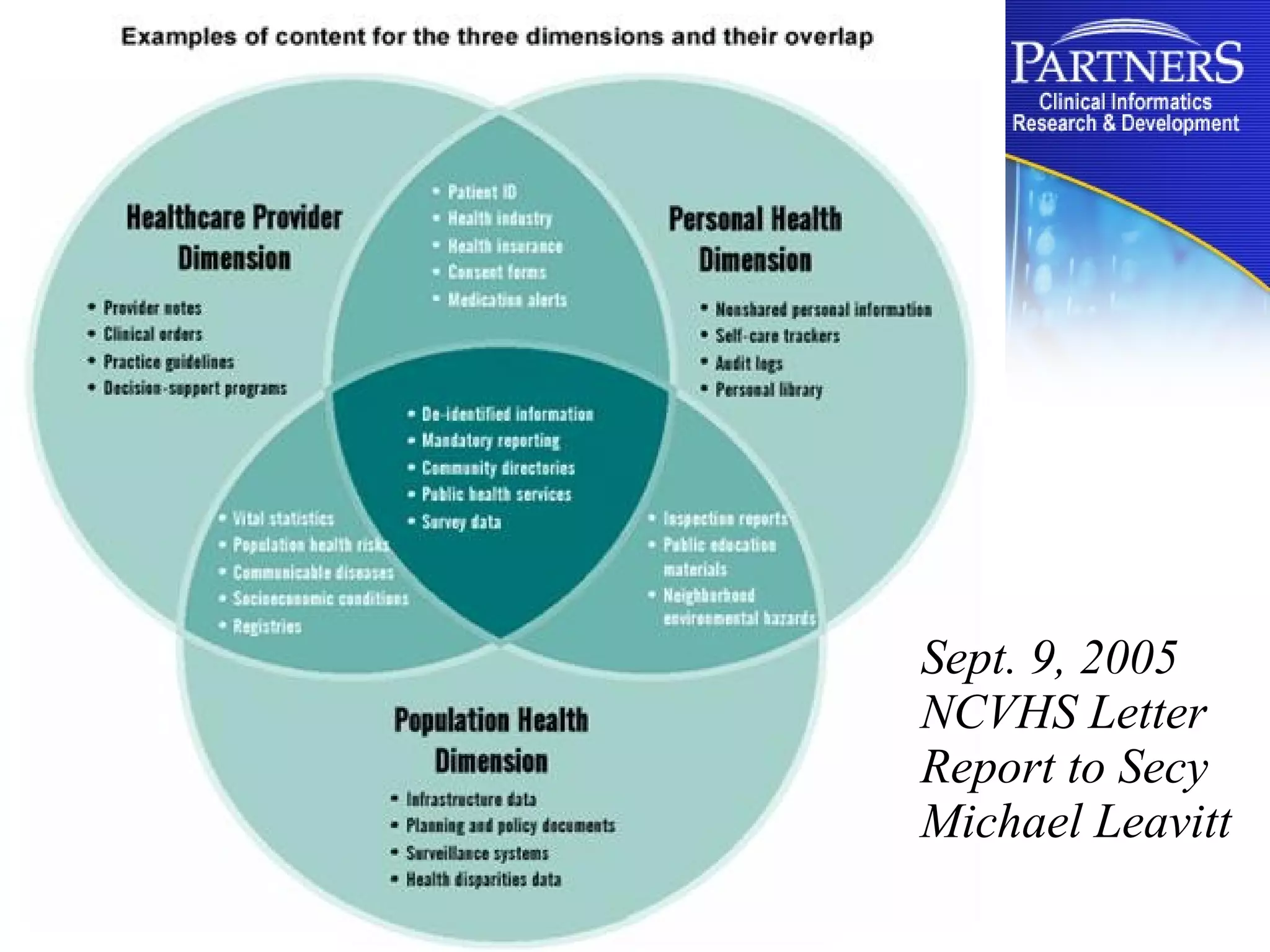
Sept. 9, 2005  NCVHS Letter Report to Secy Michael Leavitt
e-Health?
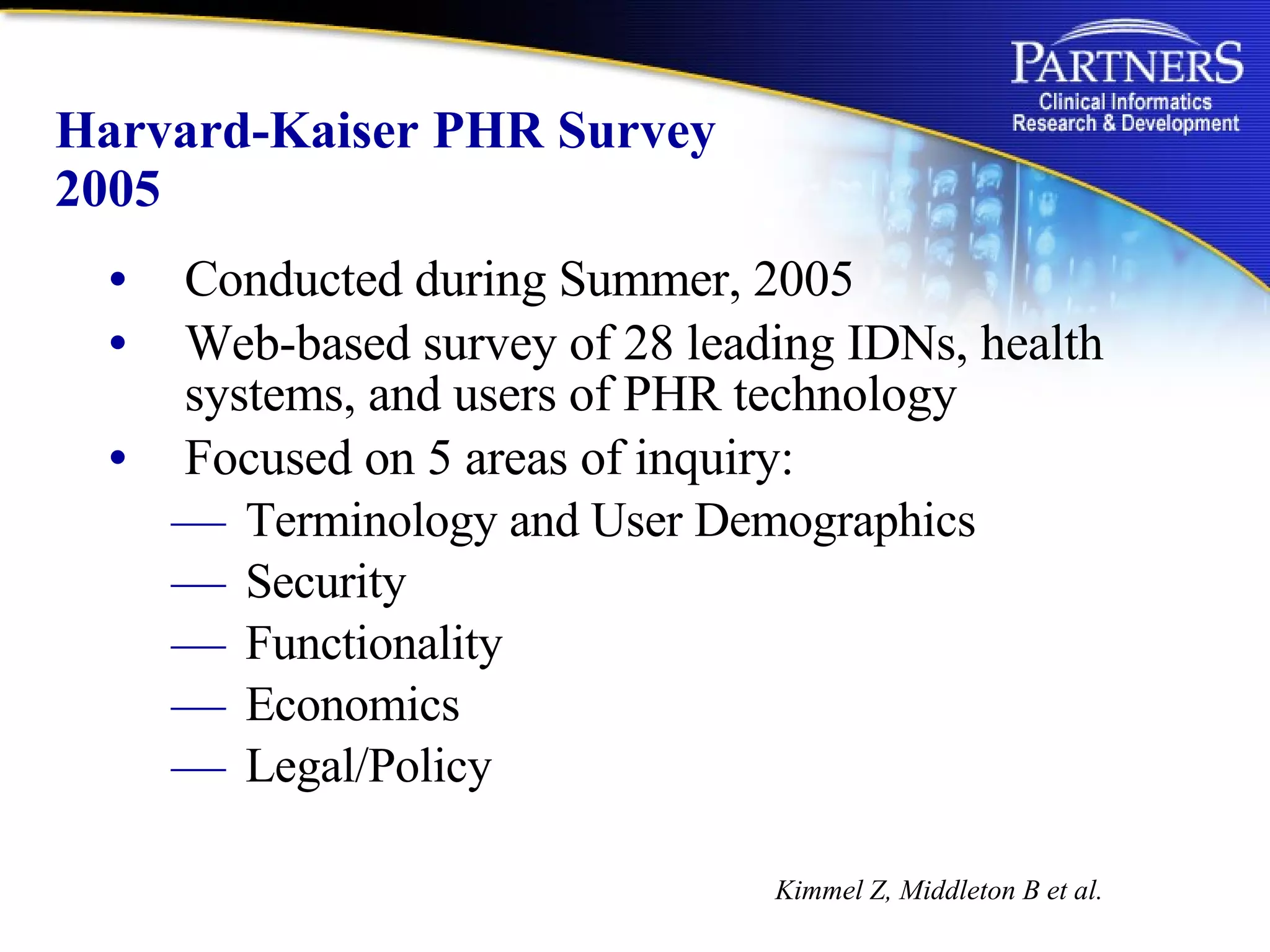
Harvard-Kaiser PHR Survey 2005 Conducted during Summer, 2005 Web-based survey of 28 leading IDNs, health systems, and users of PHR technology Focused on 5 areas of inquiry:  Terminology and User Demographics Security Functionality Economics Legal/Policy Kimmel Z, Middleton B et al.
Harvard PHR Survey Respondents Kaiser Permanente NW University of California – Davis Family Medicine of Winona Geisinger Health System Palo Alto Medical Foundation Group Health Cooperative  Henry Ford Health System Partners Healthcare, Boston Aurora Healthcare Evanston Northwestern Healthcare Intermountain Healthcare Vanderbilt U. Medical Center University of Colorado Health Sciences Center Iowa Health System Dartmouth – Hitchcock Health Services Greenfield Health, Portland, Ore. Eastern Maine Healthcare Systems Boston Children’s Hospital  PatientCare Family Clinic University of Washington Beth Israel Deaconess Medical Center Park Nicollet Health Services Veterans Health Administration Spectrum Health Whatcom County Healthcare Community  Department of Defense


Who Creates the  Electronic Health Record  at Partners HealthCare?  Physician Longitudinal Medical Record (LMR) Patient LMR/PHR
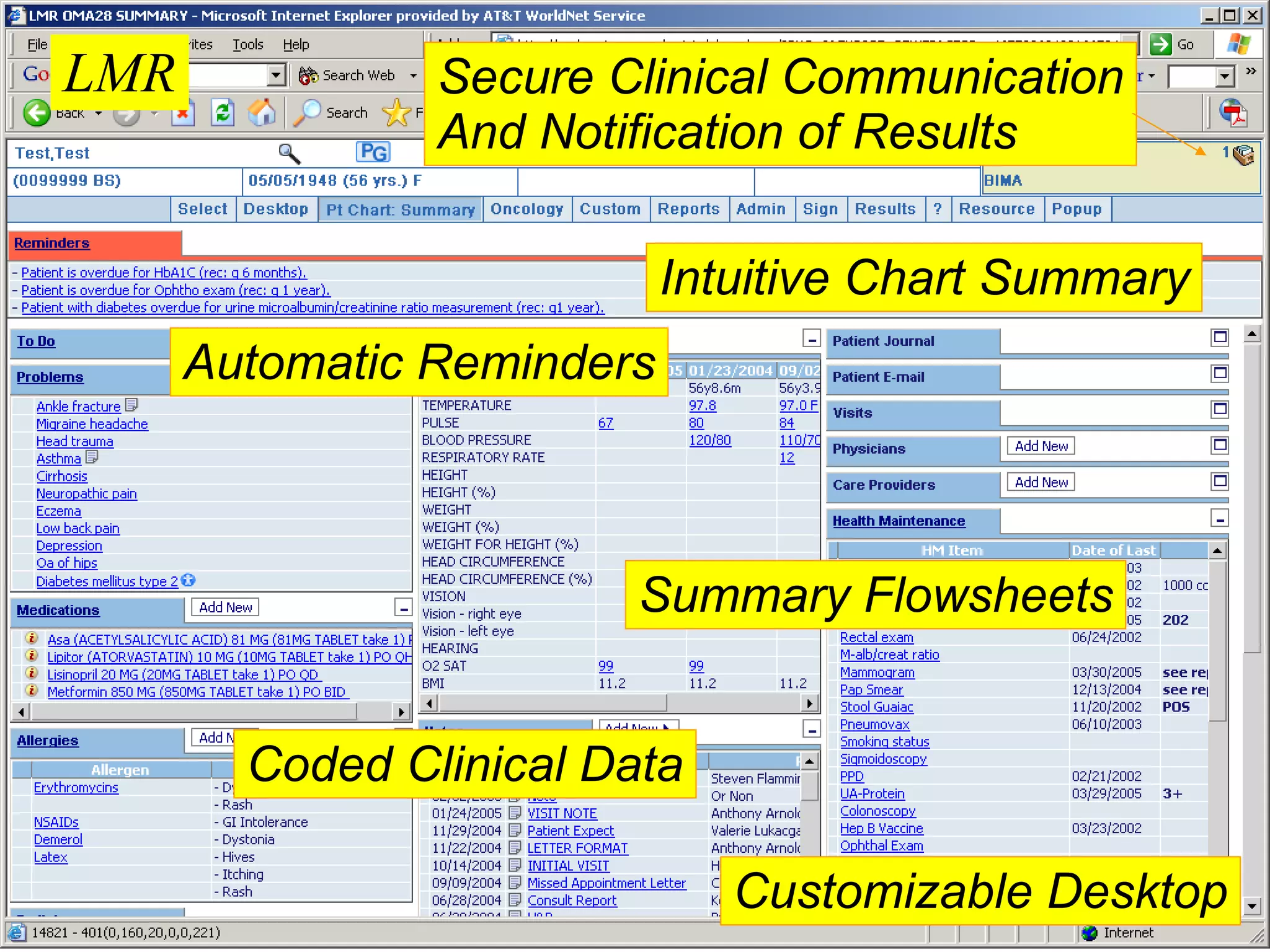
Intuitive Chart Summary Automatic Reminders Summary Flowsheets Coded Clinical Data Customizable Desktop LMR Secure Clinical Communication And Notification of Results
Prescription Appointment Referral (practice selected) Medications Allergies (from LMR) Illnesses & Conditions Drugs Medical Tests Self Help (from Healthwise) Staff Directions Insurance Contact Information (practice specific) Mail settings Notification Request Defaults Pharmacy Contact info Registration info Mail (secure) Courtesy Jonathan Wald, MD, MPH Patient Gateway Product Manager
 
 
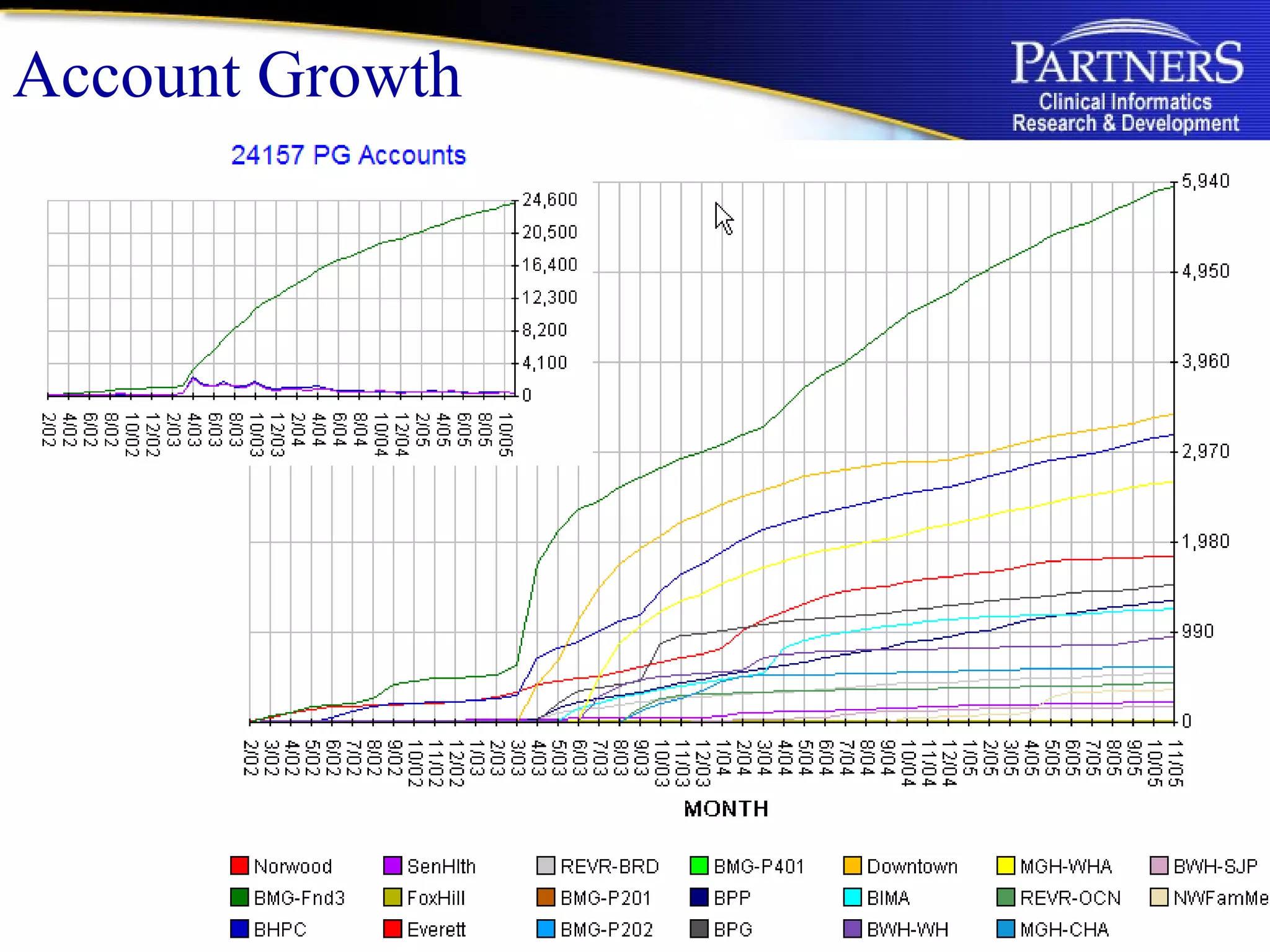
Account Growth
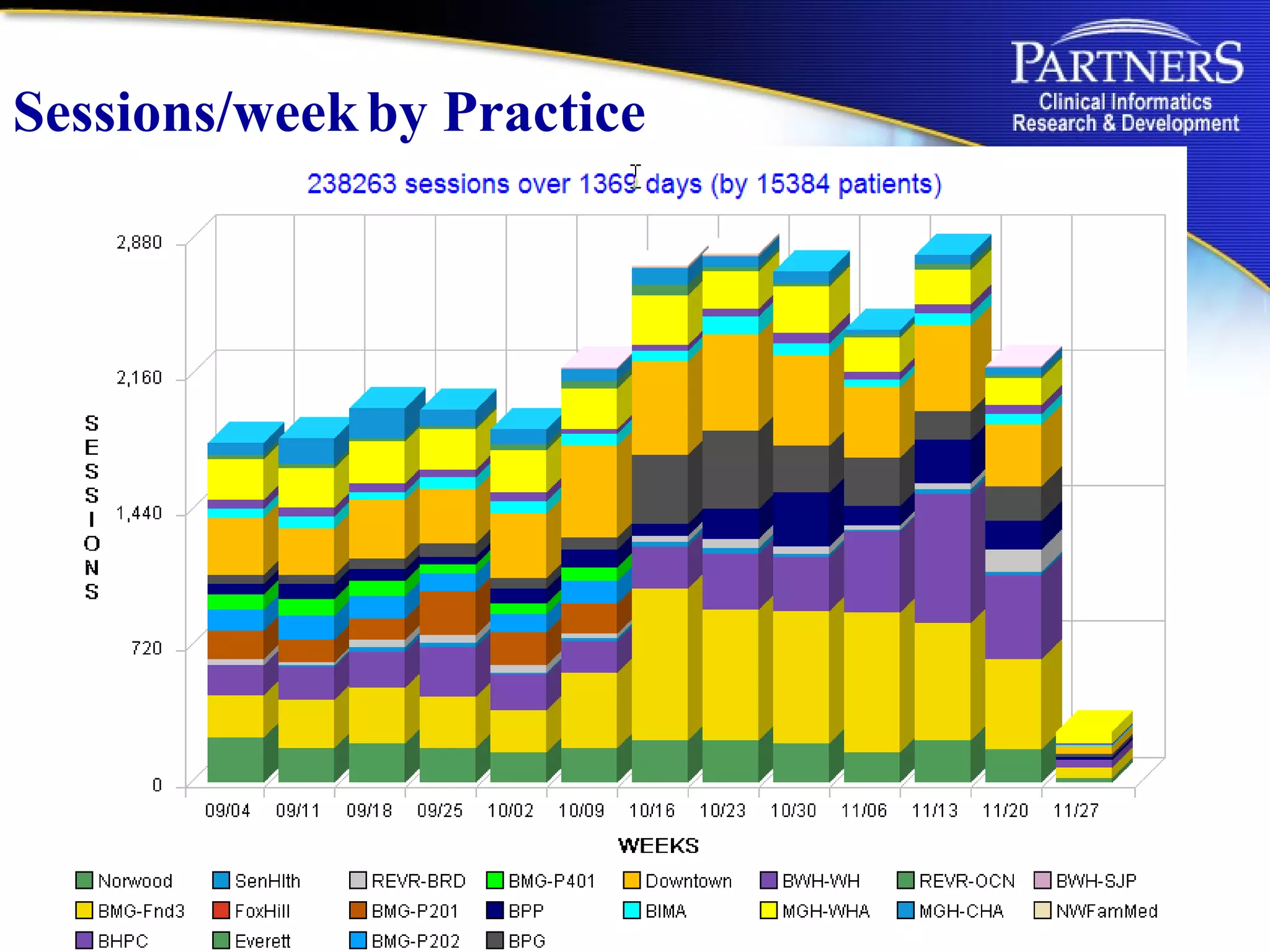
Sessions/week by Practice
Patient-to-Practice Requests 2524 2383 2353 2580 2409 2840
Shared Online Health Records  for Patient Safety and Care Focuses on Quality of Care with use of a Secure Patient Portal Primary Clinical outcomes Medication safety – fewer ADEs Diabetes control – HbA1c, cholesterol, BP, Referrals and Self-care Health Mtce guideline adherence Family History risk detection Secondary Process outcomes  Complete/correct documentation Satisfaction Usage AHRQ R01 HS13326 B. Middleton, PI
Research portal “Home” Tasks
Tele-care option LMR Details List More Info Shared Online Health Records for Patient Safety and Care AHRQ R01 HS13326, PI: B. Middleton, J. Wald co-PI
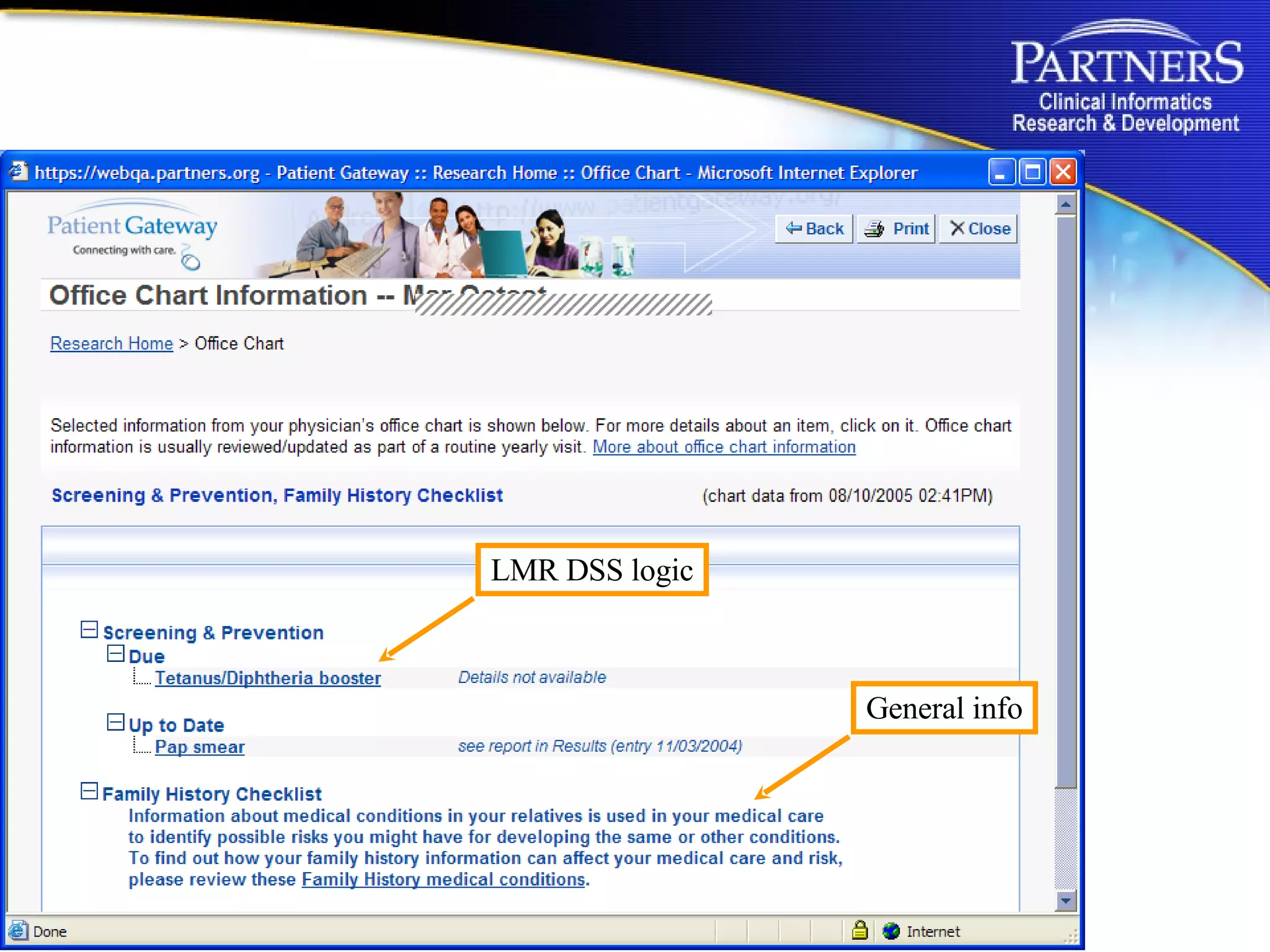
LMR DSS logic General info
 
FHx Checklist Enter Relatives
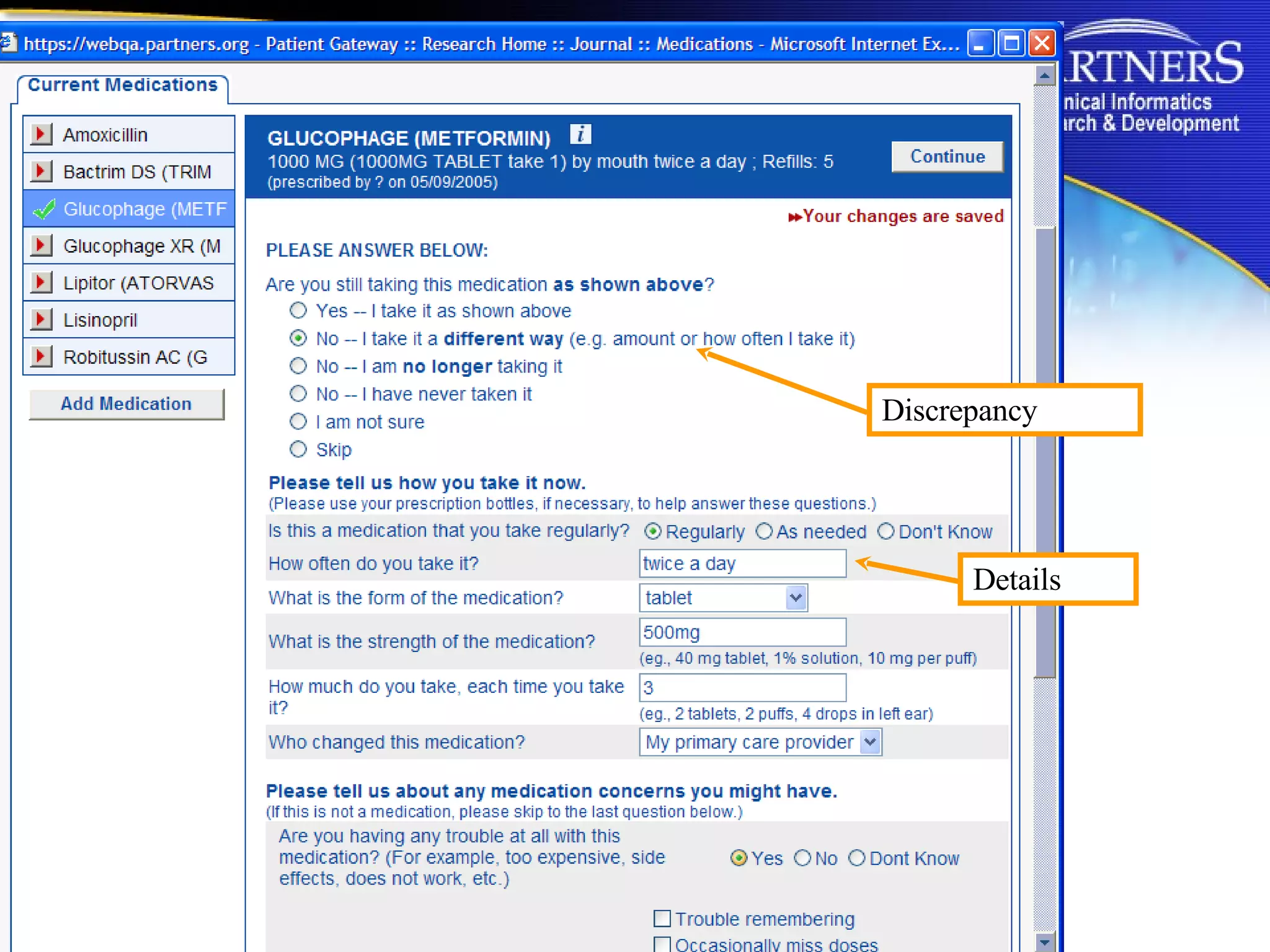
Discrepancy Details
Patient Clinical Decision Support Personalized information
 
LMR: to “view” the Journal information Narrative view in the LMR
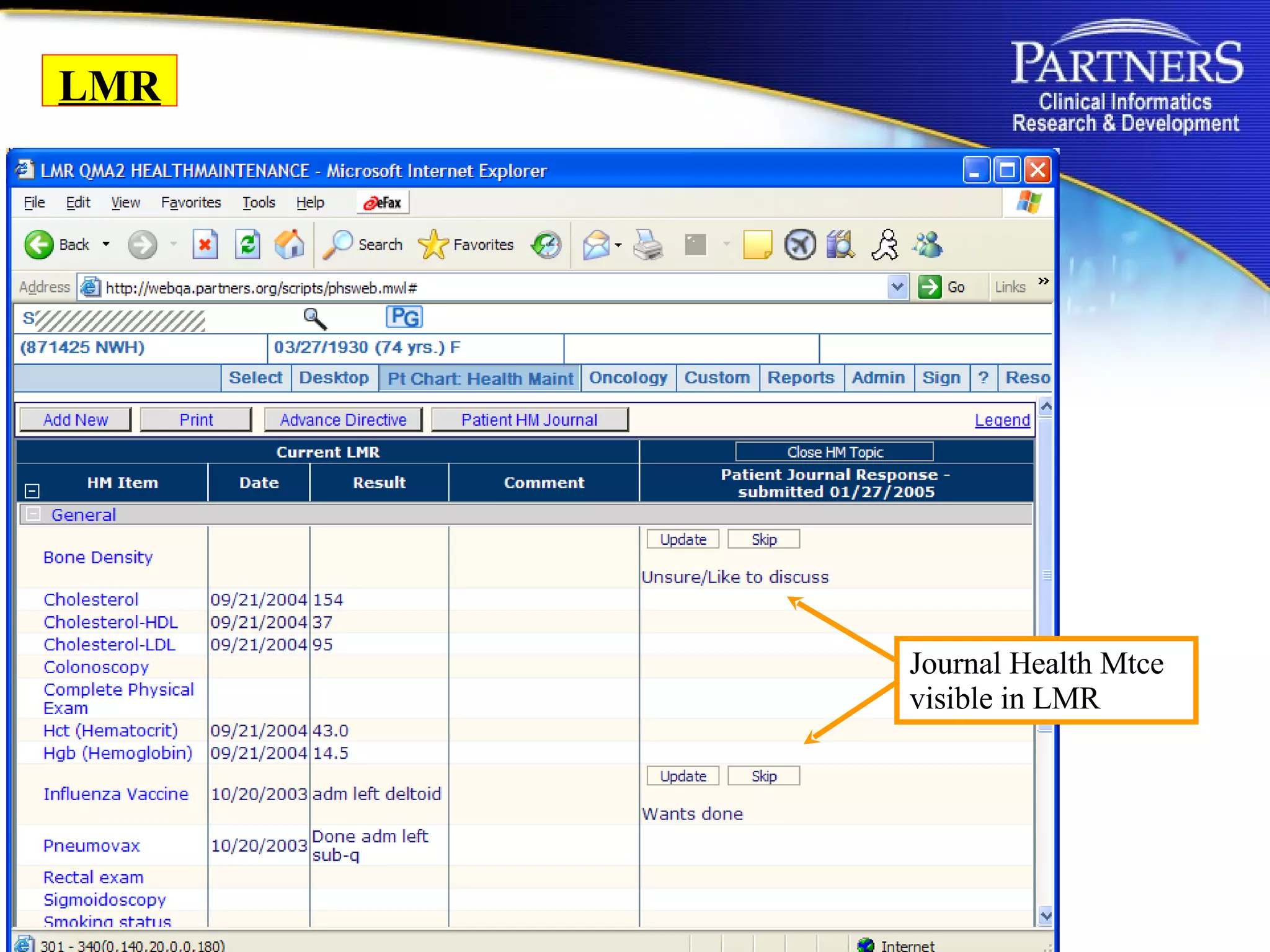
Journal Health Mtce visible in LMR LMR
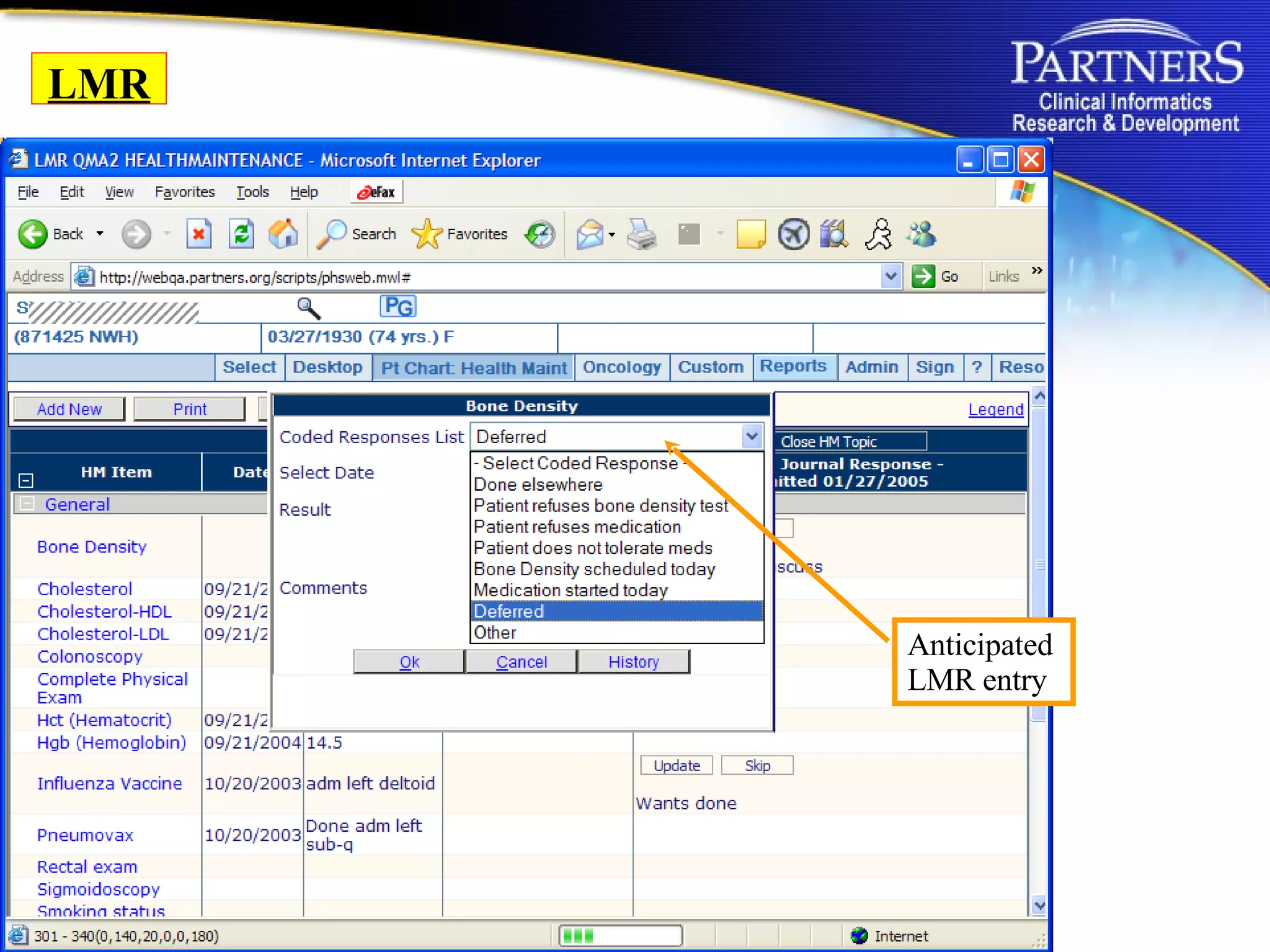
LMR Anticipated  LMR entry
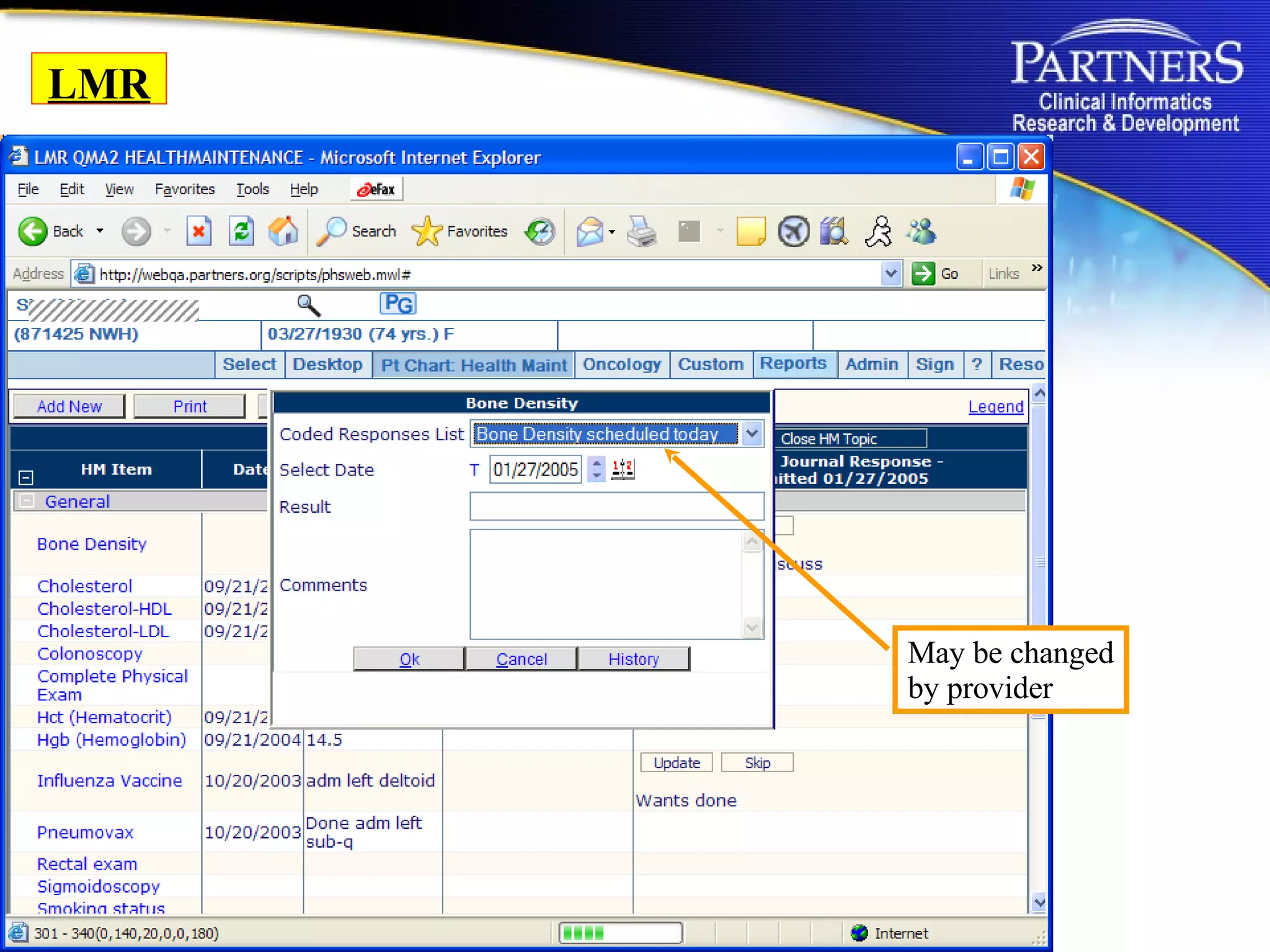
May be changed by provider LMR
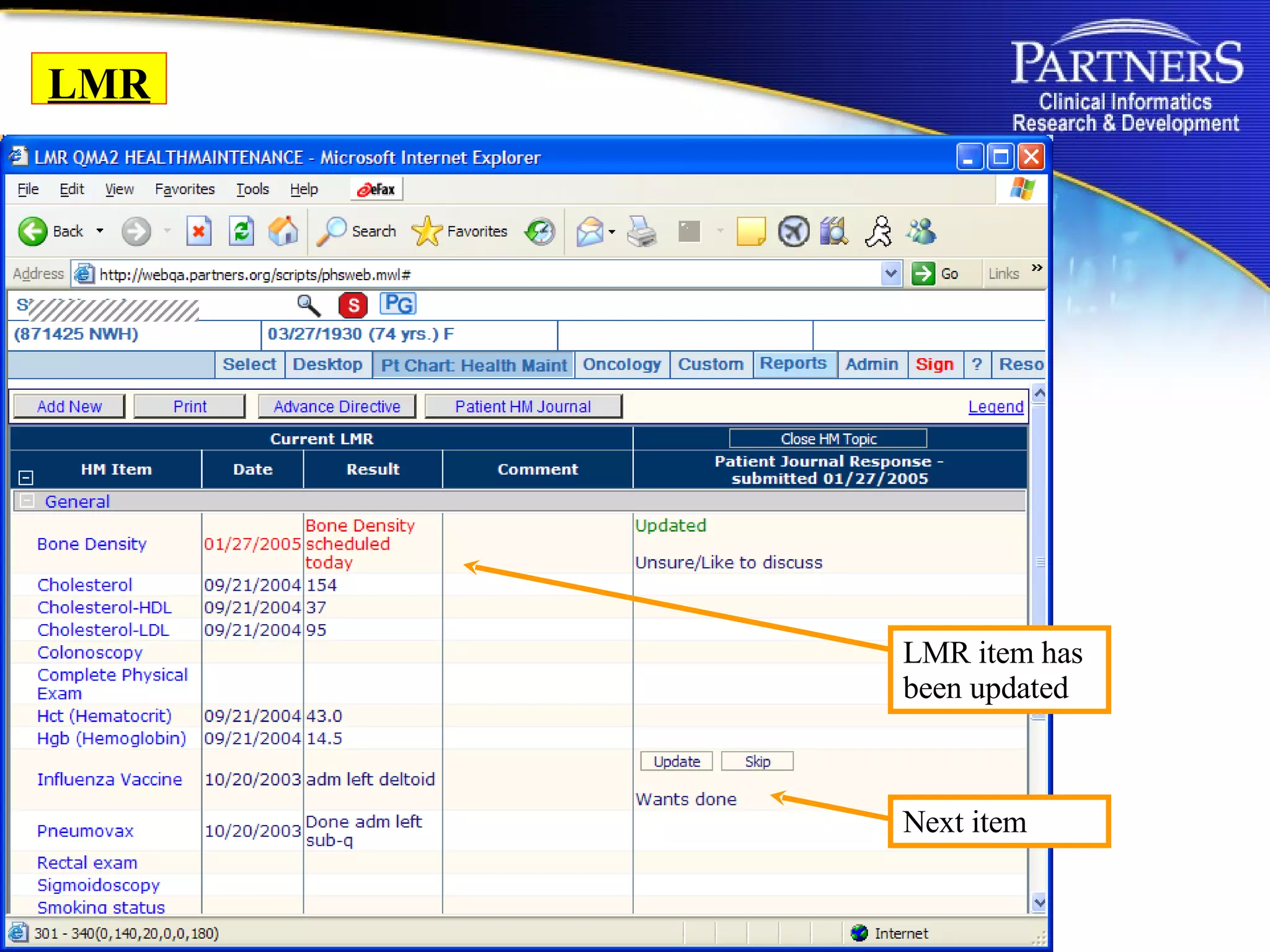
LMR item has been updated Next item LMR
Key Questions To Consider Will Consumer’s use PHRs? Providers? How? What’s the evidence for consumer directed care management and clinical improvement? Who fronts and maintains the PHR?  Provider, Health plans, Employer-purchaser Who owns the clinical data? How to overcoming barriers to adoption? EMRs  PHR standardization and certification PHR business model  The HIPAA hole for independent PHRs
What we’ve learned so far.. Will patients use Patient Gateway? Yes, enthusiastically They like 24x7 convenience of leaving messages and receiving a reply for non-urgent matters They can be more discreet when communicating via Web than by telephone while at work They have suggested changes to the medication list to make it more accurate PATIENT’S LOVE THIS! Have there been patient complaints? Very few Most common: delays in getting their password, retrieving Apple Mac access Some want more services
What we’ve learned so far... Will physicians use Patinet Gateway? Extra MD work/time: to date: No (by design) And, industry data says “no”  because most messages are handled by staff, and the few that are forwarded are more efficiently handled because they are electronic Will staff experience additional demands on their time? Our experience to date: No, but only if it’s a trade-off from other activities Industry data says “no”  labor is saved (on average) due to request information that is complete, immediately chart-able, and avoids telephone time Will we save healthcare $$? To early to tell, need to do analysis
What we’ve learned so far... Will freeform messages from patients be lengthy or inappropriate? Pilot data: a few occurrences so far ~ 1% Industry data: these do occur but can be managed Will patients expect instant turn-around? Our experience to date: No, but still early Request forms say: “several business days” Expectations are set by the practice (not only for the Web) Staff who receive very few messages could overlook a message if they check them infrequently
Where Are We?
“ I conclude that though the individual physician  is not perfectible, the system of care is, and that  the computer will play a major part in the  perfection of future care systems.” Clem McDonald, MD NEJM 295:1355, 1976 Thank you! Blackford Middleton, MD [email_address]

Middleton.Cgu2005v6

  • 1.
    Connecting with Patientsto Prepare for Care: The Partners HealthCare Patient Gateway Blackford Middleton, MD, MPH, MSc Chairman, Center for IT Leadership Corporate Director, Clinical Informatics R&D Partners HealthCare System, Inc. Harvard Medical School The Many Faces of Person-Centric Electronic Health Systems
  • 2.
    Overview The HealthCareCrisis The Provider’s Dilemma The Purchaser’s Dilemma The Consumer’s Dilemma What is the Personal Health Record? A Snapshot of the Current State Harvard-Kaiser PHR Survey 2005 Future Directions Partners HealthCare Patient Gateway
  • 3.
    The Provider’s DilemmaMedical error, patient safety, and quality issues 1 in 4 prescriptions taken by a patient are not known to the treating physician 1 in 5 lab and x-ray tests ordered because originals can not be found Patient data unavailable in 81% of cases in one clinic, with an average of 4 missing items per case. 18% of medical errors are estimated to be due to inadequate availability of patient information. 40% of outpatient prescriptions unnecessary Patients receive only 54.9% of recommended care
  • 4.
    Per “Average” ProviderAnnual Cost Saving Projections ACPOE $28K $16.6K $12.3K $2.5K $2.2K
  • 5.
    US Healthcare SystemWill Benefit National adoption of Advanced ACPOE systems would prevent… 2 million ADE/yr 190,000 ADE admission/yr 130,000 life-threatening ADE/yr Nationwide implementation of advanced ACPOE could: Save the US $44 billion annually
  • 6.
    Value of HealthcareInformation Exchange and Interoperability Provider-centric encounter-based model of clinical information exchange Provider Public Health Laboratory Pharmacy Payer Radiology Other Provider Clinical and administrative transactions and data exchange Between providers and other providers Between providers and labs, pharmacies, payers, radiology centers, and public health departments Secondary (out of scope)
  • 7.
    US Would Benefitfrom Healthcare Information Exchange Nationwide implementation of standardized healthcare information exchange would: Save $337B over 10 years Save the US $78B annually at steady state Cumulative breakeven during year five of implementation There is a business case for standardized healthcare information exchange and interoperability
  • 8.
    The “CPR AdoptionGap”: The United States vs Others Primary Care Physician Office CPR Use by Country, 2002 Source: "European Physicians Especially in Sweden, Netherlands, and Denmark, Lead U.S. in Use of Electronic Medical Records." Harris Interactive Health Care News 2(16).
  • 9.
    National Cost Savingsto Providers and Other Healthcare Stakeholders In US Millions
  • 10.
    The Purchaser’s DilemmaUS healthcare is $1.7T, 16% GDP 5% in 1963; Industrialized societies average less than 10% Costs rising 7-9%/yr Public expenditure on healthcare now 43% of total (up 10% in past decade) GM healthcare costs now $1500/automobile, most expensive component Where will additional value be found in, or costs taken out of, the system?
  • 11.
    Health Care CostsConcentrated in Sick Few Source: A.C. Monheit, “Persistence in Health Expenditures in the Short Run: Prevalence and Consequences,” Medical Care 41, supplement 7 (2003): III53–III64. Distribution of Health Expenditures for the U.S. Population, By Magnitude of Expenditure, 1997 1% 5% 10% 55% 69% 27% 50% 97% $27,914 $7,995 $4,115 $351 Expenditure Threshold (1997 Dollars) www.cmwf.org
  • 12.
    U.S. Patient Cost-Sharing is Highest c b a a a 1999, b 1998, c 1996 Source: Anderson et al., Multinational Comparisons of Health Systems Data, 2002. The Commonwealth Fund, October 2002. Dollars Per Capita Out-of-Pocket Health Care Spending in Selected Countries, 2000 www.cmwf.org
  • 13.
    Cost Sharing ReducesBoth Appropriate and Inappropriate Hospital Admissions Percent reduction in number of hospital admissions per 1000 person-years Source: A.L. Siu et al., “Inappropriate Use of Hospitals in a Randomized Trial of Health Insurance Plans,” New England Journal of Medicine 315, no. 20 (1986): 1259–1266. *Based on Appropriateness Evaluation Protocol (AEP) instrument developed by Boston University researchers in consultation with Massachusetts physicians www.cmwf.org
  • 14.
    The Consumer’s DilemmaAverage American consumers $6240/yr of healthcare, or $12,200 for the ave. family 45M Americans lack Healthcare insurance 80M lack at some time during each year A fractured and ‘unwired’ healthcare system Medicare beneficiaries see 1.3 – 13.8 unique providers annually, On average 6.4 different providers/yr 90% of the >30B healthcare transactions in the US every year are conducted via mail, fax, or phone Increasing exposure to tiered pharmacy plans, consumer directed care Absent reliable quality data to make informed choices
  • 15.
  • 16.
    Crossing the QualityChasm: A New Health System for the 21st Century Safe Effective Patient-centered Timely Efficient Equitable Richardson, William C. Crossing the Quality Chasm , Institute of Medicine, 2001          
  • 17.
    Simple Rules forthe 21 st -Century Health Care System Old Way Episodic care Doctor idiosyncrasies Professional control Information management Experience driven decision-making Safety as individual responsibility Secrecy Reactive Cost reduction as goal Individual care givers New Way Continuous care Patient idiosyncrasies Patient control Knowledge management Evidence-based decision-making Safety as system responsibility Transparency Proactive Waste reduction as goal Cooperation among healthcare team
  • 18.
    Markle 2002: Asked800 people about the role of EHRs in health care 72% of respondents believe EHRs have the potential to improve health care 80% of respondents believe that if physicians kept EHRs on their patients, health care quality would improve and medical errors would be reduced 81% believe the ability of researchers to review millions of records anonymously to determine best treatment practices would help all physicians improve the quality of medical care.
  • 19.
    A majority ofAmericans believe that doctors keeping electronic medical records of their patients would: Allow physicians to access medical information at a moment’s notice (93% Agree); Allow physicians to determine what treatments work best for different diseases (81% Agree); Improve health care quality (80% Agree); Be secure and private (66% Agree); and Decrease health care costs (60% Agree).
  • 20.
    Six out of10 Americans (60%) support the creation of a secure online "personal health record" service that would allow consumers to: Check and refill prescriptions; Get results over the Internet; Check for mistakes in your medical record; and Conduct secure and private e-mail communication with your doctor or doctors.
  • 21.
    "By computerizing healthrecords, we can avoid dangerous medical mistakes, reduce costs, and improve care." President George W. Bush State of the Union Address January 20, 2004
  • 22.
    US Health Information Technology Framework: a Model Informing clinical practice Providing incentives for EHR adoption Reducing the risk of EHR investment Promoting EHR diffusion in rural and underserved areas Interconnecting clinicians Enhancing regional collaborations Developing a national health information network Coordinating federal health information systems Personalizing care Encouraging the use of personal health records Enhancing informed consumer choice Promoting the use of telehealth systems Improving population health Unifying public health surveillance architectures Streamlining quality and health status monitoring Accelerating research and dissemination of evidence Thompson T, Brailer D DHHS July 21, 2004
  • 23.
    Framework for StrategicAction Presidential Goal #3: Personalize Care. “ Consumer-centric information helps individuals manage their own wellness and assists with their personal health decisions.” Strategy #1: Encourage use of PHRs: “ Consumers are increasingly seeking information about their care as a means of getting better control over their health care experience, and PHRs that provide customized facts and guidance to them are needed.”
  • 24.
    PHR vs EHRPHR : “An electronic application through which individuals can access, manage and share their health information in a secure and confidential environment. It allows people to access and coordinate their lifelong health information and make appropriate parts of it available to those who need it.” Source: Connecting for Health ( Connecting Americans To Their Healthcare – Final Report, 7/04, chapter 2, p.13)
  • 25.
    PHR vs EHREHR : “An electronic version of the patient medical record kept by doctors and hospitals. The data in the EHR are controlled by and intended for use by medical providers.” Source: Connecting for Health ( Connecting Americans To Their Healthcare – Final Report, 7/04, chapter 2, p.13)
  • 26.
    A possible schematicPHR EMR Clinic EMR 2d Clinic EMR Hospital EHR
  • 27.
    Sept. 9, 2005 NCVHS Letter Report to Secy Michael Leavitt
  • 28.
  • 29.
    Harvard-Kaiser PHR Survey2005 Conducted during Summer, 2005 Web-based survey of 28 leading IDNs, health systems, and users of PHR technology Focused on 5 areas of inquiry: Terminology and User Demographics Security Functionality Economics Legal/Policy Kimmel Z, Middleton B et al.
  • 30.
    Harvard PHR SurveyRespondents Kaiser Permanente NW University of California – Davis Family Medicine of Winona Geisinger Health System Palo Alto Medical Foundation Group Health Cooperative Henry Ford Health System Partners Healthcare, Boston Aurora Healthcare Evanston Northwestern Healthcare Intermountain Healthcare Vanderbilt U. Medical Center University of Colorado Health Sciences Center Iowa Health System Dartmouth – Hitchcock Health Services Greenfield Health, Portland, Ore. Eastern Maine Healthcare Systems Boston Children’s Hospital PatientCare Family Clinic University of Washington Beth Israel Deaconess Medical Center Park Nicollet Health Services Veterans Health Administration Spectrum Health Whatcom County Healthcare Community Department of Defense
  • 31.
  • 32.
  • 33.
  • 34.
    Who Creates the Electronic Health Record at Partners HealthCare? Physician Longitudinal Medical Record (LMR) Patient LMR/PHR
  • 35.
    Intuitive Chart SummaryAutomatic Reminders Summary Flowsheets Coded Clinical Data Customizable Desktop LMR Secure Clinical Communication And Notification of Results
  • 36.
    Prescription Appointment Referral(practice selected) Medications Allergies (from LMR) Illnesses & Conditions Drugs Medical Tests Self Help (from Healthwise) Staff Directions Insurance Contact Information (practice specific) Mail settings Notification Request Defaults Pharmacy Contact info Registration info Mail (secure) Courtesy Jonathan Wald, MD, MPH Patient Gateway Product Manager
  • 37.
  • 38.
  • 39.
  • 40.
  • 41.
    Patient-to-Practice Requests 25242383 2353 2580 2409 2840
  • 42.
    Shared Online HealthRecords for Patient Safety and Care Focuses on Quality of Care with use of a Secure Patient Portal Primary Clinical outcomes Medication safety – fewer ADEs Diabetes control – HbA1c, cholesterol, BP, Referrals and Self-care Health Mtce guideline adherence Family History risk detection Secondary Process outcomes Complete/correct documentation Satisfaction Usage AHRQ R01 HS13326 B. Middleton, PI
  • 43.
  • 44.
    Tele-care option LMRDetails List More Info Shared Online Health Records for Patient Safety and Care AHRQ R01 HS13326, PI: B. Middleton, J. Wald co-PI
  • 45.
    LMR DSS logicGeneral info
  • 46.
  • 47.
  • 48.
  • 49.
    Patient Clinical DecisionSupport Personalized information
  • 50.
  • 51.
    LMR: to “view”the Journal information Narrative view in the LMR
  • 52.
    Journal Health Mtcevisible in LMR LMR
  • 53.
  • 54.
    May be changedby provider LMR
  • 55.
    LMR item hasbeen updated Next item LMR
  • 56.
    Key Questions ToConsider Will Consumer’s use PHRs? Providers? How? What’s the evidence for consumer directed care management and clinical improvement? Who fronts and maintains the PHR? Provider, Health plans, Employer-purchaser Who owns the clinical data? How to overcoming barriers to adoption? EMRs PHR standardization and certification PHR business model The HIPAA hole for independent PHRs
  • 57.
    What we’ve learnedso far.. Will patients use Patient Gateway? Yes, enthusiastically They like 24x7 convenience of leaving messages and receiving a reply for non-urgent matters They can be more discreet when communicating via Web than by telephone while at work They have suggested changes to the medication list to make it more accurate PATIENT’S LOVE THIS! Have there been patient complaints? Very few Most common: delays in getting their password, retrieving Apple Mac access Some want more services
  • 58.
    What we’ve learnedso far... Will physicians use Patinet Gateway? Extra MD work/time: to date: No (by design) And, industry data says “no” because most messages are handled by staff, and the few that are forwarded are more efficiently handled because they are electronic Will staff experience additional demands on their time? Our experience to date: No, but only if it’s a trade-off from other activities Industry data says “no” labor is saved (on average) due to request information that is complete, immediately chart-able, and avoids telephone time Will we save healthcare $$? To early to tell, need to do analysis
  • 59.
    What we’ve learnedso far... Will freeform messages from patients be lengthy or inappropriate? Pilot data: a few occurrences so far ~ 1% Industry data: these do occur but can be managed Will patients expect instant turn-around? Our experience to date: No, but still early Request forms say: “several business days” Expectations are set by the practice (not only for the Web) Staff who receive very few messages could overlook a message if they check them infrequently
  • 60.
  • 61.
    “ I concludethat though the individual physician is not perfectible, the system of care is, and that the computer will play a major part in the perfection of future care systems.” Clem McDonald, MD NEJM 295:1355, 1976 Thank you! Blackford Middleton, MD [email_address]