Derek Scally
Lucille McElroy
Microwave Hood Range
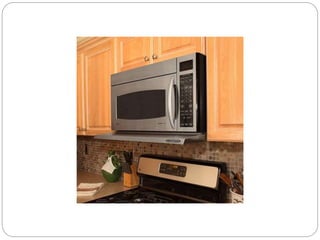
A microwave range hood is a device that
incorporates both the functionality of a
microwave and the benefits of a stove
hood. The microwave hood is considered
a beneficial space-saving device that
frees up space on kitchen counters
where microwave ovens have
traditionally been placed.
Most high end apartments provide
microwave range hood to save space
inside the apartment kitchen.
Introduction
History
A microwave oven is an electric oven that heats and cooks
food by exposing to an electromagnetic radiation in the
microwave frequency range. Microwaves are also used in
radar and communications, which was its original use.
Towards the end of World War II, big companies looked for
industrial heating applications of microwaves, including
medical field, and industrial heating of products such as
inks, glue, and tires. Anyone who worked around
microwaves knew that "soft" objects such as people would
start to heat up if they were to stay in the direct path of high-
power microwave radiation.
Raytheon engineer Percy Spencer had an accidental
discovery that microwaves could quickly heat food:
One day, sometime around 1946, Spencer was
visiting a lab where magnetrons, the power tubes
of radar sets, were being tested. Suddenly, he felt
a peanut bar start to cook in his pocket. Other
scientists had noticed this phenomenon, but
Spencer itched to know more about it.
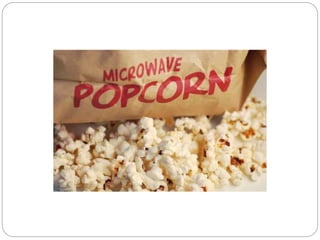
He sent a boy out for a package of popcorn.
When he held it near a magnetron, popcorn
exploded all over the lab.
A 1947 patent application by Raytheon’s Percy
Spencer described the use of microwaves for
heating foods, including popcorn.
Microwave ovens are so quick and
efficient because they channel heat
energy directly to the molecules (tiny
particles) inside food. Microwaves heat
food like the sun heats your face—by
radiation. A microwave is much like the
electromagnetic waves that zap through
the air from TV and radio transmitters.
How Microwave Works
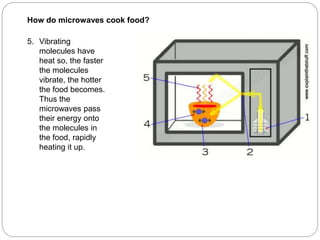
How do microwaves cook food?
How does a microwave turn
electricity into heat?
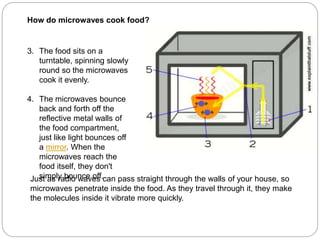
1. Inside the strong metal
box, there is a microwave
generator called
a magnetron. When you
start cooking, the
magnetron
takes electricity from the
power outlet and converts
it into high-powered, 12cm
(4.7 inch) radio waves.
2. The magnetron blasts
these waves into the food
compartment through a
channel called a wave
guide.
How do microwaves cook food?
3. The food sits on a
turntable, spinning slowly
round so the microwaves
cook it evenly.
4. The microwaves bounce
back and forth off the
reflective metal walls of
the food compartment,
just like light bounces off
a mirror. When the
microwaves reach the
food itself, they don't
simply bounce off.Just as radio waves can pass straight through the walls of your house, so
microwaves penetrate inside the food. As they travel through it, they make
the molecules inside it vibrate more quickly.
How do microwaves cook food?
5. Vibrating
molecules have
heat so, the faster
the molecules
vibrate, the hotter
the food becomes.
Thus the
microwaves pass
their energy onto
the molecules in
the food, rapidly
heating it up.
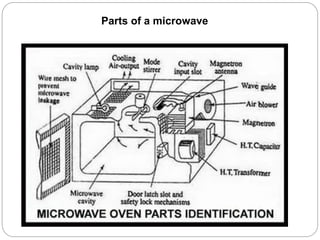
Parts of a microwave
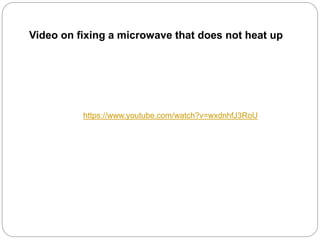
https://www.youtube.com/watch?v=wxdnhfJ3RoU
Video on fixing a microwave that does not heat up
Parts of a microwave
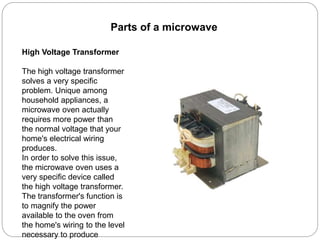
High Voltage Transformer
The high voltage transformer
solves a very specific
problem. Unique among
household appliances, a
microwave oven actually
requires more power than
the normal voltage that your
home's electrical wiring
produces.
In order to solve this issue,
the microwave oven uses a
very specific device called
the high voltage transformer.
The transformer's function is
to magnify the power
available to the oven from
the home's wiring to the level
necessary to produce
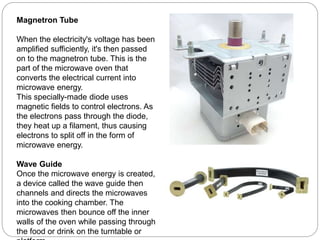
Magnetron Tube
When the electricity's voltage has been
amplified sufficiently, it's then passed
on to the magnetron tube. This is the
part of the microwave oven that
converts the electrical current into
microwave energy.
This specially-made diode uses
magnetic fields to control electrons. As
the electrons pass through the diode,
they heat up a filament, thus causing
electrons to split off in the form of
microwave energy.
Wave Guide
Once the microwave energy is created,
a device called the wave guide then
channels and directs the microwaves
into the cooking chamber. The
microwaves then bounce off the inner
walls of the oven while passing through
the food or drink on the turntable or
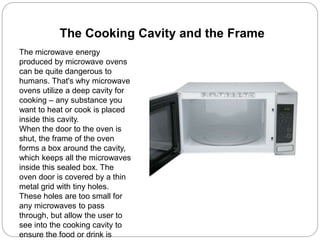
The microwave energy
produced by microwave ovens
can be quite dangerous to
humans. That's why microwave
ovens utilize a deep cavity for
cooking – any substance you
want to heat or cook is placed
inside this cavity.
When the door to the oven is
shut, the frame of the oven
forms a box around the cavity,
which keeps all the microwaves
inside this sealed box. The
oven door is covered by a thin
metal grid with tiny holes.
These holes are too small for
any microwaves to pass
through, but allow the user to
see into the cooking cavity to
ensure the food or drink is
The Cooking Cavity and the Frame
References:
https://www.wisegeek.com/what-is-a-microwave-range-
hood.htm#didyouknowout
History:
https://www.microwaves101.com/encyclopedias/history-of-the-
microwave-oven
https://spectrum.ieee.org/tech-history/space-age/a-brief-history-of-the-
microwave-oven
https://en.wikipedia.org/wiki/Microwave
https://www.todayshomeowner.com/video/range-hood-or-over-the-
range-microwave-venting/
How microwave works:
www.explainthatstuff.com/microwaveovens.html
The Cooking Cavity and the Frame
https://www.ifixit.com/Device/Microwave

Microwave range hood

  • 1.
  • 3.
    A microwave rangehood is a device that incorporates both the functionality of a microwave and the benefits of a stove hood. The microwave hood is considered a beneficial space-saving device that frees up space on kitchen counters where microwave ovens have traditionally been placed. Most high end apartments provide microwave range hood to save space inside the apartment kitchen. Introduction
  • 4.
    History A microwave ovenis an electric oven that heats and cooks food by exposing to an electromagnetic radiation in the microwave frequency range. Microwaves are also used in radar and communications, which was its original use. Towards the end of World War II, big companies looked for industrial heating applications of microwaves, including medical field, and industrial heating of products such as inks, glue, and tires. Anyone who worked around microwaves knew that "soft" objects such as people would start to heat up if they were to stay in the direct path of high- power microwave radiation. Raytheon engineer Percy Spencer had an accidental discovery that microwaves could quickly heat food:
  • 5.
    One day, sometimearound 1946, Spencer was visiting a lab where magnetrons, the power tubes of radar sets, were being tested. Suddenly, he felt a peanut bar start to cook in his pocket. Other scientists had noticed this phenomenon, but Spencer itched to know more about it. He sent a boy out for a package of popcorn. When he held it near a magnetron, popcorn exploded all over the lab. A 1947 patent application by Raytheon’s Percy Spencer described the use of microwaves for heating foods, including popcorn.
  • 7.
    Microwave ovens areso quick and efficient because they channel heat energy directly to the molecules (tiny particles) inside food. Microwaves heat food like the sun heats your face—by radiation. A microwave is much like the electromagnetic waves that zap through the air from TV and radio transmitters. How Microwave Works
  • 8.
    How do microwavescook food? How does a microwave turn electricity into heat? 1. Inside the strong metal box, there is a microwave generator called a magnetron. When you start cooking, the magnetron takes electricity from the power outlet and converts it into high-powered, 12cm (4.7 inch) radio waves. 2. The magnetron blasts these waves into the food compartment through a channel called a wave guide.
  • 9.
    How do microwavescook food? 3. The food sits on a turntable, spinning slowly round so the microwaves cook it evenly. 4. The microwaves bounce back and forth off the reflective metal walls of the food compartment, just like light bounces off a mirror. When the microwaves reach the food itself, they don't simply bounce off.Just as radio waves can pass straight through the walls of your house, so microwaves penetrate inside the food. As they travel through it, they make the molecules inside it vibrate more quickly.
  • 10.
    How do microwavescook food? 5. Vibrating molecules have heat so, the faster the molecules vibrate, the hotter the food becomes. Thus the microwaves pass their energy onto the molecules in the food, rapidly heating it up.
  • 11.
    Parts of amicrowave
  • 12.
  • 13.
    Parts of amicrowave High Voltage Transformer The high voltage transformer solves a very specific problem. Unique among household appliances, a microwave oven actually requires more power than the normal voltage that your home's electrical wiring produces. In order to solve this issue, the microwave oven uses a very specific device called the high voltage transformer. The transformer's function is to magnify the power available to the oven from the home's wiring to the level necessary to produce
  • 14.
    Magnetron Tube When theelectricity's voltage has been amplified sufficiently, it's then passed on to the magnetron tube. This is the part of the microwave oven that converts the electrical current into microwave energy. This specially-made diode uses magnetic fields to control electrons. As the electrons pass through the diode, they heat up a filament, thus causing electrons to split off in the form of microwave energy. Wave Guide Once the microwave energy is created, a device called the wave guide then channels and directs the microwaves into the cooking chamber. The microwaves then bounce off the inner walls of the oven while passing through the food or drink on the turntable or
  • 15.
    The microwave energy producedby microwave ovens can be quite dangerous to humans. That's why microwave ovens utilize a deep cavity for cooking – any substance you want to heat or cook is placed inside this cavity. When the door to the oven is shut, the frame of the oven forms a box around the cavity, which keeps all the microwaves inside this sealed box. The oven door is covered by a thin metal grid with tiny holes. These holes are too small for any microwaves to pass through, but allow the user to see into the cooking cavity to ensure the food or drink is The Cooking Cavity and the Frame
  • 16.