MICROWAVE
GROUP BAR-MAGNET
MICROWAVE
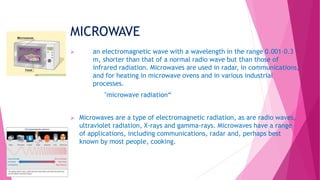
 an electromagnetic wave with a wavelength in the range 0.001–0.3
m, shorter than that of a normal radio wave but than those of
infrared radiation. Microwaves are used in radar, in communications,
and for heating in microwave ovens and in various industrial
processes.
"microwave radiation“
 Microwaves are a type of electromagnetic radiation, as are radio waves,
ultraviolet radiation, X-rays and gamma-rays. Microwaves have a range
of applications, including communications, radar and, perhaps best
known by most people, cooking.
Inventor of the microwave
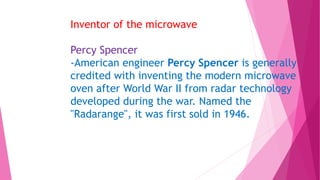
Percy Spencer
-American engineer Percy Spencer is generally
credited with inventing the modern microwave
oven after World War II from radar technology
developed during the war. Named the
"Radarange", it was first sold in 1946.
Percy Spencer
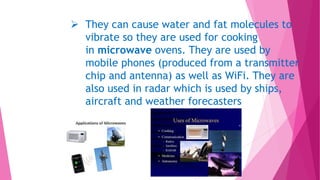
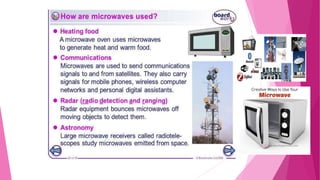
 They can cause water and fat molecules to
vibrate so they are used for cooking
in microwave ovens. They are used by
mobile phones (produced from a transmitter
chip and antenna) as well as WiFi. They are
also used in radar which is used by ships,
aircraft and weather forecasters
 Different wavelengths
of microwaves (grouped into "sub-
bands") provide different information
to scientists. Medium-length (C-
band) microwaves penetrate through
clouds, dust, smoke, snow, and rain to
reveal the Earth's surface. ... It
also used awavelengthin the L-band of
the microwave spectrum.
How microwave
works?
 Microwave ovens are so
quick and efficient
because they channel
heat energy directly to
the molecules (tiny
particles) inside
food. Microwaves heat
food like the sun heats
your face—by radiation.
A microwave is much like
the electromagnetic
waves that zap through
the air from TV and radio
transmitters.
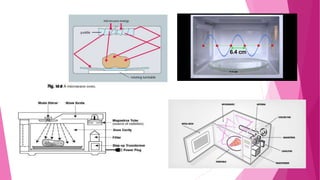
 A microwave oven (also commonly
referred to as a microwave) is an
electric oven that heats and cooks food
by exposing it to electromagnetic
radiation in the microwave frequency
range. This induces polar molecules in
the food to rotate and produce thermal
energy in a process known as dielectric
heating.
 Benefits of Microwaves -
Advantages of Using Microwave Ovens
Since the microwave oven entered
almost every home it shows
its advantages compared to other ways
of preparing food. Microwave ovens
present less of a risk of burns when
used. They heat the food but stay cold
themselves unlike other types of
heating methods.
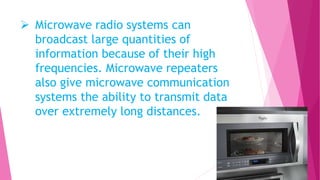
 Microwave radio systems can
broadcast large quantities of
information because of their high
frequencies. Microwave repeaters
also give microwave communication
systems the ability to transmit data
over extremely long distances.
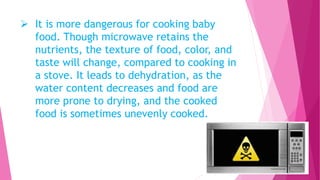
 It is more dangerous for cooking baby
food. Though microwave retains the
nutrients, the texture of food, color, and
taste will change, compared to cooking in
a stove. It leads to dehydration, as the
water content decreases and food are
more prone to drying, and the cooked
food is sometimes unevenly cooked.

microwave.

  • 1.
  • 2.
    MICROWAVE  an electromagneticwave with a wavelength in the range 0.001–0.3 m, shorter than that of a normal radio wave but than those of infrared radiation. Microwaves are used in radar, in communications, and for heating in microwave ovens and in various industrial processes. "microwave radiation“  Microwaves are a type of electromagnetic radiation, as are radio waves, ultraviolet radiation, X-rays and gamma-rays. Microwaves have a range of applications, including communications, radar and, perhaps best known by most people, cooking.
  • 3.
    Inventor of themicrowave Percy Spencer -American engineer Percy Spencer is generally credited with inventing the modern microwave oven after World War II from radar technology developed during the war. Named the "Radarange", it was first sold in 1946.
  • 4.
  • 6.
     They cancause water and fat molecules to vibrate so they are used for cooking in microwave ovens. They are used by mobile phones (produced from a transmitter chip and antenna) as well as WiFi. They are also used in radar which is used by ships, aircraft and weather forecasters
  • 8.
     Different wavelengths ofmicrowaves (grouped into "sub- bands") provide different information to scientists. Medium-length (C- band) microwaves penetrate through clouds, dust, smoke, snow, and rain to reveal the Earth's surface. ... It also used awavelengthin the L-band of the microwave spectrum.
  • 9.
    How microwave works?  Microwaveovens are so quick and efficient because they channel heat energy directly to the molecules (tiny particles) inside food. Microwaves heat food like the sun heats your face—by radiation. A microwave is much like the electromagnetic waves that zap through the air from TV and radio transmitters.
  • 11.
     A microwaveoven (also commonly referred to as a microwave) is an electric oven that heats and cooks food by exposing it to electromagnetic radiation in the microwave frequency range. This induces polar molecules in the food to rotate and produce thermal energy in a process known as dielectric heating.
  • 12.
     Benefits ofMicrowaves - Advantages of Using Microwave Ovens Since the microwave oven entered almost every home it shows its advantages compared to other ways of preparing food. Microwave ovens present less of a risk of burns when used. They heat the food but stay cold themselves unlike other types of heating methods.
  • 13.
     Microwave radiosystems can broadcast large quantities of information because of their high frequencies. Microwave repeaters also give microwave communication systems the ability to transmit data over extremely long distances.
  • 14.
     It ismore dangerous for cooking baby food. Though microwave retains the nutrients, the texture of food, color, and taste will change, compared to cooking in a stove. It leads to dehydration, as the water content decreases and food are more prone to drying, and the cooked food is sometimes unevenly cooked.