Microsoft Azure Fundamentals
Exam code: AZ900
Introduction/Overview:
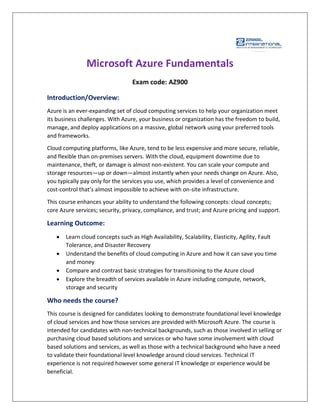
Azure is an ever-expanding set of cloud computing services to help your organization meet
its business challenges. With Azure, your business or organization has the freedom to build,
manage, and deploy applications on a massive, global network using your preferred tools
and frameworks.
Cloud computing platforms, like Azure, tend to be less expensive and more secure, reliable,
and flexible than on-premises servers. With the cloud, equipment downtime due to
maintenance, theft, or damage is almost non-existent. You can scale your compute and
storage resources—up or down—almost instantly when your needs change on Azure. Also,
you typically pay only for the services you use, which provides a level of convenience and
cost-control that’s almost impossible to achieve with on-site infrastructure.
This course enhances your ability to understand the following concepts: cloud concepts;
core Azure services; security, privacy, compliance, and trust; and Azure pricing and support.
Learning Outcome:
 Learn cloud concepts such as High Availability, Scalability, Elasticity, Agility, Fault
Tolerance, and Disaster Recovery
 Understand the benefits of cloud computing in Azure and how it can save you time
and money
 Compare and contrast basic strategies for transitioning to the Azure cloud
 Explore the breadth of services available in Azure including compute, network,
storage and security
Who needs the course?
This course is designed for candidates looking to demonstrate foundational level knowledge
of cloud services and how those services are provided with Microsoft Azure. The course is
intended for candidates with non-technical backgrounds, such as those involved in selling or
purchasing cloud based solutions and services or who have some involvement with cloud
based solutions and services, as well as those with a technical background who have a need
to validate their foundational level knowledge around cloud services. Technical IT
experience is not required however some general IT knowledge or experience would be
beneficial.
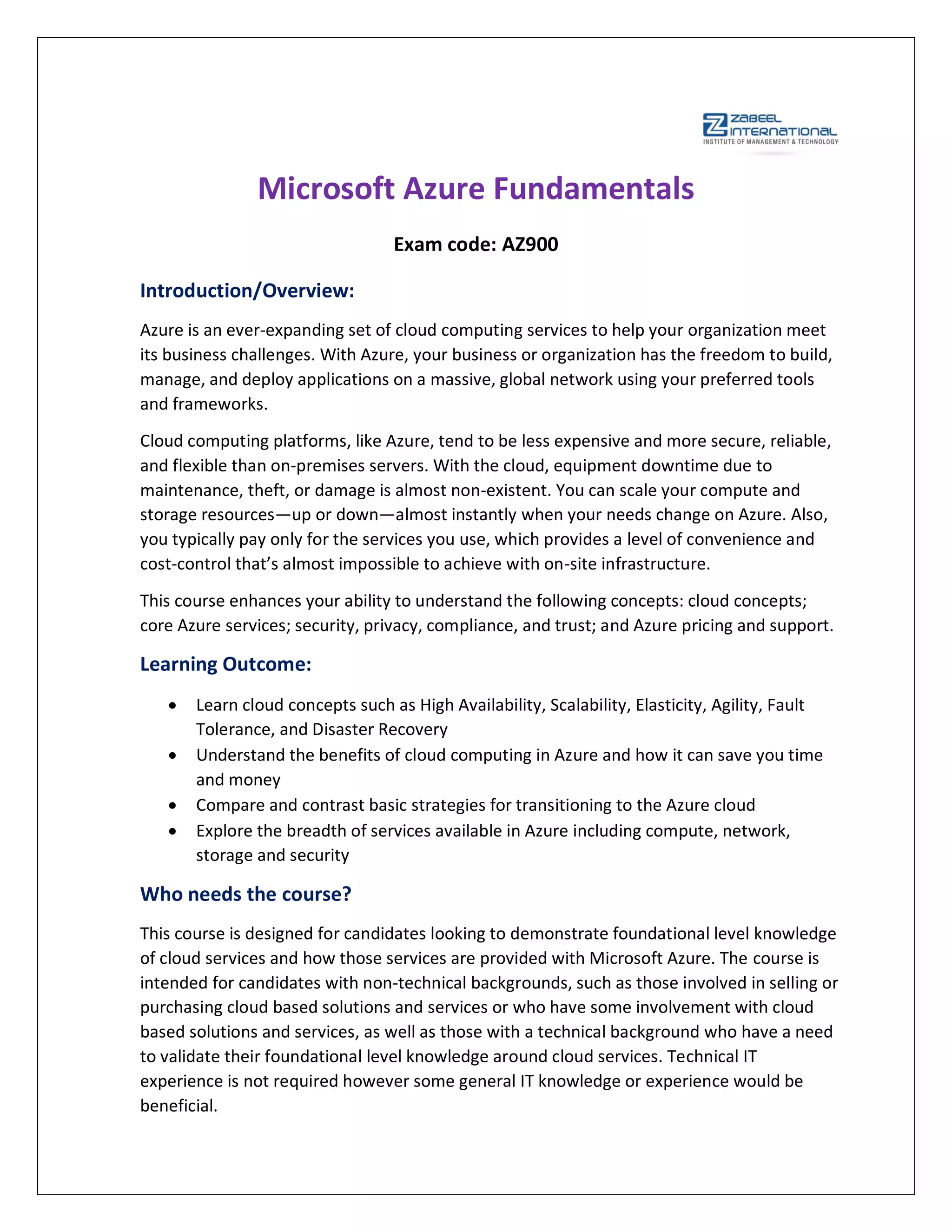
Detailed Course Content:
Understand cloud concepts (15-20%)
Describe the benefits and considerations of using cloud services
 understand terms such as High Availability, Scalability, Elasticity, Agility, Fault
Tolerance, and Disaster Recovery
 understand the principles of economies of scale
 understand the differences between Capital Expenditure (CapEx) and
Operational Expenditure (OpEx)
 understand the consumption-based model
Describe the differences between Infrastructure-as-a-Service (IaaS), Platform-as-a-
Service (PaaS) and Software-as-a-Service (SaaS)
 describe Infrastructure-as-a-Service (IaaS)
 describe Platform-as-a-Service (PaaS)
 describe Software-as-a-Service (SaaS)
 compare and contrast the three different service types
Describe the differences between Public, Private and Hybrid cloud models
 describe Public cloud
 describe Private cloud
 describe Hybrid cloud
 compare and contrast the three different cloud models
Understand core Azure services (30-35%)
Understand the core Azure architectural components
 describe Regions
 describe Availability Zones
 describe Resource Groups
 describe Azure Resource manager
 describe the benefits and usage of core Azure architectural components
Describe some of the core products available in Azure
 describe products available for Compute such as Virtual Machines, Virtual
Machine Scale Sets, App Service and Functions
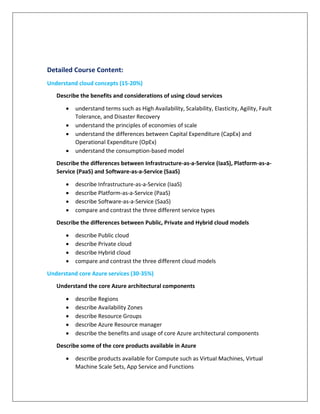
 describe products available for Networking such as Virtual Network, Load
Balancer, VPN Gateway, Application Gateway and Content Delivery Network
 describe products available for Storage such as Blob Storage, Disk Storage, File
Storage, and Archive Storage
 describe products available for Databases such as CosmosDB, Azure SQL
Database, Azure Database Migration service, and Azure SQL Data Warehouse
 describe the Azure Marketplace and its usage scenarios
Describe some of the solutions available on Azure
 describe Internet of Things (IoT) and products that are available for IoT on Azure
such as IoT Fundamentals, IoT Hub and IoT Central
 describe Big Data and Analytics and products that are available for Big Data and
Analytics such as SQL Data Warehouse, HDInsight and Data Lake Analytics
 describe Artificial Intelligence (AI) and products that are available for AI such as
Azure Machine Learning Service and Studio
 describe Serverless computing and Azure products that are available for
serverless computing such as Azure Functions, Logic Apps and App grid
 describe the benefits and outcomes of using Azure solutions
Understand Azure management tools
 understand Azure tools such as Azure CLI, PowerShell, and the Azure Portal
 understand Azure Advisor
Understand security, privacy, compliance, and trust (25-30%)
Understand securing network connectivity in Azure
 describe Azure Firewall
 describe Azure DDoS Protection
 describe Network Security Group (NSG)
 choose an appropriate Azure security solution
Describe core Azure Identity services
 understand the difference between authentication and authorization
 describe Azure Active Directory
 describe Azure Multi-Factor Authentication
Describe security tools and features of Azure
 describe Azure Security
 understand Azure Security center usage scenarios
 describe Key Vault
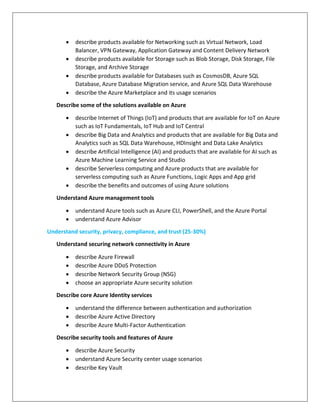
 describe Azure Information Protection (AIP)
 describe Azure Advanced Threat Protection (ATP)
Describe Azure governance methodologies
 describe Azure Policies
 describe Initiatives
 describe Role-Based Access Control (RBAC)
 describe Locks
 describe Azure Advisor security assistance
Understand monitoring and reporting options in Azure
 describe Azure Monitor
 describe Azure Service Health
 understand the use cases and benefits of Azure Monitor and Azure Service
Health
Understand privacy, compliance and data protection standards in Azure
 understand industry compliance terms such as GDPR, ISO and NIST
 understand the Microsoft Privacy Statement
 describe the Trust center
 describe the Service Trust Portal
 describe Compliance Manager
 determine if Azure is compliant for a business need
 understand Azure Government services
 understand Azure Germany services
Understand Azure pricing and support (25-30%)
Understand Azure subscriptions
 describe an Azure subscription
 understand the uses and options with Azure subscriptions
Understand planning and management of costs
 understand options for purchasing Azure products and services
 understand options around Azure Free account
 understand the factors affecting costs such as resource types, services, locations,
ingress and egress traffic
 understand Zones for billing purposes
 understand the Pricing calculator
 understand the Total Cost of Ownership (TCO) calculator
 understand best practices for minimizing Azure costs such as performing cost
analysis, creating spending limits and quotas, and using tags to identify cost
owners; use Azure reservations; use Azure Advisor recommendations
 describe Azure Cost Management
Understand the support options available with Azure
 understand support plans that are available such as Dev, Standard, Professional
Direct and Premier
 understand how to open a support ticket
 understand available support channels outside of support plan channels
 describe the Knowledge Center
Describe Azure Service Level Agreements (SLAs)
 describe a Service Level Agreement (SLA)
 determine SLA for a particular Azure product or service
Understand service lifecycle in Azure
 understand Public and Private Preview features
 understand how to access Preview features
 understand the term General Availability (GA)
 monitor feature updates
Exam and Certification if Public Exam- Public Exam
Specific Certification Title: Microsoft Certified Azure Fundamentals
About Awarding Body:
Microsoft Corporation is an American multinational technology company with headquarters
in Redmond, Washington. It develops, manufactures, licenses, supports and sells computer
software, consumer electronics, personal computers, and related services. Its best known
software products are the Microsoft Windows line of operating systems, the Microsoft
Office suite, and the Internet Explorer and Edge Web browsers.
Eligibility: Anyone who aspires to validate their foundational level knowledge around cloud
services.
Examination Pattern:
 Duration: 85 Mins
 Number of Questions: 40-60
 Passing Score - 700
Exam Dates:
Exam can be taken anytime in the year. Exam can be scheduled by clicking “schedule exam”
link on AZ-900 page on Microsoft portal.
Membership Fee: Not Applicable
Exam fee: $99 USD

Microsoft certified azure fundamentals exam code az-900

  • 1.
    Microsoft Azure Fundamentals Examcode: AZ900 Introduction/Overview: Azure is an ever-expanding set of cloud computing services to help your organization meet its business challenges. With Azure, your business or organization has the freedom to build, manage, and deploy applications on a massive, global network using your preferred tools and frameworks. Cloud computing platforms, like Azure, tend to be less expensive and more secure, reliable, and flexible than on-premises servers. With the cloud, equipment downtime due to maintenance, theft, or damage is almost non-existent. You can scale your compute and storage resources—up or down—almost instantly when your needs change on Azure. Also, you typically pay only for the services you use, which provides a level of convenience and cost-control that’s almost impossible to achieve with on-site infrastructure. This course enhances your ability to understand the following concepts: cloud concepts; core Azure services; security, privacy, compliance, and trust; and Azure pricing and support. Learning Outcome:  Learn cloud concepts such as High Availability, Scalability, Elasticity, Agility, Fault Tolerance, and Disaster Recovery  Understand the benefits of cloud computing in Azure and how it can save you time and money  Compare and contrast basic strategies for transitioning to the Azure cloud  Explore the breadth of services available in Azure including compute, network, storage and security Who needs the course? This course is designed for candidates looking to demonstrate foundational level knowledge of cloud services and how those services are provided with Microsoft Azure. The course is intended for candidates with non-technical backgrounds, such as those involved in selling or purchasing cloud based solutions and services or who have some involvement with cloud based solutions and services, as well as those with a technical background who have a need to validate their foundational level knowledge around cloud services. Technical IT experience is not required however some general IT knowledge or experience would be beneficial.
  • 2.
    Detailed Course Content: Understandcloud concepts (15-20%) Describe the benefits and considerations of using cloud services  understand terms such as High Availability, Scalability, Elasticity, Agility, Fault Tolerance, and Disaster Recovery  understand the principles of economies of scale  understand the differences between Capital Expenditure (CapEx) and Operational Expenditure (OpEx)  understand the consumption-based model Describe the differences between Infrastructure-as-a-Service (IaaS), Platform-as-a- Service (PaaS) and Software-as-a-Service (SaaS)  describe Infrastructure-as-a-Service (IaaS)  describe Platform-as-a-Service (PaaS)  describe Software-as-a-Service (SaaS)  compare and contrast the three different service types Describe the differences between Public, Private and Hybrid cloud models  describe Public cloud  describe Private cloud  describe Hybrid cloud  compare and contrast the three different cloud models Understand core Azure services (30-35%) Understand the core Azure architectural components  describe Regions  describe Availability Zones  describe Resource Groups  describe Azure Resource manager  describe the benefits and usage of core Azure architectural components Describe some of the core products available in Azure  describe products available for Compute such as Virtual Machines, Virtual Machine Scale Sets, App Service and Functions
  • 3.
     describe productsavailable for Networking such as Virtual Network, Load Balancer, VPN Gateway, Application Gateway and Content Delivery Network  describe products available for Storage such as Blob Storage, Disk Storage, File Storage, and Archive Storage  describe products available for Databases such as CosmosDB, Azure SQL Database, Azure Database Migration service, and Azure SQL Data Warehouse  describe the Azure Marketplace and its usage scenarios Describe some of the solutions available on Azure  describe Internet of Things (IoT) and products that are available for IoT on Azure such as IoT Fundamentals, IoT Hub and IoT Central  describe Big Data and Analytics and products that are available for Big Data and Analytics such as SQL Data Warehouse, HDInsight and Data Lake Analytics  describe Artificial Intelligence (AI) and products that are available for AI such as Azure Machine Learning Service and Studio  describe Serverless computing and Azure products that are available for serverless computing such as Azure Functions, Logic Apps and App grid  describe the benefits and outcomes of using Azure solutions Understand Azure management tools  understand Azure tools such as Azure CLI, PowerShell, and the Azure Portal  understand Azure Advisor Understand security, privacy, compliance, and trust (25-30%) Understand securing network connectivity in Azure  describe Azure Firewall  describe Azure DDoS Protection  describe Network Security Group (NSG)  choose an appropriate Azure security solution Describe core Azure Identity services  understand the difference between authentication and authorization  describe Azure Active Directory  describe Azure Multi-Factor Authentication Describe security tools and features of Azure  describe Azure Security  understand Azure Security center usage scenarios  describe Key Vault
  • 4.
     describe AzureInformation Protection (AIP)  describe Azure Advanced Threat Protection (ATP) Describe Azure governance methodologies  describe Azure Policies  describe Initiatives  describe Role-Based Access Control (RBAC)  describe Locks  describe Azure Advisor security assistance Understand monitoring and reporting options in Azure  describe Azure Monitor  describe Azure Service Health  understand the use cases and benefits of Azure Monitor and Azure Service Health Understand privacy, compliance and data protection standards in Azure  understand industry compliance terms such as GDPR, ISO and NIST  understand the Microsoft Privacy Statement  describe the Trust center  describe the Service Trust Portal  describe Compliance Manager  determine if Azure is compliant for a business need  understand Azure Government services  understand Azure Germany services Understand Azure pricing and support (25-30%) Understand Azure subscriptions  describe an Azure subscription  understand the uses and options with Azure subscriptions Understand planning and management of costs  understand options for purchasing Azure products and services  understand options around Azure Free account  understand the factors affecting costs such as resource types, services, locations, ingress and egress traffic  understand Zones for billing purposes  understand the Pricing calculator  understand the Total Cost of Ownership (TCO) calculator
  • 5.
     understand bestpractices for minimizing Azure costs such as performing cost analysis, creating spending limits and quotas, and using tags to identify cost owners; use Azure reservations; use Azure Advisor recommendations  describe Azure Cost Management Understand the support options available with Azure  understand support plans that are available such as Dev, Standard, Professional Direct and Premier  understand how to open a support ticket  understand available support channels outside of support plan channels  describe the Knowledge Center Describe Azure Service Level Agreements (SLAs)  describe a Service Level Agreement (SLA)  determine SLA for a particular Azure product or service Understand service lifecycle in Azure  understand Public and Private Preview features  understand how to access Preview features  understand the term General Availability (GA)  monitor feature updates Exam and Certification if Public Exam- Public Exam Specific Certification Title: Microsoft Certified Azure Fundamentals About Awarding Body: Microsoft Corporation is an American multinational technology company with headquarters in Redmond, Washington. It develops, manufactures, licenses, supports and sells computer software, consumer electronics, personal computers, and related services. Its best known software products are the Microsoft Windows line of operating systems, the Microsoft Office suite, and the Internet Explorer and Edge Web browsers. Eligibility: Anyone who aspires to validate their foundational level knowledge around cloud services. Examination Pattern:  Duration: 85 Mins  Number of Questions: 40-60  Passing Score - 700
  • 6.
    Exam Dates: Exam canbe taken anytime in the year. Exam can be scheduled by clicking “schedule exam” link on AZ-900 page on Microsoft portal. Membership Fee: Not Applicable Exam fee: $99 USD