MICROFINANCE

Presented by,
Yogita Patil.
F.Y.MMS
History of microfinance
•

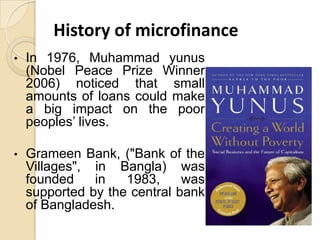
In 1976, Muhammad yunus
(Nobel Peace Prize Winner
2006) noticed that small
amounts of loans could make
a big impact on the poor
peoples’ lives.

•

Grameen Bank, ("Bank of the
Villages", in Bangla) was
founded
in
1983,
was
supported by the central bank
of Bangladesh.
â—¦ "Poverty is the absence of all human rights.

The frustrations, hostility and anger generated
by abject poverty cannot sustain peace in any
society. For building stable peace we must find
ways to provide opportunities for people to live
decent lives."
â—¦
— Dr. Muhammad Yunus
Founder, Grameen Bank
Recipient of Nobel Peace Prize -2006
Definition of 'Microfinance'
A type of banking service that is provided
to unemployed or low-income individuals
or groups who would otherwise have no
other means of gaining financial services.
ď‚— Ultimately, the goal of microfinance is to
give low income people an opportunity to
become self-sufficient by providing a
means of saving money, borrowing money
and insurance.
ď‚—
DEFINITION OF MICROFINANCE or
microcredit
â—¦ MICROFINANCE: Financial services to
low-income individuals who do not have
access to normal banking services.
Microcredit is one of the financial services
offered.
â—¦ MICROCREDIT: The lending of small
amounts of money at low interest to
individuals and/or new businesses in the
developing world. (Oxford Dictionaries
Online)
HOW DOES MICROFINANCE AID IN ECONOMIC
DEVELOPMENT?
• Encourages
entrepreneurship
and
independence from government aid and/or
subsidies
• Provides “poor” people the opportunity to earn
sustainable income which in turn allows for a
better standard of living
• Increases in disposable income can lead to
future development and growth
• Has a positive influence on social indicators—
education, health, nutrition)
• Empower the poor which can correlate directly
with political democracy and economic
development
Why do poor people need for financial
service?
Lifecycle Needs: such as weddings, funerals,
childbirth, education, homebuilding, widowhood,
old age.
ď‚— Personal Emergencies: such as sickness, injury,
unemployment, theft, harassment or death.
ď‚— Disasters: such as fires, floods, cyclones and
man-made events like war.
ď‚— Investment Opportunities: expanding a business,
buying land or equipment, improving housing, etc.
ď‚—
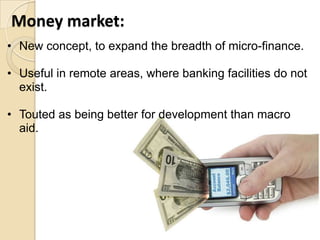
Money market:
• New concept, to expand the breadth of micro-finance.
• Useful in remote areas, where banking facilities do not
exist.
• Touted as being better for development than macro
aid.
conclusion
• Emerging markets are doing very well right now
• Good from an investor's point of view (high returns,
diversification)

• Feel-good investment
• Untapped potential
Microfinance

Microfinance

  • 1.
  • 2.
    History of microfinance • In1976, Muhammad yunus (Nobel Peace Prize Winner 2006) noticed that small amounts of loans could make a big impact on the poor peoples’ lives. • Grameen Bank, ("Bank of the Villages", in Bangla) was founded in 1983, was supported by the central bank of Bangladesh.
  • 3.
    ◦ "Poverty isthe absence of all human rights. The frustrations, hostility and anger generated by abject poverty cannot sustain peace in any society. For building stable peace we must find ways to provide opportunities for people to live decent lives." ◦ — Dr. Muhammad Yunus Founder, Grameen Bank Recipient of Nobel Peace Prize -2006
  • 4.
    Definition of 'Microfinance' Atype of banking service that is provided to unemployed or low-income individuals or groups who would otherwise have no other means of gaining financial services. ď‚— Ultimately, the goal of microfinance is to give low income people an opportunity to become self-sufficient by providing a means of saving money, borrowing money and insurance. ď‚—
  • 5.
    DEFINITION OF MICROFINANCEor microcredit â—¦ MICROFINANCE: Financial services to low-income individuals who do not have access to normal banking services. Microcredit is one of the financial services offered. â—¦ MICROCREDIT: The lending of small amounts of money at low interest to individuals and/or new businesses in the developing world. (Oxford Dictionaries Online)
  • 6.
    HOW DOES MICROFINANCEAID IN ECONOMIC DEVELOPMENT? • Encourages entrepreneurship and independence from government aid and/or subsidies • Provides “poor” people the opportunity to earn sustainable income which in turn allows for a better standard of living • Increases in disposable income can lead to future development and growth • Has a positive influence on social indicators— education, health, nutrition) • Empower the poor which can correlate directly with political democracy and economic development
  • 7.
    Why do poorpeople need for financial service? Lifecycle Needs: such as weddings, funerals, childbirth, education, homebuilding, widowhood, old age. ď‚— Personal Emergencies: such as sickness, injury, unemployment, theft, harassment or death. ď‚— Disasters: such as fires, floods, cyclones and man-made events like war. ď‚— Investment Opportunities: expanding a business, buying land or equipment, improving housing, etc. ď‚—
  • 8.
    Money market: • Newconcept, to expand the breadth of micro-finance. • Useful in remote areas, where banking facilities do not exist. • Touted as being better for development than macro aid.
  • 9.
    conclusion • Emerging marketsare doing very well right now • Good from an investor's point of view (high returns, diversification) • Feel-good investment • Untapped potential