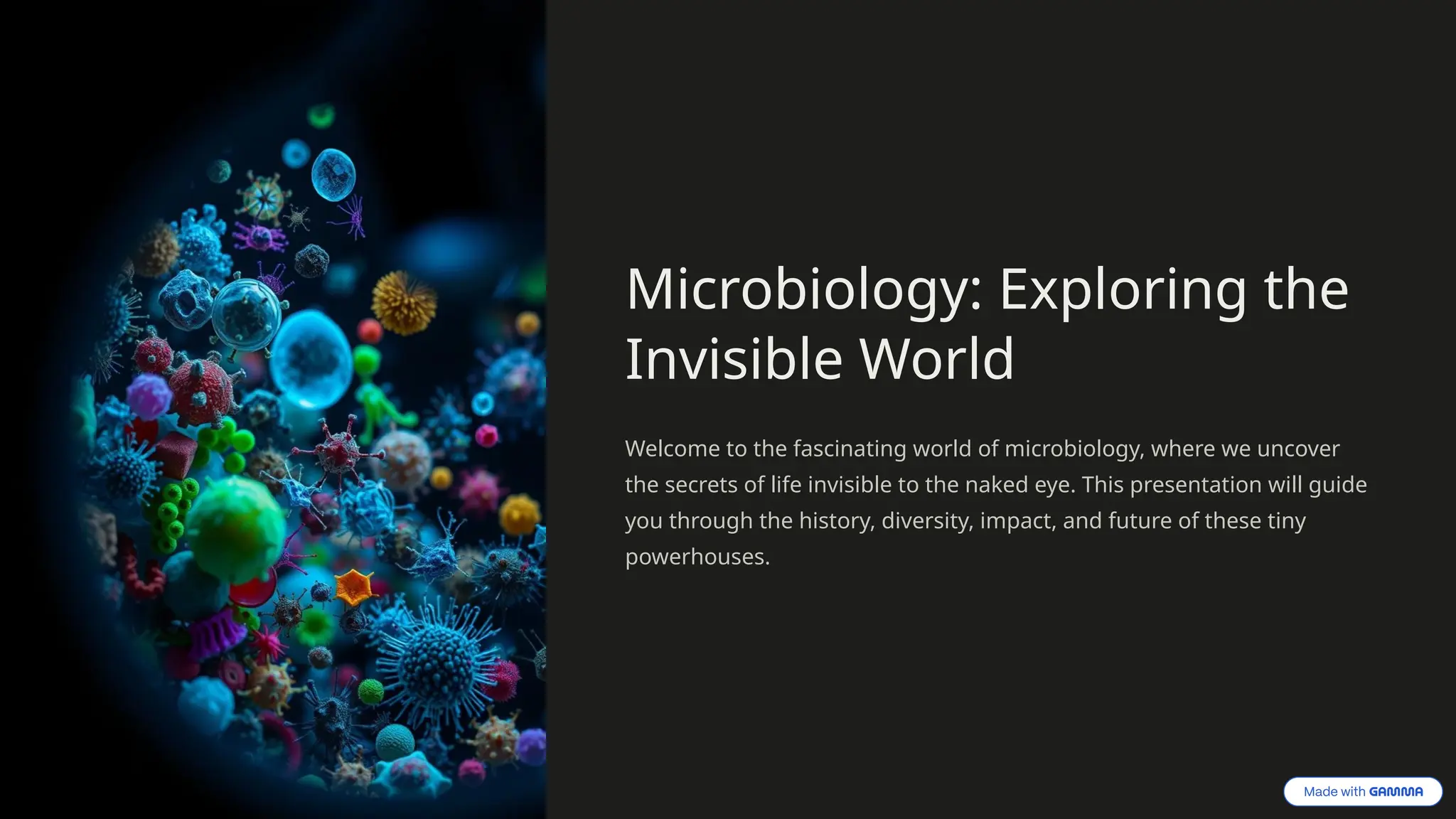
Microbiology: Exploring the
InvisibleWorld
Welcome to the fascinating world of microbiology, where we uncover
the secrets of life invisible to the naked eye. This presentation will guide
you through the history, diversity, impact, and future of these tiny
powerhouses.
2.
The Birth ofMicrobiology:
Seeing the Unseen
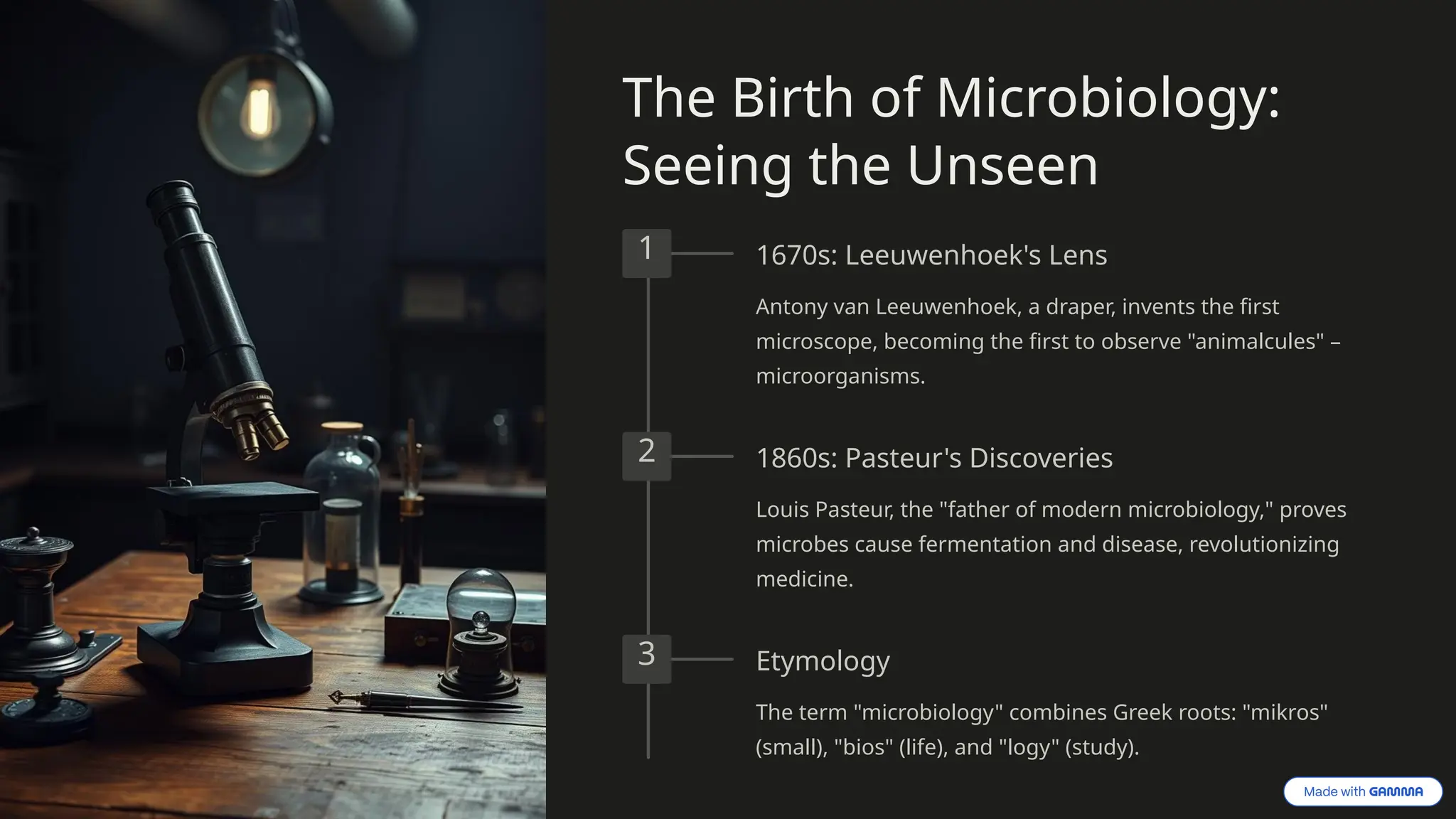
1 1670s: Leeuwenhoek's Lens
Antony van Leeuwenhoek, a draper, invents the first
microscope, becoming the first to observe "animalcules" –
microorganisms.
2 1860s: Pasteur's Discoveries
Louis Pasteur, the "father of modern microbiology," proves
microbes cause fermentation and disease, revolutionizing
medicine.
3 Etymology
The term "microbiology" combines Greek roots: "mikros"
(small), "bios" (life), and "logy" (study).
3.
The Microbial Universe:Diversity Beyond Sight
Microorganisms are incredibly diverse, inhabiting every corner of Earth and even our own bodies. They are broadly categorized based on their
cellular structure.
Major Groups
• Bacteria: Single-celled prokaryotes
• Archaea: Ancient, extremophile prokaryotes
• Fungi: Yeasts, molds, and mushrooms
• Protozoa: Single-celled eukaryotes
• Algae: Photosynthetic eukaryotes
• Viruses: Non-cellular infectious agents
Cellular Structures
Prokaryotes: Simple cells lacking a nucleus (e.g., bacteria, archaea).
Eukaryotes: Complex cells with a membrane-bound nucleus (e.g.,
fungi, protozoa, algae).
Did you know? Over 1,000 species of microbes colonize the human
mouth, and 99% of the cells in our body are microbial!
4.
Microbes: Friends andFoes
Beneficial Contributions
• Nutrient recycling in
ecosystems
• Food production: yogurt,
cheese, beer
• Vitamin synthesis: E. coli
produces Vitamin K in the gut
• Decomposition of organic
matter
Harmful Roles
• Pathogens causing diseases:
tuberculosis, influenza, food
poisoning
• Spoilage of food and
materials
Vaccine Pioneers
• Edward Jenner (smallpox)
• Louis Pasteur (rabies)
5.
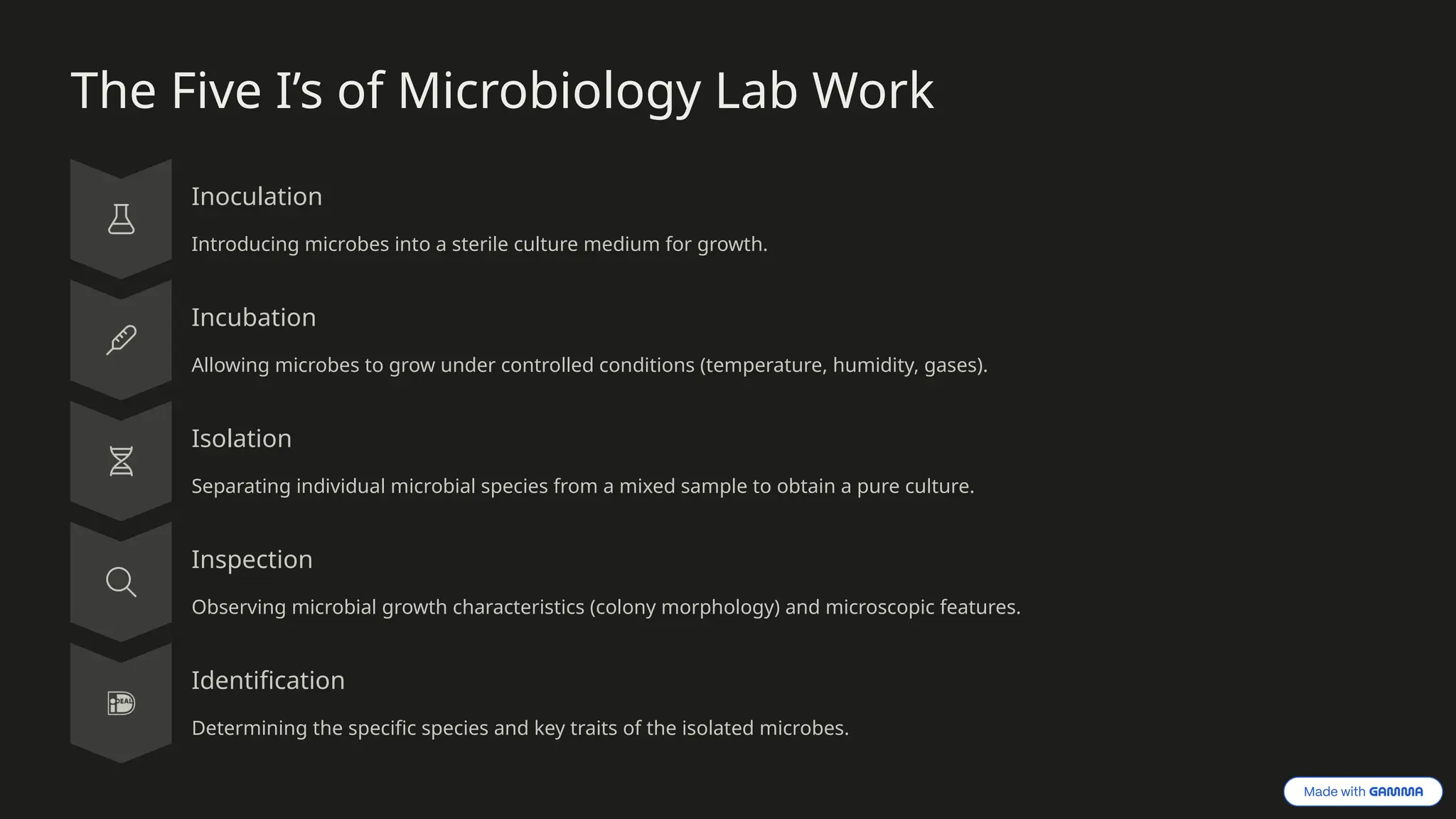
The Five I’sof Microbiology Lab Work
Inoculation
Introducing microbes into a sterile culture medium for growth.
Incubation
Allowing microbes to grow under controlled conditions (temperature, humidity, gases).
Isolation
Separating individual microbial species from a mixed sample to obtain a pure culture.
Inspection
Observing microbial growth characteristics (colony morphology) and microscopic features.
Identification
Determining the specific species and key traits of the isolated microbes.
6.
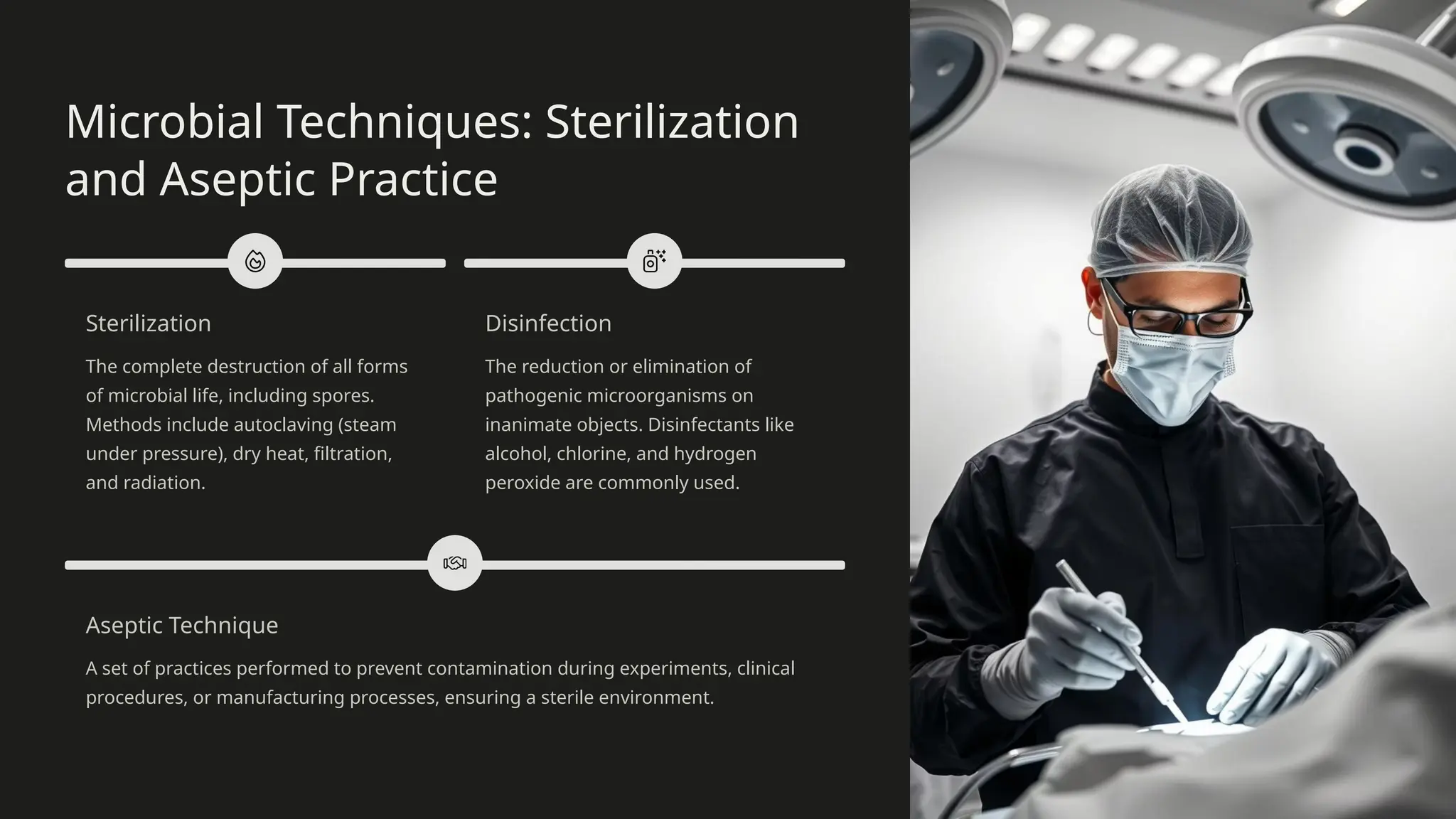
Microbial Techniques: Sterilization
andAseptic Practice
Sterilization
The complete destruction of all forms
of microbial life, including spores.
Methods include autoclaving (steam
under pressure), dry heat, filtration,
and radiation.
Disinfection
The reduction or elimination of
pathogenic microorganisms on
inanimate objects. Disinfectants like
alcohol, chlorine, and hydrogen
peroxide are commonly used.
Aseptic Technique
A set of practices performed to prevent contamination during experiments, clinical
procedures, or manufacturing processes, ensuring a sterile environment.
7.
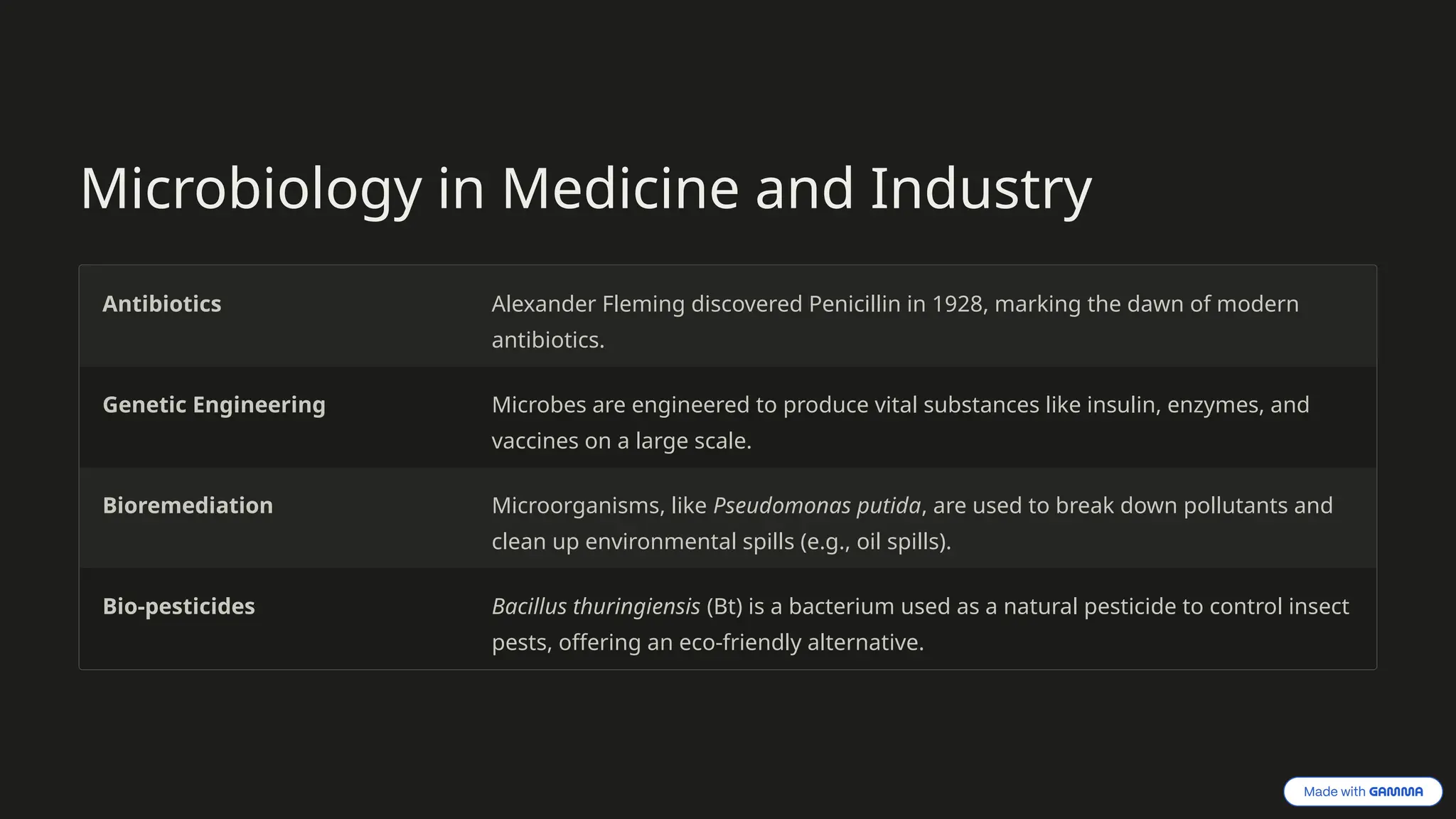
Microbiology in Medicineand Industry
Antibiotics Alexander Fleming discovered Penicillin in 1928, marking the dawn of modern
antibiotics.
Genetic Engineering Microbes are engineered to produce vital substances like insulin, enzymes, and
vaccines on a large scale.
Bioremediation Microorganisms, like Pseudomonas putida, are used to break down pollutants and
clean up environmental spills (e.g., oil spills).
Bio-pesticides Bacillus thuringiensis (Bt) is a bacterium used as a natural pesticide to control insect
pests, offering an eco-friendly alternative.
8.
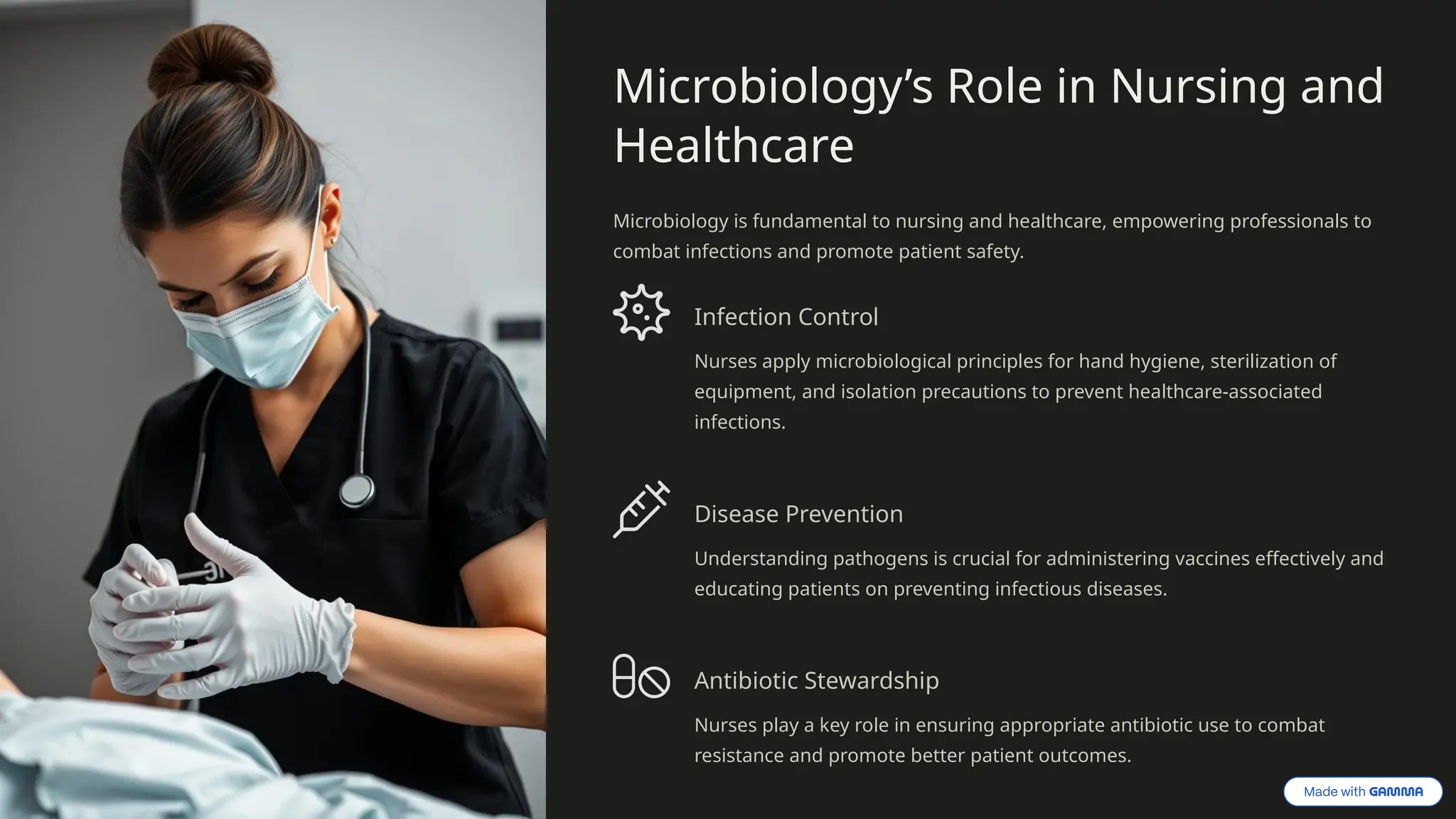
Microbiology’s Role inNursing and
Healthcare
Microbiology is fundamental to nursing and healthcare, empowering professionals to
combat infections and promote patient safety.
Infection Control
Nurses apply microbiological principles for hand hygiene, sterilization of
equipment, and isolation precautions to prevent healthcare-associated
infections.
Disease Prevention
Understanding pathogens is crucial for administering vaccines effectively and
educating patients on preventing infectious diseases.
Antibiotic Stewardship
Nurses play a key role in ensuring appropriate antibiotic use to combat
resistance and promote better patient outcomes.
9.
The Future ofMicrobiology: Innovations and
Challenges
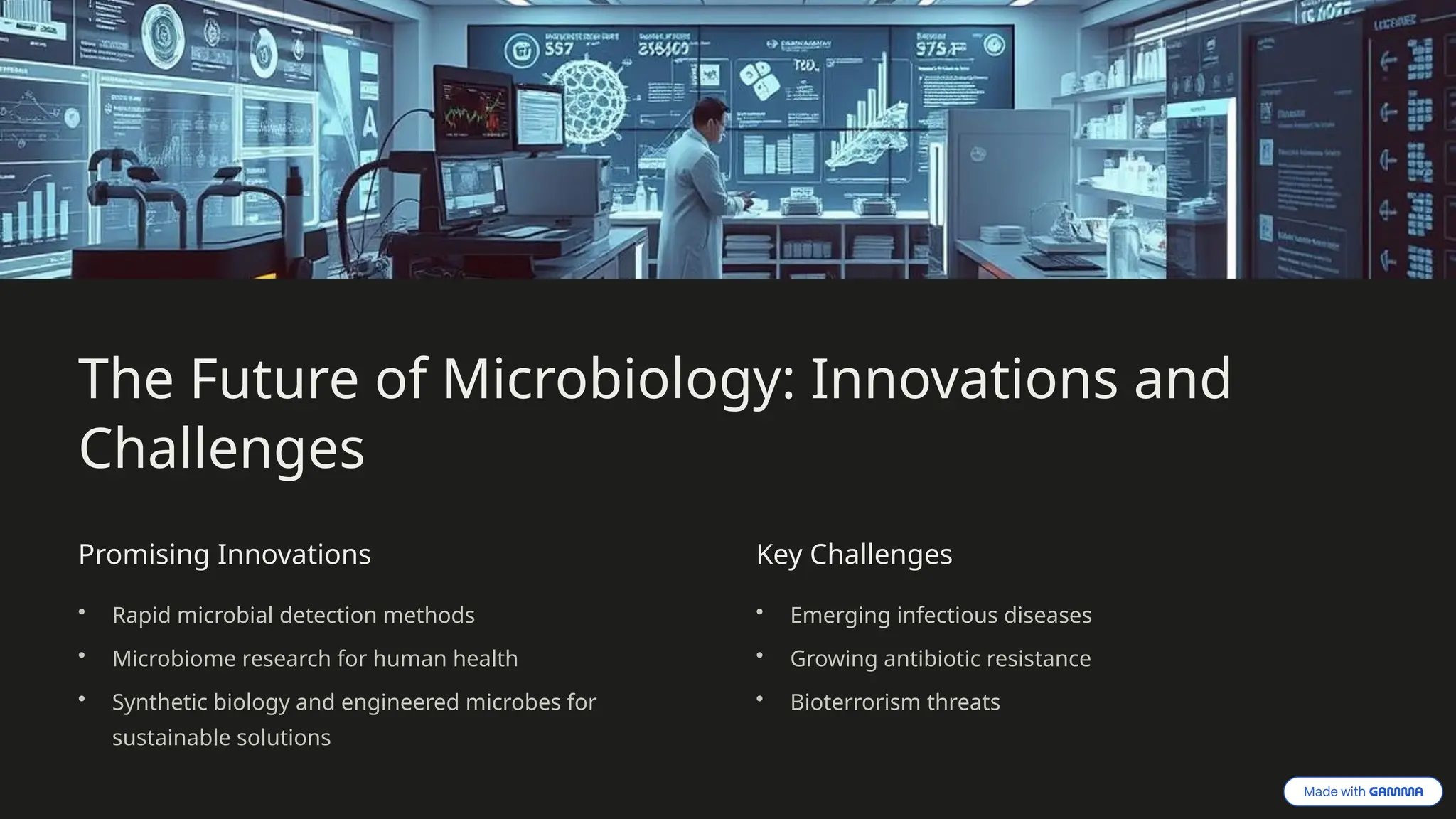
Promising Innovations
• Rapid microbial detection methods
• Microbiome research for human health
• Synthetic biology and engineered microbes for
sustainable solutions
Key Challenges
• Emerging infectious diseases
• Growing antibiotic resistance
• Bioterrorism threats
10.
Conclusion: The Microscopic
World,A Giant Impact
The invisible world of microbes profoundly shapes our ecosystems,
health, and industries. Our journey through microbiology underscores
the immense importance of these tiny organisms.
Continued research and innovation are vital for addressing global
challenges in medicine, environmental sustainability, and food
security.
"Small things make a big difference."