Microbes, Food Biotech &
Processing
- BY GROUP 5
Micro-organisms:-
 MICROORGANISMS USED IN BIOTECHNOLOGY Some of the organisms more commonly used
in biotechnology include
 Pseudomonas. A group of soil bacteria that contain some extremely diverse chemical abilities,
which biotechnology has harnessed in bioremediation..
 Escherichia coli. This very versatile Gram-negative ,bacterium is used in many biotechnological
processes. It is by far the most common host cell for recombinant DNA work. It is also used in
fermentations to make many amino acids and other products since it grows on many very
cheap fermentation substrates, grows fast, and can be manipulated genetically to accumulate
many different chemicals. It is also very chemically versatile and quite non-pathogenic (with
the exception of a few strains which, obviously, are not used for biotechnology).
 Clostridium acetobutylicum. A bacterium used as a source of enzymes.
Corynebacterium glutamicum. This is widely used in fermentation
processes producing amino acids for food supplements
 Microbes can also be used as biofertilisers to improve crop yield. The
large-scale cultivation of crop plants rapidly depletes nutrients in the soil
and limits plant growth. Nitrogen can be replenished by using legume
plants in crop rotation programmes or by the application of free-living
nitrogen-fixing bacteria such as Azotobacter to the soil.
 Different strains of bacteria and fungus are used for fermentation of dairy
products for production of a wide variety of cultured milk products. Both
bacteria and fungi are used in these cheese production processes.
 Lactic acid bacteria are used for coagulation of milk that can be processed to
yield a wide variety of cheeses, including soft unripened, soft ripened, semisoft,
hard, and very hard types.
 Spirulina, a cyanobacterium, also is a popular food source sold in specialty stores.
 Moulds are used for rotting of grapes for production of different varieties of
wines.
 Mushrooms (Agaricusbisporus) are one of the most important fungi used as a
food source.
 Alcoholic beverages as beer are produced by fermentation of cereals and
grains using different strains of yeasts.
Food Biotechnology:-
 Food biotech is the use of technology to modify the genes of our food
sources. Our food sources are animals, plants, and microorganisms.
 With FOOD BIOTECH, we create new species of animals and plants,
specifically, animals and plants that we eat. We also use it to improve how
we produce food.
 These new species have desired nutritional, production, and marketing
properties.
By improvement, we mean either making the food
cheaper to produce, longer lasting, more disease
resistant, more drought resistant, more nutritional,
or tastier.
 Humans have been practicing FOOD BIOTECHNOLOGY for thousands of years
in the production and processing of food.
 We have been practicing Fermentation for example, which is a form of Food
Biotech, for over 8,000 years.
 Fermentation products include:
1. Beverages (alcoholic): Beer, wine, cider, and distilled spirits
2. Beverages (non-alcoholic): Coffee and tea
3. Dairy: Cheese, yogurt, kefir, buttermilk, and sour cream
4. Soybean products: Tofu, miso, soy sauce, tamari, and tempeh
5. Preserved vegetables: Sauerkraut and pickles
6. Other foods: Bread, vinegar, olives, salami
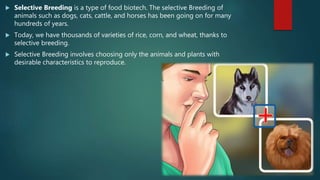
 Selective Breeding is a type of food biotech. The selective Breeding of
animals such as dogs, cats, cattle, and horses has been going on for many
hundreds of years.
 Today, we have thousands of varieties of rice, corn, and wheat, thanks to
selective breeding.
 Selective Breeding involves choosing only the animals and plants with
desirable characteristics to reproduce.
Processing
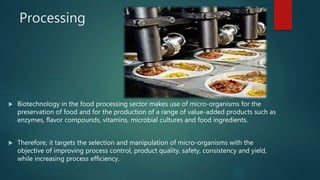
 Biotechnology in the food processing sector makes use of micro-organisms for the
preservation of food and for the production of a range of value-added products such as
enzymes, flavor compounds, vitamins, microbial cultures and food ingredients.
 Therefore, it targets the selection and manipulation of micro-organisms with the
objective of improving process control, product quality, safety, consistency and yield,
while increasing process efficiency.
 Recombinant gene technology, genetically modified (GM) microbes/food for
sustainable development for food and nutrition will also be catered to, by harnessing
the potential of biotechnology e.g., biotechnologists are investigating GM bacterial
strains that are resistant to phage infection.
 Bacteria used in fermentation are subject to viral bacteriophages, which can destroy
active cultures utilized in bioreactors and this problem can be solved by the use of
Virus-resistant strains.
 Also, Bioreactors can become contaminated with unwanted bacterial species & GM
bacteria that produce toxins are able to kill these unwanted contaminants .
 Food biotechnology research is investigating several avenues for
improving
1. the efficiency of production methods. The benefits include:
2. More environmentally friendly processes
3. Reduced energy consumption
4. Reduced waste and improved waste treatment processes
5. Better food safety via improved evaluation methods
6. Bioengineering of natural flavorings and food colorings
7. Enhanced enzymes, thickeners, emulsifying agents, and preservatives
8. More available and affordable ingredients and additives

Microbes, food biotech & processing

  • 1.
    Microbes, Food Biotech& Processing - BY GROUP 5
  • 2.
    Micro-organisms:-  MICROORGANISMS USEDIN BIOTECHNOLOGY Some of the organisms more commonly used in biotechnology include  Pseudomonas. A group of soil bacteria that contain some extremely diverse chemical abilities, which biotechnology has harnessed in bioremediation..  Escherichia coli. This very versatile Gram-negative ,bacterium is used in many biotechnological processes. It is by far the most common host cell for recombinant DNA work. It is also used in fermentations to make many amino acids and other products since it grows on many very cheap fermentation substrates, grows fast, and can be manipulated genetically to accumulate many different chemicals. It is also very chemically versatile and quite non-pathogenic (with the exception of a few strains which, obviously, are not used for biotechnology).
  • 3.
     Clostridium acetobutylicum.A bacterium used as a source of enzymes. Corynebacterium glutamicum. This is widely used in fermentation processes producing amino acids for food supplements  Microbes can also be used as biofertilisers to improve crop yield. The large-scale cultivation of crop plants rapidly depletes nutrients in the soil and limits plant growth. Nitrogen can be replenished by using legume plants in crop rotation programmes or by the application of free-living nitrogen-fixing bacteria such as Azotobacter to the soil.
  • 4.
     Different strainsof bacteria and fungus are used for fermentation of dairy products for production of a wide variety of cultured milk products. Both bacteria and fungi are used in these cheese production processes.  Lactic acid bacteria are used for coagulation of milk that can be processed to yield a wide variety of cheeses, including soft unripened, soft ripened, semisoft, hard, and very hard types.  Spirulina, a cyanobacterium, also is a popular food source sold in specialty stores.
  • 5.
     Moulds areused for rotting of grapes for production of different varieties of wines.  Mushrooms (Agaricusbisporus) are one of the most important fungi used as a food source.  Alcoholic beverages as beer are produced by fermentation of cereals and grains using different strains of yeasts.
  • 6.
    Food Biotechnology:-  Foodbiotech is the use of technology to modify the genes of our food sources. Our food sources are animals, plants, and microorganisms.  With FOOD BIOTECH, we create new species of animals and plants, specifically, animals and plants that we eat. We also use it to improve how we produce food.  These new species have desired nutritional, production, and marketing properties.
  • 7.
    By improvement, wemean either making the food cheaper to produce, longer lasting, more disease resistant, more drought resistant, more nutritional, or tastier.
  • 8.
     Humans havebeen practicing FOOD BIOTECHNOLOGY for thousands of years in the production and processing of food.  We have been practicing Fermentation for example, which is a form of Food Biotech, for over 8,000 years.  Fermentation products include: 1. Beverages (alcoholic): Beer, wine, cider, and distilled spirits 2. Beverages (non-alcoholic): Coffee and tea 3. Dairy: Cheese, yogurt, kefir, buttermilk, and sour cream 4. Soybean products: Tofu, miso, soy sauce, tamari, and tempeh 5. Preserved vegetables: Sauerkraut and pickles 6. Other foods: Bread, vinegar, olives, salami
  • 9.
     Selective Breedingis a type of food biotech. The selective Breeding of animals such as dogs, cats, cattle, and horses has been going on for many hundreds of years.  Today, we have thousands of varieties of rice, corn, and wheat, thanks to selective breeding.  Selective Breeding involves choosing only the animals and plants with desirable characteristics to reproduce.
  • 10.
    Processing  Biotechnology inthe food processing sector makes use of micro-organisms for the preservation of food and for the production of a range of value-added products such as enzymes, flavor compounds, vitamins, microbial cultures and food ingredients.  Therefore, it targets the selection and manipulation of micro-organisms with the objective of improving process control, product quality, safety, consistency and yield, while increasing process efficiency.
  • 11.
     Recombinant genetechnology, genetically modified (GM) microbes/food for sustainable development for food and nutrition will also be catered to, by harnessing the potential of biotechnology e.g., biotechnologists are investigating GM bacterial strains that are resistant to phage infection.  Bacteria used in fermentation are subject to viral bacteriophages, which can destroy active cultures utilized in bioreactors and this problem can be solved by the use of Virus-resistant strains.  Also, Bioreactors can become contaminated with unwanted bacterial species & GM bacteria that produce toxins are able to kill these unwanted contaminants .
  • 12.
     Food biotechnologyresearch is investigating several avenues for improving 1. the efficiency of production methods. The benefits include: 2. More environmentally friendly processes 3. Reduced energy consumption 4. Reduced waste and improved waste treatment processes 5. Better food safety via improved evaluation methods 6. Bioengineering of natural flavorings and food colorings 7. Enhanced enzymes, thickeners, emulsifying agents, and preservatives 8. More available and affordable ingredients and additives