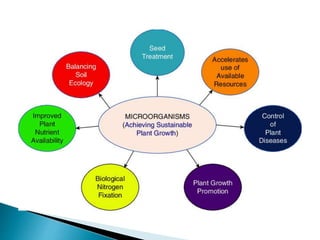
 Those organisms which cannot be seen with
the naked eye so we can see them through
microscope. They live everywhere, can be
useful and harmful to living things.
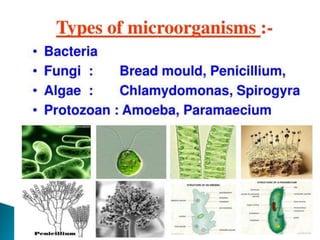
There are five main
types of
microorganisms namely
virus, bacteria, algae,
protozoa and fungi.
A: MICROBIOLOGY:
The branch of biology
that deals with the
study of microbes is
called microbiology.
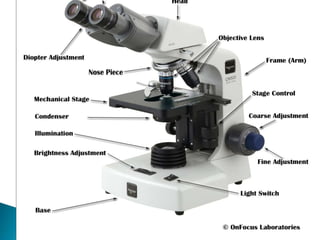
MICROSCOPE: It is an
instrument that is
used to view objects
that cannot be seen
with the naked eye
MICROBIOLOGIST:
The scientist which
research on
microbes are called
microbiologist
 Bacteria are of many shapes
out of which three are
common like bacillus (rod
shaped), cocci (spherical) and
spirilla (spiral).
 They are present in
humans, plants and
animals
PARASITES: A living
thing that lives in
another living things
and feeds on it and
harm it.
SAPROPHTEYS:
saprophytes are
organisms that feed
on waste and dead
plants and animals.
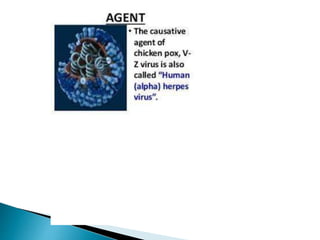
viruses have nucleic
acid core and have the
property of replication
in the body of living
things
: These are
bacteriophages,
saprophytic, parasitic
living in plant animals
and human beings
 A: some bacteria are useful in
converting sewage into
manure for field and other
waste animal excreta and
plant waste to liberate
methane which can be used to
provide energy as fuel.
 : Methane is called marsh gas because it is
found in marshy places and it is used to run
engine to produce electricity and to provide
energy as a fuel for home
A process by which
decomposers decompose
dead animals and plants
into smaller units is called
decomposition.it is
facilitated by saprophytic
organisms
MICRO ORGANISMS.pptx

MICRO ORGANISMS.pptx