CELLULAR EVENTS IN ZEBRAFISH OPTIC TECTAL BRAIN EXPLANTS: A MODEL TO ANALYZE NEUROTRAUMA AND NEUROREGENERATION  by Michael C. GutkinReflective Tutorial in Biology(Senior Learning Community) Experiential Component: ResearchDepartment of Biological SciencesWagner College Spring, 2010
Research Focuses in the LaboratoryTo study cellular events taking place in nervous tissue in cases of Traumatic Brain Injury (TBI).To use a model animal whose brain has known regenerative capacities. To use a model animal which inexpensive and easy to handle.
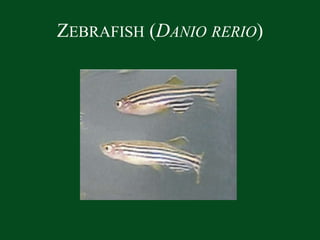
Zebrafish (Daniorerio)
Zebrafish Brain
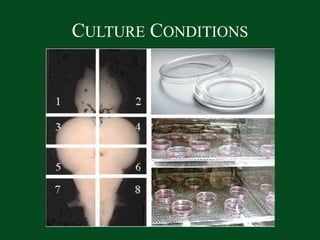
Culture Conditions
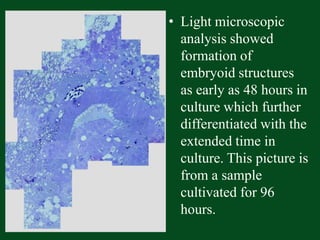
Light microscopic analysis showed formation of embryoid structures as early as 48 hours in culture which further differentiated with the extended time in culture. This picture is from a sample cultivated for 96 hours.
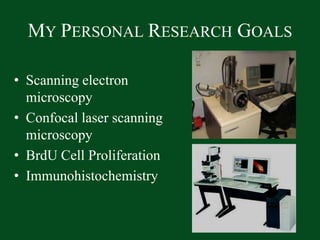
My Personal Research GoalsScanning electron microscopy Confocal laser scanning microscopy BrdU Cell ProliferationImmunohistochemistry
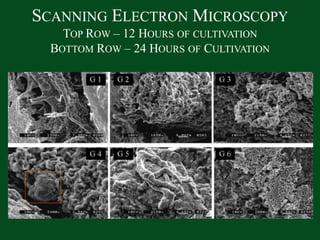
Scanning Electron MicroscopyTop Row – 12 Hours of cultivationBottom Row – 24 Hours of Cultivation
Scanning Electron Microscopy48 Hours of Cultivation
Scanning Electron Microscopy96 Hours of Cultivation
Zebrafish Brain Cytoarchitecture seen with Immunohistochemistry and Confocal Microscopy
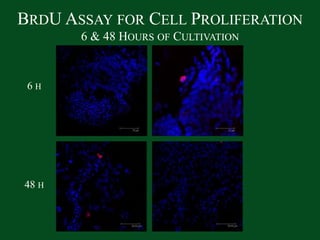
BrdU Assay for Cell Proliferation6 & 48 Hours of Cultivation6 h48 h
BrdU Assay for Cell Proliferation96 Hours of Cultivation
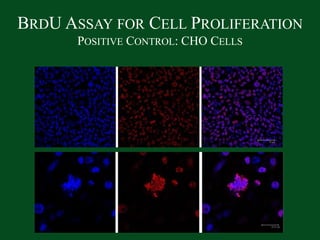
BrdU Assay for Cell ProliferationPositive Control: CHO Cells
ConclusionAdult zebrafish brain demonstrates regenerative capacities in surviving organotypic culture. This regeneration is characterized in SEM by relocation of “stem-like cells” and the formation of embryoid bodies accompanied by neovascularization within spongiform degenerative regions. Vital cells can be detected by IHC as well as cell proliferation, but dividing cells are seen less than expected.
Acknowledgements Professor Christopher CorboDr. Alejandra del C. Alonso Dr. William L’AmoreauxDr. ZoltanFulopProfessor Linda Raths

Michael Gutkin (Biology)

  • 1.
    CELLULAR EVENTS INZEBRAFISH OPTIC TECTAL BRAIN EXPLANTS: A MODEL TO ANALYZE NEUROTRAUMA AND NEUROREGENERATION  by Michael C. GutkinReflective Tutorial in Biology(Senior Learning Community) Experiential Component: ResearchDepartment of Biological SciencesWagner College Spring, 2010
  • 2.
    Research Focuses inthe LaboratoryTo study cellular events taking place in nervous tissue in cases of Traumatic Brain Injury (TBI).To use a model animal whose brain has known regenerative capacities. To use a model animal which inexpensive and easy to handle.
  • 3.
  • 4.
  • 5.
  • 6.
    Light microscopic analysisshowed formation of embryoid structures as early as 48 hours in culture which further differentiated with the extended time in culture. This picture is from a sample cultivated for 96 hours.
  • 7.
    My Personal ResearchGoalsScanning electron microscopy Confocal laser scanning microscopy BrdU Cell ProliferationImmunohistochemistry
  • 8.
    Scanning Electron MicroscopyTopRow – 12 Hours of cultivationBottom Row – 24 Hours of Cultivation
  • 9.
    Scanning Electron Microscopy48Hours of Cultivation
  • 10.
    Scanning Electron Microscopy96Hours of Cultivation
  • 11.
    Zebrafish Brain Cytoarchitectureseen with Immunohistochemistry and Confocal Microscopy
  • 12.
    BrdU Assay forCell Proliferation6 & 48 Hours of Cultivation6 h48 h
  • 13.
    BrdU Assay forCell Proliferation96 Hours of Cultivation
  • 14.
    BrdU Assay forCell ProliferationPositive Control: CHO Cells
  • 15.
    ConclusionAdult zebrafish braindemonstrates regenerative capacities in surviving organotypic culture. This regeneration is characterized in SEM by relocation of “stem-like cells” and the formation of embryoid bodies accompanied by neovascularization within spongiform degenerative regions. Vital cells can be detected by IHC as well as cell proliferation, but dividing cells are seen less than expected.
  • 16.
    Acknowledgements Professor ChristopherCorboDr. Alejandra del C. Alonso Dr. William L’AmoreauxDr. ZoltanFulopProfessor Linda Raths