Mexico City Yareny medina
History Mexico  is a country in North America and the largest  Spanish -speaking country in the world. It also has the largest number of  Native American  language speakers on the continent (the majority speaking  Nahuatl ,  Mayan ,  Mixtec  and  Zapotec ). For thousands of years, what is now known as Mexico was a land of hunter-gatherers. Around 9,000 years ago, ancient Amerindians domesticated  corn  and initiated an agricultural revolution, leading to the formation of many complex  civilizations . These civilizations revolved around  cities  with writing, monumental architecture, astronomical studies, mathematics and  militaries . After 4,000 years these civilizations were destroyed with the arrival of the  Spaniards  in 1519. For three centuries, Mexico was colonized by  Spain , during which time the majority of its indigenous population died off. Formal independence from Spain was recognized in 1821. A war with the  United States  (U.S) ended with Mexico losing almost half of its territory in 1848.  France  then invaded Mexico in 1861 and ruled briefly until 1867. The  Mexican Revolution  would later result in the death of 10 percent of the nation's population. Since then, Mexico as a  nation-state  has struggled with reconciling its deeply-entrenched indigenous heritage with the demands of the modern  Western  cultural model imposed in 1519. The nation's name is derived from the  Aztec 's capital called  Mexico-Tenochtitlan . Today, Mexico is home to the largest number of  Spanish -speakers in the world, and also has the largest number of  Native American -language-speakers in the  Americas  (the majority speaking  Nahuatl ,  Mayan ,  Mixtec  and  Zapotec ).
Important facts The official name of Mexico is Estados Unidos Mexicanos (United Mexican States).d  A Mexican tamale called the  zacahuil  is three feet long and weighs about 150 pounds.c  Mexico introduced chocolate, corn, and chilies to the world.f  Mexico is home to a very rare rabbit called the volcano rabbit which lives near Mexican volcanoes.c  The largest wildcat in North America is the jaguar, which can be found in Mexico's southern jungles.c  The first printing press in North America was used in Mexico City in 1539.c  The National University of Mexico was founded in 1551 by Charles V of Spain and is the oldest university in North America's
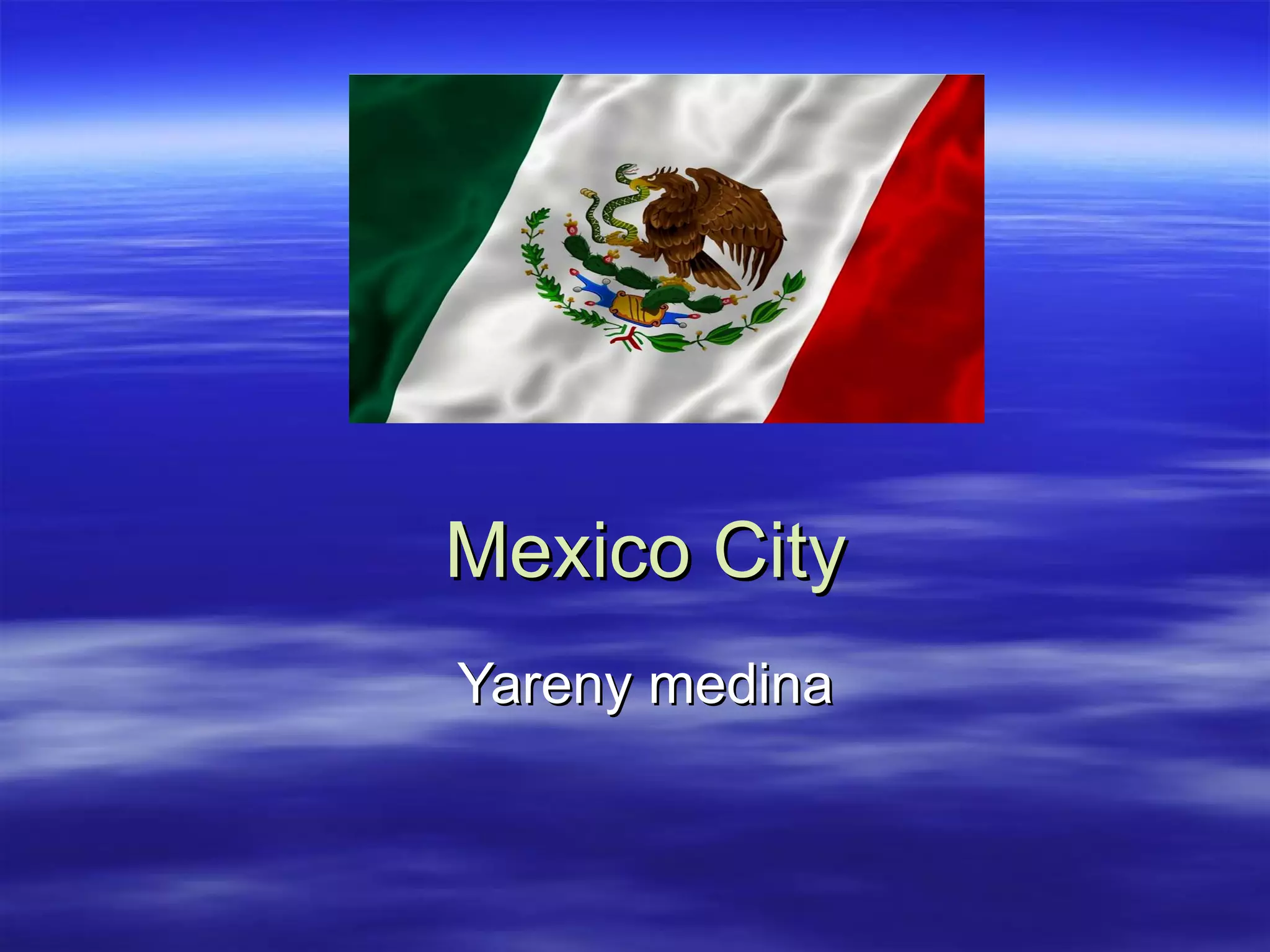
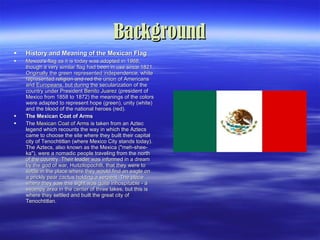
Background History and Meaning of the Mexican Flag Mexico's flag as it is today was adopted in 1968, though a very similar flag had been in use since 1821. Originally the green represented independence, white represented religion and red the union of Americans and Europeans, but during the secularization of the country under President  Benito Juarez  (president of Mexico from 1858 to 1872) the meanings of the colors were adapted to represent hope (green), unity (white) and the blood of the national heroes (red).  The Mexican Coat of Arms The  Mexican Coat of Arms  is taken from an Aztec legend which recounts the way in which the Aztecs came to choose the site where they built their capital city of Tenochtitlan (where Mexico City stands today). The Aztecs, also known as the Mexica ("meh-shee-ka"), were a nomadic people traveling from the north of the country. Their leader was informed in a dream by the god of war, Huitzilopochtli, that they were to settle in the place where they would find an eagle on a prickly pear cactus holding a serpent. The place where they saw this sight was quite inhospitable - a swampy area in the center of three lakes, but this is where they settled and built the great city of Tenochtitlan.
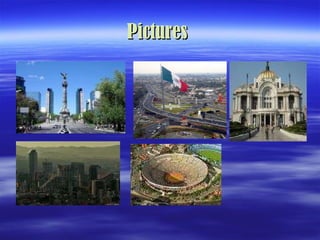
Pictures
conclusion Mexico city is one of the lagers cities in the world and is also one of the larger Spanish speaking country.
Reference www.yahoo.com www.google.com

Mexico City Power Point

  • 1.
  • 2.
    History Mexico is a country in North America and the largest Spanish -speaking country in the world. It also has the largest number of Native American language speakers on the continent (the majority speaking Nahuatl , Mayan , Mixtec and Zapotec ). For thousands of years, what is now known as Mexico was a land of hunter-gatherers. Around 9,000 years ago, ancient Amerindians domesticated corn and initiated an agricultural revolution, leading to the formation of many complex civilizations . These civilizations revolved around cities with writing, monumental architecture, astronomical studies, mathematics and militaries . After 4,000 years these civilizations were destroyed with the arrival of the Spaniards in 1519. For three centuries, Mexico was colonized by Spain , during which time the majority of its indigenous population died off. Formal independence from Spain was recognized in 1821. A war with the United States (U.S) ended with Mexico losing almost half of its territory in 1848. France then invaded Mexico in 1861 and ruled briefly until 1867. The Mexican Revolution would later result in the death of 10 percent of the nation's population. Since then, Mexico as a nation-state has struggled with reconciling its deeply-entrenched indigenous heritage with the demands of the modern Western cultural model imposed in 1519. The nation's name is derived from the Aztec 's capital called Mexico-Tenochtitlan . Today, Mexico is home to the largest number of Spanish -speakers in the world, and also has the largest number of Native American -language-speakers in the Americas (the majority speaking Nahuatl , Mayan , Mixtec and Zapotec ).
  • 3.
    Important facts Theofficial name of Mexico is Estados Unidos Mexicanos (United Mexican States).d A Mexican tamale called the zacahuil is three feet long and weighs about 150 pounds.c Mexico introduced chocolate, corn, and chilies to the world.f Mexico is home to a very rare rabbit called the volcano rabbit which lives near Mexican volcanoes.c The largest wildcat in North America is the jaguar, which can be found in Mexico's southern jungles.c The first printing press in North America was used in Mexico City in 1539.c The National University of Mexico was founded in 1551 by Charles V of Spain and is the oldest university in North America's
  • 4.
    Background History andMeaning of the Mexican Flag Mexico's flag as it is today was adopted in 1968, though a very similar flag had been in use since 1821. Originally the green represented independence, white represented religion and red the union of Americans and Europeans, but during the secularization of the country under President Benito Juarez (president of Mexico from 1858 to 1872) the meanings of the colors were adapted to represent hope (green), unity (white) and the blood of the national heroes (red). The Mexican Coat of Arms The Mexican Coat of Arms is taken from an Aztec legend which recounts the way in which the Aztecs came to choose the site where they built their capital city of Tenochtitlan (where Mexico City stands today). The Aztecs, also known as the Mexica ("meh-shee-ka"), were a nomadic people traveling from the north of the country. Their leader was informed in a dream by the god of war, Huitzilopochtli, that they were to settle in the place where they would find an eagle on a prickly pear cactus holding a serpent. The place where they saw this sight was quite inhospitable - a swampy area in the center of three lakes, but this is where they settled and built the great city of Tenochtitlan.
  • 5.
  • 6.
    conclusion Mexico cityis one of the lagers cities in the world and is also one of the larger Spanish speaking country.
  • 7.