


1
METHODS FOR MARKING
INSECTS: CURRENT TECHNIQUES AND
FUTURE PROSPECTS
2
Welcome
To
Seminar -iii
Ravi Biradar
PhD 2nd
year
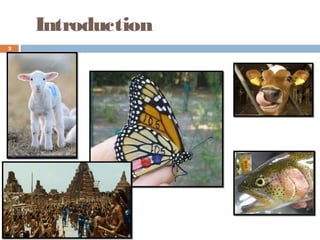
Introduction
3
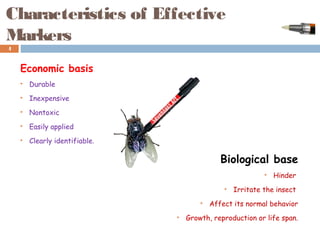
Characteristics of Effective
Markers
Economic basis
 Durable
 Inexpensive
 Nontoxic
 Easily applied
 Clearly identifiable.
Biological base
 Hinder
 Irritate the insect
 Affect its normal behavior
 Growth, reproduction or life span.
4
HOWTO CHOOSE
Insect being marked
Habitat of the insects
Nature of the experiment
Individually or in large groups
Durability of the study
Purpose of the experiment
5
Types of Studies
Marking procedure for two broad categories of research
 Mark-Release-Recapture
 Mark-Capture
6
Mark-Release-Recapture (MRR)
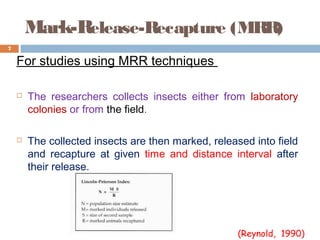
For studies using MRR techniques
 The researchers collects insects either from laboratory
colonies or from the field.
 The collected insects are then marked, released into field
and recapture at given time and distance interval after
their release.
7
(Reynold, 1990)
Mark-Recapture (MR)
For studies using MR techniques
 The researchers applies the marker to the
insects directly in the field.
 The most useful markers for MR studies are
those material that are inexpensive and can be
easily applied.
8
(Reynold, 1990)
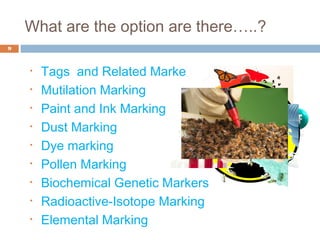
• Tags and Related Markers
• Mutilation Marking
• Paint and Ink Marking
• Dust Marking
• Dye marking
• Pollen Marking
• Biochemical Genetic Markers
• Radioactive-Isotope Marking
• Elemental Marking
9
What are the option are there…..?
Recent Development in Insect
Marking
 Protein Marking
 Genetically Engineered marking
10
Tags and Related
markers
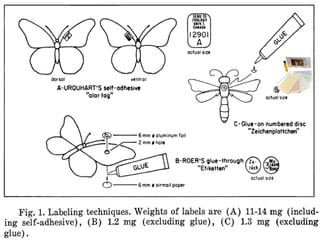
 Early researchers glued numbered pieces or
cellophane on insects.
 Tags were made by photographically reducing a series
of two alphanumeric codes, printed in a continues,
nonrepeating series onto a film.
 Small plastic tags made from photographic film have
been used to mark screw worms (Co chlio m yia
ho m inivo rax).
11
(Rubink, 1988)
12
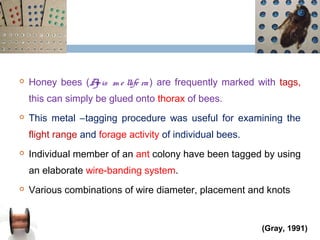
 Honey bees (Apis m e llife ra) are frequently marked with tags,
this can simply be glued onto thorax of bees.
 This metal –tagging procedure was useful for examining the
flight range and forage activity of individual bees.
 Individual member of an ant colony have been tagged by using
an elaborate wire-banding system.
 Various combinations of wire diameter, placement and knots
13
(Gray, 1991)
Cont…
Advantages of Tags and Related markers
• Inexpensive and they can be used to identify
insects in an individual basis for MRR studies.
• Tags are most useful for long term studies
Disadvantages
• Application of individual tags is tedious and time
consuming.
14
Mutilation Marking
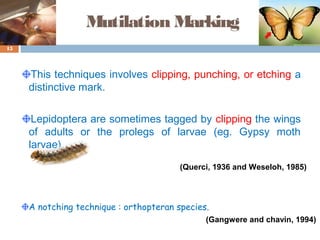
This techniques involves clipping, punching, or etching a
distinctive mark.
Lepidoptera are sometimes tagged by clipping the wings
of adults or the prolegs of larvae (eg. Gypsy moth
larvae).
A notching technique : orthopteran species.
15
(Querci, 1936 and Weseloh, 1985)
(Gangwere and chavin, 1994)
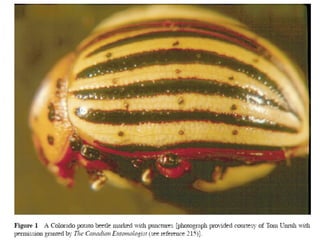
 Distinctive marks have been etched or punctured onto
the elytra of adult beetle using insect pins.
 Some beetles produce a melanized dark spot when they
are punctured.
 This puncturing (Colorado potato beetle) and etching do
not produce any noticeable side effects on beetle life
span.
16
(Best et al., 1981)
Advantages of Mutilation Marking
 The marks usually persisted and that they can
readily and accurately recognized in the field
without the aid of any specialized equipment.
Disadvantages
 It can be tedious and time consuming.
17
Paints and InkMarking
These were among the first materials used to
mark insects and they are still among the most
commonly used material for marking individual
and groups of insects
18
19
Marking individual insects
with Paints and Inks
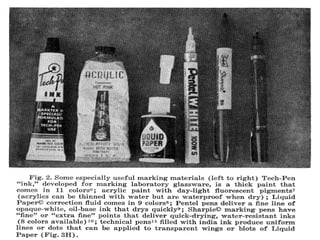
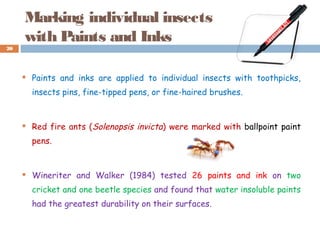
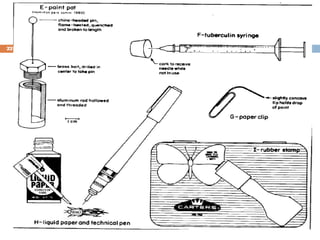
 Paints and inks are applied to individual insects with toothpicks,
insects pins, fine-tipped pens, or fine-haired brushes.
 Red fire ants (Solenopsis invicta) were marked with ballpoint paint
pens.
 Wineriter and Walker (1984) tested 26 paints and ink on two
cricket and one beetle species and found that water insoluble paints
had the greatest durability on their surfaces.
20
21
22
 Ideal paint or ink marker: durable, nontoxic, easy to apply, quick drying,
lightweight.
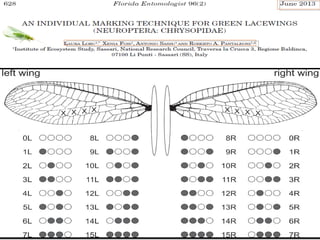
 White & Singer (1995) assigned numeric code to each larval segment,
enabling each larvae to be coded with any 1 to 50 different combination.
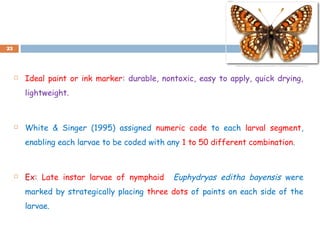
 Ex: Late instar larvae of nymphaid Euphydryas editha bayensis were
marked by strategically placing three dots of paints on each side of the
larvae.
23
24
Marking Group of insects with Paints
and Inks
 A variety of paints and inks can be applied topically to large
batches of insects for MRR studies using various spraying
devices including hand atomizers and spray guns.
 Mass marking with paints and inks is easy, rapid and inexpensive
 These marker are usually recognizable on recaptured insects
without microscope examination.
25
(Davey, 1956)
Cont…
Advantages of Marking with Paints and Inks
• Inexpensive , durable and easy to apply.
• Specimens can be nondestructively sampled and resample over the
course of long-term study.
Disadvantages
• Process is tedious and time consuming.
• The marker or solvent is often toxic to insects.
26
Dust Marking (known as powders)
 They are probably the most commonly used materials for externally
marking a variety of insects.
 Dusts are most useful for marking large insects or insects with hairy
surfaces.
 An invisible green fluorescent dust was among the first dusts used
to mark insects (it is easily detectable under the UV-light).
 The most commercially dust used to mark insects is Day-Glo.
(Beier and Craig,
1982)
27
Cont
 Tumbling devices have been used to mark adult boll weevils and
fruit fly pupae.
 Mosquitoes may be marked with dusts by “puffing” them, using
insufflators.
(Stern and Mueller, 1988)
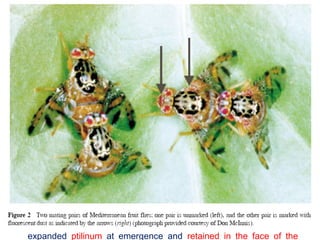
 Schroeder & Mitchell (1992) used dusts to mass-mark millions of
sterilized tephritid fruit flies. Fruit fly pupae were “tumbled” with dust
just prior to adult emergence. The dust was contacted by the
expanded ptilinum at emergence and retained in the face of the
28
 Self-marking techniques were developed for mark-capture studies
in which dusts were placed strategically near insect nest and hive
entrances, insect floral-visitation sites, insect bait stations and
insect traps (ex: Honeybees).
 Price & Slosser (1995) placed fluorescent dust in pheromone-baited
traps modified to allow for the escape of trapped boll weevils
exposed to the dust. Adult bark beetles (Dendroctonus frontalis
and Ips grandicollis) were self-marked as they emerged from logs
that were treated with dust.
29
Self-marking technique
30
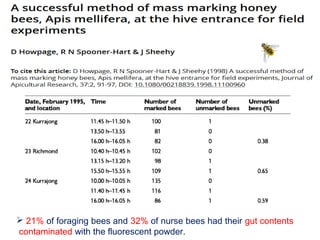
 21% of foraging bees and 32% of nurse bees had their gut contents
contaminated with the fluorescent powder.
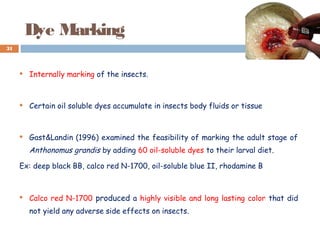
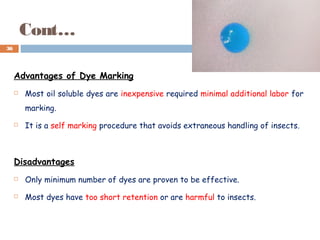
Dye Marking
 Internally marking of the insects.
 Certain oil soluble dyes accumulate in insects body fluids or tissue
 Gast&Landin (1996) examined the feasibility of marking the adult stage of
Anthonomus grandis by adding 60 oil-soluble dyes to their larval diet.
Ex: deep black BB, calco red N-1700, oil-soluble blue II, rhodamine B
 Calco red N-1700 produced a highly visible and long lasting color that did
not yield any adverse side effects on insects.
31
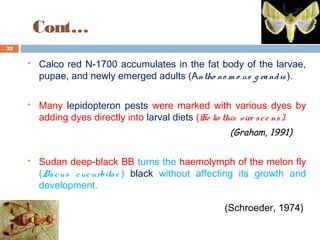
Cont…
 Calco red N-1700 accumulates in the fat body of the larvae,
pupae, and newly emerged adults (Antho no m o us g randis ).
 Many lepidopteron pests were marked with various dyes by
adding dyes directly into larval diets (He lio this vire sce ns).
(Graham, 1991)
 Sudan deep-black BB turns the haemolymph of the melon fly
(Dacus cucurbitae ) black without affecting its growth and
development.
(Schroeder, 1974)
32
33
34
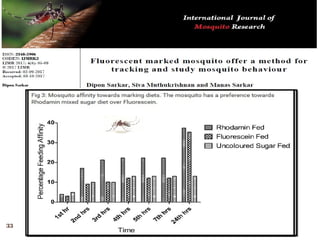
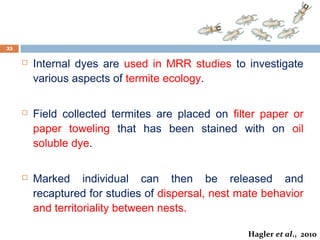
 Internal dyes are used in MRR studies to investigate
various aspects of termite ecology.
 Field collected termites are placed on filter paper or
paper toweling that has been stained with on oil
soluble dye.
 Marked individual can then be released and
recaptured for studies of dispersal, nest mate behavior
and territoriality between nests.
35
Hagler et al., 2010
Cont…
Advantages of Dye Marking
 Most oil soluble dyes are inexpensive required minimal additional labor for
marking.
 It is a self marking procedure that avoids extraneous handling of insects.
Disadvantages
 Only minimum number of dyes are proven to be effective.
 Most dyes have too short retention or are harmful to insects.
36
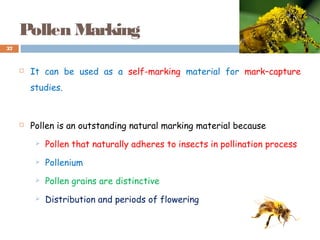
Pollen Marking
 It can be used as a self-marking material for mark–capture
studies.
 Pollen is an outstanding natural marking material because
 Pollen that naturally adheres to insects in pollination process
 Pollenium
 Pollen grains are distinctive
 Distribution and periods of flowering
37
Cont…
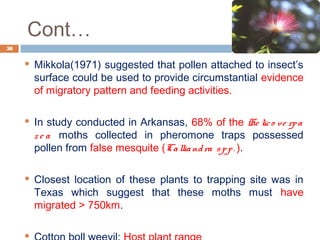
 Mikkola(1971) suggested that pollen attached to insect’s
surface could be used to provide circumstantial evidence
of migratory pattern and feeding activities.
 In study conducted in Arkansas, 68% of the He lico ve rpa
z e a moths collected in pheromone traps possessed
pollen from false mesquite (Calliandra spp. ).
 Closest location of these plants to trapping site was in
Texas which suggest that these moths must have
migrated > 750km.

38
Genetic
Marking
Visible genetic Marking
• Laboratory reared insects have been used to identify insects
for MRR studies.
• In some instances mutation are induced by exposing insects
to ionizing radiation or mutagenic chemicals.
• Part of the insect
39
Cont…
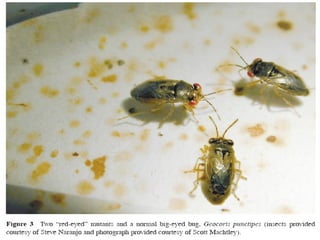
 Body and Eye colors are the most common and conspicuous visible
markers (Geocoris punctipes).
 Mosquito visible genetic markers: silver mesonotum, spotted
abdomen, bronzed tarsi and black palpi.
 An ebony body color mutation was discovered in Anthonomus
grandis, this codominant phenotype which persisted over 9
generations in the laboratory and in field cages.
(Bartlett, 1967)
40
Biochemical Genetic Marker
 Genetic variation between insect races and biotypes
 Insect-specific enzymes can identify distinct insect populations. These
enzyme “fingerprints” are invisible to the naked eye, so their banding
patterns must be detected by various techniques, including
Polyacrylamide and Starch Gel Electrophoresis.
 Use of biochemical markers include studying insect dispersal, mating
immigrant origin, population relationships, and insecticides resistance.
41
(Pashley and Bush, 1979)
Radioactive-Isotope Marking
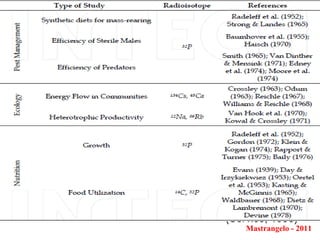
 This technique was a popular insects marking method
from the 1950s to 1970s.
 Stricter environmental protection laws coupled with
development of simpler, less expensive and more
reliable methods have reduced the usefulness of these
techniques.
(Service, 1993)
42
Mastrangelo - 2011
Elemental Marking
 Element were used successfully to mark at least 8 orders and 30
families of insects, ticks and spiders.
 Elements used to mark are rubidium, strontium, cesium,
manganese, hafnium, and iridium.
 An easy and effective method to externally mark insects for
MRR studies is to dip the pupae or topically spray the adults.
43
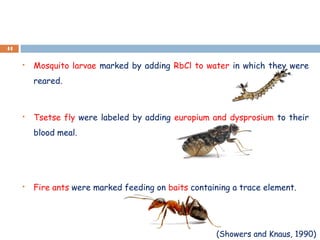
 Mosquito larvae marked by adding RbCl to water in which they were
reared.
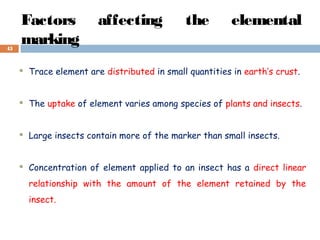
 Tsetse fly were labeled by adding europium and dysprosium to their
blood meal.
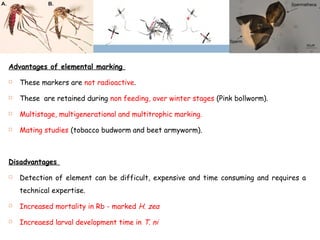
 Fire ants were marked feeding on baits containing a trace element.
44
(Showers and Knaus, 1990)
Factors affecting the elemental
marking
 Trace element are distributed in small quantities in earth’s crust.
 The uptake of element varies among species of plants and insects.
 Large insects contain more of the marker than small insects.
 Concentration of element applied to an insect has a direct linear
relationship with the amount of the element retained by the
insect.
45
Advantages of elemental marking
 These markers are not radioactive.
 These are retained during non feeding, over winter stages (Pink bollworm).
 Multistage, multigenerational and multitrophic marking.
 Mating studies (tobacco budworm and beet armyworm).
Disadvantages
 Detection of element can be difficult, expensive and time consuming and requires a
technical expertise.
 Increased mortality in Rb - marked H. zea
 Increaesd larval development time in T. ni
46
47
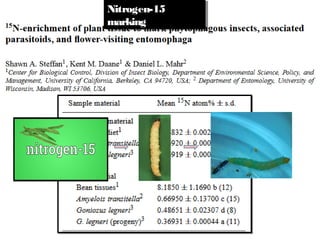
Nitrogen-15
marking
Nitrogen-15
marking
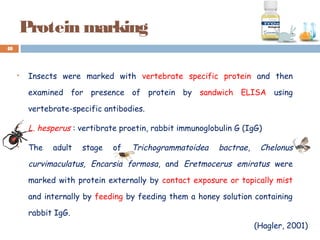
Protein marking
 Insects were marked with vertebrate specific protein and then
examined for presence of protein by sandwich ELISA using
vertebrate-specific antibodies.
 L. hesperus : vertibrate proetin, rabbit immunoglobulin G (IgG)
 The adult stage of Trichogrammatoidea bactrae, Chelonus
curvimaculatus, Encarsia formosa, and Eretmocerus emiratus were
marked with protein externally by contact exposure or topically mist
and internally by feeding by feeding them a honey solution containing
rabbit IgG.
48
(Hagler, 2001)
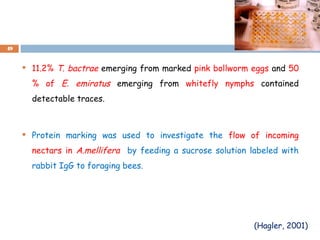
 11.2% T. bactrae emerging from marked pink bollworm eggs and 50
% of E. emiratus emerging from whitefly nymphs contained
detectable traces.
 Protein marking was used to investigate the flow of incoming
nectars in A.mellifera by feeding a sucrose solution labeled with
rabbit IgG to foraging bees.
49
(Hagler, 2001)
50
Genetic Engineered
Marking
 Gene transfer systems that use transposable elements (hobo, Hermes, mariner,
Minos etc).
 Transposable elements may be used to permanently mark mass-reared insects
forSIRstudies programmes.
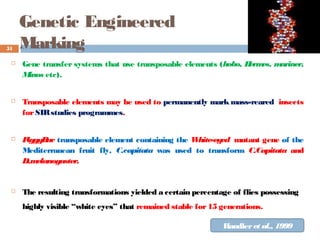
 PiggyBac transposable element containing the White-eyed mutant gene of the
Mediterranean fruit fly, C.capitata was used to transform C.Capitata and
D.melanogaster.
 The resulting transformations yielded a certain percentage of flies possessing
highly visible “white eyes” that remained stable for15 generations.
51
Handleret al., 1999
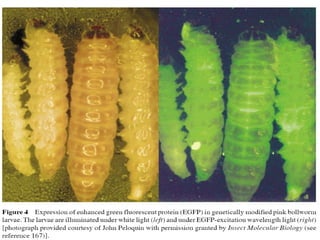
 Transposable elements carrying green fluorescent protein
 GFB used to study : sperm competition, egg development and neurobiology
 Pink bollworm was transformed with piggyBac transposable element
carrying enhanced GFP and have planned to introduce this marker gene
into the pink bollworm colony used for the SIR programme.
52
(Peloquin and miller, 2000)
53
 GMOs containing GFP are permanently marked.
 Expression of GFP can potentially be expressed during
one or all life stages.
 GFP can detected using a fluorescence microscope,
spectrofluorometer.
 Alternative approach for detecting GFP was developed
using PCR
54
Advantages
55
56

Methods of marking insects

  • 1.
  • 2.
    METHODS FOR MARKING INSECTS:CURRENT TECHNIQUES AND FUTURE PROSPECTS 2 Welcome To Seminar -iii Ravi Biradar PhD 2nd year
  • 3.
  • 4.
    Characteristics of Effective Markers Economicbasis  Durable  Inexpensive  Nontoxic  Easily applied  Clearly identifiable. Biological base  Hinder  Irritate the insect  Affect its normal behavior  Growth, reproduction or life span. 4
  • 5.
    HOWTO CHOOSE Insect beingmarked Habitat of the insects Nature of the experiment Individually or in large groups Durability of the study Purpose of the experiment 5
  • 6.
    Types of Studies Markingprocedure for two broad categories of research  Mark-Release-Recapture  Mark-Capture 6
  • 7.
    Mark-Release-Recapture (MRR) For studiesusing MRR techniques  The researchers collects insects either from laboratory colonies or from the field.  The collected insects are then marked, released into field and recapture at given time and distance interval after their release. 7 (Reynold, 1990)
  • 8.
    Mark-Recapture (MR) For studiesusing MR techniques  The researchers applies the marker to the insects directly in the field.  The most useful markers for MR studies are those material that are inexpensive and can be easily applied. 8 (Reynold, 1990)
  • 9.
    • Tags andRelated Markers • Mutilation Marking • Paint and Ink Marking • Dust Marking • Dye marking • Pollen Marking • Biochemical Genetic Markers • Radioactive-Isotope Marking • Elemental Marking 9 What are the option are there…..?
  • 10.
    Recent Development inInsect Marking  Protein Marking  Genetically Engineered marking 10
  • 11.
    Tags and Related markers Early researchers glued numbered pieces or cellophane on insects.  Tags were made by photographically reducing a series of two alphanumeric codes, printed in a continues, nonrepeating series onto a film.  Small plastic tags made from photographic film have been used to mark screw worms (Co chlio m yia ho m inivo rax). 11 (Rubink, 1988)
  • 12.
  • 13.
     Honey bees(Apis m e llife ra) are frequently marked with tags, this can simply be glued onto thorax of bees.  This metal –tagging procedure was useful for examining the flight range and forage activity of individual bees.  Individual member of an ant colony have been tagged by using an elaborate wire-banding system.  Various combinations of wire diameter, placement and knots 13 (Gray, 1991)
  • 14.
    Cont… Advantages of Tagsand Related markers • Inexpensive and they can be used to identify insects in an individual basis for MRR studies. • Tags are most useful for long term studies Disadvantages • Application of individual tags is tedious and time consuming. 14
  • 15.
    Mutilation Marking This techniquesinvolves clipping, punching, or etching a distinctive mark. Lepidoptera are sometimes tagged by clipping the wings of adults or the prolegs of larvae (eg. Gypsy moth larvae). A notching technique : orthopteran species. 15 (Querci, 1936 and Weseloh, 1985) (Gangwere and chavin, 1994)
  • 16.
     Distinctive markshave been etched or punctured onto the elytra of adult beetle using insect pins.  Some beetles produce a melanized dark spot when they are punctured.  This puncturing (Colorado potato beetle) and etching do not produce any noticeable side effects on beetle life span. 16 (Best et al., 1981)
  • 17.
    Advantages of MutilationMarking  The marks usually persisted and that they can readily and accurately recognized in the field without the aid of any specialized equipment. Disadvantages  It can be tedious and time consuming. 17
  • 18.
    Paints and InkMarking Thesewere among the first materials used to mark insects and they are still among the most commonly used material for marking individual and groups of insects 18
  • 19.
  • 20.
    Marking individual insects withPaints and Inks  Paints and inks are applied to individual insects with toothpicks, insects pins, fine-tipped pens, or fine-haired brushes.  Red fire ants (Solenopsis invicta) were marked with ballpoint paint pens.  Wineriter and Walker (1984) tested 26 paints and ink on two cricket and one beetle species and found that water insoluble paints had the greatest durability on their surfaces. 20
  • 21.
  • 22.
  • 23.
     Ideal paintor ink marker: durable, nontoxic, easy to apply, quick drying, lightweight.  White & Singer (1995) assigned numeric code to each larval segment, enabling each larvae to be coded with any 1 to 50 different combination.  Ex: Late instar larvae of nymphaid Euphydryas editha bayensis were marked by strategically placing three dots of paints on each side of the larvae. 23
  • 24.
  • 25.
    Marking Group ofinsects with Paints and Inks  A variety of paints and inks can be applied topically to large batches of insects for MRR studies using various spraying devices including hand atomizers and spray guns.  Mass marking with paints and inks is easy, rapid and inexpensive  These marker are usually recognizable on recaptured insects without microscope examination. 25 (Davey, 1956)
  • 26.
    Cont… Advantages of Markingwith Paints and Inks • Inexpensive , durable and easy to apply. • Specimens can be nondestructively sampled and resample over the course of long-term study. Disadvantages • Process is tedious and time consuming. • The marker or solvent is often toxic to insects. 26
  • 27.
    Dust Marking (knownas powders)  They are probably the most commonly used materials for externally marking a variety of insects.  Dusts are most useful for marking large insects or insects with hairy surfaces.  An invisible green fluorescent dust was among the first dusts used to mark insects (it is easily detectable under the UV-light).  The most commercially dust used to mark insects is Day-Glo. (Beier and Craig, 1982) 27
  • 28.
    Cont  Tumbling deviceshave been used to mark adult boll weevils and fruit fly pupae.  Mosquitoes may be marked with dusts by “puffing” them, using insufflators. (Stern and Mueller, 1988)  Schroeder & Mitchell (1992) used dusts to mass-mark millions of sterilized tephritid fruit flies. Fruit fly pupae were “tumbled” with dust just prior to adult emergence. The dust was contacted by the expanded ptilinum at emergence and retained in the face of the 28
  • 29.
     Self-marking techniqueswere developed for mark-capture studies in which dusts were placed strategically near insect nest and hive entrances, insect floral-visitation sites, insect bait stations and insect traps (ex: Honeybees).  Price & Slosser (1995) placed fluorescent dust in pheromone-baited traps modified to allow for the escape of trapped boll weevils exposed to the dust. Adult bark beetles (Dendroctonus frontalis and Ips grandicollis) were self-marked as they emerged from logs that were treated with dust. 29 Self-marking technique
  • 30.
    30  21% offoraging bees and 32% of nurse bees had their gut contents contaminated with the fluorescent powder.
  • 31.
    Dye Marking  Internallymarking of the insects.  Certain oil soluble dyes accumulate in insects body fluids or tissue  Gast&Landin (1996) examined the feasibility of marking the adult stage of Anthonomus grandis by adding 60 oil-soluble dyes to their larval diet. Ex: deep black BB, calco red N-1700, oil-soluble blue II, rhodamine B  Calco red N-1700 produced a highly visible and long lasting color that did not yield any adverse side effects on insects. 31
  • 32.
    Cont…  Calco redN-1700 accumulates in the fat body of the larvae, pupae, and newly emerged adults (Antho no m o us g randis ).  Many lepidopteron pests were marked with various dyes by adding dyes directly into larval diets (He lio this vire sce ns). (Graham, 1991)  Sudan deep-black BB turns the haemolymph of the melon fly (Dacus cucurbitae ) black without affecting its growth and development. (Schroeder, 1974) 32
  • 33.
  • 34.
  • 35.
     Internal dyesare used in MRR studies to investigate various aspects of termite ecology.  Field collected termites are placed on filter paper or paper toweling that has been stained with on oil soluble dye.  Marked individual can then be released and recaptured for studies of dispersal, nest mate behavior and territoriality between nests. 35 Hagler et al., 2010
  • 36.
    Cont… Advantages of DyeMarking  Most oil soluble dyes are inexpensive required minimal additional labor for marking.  It is a self marking procedure that avoids extraneous handling of insects. Disadvantages  Only minimum number of dyes are proven to be effective.  Most dyes have too short retention or are harmful to insects. 36
  • 37.
    Pollen Marking  Itcan be used as a self-marking material for mark–capture studies.  Pollen is an outstanding natural marking material because  Pollen that naturally adheres to insects in pollination process  Pollenium  Pollen grains are distinctive  Distribution and periods of flowering 37
  • 38.
    Cont…  Mikkola(1971) suggestedthat pollen attached to insect’s surface could be used to provide circumstantial evidence of migratory pattern and feeding activities.  In study conducted in Arkansas, 68% of the He lico ve rpa z e a moths collected in pheromone traps possessed pollen from false mesquite (Calliandra spp. ).  Closest location of these plants to trapping site was in Texas which suggest that these moths must have migrated > 750km.  38
  • 39.
    Genetic Marking Visible genetic Marking •Laboratory reared insects have been used to identify insects for MRR studies. • In some instances mutation are induced by exposing insects to ionizing radiation or mutagenic chemicals. • Part of the insect 39
  • 40.
    Cont…  Body andEye colors are the most common and conspicuous visible markers (Geocoris punctipes).  Mosquito visible genetic markers: silver mesonotum, spotted abdomen, bronzed tarsi and black palpi.  An ebony body color mutation was discovered in Anthonomus grandis, this codominant phenotype which persisted over 9 generations in the laboratory and in field cages. (Bartlett, 1967) 40
  • 41.
    Biochemical Genetic Marker Genetic variation between insect races and biotypes  Insect-specific enzymes can identify distinct insect populations. These enzyme “fingerprints” are invisible to the naked eye, so their banding patterns must be detected by various techniques, including Polyacrylamide and Starch Gel Electrophoresis.  Use of biochemical markers include studying insect dispersal, mating immigrant origin, population relationships, and insecticides resistance. 41 (Pashley and Bush, 1979)
  • 42.
    Radioactive-Isotope Marking  Thistechnique was a popular insects marking method from the 1950s to 1970s.  Stricter environmental protection laws coupled with development of simpler, less expensive and more reliable methods have reduced the usefulness of these techniques. (Service, 1993) 42 Mastrangelo - 2011
  • 43.
    Elemental Marking  Elementwere used successfully to mark at least 8 orders and 30 families of insects, ticks and spiders.  Elements used to mark are rubidium, strontium, cesium, manganese, hafnium, and iridium.  An easy and effective method to externally mark insects for MRR studies is to dip the pupae or topically spray the adults. 43
  • 44.
     Mosquito larvaemarked by adding RbCl to water in which they were reared.  Tsetse fly were labeled by adding europium and dysprosium to their blood meal.  Fire ants were marked feeding on baits containing a trace element. 44 (Showers and Knaus, 1990)
  • 45.
    Factors affecting theelemental marking  Trace element are distributed in small quantities in earth’s crust.  The uptake of element varies among species of plants and insects.  Large insects contain more of the marker than small insects.  Concentration of element applied to an insect has a direct linear relationship with the amount of the element retained by the insect. 45
  • 46.
    Advantages of elementalmarking  These markers are not radioactive.  These are retained during non feeding, over winter stages (Pink bollworm).  Multistage, multigenerational and multitrophic marking.  Mating studies (tobacco budworm and beet armyworm). Disadvantages  Detection of element can be difficult, expensive and time consuming and requires a technical expertise.  Increased mortality in Rb - marked H. zea  Increaesd larval development time in T. ni 46
  • 47.
  • 48.
    Protein marking  Insectswere marked with vertebrate specific protein and then examined for presence of protein by sandwich ELISA using vertebrate-specific antibodies.  L. hesperus : vertibrate proetin, rabbit immunoglobulin G (IgG)  The adult stage of Trichogrammatoidea bactrae, Chelonus curvimaculatus, Encarsia formosa, and Eretmocerus emiratus were marked with protein externally by contact exposure or topically mist and internally by feeding by feeding them a honey solution containing rabbit IgG. 48 (Hagler, 2001)
  • 49.
     11.2% T.bactrae emerging from marked pink bollworm eggs and 50 % of E. emiratus emerging from whitefly nymphs contained detectable traces.  Protein marking was used to investigate the flow of incoming nectars in A.mellifera by feeding a sucrose solution labeled with rabbit IgG to foraging bees. 49 (Hagler, 2001)
  • 50.
  • 51.
    Genetic Engineered Marking  Genetransfer systems that use transposable elements (hobo, Hermes, mariner, Minos etc).  Transposable elements may be used to permanently mark mass-reared insects forSIRstudies programmes.  PiggyBac transposable element containing the White-eyed mutant gene of the Mediterranean fruit fly, C.capitata was used to transform C.Capitata and D.melanogaster.  The resulting transformations yielded a certain percentage of flies possessing highly visible “white eyes” that remained stable for15 generations. 51 Handleret al., 1999
  • 52.
     Transposable elementscarrying green fluorescent protein  GFB used to study : sperm competition, egg development and neurobiology  Pink bollworm was transformed with piggyBac transposable element carrying enhanced GFP and have planned to introduce this marker gene into the pink bollworm colony used for the SIR programme. 52 (Peloquin and miller, 2000)
  • 53.
  • 54.
     GMOs containingGFP are permanently marked.  Expression of GFP can potentially be expressed during one or all life stages.  GFP can detected using a fluorescence microscope, spectrofluorometer.  Alternative approach for detecting GFP was developed using PCR 54 Advantages
  • 55.
  • 56.

Editor's Notes

  • #4 Animal marking dates back to 218 B.C. Insect marking for scientific studies began around 1920. Earlier researchers used paints, dyes, and stains in studies of insect population. A reliable method for marking animal is often a key in studies of animal biology, ethology, and demography.
  • #6 The method of applying and choice for markers depend on the insect being marked, the environment that the insect will encounter, and the nature of the experiment. Insect can be marked individually or in large groups. Self marking techniques have been developed in which insects mark themselves by contacting marking materials that are natural to their environment (eg. Pollen).
  • #8 Useful for mass marking known population of insects for dispersal studies. Most of the marking techniques can be used.
  • #9 Many of the marking procedure not practical for mark capture studies (tags and mutilation) Applied via broad cast application to the insects
  • #12 Tags are frequently used to mark individual mammals, reptiles, amphibians, fish and birds for conservation, dispersal and population ecology studies. Biologist have used a wide variety of techniques to affix tags, labels and bands. Tags were made by photographically reducing a series of two alphanumeric codes, printed in a continous, nonrepeating series onto a film.
  • #14 As bees return to their hive, they recaptured with magnets strategically placed at the hive entrance. Wire band size either 30mm or 60mm diameter, tied to various body regions of the ants ( petiole joints , gaster). Different types of knots and knot orientations.
  • #15 the size, shape and placement of tags must not restrict the insect’s behavior.
  • #16 Mutilation marking has been used to mark animals for over a century. Usually reserved for marking large animals like fish, amphibians, reptlies cattles and birds This notching technique was not harmful to the insects and was persisted through the later life stages of insects as the molting insects retained their distinctive marks. Useful for heavily sclerotized insects beetles or insect large wings (butterflies dragonflies and grasshoppers). Removing different prolegs or number of prolegs to study their movement, survival and population dynamics.
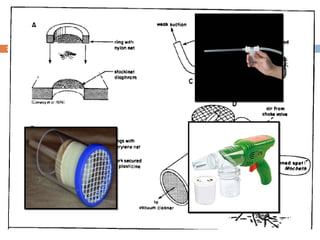
  • #17 However in most cases, insect must be anaesthetized with co2, chilled or held down with some sort of device relying on vacum suction or an adhesive.
  • #18 Applicable only small number of insect species
  • #24 An ideal paint or ink marker should be durable, nontoxic, easy to apply, quick drying, lightweight, visible colors and resistant to peeling and chipping. Marker restricted to single life stage, immature insects lose the mark when they molt.
  • #25 Fig. 1. Marking of an anesthetized specimen (left); marked green lacewing (right). Fig. 2. Marking code. Using a simple binary code (2 digits corresponding to colors: light = 0, dark = 1), 4 cells provide 16 combinations (number of digitsnumber of cells, viz. 24) that could be multiplied by the wings (right and left) and the sex (male and female) reaching 64 (16 × 2 × 2) individual marked specimens. Increasing the number of cells (the 2 cells adjacent to the ends of the line) this value can be doubled or quadrupled. Varying slightly the number of colors (= digits) it is possible to reach a higher value: 34 = 81, 44 = 256, etc. Combining number of cells and colors it is possible to obtain a wide range of combinations (around a thousand) without overcomplicating the code. Spots must be made on the dorsal side of the wing; x = cell usable for marking.
  • #26 Paints are so thick , so diluted in acetone or alcohol before application.
  • #27 Logistical difficulties of applying a mark to small insects. Topical spray may be destructive to small and delicate insects, so usually reserved for large, sturdy insects.
  • #28 Have been used to mark insects for > 75years. Invisible green flurescent dust used in crimedetection Day-Glo is visible to naked eye however the detection of it on insects can be enhanced under UV light. Dust marking can used for both MRR and Mark-capture. Different colors of dusts can be used to mark different cohorts of individuals helps to investigation of intercrop dispersal, colonization rates and habitat selection.
  • #29 Dust particle enclosed in the ptilinium are often not visible to naked eye (Mediterranean fruit flies). Sometimes dust were reported to inhibit normal dispersal behaviour, decreased logevity and not persistent for longer time. Chances of trasnferred to unmarked insects in the fieldor in the traps and sweep nets used for sampling.
  • #30 Eliminate the damage associated with handling under artificial conditions.
  • #31 More than 99% of foragers were marked. 21% of foraging bees and 32% of nurse bees had their gut contents contaminated with the fluorescent powder.
  • #32 Most of the progress toward marking insect with dyes was made in the 1960 to 1970 with the concurrent development of sterile insect release and area wise pest managent programs.
  • #33 Calco red N 1700 retained in the intugument, fat bodies and ovaries of the adult moths. Sudan deep black BB dye transferred to the eggs deposited by marked females.. And even hatched larva also marked but fainted. Detection of the sudan deep black dye , dipping in acetone is necessary and crushed on filter paper. For others solvent not required.
  • #37 Reqires solvents to examine for some dyes
  • #38 Mark capture studies of insect migration, host plant visitation and host plant feeding. Pollens are distinctive can often be identified to genus. Distribution and flowering periods of most plants are known, so establish origin of captured insects.
  • #39 To be an effective marker, pollen source must be geographically remote from the areas in which pollen bearing migrants are caught. Gut dissections of the boll weevils contained pollen grains of over dozen plant families. But pollen analysis is costly, time consuming, requires expertise in pollen taxonomy. identification of the pollen requires light microscopy and scanned electron microscopy.
  • #40 Major advantage of the visible genetic marker is that they are part of the insect, physical makeup and persist throughout their life span. Markers are rare and Only assoicated with reared insects in the laboratory for many generation Suitable for MRR studies. Inheritance of genetic markers may be dominant, codominant, recessive, polygenic or sex linked.
  • #42 Laboratory experimentation to find unique enzyme-banding patterns between population. Costly, time consuming, tedious and potentially subjective. Destructive method and imparctical for direct field examination
  • #44 Rare and trace element marking technique were developed in the 1970s as an alternative to marking insects with radioactive isotopes. Rb in its chloride form is the most frequently used trace element marker for insects
  • #45 The use of two different elements was useful for determining whether mosquitoes take multiple blood meals.
  • #46 Insect can decline over time owing to physiological and behavioural factors such as feeding, ecxcretion, mating and oviposition
  • #47 Small insects like aphids, leaf hopper, mosquitoes, whiteflies can easily mark with trace elements. Transfer trace elements via spermatophores to unmarked female during mating. High conc. Can adversly affect develeopment, survival and fecundity of certain insects. Host and parasitiod, prey and predator relationship
  • #48 Plant material enriched with 15N was mixed into the artificial diet of navel orangeworms (Amyelois transitella). Both the orangeworms that fed on the artificial diet and wasps (Goniozus legneri) that parasitized them contained detectable levels of 15N in their systems. DRAWBACK is detection requires mass spectrometry, and it analyses require a large qty of biomass.
  • #49 For robust insects, the lyophilized protein is simply dissolved in water and topically sprayed on the insects with any common spraying device.
  • #53 Transposable elements carrying green florescent element protein (GFP) were recently used as biological-marker genes in wide variety of studies.