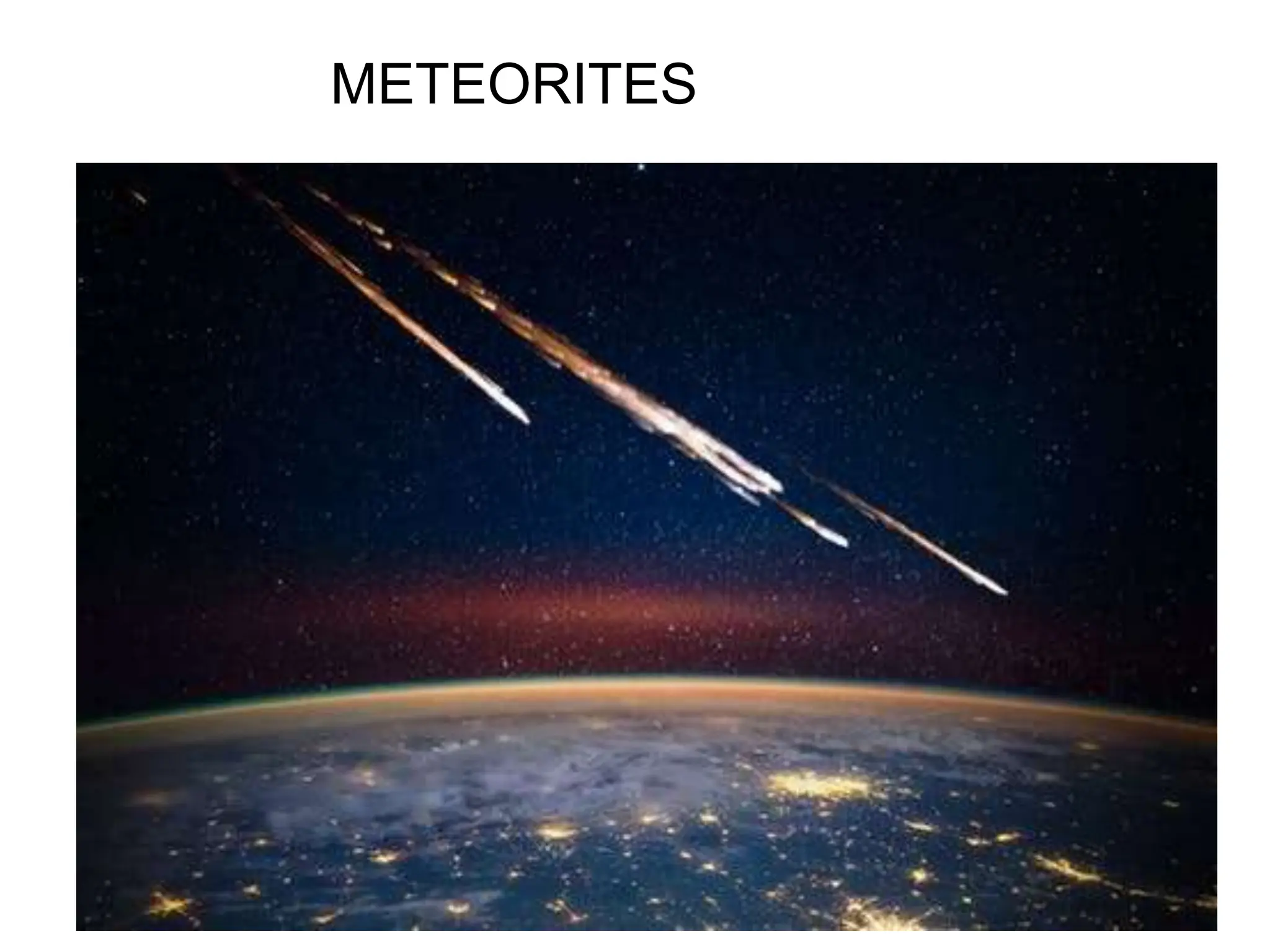
METEORITES
Meteorite Types
– Stony meteorites
• Chondrites
• Achondrites
– Iron meteorites
– Stony-iron meteorites
• Pallasites
• Mesosiderites
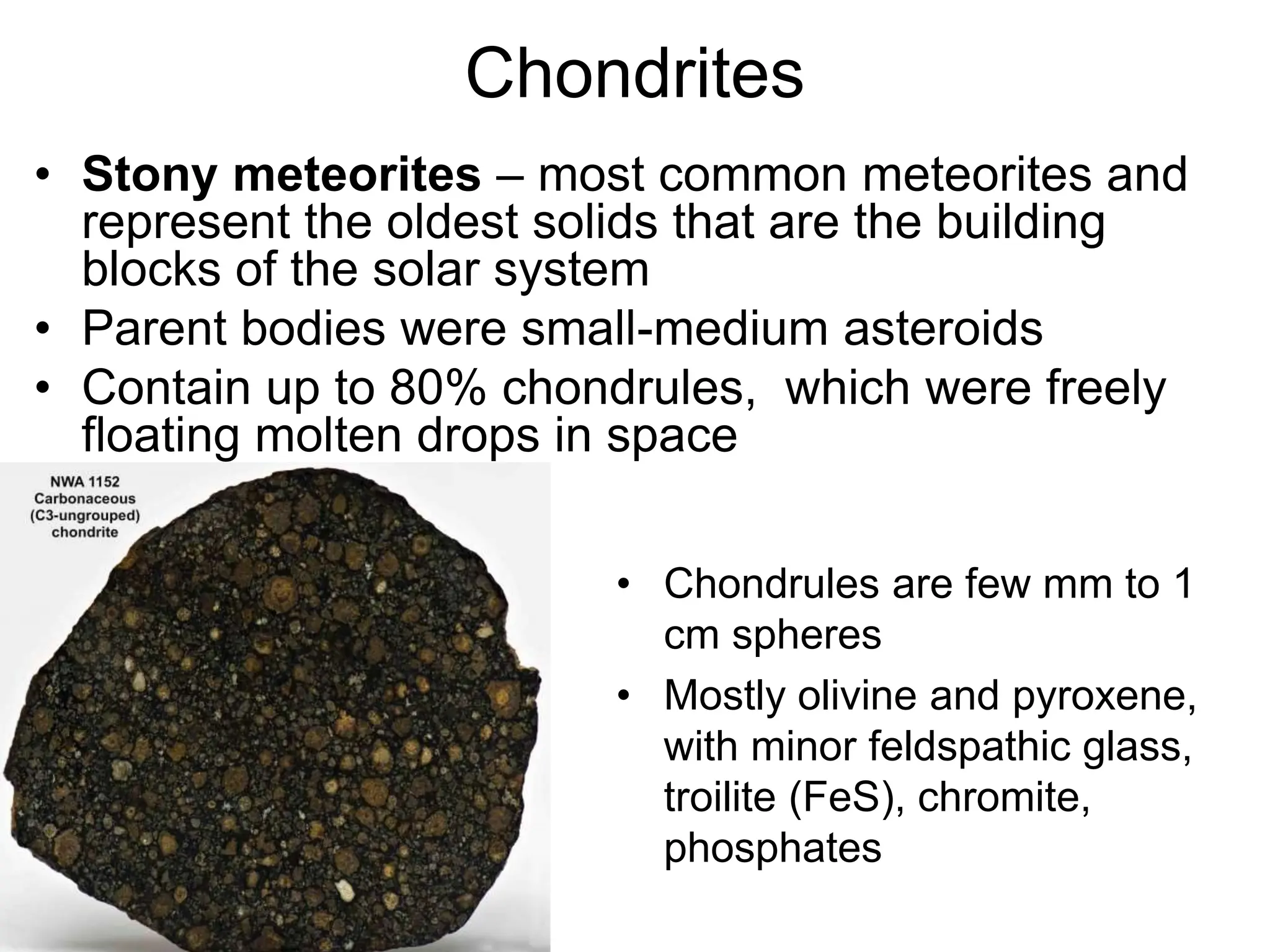
Chondrites
• Stony meteorites – most common meteorites and
represent the oldest solids that are the building
blocks of the solar system
• Parent bodies were small-medium asteroids
• Contain up to 80% chondrules, which were freely
floating molten drops in space
• Chondrules are few mm to 1
cm spheres
• Mostly olivine and pyroxene,
with minor feldspathic glass,
troilite (FeS), chromite,
phosphates
Chondrite groups
• Ordinary chondrites – make up 80% of the
meteorites and 90% of chondritic meteorites,
abundant chondrules
• Carbonaceous chondrites –less the 5% of
chondritic meteorites, few chondrules, more
lithophile elements (Ca, Mg, K, Cr, Al, Cl,…), water
and organic compounds
• Enstatite Chondrites – 2% of chondritic
meteorites, enstatite-rich chondrules and abundant
metal and sulfide minerals
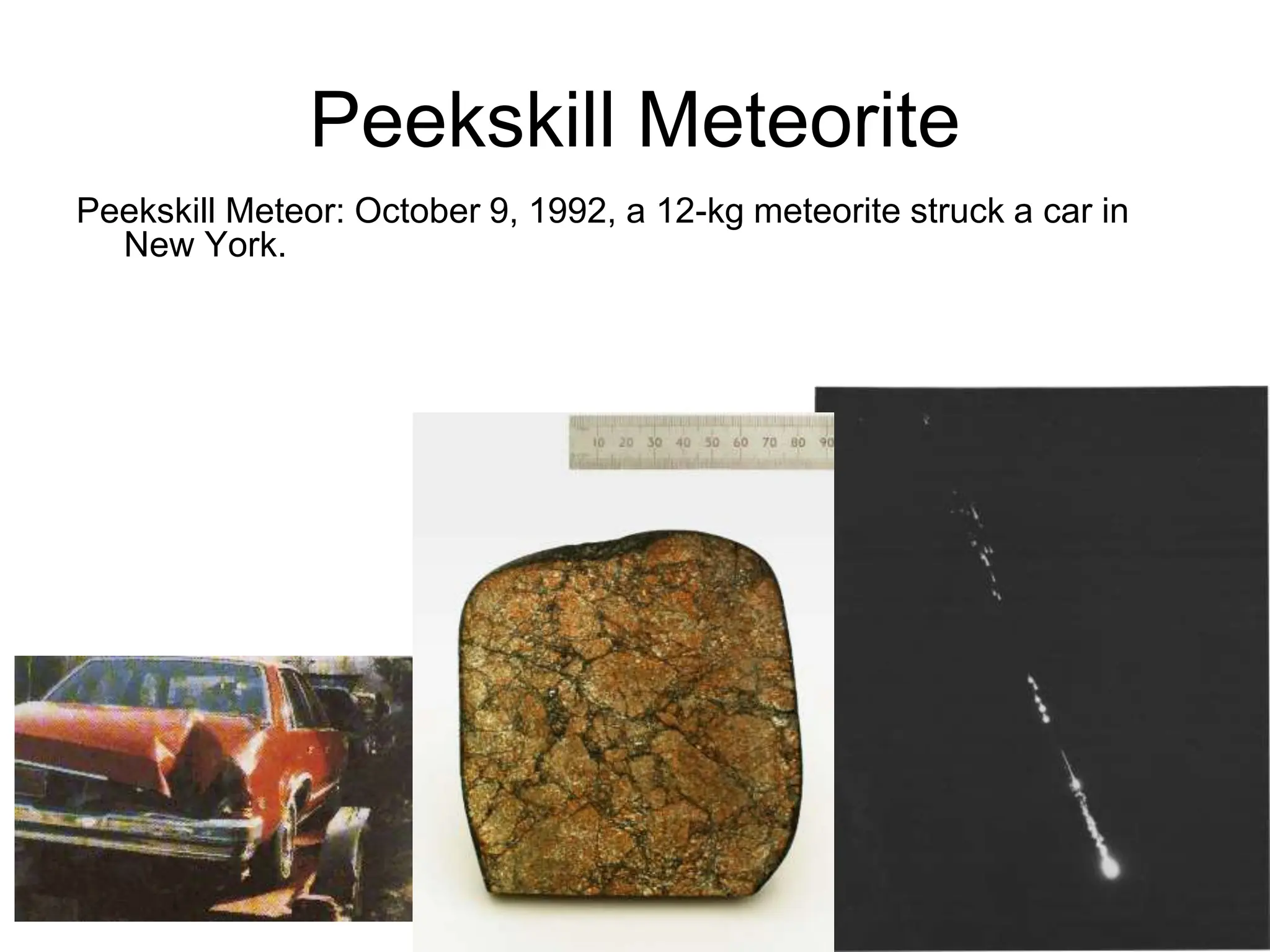
Peekskill Meteorite
Peekskill Meteor: October 9, 1992, a 12-kg meteorite struck a car in
New York.
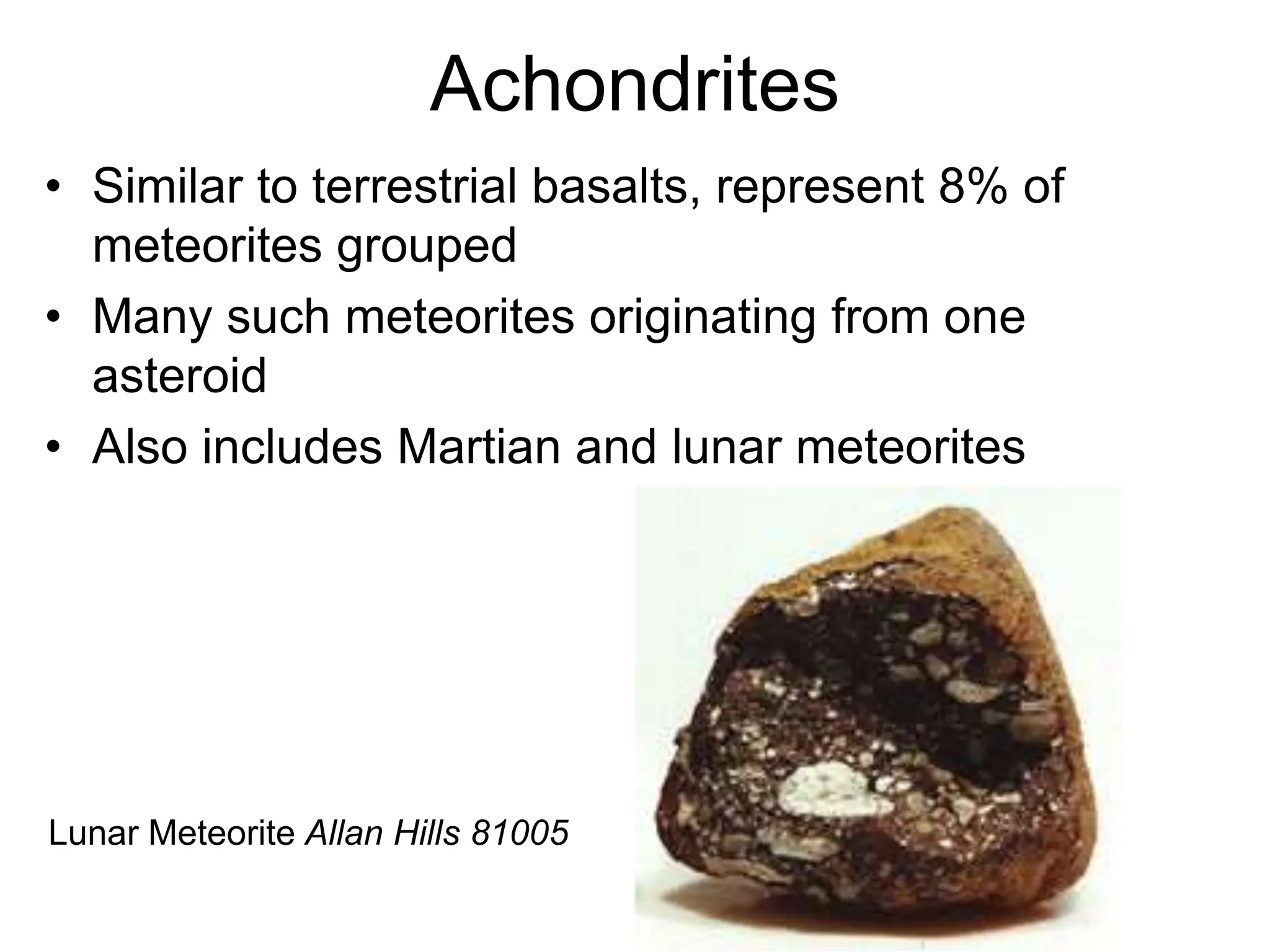
Achondrites
• Similar to terrestrial basalts, represent 8% of
meteorites grouped
• Many such meteorites originating from one
asteroid
• Also includes Martian and lunar meteorites
Lunar Meteorite Allan Hills 81005
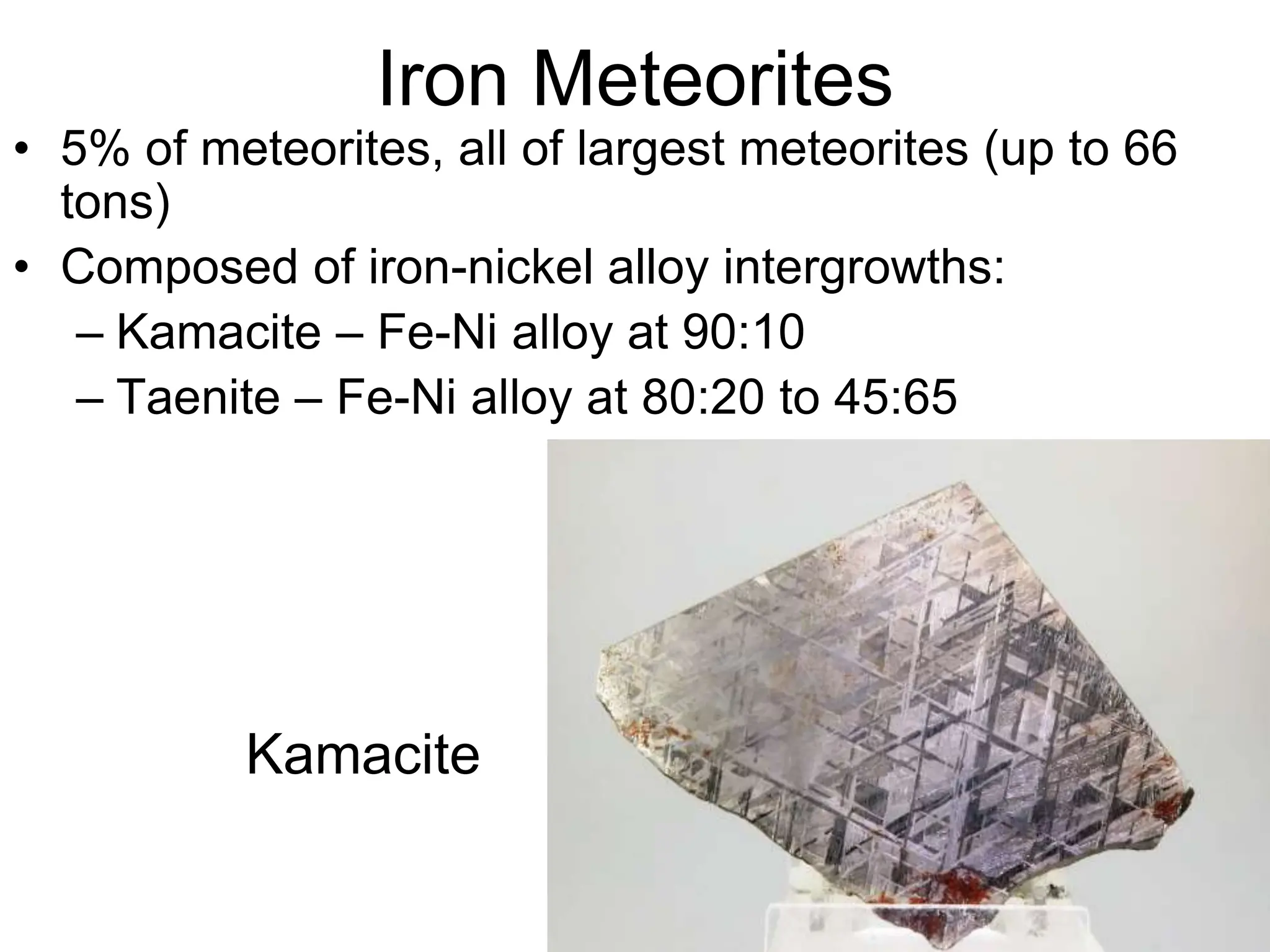
Iron Meteorites
• 5% of meteorites, all of largest meteorites (up to 66
tons)
• Composed of iron-nickel alloy intergrowths:
– Kamacite – Fe-Ni alloy at 90:10
– Taenite – Fe-Ni alloy at 80:20 to 45:65
Kamacite
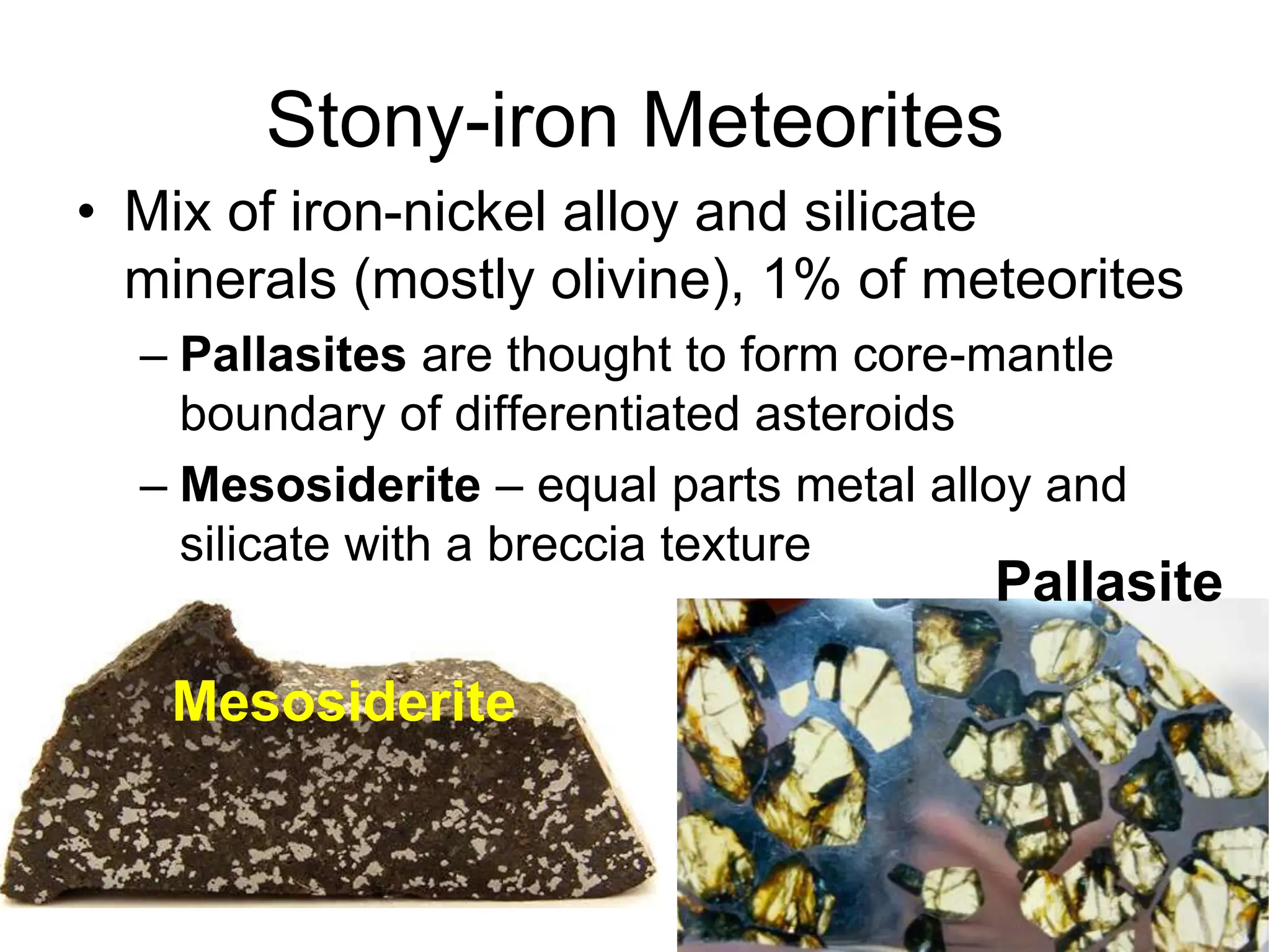
Stony-iron Meteorites
• Mix of iron-nickel alloy and silicate
minerals (mostly olivine), 1% of meteorites
– Pallasites are thought to form core-mantle
boundary of differentiated asteroids
– Mesosiderite – equal parts metal alloy and
silicate with a breccia texture
Mesosiderite
Pallasite
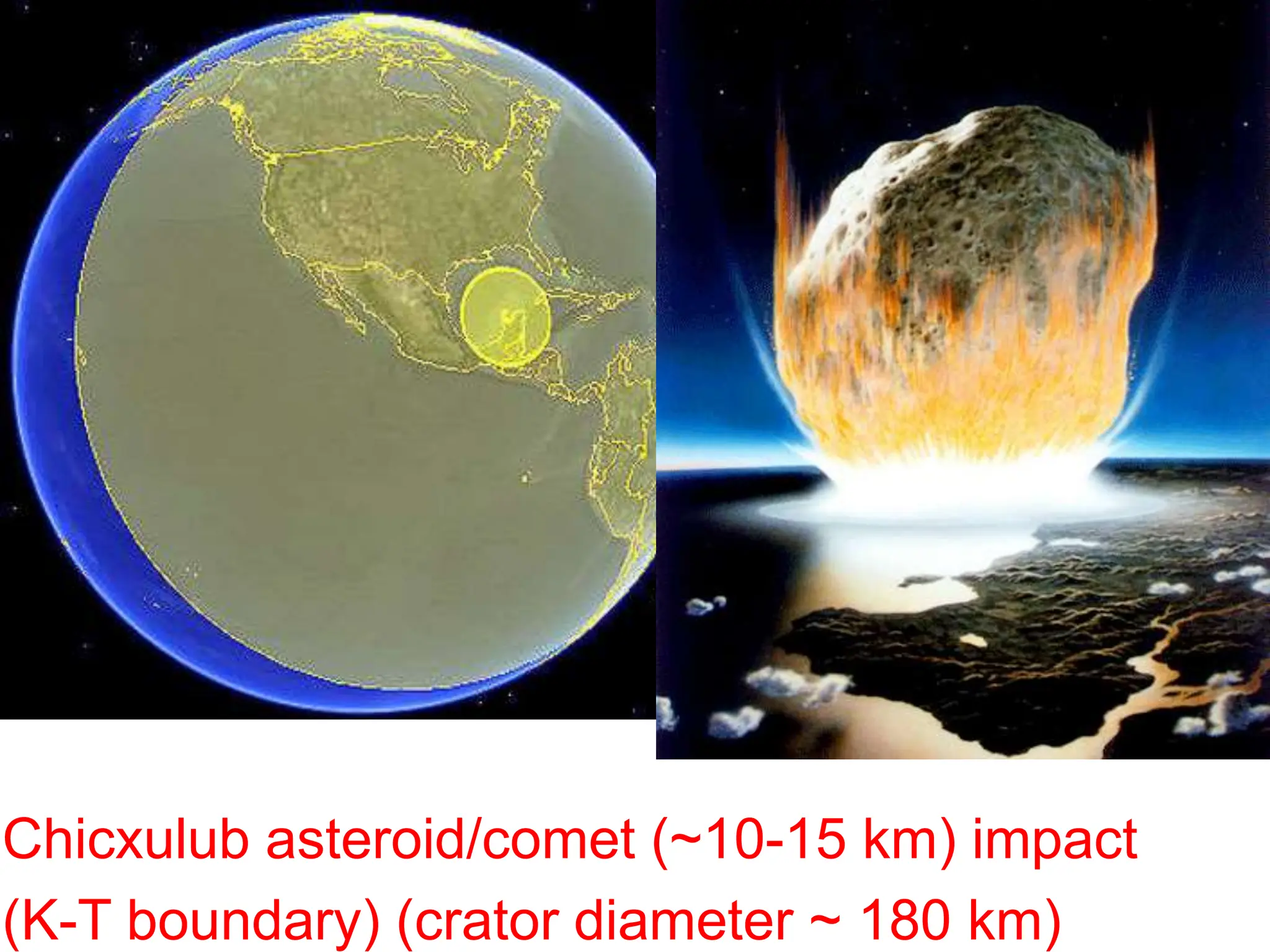
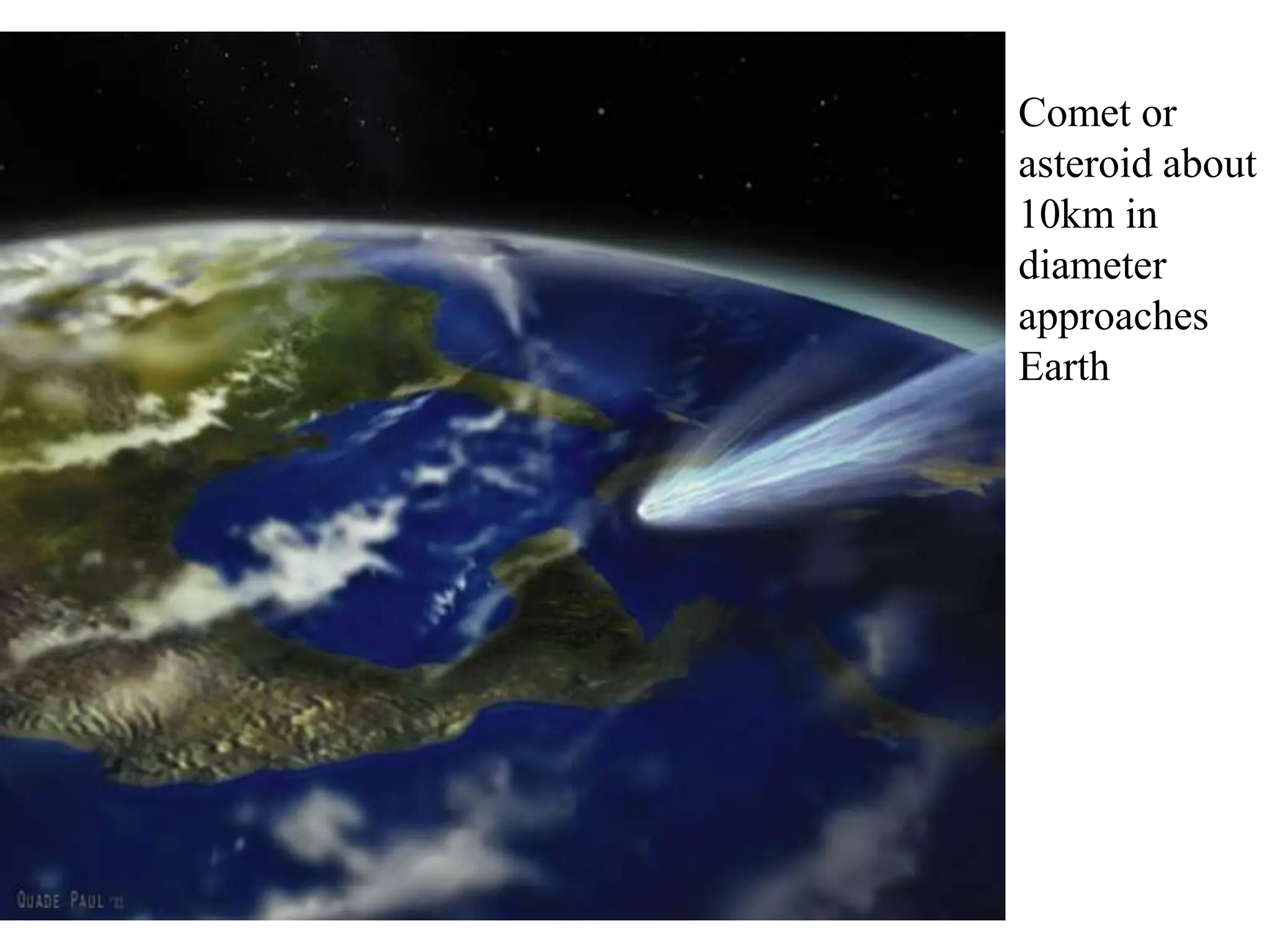
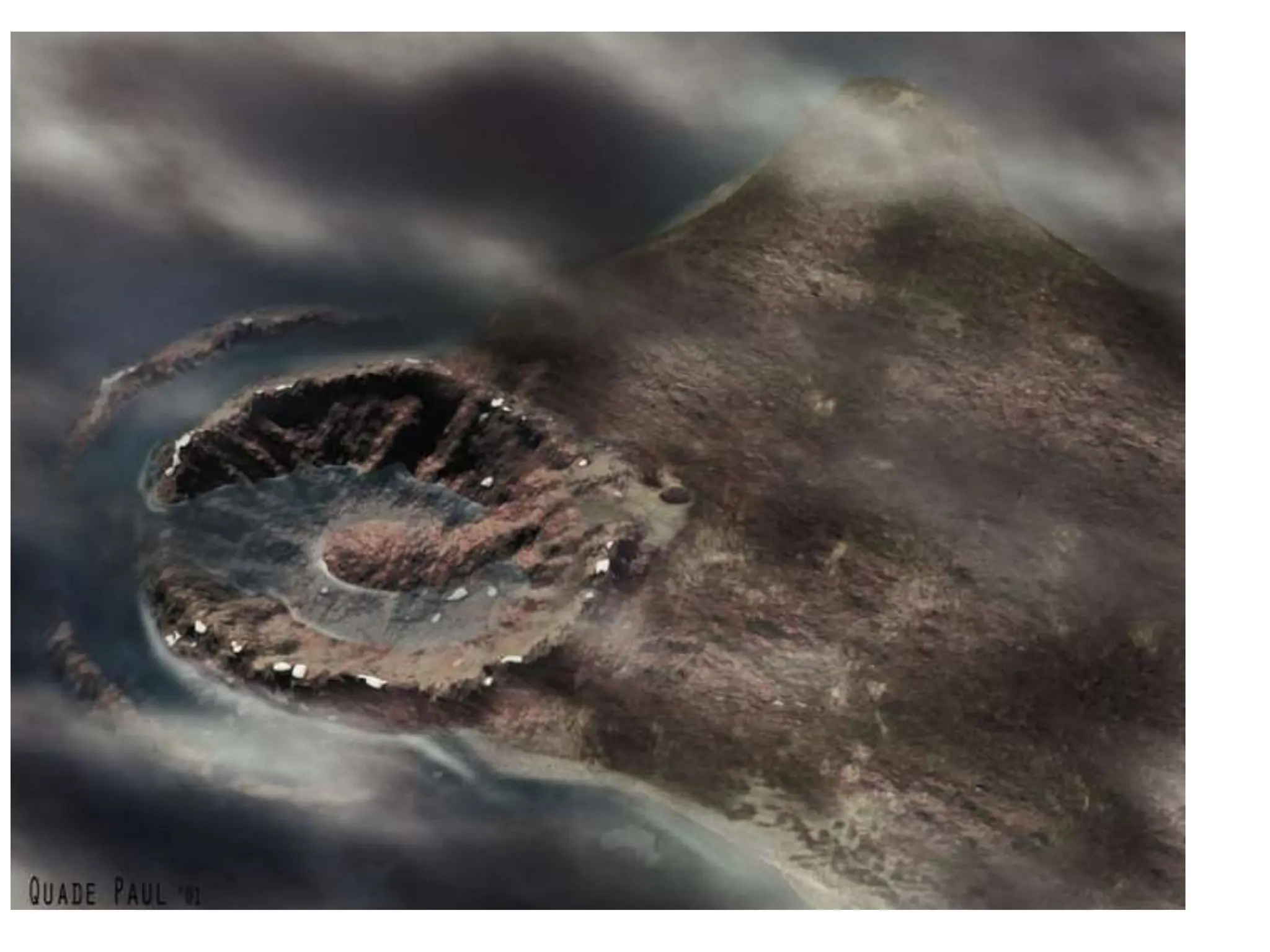
Chicxulub asteroid/comet (~10-15 km) impact
(K-T boundary) (crator diameter ~ 180 km)
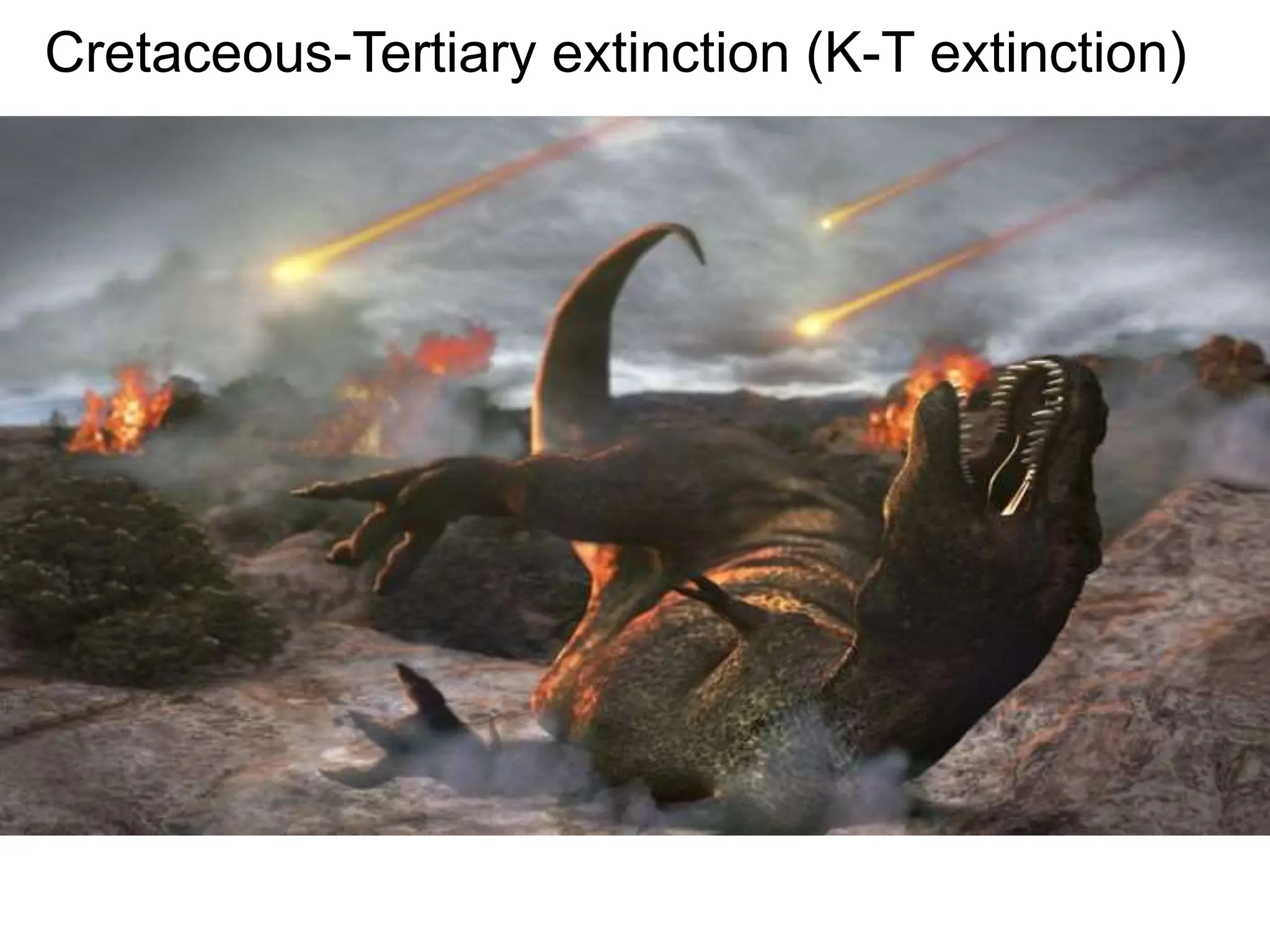
Cretaceous-Tertiary extinction (K-T extinction)
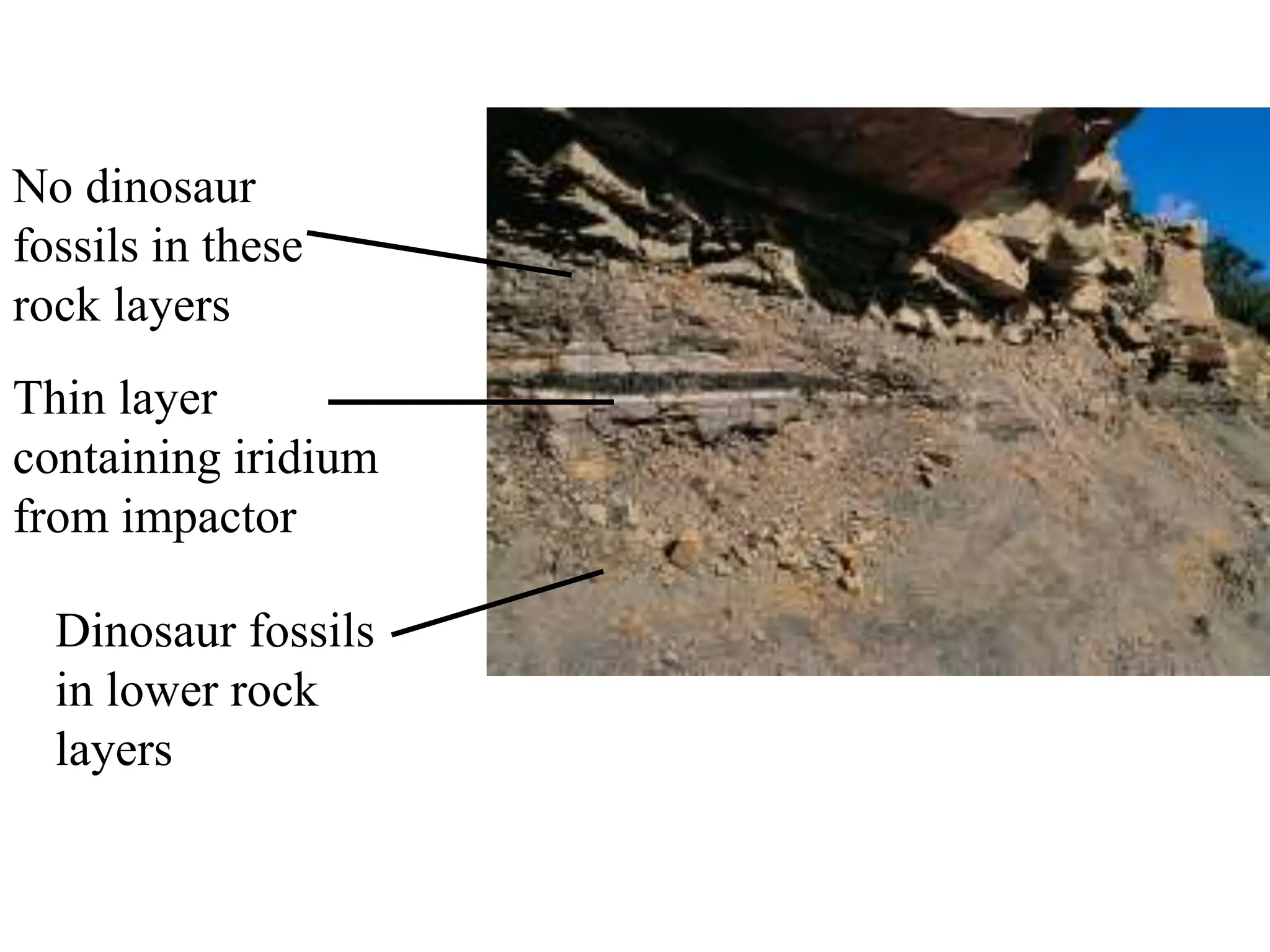
Dinosaur fossils
in lower rock
layers
No dinosaur
fossils in these
rock layers
Thin layer
containing iridium
from impactor
Iridium - evidence of an impact
• Iridium is very rare in Earth surface rocks
but often found in meteorites.
• Luis and Walter Alvarez found a worldwide
layer containing iridium, laid down 65
million years ago.
Comet or
asteroid about
10km in
diameter
approaches
Earth
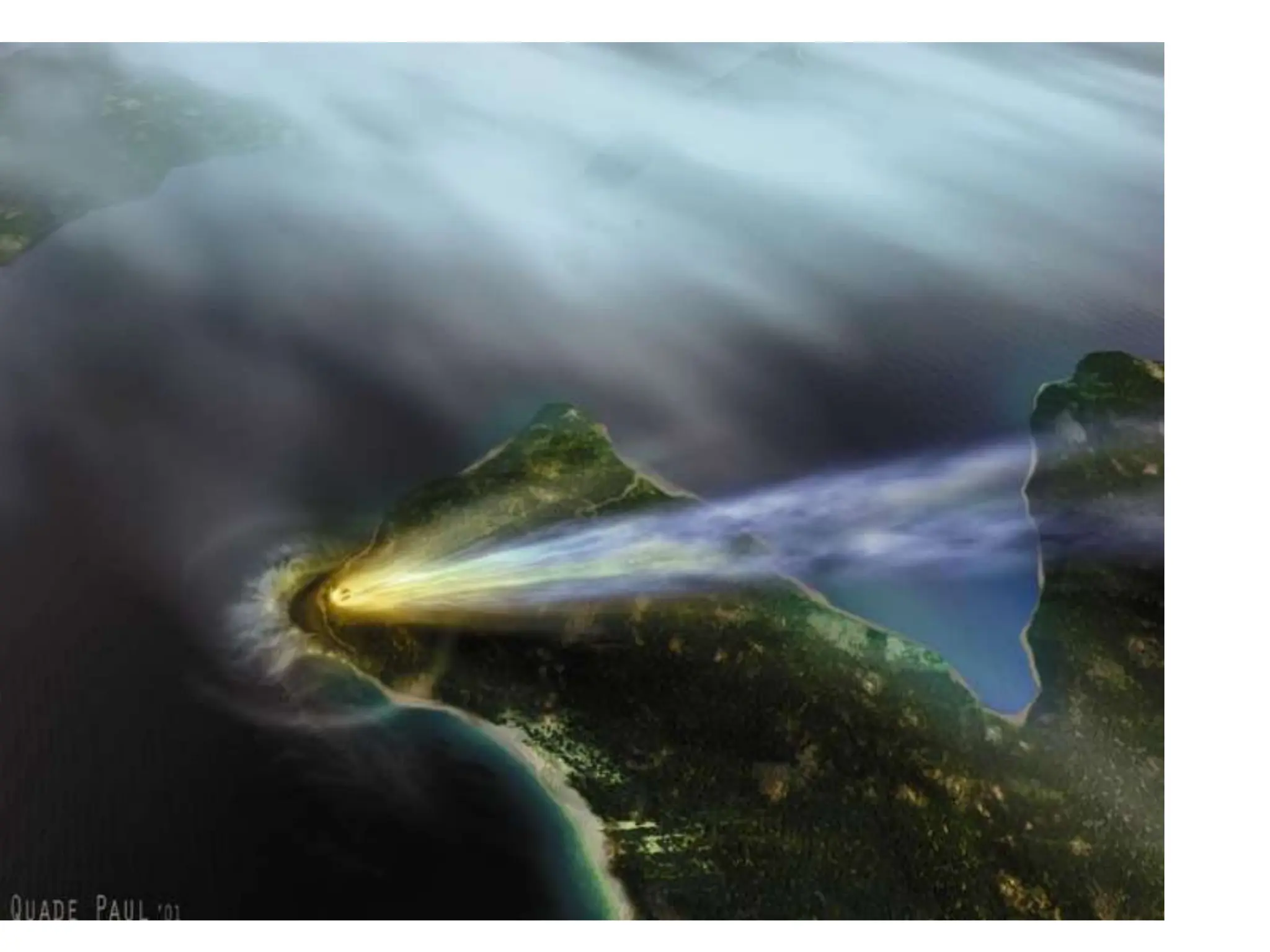
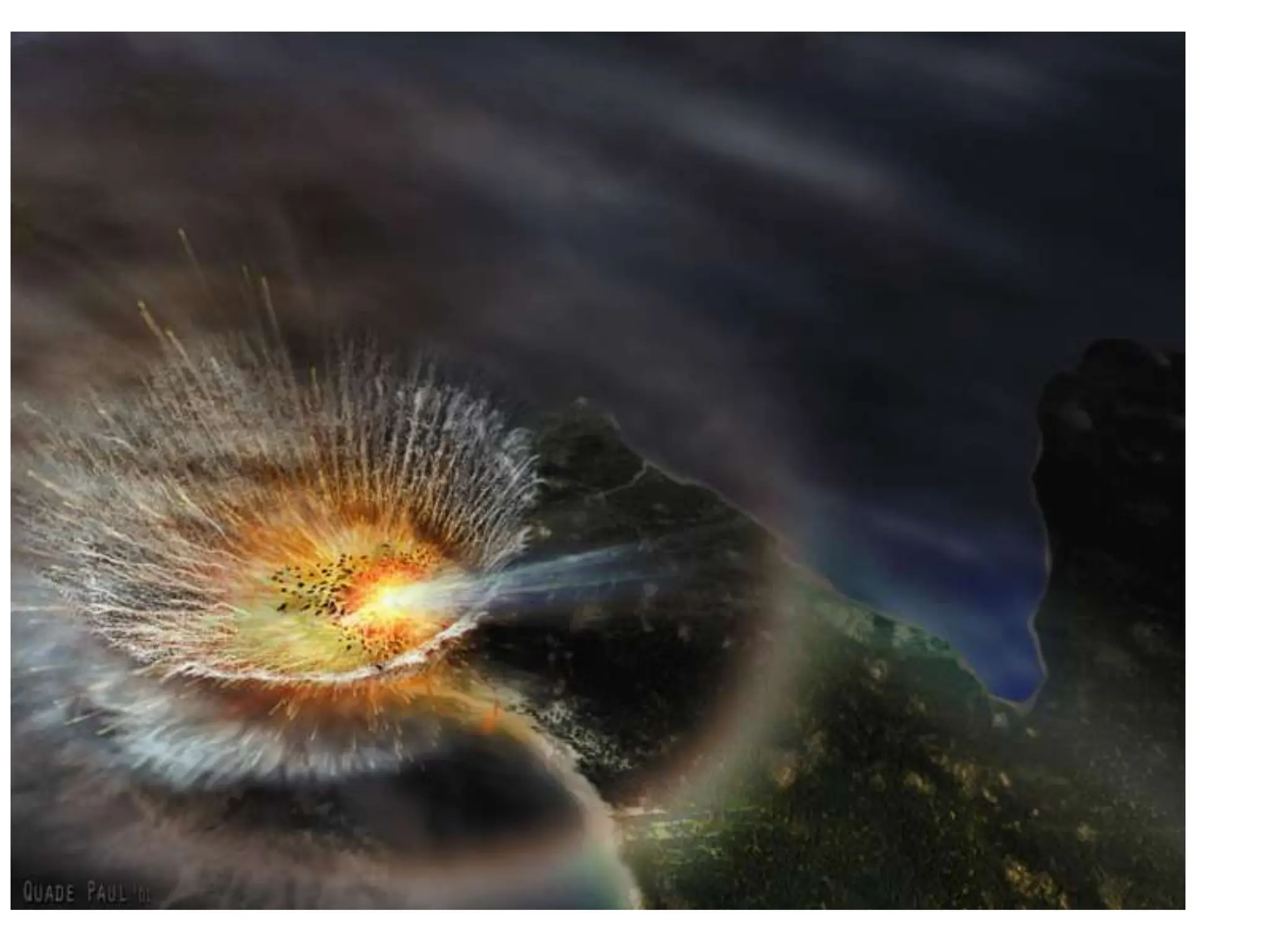
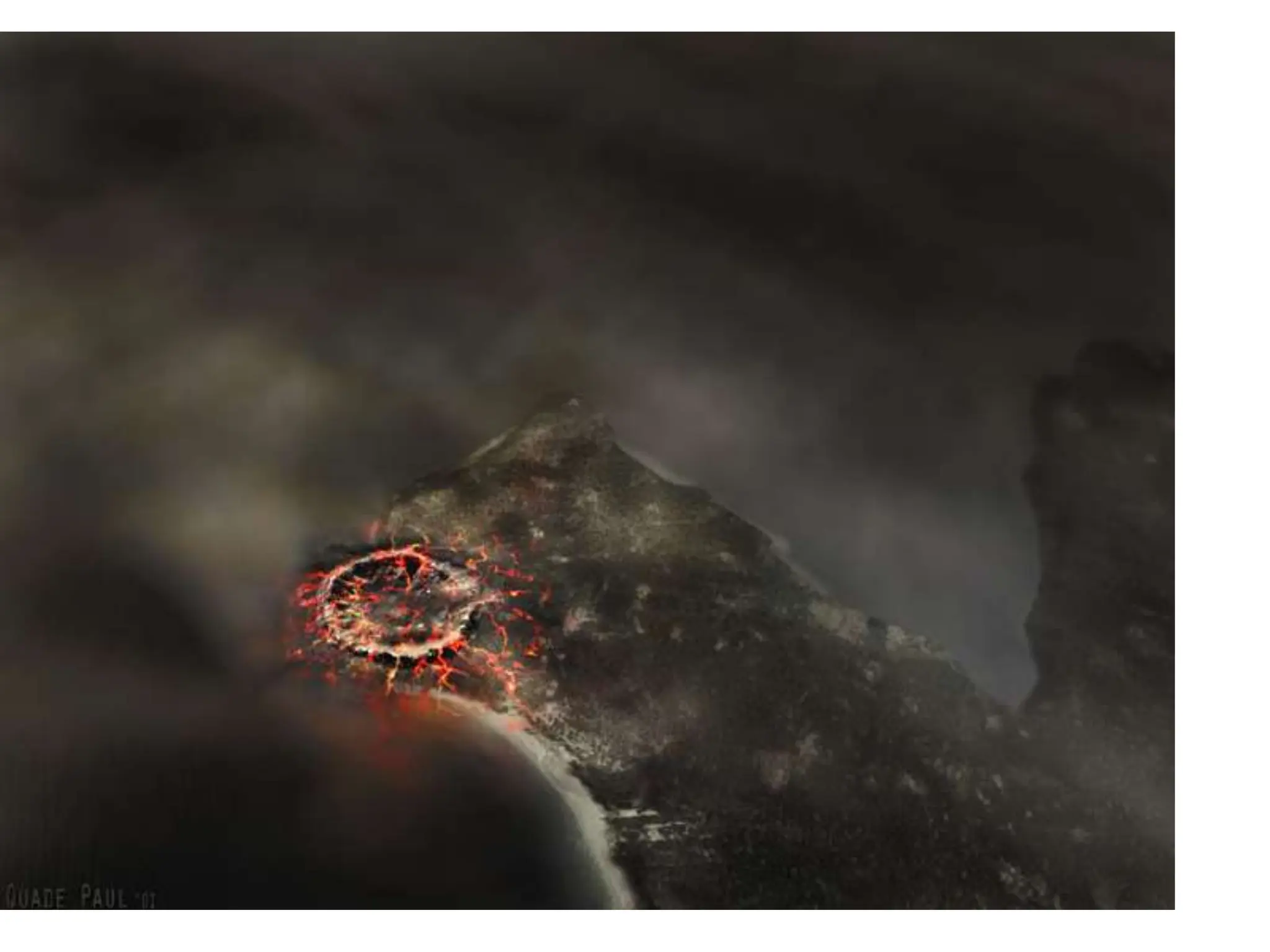
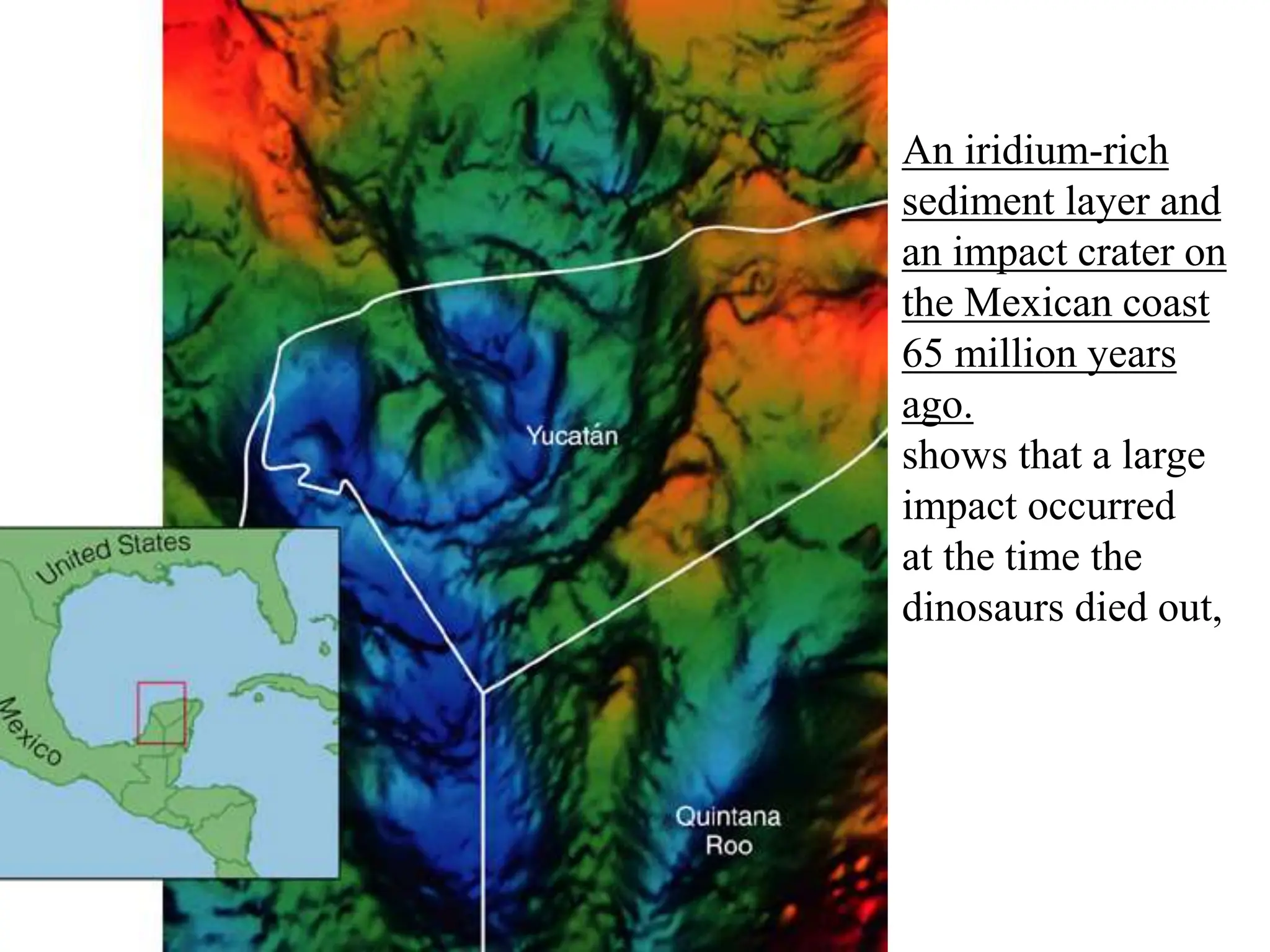
An iridium-rich
sediment layer and
an impact crater on
the Mexican coast
65 million years
ago.
shows that a large
impact occurred
at the time the
dinosaurs died out,
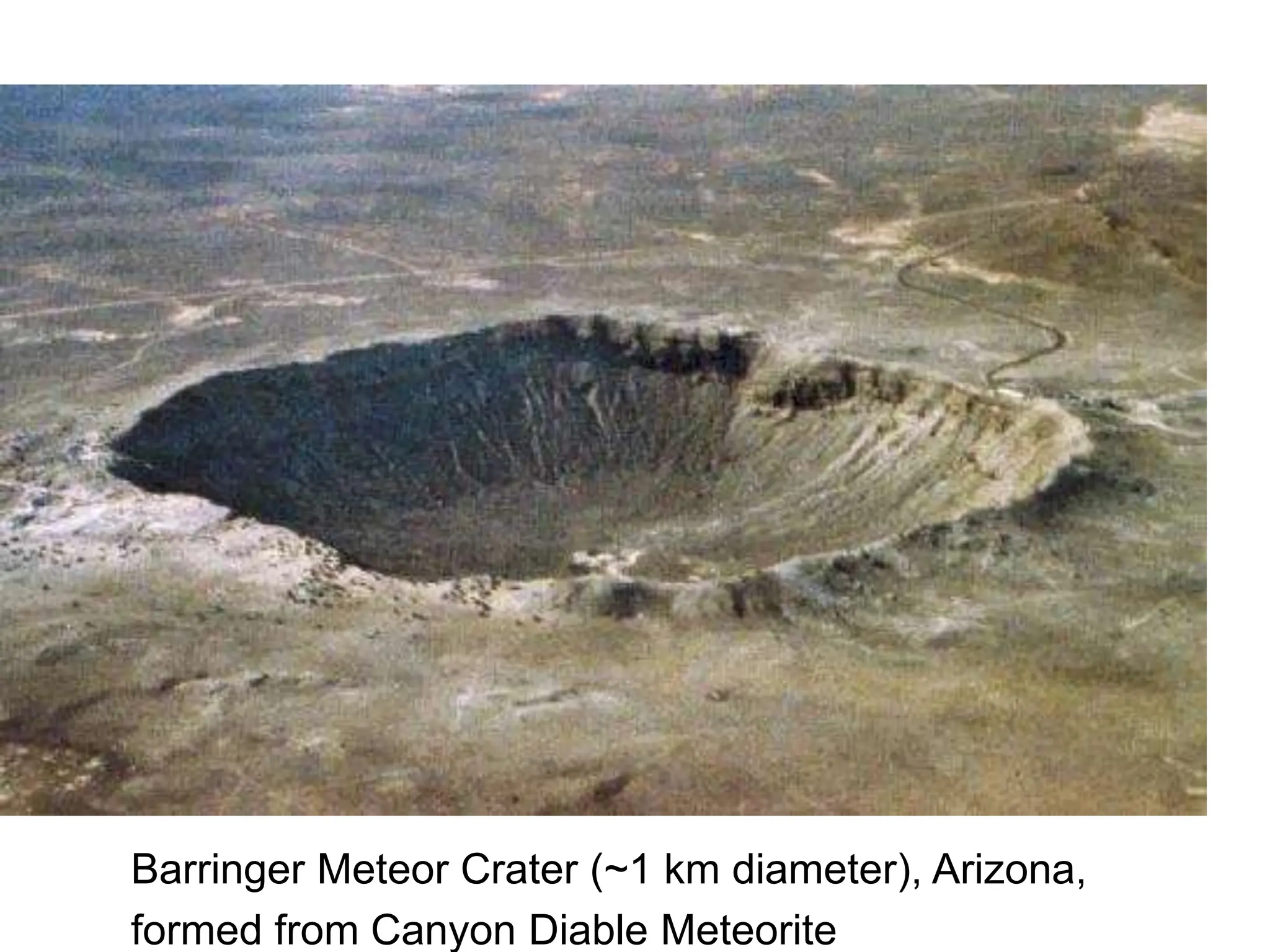
Barringer Meteor Crater (~1 km diameter), Arizona,
formed from Canyon Diable Meteorite
Impact Craters
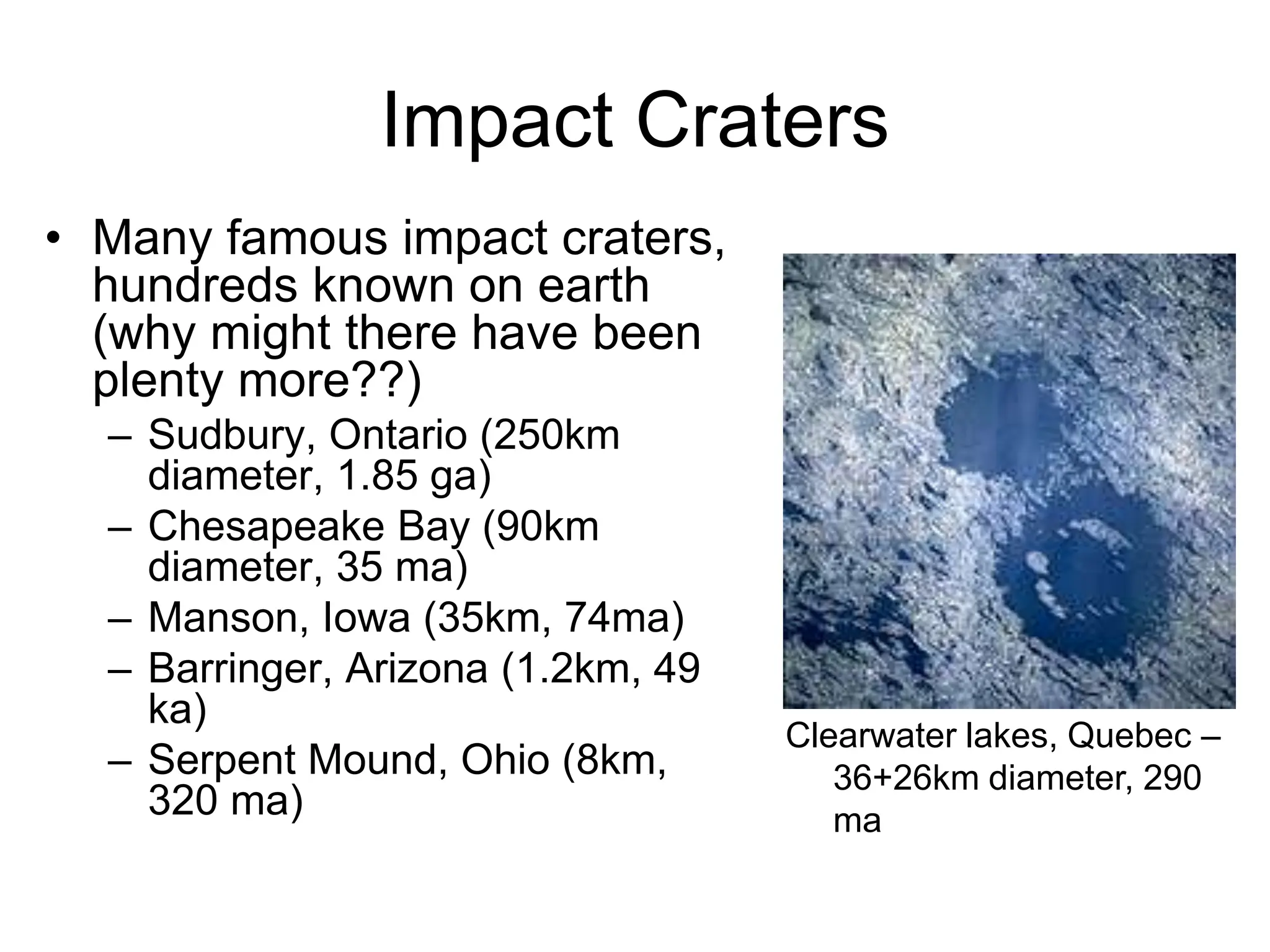
Clearwater lakes, Quebec –
36+26km diameter, 290
ma
• Many famous impact craters,
hundreds known on earth
(why might there have been
plenty more??)
– Sudbury, Ontario (250km
diameter, 1.85 ga)
– Chesapeake Bay (90km
diameter, 35 ma)
– Manson, Iowa (35km, 74ma)
– Barringer, Arizona (1.2km, 49
ka)
– Serpent Mound, Ohio (8km,
320 ma)
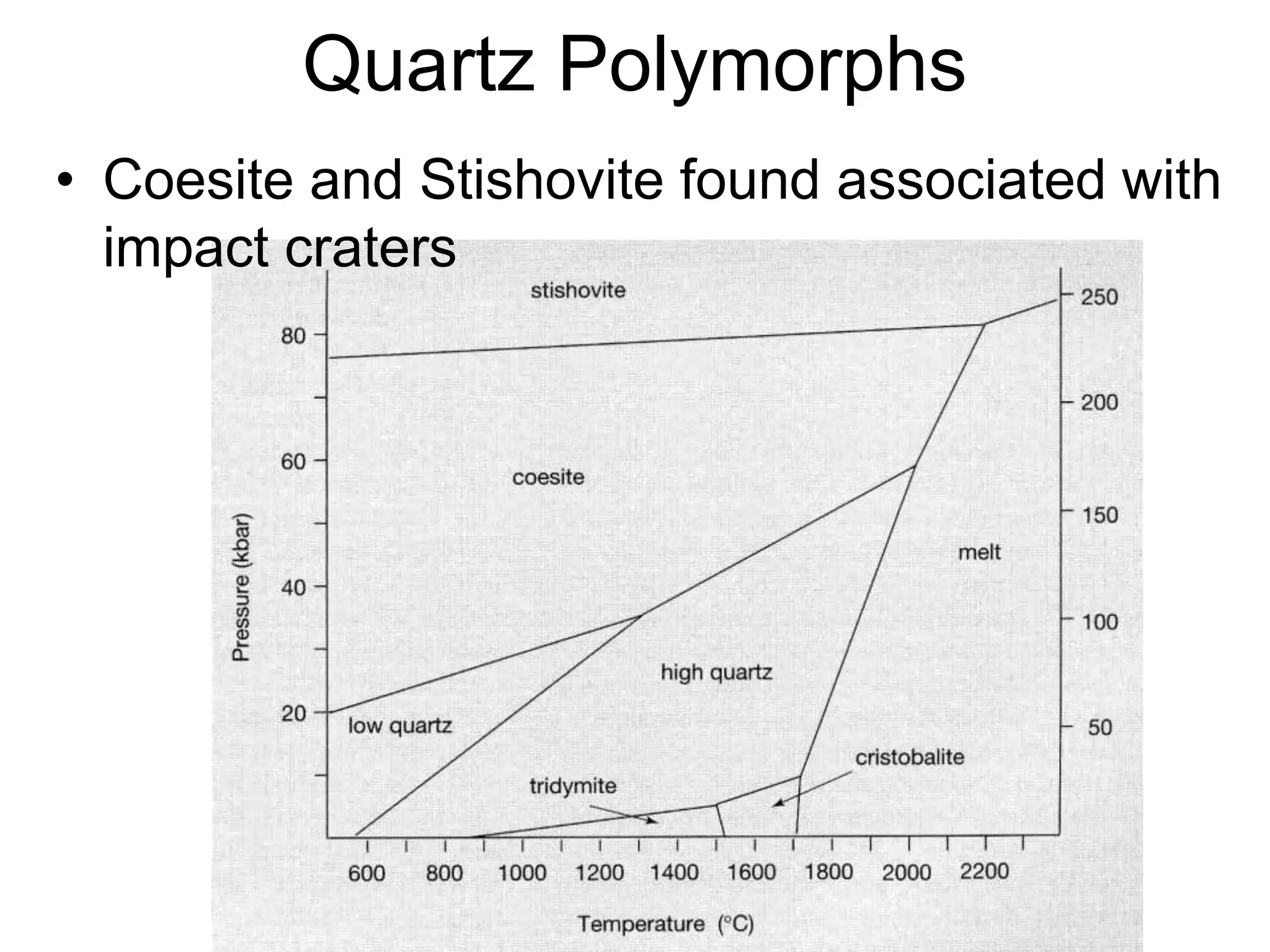
Quartz Polymorphs
• Coesite and Stishovite found associated with
impact craters

Meteorites lecture Introduction Types meteor

  • 1.
  • 2.
    Meteorite Types – Stonymeteorites • Chondrites • Achondrites – Iron meteorites – Stony-iron meteorites • Pallasites • Mesosiderites
  • 3.
    Chondrites • Stony meteorites– most common meteorites and represent the oldest solids that are the building blocks of the solar system • Parent bodies were small-medium asteroids • Contain up to 80% chondrules, which were freely floating molten drops in space • Chondrules are few mm to 1 cm spheres • Mostly olivine and pyroxene, with minor feldspathic glass, troilite (FeS), chromite, phosphates
  • 4.
    Chondrite groups • Ordinarychondrites – make up 80% of the meteorites and 90% of chondritic meteorites, abundant chondrules • Carbonaceous chondrites –less the 5% of chondritic meteorites, few chondrules, more lithophile elements (Ca, Mg, K, Cr, Al, Cl,…), water and organic compounds • Enstatite Chondrites – 2% of chondritic meteorites, enstatite-rich chondrules and abundant metal and sulfide minerals
  • 5.
    Peekskill Meteorite Peekskill Meteor:October 9, 1992, a 12-kg meteorite struck a car in New York.
  • 6.
    Achondrites • Similar toterrestrial basalts, represent 8% of meteorites grouped • Many such meteorites originating from one asteroid • Also includes Martian and lunar meteorites Lunar Meteorite Allan Hills 81005
  • 7.
    Iron Meteorites • 5%of meteorites, all of largest meteorites (up to 66 tons) • Composed of iron-nickel alloy intergrowths: – Kamacite – Fe-Ni alloy at 90:10 – Taenite – Fe-Ni alloy at 80:20 to 45:65 Kamacite
  • 8.
    Stony-iron Meteorites • Mixof iron-nickel alloy and silicate minerals (mostly olivine), 1% of meteorites – Pallasites are thought to form core-mantle boundary of differentiated asteroids – Mesosiderite – equal parts metal alloy and silicate with a breccia texture Mesosiderite Pallasite
  • 9.
    Chicxulub asteroid/comet (~10-15km) impact (K-T boundary) (crator diameter ~ 180 km)
  • 10.
  • 11.
    Dinosaur fossils in lowerrock layers No dinosaur fossils in these rock layers Thin layer containing iridium from impactor
  • 12.
    Iridium - evidenceof an impact • Iridium is very rare in Earth surface rocks but often found in meteorites. • Luis and Walter Alvarez found a worldwide layer containing iridium, laid down 65 million years ago.
  • 13.
    Comet or asteroid about 10kmin diameter approaches Earth
  • 18.
    An iridium-rich sediment layerand an impact crater on the Mexican coast 65 million years ago. shows that a large impact occurred at the time the dinosaurs died out,
  • 19.
    Barringer Meteor Crater(~1 km diameter), Arizona, formed from Canyon Diable Meteorite
  • 20.
    Impact Craters Clearwater lakes,Quebec – 36+26km diameter, 290 ma • Many famous impact craters, hundreds known on earth (why might there have been plenty more??) – Sudbury, Ontario (250km diameter, 1.85 ga) – Chesapeake Bay (90km diameter, 35 ma) – Manson, Iowa (35km, 74ma) – Barringer, Arizona (1.2km, 49 ka) – Serpent Mound, Ohio (8km, 320 ma)
  • 21.
    Quartz Polymorphs • Coesiteand Stishovite found associated with impact craters