Metaphysical Poetry
Realised by : Younes Morjane
Metaphysics: the branch of philosophy that systematically investigates the
nature of first principles and the problems of ultimate reality: it includes the
study of being (ontology) and the study of the structure of the universe
(cosmology).
The term was applied 100 years later, by Dr Johnson, who used it rather
disparagingly, to describe certain poets whom he regarded as addicted to
‘witty conceits’ (comparisons) and far fetched imagery. In a poetic
context, the term was first applied to a group of 17th century poets,
including Donne, but has since come to mean poetry which expresses
emotion in an intellectual context,
What are the characteristics of
metaphysical poetry ?
Chief characteristics of Metaphysical poetry:
Colloquial diction
inventive use of structure and form
Variety of tone – often within one poem
Poets speak in their own persona or create dramatically
different characters and situations: self-dramatization,
internal dramatic conflict.
Opening lines often direct and startling.
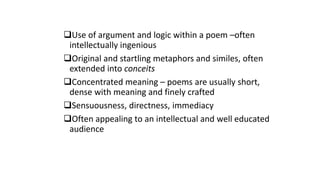
Use of argument and logic within a poem –often
intellectually ingenious
Original and startling metaphors and similes, often
extended into conceits
Concentrated meaning – poems are usually short,
dense with meaning and finely crafted
Sensuousness, directness, immediacy
Often appealing to an intellectual and well educated
audience
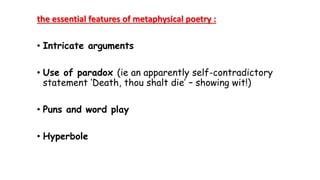
the essential features of metaphysical poetry :
• Intricate arguments
• Use of paradox (ie an apparently self-contradictory
statement ‘Death, thou shalt die’ – showing wit!)
• Puns and word play
• Hyperbole
 Intertextual references and analogies drawn from other areas of learning
 Moving between strict (often iambic) rhythms and regular metres
 The patterns of colloquial speech
 Arresting openings
 The metaphysical ‘conceit’ – a strongly maintained metaphor that creates an
unusual comparison between two things. (Samuel Johnson did not approve – he
called Donne’s conceits “the most heterogeneous ideas are yoked together by
violence’ and said Donne’s ‘Thoughts (are) often new, but seldom natural”)
metaphysical poetry.pptx

metaphysical poetry.pptx

  • 1.
  • 3.
    Metaphysics: the branchof philosophy that systematically investigates the nature of first principles and the problems of ultimate reality: it includes the study of being (ontology) and the study of the structure of the universe (cosmology).
  • 4.
    The term wasapplied 100 years later, by Dr Johnson, who used it rather disparagingly, to describe certain poets whom he regarded as addicted to ‘witty conceits’ (comparisons) and far fetched imagery. In a poetic context, the term was first applied to a group of 17th century poets, including Donne, but has since come to mean poetry which expresses emotion in an intellectual context,
  • 5.
    What are thecharacteristics of metaphysical poetry ?
  • 6.
    Chief characteristics ofMetaphysical poetry: Colloquial diction inventive use of structure and form Variety of tone – often within one poem Poets speak in their own persona or create dramatically different characters and situations: self-dramatization, internal dramatic conflict. Opening lines often direct and startling.
  • 7.
    Use of argumentand logic within a poem –often intellectually ingenious Original and startling metaphors and similes, often extended into conceits Concentrated meaning – poems are usually short, dense with meaning and finely crafted Sensuousness, directness, immediacy Often appealing to an intellectual and well educated audience
  • 8.
    the essential featuresof metaphysical poetry : • Intricate arguments • Use of paradox (ie an apparently self-contradictory statement ‘Death, thou shalt die’ – showing wit!) • Puns and word play • Hyperbole
  • 9.
     Intertextual referencesand analogies drawn from other areas of learning  Moving between strict (often iambic) rhythms and regular metres  The patterns of colloquial speech  Arresting openings  The metaphysical ‘conceit’ – a strongly maintained metaphor that creates an unusual comparison between two things. (Samuel Johnson did not approve – he called Donne’s conceits “the most heterogeneous ideas are yoked together by violence’ and said Donne’s ‘Thoughts (are) often new, but seldom natural”)