2
Social Leadership Program
Nameof Research Project:
Mentoring of Tyros or Social Work
Neophytes (SWN) for Social
Leadership in Community
Project Work in Sociology:
Community Work for Tyro or Social
Work for Neophytes (SWN)
By
Dr Sushma Singh
Coollaborate Leadership Foundation
Inspiring Collaborative Leadership for a Better Tomorrow
3.
3
Coollaborate Leadership Foundation
InspiringCollaborative Leadership for a Better Tomorrow
A Note from the Director
Coollaborate Leadership Foundation
Training in Social Leadership
Dear Participants,
It is with great enthusiasm that I welcome you to the Training in Social Leadership under
the banner of the Coollaborate Leadership Foundation.
In today’s world, leadership must go beyond authority—it must be rooted in empathy,
inclusivity, and a deep sense of social responsibility. This training has been designed not
only to build essential leadership skills but also to ignite within each of you a commitment
to lead change in your communities with courage and compassion.
At the Coollaborate Leadership Foundation, we believe that every individual has the
potential to be a catalyst for transformation. Through this program, we aim to equip you
with the tools, experiences, and
collaborative spirit needed to become ethical, effective, and visionary social leaders.
As you engage in workshops, projects, and community interactions, I encourage you to
reflect, participate actively, and challenge yourselves. Remember, true leadership lies in
listening, in building together, and in inspiring others to take action.
We are proud to walk this journey with you—and we are confident that the seeds sown
here will grow into lasting impact.
Wishing you an inspiring and empowering experience.
Warm regards,
Himani Priya
Director
Coollaborate Leadership Foundation
4.
4
Research Project: CreatingCommunity
Leaders for Change
-----------------------------------------------------------------------------------------------------------------
Social Leadership Program
Name of Research Project:
Mentoring of Tyros or Social Work Neophytes (SWN) for
Social Leadership in Community
Project Work in Sociology, Community Work for Tyro or Social Work for Neophytes
(SWN)
Here's a formal Introduction of Training Program in Social Leadership by the
Coollaborate Leadership Foundation that you can include in your documents or
presentations:
Introduction to Training Program in Social Leadership
By Coollaborate Leadership Foundation
The Coollaborate Leadership Foundation (CLF) is proud to present its flagship
Training Program in Social Leadership, designed to empower individuals with the
skills, mindset, and strategies essential for driving positive change in their communities
and beyond. These Program are part of our commitment to nurturing future-ready leaders
who lead with empathy, integrity, and a deep sense of social responsibility.
Social Leadership is more than just leading people—it is about inspiring action, fostering
collaboration, and addressing pressing social challenges with innovative and inclusive
solutions. At CLF, we believe that every individual has the potential to become a change-
maker when equipped with the right tools and mentorship.
Purpose of the Program
The Program aim to:
• Develop leadership skills rooted in empathy, collaboration, and ethical decision-
making.
• Strengthen the capacity of youth and community members to identify and address
social issues.
• Promote civic engagement, sustainability, and community development through
project-based learning.
• Encourage reflective practices and critical thinking through experiential learning.
Key Features
• Interactive Workshops led by experienced mentors and practitioners.
• Project-Based Learning to solve real-world social issues.
• Personal Growth Sessions focusing on communication, team dynamics, and self-
awareness.
• Community Immersion Activities for practical understanding and impact.
• Evaluation & Feedback Mechanisms to monitor growth
• and learning outcomes.
Chapter Highlights
The training program is structured into progressive Program covering:
5.
5
• Understanding Leadershipin Social Contexts
• Self-Discovery and Identity as a Leader
• Effective Communication and Conflict Resolution
• Design Thinking for Social Innovation
• Building and Leading Collaborative Teams
• Ethics, Values, and Inclusive Leadership
• Community Engagement and Participatory Approaches
• Project Planning, Execution & Impact Assessment
Each Chapter integrates reflective exercises, group tasks, and mentoring support to ensure
deep and sustained learning.
Our Vision Through This Training
By introducing these Program, CLF envisions a growing network of socially conscious
leaders who are prepared to transform their communities with courage, compassion, and
collaborative spirit.
Project Work in Sociology
Project Based Learning (PBL) Chapters
1. Designing Cover Page and Research Project Front Pages (5):
a. 1 design cover page with chart paper
b. Name – School, Your Name, Teacher, Class, Roll Number, Project, Foundation
c. Whom to give Acknowledgment
d. How to write a Certificate
e. What is Index
2. Workshop conduction and preparation of workshop report (1 page)
3. Making PPT for workshop – 10 slides (print of slides can be included in the report)
4. Writing Essay (5 pages)
5. Designing Poster (A4 sheet, 2 in number with explanation in report)
6. Learning how to make Educational Video & written script (2 to 3 minutes self-made)
7. Community awareness conversation with family members or neighbors (1-minute
video)
8. Writing Social Media Posts (2 Twitter or LinkedIn posts)
9. SWOT Analysis
10. Self-Assessment (What did I learn during this Research Project) and Reflections
Suggested Topics and Overall Project Timeline
- **July 2025**: Orientation Session, Topic Allotment, and Planning
- **August 2025**: Workshop Preparation and Report Writing
- **September 2025**: Posters, Essays, and Social Media Activities
- **October 2025**: Educational Video Creation and Community Conversations
- **November 2025**: Compilation of Project Material, SWOT Analysis, and
Reflections
- **December 2025**: Presentation, Submission, and Exhibition of Final Projects
6.
6
Chapter -1 FrontPages
---‐‐‐--------------------------------‐---------------------------------------------------------------------
Design first 5 pages for the Research Report
- Design cover page with chart paper on the theme of your allotted topic
• Name of Project, Name of SWN, Name of School, Name of Mentoring
Teacher, Class and Section, Roll Number
- Acknowledgment for all the contributions
- Write a Certificate for Research Report
- Index or list of the Chapters and pages etc.
RESEARCH REPORT
[Your Topic Title]
Name of SWN: __________
Name of School: __________
Name of Mentoring Teacher: __________
Class & Section: __________
Roll Number: __________
Project First Page Details (To be filled by Student)
School Name: ________________________________________________
Your Name: _________________________________________________
Teacher’s Name: _____________________________________________
Class: _____________________________________________________
Roll Number: ________________________________________________
Project Title: Creating Community Leaders for Change
Foundation Name: Coollaborate Leadership Foundation
Acknowledgment (To be Given to): _______________________________
7.
7
Certificate Issued By:_________________________________________
ACKNOWLEDGMENT
I would like to express my heartfelt gratitude to my mentoring teacher, [Mentor’s
Name], for their guidance and support throughout this project. I also thank my school,
classmates, and family for their encouragement and assistance during the research
work.
[Your Name]
CERTIFICATE
This is to certify that [Student Name], Class [__], Roll No. [__], has successfully completed
the Research Project titled “[Title]” under my supervision. The work is original and a
part of the internal assessment for Sociology.
Mentoring Teacher’s Name & Signature
Date: __________
INDEX
1. Cover Page ............................................. Page 1
2. Acknowledgment ........................................ Page 2
3. Certificate .................................................. Page 3
4. Index ......................................................... Page 4
5. Chapter 1: [Title] ..................................... Page 5
Self-Assessment Checklist and Rubric for Research Report (First 5 Pages)
Chapter -2 Workshop
---------------------------------------------------------------------------------------------------------------------
Introduction for Workshops
Workshops are an integral component of the "Creating Community Leaders for Change" initiative.
They serve as dynamic platforms for learning, collaboration, and empowerment. Through these
8.
8
interactive sessions, participantsare equipped with knowledge, practical skills, and the confidence
needed to lead positive change within their communities.
Each workshop is designed to foster critical thinking, encourage dialogue, and promote inclusive
leadership practices. By engaging with real-world issues and exploring innovative solutions,
participants gain a deeper understanding of community needs and the role they can play as change-
makers.
Our workshops also provide a space for networking, sharing experiences, and building partnerships
that extend beyond the training sessions. Whether focused on leadership, communication, social
justice, sustainability, or civic engagement, every workshop is a step toward building a more
informed, active, and responsible community.
Together, we aim to inspire a generation of community leaders who are committed to driving
meaningful and sustainable transformation.
How to conduct a Workshop and prepare a workshop report (1 page)
Tips:
• Start by your Introduction, your goals and audience, then
- create an interactive agenda that incorporates diverse activities and breaks.
• Ensure a welcoming atmosphere with introductions and icebreakers, and
- facilitate discussions to encourage participation.
- Finally, collect feedback and plan for follow-up to improve future workshops.
----------------------------------------------------------------------------------------------------------------------
A PowerPoint presentation is a digital slideshow created using Microsoft PowerPoint, a
popular software used for creating visual and multimedia presentations. It's widely used in
education, business, and professional settings to convey information in a structured and
engaging way.
Key Features of a PowerPoint Presentation:
1. Slides: Each slide acts like a page where you can present different points, images, charts,
or videos.
2. Text: Titles, bullet points, and short descriptions to convey ideas clearly.
3. Images & Videos: Visual elements to support the message or make it more engaging.
Chapter -3 Power Point Presentation (PPT)
9.
9
4. Animations &Transitions: Effects to make elements appear in an interesting way or to
switch between slides.
5. Charts & Graphs: Useful for presenting data visually.
6. Design Themes: Pre-designed templates that make your presentation look professional.
Uses of PowerPoint Presentations: Classroom teaching and student projects
Business meetings and reports
Workshops and seminars
Project proposals
Public speeches or lectures
Benefits: Visually appealing way to present ideas
Easy to follow for the audience
Helps organize thoughts clearly
Can include multimedia for better impact
Making PPT and presenting through PPT in a Workshop (10 slides) print of slides can
be included in the project Report.
Tips for an effective presentation:
• Keep it concise: Avoid using too much text on each slide. Use bullet points and short
sentences.
• Use visuals: Incorporate images, charts, and other visuals to make your presentation
more engaging.
• Use consistent design: Maintain a consistent theme, font, and color scheme throughout
the presentation.
• Use animations and transitions sparingly: Too much animation can
• be distracting.
• Practice your delivery: Rehearse your presentation to ensure a smooth and confident
delivery.
Chapter -4 Essay
----------------------------------------------------------------------------------------------------------------------
10.
10
An essay isa short piece of writing that presents the author’s point of view or argument on
a particular topic. It is a structured form of writing commonly used in education,
journalism, and other fields to express ideas clearly and logically.
Key Features of an Essay:
1. Introduction – Introduces the topic and gives a clear thesis or main idea.
2. Body Paragraphs – Each paragraph discusses one main point supporting the thesis.
Usually includes: Topic sentence, Explanation, Evidence or examples
3. Conclusion – Summarizes the main points and restates the thesis in a new way, offering
final thoughts.
Types of Essays:
Descriptive Essay – Describes a person, place, event, or feeling.
Narrative Essay – Tells a story or personal experience.
Expository Essay – Explains or informs with facts and logic.
Persuasive/Argumentative Essay – Tries to convince the reader of a viewpoint.
Reflective Essay – Reflects on a personal experience and its meaning.
Purpose of an Essay: To inform, To persuade, To explain,To reflect
Writing an Essay on the allotted Topic (5 pages)
Understanding the Basics:
• Essay Structure:
Essays typically have three main parts:
• Introduction: Introduces the topic, provides context, and states the essay's main
argument (thesis statement).
• Body Paragraphs: Develop the argument, providing evidence, examples, and analysis
to support the thesis.
• Conclusion: Summarizes the main points, restates the thesis in a new way, and offers
a final thought or
• reflection.
Chapter -5 Poster
------------------------------------------------------------------------------------------------------------
A poster is a visual communication tool designed to convey information, ideas, or
messages quickly and effectively, usually combining text, images, and design elements.
11.
11
Types of Posters:
1.Informational Posters – Share facts or instructions (e.g., safety guidelines).
2. Promotional Posters – Advertise events, products, or services (e.g., a concert or
seminar).
3. Educational Posters – Teach or explain a concept (e.g., in classrooms or workshops).
4. Scientific/Research Posters – Summarize research for academic or conference
presentations.
5. Advocacy Posters – Promote awareness or social change (e.g., environmental
campaigns).
Key Features:
Title/Header – Captures attention.
Images/Graphics – Enhance understanding and appeal.
Concise Text – Bullet points, slogans, or brief paragraphs.
Layout – Clear, logical arrangement for easy reading.
Color & Design – Attract attention and highlight key points.
Where Posters Are Used: Schools and colleges
Conferences and exhibitions
Streets, walls, or bulletin boards
Online (as digital posters)
Community campaigns and events
A slogan is a short, memorable phrase used to capture the essence of a product, brand,
organization, or campaign. Its main purpose is to quickly communicate the core message,
value, or emotion associated with what it represents.
Examples: Commercial brands:
Nike: "Just Do It"
McDonald's: "I'm Lovin' It"
Social campaigns: Swachh Bharat Abhiyan: "One step towards cleanliness"
Beti Bachao, Beti Padhao: "Save the Daughter, Educate the Daughter"
A good slogan is: Concise
Catchy
Easy to remember
Emotionally appealing
Relevant to the cause or product
Design a Poster or Slogan on A4 sheet on the allotted topic (2 in Number with
explanation)
What Makes a Good Poster?
• Important information should be readable from about 10 feet away.
• Title is short and draws interest.
• Word count of about 300 to 800 words.
• Text is clear and to the point.
• Use of bullets, numbering, and headlines make it easy to read.
• Effective use of graphics, color and fonts.
12.
12
Chapter -6 Video
---------------------------------------------------------------------------------------------------------------------
Avideo is a form of media that displays moving visual images, often combined with sound,
to convey information, tell a story, entertain, or document events. Videos can be recorded,
live-streamed, or animated, and they are commonly used in television, movies, social
media, education, marketing, and more.
Types of Videos:
1. Recorded Video – Pre-filmed content (e.g., movies, documentaries, tutorials).
2. Live Video – Real-time broadcast (e.g., news, live events).
3. Animated Video – Created with graphics or drawings (e.g., cartoons, explainer videos).
4. Short-form Video – Quick clips, common on social media (e.g., Instagram Reels,
TikTok).
5. Educational Video – Used for teaching or training purposes.
6. Promotional Video – Used for advertising or marketing.
Common Formats: MP4, AVI, MOV, WMV
Uses of Video:
Communication – Video calls, webinars
Education – Online courses, lectures
Entertainment – Films, TV shows,
YouTube videos
Marketing – Product demos, brand stories
Documentation – Events, interviews, surveys
How to make Educational Video & write script (2 to 3 minutes self) on the allotted topic
Mayer's 12 Principles of Multimedia Learning:
• Multimedia Principle: People learn better from words and pictures than from words
alone.
• Coherence Principle: Exclude extraneous words, pictures, and sounds.
• Signaling Principle: Highlight key information and its organization.
13.
13
• Redundancy Principle:Avoid presenting the same information in multiple redundant
formats (e.g., narration and on-screen text simultaneously).
• Spatial Contiguity Principle: Place corresponding words and pictures near each
other.
• Temporal Contiguity Principle: Present corresponding words and pictures
simultaneously.
• Segmenting Principle: Break up information into smaller, manageable chunks.
• Pre-training Principle: Provide learners with introductory information about key
concepts before presenting complex material.
• Modality Principle: Use narration and visuals instead of on-screen text and
animation.
• Personalization Principle: Use a conversational tone rather than a formal one.
• Voice Principle: Use a human voice for narration rather than a machine voice.
• Image Principle: Use images that are relevant and clarify the presented information.
Chapter -7 Community Conversation
----------------------------------------------------------------------------------------------------------------------
Community conversation is a structured or informal dialogue among members of a
community to discuss shared concerns, needs, challenges, or goals. It is a participatory
process that promotes inclusive communication, mutual understanding, and collective
decision-making.
Key Features of Community Conversation:
1. Inclusive Participation: Everyone in the community, regardless of age, gender, or
background, is encouraged to participate.
2. Shared Dialogue: Participants share experiences, raise issues, and express opinions in a
respectful environment.
14.
14
3. Problem-Solving Focus:Conversations often aim to identify challenges and find
community-led solutions.
4. Empowerment Tool: It empowers people to take ownership of their issues and become
active agents of change.
5. Trust Building: Builds trust and strengthens social bonds among community members.
Examples of Topics in Community Conversations:
Health and hygiene practices
Gender equality and women’s empowerment
Environmental issues
Education and youth development
Local governance and accountability
Peacebuilding and conflict resolution
Benefits:
Enhances community cohesion
Encourages transparency and accountability
Promotes behavior change and awareness
Strengthens civic participation
Where It's Used:
Community conversations are widely used by NGOs, local governments, schools,
development agencies, and health programs to engage communities and co-create
solutions.
Community Awareness Conversation with family members or neighbors, interview,
Panel Discussion, Survey etc. (video 1 minute minimum) on the allotted topic
Before the Interview:
• Prepare questions:
Develop a list of open-ended questions that encourage detailed responses and allow for
natural conversation flow.
• Research the community:
Understand the community's background, key issues, and existing initiatives to tailor your
questions effectively.
• Establish rapport:
Start with small talk to build a comfortable and trusting relationship
with the interviewee.
• Consider the setting:
Choose a neutral and comfortable location for the interview.
During the Interview:
• Be an active listener:
Pay close attention to the interviewee's responses, both verbal and nonverbal, and show
genuine interest.
• Encourage elaboration:
Don't settle for simple "yes/no" answers. Probe for deeper understanding by asking follow-
up questions like "Can you tell me more about that?" or "What do you mean by that?".
Focus on the interviewee's perspective:
Let them share their experiences and insights in their own words.
• Manage your time:
Keep the interview focused on the key questions and avoid getting sidetracked.
15.
15
• Be respectfuland mindful of power dynamics:
Ensure the interviewee feels valued and respected throughout the conversation.
After the Interview:
• Review and reflect: Summarize your findings and identify key insights from the
interview.
• Follow up: Thank the interviewee for their time and contribution.
• Share your findings: Use the information gathered to inform your work and improve
the community.
• A panel discussion is a structured conversation on a specific topic held in front of an
audience, featuring a group of experts or individuals with diverse perspectives. It is
moderated by a panel moderator who guides the discussion and ensures it flows
smoothly. Key Features of a Panel Discussion:
• 1. Panellists: Usually 3 to 5 experts or experienced individuals in a particular field.
• 2. Moderator: A neutral person who introduces the topic, asks questions, and manages
time and interaction.
• 3. Topic: A central theme or issue that is relevant, current, and sometimes controversial
or thought-provoking.
• 4. Audience: May be passive listeners or active participants if a Q&A session is
included.
• 5. Format: Introduction by the moderator.
• Opening remarks by each panellist.
• Moderator-led questions and discussion.
• Audience Q&A (optional).
• Conclusion or summary.
• Purpose:
• To present multiple viewpoints on a topic.
• To inform, educate, or persuade the audience.
• To encourage critical thinking and discussion.
• Common Settings: Conferences and seminars
• Educational institutions
• Television/radio shows
A panel discussion is a structured conversation on a specific topic or issue, featuring a
group of experts or knowledgeable individuals (called panelists) who share their insights,
opinions, and experiences in front of an audience. Key Features of a Panel Discussion:
Panelists: 3–6 people who have expertise or experience related to the topic.
Moderator: A person who guides the discussion, asks questions, manages time, and ensures
everyone gets a chance to speak.
Audience: May be allowed to ask questions during a Q&A session.
Format: Can be formal or informal, and usually lasts 30–90 minutes.
Purpose:
To provide multiple perspectives on a topic.
To educate, inform, or spark discussion among the audience.
To explore complex issues from different angles.
Common Settings:
Conferences
Seminars
16.
16
Educational institutions
Television orradio programs
Example:
A panel discussion on “Youth Leadership in Social Change” might include:
A youth activist
A sociologist
A government official
A representative from a youth NGO
The moderator would ask questions about challenges, strategies, and real-life examples,
followed by audience interaction.
Panel Discussion for Moderators:
• Prepare Questions in Advance:
Develop a series of questions that will spark discussion and explore different angles of the
topic.
• Know Your Panelists:
Research their backgrounds and expertise to tailor questions and guide the discussion.
• Manage Time Effectively:
Keep the discussion flowing and ensure all panelists have a chance to speak.
• Encourage Audience Participation:
Incorporate Q&A sessions and encourage audience members to share their thoughts.
• Be Neutral and Objective:
Maintain a balanced perspective and avoid taking sides.
• Summarize Key Points:
At the end of the discussion, summarize the main takeaways for the audience.
• Ensure a Smooth Flow:
Guide the conversation, manage interruptions, and keep the discussion on track.
A survey is a research method used to collect information from a group of people, usually
through a set of structured questions. It is commonly used in social sciences, marketing,
health studies, and many other fields to gather data on people's opinions, behaviors,
experiences, or characteristics.
Key Features of a Survey:
1. Structured Questions: Typically includes multiple-choice, rating scales, or open-ended
questions.
2. Respondents: The people who answer the survey questions.
3. Purpose: To gather specific data for analysis and decision-making.
4. Method of Delivery: Online (e.g., Google Forms, SurveyMonkey)
Paper-based
Telephone
Face-to-face interviews
Types of Surveys:
Descriptive surveys – To describe the current status of a phenomenon.
Analytical surveys – To understand relationships or cause-and-effect among variables.
Example:
A survey on "Youth Leadership in Communities" might ask:
How often do you participate in community service?
Do you feel confident taking leadership roles?
17.
17
What challenges doyou face in becoming a leader?
Chapter -8 Social Media Post
----------------------------------------------------------------------------------------------------------------------
What is Social Media?
Social media refers to online platforms and technologies that allow people to create, share,
and exchange content (such as text, images, videos, and links) and to interact with others.
These platforms enable communication, networking, and collaboration among individuals,
communities, and organizations.
Some popular examples of social media platforms include:
Facebook
Instagram
X (formerly Twitter)
WhatsApp
YouTube
LinkedIn
Snapchat
TikTok
What is a Social Media Post?
A social media post is any piece of content that a user shares on a social media platform.
Posts can vary in format depending on the platform, but they typically include:
Text (messages, opinions, or updates)
Photos or Videos
Links (to articles, websites, etc.)
Hashtags (to categorize content, e.g., #Leadership)
Mentions or Tags (to refer to other users or pages)
Examples of Social Media Posts:
1. Facebook:
“Excited to start our community leadership workshop today! 💪🌍 #ChangeMakers
#CoollaborateLeadership”
18.
18
2. Instagram (witha photo):
A picture of participants in a workshop with the caption:
“Day 1 of building community leaders! So much energy and inspiration. 🌟
#LeadershipForChange”
3. X (Twitter):
“Empowering youth to lead change in their communities. Follow our journey!
#YouthLeadership #CommunityChange”
4. WhatsApp (status update):
“Join us live for the leadership workshop today at 4 PM. Be the change!”
Writing Social Media posts on Twitter, LinkedIn (2 posts) regarding your achievements
on the allotted topic
- Keep it short and sweet. The main idea of your message should be front and center,
because people have a short attention span. If you keep your posts short ...
- Use Hashtags Effectively. Hashtags are a powerful tool for increasing the
discoverability of your content. Use relevant and trending hashtags to reach a
Chapter -9 SWOT Analysis
-------------------------------------------------------------------------------------------------------
SWOT Analysis is a strategic planning tool used to identify and evaluate the internal and
external factors that can affect the success of a project, organization, or initiative. The
acronym SWOT stands for:
1. S – Strengths (Internal, Positive):
These are the internal attributes and resources that support a successful outcome.
Examples: skilled staff, strong brand reputation, loyal customer base, good financial
standing.
2. W – Weaknesses (Internal, Negative):
These are internal factors that may hinder success or performance.
Examples: lack of expertise, limited resources, poor location, weak online presence.
3. O – Opportunities (External, Positive):
External factors that the entity could exploit to its advantage.
Examples: market growth, partnerships, changes in regulations, emerging trends.
19.
19
4. T –Threats (External, Negative):
External elements that could cause trouble for the business or project.
Examples: competition, economic downturn, technological changes, new regulations.
Example of a SWOT Matrix:
Positive Negative
Internal Factors Strengths Weaknesses
- Strong leadership - Limited funding
- High-quality products - Inadequate marketing
External Factors Opportunities Threats
- Growing market demand - New competitors
- Technological advancements - Economic recession
Purpose of SWOT Analysis:
To help in strategic planning
To identify key issues and develop solutions
To make informed decisions
To align internal strengths with external opportunities
SWOT Analysis by Social Neophytes on the allotted topic
How to Write A Personal SWOT Analysis?
• List your relevant strengths. You may start by assessing what internal factors benefit
you in the context of your situation. ...
• Review your weaknesses. While listing weaknesses, be honest and objective. ...
• Define your opportunities. ...
• Understand any potential threats. ...
• Make an informed decision.
Chapter -10 Self- Assessment
Workshop Conduction Checklist and Self-Assessment Rubric
✅ Self-Assessment Checklist
Component Checklist /❌
Cover Page Design Used chart paper creatively with visuals/graphics based
on the theme
Title of the Research Project is clearly written
Includes: Name of SWN, Name of School
Includes: Name of Mentoring Teacher
Includes: Class, Section, and Roll Number
Acknowledgment Page Acknowledged guidance from teacher, peers, family etc.
Language is respectful and appreciative
Certificate Page Certificate includes student name, class, topic, and
signature of mentor
Proper format and formal tone are used
Index Page All chapters listed with correct page numbers
Neatly formatted and organized
Presentation All 5 pages are neatly written or printed
Free from spelling and grammatical errors
Pages are in order and properly stapled/bound
20.
20
📊 Self-Assessment Rubric(Total: 20 Marks)
Component Excellent (4) Good (3) Satisfactory (2) Needs
Improvement (1)
Cover Page
Design
Visually
appealing, all
elements
included
Clear design,
minor missing
elements
Some effort
shown, lacks
neatness or info
Incomplete or
messy
Acknowledgment
Page
Well-written,
personal, and
appreciative
Adequate
acknowledgment
Minimal effort
shown
Missing or
unclear
Certificate Page All details
present, formal
tone used
Mostly complete,
minor format
issues
Some parts
missing
Incomplete
Index Page Organized and
accurate
Minor
formatting/page
errors
Partially
complete
Missing/incorrec
t
Neatness &
Language
Neat, error-free,
and well-
presented
Few errors,
mostly neat
Average
presentation
Poorly written or
messy
Workshop Conduction Checklist and Self-Assessment Rubric
✅ Workshop Conduction Checklist
Item Details Tick ( )
1. Planning - Define the workshop objective clearly
- Identify the target audience
- Choose relevant topic and sub-themes
- Design agenda and time allocation for each session
2. Preparation - Prepare presentation slides (10-12 slides)
- Create handouts, worksheets, and feedback forms
- Arrange materials: projector, stationery, chart paper, etc.
- Assign roles: moderator, speaker, timekeeper, etc.
3. Promotion - Design poster/invitation
- Use WhatsApp/social media/email for outreach
- Confirm participation of attendees
4. Execution - Begin with introduction and ice-breaker
- Deliver content clearly and interactively
- Use activities, Q&A, and examples
- Ensure time management
5. Engagement - Encourage audience participation
- Use storytelling, case studies, or visuals
- Allow group discussions or breakout sessions
6. Feedback &
Evaluation
- Collect feedback through a short form or oral review
- Reflect on what worked well and what needs improvement
- Record attendance and take photographs (if needed)
7. Report
Submission
- Write a 1-page report
- Attach photo(s) and feedback summary
- Submit PPT, handouts, and final documentation
21.
21
🎯 Self-Assessment Rubricfor Workshop Conduction
Criteria Excellent (4) Good (3) Satisfactory (2) Needs
Improvement (1)
Objective
Clarity
Clear and focused
objective aligned
with theme
Mostly clear with
slight deviation
Vague or
somewhat
relevant
Unclear or
missing
Planning &
Organization
Well-structured
with all resources
ready
Mostly organized
with minor issues
Some
disorganization
Poorly planned
Content
Relevance
Content deeply
connects to theme
and audience
Relevant but slightly
generic
Partially relevant Not aligned or
superficial
Delivery &
Communicati
on
Engaging, clear,
confident, and
interactive
Clear and audible
with some
engagement
Average delivery,
minimal
interaction
Poor delivery or
reading from
slides
Visuals &
Materials
Creative,
attractive, and
well-prepared
Sufficient and useful Minimal or basic Lacking or
missing
Time
Management
Perfectly timed
with all parts
covered
Minor timing issues Significant
delays or cuts
Poorly timed or
unfinished
Audience
Engagement
Very high
participation and
energy
Moderate
involvement
Passive audience No effort to
engage
Feedback
Collection
Collected,
analyzed, and
reported feedback
Collected and
partially analyzed
Collected but not
used
Not collected
Reflection &
Improvemen
t
Clear reflection
with improvement
ideas
Some reflection
shown
Little reflection No reflection
given
Total Score: ____ / 36
Rating Scale:
- 32–36: Excellent
- 25–31: ✅ Good
- 18–24: Satisfactory
- Below 18: ❌ Needs Improvement
PowerPoint Presentation Checklist and Self-Assessment Rubric
PowerPoint Presentation Self-Assessment Checklist
Content & Structure
[] Title slide includes the presentation title, your name, date, and relevant details.
[] Objectives or overview slide clearly states the purpose of the presentation.
[] Content is organized in a logical and coherent sequence.
[] Each slide focuses on one main idea or point.
[] Key points are concise, accurate, and relevant.
22.
22
[] Conclusion slideeffectively summarizes the main takeaways.
[] Citations or references are included where needed.
Design & Layout
[] Slide background is clean and not distracting.
[] Consistent use of fonts, colors, and layout throughout the presentation.
[] Text is large enough to be easily read from a distance (minimum 24 pt.).
[] Appropriate contrast between text and background.
[] Visual hierarchy is used to emphasize important information.
[] Adequate white space is maintained; slides are not overcrowded.
Visuals & Media
[] Images, charts, and graphics are relevant and high-quality.
[] Visuals are used to support, not replace, the text.
[] Animations and transitions are minimal and purposeful.
[] Embedded videos or audio clips function correctly and are cued properly.
Clarity & Language
[] Slide text is clear, concise, and free of spelling/grammar errors.
[] Avoids long paragraphs; uses bullet points effectively.
[] Technical terms are explained or defined as necessary.
[] Tone and language are appropriate for the target audience.
Engagement & Interactivity
[] Includes questions, prompts, or interactive elements (if applicable).
[] Visual aids or demonstrations help maintain audience interest.
[] Speaker notes or prompts are prepared to expand on slide content.
Timing & Flow
[] Presentation fits within the allotted time.
[] Time is balanced across sections—no part feels rushed or too long.
[] Practice runs have been completed to check timing and flow.
Final Review
[] All slides are numbered and in correct order.
[] No placeholder text or images remain.
[] File format is appropriate and compatible with the venue/device.
[] A backup copy is saved and accessible.
[] Reviewed with peer/faculty feedback (if required).
Essay Self-Assessment Checklist
Content & Ideas
☐ The essay clearly addresses the assigned topic or question.
☐ The main idea or thesis is clearly stated and well-developed.
☐ Ideas are original, insightful, and supported with relevant evidence or examples.
☐ I have included sufficient detail and depth in my analysis.
☐ Counterarguments or alternative perspectives are acknowledged, if relevant.
23.
23
Structure & Organization
☐The essay has a clear introduction, body, and conclusion.
☐ Each paragraph has a clear topic sentence and focuses on one idea.
☐ Transitions between paragraphs and ideas are smooth and logical.
☐ The conclusion summarizes the key points and restates the thesis effectively.
Language & Style
☐ Language is clear, concise, and formal (as per academic standards).
☐ I avoided slang, informal expressions, and overly complex sentences.
☐ Sentence variety and vocabulary are appropriate and effective.
☐ Tone and voice are consistent throughout the essay.
Grammar & Mechanics
☐ I checked for and corrected grammar, punctuation, and spelling errors.
☐ I used appropriate verb tenses and subject-verb agreement.
☐ Paragraphs are properly indented and formatted.
Citations & Academic Integrity
☐ All sources are properly cited in the required format (e.g., APA, MLA, Chicago).
☐ I have included a bibliography or reference list.
☐ I have not plagiarized and have used quotations and paraphrasing appropriately.
Critical Reflection
☐ I reviewed my essay at least twice before submission.
☐ I sought feedback from a peer, teacher, or mentor.
☐ I can identify one strength in this essay.
☐ I can identify one area for improvement in future essays.
Poster Self-Assessment Checklist & Rubrics
Poster Design Self-Assessment Checklist & Rubrics
✅ Poster Design Self-Assessment Checklist
Criteria Yes No Notes
Title is short, clear,
and attention-
grabbing
☐ ☐
Title and main text
are readable from
10 feet away
☐ ☐
24.
24
Total word countis
within 300–800
words
☐ ☐
Text is clear,
concise, and to the
point
☐ ☐
Bullets, numbering,
and headings are
used effectively
☐ ☐
Poster has a logical
flow (Introduction –
Body – Conclusion)
☐ ☐
Graphics/images
are relevant and
support the content
☐ ☐
Colors are used
effectively and
consistently
☐ ☐
Fonts are easy to
read and
professional
☐ ☐
There is a good
balance of text and
visuals
☐ ☐
📊 Poster Rubrics for Self-Assessment
Criteria Excellent (4) Good (3) Satisfactory (2) Needs
Improvement
(1)
Title Very engaging
and clear
Clear but could
be more
engaging
Adequate, lacks
impact
Unclear or too
long
Readability All text easily
readable from
10 ft
Most text
readable from
10 ft
Some text hard
to read
Text too small
or unclear
25.
25
Word Count 300–800words Slightly
over/under
limit
Significantly
over/under
Too wordy or
too brief
Clarity of
Content
Very clear and
concise
Mostly clear Somewhat
unclear or
wordy
Confusing or
vague
Layout &
Organization
Excellent flow
and structure
Good layout Adequate
structure
Disorganized
Use of Graphics Highly effective
and relevant
Relevant but
could improve
Present but
basic
Not used or
irrelevant
Use of Color &
Font
Enhances
readability and
design
Mostly effective Basic or
inconsistent
Distracting or
hard to read
Text Features Excellent use of
bullets/heading
s
Mostly effective Some use, not
consistent
Not used
Visual Appeal Professional
and visually
balanced
Neat and
organized
Adequate Cluttered or
messy
Video Self-Assessment Checklist & Rubrics
Mayer’s Multimedia Principles – Evaluation Worksheet
Name of Reviewer: ______________________
Date: _______________
Title of Multimedia Material: ______________________________
Type (e.g., PPT, video, Chapter): ___________________________
Instructions:
Review the multimedia material and answer each section based on the 12 Principles by
Richard Mayer. Use the checklist and comments section to reflect on how well the principle
is applied.
# Principle Checklist
(✔/✘)
How is it applied?
Comments/Examples
1 Multimedia (Words + Pictures)
2 Contiguity (Spatial) (Text close to images)
3 Contiguity (Temporal) (Audio/narration and
visuals presented together)
4 Coherence (No unnecessary info, visuals, or
sounds)
26.
26
5 Modality (Usespoken words rather than
written text with graphics)
6 Redundancy (Avoid reading text that's also on
screen)
7 Signaling (Use cues to highlight key content)
8 Segmenting (Break content into small,
learner-controlled chunks)
9 Pre-training (Introduce key concepts before
complex material)
10 Personalization (Conversational style, human
voice)
11 Voice (Use human voice, not machine-
sounding)
12 Image (Image of speaker not always
necessary)
Summary Reflection:
Overall Strengths of the Multimedia Design:
____________________________________________________________________
____________________________________________________________________
Areas for Improvement:
____________________________________________________________________
____________________________________________________________________
Does the material align with Mayer’s principles overall?
☐ Yes ☐ Partially ☐ No
Community Awareness Self-Assessment Checklist & Rubrics
Self-Assessment Checklist: Community Awareness Conversation
1. Preparation & Knowledge
☐ I clearly understood the topic I was discussing.
☐ I researched facts, statistics, or examples related to the community issue.
☐ I anticipated potential questions or doubts people might have.
☐ I identified my target audience and tailored the conversation accordingly.
2. Communication Skills
☐ I spoke clearly and confidently.
☐ I used simple, jargon-free language.
☐ I maintained eye contact and positive body language.
27.
27
☐ I listenedactively to others' opinions without interrupting.
3. Engagement & Interaction
☐ I encouraged others to share their views and experiences.
☐ I responded respectfully to disagreements or misconceptions.
☐ I used stories, visuals, or examples to make the topic relatable.
☐ I ensured everyone felt included in the discussion.
4. Awareness Outcomes
☐ I helped others understand the issue better.
☐ I provided useful information or resources (e.g., helplines, local groups).
☐ I motivated others to take a small action or spread the message.
☐ I reflected on what worked well and what could be improved next time.
5. Personal Growth
☐ I felt more confident after the conversation.
☐ I learned something new from others.
☐ I stayed open-minded and adaptable.
☐ I am willing to continue raising awareness on this or similar topics.
Interview Self-Assessment Checklist & Rubrics
Self-Assessment Checklist: Interview Process
1. Preparation
● ☐ Researched the company (mission, values, services, latest news)
● ☐ Understood the job description and required qualifications
● ☐ Prepared responses for common interview questions
● ☐ Prepared questions to ask the interviewer
● ☐ Practiced mock interviews or rehearsed key answers
● ☐ Prepared documents (resume, certificates, portfolio, etc.)
● ☐ Chose appropriate interview attire
2. Punctuality & Presentation
● ☐ Arrived on time / joined the online interview punctually
● ☐ Greeted the interviewer confidently
● ☐ Maintained appropriate body language and eye contact
● ☐ Spoke clearly and confidently
3. Communication Skills
● ☐ Answered questions with clarity and relevance
● ☐ Used examples to support answers (e.g., STAR method)
● ☐ Avoided filler words like “um,” “like,” or “you know”
● ☐ Asked insightful questions about the role/company
● ☐ Listened actively and didn’t interrupt
28.
28
4. Content ofResponses
● ☐ Highlighted relevant skills and experiences
● ☐ Demonstrated understanding of the role and responsibilities
● ☐ Showed enthusiasm and motivation for the position
● ☐ Communicated career goals effectively
● ☐ Showed awareness of personal strengths and weaknesses
5. Professionalism
● ☐ Maintained a respectful and positive tone
● ☐ Avoided negative comments about previous employers or roles
● ☐ Expressed gratitude at the end of the interview
● ☐ Followed up with a thank-you note/email
6. Self-Reflection After Interview
● ☐ What went well in the interview?
● ☐ What questions were difficult to answer?
● ☐ Which responses could be improved?
● ☐ Did I forget to mention any key strengths or achievements?
☐ What feedback (if any) did I receive?
Self-Assessment Checklist – Panel Discussion
🧑💼 Preparation
● ☐ I researched the topic thoroughly.
● ☐ I understood the purpose and goals of the panel discussion.
● ☐ I prepared key points and examples to share.
● ☐ I anticipated potential questions from the moderator or audience.
● ☐ I coordinated with other panelists and/or the moderator beforehand.
🎙️ Presentation Skills
● ☐ I spoke clearly and confidently.
● ☐ I stayed within the allotted time for my responses.
● ☐ I avoided filler words (like 'um', 'uh', 'you know').
● ☐ I maintained good posture and body language.
● ☐ I made eye contact with the audience and/or camera (if virtual).
🔄 Engagement and Interaction
● ☐ I listened actively to other panelists.
● ☐ I responded respectfully and built on others' points.
● ☐ I asked thoughtful follow-up questions or added relevant insights.
● ☐ I engaged the audience when appropriate.
● ☐ I remained calm and composed during disagreements or challenges.
29.
29
📚 Content Contribution
●☐ My points were relevant and insightful.
● ☐ I supported my views with evidence or real-life examples.
● ☐ I avoided repetition or off-topic remarks.
● ☐ I contributed new or unique perspectives.
● ☐ I stayed focused on the theme and objectives.
🕊️ Professionalism
● ☐ I was punctual and well-dressed (or met the expected attire).
● ☐ I respected time limits and speaking turns.
● ☐ I remained polite and professional throughout.
● ☐ I avoided jargon and used accessible language.
● ☐ I showed enthusiasm and interest in the discussion.
📈 Post-Discussion Reflection
● ☐ I identified my strengths during the panel.
● ☐ I recognized areas for improvement.
● ☐ I received and considered feedback from peers/moderator.
● ☐ I noted steps to improve in future discussions.
● ☐ I followed up (e.g., with a thank you for sharing insights).
📝 Overall Rating (Optional)
Use a 1–5 scale (1 = Poor, 5 = Excellent)
Criteria Rating (1–5)
Preparation
Presentation Skills
Engagement
Content Contribution
Professionalism
Overall Performance
Self-Assessment Checklist for Social Media Posts
Content Quality
● ☐ Is the message clear and easy to understand?
● ☐ Is the information accurate and fact-checked?
● ☐ Does the post reflect my values and objectives?
● ☐ Is the language appropriate for the intended audience?
Purpose & Relevance
● ☐ Does this post serve a clear purpose (inform, inspire, educate, engage)?
● ☐ Is the content relevant to my goals or the campaign/project?
30.
30
● ☐ Doesthe post align with the mission of the initiative (e.g., leadership, community
change)?
Visual Appeal
● ☐ Is the design/layout clean and visually appealing?
● ☐ Are images or graphics used appropriately and with proper credits?
● ☐ Is the text readable (font, size, contrast)?
● ☐ Have I avoided clutter and unnecessary elements?
Engagement & Reach
● ☐ Have I included a call to action (like, comment, share, join)?
● ☐ Are appropriate hashtags and tags used for better reach?
● ☐ Is the post scheduled at an optimal time for visibility?
Consistency & Branding
● ☐ Does the post maintain a consistent tone and style with my previous posts?
● ☐ Have I included my logo or project name if required?
● ☐ Does the post reflect the identity of the group or campaign?
Ethical & Cultural Sensitivity
● ☐ Is the post respectful and inclusive of all communities?
● ☐ Have I avoided stereotypes, offensive language, or misinformation?
● ☐ Have I respected privacy, copyright, and consent for all shared content?
Performance Review (Post-Publication)
● ☐ Did the post receive the expected engagement (likes, shares, comments)?
● ☐ What kind of feedback did I receive?
● ☐ What can I improve next time?
31.
31
SWOT Analysis Self-AssessmentChecklist
Worksheet
SWOT Analysis
Strengths
What do you do well?
What unique resources can you draw on?
What do others see as your strengths?
Opportunities
What opportunities are open to you? What
trends could you take advantage of? How can
you turn your strengths into opportunities?
Weaknesses
What could you improve?
Where do you have fewer resources than
others?
What are others likely to see as weaknesses?
Threats
What threats could harm you?
What is your competition doing?
What threats do your weaknesses expose you
to?
32.
32
Chapter -10 Reflections
STARRMethod Evaluation
🎯 Sample Behavioral Questions for Social Leadership + STARR Answer Examples
✅ 1. Tell me about a time you led a community initiative.
S: “In my second year of college, I noticed a lack of menstrual hygiene awareness among rural
schoolgirls in our village outreach program.”
T: “As the student leader, I took the initiative to design a health and awareness campaign.”
A: “I collaborated with NGOs for supplies, trained volunteers, and organized sessions in five local
schools.”
R: “We reached over 300 girls, and post-campaign surveys showed a 60% increase in awareness
and confidence.”
R: “I learned how powerful grassroots mobilization can be when it's culturally sensitive and
community-led.”
✅ 2. Describe a time you had to resolve conflict in a team of volunteers.
S: “During our clean water drive, two team members disagreed over the distribution plan for water
filters.”
T: “As the team coordinator, it was my responsibility to ensure harmony and progress.”
A: “I held a mediation meeting, listened to both perspectives, and proposed a compromise that
merged both plans.”
R: “We implemented the new plan, avoided delays, and distributed filters to 50 families in time.”
R: “I realized the importance of creating space for every voice, and the value of collaborative
decision-making.”
33.
33
✅ 3. Tellme about a time you had to motivate others to participate in a difficult or low-interest
cause.
S: “When we began our campaign on caste discrimination in a conservative locality, initial
volunteer turnout was very low.”
T: “My task was to engage youth and build a team willing to take the issue forward.”
A: “I organized informal dialogue circles, invited a local activist to speak, and emphasized the
long-term impact of the campaign.”
R: “Volunteer numbers grew from 3 to 20 in two weeks, and we conducted a powerful street play
that reached over 500 residents.”
R: “I learned that storytelling and local relevance can transform apathy into action.”
✅ 4. Share an experience where you created change in a community.
S: “In a slum area we were working in, children dropped out of school to work during the day.”
T: “I led a team to explore ways to keep these children in school.”
A: “We started evening tuition classes, arranged for used books, and persuaded local shopkeepers
to give the children flexible hours.”
R: “Dropout rates fell by 30% over the next 3 months.”
R: “This taught me that real change comes from understanding people’s realities and building
solutions around their lives—not our assumptions.”
🛠️ Bonus: Create Your Own STARR Answers
When preparing for social leadership interviews or fellowships:
Reflect on your real-life stories—even small initiatives count!
Think of times you showed initiative, empathy, adaptability, or advocacy.
Include measurable impact wherever possible (e.g., number of people reached, percentage
improvements, awareness metrics, etc.)
🎯 Sample Behavioral Questions for Social Leadership + STARR Answer Examples
✅ 1. Tell me about a time you led a community initiative.
S: “In my second year of college, I noticed a lack of menstrual hygiene awareness among rural
schoolgirls in our village outreach program.”
T: “As the student leader, I took the initiative to design a health and awareness campaign.”
A: “I collaborated with NGOs for supplies, trained volunteers, and organized sessions in five local
schools.”
R: “We reached over 300 girls, and post-campaign surveys showed a 60% increase in awareness
and confidence.”
R: “I learned how powerful grassroots mobilization can be when it's culturally sensitive and
community-led.”
✅ 2. Describe a time you had to resolve conflict in a team of volunteers.
S: “During our clean water drive, two team members disagreed over the distribution plan for water
filters.”
T: “As the team coordinator, it was my responsibility to ensure harmony and progress.”
A: “I held a mediation meeting, listened to both perspectives, and proposed a compromise that
merged both plans.”
R: “We implemented the new plan, avoided delays, and distributed filters to 50 families in time.”
34.
34
R: “I realizedthe importance of creating space for every voice, and the value of collaborative
decision-making.”
✅ 3. Tell me about a time you had to motivate others to participate in a difficult or low-interest
cause.
S: “When we began our campaign on caste discrimination in a conservative locality, initial
volunteer turnout was very low.”
T: “My task was to engage youth and build a team willing to take the issue forward.”
A: “I organized informal dialogue circles, invited a local activist to speak, and emphasized the
long-term impact of the campaign.”
R: “Volunteer numbers grew from 3 to 20 in two weeks, and we conducted a powerful street play
that reached over 500 residents.”
R: “I learned that storytelling and local relevance can transform apathy into action.”---
✅ 4. Share an experience where you created change in a community.
S: “In a slum area we were working in, children dropped out of school to work during the day.”
T: “I led a team to explore ways to keep these children in school.”
A: “We started evening tuition classes, arranged for used books, and persuaded local shopkeepers
to give the children flexible hours.”
R: “Dropout rates fell by 30% over the next 3 months.”
R: “This taught me that real change comes from understanding people’s realities and building
solutions around their lives—not our assumptions.”
🛠️ Bonus: Create Your Own STARR Answers
When preparing for social leadership interviews or fellowships:
Reflect on your real-life stories—even small initiatives count!
Think of times you showed initiative, empathy, adaptability, or advocacy.
Include measurable impact wherever possible (e.g., number of people reached, percentage
improvements, awareness metrics, etc.)
🌟 What is the STARR Technique?
STARR is a structured method used to answer behavioral interview questions—the kind that begin
with:
“Tell me about a time when…”
“Describe a situation where you…”
“Have you ever had to deal with…”
Interviewers use these to evaluate your past behavior to predict future performance. STARR helps
you tell clear, complete, and compelling stories from your experience.
🧩 Breakdown of STARR
S – Situation
> Describe the context. Set the scene with enough detail to give the interviewer background.
✅ Example: “While working as a team leader during my final year group project, we were
assigned to develop a mobile app within 4 weeks.”
T – Task
> What was your responsibility or goal in that situation?
✅ Example: “I was responsible for coordinating the team, setting deadlines, and ensuring we
completed the backend development.”
35.
35
A – Action
>What did you do? Focus on your
personal contributions, even if it was a team effort.
✅ Example: “I organized weekly check-ins, delegated tasks based on strengths, and resolved a
conflict between two team members over code implementation.”
R – Result
> What was the outcome of your actions? Highlight any measurable results or impact.
✅ Example: “We finished the app on time, presented it successfully, and received the highest
grade in the class.”
R – Reflection (the “extra R”)
> What did you learn, and what might you do differently? This adds depth and shows growth.
✅ Example: “I learned that proactive communication is key to preventing conflict. In the future,
I’d implement a shared task board from the start.”
🧠 Why Use STARR?
Keeps your answer organized and concise
Demonstrates problem-solving, communication, and leadership clearly
Helps reduce nervousness—because you have a plan
Makes your answers memorable and authentic
🎯 Sample Question + STARR Answer
Q: Tell me about a time you had to work under pressure.
A STARR Answer:
> S: “During my internship at a marketing firm, our team was tasked with preparing a campaign
for a new product launch.”
T: “Our manager fell sick a week before the deadline, and I had to step up and lead the team.”
A: “I scheduled daily stand-ups, reassigned responsibilities, and worked extra hours to finalize
the campaign materials.”
R: “We launched the campaign on time, and it achieved a 25% increase in customer engagement.”
R: “I learned the value of calm leadership and time management during stressful periods.”
✅ Quick Tips for STARR Success
Choose relevant stories from school, work, volunteering, or life.
Focus on you, not just “we.”
Keep answers 1.5 to 3 minutes long.
Practice aloud—but don’t memorize word-for-word.
Tailor your examples to the skills in the job description.
Self-Assessment Report and Reflections (list the parameters which you have included given
in the 11 chapters mentioned
here and fill the worksheets for self-Assessment)
Reflection (What did I learn as Social Work Neophyte during this Research Project)
• STARR Method:
Alternatively, you can use the Situation, Task, Action, Result, and Reflection method.
Key Considerations:
• Be Analytical: Focus on why things happened, not just what happened.
• Use the First Person: Reflective writing is personal, so use "I" statements.
36.
36
• Maintain aFormal Tone: Even though it's personal, maintain an academic and professional
tone.
• Be Specific: Provide concrete
• examples to support your reflections.
• Keep it Concise: Most reflection papers are relatively short (e.g., 300-750 words).
• Proofread: Carefully check for any errors in grammar or spelling.
Worksheet STARR
Name: _________________________
Date: _________________________
Topic/Question: ___________________________________________
Instructions:
Use the checklist below to evaluate if the response includes all parts of the STARR method. Provide
brief notes or feedback where necessary.
✅ S – Situation
● [] Is the background or context clearly explained?
● [] Does it answer “Where?” and “When?”
Notes:
__________________________________________________
✅ T – Task
● [] Is the task, challenge, or responsibility clearly stated?
● [] Is the person’s role in the situation explained?
Notes:
__________________________________________________
✅ A – Action
● [] Are specific actions taken by the person described in detail?
● [] Does the response focus on what *they* did (not the team)?
Notes:
__________________________________________________
37.
37
✅ R –Result
● [] Are the outcomes or results of the actions mentioned?
● [] Are the results measurable, specific, or impactful?
Notes:
__________________________________________________
✅ R – Reflection
● [] Does the person reflect on what they learned or what could be improved?
● [] Is there a connection to future situations or growth?
Notes:
__________________________________________________
🔄 Overall Assessment
Strengths of the Response:
__________________________________________________
__________________________________________________
Areas for Improvement:
__________________________________________________
__________________________________________________
🔢 Scoring (Optional)
STARR Element Score (0–2)
Situation
Task
Action
Result
Reflection
Total /10
38.
38
Topics Included inthe rogram
WASH
WASH stands for Water, Sanitation, and Hygiene, a critical public health initiative aimed at ensuring
access to clean water, safe sanitation, and good hygiene practices. These three elements are
interlinked and essential for maintaining health, dignity, and overall well-being.
Globally, millions of people still lack access to safe drinking water, adequate sanitationfacilities, and
basic hygiene knowledge. Poor WASH conditions contribute significantly to the spread of diseases
such as diarrhea, cholera, typhoid, and COVID-19, particularly in vulnerable communities.
The WASH approach emphasizes:
Safe Water: Availability and accessibility of clean and safe drinking water.
Sanitation: Proper disposal of human waste through toilets and sewage systems to prevent
contamination.
Hygiene: Promotion of behaviors such as handwashing with soap, menstrual hygiene management,
and personal cleanliness.
Improving WASH services enhances health outcomes, reduces child mortality, promotes gender
equality, and supports education—especially for girls. It is also crucial in humanitarian emergencies
and is a key focus of the United Nations’ Sustainable Development Goal 6: Clean Water and
Sanitation for All.
Effective WASH interventions require the collaboration of governments, NGOs, schools,
communities, and
individuals to create lasting change and ensure a healthy and dignified life for all.
Tuberculosis (TB)
Tuberculosis (TB) is a contagious and potentially life-threatening infectious disease caused primarily
by the bacterium Mycobacterium tuberculosis. It most commonly affects the lungs (pulmonary TB)
but can also impact other parts of the body, such as the kidneys, spine, and brain (extrapulmonary
TB). TB spreads through the air when an infected person coughs, sneezes, or speaks, making it a
significant public health concern.
Despite being preventable and curable, TB remains one of the top ten causes of death worldwide,
particularly affecting low- and middle-income countries. According to the World Health
Organization (WHO), millions fall ill with TB each year, and many remain undiagnosed or untreated.
The rise of multidrug-resistant TB (MDR-TB) has further complicated control efforts.
Symptoms of TB include a persistent cough, chest pain, weight loss, fever, and night sweats.
Diagnosis typically involves skin tests, blood tests, chest X-rays, and sputum analysis. Treatment
requires a prolonged course of antibiotics, usually spanning six months or more.
Combating TB requires a combination of early detection, consistent treatment, vaccination (BCG
vaccine), improved living conditions, and public awareness. Global and national health programs
continue to work towards the WHO's goal of eliminating TB as a public health threat.
39.
39
AIDS/HIV (Human ImmunodeficiencyVirus)
HIV (Human Immunodeficiency Virus) is a virus that attacks the body's immune system,
specifically the CD4 cells (T cells), which help the immune system fight off infections. If
left untreated, HIV can lead to the disease called AIDS (Acquired Immunodeficiency
Syndrome) AIDS is the final stage of HIV infection, where the immune system is severely
damaged and the body becomes vulnerable to opportunistic infections and certain cancers.
However, not everyone with HIV develops AIDS. With early diagnosis and effective
antiretroviral therapy (ART), people living with HIV can lead long, healthy lives and prevent
the progression to AIDS.
HIV is primarily transmitted through unprotected sexual contact, sharing needles,
transfusion of contaminated blood, and from mother to child during childbirth or
breastfeeding. It is not spread through casual contact such as hugging, shaking hands, or
sharing food. Raising awareness, promoting safe practices, regular testing, and ensuring
access to treatment are crucial steps in preventing the spread of HIV and supporting those
living with the virus.
Social Movements
Social Movements are organized efforts by groups of people to bring about or resist
social, political, economic, or environmental change. These movements emerge when
individuals come together around a shared concern, challenge the existing norms or
power structures, and collectively advocate for transformation. Rooted in collective
action and a sense of shared identity, social movements can be local, national, or global
in scope.
Throughout history, social movements have played a critical role in shaping societies—
challenging injustices, expanding civil rights, promoting gender equality, protecting the
environment, and demanding democratic reforms. Movements such as the Civil Rights
Movement in the United States, the Indian Independence Movement, the feminist
movement, and recent climate justice campaigns exemplify the power of collective
action in bringing about social change. Social movements typically go through various
stages—emergence, organization, mobilization, and sometimes institutionalization or
decline. They use a range of strategies such as protests, petitions, social media
campaigns, and civil disobedience to achieve their goals.
Understanding social movements is essential in the study of sociology, as they reflect
the dynamic nature of society and the constant struggle between tradition and change.
40.
40
Menstrual Hygiene
Menstrual Hygienerefers to the effective management of menstrual health through proper
hygiene practices during menstruation. It is a crucial aspect of health, dignity, and well-
being for women, girls, and all people who menstruate. Maintaining menstrual hygiene
involves the use of clean and safe menstrual products, access to clean water and sanitation
facilities, and proper knowledge about menstruation and its management.
Despite being a natural biological process, menstruation is still surrounded by stigma,
misinformation, and cultural taboos in many societies. This often leads to poor menstrual
hygiene practices, which can result in infections, reproductive health problems, and social
exclusion—especially among adolescent girls.
Promoting menstrual hygiene is not only essential for individual health but also for gender
equality, education, and empowerment. When girls have access to menstrual products,
accurate information, and supportive environments, they are more likely to attend school
and participate fully in society.
Menstrual hygiene management (MHM) is therefore a key component of public health,
education, and human rights initiatives aimed at creating inclusive, healthy, and informed
communities.
Menstrual Hygiene
Menstrual Hygiene refers to the effective management of menstrual health through proper hygiene
practices during menstruation. It is a crucial aspect of health, dignity, and well-being for women, girls,
and all people who menstruate. Maintaining menstrual hygiene involves the use of clean and safe
menstrual products, access to clean water and sanitation facilities, and proper knowledge about
menstruation and its management.
Despite being a natural biological process, menstruation is still surrounded by stigma, misinformation,
and cultural taboos in many societies. This often leads to poor menstrual hygiene practices, which can
result in infections, reproductive health problems, and social exclusion—especially among adolescent
girls.
Promoting menstrual hygiene is not only essential for individual health but also for gender equality,
education, and empowerment. When girls have access to menstrual products, accurate information, and
supportive environments, they are more likely to attend school and participate fully in society.
Menstrual hygiene management (MHM) is therefore a key component of public health, education, and
human rights initiatives aimed at creating inclusive, healthy, and informed communities.
Drugs and Substance Abuse
Drugs and Substance Abuse have emerged as one of the most pressing social and health concerns
globally. It refers to the excessive and harmful use of psychoactive substances, including alcohol,
prescription medications, and illegal drugs. While some substances may have medicinal uses when
taken appropriately, their misuse can lead to addiction, mental and physical health deterioration, and
social dysfunction.
In recent years, the problem has intensified, particularly among youth, who are vulnerable due to peer
pressure, curiosity, stress, and lack of awareness. Substance abuse not only affects the individual but
also has devastating consequences for families, communities, and society at large. It is often linked to
increased crime rates, academic failure, domestic violence, and unemployment. Understanding the
causes, effects, and prevention strategies for
substance abuse is critical to addressing this issue. Through education, rehabilitation, strong family
support, and effective government policies, we can work toward a drug-free and healthier society.
41.
41
Gender Sensitization
Gender Sensitizationrefers to the process of creating awareness and understanding
about gender equality, gender roles, and the impact of gender-based discrimination
in society. It involves recognizing and challenging the stereotypes, biases, and
inequalities that exist between different genders, especially those that disadvantage
women and other marginalized groups.
The objective of gender sensitization is to foster respect, empathy, and equality
among individuals by promoting fair treatment irrespective of one’s gender. It aims
to transform attitudes and behaviors that contribute to gender-based violence,
discrimination, and exclusion.
In educational institutions, workplaces, and communities, gender sensitization
programs help build a more inclusive and equitable environment. By encouraging
critical thinking about traditional gender norms, such programs empower
individuals to become active participants in promoting gender justice.
Overall, gender sensitization is an essential step towards building a more just,
democratic, and inclusive society where everyone, regardless of gender, has equal
opportunities and rights.
Cyber Crime
In today’s digital era, the internet has become an integral part of everyday life, connecting
people, systems, and data across the globe. While this has brought immense benefits, it has
also given rise to new forms of criminal activity known as cybercrimes. Cyber-crimes are
offenses that involve computers, networks, or digital devices,either as tools, targets, or both.
Cybercrimes range from data theft, online fraud, hacking, phishing, and identity theft to
more severe threats like cyber terrorism, ransomware attacks, and cyberbullying. These
crimes can be committed by individuals, organized groups, or even state actors, and they
can have devastating impacts on personal privacy, corporate security, and national
infrastructure.
As technology evolves, so do the methods of cyber criminals. This makes cybersecurity
awareness, digital literacy, and legal frameworks critical in preventing and combating these
crimes. Addressing cyber crime requires collaboration between governments, law
enforcement agencies, technology providers, and individuals to create a safer digital
environment for all.
Child Abuse
Child Abuse is a grave violation of a child’s fundamental rights and dignity. It encompasses
various forms of physical, emotional, sexual abuse, and neglect that can occur in homes,
schools, institutions, or online. This harmful treatment can severely impact a child’s
development, mental health, and overall well-being, often leading to long-lasting
consequences that extend into adulthood.
Despite growing awareness, child abuse remains a hidden issue in many communities due
to fear, stigma, and lack of reporting. It is not limited by geography, culture, or
socioeconomic status—it affects millions of children worldwide. Combating child abuse
requires collective responsibility: families, educators, healthcare workers,communities, and
governments must work together to ensure children grow up in safe, nurturing environments
where their rights are respected and protected. Raising awareness, providing education,
strengtheninglegal systems, and promoting child-friendly policies are essential steps toward
creating a world free from child abuse.
42.
42
Road Safety
Road Safetyand traffic jams are two major concerns in today’s fast-moving world. With the
rapid growth in the number of vehicles and urbanization, the roads have become increasingly
crowded and often dangerous. Road safety refers to the measures and methods used to
prevent road accidents and protect the lives of drivers, passengers, and pedestrians. It
includes following traffic rules, wearing seat belts or helmets, obeying speed limits, and
being aware of surroundings while on the road.
On the other hand, traffic jams occur when the number of vehicles on the road exceeds the
road's capacity, leading to slow movement or complete standstill. This not only wastes time
and fuel but also increases pollution and stress levels among commuters. Many traffic jams
are caused by poor road planning, violation of traffic rules, and lack of public transportation
options. Promoting awareness about road safety and taking steps to reduce traffic congestion
are crucial for building safer, healthier, and more efficient cities. Through education,
responsible behavior, and better infrastructure, we can work together to make our roads safer
for everyone.
Malnutrition
Malnutrition is a condition that arises from an imbalanced or insufficient intake of nutrients
required for healthy growth and development. It encompasses both undernutrition—such as
stunting, wasting, and deficiencies of essential vitamins and minerals—and overnutrition,
which involves excessive consumption of calories leading to overweight and obesity.
Malnutrition affects individuals of all age groups, but children, pregnant women, and the
elderly are particularly vulnerable.
Globally,malnutritionremains a major public health concern, especiallyin low- andmiddle-
income countries, where food insecurity, poverty, lack of access to healthcare, and poor
sanitation are prevalent. It not only weakens the immune system, making individuals more
susceptible to diseases, but also impairs cognitive and physical development, thereby
hindering human potential and national development.
Efforts to combat malnutrition require a multisectoral approach involving health,
agriculture, education, and social protection. Ensuring food security, promoting nutritional
education, and improving access to healthcare are essential steps in addressing this complex
issue.
Disaster Management
Disaster Management refers to the systematic process of preparing for, responding to, and
recovering from disasters to minimize their impact on human life, property, and the
environment. Disasters—whether natural like earthquakes, floods, and cyclones, or man-
made like industrial accidents and armed conflicts—pose significant threats to communities
worldwide.
The goal of disaster management is to reduce vulnerabilities and ensure effective
coordination between government agencies, non-governmental organizations, and the
community. It involves four key phases: mitigation, preparedness, response, and recovery.
By implementing early warning systems, conducting awareness programs, and strengthening
infrastructure, disaster management plays a vital role in saving lives and promoting
resilience.
In today’s world, where climate change and urbanization increase the frequency andintensity
of disasters, effective disaster management is not only a necessity but also a responsibility
shared by all sectors of society.
43.
43
Old Age
Old Ageis a significant and inevitable phase of the human life cycle, typically marked by
retirement, physical decline, and increased dependence on others. It is generally
associated with individuals aged 60 and above, although this can vary across cultures and
societies. This stage of life brings both challenges and opportunities. While many elderly
individuals face issues such as health problems, social isolation, and financial insecurity,
others experience personal growth, wisdom, and deeper connections with family and
community. Understanding the realities of old age is essential for building a
compassionate and inclusive society that respects and supports its senior citizens.
Artificial Intelligence (AI)
Artificial Intelligence (AI) is transforming the landscape of education by enhancing teaching
and learning experiences through intelligent systems. From personalized learning platforms
and smart tutors to automated grading and virtual classrooms, AI offers innovative solutions
that make education more accessible, engaging, and effective. It allows educators to tailor
content to individual student needs, track progress with greater accuracy, and focus on
creative and critical thinking skills rather than routine tasks.
As AI continues to evolve, its integration into education systems worldwide is reshaping
traditional models of instruction, enabling a shift towards more learner-centric approaches.
However, this transformation also brings challenges related to data privacy, ethical use,
teacher training, and equity in access. Understanding the role of AI in education is crucial for
harnessing its potential responsibly and effectively, ensuring that it serves as a powerful tool
for inclusive and lifelong learning.
Environment Protection
Environment Protection refers to the practices and policies aimed at preserving the natural
world and ensuring the health and sustainability of ecosystems. It involves conscious efforts
to reduce pollution, conserve natural resources, protect biodiversity, and combat climate
change. As human activities increasingly impact the planet—through deforestation,
industrialization, and overconsumption—the need for protecting the environment has
become more urgent than ever. Sustainable development, environmental awareness, and
responsible behavior by individuals, communities, and governments are essential to
safeguard the earth for present and future generations. By protecting our environment, we
not only preserve the beauty and balance of nature but also secure the foundation for a
healthy and prosperous life.
Family Bonds
Family Bonds are the emotional and social connections that unite individuals within a
family. These ties are formed through love, support, shared experiences, and mutual
responsibility. Family is often the first environment where individuals learn values,
traditions, and social behavior. Whether through blood relations or chosen families,
these bonds provide a sense of belonging, identity, and security. In a world of constant
change, strong family relationships remain a source of stability and strength, shaping
personal growth and fostering emotional well-being.
44.
44
Climate Change Mitigationand Renewable Energy
Climate Change is one of the most pressing global challenges of the 21st century, driven
largely by the emission of greenhouse gases (GHGs) from human activities such as burning
fossil fuels, deforestation, and industrial processes. Its impacts—ranging from rising sea
levels and extreme weather events to biodiversity loss and food insecurity—pose serious
threats to ecosystems and human well-being across the planet.
Mitigating climate change involves reducing the sources or enhancingthe sinks of greenhouse
gases. A key strategy in this effort is the transition from fossil fuels to renewable energy
sources. Renewable energy—such as solar, wind, hydro, biomass, and geothermal—offers a
sustainable, clean, and increasingly affordable alternative to conventional energy systems.
Sustainable Urban Development
Sustainable Urban Development refers to the process of designing, building, and managing
cities in ways that promote environmental sustainability, economic viability, and social
equity. As urban populations continue to grow rapidly, especially in developing countries,
cities face significant challenges such as pollution, inadequate infrastructure, traffic
congestion, social inequality, and climate change.
The concept of sustainable urban development aims to create liveable, resilient, and
inclusive urban environments by integrating green spaces, promoting public transportation,
ensuring access to basic services, and encouraging participatory governance. It involves
balancing the needs of the present generation with those of the future by minimizing the
ecological footprint of urbanization and enhancing the quality of life for all residents.
Mental Health in Post Pandemic Societies
The COVID-19 pandemic not only brought about an unprecedented global health crisis but
also triggered a silent epidemic: the deterioration of mental health across all age groups,
especially among students. As the world transitions into the post-pandemic era, the scars left
behind are not only physical or economic but deeply psychological. For students, the
disruption of educational routines, social isolation, uncertainty about the future, and the
sudden shift to virtual learning environments have had profound effects on their mental and
emotional well-being.
In this evolving landscape, addressing mental health in student communities has become
more critical than ever. Post-pandemic societies face the urgent task of rebuilding not just
academic systems but also fostering environments that prioritize psychological resilience,
emotional intelligence, and mental wellness. Educational institutions, parents, and
policymakers must collaborate to create nurturing spaces that support students in coping with
anxiety, stress, depression, and burnout.
This project explores the key challenges and emerging strategies related to mental health
among students in post-pandemic societies. It highlights the need for holistic interventions,
community-based support systems, and a renewed commitment to mental well-being as a
foundational component of education and youth development.
45.
45
Global Health Equity
GlobalHealth Equity refers to the principle and practice of ensuring that all people,
regardless of where they live, have fair and just access to the resources, opportunities,
and healthcare services necessary to achieve optimal health. It recognizes that health
disparities—often shaped by social, economic, environmental, and political factors—are
unjust and preventable.
In a world increasingly interconnected by globalization, the burden of disease is
unequally distributed. Low- and middle-income countries often face higher rates of
infectious diseases, malnutrition, and maternal and child mortality, while lacking the
health infrastructure and workforce to adequately respond. Meanwhile, wealthier nations
may struggle with non-communicable diseases like diabetes and heart disease but have
far more resources to address them. Promoting global health equity involves addressing
these imbalances throughinternational cooperation, policyreform, capacity building, and
equitable distribution of resources such as vaccines, medicines, andmedical technologies.
It also means amplifying the voices of marginalized communities and ensuring that
solutions are culturally appropriate and sustainably implemented.
Achieving global health equity is essential not only for moral and humanitarian reasons
but also for global stability and development. In an era where diseases know no borders,
health equity is both a shared responsibility and a collective benefit.
Business and Entrepreneurship
In the rapidly evolving global economy, business and entrepreneurship have emerged as
powerful drivers of job creation, innovation, and economic development. As traditional
employment patterns shift due to automation, globalization, and digital transformation,
entrepreneurship offers individuals a dynamic alternative to conventional jobs by fostering
self-employment and new enterprise development.
Businesses—whether start-ups, small enterprises, or large corporations—play a crucial role
in shaping the job market by generating employment opportunities across diverse sectors.
Entrepreneurs not only create jobs for themselves but also stimulate local economies,
introduce innovative products and services, and address unmet social or economic needs.
Moreover, the entrepreneurial mindset—characterized by creativity, risk-taking, problem-
solving, and adaptability—is increasingly valued by employers in all industries. As such,
equipping individuals with entrepreneurial skills is essential for enhancing employability,
encouraging economic self-reliance, and supporting sustainable development.
This integration of business acumen and entrepreneurial thinking into the job market
landscape is reshaping the future of work, empowering individuals to not only seek jobs but
also create them.
46.
46
Career Development
A CareerDevelopment Professional is a trained expert dedicated to helping individuals
make informed decisions about their education, training, and career paths. They work
across a variety of settings, including educational institutions, community
organizations, government agencies, and private practice, providing guidance and
resources to support personal and professional growth.
With a deep understanding of labor market trends, skills development, and career
planning strategies, Career Development Professionals assist individuals in identifying
their strengths, exploring career options, setting realistic goals, and overcoming barriers
to employment. Their work involves career assessments, resume building, interview
preparation, job search strategies, and life-long career management.
More than just advisors, Career Development Professionals are empowerment agents—
committed to enhancing employability, supporting career transitions, and contributing
to the creation of a skilled, confident, and adaptable workforce in today’s ever-changing
world of work.
Student Motivation in Classroom
Motivation plays a crucial role in the academic success and overall development of
students. In a classroom setting, motivated students are more engaged, eager to learn,
and willing to take on challenges. Developing and sustaining student motivation is a
fundamental responsibility of educators, as it directly influences learning outcomes,
behavior, and classroom dynamics.
There are two primary types of motivation: intrinsic motivation, which comes from
within the student, and extrinsic motivation, which is influenced by external rewards or
consequences. Both forms are important and can be nurtured through effective teaching
strategies, supportive classroom environments, and meaningful student-teacher
relationships.
This topic explores how teachers can foster motivation by creating engaging lesson
plans, using positive reinforcement, setting achievable goals, providing feedback, and
recognizing student efforts. Understanding the factors that influence motivation — such
as individual interests, self-efficacy, peer influence, and cultural background — can
empower educators to tailor their approaches andinspire every learner to reach their full
potential.
Career in Truism
The tourism industry is one of the fastest-growing sectors globally, offering diverse
career opportunities that combine travel, culture, hospitality, and service. As people
increasingly seek unique travel experiences, the demand for skilled professionals in
tourism continues to rise. A career in tourism is not just about traveling—it's about
creating memorable experiences for others, promoting cultural exchange, and
contributing to economic development.
From travel agencies and tour operations to hospitality management, event planning,
and eco-tourism, the field is vast and dynamic. It appeals to individuals who are
passionate about communication, customer service, and global exploration. With the
right education, training, and enthusiasm, a career in tourism can be both fulfilling and
exciting, offering opportunities to work locally or internationally.
47.
47
Overcoming Challenges inGroup projects
Group projects are a common feature in academic, professional, and community
settings, designed to promote collaboration, critical thinking, and shared responsibility.
While working in teams can lead to creative problem-solving and diverse perspectives,
it often comes withits own set of challenges. Miscommunication, unequal participation,
conflicts, and time management issues are just a few of the hurdles that can affect group
dynamics and project outcomes. Overcoming these challenges requires a combination
of clear communication, mutual respect, effective planning, and strong leadership. This
introduction explores the common difficulties faced in group work and sets the stage for
strategies that can help teams succeed despite the obstacles.
Building Effective Study Habits
Success in academics is not merely the result of intelligence or hard work, but also of
well-developed and consistent study habits. Effective study habits empower students to
learn more efficiently, retain information longer, and perform better in exams and
assignments. These habits include time management, goal setting, active reading,
regular revision, and the use of appropriate study environments and techniques. In a
world filled with distractions and increasing academic pressures, cultivating strong
study habits is essential for both academic achievement and personal growth. This
introduction explores the importance of building effective study habits and how they
can lead to a more productive and rewarding learning experience.
The Influence of Technology in Education
In the 21st century, technology has emerged as a transformative force across all sectors,
with education experiencingsome of the most profound changes. From digital classrooms
and interactive learning platforms to virtual labs and artificial intelligence-based tutoring,
the integration of technology in education has revolutionized the way knowledge is
delivered and received. Traditional chalk-and-talk methods are increasingly being
complemented—and sometimes replaced—by innovative digital tools that enhance
student engagement, personalize learning experiences, and make education more
accessible and inclusive.
The COVID-19 pandemic further accelerated this transformation, pushing schools and
universities worldwide to adopt online learning models almost overnight. As a result,
students, teachers, and institutions had to rapidly adapt to new educational technologies,
leading to a deeper understanding of both their potential and limitations.
This essay explores the growing influence of technology in education, examining its
benefits, challenges, and the evolving role of teachers and students in a digital learning
environment. It also looks at how technology is shaping the future of education, with a
focus on equity, interactivity, and lifelong learning.
48.
48
Protecting Human Rights
Humanrights are the basic rights and freedoms that belong to every person,
regardless of their nationality, race, gender, religion, or background. They include the
right to life, freedom of speech, education, equality before the law, and freedom from
discrimination and violence. Protecting these rights is essential to ensure justice,
peace, and dignity for all. In a world where millions still face oppression, poverty,
and abuse, the protection of human rights becomes not just a moral duty but a
necessary foundation for a fair and inclusive society. Governments, international
organizations, and civil society must work together to uphold these rights and ensure
that every individual lives with freedom, security, and respect.
Refugees and Migration
In today’s interconnected world, the movement of people across borders has become
increasingly common due to a variety of factors. Among these mobile populations are
refugees and migrants, two groups often discussed together but distinguished by
important legal and social differences. Refugees are individuals who are forced to flee
their countries due to war, persecution, or violence, and are protected under
international law. In contrast, migrants usually move voluntarily, often seeking better
economic opportunities, education, or living conditions.
The increasing number of displaced people—driven by conflict, climate change,
political instability, and poverty—poses significant challenges for both the countries
of origin and host nations. Understanding the root causes, experiences, and needs of
refugees and migrants is crucial for creating inclusive, humane, and effective policies.
This introduction sets the stage for a deeper explorationinto the realities faced by these
communities, the global responses to their movement, and the social, economic, and
cultural impacts of migration in both the short and long term.
49.
49
Happiness Index
Happiness isa complex and multifaceted emotion that encompasses a range of
positive feelings, from contentment to intense joy. It is often associated with
positive life experiences, such as achieving goals, spending time with loved ones,
or engaging in enjoyable activities. However, happiness can also arise
spontaneously, without any apparent external cause.
Happiness is closely linked to well-being and overall life satisfaction. Studies have
shown that individuals who experience higher levels of happiness tend to have
better physical and mental health, stronger social relationships, and greater
resilience in the face of adversity.
The pursuit of happiness has been a central theme in philosophy and psychology
for centuries. While there is no single, universally accepted definition of happiness,
it is generally understood to be a state of mind characterized by positive emotions,
a sense of purpose, and a feeling of fulfilment.
Inequality
Inequality refers to the unequal distribution of resources, opportunities, rights, and
privileges within a society. It manifests in various forms, including economic, social,
gender, racial, educational, and health-related disparities. While some level of
inequality is present in all societies, excessive and systemic inequalities can lead to
social unrest, reduced social mobility, and weakened community cohesion.
Economic inequality, for example, is evident in the gap between the rich and the poor,
while social inequality can be seen in the unequal access to quality education,
healthcare, and employment. Structural factors such as caste, class, gender, ethnicity,
and geography often play a significant role in perpetuating these divisions.
Addressing inequalities is essential for fostering inclusive development and ensuring
that every individual has the opportunity to thrive. It requires collective efforts in
policymaking, awareness, education, and community engagement to build a more just
and equitable society.
Poverty and Hunger
Poverty and hunger are among the most pressing global challenges of the 21st
century. They are deeply interconnected issues that affect millions of people
worldwide, especially in developing and underdeveloped nations. Poverty refers to
the lack of financial resources needed to meet basic living standards, including food,
shelter, healthcare, and education. Hunger, a direct consequence of poverty, is the
condition in which people do not get enough food to lead healthy, active lives.
Despite advancements in technology and economic growth in many parts of the
world, large sections of the population still struggle to access adequate nutrition and
essential services. Poverty and hunger not only diminish the quality of life but also
hinder social and economic development. These issues disproportionately affect
vulnerable groups such as children, women, and the elderly, and perpetuate cycles
of inequality across generations.
Addressing poverty and hunger requires a multi-dimensional approach involving
government policies, community action, international cooperation, and sustainable
development strategies. It is a fundamental step toward achieving social justice and
building a more equitable world.
50.
50
Religion
Religion is acomplex and deeply rooted aspect of human society that encompasses
beliefs, practices, rituals, and moral codes centered around the idea of a higher power
or divine presence. It seeks to provide answers to fundamental questions about life,
existence, morality, the universe, and the afterlife. Across different cultures and time
periods, religion has played a vital role in shaping human behavior, societal structures,
laws, art, and traditions.
While religions vary widely in their doctrines and rituals, most promote a sense of
community, ethical living, and a connection to something greater than the individual
self. Major world religions such as Hinduism, Buddhism, Christianity, Islam, Judaism,
and others have influenced civilizations, inspired movements for peace and justice,
and served as both a source of comfort and a cause of conflict.
In the modern world, religion continues to evolve, coexisting with science, secular
ideologies, and diverse cultural expressions. Understanding religion not only offers
insights into the values and history of various communities but also fosters tolerance,
dialogue, and respect in an increasingly interconnected world.
Family
The word has shifted its meaning considerably since it entered our language, currently
contains many different senses, and in at least one of these senses may signify different
things to different people. The earliest uses of family denoted “a group of persons in the
service of an individual,” a sense that is now archaic. Although this early meaning may
seem far afield from the way that most of us use family today, it is not surprising when
we consider that the word comes from the Latin familia, which meant “household,” a
designation that included both servants and relatives.
In modern use family may refer to one of a number of different groups of people or
things collectively, such as chemical compounds, relatedlanguages, plants and animals,
and people who may or may not share ancestry. Family is often encountered in legal
use, but even within the jargon of the law it is not restricted to a single meaning. In many
legal contexts family denotes “individuals related by blood, marriage, or adoption,” but
in others the definition may be somewhat broader, encompassing groups of individuals
not related by these things.
Culture
Culture is the shared system of beliefs, values, customs, behaviors, and artifacts that
members of a society use to cope with their world and with one another. It is passed down
from generation to generation through language, rituals, traditions, and social practices.
Culture shapes how individuals think, communicate, and interact, influencing everything
from daily habits to moral codes.
It encompasses both tangible elements such as art, clothing, and architecture, as well as
intangible aspects like language, religion, social norms, and knowledge systems. While
culture provides identity and belonging, it also evolves over time, adapting to social,
political, and environmental changes. Understanding culture is essential for fostering
respect, inclusion, and meaningful community engagement in an increasingly
interconnected world.
51.
51
School Education
School isnot just a place where lessons are taught—it is a space where young minds
grow, discover, and build their future. A typical day in school is filled with opportunities
to learn, interact, and develop essential skills that shape a student’s personality and
character. From the morning assembly to the last bell, each moment contributes to
academic knowledge, moral values, discipline, and creativity. This daily routine plays a
vital role in laying the foundation of a well-rounded education, preparing students to face
the world with confidence and responsibility
The Right to Education
The Right to Education is a fundamental human right that ensures every individual has
access to quality education without discrimination. Enshrined under Article 21-A of the
Indian Constitution, this right mandate free and compulsory education for all children
between the ages of 6 to 14 years. Introduced through the 86th Constitutional
Amendment Act, 2002 and enforced by the Right of Children to Free and Compulsory
Education Act, 2009, it aims to provide equal learning opportunities regardless of socio-
economic background. Education empowers individuals, promotes social justice, and is
essential for the development of a progressive and inclusive society. The Right to
Education not only facilitates personal growth but also plays a critical role in nation-
building.
Marriage
Marriage is a socially and legally recognized union between individuals that establishes
rights and obligations between them, as well as between them and their children, and their
extended families. Across cultures and religions, marriage has been regarded as a
foundational institution that structures family life, provides social stability, and supports the
upbringing of children.
Traditionally, marriage has symbolized commitment, companionship, andthe joining of two
lives inmutual support and love. In many societies, it also plays a vital role in shaping social
identity and economic alliances. While customs, rituals, and expectations surrounding
marriage vary widely, the core values often include fidelity, partnership, cooperation, and
responsibility.
In modern times, the definition and form of marriage have evolvedto reflect changing social
values, including recognition of same-sex unions, interfaith and intercultural marriages, and
individual autonomy in choosing life partners. Despite these changes, marriage continues to
be a significant institution that reflects personal values and societal norms.
52.
52
Food Security
Food securityis a condition in which all people, at all times, have physical, social, and
economic access to sufficient, safe, and nutritious food that meets their dietary needs and
food preferences for an active and healthy life. It is a fundamental aspect of human
development and a key pillar of national and global stability.
The concept of food security encompasses four main dimensions: availability, access,
utilization, and stability. Availability refers to the supply of food through production,
distribution, and exchange. Access implies that individuals have adequate resources to
obtain appropriate foods for a nutritious diet. Utilization covers the proper biological use
of food, requiring a diet with sufficient energy and essential nutrients, along with clean
water and sanitation. Stability ensures that these conditions are consistently met over time,
without risk of losing access due to economic, climatic, or political disturbances.
In many parts of the world, particularly in developing countries, food insecurity remains
a pressing challenge. Factors such as poverty, climate change, conflict, population growth,
and economic inequality contribute to hunger and malnutrition. Addressing food security
requires coordinated efforts from governments, international organizations, communities,
and individuals to build resilient food systems and promote sustainable agriculture.
Ensuring food security is not just about ending hunger—it is about promoting health,
dignity, and opportunity for all.
Water Conservation
Water is one of the most essential natural resources on Earth, vital for the survival of all
living beings. However, with increasing population, industrialization, and climate change,
the availability of clean and usable freshwater is becoming a global concern. Water
conservation refers to the careful management, use, and protection of water resources to
ensure sustainable availability for current and future generations.
Conserving water helps reduce the strain on natural water bodies, decreases the energy
required for water treatment and distribution, and supports the balance of ecosystems.
Simple actions such as fixingleaks, using water-efficient appliances, rainwater harvesting,
and promoting awareness about responsible water usage can make a significant difference.
It is our shared responsibility to preserve this precious resource and ensure a water-secure
future for all.
The Right to Information (RTI)
The Right to Information (RTI) is a fundamental democratic right that empowers citizens
to seek information from public authorities and hold the government accountable. In
India, the RTI Act, 2005 was enacted to promote transparency and accountability in the
working of every public authority. It gives citizens the legal right to request information
regarding government functioning, policies, decisions, and public expenditure.
The RTI Act applies to all levels of government—central, state, and local—and covers
various departments, institutions, and organizations that receive government funding. By
providing access to information, RTI enhances citizen participation in governance,
reduces corruption, and ensures that public authorities are answerable to the people.
The law mandates timely responses to citizen requests and has provisions for penalties in
case of non-compliance by officials. RTI has emerged as a powerful tool for empowering
individuals, particularly marginalized communities, to demand their rights and seek
justice.
53.
53
Plastic Waste Management
Plastichas become an integral part of modern life due to its versatility, durability, and cost-
effectiveness. However, the widespread use of plastic has led to a significant environmental
challenge—plastic waste. Plastic waste is non-biodegradable, meaning it can persist in the
environment for hundreds of years, posing serious threats to ecosystems, human health, and
marine life.
Plastic Waste Management refers to the systematic handling of plastic waste through
processes such as collection, segregation, recycling, reuse, and safe disposal. Effective
plastic waste management is essential to reduce environmental pollution, conserve natural
resources, and promote sustainable development.
With the growing concern over plastic pollution, governments, organizations, and
communities worldwide are adopting policies and practices aimed at minimizing plastic use
and promoting alternatives. Public awareness, technological innovations in recycling, and
stricter regulations are crucial components of a comprehensive plastic waste management
strategy.
Women Empowerment
Women empowerment refers to the process of enhancing the social, economic, political, and
legal strength of women, ensuring equal rights and opportunities for them in all spheres of
life. It involves challenging societal norms and breaking barriers that restrict women's full
participation in society. Empowering women is not only a matter of justice but also essential
for the progress of any nation. When women are empowered, families thrive, communities
grow stronger, and societies become more equitable and sustainable. True empowerment
means enabling women to make their own decisions, gain access to education and
employment, and have a voice in governance and leadership. It is a collective effort that
requires support from individuals, communities, and governments to create an inclusive
world where every woman can live with dignity and freedom.
Sanitation Awareness
Sanitation is a fundamental aspect of public health and human dignity. It involves the
safe management of human waste, clean water supply, hygiene practices, and waste
disposal. Despite its importance, lack of awareness and poor sanitation facilities
continue to pose serious health risks, especially in underprivileged communities.
Sanitation-related diseases such as diarrhoea, cholera, and typhoid claim countless
lives every year, most of which are preventable through simple hygiene and sanitation
measures.
Sanitation awareness aims to educate individuals and communities about the
importance of maintaining cleanliness in their surroundings and practicing good
hygiene. It encourages behavioral changes, promotes the use of toilets, handwashing
with soap, and the safe disposal of waste. Raising awareness is crucial for preventing
diseases, improving quality of life, and achieving sustainable development goals,
particularly SDG 6: Clean Water and Sanitation for All.
By spreading knowledge and encouraging community participation, sanitation
awareness programs play a vital role in building healthier, safer, and more resilient
communities.
54.
54
Student-wise Topic Allocationworksheet
S.
No.
Student Name Topic
1 ________________________ WASH (Water Sanitation and Hygiene)
2 ________________________ Tuberculosis
3 ________________________ HIV/AIDS
4 ________________________ Social Movements
5 ________________________ Menstrual Hygiene
6 ________________________ Drugs and Substance Abuse
7 ________________________ Digital Empowerment
8 ________________________ Gender Sensitization
9 ________________________ Cyber Crimes
10 ________________________ Child Abuse
11 ________________________ Road Safety and Traffic Rules
12 ________________________ Disaster Management
13 ________________________ Environment Protection
14 ________________________ Malnutrition
15 ________________________ Old Age
16 ________________________ Family Bonds
17 ________________________ Artificial Intelligence in Education
18 ________________________ Climate Change Mitigation & Renewable Energy
19 ________________________ Mental Health in Post-Pandemic Societies (Nurturing in Student
Community)
20 ________________________ Sustainable Urban Development
21 ________________________ Global Health Equity
22 ________________________ Business and Entrepreneurship
23 ________________________ Career Development in Job Market
24 ________________________ Student Motivation in Classroom
25 ________________________ Career in Tourism
26 ________________________ Overcoming Challenges in Group Projects
27 ________________________ Building Effective Study Habits
28 ________________________ The Influence of Technology in Education
29 ________________________ Protecting Human Rights
30 ________________________ Refugees and Migrants
31 ________________________ Poverty and Hunger
32 ________________________ Happiness Index
33 ________________________ Inequality
34 ________________________ Culture
35 ________________________ Religion
36 ________________________ Family
37 ________________________ Marriage
38 ________________________ School Education
39 ________________________ Right to Education
40 ________________________ RTI (Right to Information)
41 ________________________ Food Security
42 ________________________ Water Conservation
43 ________________________ Sanitation Awareness
44 ________________________ Plastic Waste Management
45 ________________________ Women Empowerment



![6
Chapter -1 Front Pages
---‐‐‐--------------------------------‐---------------------------------------------------------------------
Design first 5 pages for the Research Report
- Design cover page with chart paper on the theme of your allotted topic
• Name of Project, Name of SWN, Name of School, Name of Mentoring
Teacher, Class and Section, Roll Number
- Acknowledgment for all the contributions
- Write a Certificate for Research Report
- Index or list of the Chapters and pages etc.
RESEARCH REPORT
[Your Topic Title]
Name of SWN: __________
Name of School: __________
Name of Mentoring Teacher: __________
Class & Section: __________
Roll Number: __________
Project First Page Details (To be filled by Student)
School Name: ________________________________________________
Your Name: _________________________________________________
Teacher’s Name: _____________________________________________
Class: _____________________________________________________
Roll Number: ________________________________________________
Project Title: Creating Community Leaders for Change
Foundation Name: Coollaborate Leadership Foundation
Acknowledgment (To be Given to): _______________________________](https://image.slidesharecdn.com/mentoringsocialleadership1-250711084745-0d59af5f/75/Mentoring-Social-Leadership-Program-by-Dr-Sushma-Singh-6-2048.jpg)
![7
Certificate Issued By: _________________________________________
ACKNOWLEDGMENT
I would like to express my heartfelt gratitude to my mentoring teacher, [Mentor’s
Name], for their guidance and support throughout this project. I also thank my school,
classmates, and family for their encouragement and assistance during the research
work.
[Your Name]
CERTIFICATE
This is to certify that [Student Name], Class [__], Roll No. [__], has successfully completed
the Research Project titled “[Title]” under my supervision. The work is original and a
part of the internal assessment for Sociology.
Mentoring Teacher’s Name & Signature
Date: __________
INDEX
1. Cover Page ............................................. Page 1
2. Acknowledgment ........................................ Page 2
3. Certificate .................................................. Page 3
4. Index ......................................................... Page 4
5. Chapter 1: [Title] ..................................... Page 5
Self-Assessment Checklist and Rubric for Research Report (First 5 Pages)
Chapter -2 Workshop
---------------------------------------------------------------------------------------------------------------------
Introduction for Workshops
Workshops are an integral component of the "Creating Community Leaders for Change" initiative.
They serve as dynamic platforms for learning, collaboration, and empowerment. Through these](https://image.slidesharecdn.com/mentoringsocialleadership1-250711084745-0d59af5f/75/Mentoring-Social-Leadership-Program-by-Dr-Sushma-Singh-7-2048.jpg)
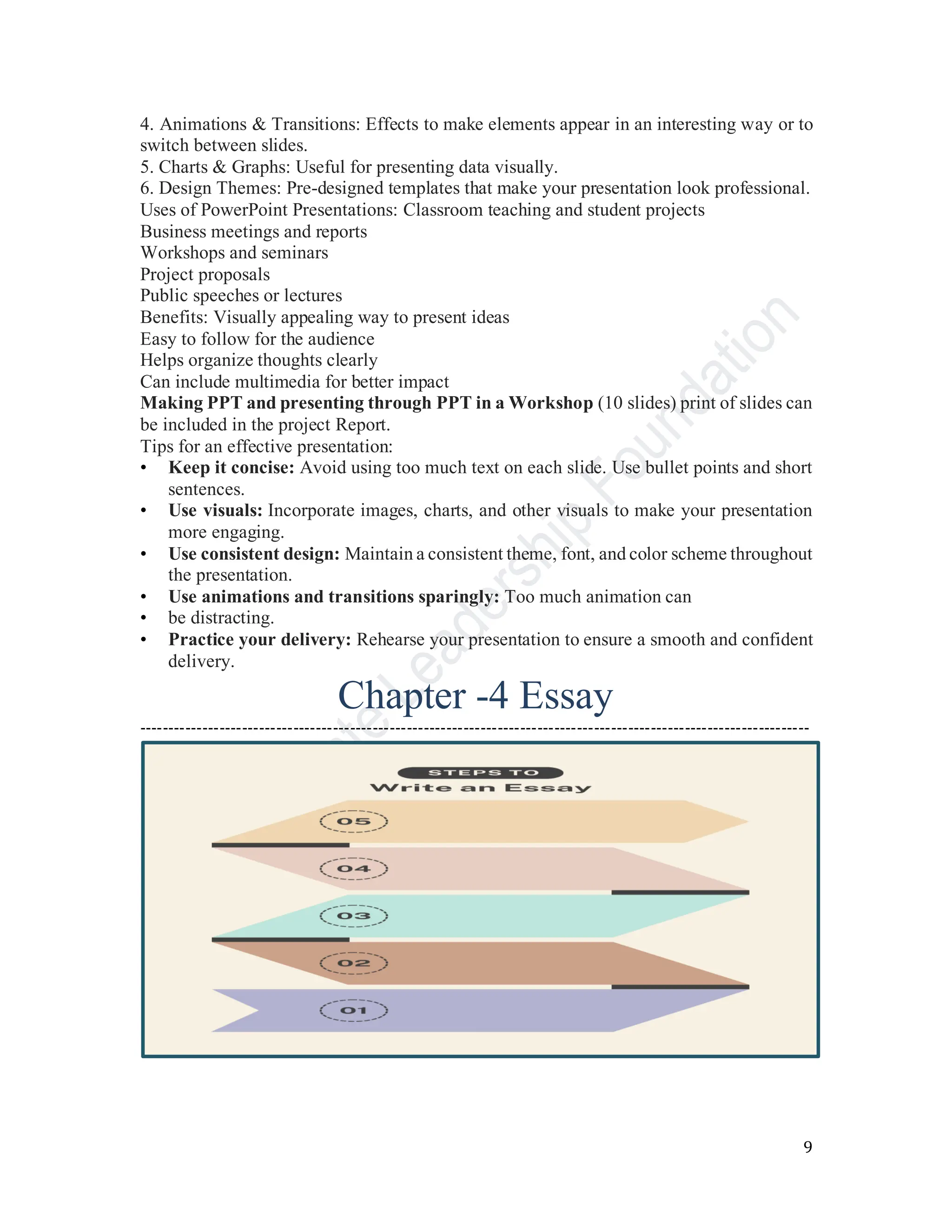



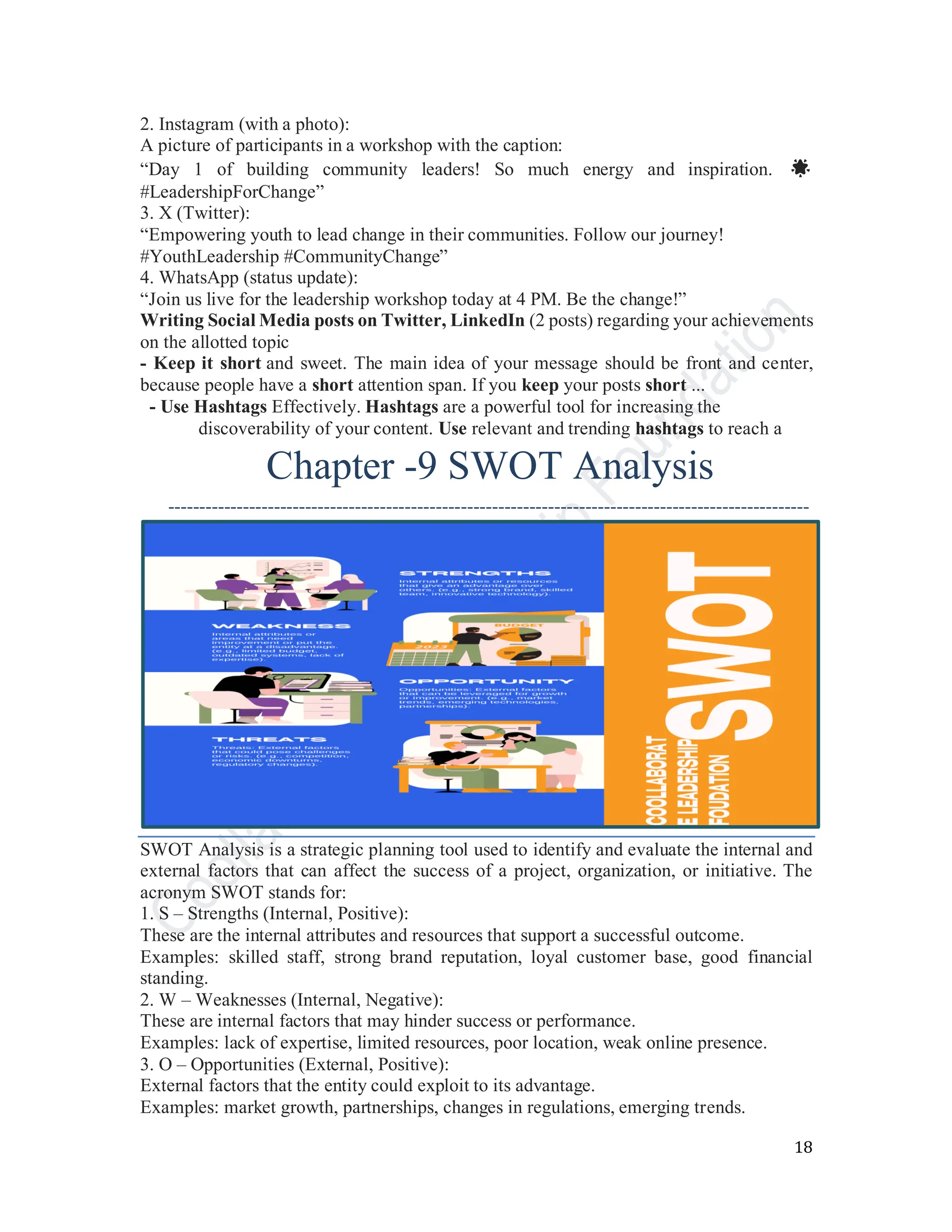
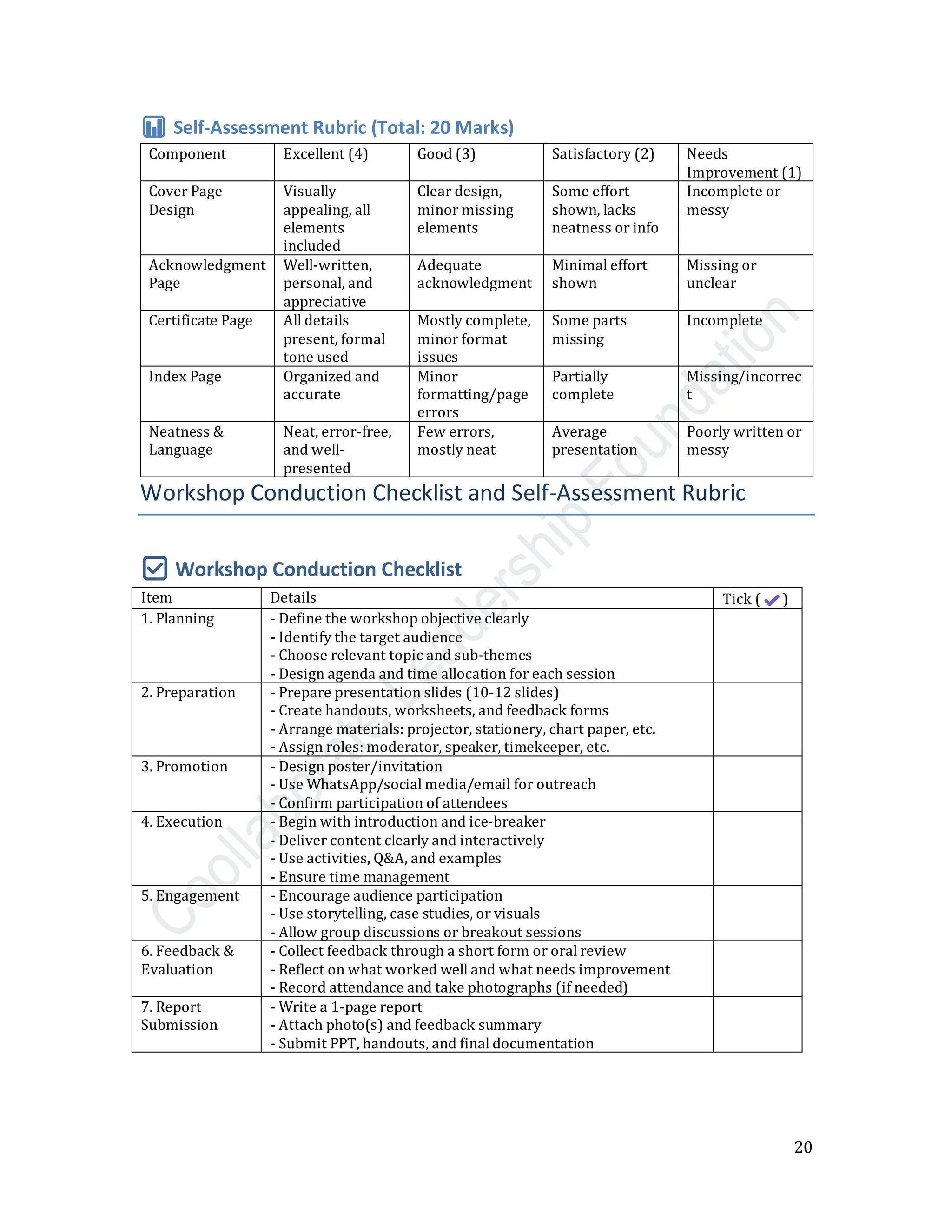
![21
🎯 Self-Assessment Rubric for Workshop Conduction
Criteria Excellent (4) Good (3) Satisfactory (2) Needs
Improvement (1)
Objective
Clarity
Clear and focused
objective aligned
with theme
Mostly clear with
slight deviation
Vague or
somewhat
relevant
Unclear or
missing
Planning &
Organization
Well-structured
with all resources
ready
Mostly organized
with minor issues
Some
disorganization
Poorly planned
Content
Relevance
Content deeply
connects to theme
and audience
Relevant but slightly
generic
Partially relevant Not aligned or
superficial
Delivery &
Communicati
on
Engaging, clear,
confident, and
interactive
Clear and audible
with some
engagement
Average delivery,
minimal
interaction
Poor delivery or
reading from
slides
Visuals &
Materials
Creative,
attractive, and
well-prepared
Sufficient and useful Minimal or basic Lacking or
missing
Time
Management
Perfectly timed
with all parts
covered
Minor timing issues Significant
delays or cuts
Poorly timed or
unfinished
Audience
Engagement
Very high
participation and
energy
Moderate
involvement
Passive audience No effort to
engage
Feedback
Collection
Collected,
analyzed, and
reported feedback
Collected and
partially analyzed
Collected but not
used
Not collected
Reflection &
Improvemen
t
Clear reflection
with improvement
ideas
Some reflection
shown
Little reflection No reflection
given
Total Score: ____ / 36
Rating Scale:
- 32–36: Excellent
- 25–31: ✅ Good
- 18–24: Satisfactory
- Below 18: ❌ Needs Improvement
PowerPoint Presentation Checklist and Self-Assessment Rubric
PowerPoint Presentation Self-Assessment Checklist
Content & Structure
[] Title slide includes the presentation title, your name, date, and relevant details.
[] Objectives or overview slide clearly states the purpose of the presentation.
[] Content is organized in a logical and coherent sequence.
[] Each slide focuses on one main idea or point.
[] Key points are concise, accurate, and relevant.](https://image.slidesharecdn.com/mentoringsocialleadership1-250711084745-0d59af5f/75/Mentoring-Social-Leadership-Program-by-Dr-Sushma-Singh-21-2048.jpg)
![22
[] Conclusion slide effectively summarizes the main takeaways.
[] Citations or references are included where needed.
Design & Layout
[] Slide background is clean and not distracting.
[] Consistent use of fonts, colors, and layout throughout the presentation.
[] Text is large enough to be easily read from a distance (minimum 24 pt.).
[] Appropriate contrast between text and background.
[] Visual hierarchy is used to emphasize important information.
[] Adequate white space is maintained; slides are not overcrowded.
Visuals & Media
[] Images, charts, and graphics are relevant and high-quality.
[] Visuals are used to support, not replace, the text.
[] Animations and transitions are minimal and purposeful.
[] Embedded videos or audio clips function correctly and are cued properly.
Clarity & Language
[] Slide text is clear, concise, and free of spelling/grammar errors.
[] Avoids long paragraphs; uses bullet points effectively.
[] Technical terms are explained or defined as necessary.
[] Tone and language are appropriate for the target audience.
Engagement & Interactivity
[] Includes questions, prompts, or interactive elements (if applicable).
[] Visual aids or demonstrations help maintain audience interest.
[] Speaker notes or prompts are prepared to expand on slide content.
Timing & Flow
[] Presentation fits within the allotted time.
[] Time is balanced across sections—no part feels rushed or too long.
[] Practice runs have been completed to check timing and flow.
Final Review
[] All slides are numbered and in correct order.
[] No placeholder text or images remain.
[] File format is appropriate and compatible with the venue/device.
[] A backup copy is saved and accessible.
[] Reviewed with peer/faculty feedback (if required).
Essay Self-Assessment Checklist
Content & Ideas
☐ The essay clearly addresses the assigned topic or question.
☐ The main idea or thesis is clearly stated and well-developed.
☐ Ideas are original, insightful, and supported with relevant evidence or examples.
☐ I have included sufficient detail and depth in my analysis.
☐ Counterarguments or alternative perspectives are acknowledged, if relevant.](https://image.slidesharecdn.com/mentoringsocialleadership1-250711084745-0d59af5f/75/Mentoring-Social-Leadership-Program-by-Dr-Sushma-Singh-22-2048.jpg)
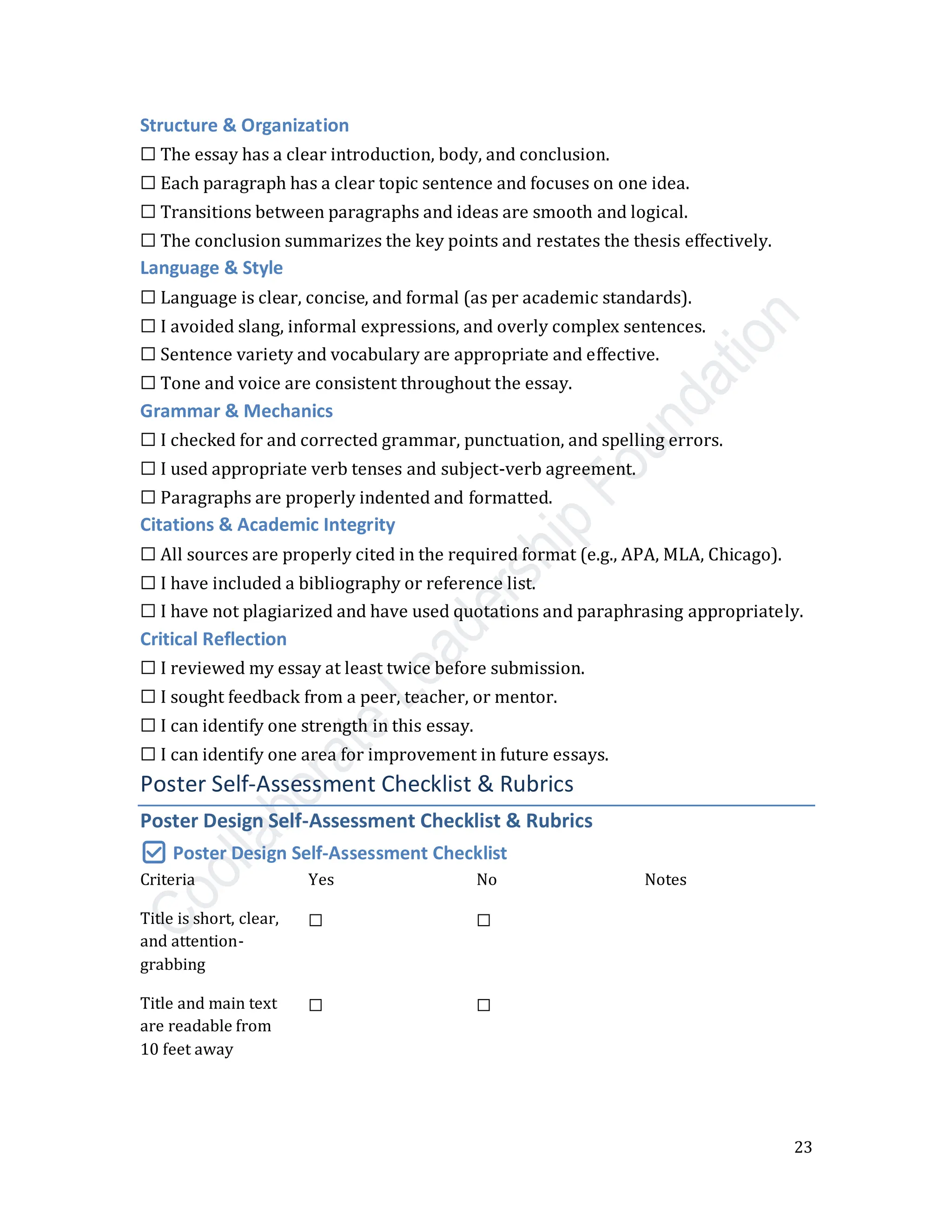


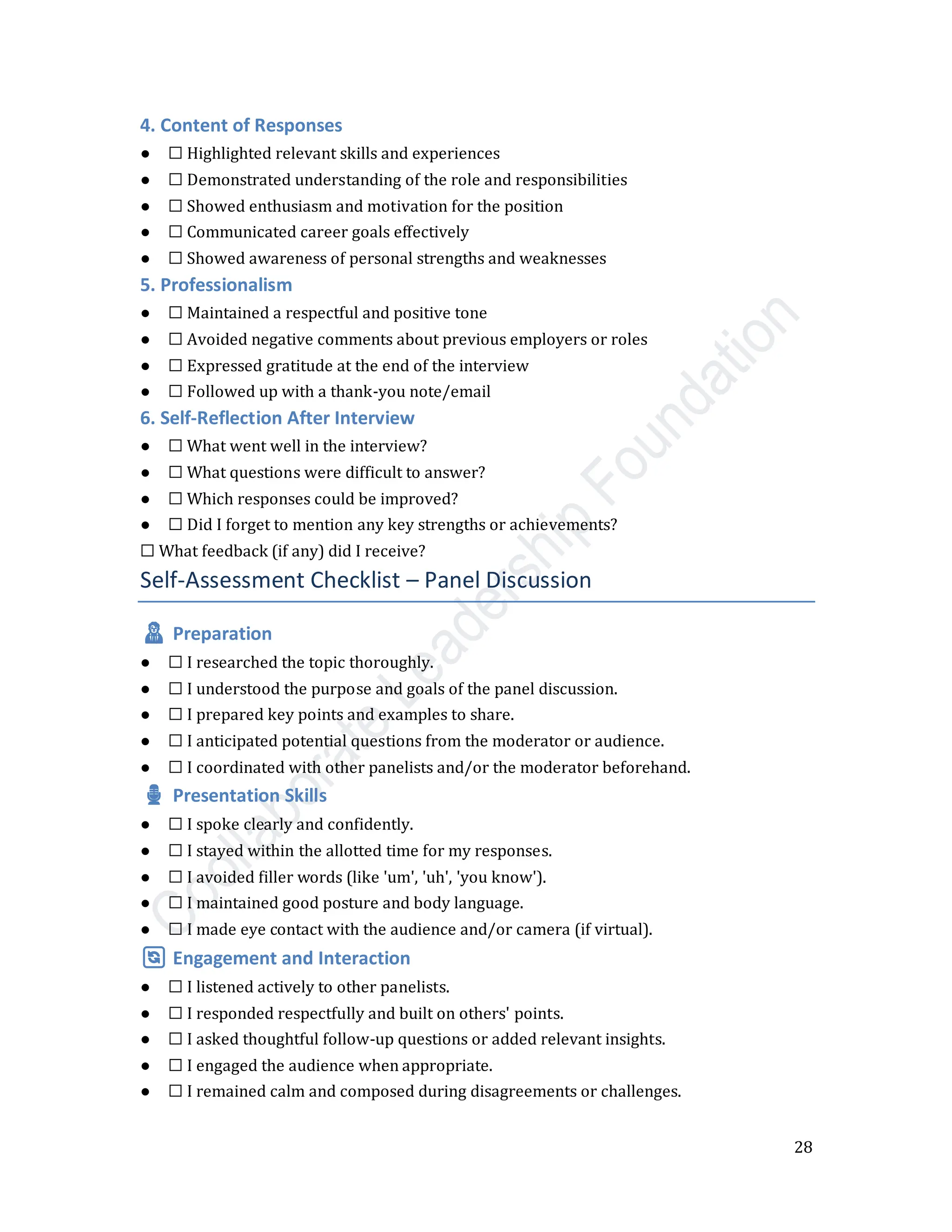


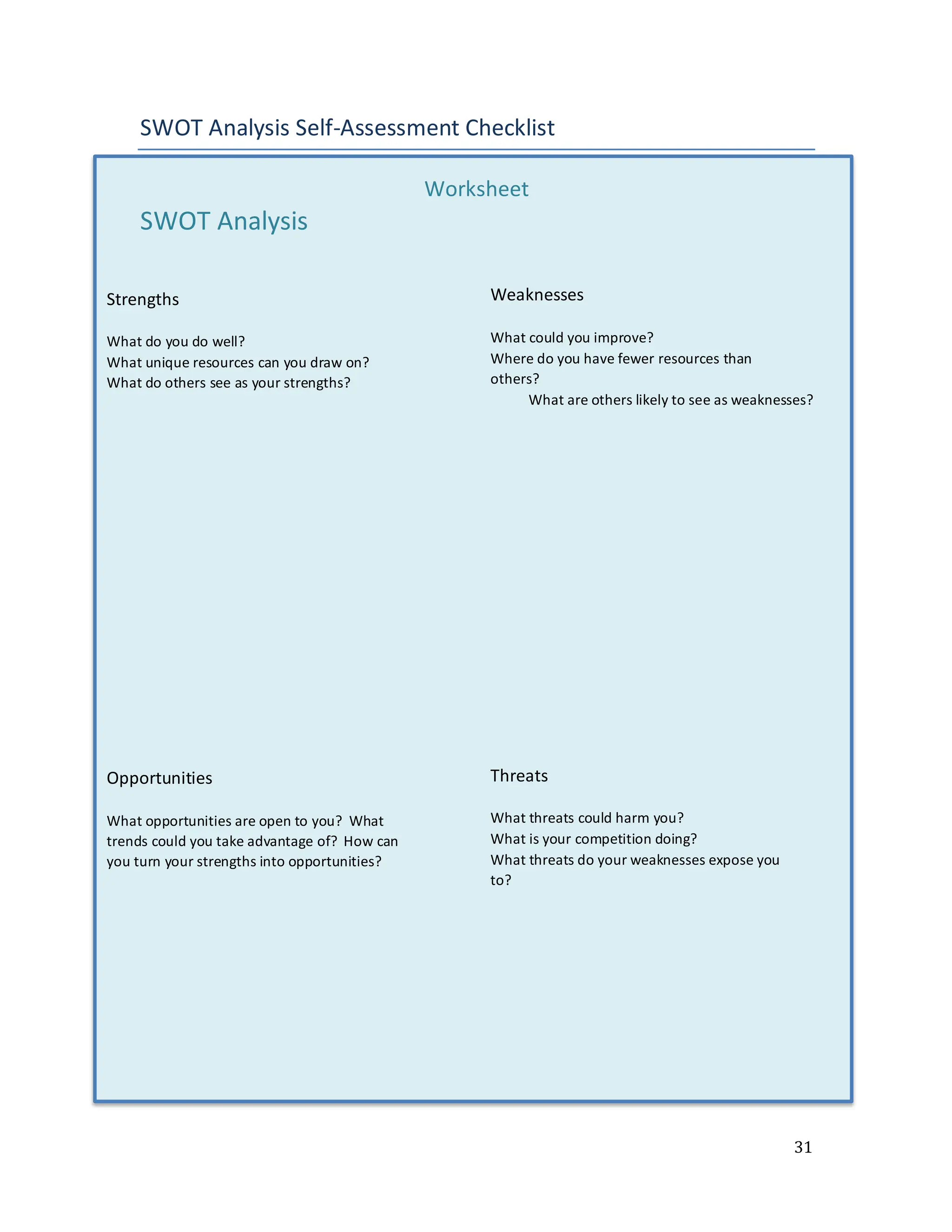


![36
• Maintain a Formal Tone: Even though it's personal, maintain an academic and professional
tone.
• Be Specific: Provide concrete
• examples to support your reflections.
• Keep it Concise: Most reflection papers are relatively short (e.g., 300-750 words).
• Proofread: Carefully check for any errors in grammar or spelling.
Worksheet STARR
Name: _________________________
Date: _________________________
Topic/Question: ___________________________________________
Instructions:
Use the checklist below to evaluate if the response includes all parts of the STARR method. Provide
brief notes or feedback where necessary.
✅ S – Situation
● [] Is the background or context clearly explained?
● [] Does it answer “Where?” and “When?”
Notes:
__________________________________________________
✅ T – Task
● [] Is the task, challenge, or responsibility clearly stated?
● [] Is the person’s role in the situation explained?
Notes:
__________________________________________________
✅ A – Action
● [] Are specific actions taken by the person described in detail?
● [] Does the response focus on what *they* did (not the team)?
Notes:
__________________________________________________](https://image.slidesharecdn.com/mentoringsocialleadership1-250711084745-0d59af5f/75/Mentoring-Social-Leadership-Program-by-Dr-Sushma-Singh-36-2048.jpg)
![37
✅ R – Result
● [] Are the outcomes or results of the actions mentioned?
● [] Are the results measurable, specific, or impactful?
Notes:
__________________________________________________
✅ R – Reflection
● [] Does the person reflect on what they learned or what could be improved?
● [] Is there a connection to future situations or growth?
Notes:
__________________________________________________
🔄 Overall Assessment
Strengths of the Response:
__________________________________________________
__________________________________________________
Areas for Improvement:
__________________________________________________
__________________________________________________
🔢 Scoring (Optional)
STARR Element Score (0–2)
Situation
Task
Action
Result
Reflection
Total /10](https://image.slidesharecdn.com/mentoringsocialleadership1-250711084745-0d59af5f/75/Mentoring-Social-Leadership-Program-by-Dr-Sushma-Singh-37-2048.jpg)