National College of Business Administration and
Economics
TOPIC: Memory
PRESENTIED TO: Miss Kausar Batool PRESENTED BY:
SESSION: FALL 2022 SOHAIB AKRAM
SUBJECT: Psychology ATTA UL BARI
MUNEEB UR
REHMAN
AHMAD SALEEM
Content:
• Introduction
• Types of memory
• Factor of memory
• Memory disorders
• Forgetting
• How to improve memory
• Techniques to improve memory
WHAT IS MEMORY?
■Memory is the means by which we draw on our past experiences in order to use this
information in the present' (Sternberg, 1999).
■Memory is the term given to the structures and processes involved in the storage
and subsequent retrieval of information.
■Without memory, we could not learn anything.
PROCESS OF MEMORY:
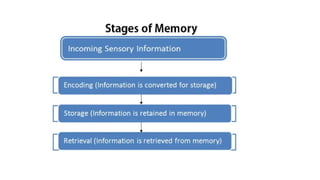
Psychologists distinguish between three necessary stages in the learning and memory process:
encoding, storage, and retrieval (Melton, 1963).
 Encoding is defined as the initial learning of information.
 Storage is the second memory stage or process in which we maintain information over
periods of time.
 Retrieval is the ability to access information when you need it. the calling back of stored
information in response to some cue for use in a process or activity.
EXAMPLE:
■ For example, you would need to pay attention if someone gave you
their telephone number or gave you a list of items to pick up at the
store.
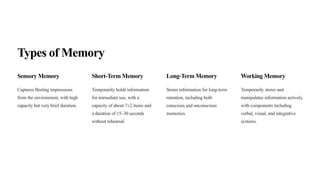
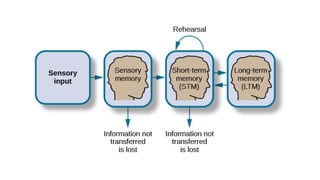
Types of Memory
Sensory Memory
Captures fleeting impressions
from the environment, with high
capacity but very brief duration.
Short-Term Memory
Temporarily holds information
for immediate use, with a
capacity of about 7±2 items and
a duration of 15–30 seconds
without rehearsal.
Long-Term Memory
Stores information for long-term
retention, including both
conscious and unconscious
memories.
Working Memory
Temporarily stores and
manipulates information actively,
with components including
verbal, visual, and integrative
systems.
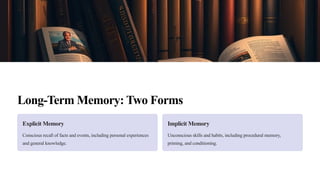
Long-Term Memory: Two Forms
Explicit Memory
Conscious recall of facts and events, including personal experiences
and general knowledge.
Implicit Memory
Unconscious skills and habits, including procedural memory,
priming, and conditioning.
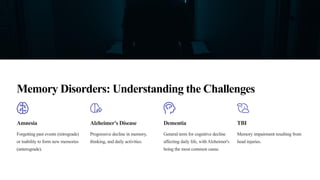
Memory Disorders: Understanding the Challenges
Amnesia
Forgetting past events (retrograde)
or inability to form new memories
(anterograde).
Alzheimer's Disease
Progressive decline in memory,
thinking, and daily activities.
Dementia
General term for cognitive decline
affecting daily life, with Alzheimer's
being the most common cause.
TBI
Memory impairment resulting from
head injuries.
Factors Influencing Memory
1 Attention
Focused attention strengthens memory formation.
2 Emotion
Strong emotions enhance memory retention.
3 Repetition
Repeated exposure improves long-term memory.
4 Sleep
Adequate sleep consolidates memories during rest.
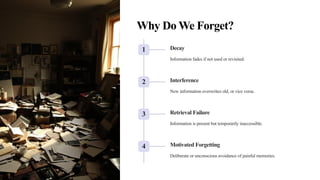
Why Do We Forget?
1 Decay
Information fades if not used or revisited.
2 Interference
New information overwrites old, or vice versa.
3 Retrieval Failure
Information is present but temporarily inaccessible.
4 Motivated Forgetting
Deliberate or unconscious avoidance of painful memories.
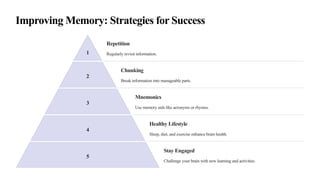
Improving Memory: Strategies for Success
1
Repetition
Regularly revisit information.
2
Chunking
Break information into manageable parts.
3
Mnemonics
Use memory aids like acronyms or rhymes.
4
Healthy Lifestyle
Sleep, diet, and exercise enhance brain health.
5
Stay Engaged
Challenge your brain with new learning and activities.
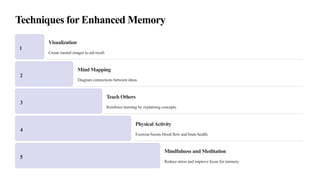
Techniques for Enhanced Memory
1
Visualization
Create mental images to aid recall.
2
Mind Mapping
Diagram connections between ideas.
3
Teach Others
Reinforce learning by explaining concepts.
4
PhysicalActivity
Exercise boosts blood flow and brain health.
5
Mindfulness and Meditation
Reduce stress and improve focus for memory.

memory complete presentation complete ppt

  • 1.
    National College ofBusiness Administration and Economics TOPIC: Memory PRESENTIED TO: Miss Kausar Batool PRESENTED BY: SESSION: FALL 2022 SOHAIB AKRAM SUBJECT: Psychology ATTA UL BARI MUNEEB UR REHMAN AHMAD SALEEM
  • 2.
    Content: • Introduction • Typesof memory • Factor of memory • Memory disorders • Forgetting • How to improve memory • Techniques to improve memory
  • 3.
    WHAT IS MEMORY? ■Memoryis the means by which we draw on our past experiences in order to use this information in the present' (Sternberg, 1999). ■Memory is the term given to the structures and processes involved in the storage and subsequent retrieval of information. ■Without memory, we could not learn anything.
  • 4.
    PROCESS OF MEMORY: Psychologistsdistinguish between three necessary stages in the learning and memory process: encoding, storage, and retrieval (Melton, 1963).  Encoding is defined as the initial learning of information.  Storage is the second memory stage or process in which we maintain information over periods of time.  Retrieval is the ability to access information when you need it. the calling back of stored information in response to some cue for use in a process or activity.
  • 6.
    EXAMPLE: ■ For example,you would need to pay attention if someone gave you their telephone number or gave you a list of items to pick up at the store.
  • 7.
    Types of Memory SensoryMemory Captures fleeting impressions from the environment, with high capacity but very brief duration. Short-Term Memory Temporarily holds information for immediate use, with a capacity of about 7±2 items and a duration of 15–30 seconds without rehearsal. Long-Term Memory Stores information for long-term retention, including both conscious and unconscious memories. Working Memory Temporarily stores and manipulates information actively, with components including verbal, visual, and integrative systems.
  • 9.
    Long-Term Memory: TwoForms Explicit Memory Conscious recall of facts and events, including personal experiences and general knowledge. Implicit Memory Unconscious skills and habits, including procedural memory, priming, and conditioning.
  • 10.
    Memory Disorders: Understandingthe Challenges Amnesia Forgetting past events (retrograde) or inability to form new memories (anterograde). Alzheimer's Disease Progressive decline in memory, thinking, and daily activities. Dementia General term for cognitive decline affecting daily life, with Alzheimer's being the most common cause. TBI Memory impairment resulting from head injuries.
  • 11.
    Factors Influencing Memory 1Attention Focused attention strengthens memory formation. 2 Emotion Strong emotions enhance memory retention. 3 Repetition Repeated exposure improves long-term memory. 4 Sleep Adequate sleep consolidates memories during rest.
  • 12.
    Why Do WeForget? 1 Decay Information fades if not used or revisited. 2 Interference New information overwrites old, or vice versa. 3 Retrieval Failure Information is present but temporarily inaccessible. 4 Motivated Forgetting Deliberate or unconscious avoidance of painful memories.
  • 13.
    Improving Memory: Strategiesfor Success 1 Repetition Regularly revisit information. 2 Chunking Break information into manageable parts. 3 Mnemonics Use memory aids like acronyms or rhymes. 4 Healthy Lifestyle Sleep, diet, and exercise enhance brain health. 5 Stay Engaged Challenge your brain with new learning and activities.
  • 14.
    Techniques for EnhancedMemory 1 Visualization Create mental images to aid recall. 2 Mind Mapping Diagram connections between ideas. 3 Teach Others Reinforce learning by explaining concepts. 4 PhysicalActivity Exercise boosts blood flow and brain health. 5 Mindfulness and Meditation Reduce stress and improve focus for memory.