CHAPTER 3:
THE PRESENT: AN “INFORMED” APPROACH
An Enlightened Eclectic Approach
 Approach, rationale (reasons or logical basis)
for language and teaching, is based on
particular context
 Eclectic approach is a method of language
education that combines various approaches
and methodologies to teach language
depending on the aims of the lesson and the
abilities of the learners
Eclectic Approach is derived from ...
 Basic principles of learning and teaching,
reading, observation, and discussion
 It is not static
 The interaction between classroom and
teaching is the key to dynamic teaching
(trial and errors)
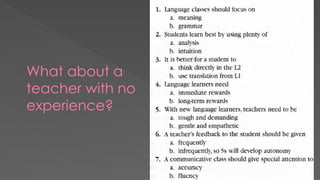
What about a
teacher with no
experience?
BUT
It depends on ...........
(YOU ARE ON THE WAY TO AN
“Enlightende Approach”)
2 reasons for variation at the approach level:
 An approach is by definition dynamic and
therefore subject to some “tinkering” as a
result of one observation and experience
 Research in second language acquisition
and pedagogy that are not conclusive, but
subject to interpretation
COMMUNICATIVE LANGUAGE
TEACHING
 Classroom goals are focused on grammatical,
 discourse.
 Language technique
 Fluent and accuracy
 Using language productively and receptively
 Student are given opportunities to focus on their
own learning process
 The role of teacher is that of facilitator and guide
Learner-Centered Instruction
 Techniques that focus on or account for learners’ need, style
or goals.
 Techniques that give some control to the student (group work
or strategy training, for example)
 Curricula that include the consultation and input of student
and that do not presuppose objectives in advan
 Techniques that allow for student creativity and innovation
 Techniques that enhance a student’s sense of competence
and self-worth.ce.
Cooperative and Collaborative
Learning
 Cooperative and Collaborative Learning
is a teaching and learning strategy
where students are grouped together to
scrutinize a particular assignment or
topic to maximize their own and each
other learning.
Interactive Learning
 A pedagogical approach that
incorporates social networking and
urban computing into course design and
delivery. Interactive Learning has
evolved out of the hyper-growth in the
use of digital technology and virtual
communication, particularly by students.
Whole Language Education
 Language should be teach as a WHOLE.
 Integration of oral (listening and
speaking) and written (reading and
wiriting) language, not fragmented
 Holistic assessment
Content-based Instruction
 Integration of content learning with
language teaching aims.
 Concurrent study of subject matters and
language
Task-based Instruction
While there is a good deal of variation among experts on
how to describe or define task, Peter Skehan’s (1998a: 95)
concept of task seems to capture the essentials.
 Meaning is primary
 There is some sort of relationship to comparable real-
world activities
 There is some communication problem to solve
 Task completion has some priority
 The assessment of the task is in terms of outcome

Meeting 2_Enlightened Informed Approach.pptx

  • 1.
    CHAPTER 3: THE PRESENT:AN “INFORMED” APPROACH
  • 2.
    An Enlightened EclecticApproach  Approach, rationale (reasons or logical basis) for language and teaching, is based on particular context  Eclectic approach is a method of language education that combines various approaches and methodologies to teach language depending on the aims of the lesson and the abilities of the learners
  • 3.
    Eclectic Approach isderived from ...  Basic principles of learning and teaching, reading, observation, and discussion  It is not static  The interaction between classroom and teaching is the key to dynamic teaching (trial and errors)
  • 4.
    What about a teacherwith no experience?
  • 5.
    BUT It depends on........... (YOU ARE ON THE WAY TO AN “Enlightende Approach”)
  • 6.
    2 reasons forvariation at the approach level:  An approach is by definition dynamic and therefore subject to some “tinkering” as a result of one observation and experience  Research in second language acquisition and pedagogy that are not conclusive, but subject to interpretation
  • 7.
    COMMUNICATIVE LANGUAGE TEACHING  Classroomgoals are focused on grammatical,  discourse.  Language technique  Fluent and accuracy  Using language productively and receptively  Student are given opportunities to focus on their own learning process  The role of teacher is that of facilitator and guide
  • 8.
    Learner-Centered Instruction  Techniquesthat focus on or account for learners’ need, style or goals.  Techniques that give some control to the student (group work or strategy training, for example)  Curricula that include the consultation and input of student and that do not presuppose objectives in advan  Techniques that allow for student creativity and innovation  Techniques that enhance a student’s sense of competence and self-worth.ce.
  • 9.
    Cooperative and Collaborative Learning Cooperative and Collaborative Learning is a teaching and learning strategy where students are grouped together to scrutinize a particular assignment or topic to maximize their own and each other learning.
  • 10.
    Interactive Learning  Apedagogical approach that incorporates social networking and urban computing into course design and delivery. Interactive Learning has evolved out of the hyper-growth in the use of digital technology and virtual communication, particularly by students.
  • 11.
    Whole Language Education Language should be teach as a WHOLE.  Integration of oral (listening and speaking) and written (reading and wiriting) language, not fragmented  Holistic assessment
  • 12.
    Content-based Instruction  Integrationof content learning with language teaching aims.  Concurrent study of subject matters and language
  • 13.
    Task-based Instruction While thereis a good deal of variation among experts on how to describe or define task, Peter Skehan’s (1998a: 95) concept of task seems to capture the essentials.  Meaning is primary  There is some sort of relationship to comparable real- world activities  There is some communication problem to solve  Task completion has some priority  The assessment of the task is in terms of outcome