MedLab concepts Project overview session A   Jesse Marsh Atelier/RCM [email_address]
What is a Living Lab?
Definition “ A Living Lab is a  user-driven open innovation ecosystem  based on a  business – citizens – government partnership  which enables users to take part an  active part in the research, development and innovation process : Bringing the users early into the creative process in order to better discover  new and emerging behaviours and user patterns ; Bridging the  innovation gap between technology development and the uptake of new products  and services involving all relevant players of the value network via partnerships between business, citizens and government; Allowing for  early assessment of the socio-economic implications  of new technological solutions by demonstrating the validity of  innovative services and business models .” DG INFSOC PUBLICATION
Learning from mistakes Marketing fiascoes in the telecoms industry Video On Demand experiments in the ’80s WAP in the ’90s UMTS spectrum auctions in early ’00s Socially driven success stories Email SMS YouTube (re-inventing the phone)
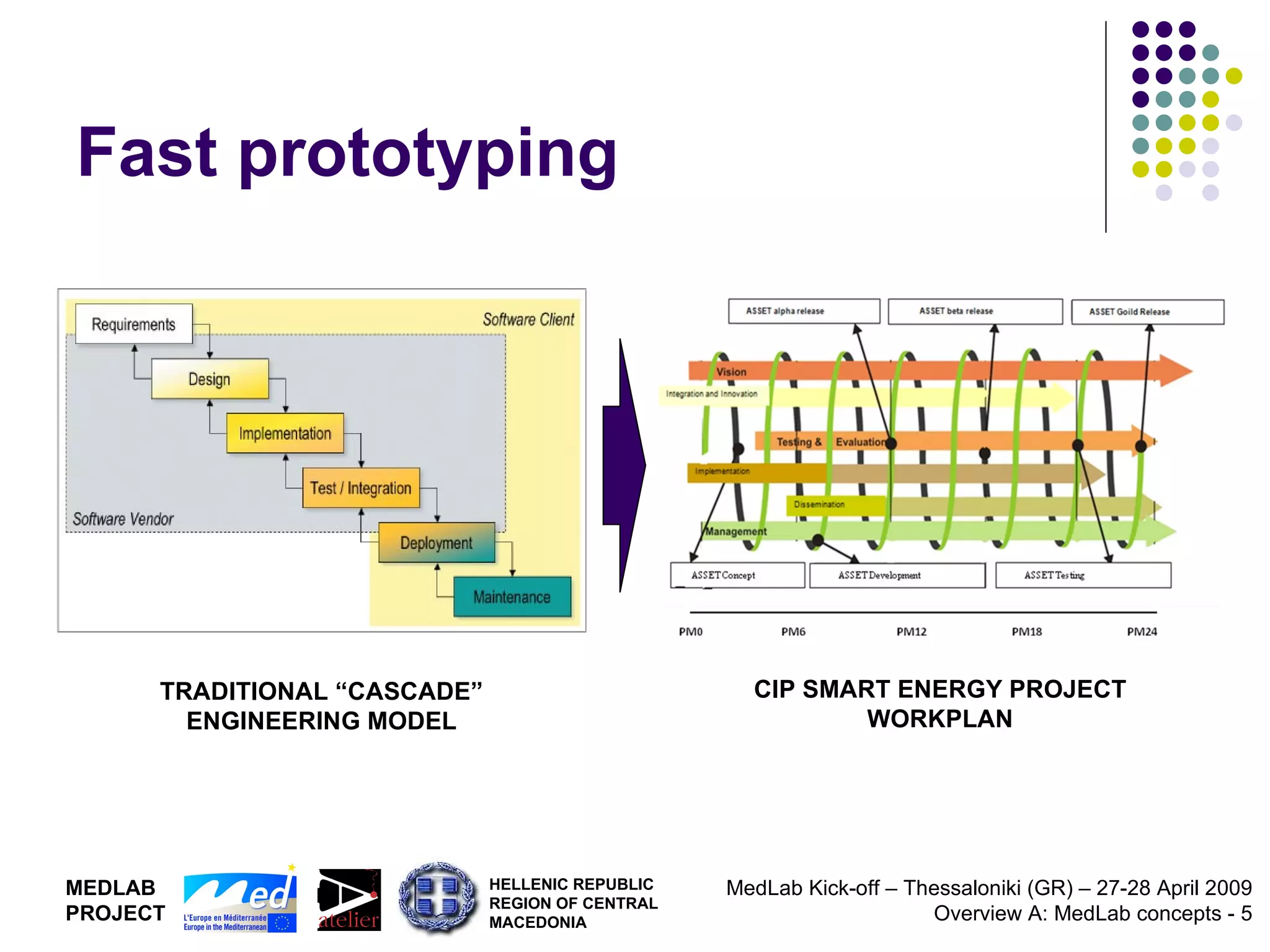
Fast prototyping TRADITIONAL “CASCADE” ENGINEERING MODEL CIP SMART ENERGY PROJECT WORKPLAN
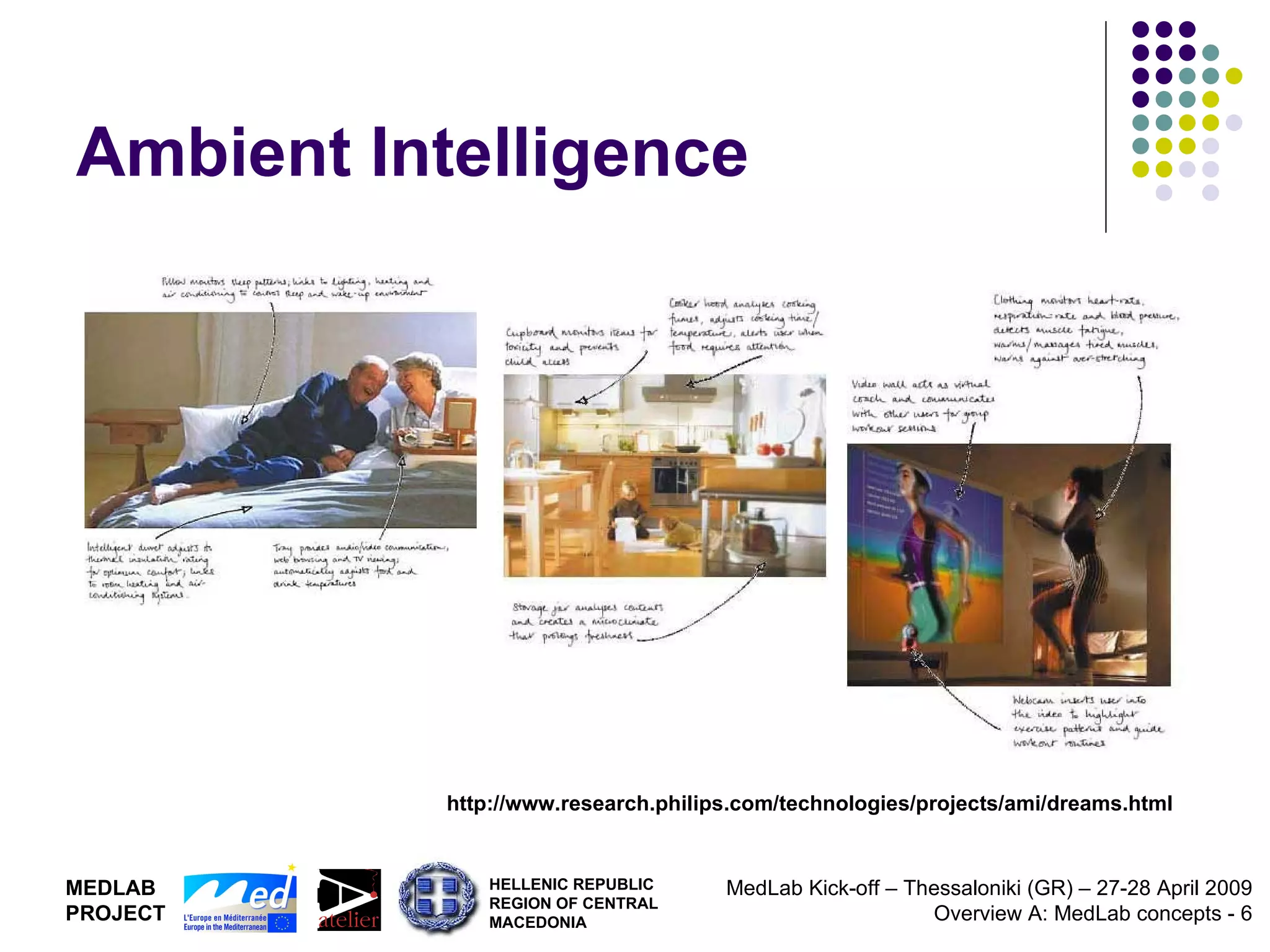
Ambient Intelligence http://www.research.philips.com/technologies/projects/ami/dreams.html
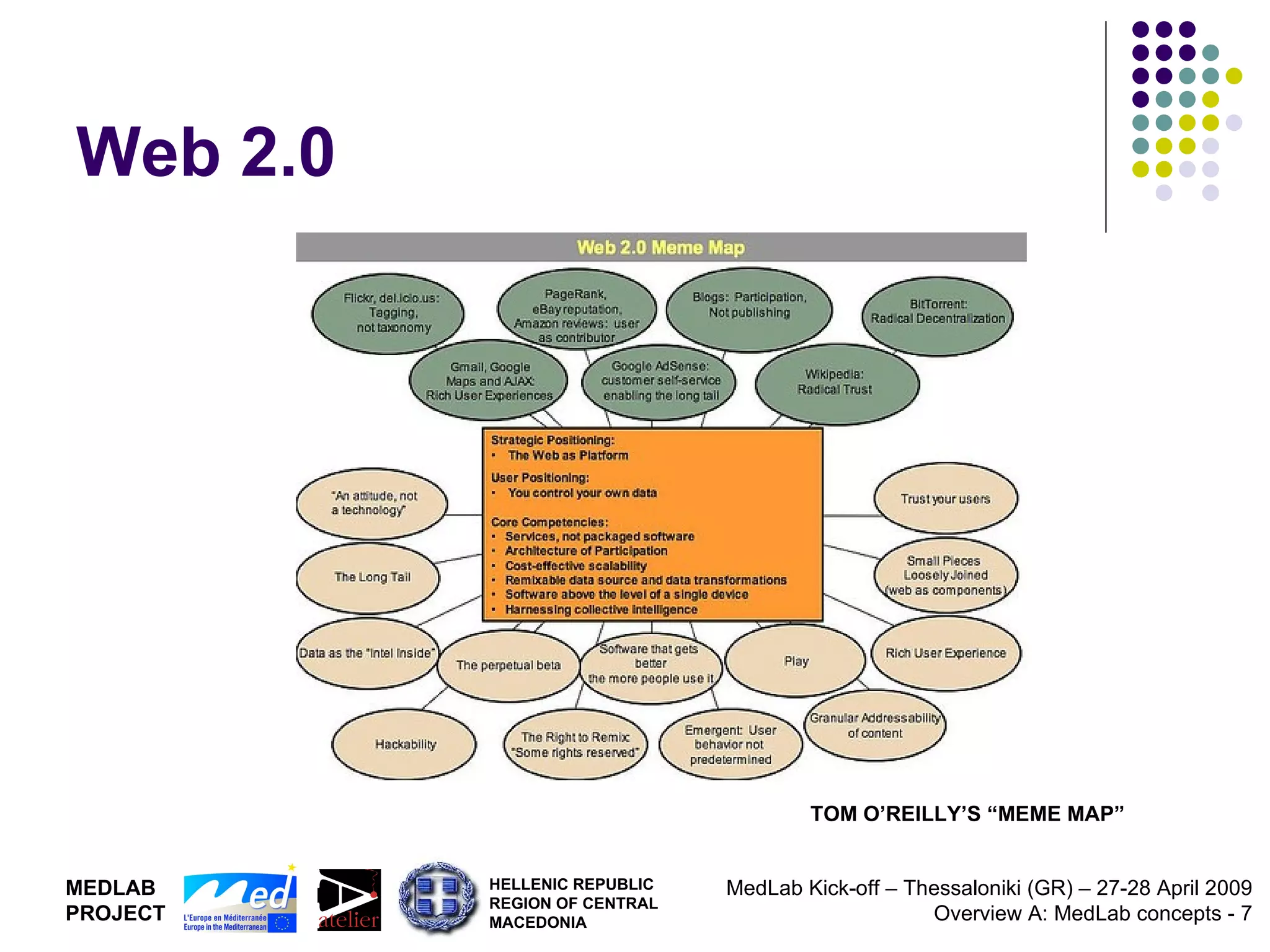
Web 2.0 TOM O’REILLY’S “MEME MAP”
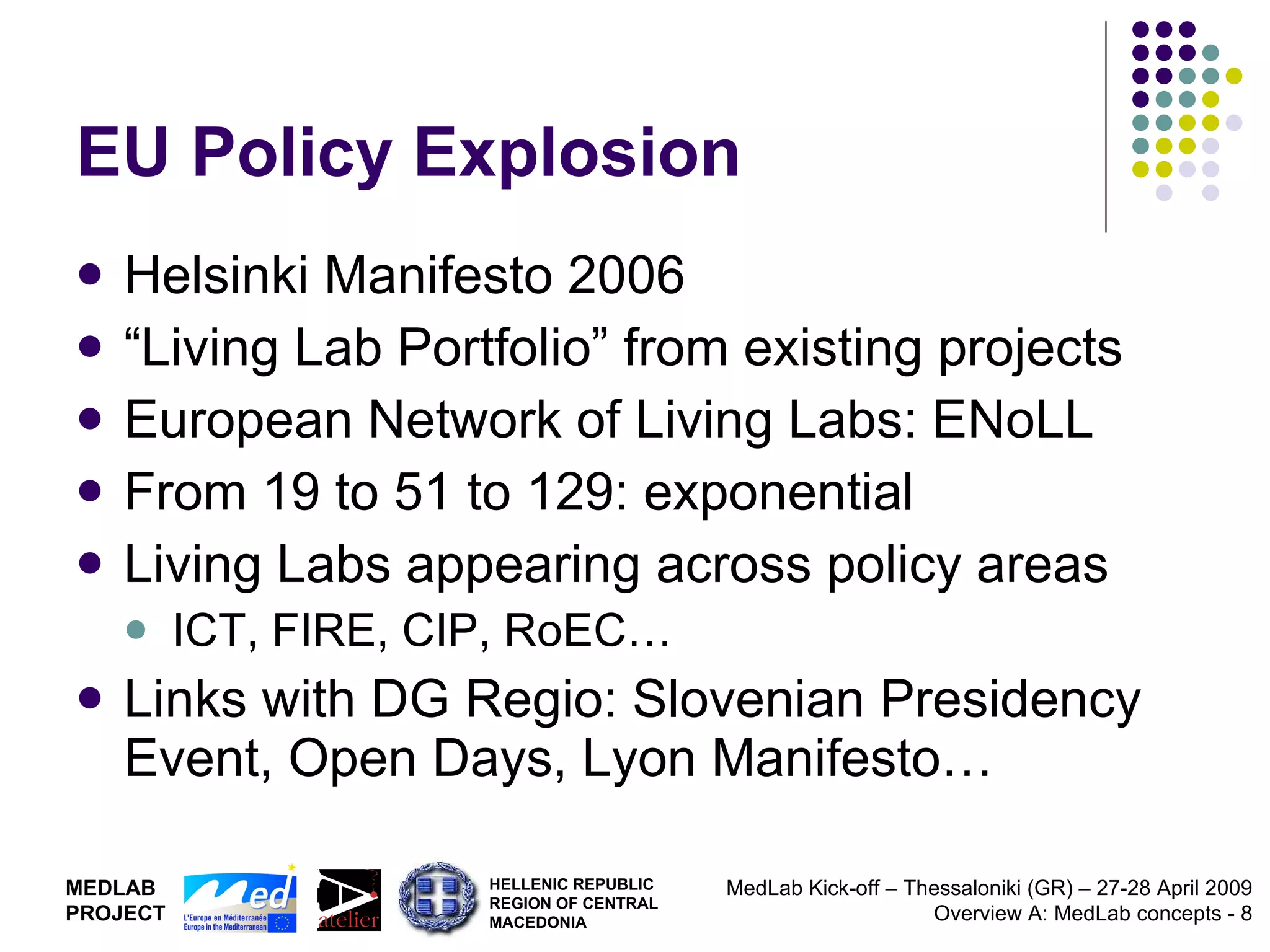
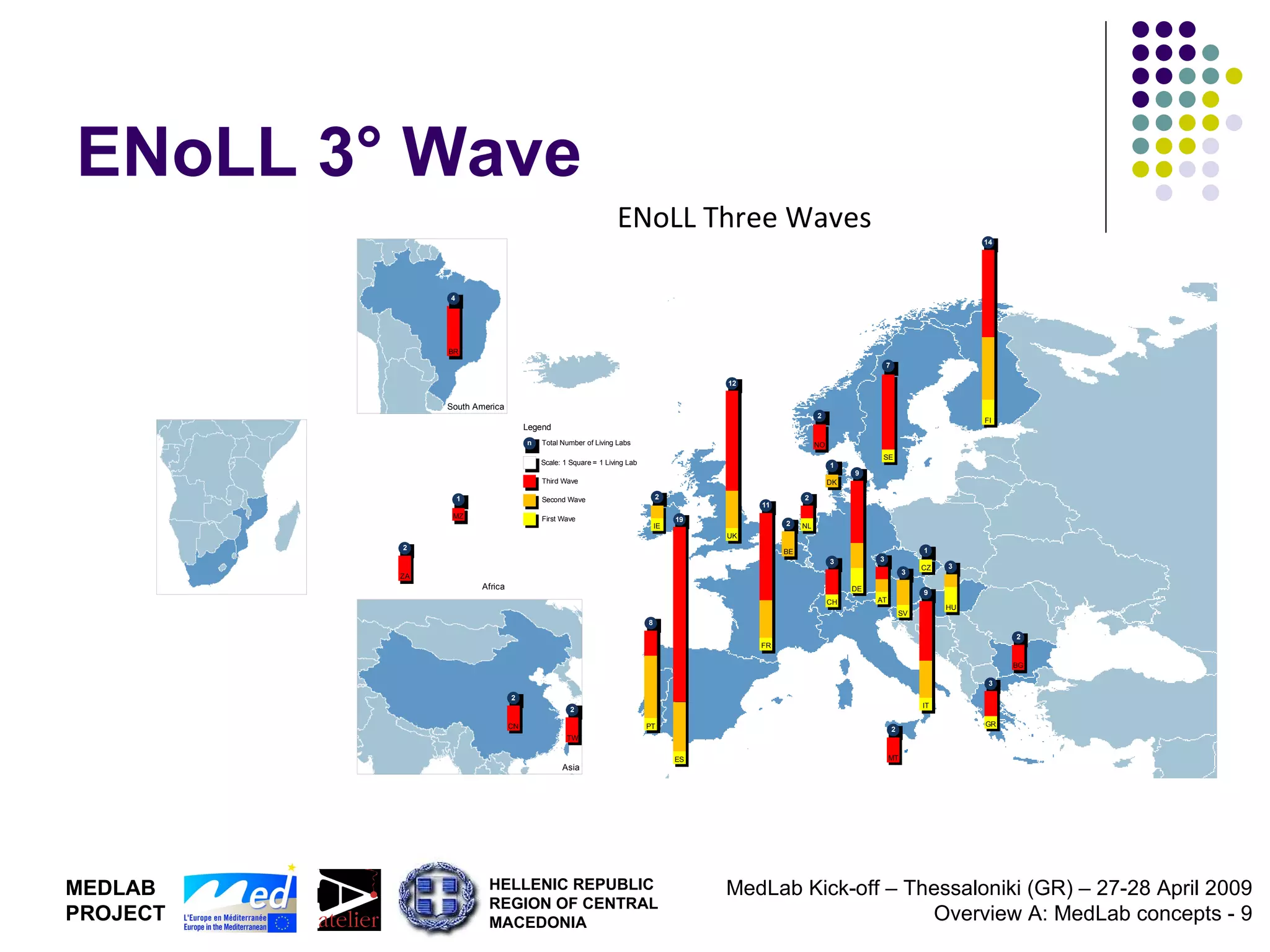
EU Policy Explosion Helsinki Manifesto 2006 “ Living Lab Portfolio” from existing projects European Network of Living Labs: ENoLL From 19 to 51 to 129: exponential Living Labs appearing across policy areas ICT, FIRE, CIP, RoEC… Links with DG Regio: Slovenian Presidency Event, Open Days, Lyon Manifesto…
ENoLL 3° Wave
Why regional policy?
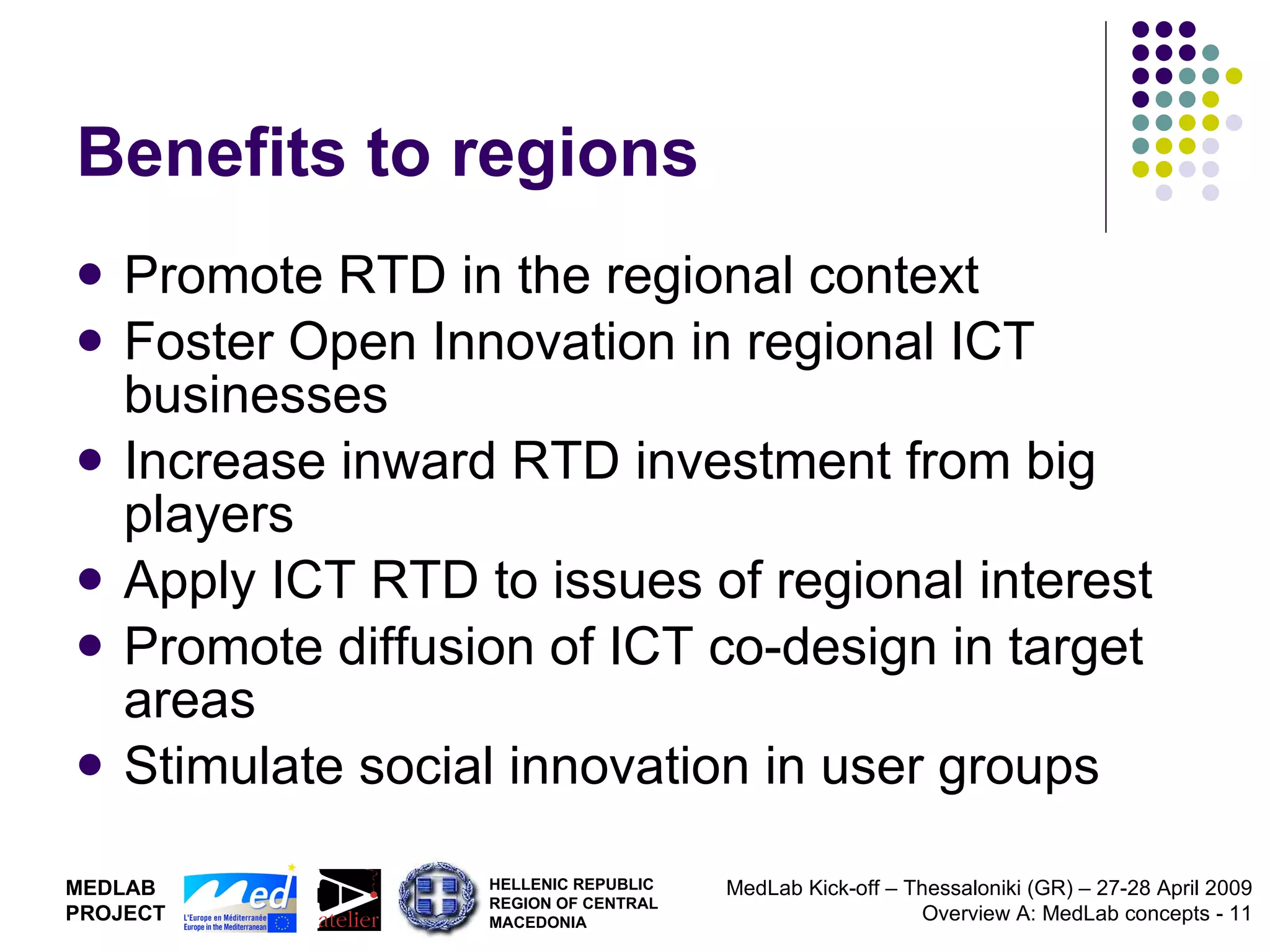
Benefits to regions Promote RTD in the regional context Foster Open Innovation in regional ICT businesses Increase inward RTD investment from big players Apply ICT RTD to issues of regional interest Promote diffusion of ICT co-design in target areas Stimulate social innovation in user groups
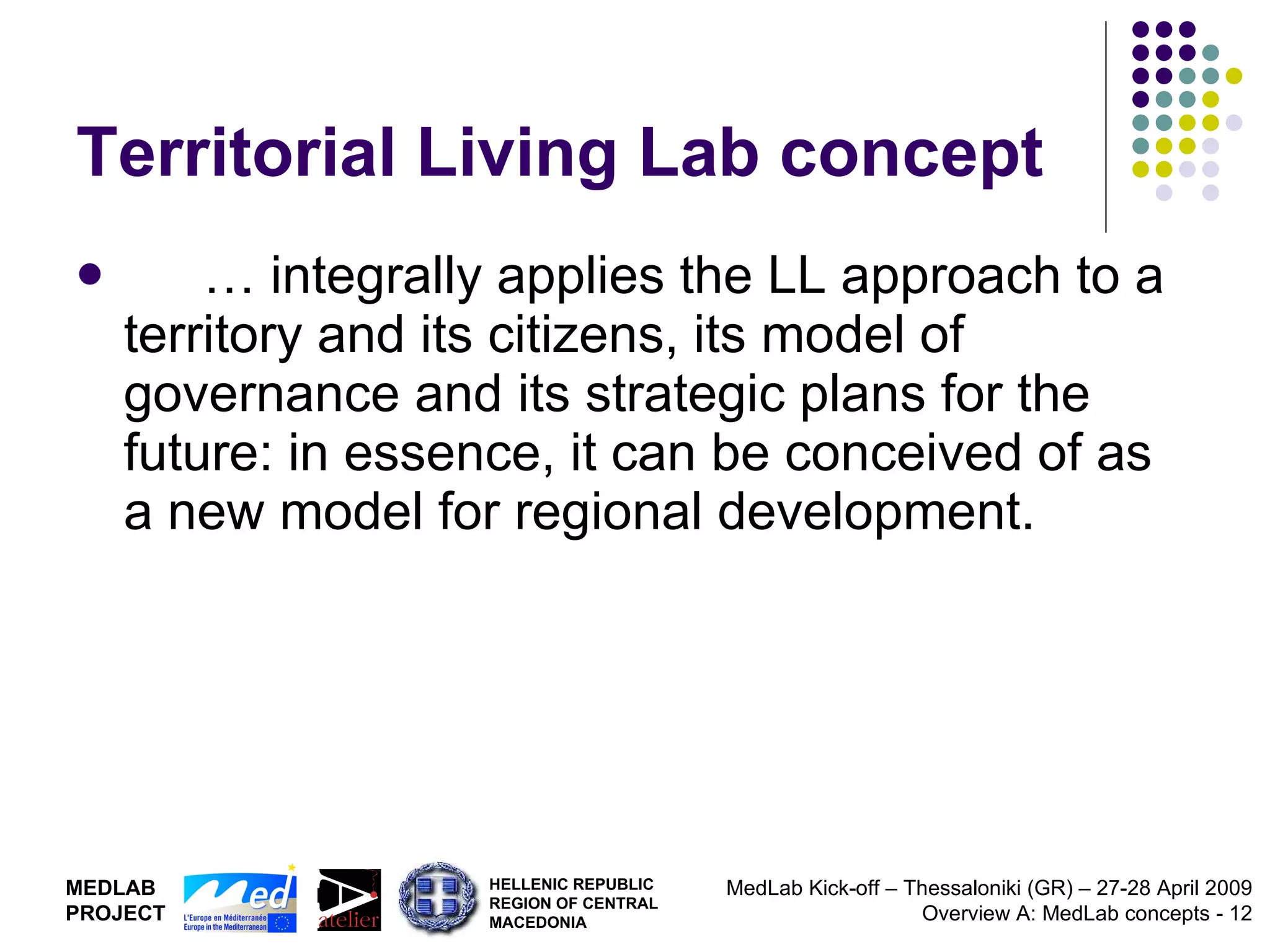
Territorial Living Lab concept …  integrally applies the LL approach to a territory and its citizens, its model of governance and its strategic plans for the future: in essence, it can be conceived of as a new model for regional development.
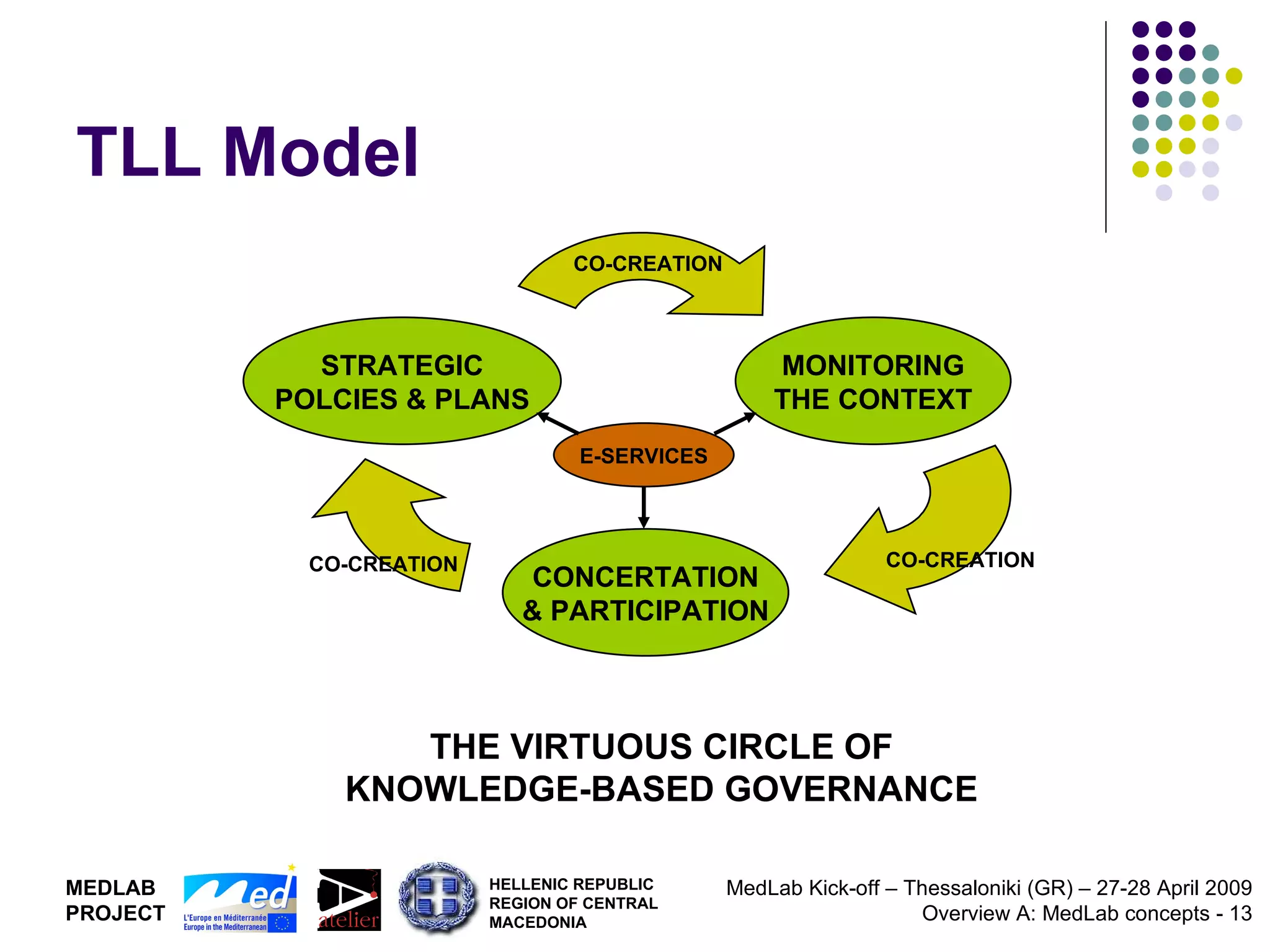
TLL Model CONCERTATION & PARTICIPATION MONITORING THE CONTEXT STRATEGIC POLCIES & PLANS CO-CREATION CO-CREATION CO-CREATION THE VIRTUOUS CIRCLE OF KNOWLEDGE-BASED GOVERNANCE E-SERVICES
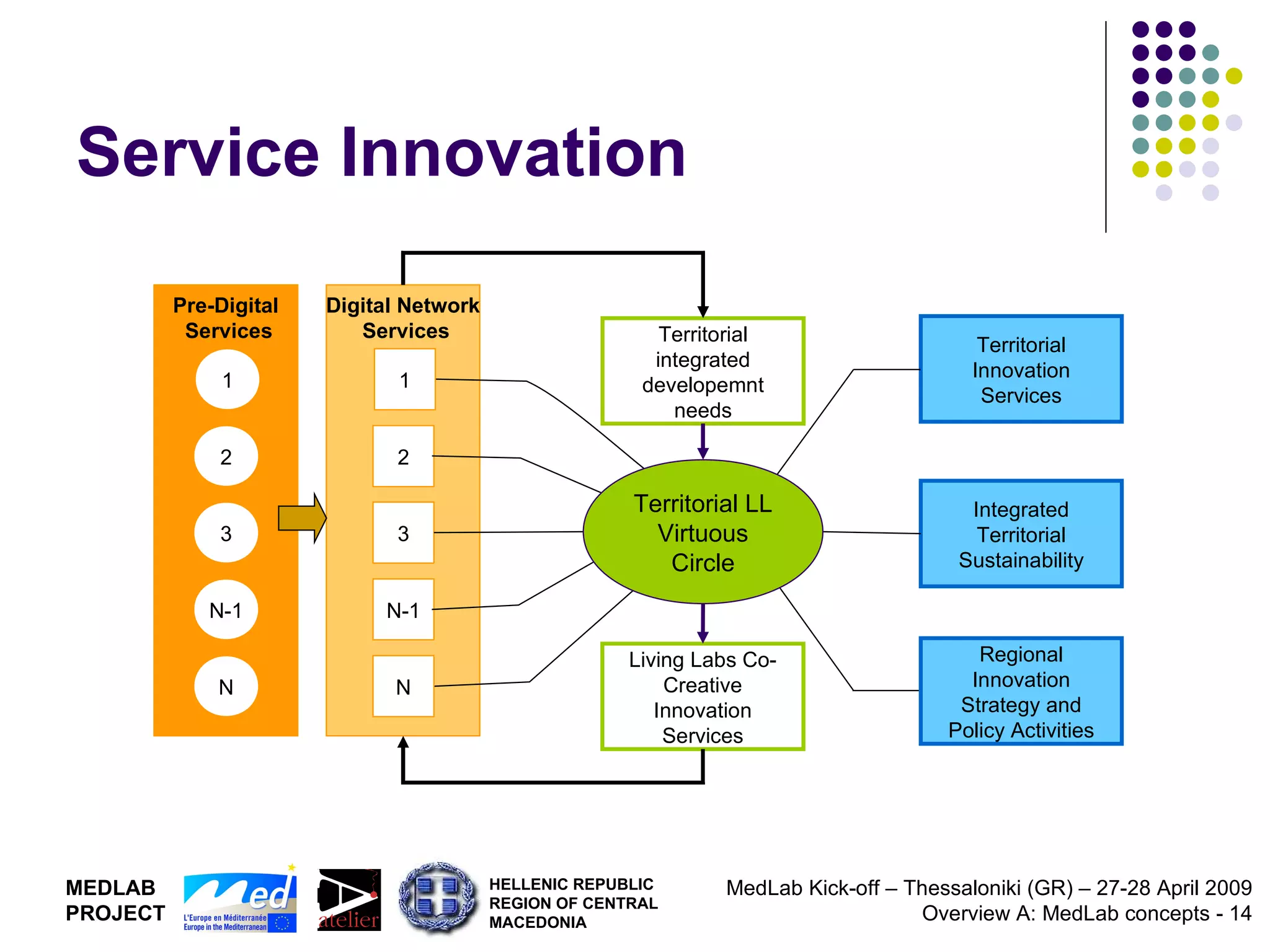
Service Innovation Pre-Digital Services 1 2 3 N-1 N Digital Network Services 2 3 N-1 Territorial integrated developemnt needs Living Labs Co-Creative Innovation Services Territorial Innovation Services Integrated Territorial Sustainability N 1 Territorial LL Virtuous Circle Regional Innovation Strategy and Policy Activities
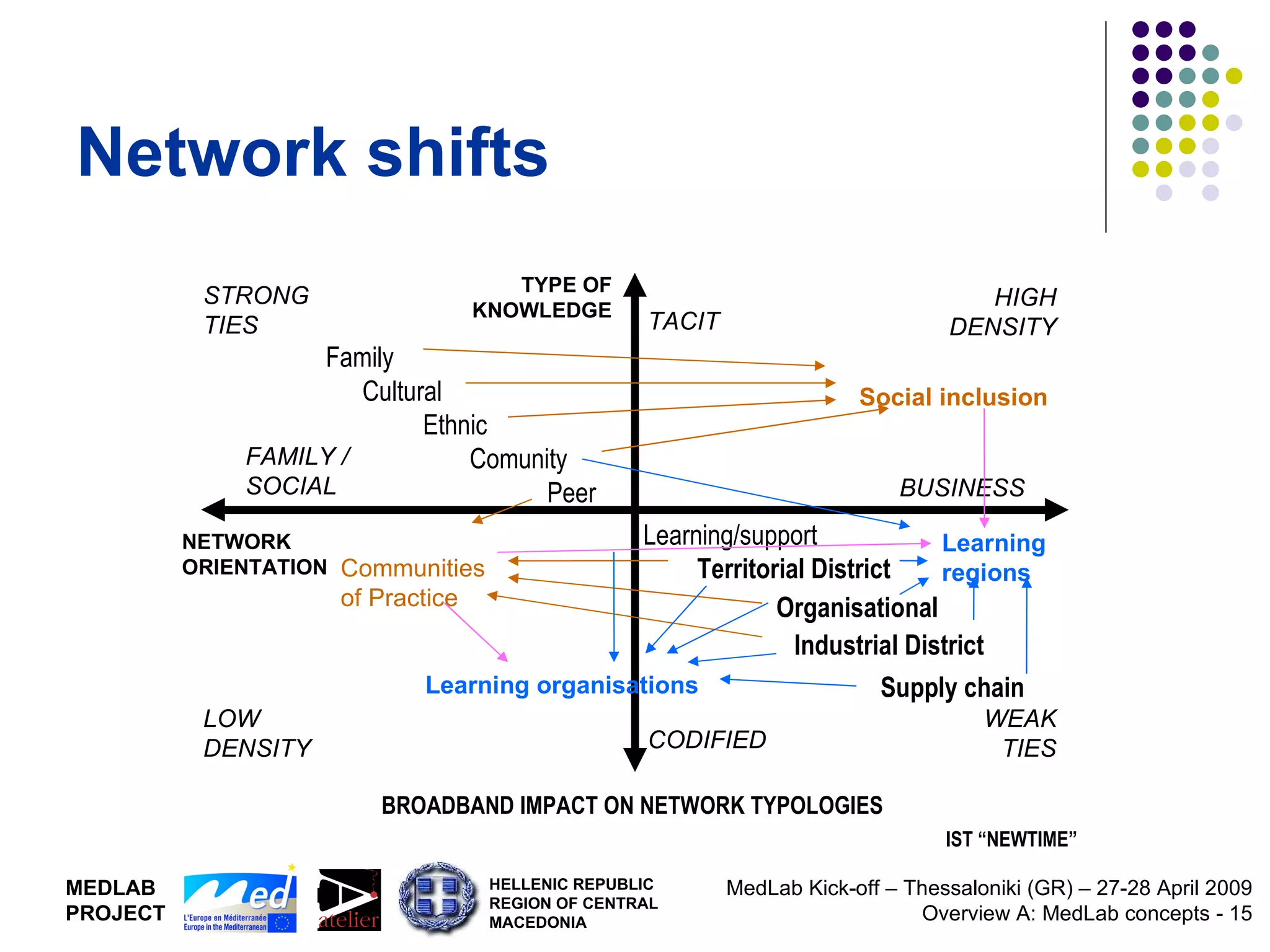
Network shifts NETWORK ORIENTATION TYPE OF KNOWLEDGE FAMILY / SOCIAL BUSINESS TACIT CODIFIED HIGH DENSITY WEAK TIES LOW DENSITY STRONG TIES Family Cultural Ethnic Comunity Peer Learning/support Territorial District Organisational Industrial District Supply chain Social inclusion Learning regions Communities of Practice Learning organisations BROADBAND IMPACT ON NETWORK TYPOLOGIES IST “NEWTIME”
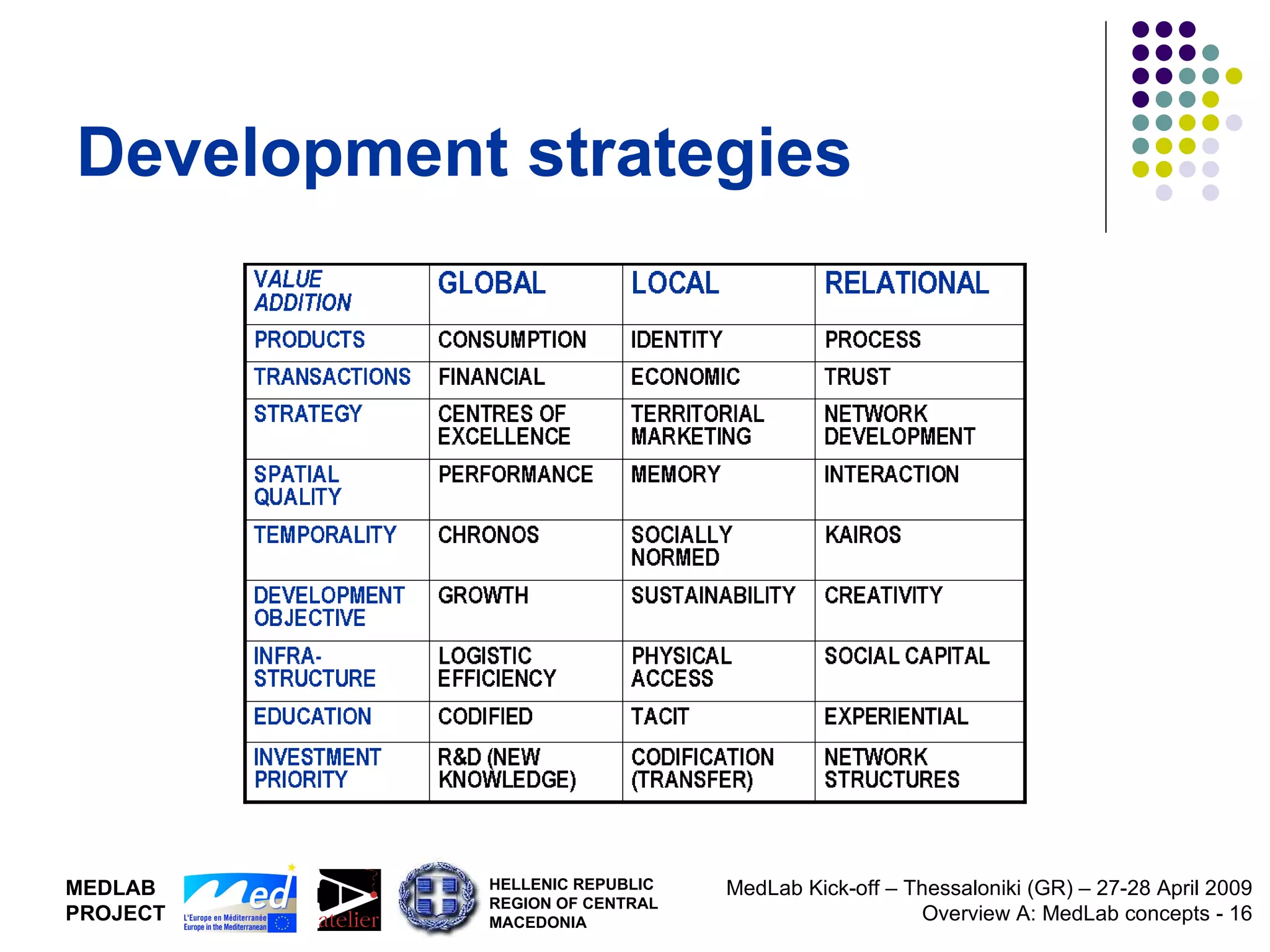
Development strategies
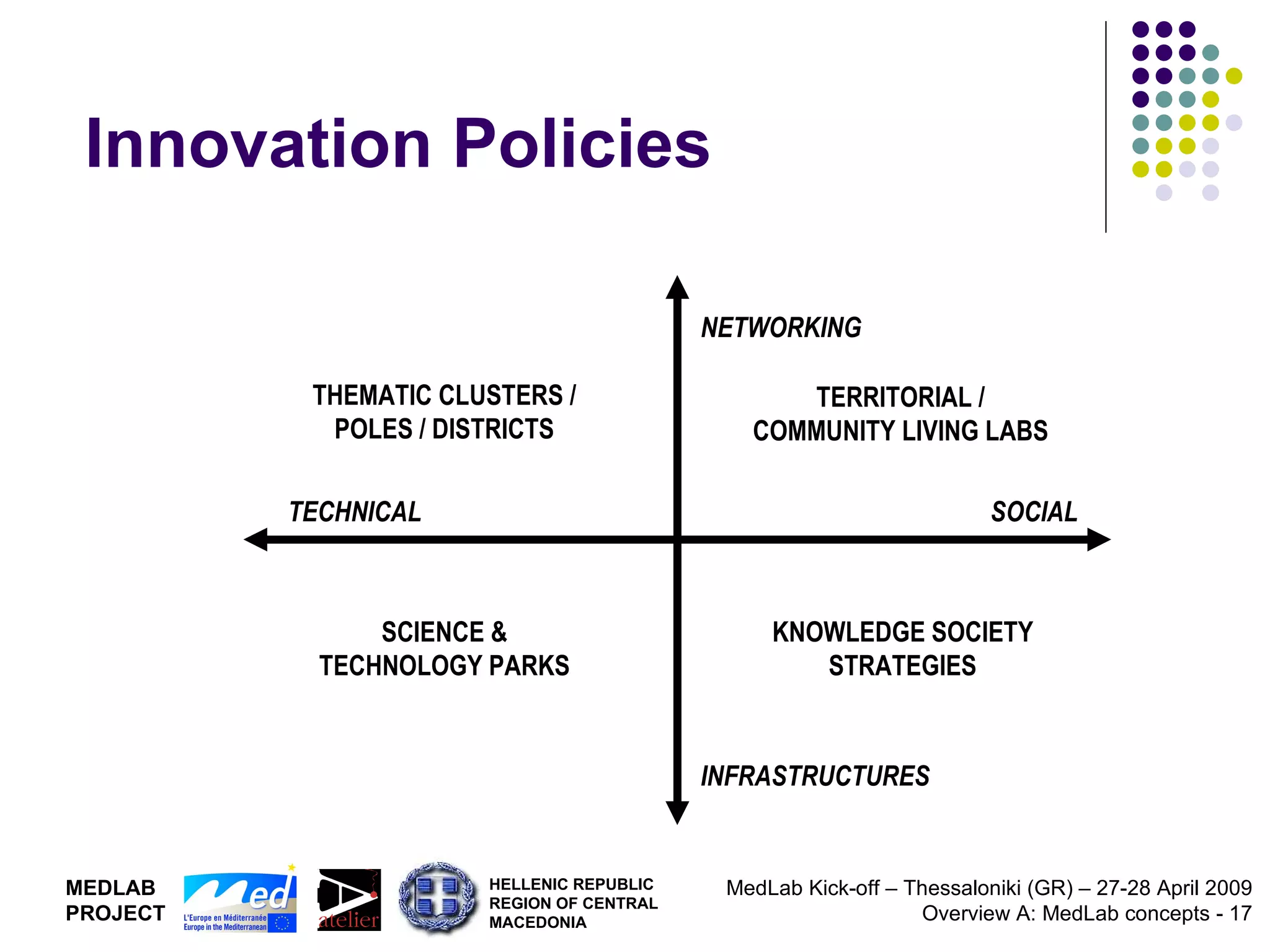
Innovation Policies TECHNICAL SOCIAL NETWORKING INFRASTRUCTURES SCIENCE & TECHNOLOGY PARKS TERRITORIAL / COMMUNITY LIVING LABS THEMATIC CLUSTERS / POLES / DISTRICTS KNOWLEDGE SOCIETY STRATEGIES
How to implement?
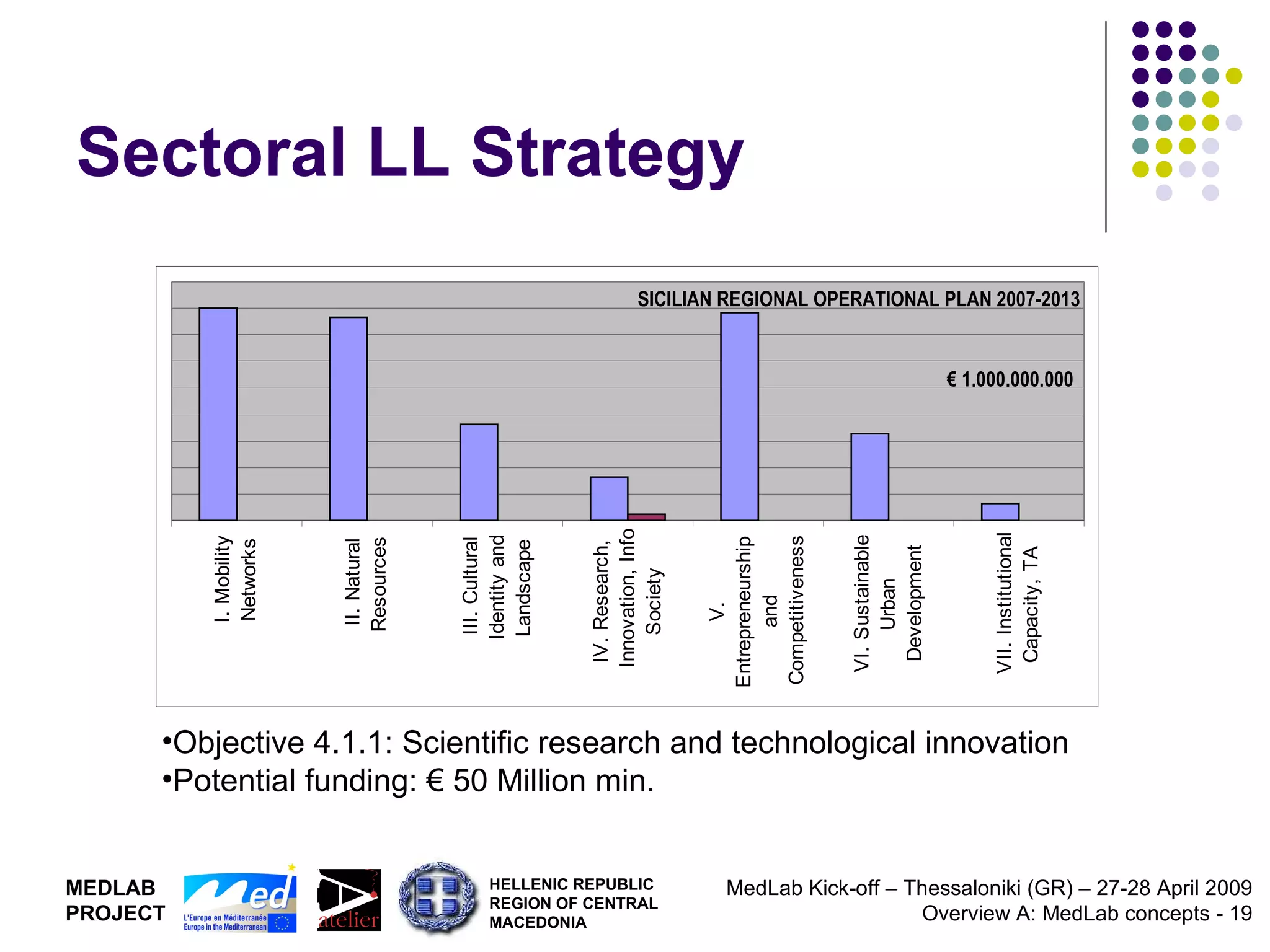
Sectoral LL Strategy €  1.000.000.000 SICILIAN REGIONAL OPERATIONAL PLAN 2007-2013 Objective 4.1.1: Scientific research and technological innovation Potential funding: € 50 Million min.
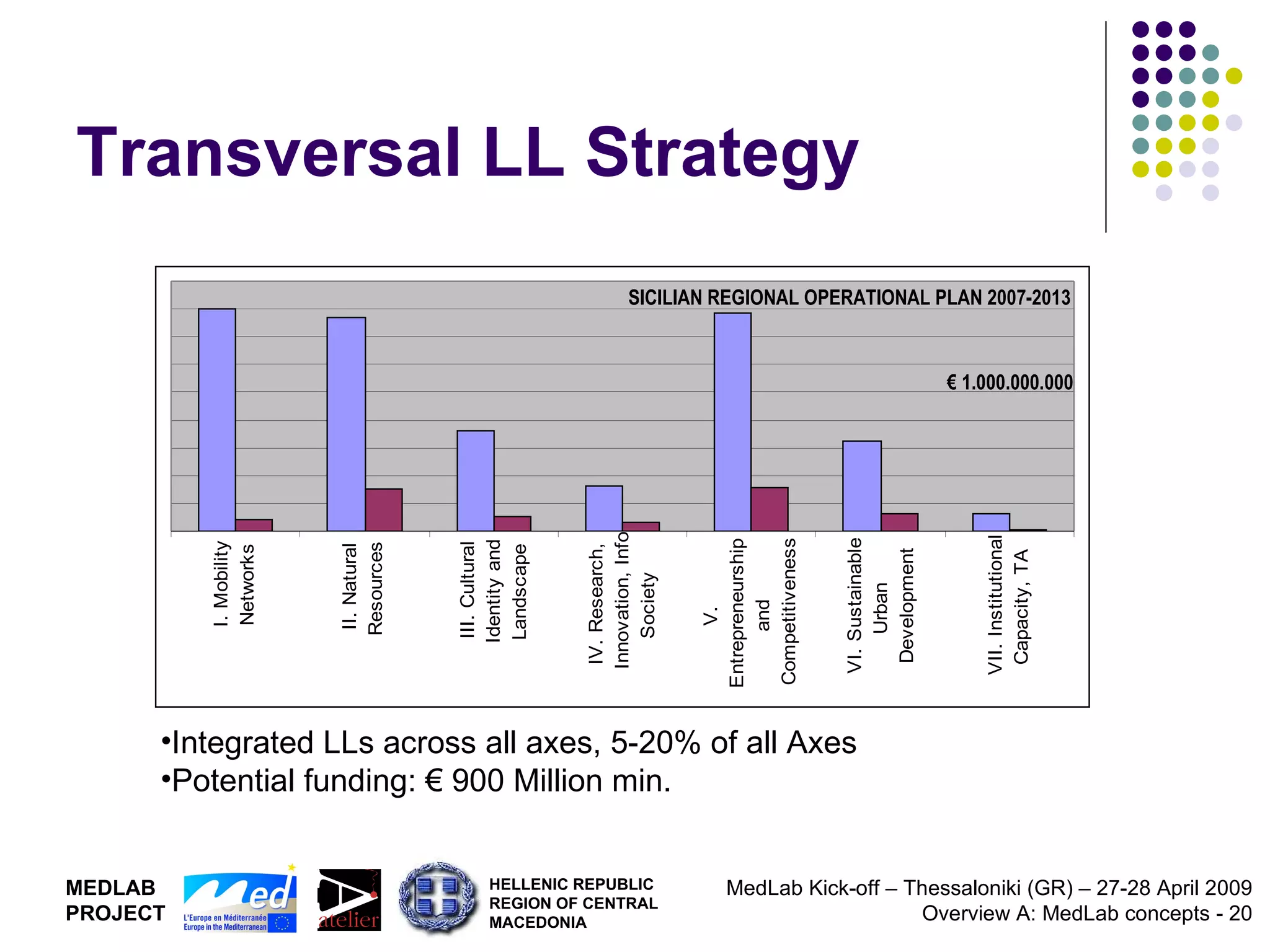
Transversal LL Strategy Integrated LLs across all axes, 5-20% of all Axes Potential funding: € 900 Million min. SICILIAN REGIONAL OPERATIONAL PLAN 2007-2013 €  1.000.000.000
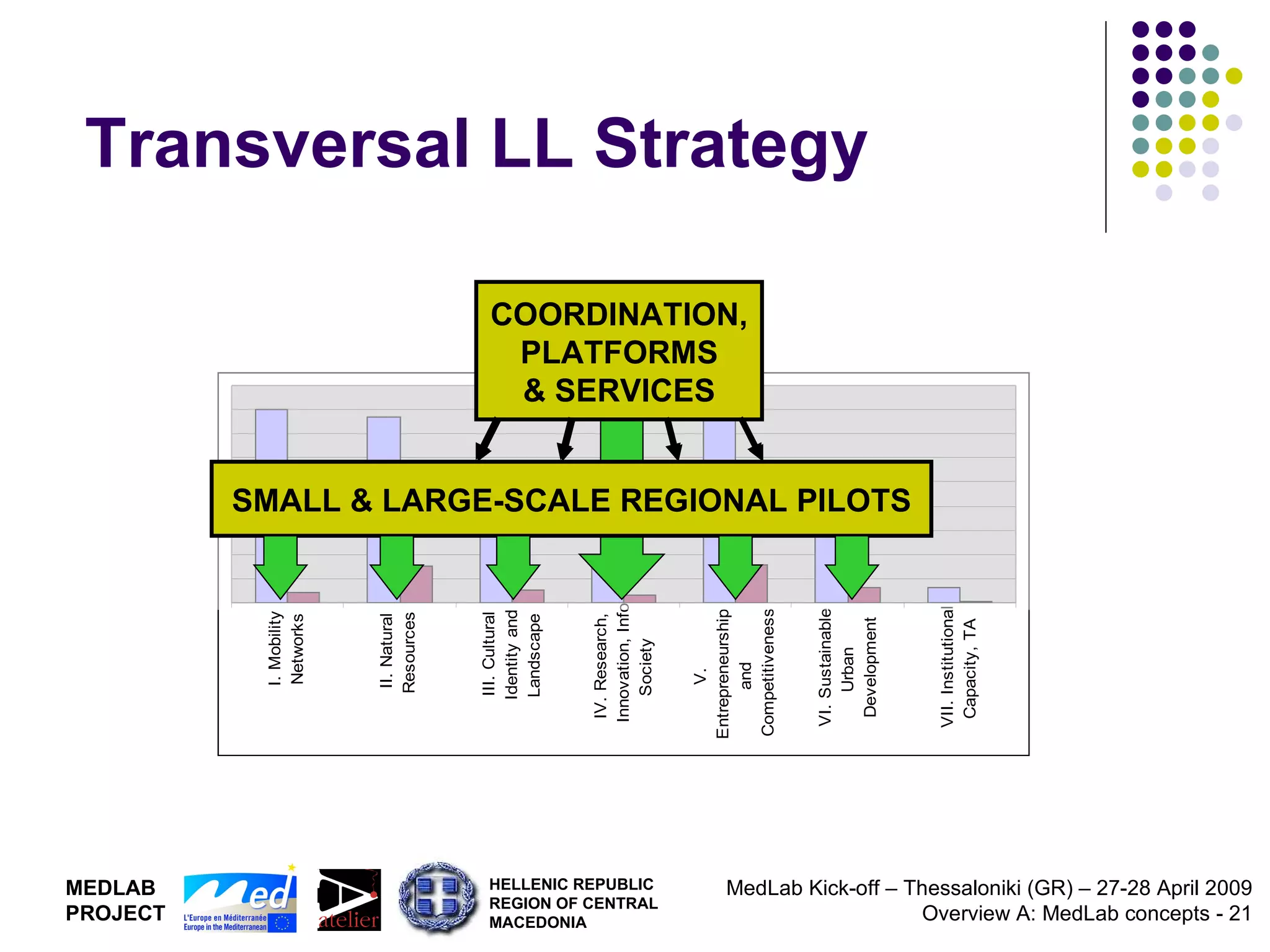
Transversal LL Strategy COORDINATION, PLATFORMS & SERVICES SMALL & LARGE-SCALE REGIONAL PILOTS
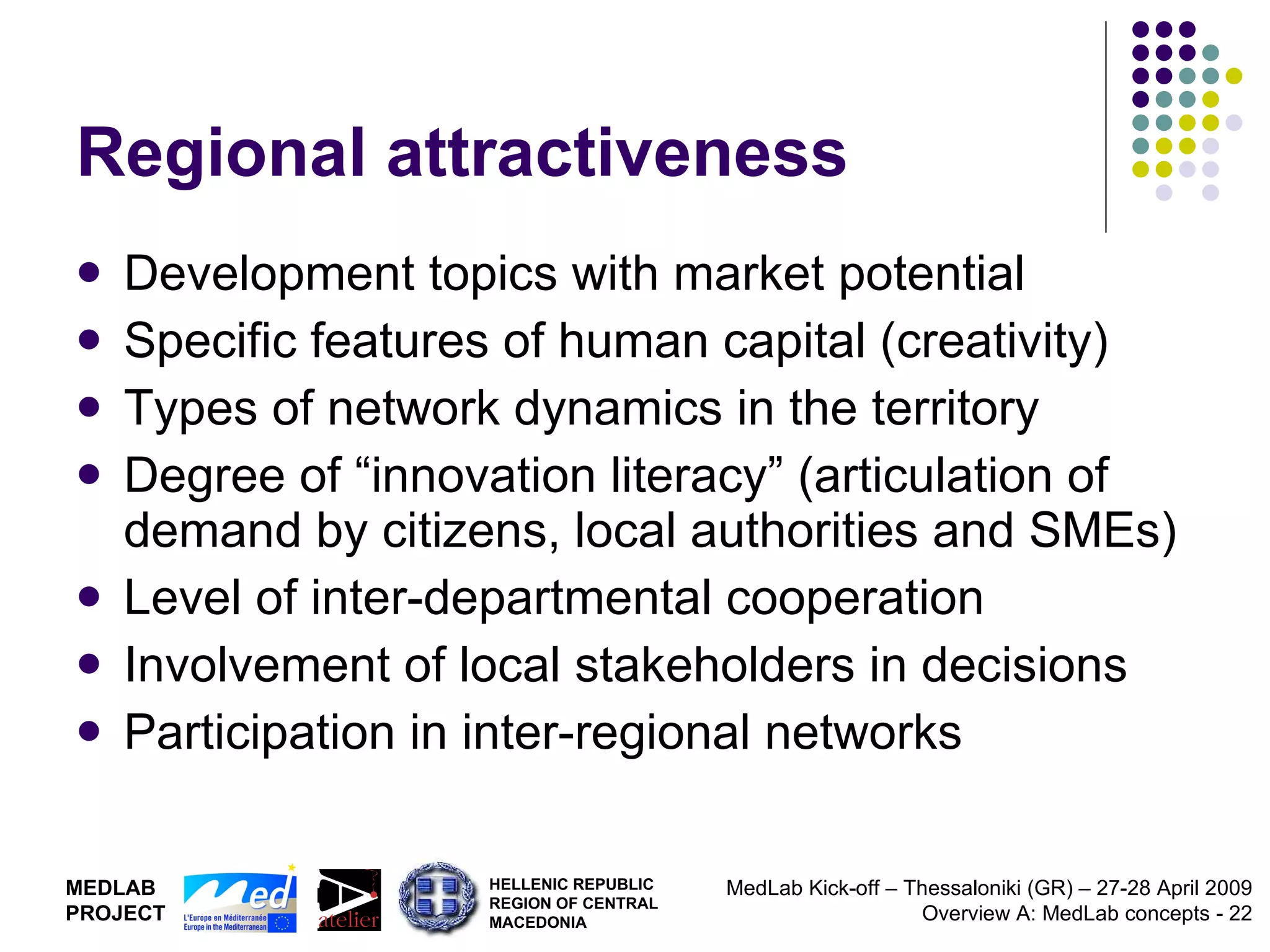
Regional attractiveness Development topics with market potential Specific features of human capital (creativity) Types of network dynamics in the territory Degree of “innovation literacy” (articulation of demand by citizens, local authorities and SMEs) Level of inter-departmental cooperation Involvement of local stakeholders in decisions Participation in inter-regional networks
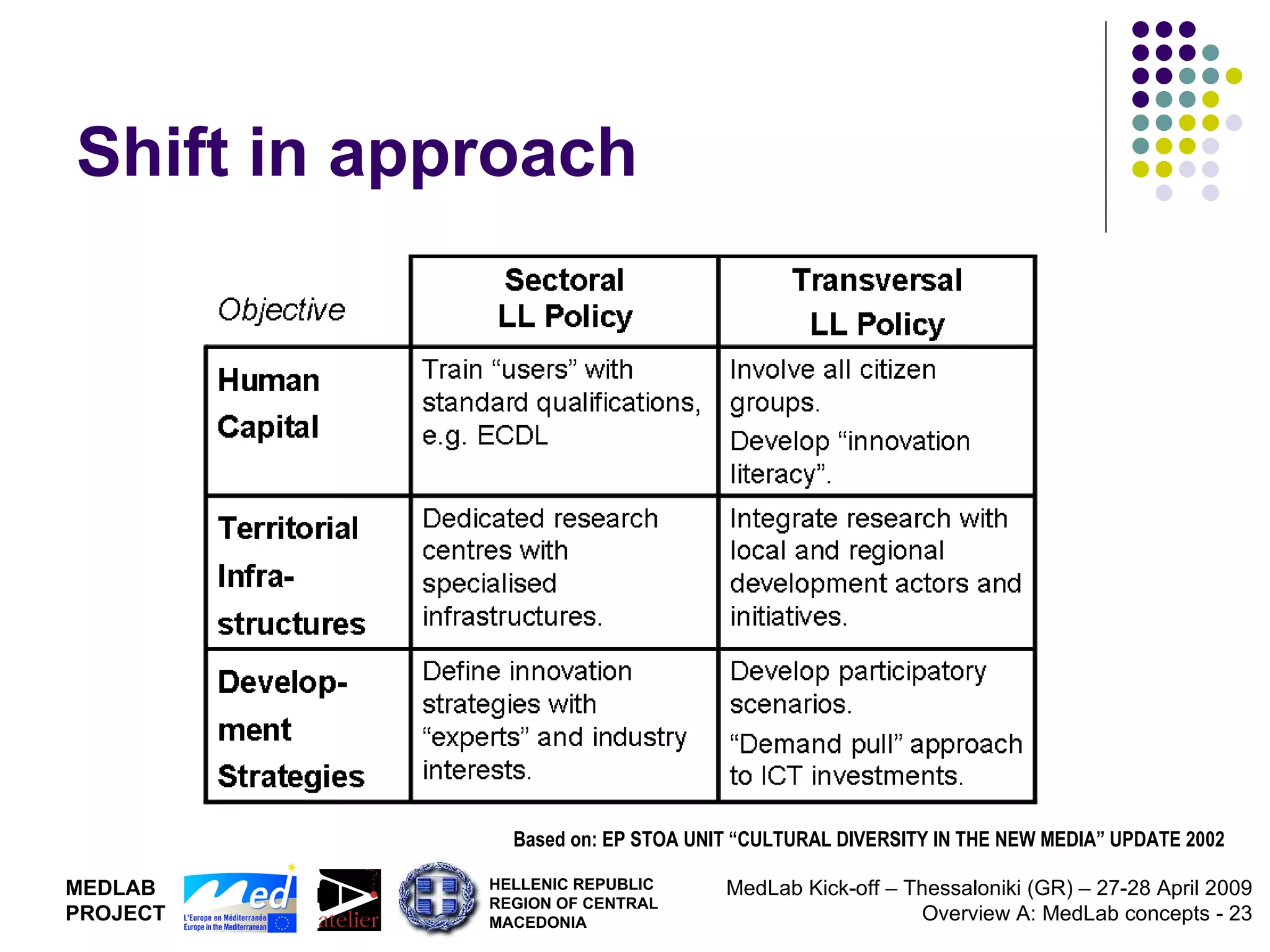
Shift in approach Based on: EP STOA UNIT “CULTURAL DIVERSITY IN THE NEW MEDIA” UPDATE 2002
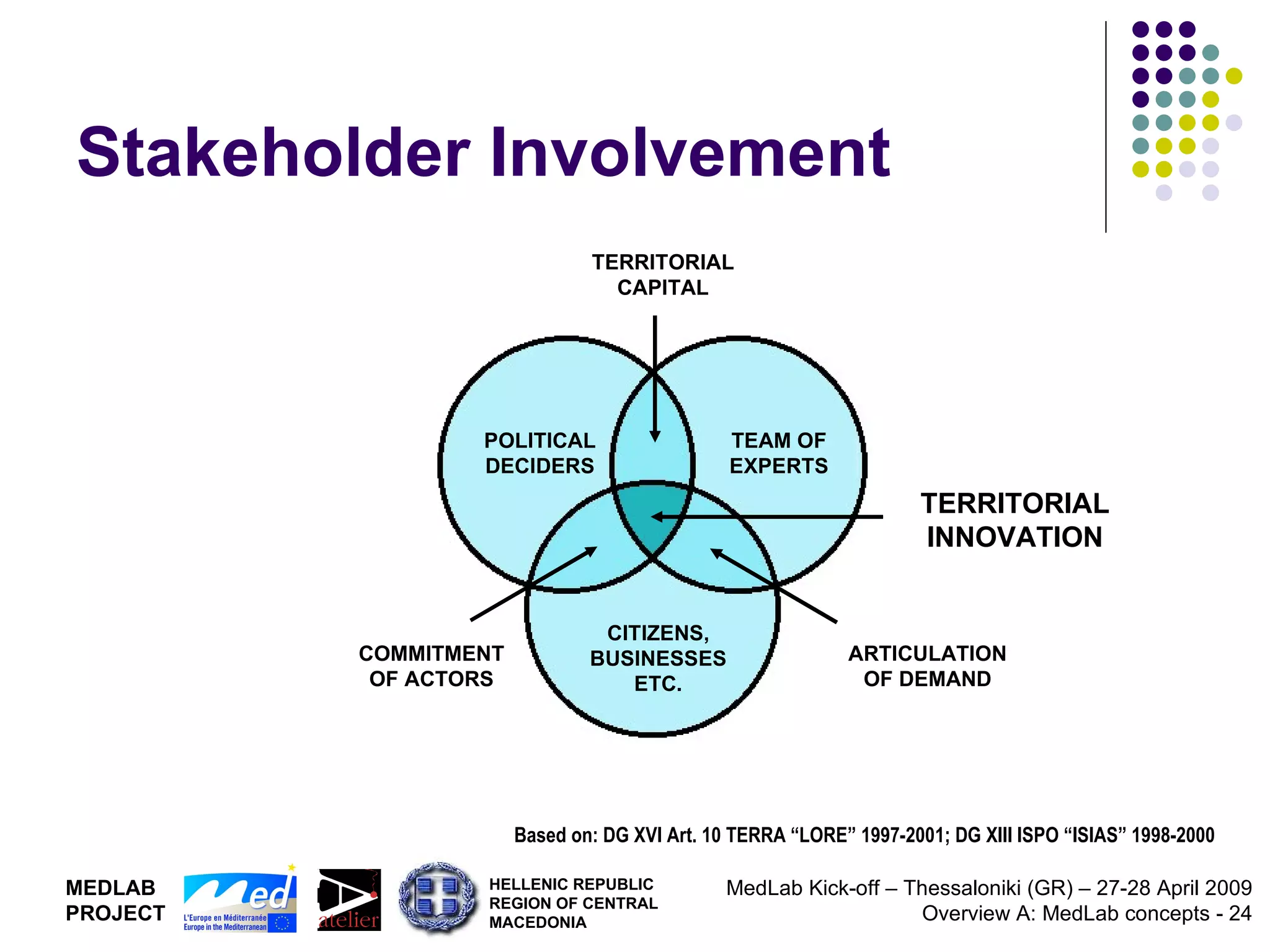
Stakeholder Involvement Based on: DG XVI Art. 10 TERRA “LORE” 1997-2001; DG XIII ISPO “ISIAS” 1998-2000 ARTICULATION OF DEMAND COMMITMENT OF ACTORS TERRITORIAL CAPITAL TERRITORIAL INNOVATION POLITICAL DECIDERS TEAM OF EXPERTS CITIZENS, BUSINESSES ETC.
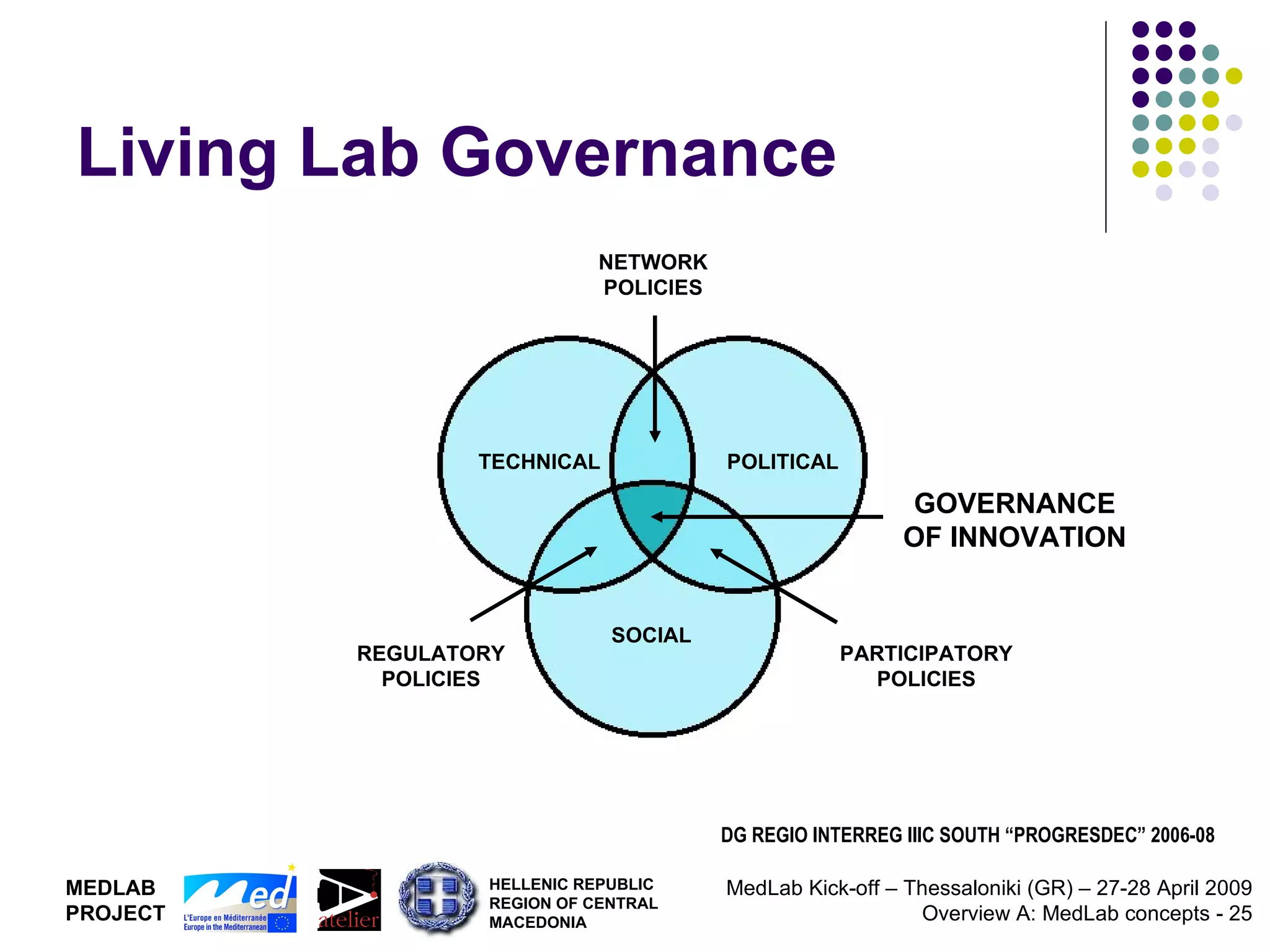
Living Lab Governance DG REGIO INTERREG IIIC SOUTH “PROGRESDEC” 2006-08 PARTICIPATORY POLICIES REGULATORY POLICIES NETWORK POLICIES GOVERNANCE OF INNOVATION TECHNICAL POLITICAL SOCIAL
Why MedLab?
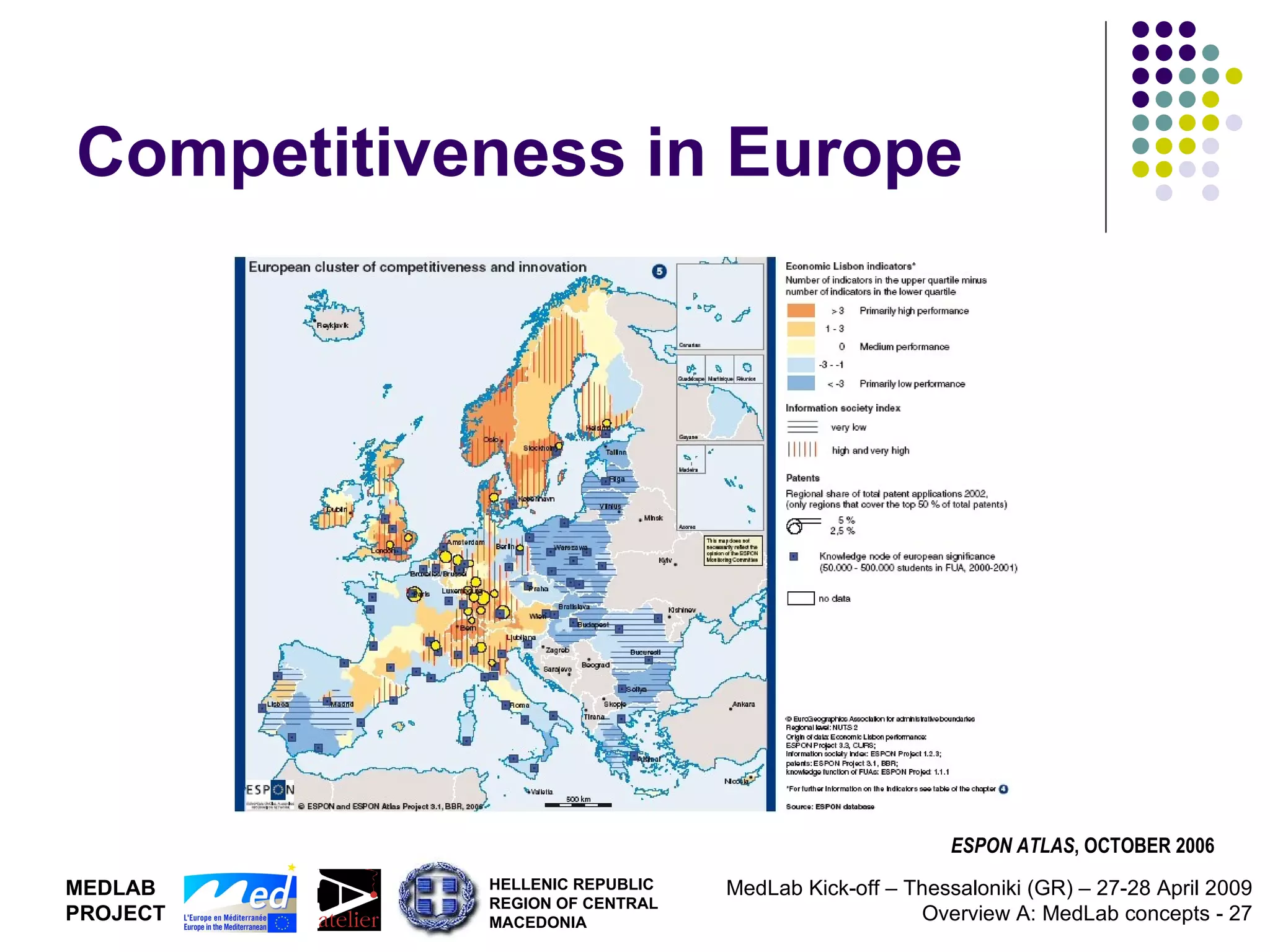
Competitiveness in Europe ESPON ATLAS , OCTOBER 2006
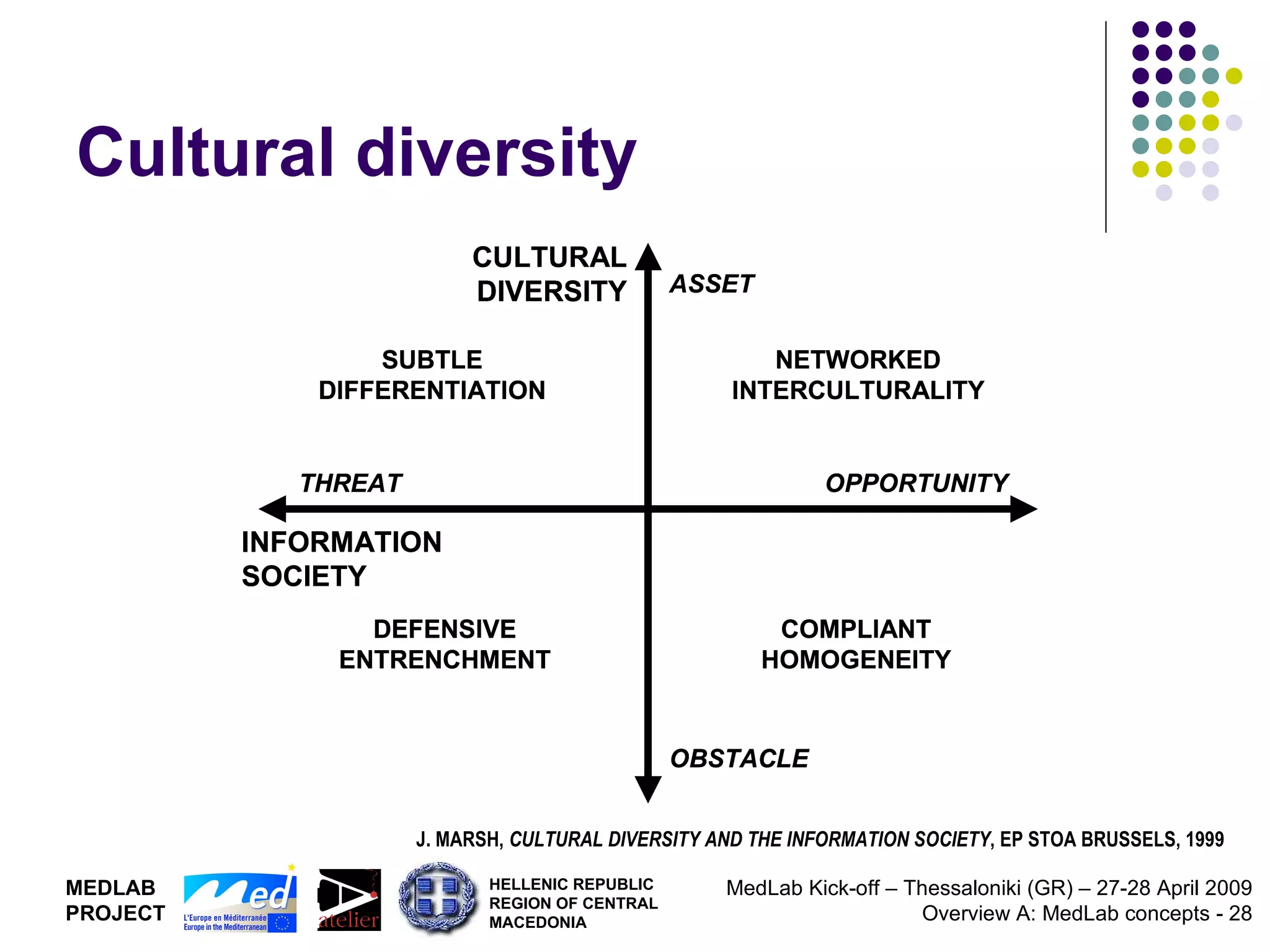
Cultural diversity J. MARSH,  CULTURAL DIVERSITY AND THE INFORMATION SOCIETY , EP STOA BRUSSELS, 1999
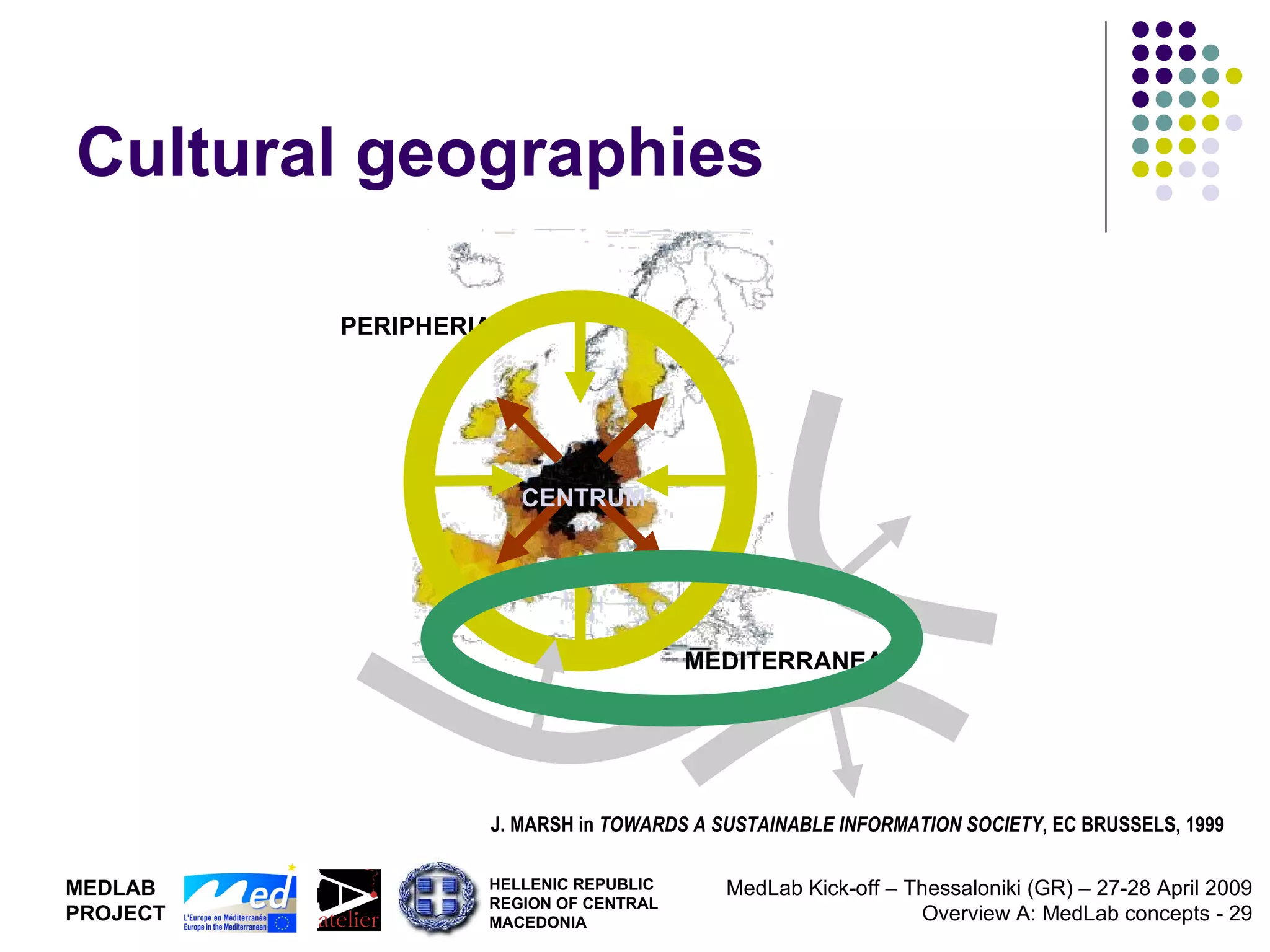
Cultural geographies J. MARSH in  TOWARDS A SUSTAINABLE INFORMATION SOCIETY , EC BRUSSELS, 1999 CENTRUM PERIPHERIA MEDITERRANEA
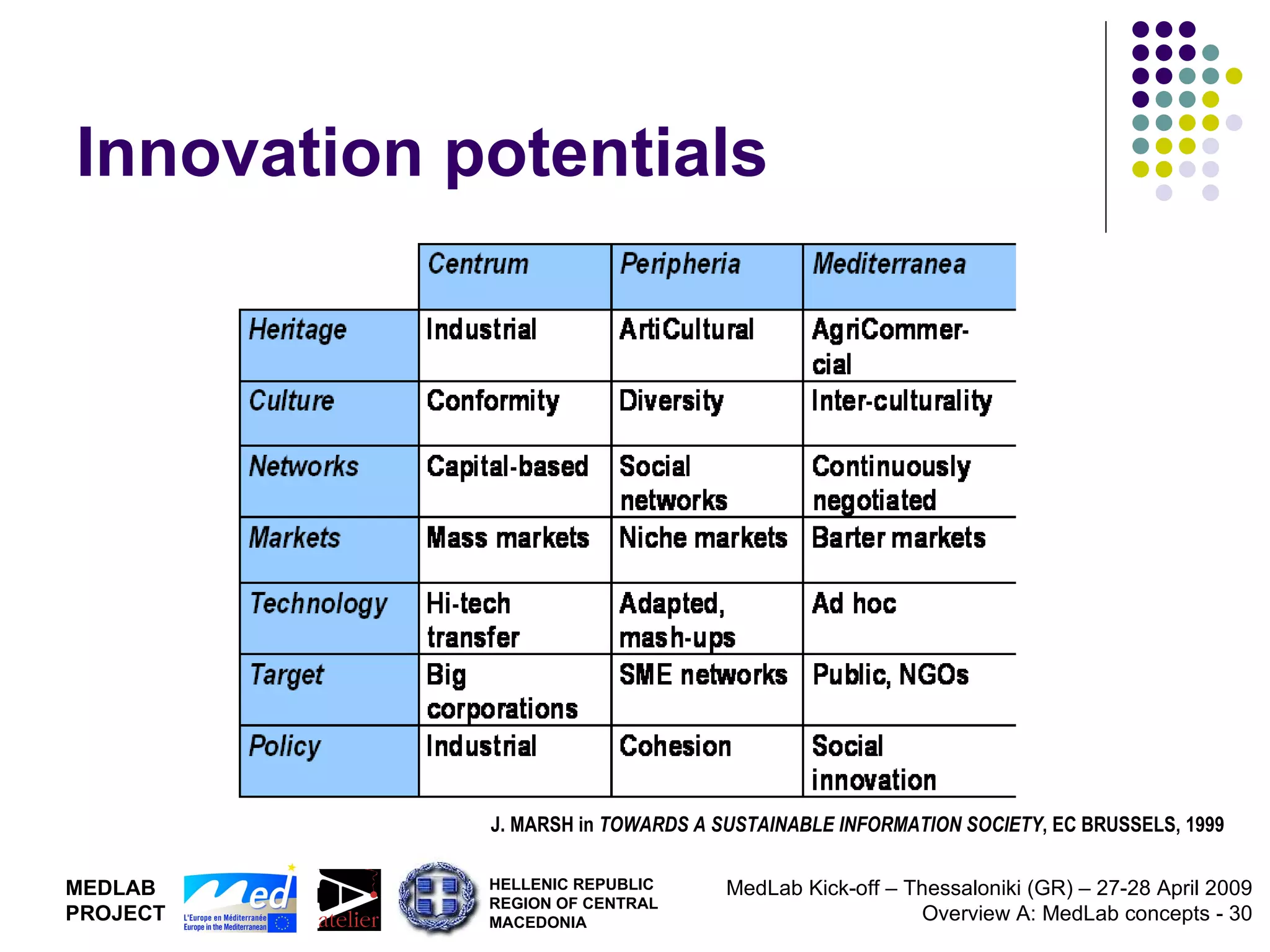
Innovation potentials J. MARSH in  TOWARDS A SUSTAINABLE INFORMATION SOCIETY , EC BRUSSELS, 1999
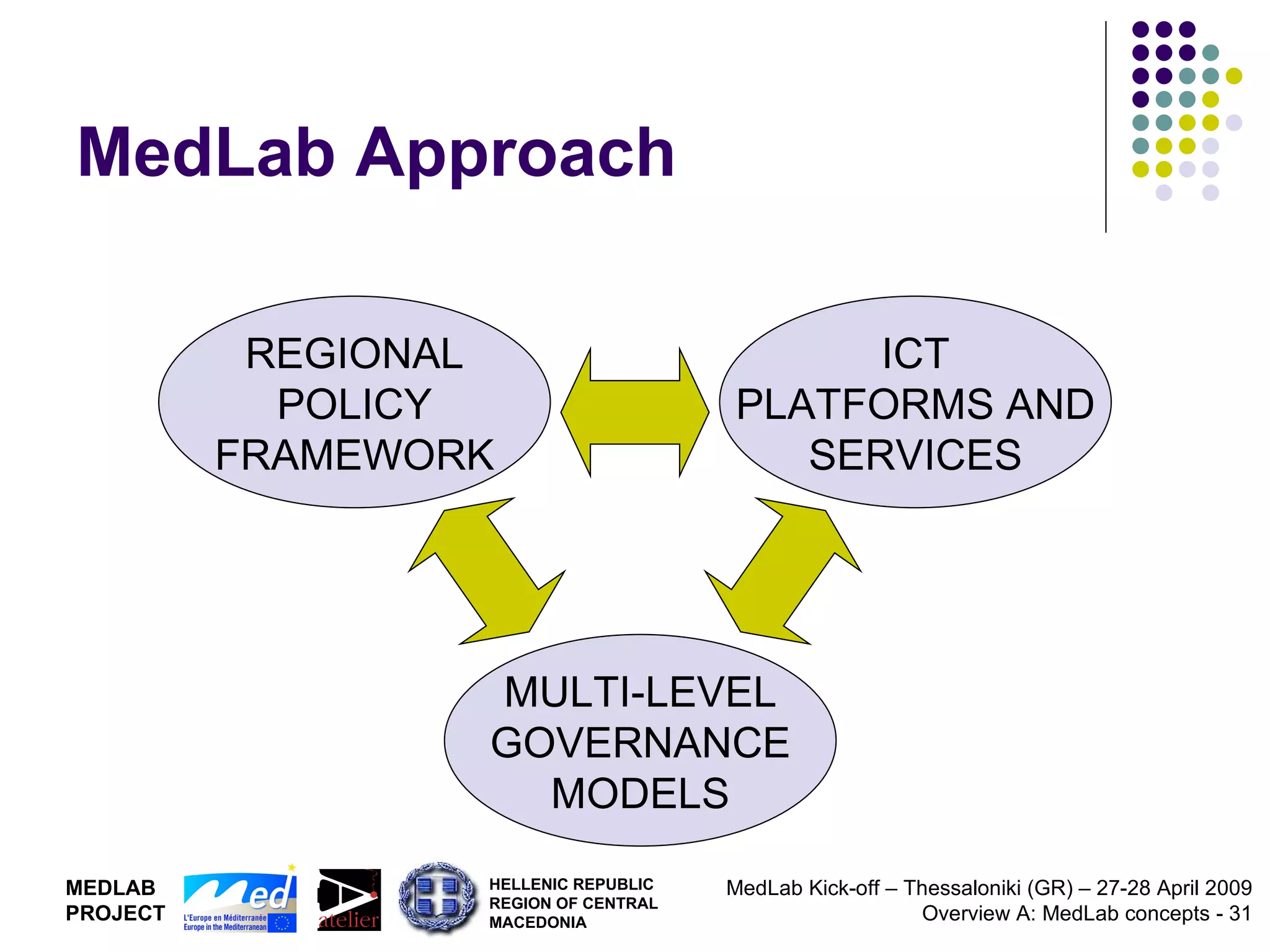
MedLab Approach REGIONAL POLICY FRAMEWORK ICT PLATFORMS AND SERVICES MULTI-LEVEL GOVERNANCE MODELS
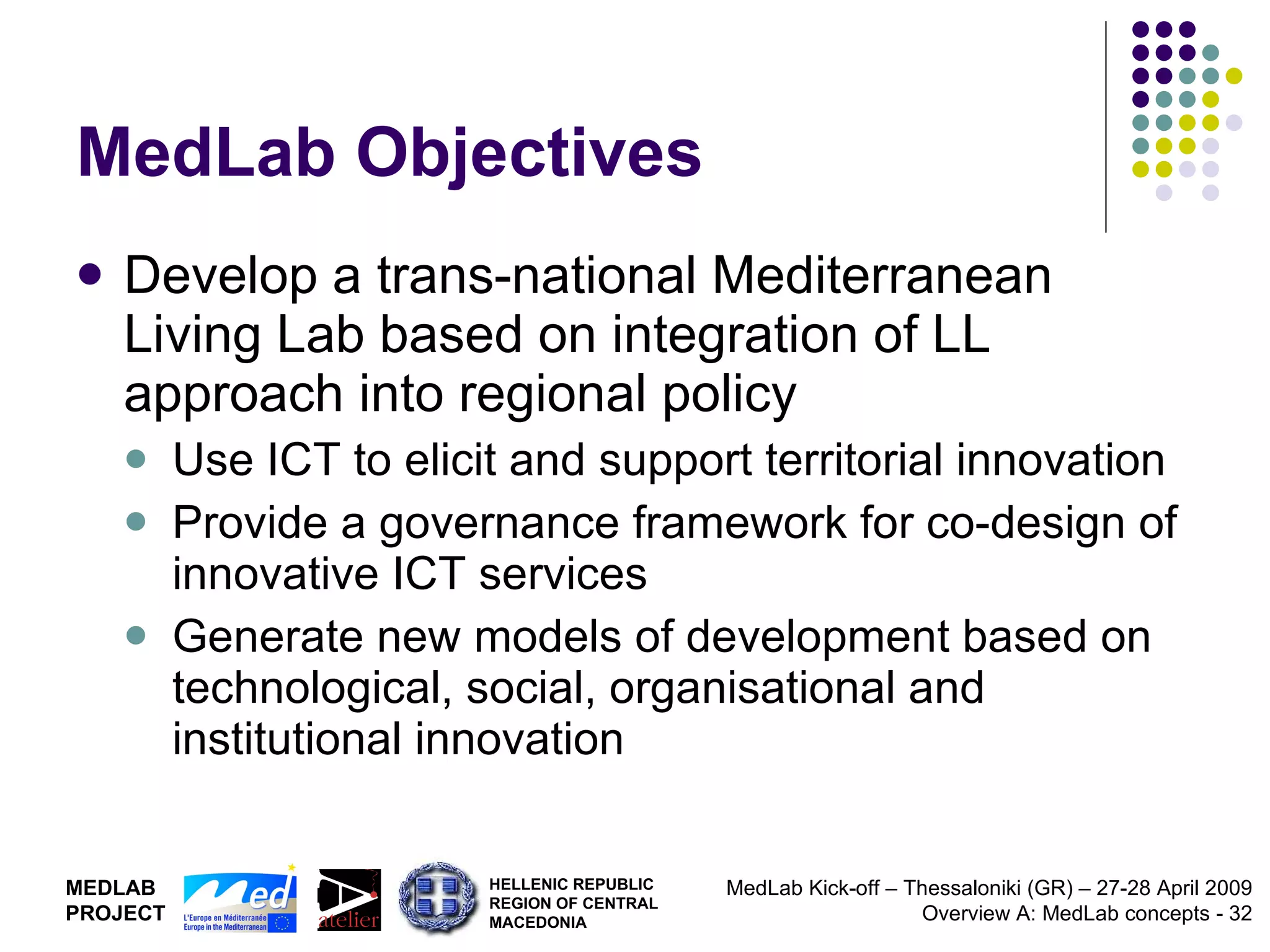
MedLab Objectives Develop a trans-national Mediterranean Living Lab based on integration of LL approach into regional policy Use ICT to elicit and support territorial innovation Provide a governance framework for co-design of innovative ICT services Generate new models of development based on technological, social, organisational and institutional innovation
Thank you for your attention

MedLab concepts: Living Labs, Regional Development and the Mediterranean

  • 1.
    MedLab concepts Projectoverview session A Jesse Marsh Atelier/RCM [email_address]
  • 2.
    What is aLiving Lab?
  • 3.
    Definition “ ALiving Lab is a user-driven open innovation ecosystem based on a business – citizens – government partnership which enables users to take part an active part in the research, development and innovation process : Bringing the users early into the creative process in order to better discover new and emerging behaviours and user patterns ; Bridging the innovation gap between technology development and the uptake of new products and services involving all relevant players of the value network via partnerships between business, citizens and government; Allowing for early assessment of the socio-economic implications of new technological solutions by demonstrating the validity of innovative services and business models .” DG INFSOC PUBLICATION
  • 4.
    Learning from mistakesMarketing fiascoes in the telecoms industry Video On Demand experiments in the ’80s WAP in the ’90s UMTS spectrum auctions in early ’00s Socially driven success stories Email SMS YouTube (re-inventing the phone)
  • 5.
    Fast prototyping TRADITIONAL“CASCADE” ENGINEERING MODEL CIP SMART ENERGY PROJECT WORKPLAN
  • 6.
  • 7.
    Web 2.0 TOMO’REILLY’S “MEME MAP”
  • 8.
    EU Policy ExplosionHelsinki Manifesto 2006 “ Living Lab Portfolio” from existing projects European Network of Living Labs: ENoLL From 19 to 51 to 129: exponential Living Labs appearing across policy areas ICT, FIRE, CIP, RoEC… Links with DG Regio: Slovenian Presidency Event, Open Days, Lyon Manifesto…
  • 9.
  • 10.
  • 11.
    Benefits to regionsPromote RTD in the regional context Foster Open Innovation in regional ICT businesses Increase inward RTD investment from big players Apply ICT RTD to issues of regional interest Promote diffusion of ICT co-design in target areas Stimulate social innovation in user groups
  • 12.
    Territorial Living Labconcept … integrally applies the LL approach to a territory and its citizens, its model of governance and its strategic plans for the future: in essence, it can be conceived of as a new model for regional development.
  • 13.
    TLL Model CONCERTATION& PARTICIPATION MONITORING THE CONTEXT STRATEGIC POLCIES & PLANS CO-CREATION CO-CREATION CO-CREATION THE VIRTUOUS CIRCLE OF KNOWLEDGE-BASED GOVERNANCE E-SERVICES
  • 14.
    Service Innovation Pre-DigitalServices 1 2 3 N-1 N Digital Network Services 2 3 N-1 Territorial integrated developemnt needs Living Labs Co-Creative Innovation Services Territorial Innovation Services Integrated Territorial Sustainability N 1 Territorial LL Virtuous Circle Regional Innovation Strategy and Policy Activities
  • 15.
    Network shifts NETWORKORIENTATION TYPE OF KNOWLEDGE FAMILY / SOCIAL BUSINESS TACIT CODIFIED HIGH DENSITY WEAK TIES LOW DENSITY STRONG TIES Family Cultural Ethnic Comunity Peer Learning/support Territorial District Organisational Industrial District Supply chain Social inclusion Learning regions Communities of Practice Learning organisations BROADBAND IMPACT ON NETWORK TYPOLOGIES IST “NEWTIME”
  • 16.
  • 17.
    Innovation Policies TECHNICALSOCIAL NETWORKING INFRASTRUCTURES SCIENCE & TECHNOLOGY PARKS TERRITORIAL / COMMUNITY LIVING LABS THEMATIC CLUSTERS / POLES / DISTRICTS KNOWLEDGE SOCIETY STRATEGIES
  • 18.
  • 19.
    Sectoral LL Strategy€ 1.000.000.000 SICILIAN REGIONAL OPERATIONAL PLAN 2007-2013 Objective 4.1.1: Scientific research and technological innovation Potential funding: € 50 Million min.
  • 20.
    Transversal LL StrategyIntegrated LLs across all axes, 5-20% of all Axes Potential funding: € 900 Million min. SICILIAN REGIONAL OPERATIONAL PLAN 2007-2013 € 1.000.000.000
  • 21.
    Transversal LL StrategyCOORDINATION, PLATFORMS & SERVICES SMALL & LARGE-SCALE REGIONAL PILOTS
  • 22.
    Regional attractiveness Developmenttopics with market potential Specific features of human capital (creativity) Types of network dynamics in the territory Degree of “innovation literacy” (articulation of demand by citizens, local authorities and SMEs) Level of inter-departmental cooperation Involvement of local stakeholders in decisions Participation in inter-regional networks
  • 23.
    Shift in approachBased on: EP STOA UNIT “CULTURAL DIVERSITY IN THE NEW MEDIA” UPDATE 2002
  • 24.
    Stakeholder Involvement Basedon: DG XVI Art. 10 TERRA “LORE” 1997-2001; DG XIII ISPO “ISIAS” 1998-2000 ARTICULATION OF DEMAND COMMITMENT OF ACTORS TERRITORIAL CAPITAL TERRITORIAL INNOVATION POLITICAL DECIDERS TEAM OF EXPERTS CITIZENS, BUSINESSES ETC.
  • 25.
    Living Lab GovernanceDG REGIO INTERREG IIIC SOUTH “PROGRESDEC” 2006-08 PARTICIPATORY POLICIES REGULATORY POLICIES NETWORK POLICIES GOVERNANCE OF INNOVATION TECHNICAL POLITICAL SOCIAL
  • 26.
  • 27.
    Competitiveness in EuropeESPON ATLAS , OCTOBER 2006
  • 28.
    Cultural diversity J.MARSH, CULTURAL DIVERSITY AND THE INFORMATION SOCIETY , EP STOA BRUSSELS, 1999
  • 29.
    Cultural geographies J.MARSH in TOWARDS A SUSTAINABLE INFORMATION SOCIETY , EC BRUSSELS, 1999 CENTRUM PERIPHERIA MEDITERRANEA
  • 30.
    Innovation potentials J.MARSH in TOWARDS A SUSTAINABLE INFORMATION SOCIETY , EC BRUSSELS, 1999
  • 31.
    MedLab Approach REGIONALPOLICY FRAMEWORK ICT PLATFORMS AND SERVICES MULTI-LEVEL GOVERNANCE MODELS
  • 32.
    MedLab Objectives Developa trans-national Mediterranean Living Lab based on integration of LL approach into regional policy Use ICT to elicit and support territorial innovation Provide a governance framework for co-design of innovative ICT services Generate new models of development based on technological, social, organisational and institutional innovation
  • 33.
    Thank you foryour attention