Effective Bible Study
2 Timothy 2:15 Read It, Explain It, Apply It
Lesson 11
Meditating On and

Teaching the Bible
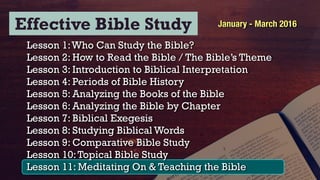
Effective Bible Study
Lesson 1:Who Can Study the Bible?
Lesson 2: How to Read the Bible / The Bible’s Theme
Lesson 3: Introduction to Biblical Interpretation
Lesson 4: Periods of Bible History
Lesson 5: Analyzing the Books of the Bible
Lesson 6: Analyzing the Bible by Chapter
Lesson 7: Biblical Exegesis
Lesson 8: Studying Biblical Words
Lesson 9: Comparative Bible Study
Lesson 10:Topical Bible Study
Lesson 11: Meditating On & Teaching the Bible
January - March 2016
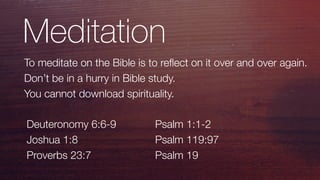
Meditation
To meditate on the Bible is to reflect on it over and over again.
Don’t be in a hurry in Bible study.
You cannot download spirituality.
Deuteronomy 6:6-9
Joshua 1:8
Proverbs 23:7
Psalm 1:1-2
Psalm 119:97
Psalm 19
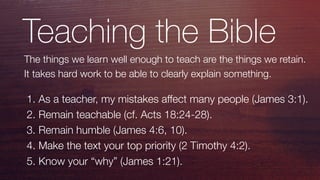
Teaching the Bible
The things we learn well enough to teach are the things we retain.
It takes hard work to be able to clearly explain something.
1. As a teacher, my mistakes affect many people (James 3:1).
2. Remain teachable (cf. Acts 18:24-28).
3. Remain humble (James 4:6, 10).
4. Make the text your top priority (2 Timothy 4:2).
5. Know your “why” (James 1:21).
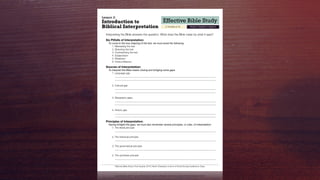
Effective Bible Study
2 Timothy 2:15 Read It, Explain It, Apply It
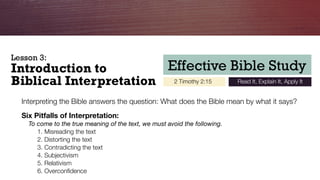
Introduction to

Biblical Interpretation
Interpreting the Bible answers the question: What does the Bible mean by what it says?
Six Pitfalls of Interpretation:
To come to the true meaning of the text, we must avoid the following.
	 1.	Misreading the text
	 2. Distorting the text
	 3. Contradicting the text
	 4. Subjectivism
	 5. Relativism
	 6. Overconfidence
Sources of Interpretation:
To interpret the Bible means closing and bridging some gaps.
	 1. Language gap
	 	 __________________________________________________________________________________
	 	 __________________________________________________________________________________
	 2. Cultural gap
	 	 __________________________________________________________________________________
	 	 __________________________________________________________________________________
	 3. Geography gaps
	 	 __________________________________________________________________________________
	 	 __________________________________________________________________________________
	 4. History gap
	 	 __________________________________________________________________________________
	 	 __________________________________________________________________________________
Principles of Interpretation:
Having bridged the gaps, we must also remember several principles, or rules, of interpretation:
	 1. The literal principle
	 	 __________________________________________________________________________________
	 2. The historical principle
	 	 __________________________________________________________________________________
	 3. The grammatical principle
	 	 __________________________________________________________________________________
	 4. The synthesis principle
	 	 __________________________________________________________________________________
Effective Bible Study | First Quarter 2016 | North Charleston church of Christ Sunday Auditorium Class
Lesson 3:
Effective Bible Study
2 Timothy 2:15 Read It, Explain It, Apply It
Introduction to

Biblical Interpretation
Interpreting the Bible answers the question: What does the Bible mean by what it says?
Six Pitfalls of Interpretation:
To come to the true meaning of the text, we must avoid the following.
	 1.	Misreading the text
	 2. Distorting the text
	 3. Contradicting the text
	 4. Subjectivism
	 5. Relativism
	 6. Overconfidence
Lesson 3:
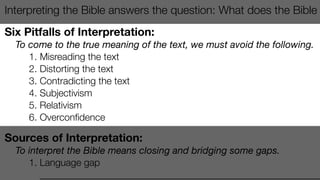
Interpreting the Bible answers the question: What does the Bible
Six Pitfalls of Interpretation:
To come to the true meaning of the text, we must avoid the following.
	 1.	Misreading the text
	 2. Distorting the text
	 3. Contradicting the text
	 4. Subjectivism
	 5. Relativism
	 6. Overconfidence
Sources of Interpretation:
To interpret the Bible means closing and bridging some gaps.
	 1. Language gap
	 	 __________________________________________________________
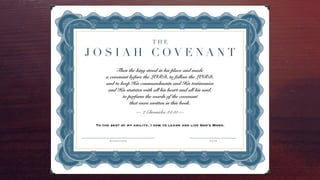
J O S I A H C O V E N A N T
S I G N A T U R E D A T E
T H E
Then the king stood in his place and made

a covenant before the LORD, to follow the LORD,

and to keep His commandments and His testimonies

and His statutes with all his heart and all his soul,

to perform the words of the covenant

that were written in this book.
— 2 Chronicles 34:31 —
To the best of my ability, I vow to learn and live God’s Word.
roberthatfield.net/study
Effective Bible Study
2 Timothy 2:15 Read It, Explain It, Apply It
Lesson 11
Meditating On and

Teaching the Bible
Meditating On & Teaching the Bible

Meditating On & Teaching the Bible

  • 1.
    Effective Bible Study 2Timothy 2:15 Read It, Explain It, Apply It Lesson 11 Meditating On and
 Teaching the Bible
  • 2.
    Effective Bible Study Lesson1:Who Can Study the Bible? Lesson 2: How to Read the Bible / The Bible’s Theme Lesson 3: Introduction to Biblical Interpretation Lesson 4: Periods of Bible History Lesson 5: Analyzing the Books of the Bible Lesson 6: Analyzing the Bible by Chapter Lesson 7: Biblical Exegesis Lesson 8: Studying Biblical Words Lesson 9: Comparative Bible Study Lesson 10:Topical Bible Study Lesson 11: Meditating On & Teaching the Bible January - March 2016
  • 3.
    Meditation To meditate onthe Bible is to reflect on it over and over again. Don’t be in a hurry in Bible study. You cannot download spirituality. Deuteronomy 6:6-9 Joshua 1:8 Proverbs 23:7 Psalm 1:1-2 Psalm 119:97 Psalm 19
  • 4.
    Teaching the Bible Thethings we learn well enough to teach are the things we retain. It takes hard work to be able to clearly explain something. 1. As a teacher, my mistakes affect many people (James 3:1). 2. Remain teachable (cf. Acts 18:24-28). 3. Remain humble (James 4:6, 10). 4. Make the text your top priority (2 Timothy 4:2). 5. Know your “why” (James 1:21).
  • 5.
    Effective Bible Study 2Timothy 2:15 Read It, Explain It, Apply It Introduction to
 Biblical Interpretation Interpreting the Bible answers the question: What does the Bible mean by what it says? Six Pitfalls of Interpretation: To come to the true meaning of the text, we must avoid the following. 1. Misreading the text 2. Distorting the text 3. Contradicting the text 4. Subjectivism 5. Relativism 6. Overconfidence Sources of Interpretation: To interpret the Bible means closing and bridging some gaps. 1. Language gap __________________________________________________________________________________ __________________________________________________________________________________ 2. Cultural gap __________________________________________________________________________________ __________________________________________________________________________________ 3. Geography gaps __________________________________________________________________________________ __________________________________________________________________________________ 4. History gap __________________________________________________________________________________ __________________________________________________________________________________ Principles of Interpretation: Having bridged the gaps, we must also remember several principles, or rules, of interpretation: 1. The literal principle __________________________________________________________________________________ 2. The historical principle __________________________________________________________________________________ 3. The grammatical principle __________________________________________________________________________________ 4. The synthesis principle __________________________________________________________________________________ Effective Bible Study | First Quarter 2016 | North Charleston church of Christ Sunday Auditorium Class Lesson 3:
  • 6.
    Effective Bible Study 2Timothy 2:15 Read It, Explain It, Apply It Introduction to
 Biblical Interpretation Interpreting the Bible answers the question: What does the Bible mean by what it says? Six Pitfalls of Interpretation: To come to the true meaning of the text, we must avoid the following. 1. Misreading the text 2. Distorting the text 3. Contradicting the text 4. Subjectivism 5. Relativism 6. Overconfidence Lesson 3:
  • 7.
    Interpreting the Bibleanswers the question: What does the Bible Six Pitfalls of Interpretation: To come to the true meaning of the text, we must avoid the following. 1. Misreading the text 2. Distorting the text 3. Contradicting the text 4. Subjectivism 5. Relativism 6. Overconfidence Sources of Interpretation: To interpret the Bible means closing and bridging some gaps. 1. Language gap __________________________________________________________
  • 8.
    J O SI A H C O V E N A N T S I G N A T U R E D A T E T H E Then the king stood in his place and made
 a covenant before the LORD, to follow the LORD,
 and to keep His commandments and His testimonies
 and His statutes with all his heart and all his soul,
 to perform the words of the covenant
 that were written in this book. — 2 Chronicles 34:31 — To the best of my ability, I vow to learn and live God’s Word.
  • 9.
  • 10.
    Effective Bible Study 2Timothy 2:15 Read It, Explain It, Apply It Lesson 11 Meditating On and
 Teaching the Bible