MEDIA THEORIES
A LEVEL
L O U I S E B A R B O N E
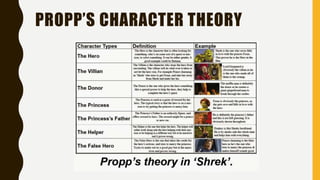
PROPP’S CHARACTER THEORY
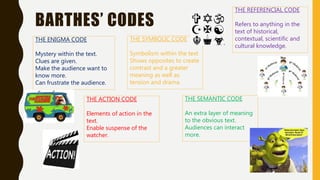
BARTHES’ CODES
THE ENIGMA CODE
Mystery within the text.
Clues are given.
Make the audience want to
know more.
Can frustrate the audience.
THE SEMANTIC CODE
An extra layer of meaning
to the obvious text.
Audiences can interact
more.
THE ACTION CODE
Elements of action in the
text.
Enable suspense of the
watcher.
THE REFERENCIAL CODE
Refers to anything in the
text of historical,
contextual, scientific and
cultural knowledge.
THE SYMBOLIC CODE
Symbolism within the text
Shows opposites to create
contrast and a greater
meaning as well as
tension and drama.
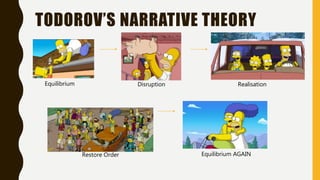
TODOROV’S NARRATIVE THEORY
Equilibrium Disruption Realisation
Restore Order Equilibrium AGAIN
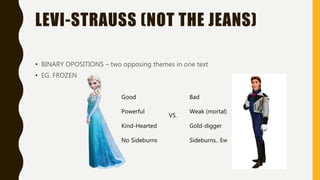
LEVI-STRAUSS (NOT THE JEANS)
• BINARY OPOSITIONS – two opposing themes in one text
• EG. FROZEN
Good
Powerful
Kind-Hearted
No Sideburns
Bad
Weak (mortal)
Gold-digger
Sideburns.. Ew
VS.
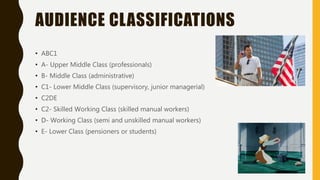
AUDIENCE CLASSIFICATIONS
• ABC1
• A- Upper Middle Class (professionals)
• B- Middle Class (administrative)
• C1- Lower Middle Class (supervisory, junior managerial)
• C2DE
• C2- Skilled Working Class (skilled manual workers)
• D- Working Class (semi and unskilled manual workers)
• E- Lower Class (pensioners or students)
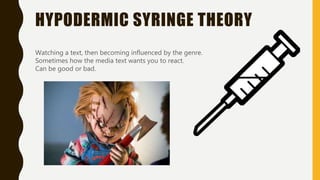
HYPODERMIC SYRINGE THEORY
Watching a text, then becoming influenced by the genre.
Sometimes how the media text wants you to react.
Can be good or bad.
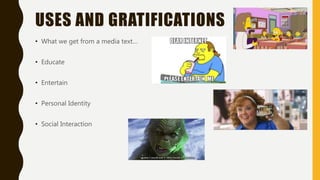
USES AND GRATIFICATIONS
• What we get from a media text…
• Educate
• Entertain
• Personal Identity
• Social Interaction
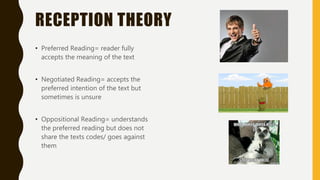
RECEPTION THEORY
• Preferred Reading= reader fully
accepts the meaning of the text
• Negotiated Reading= accepts the
preferred intention of the text but
sometimes is unsure
• Oppositional Reading= understands
the preferred reading but does not
share the texts codes/ goes against
them
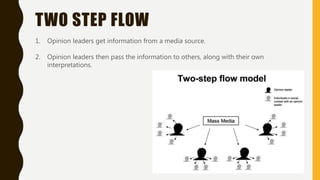
TWO STEP FLOW
1. Opinion leaders get information from a media source.
2. Opinion leaders then pass the information to others, along with their own
interpretations.
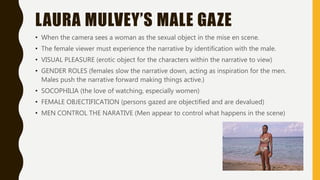
LAURA MULVEY’S MALE GAZE
• When the camera sees a woman as the sexual object in the mise en scene.
• The female viewer must experience the narrative by identification with the male.
• VISUAL PLEASURE (erotic object for the characters within the narrative to view)
• GENDER ROLES (females slow the narrative down, acting as inspiration for the men.
Males push the narrative forward making things active.)
• SOCOPHILIA (the love of watching, especially women)
• FEMALE OBJECTIFICATION (persons gazed are objectified and are devalued)
• MEN CONTROL THE NARATIVE (Men appear to control what happens in the scene)
Media Theories (Audiences and Narrative structures)

Media Theories (Audiences and Narrative structures)

  • 1.
    MEDIA THEORIES A LEVEL LO U I S E B A R B O N E
  • 2.
  • 3.
    BARTHES’ CODES THE ENIGMACODE Mystery within the text. Clues are given. Make the audience want to know more. Can frustrate the audience. THE SEMANTIC CODE An extra layer of meaning to the obvious text. Audiences can interact more. THE ACTION CODE Elements of action in the text. Enable suspense of the watcher. THE REFERENCIAL CODE Refers to anything in the text of historical, contextual, scientific and cultural knowledge. THE SYMBOLIC CODE Symbolism within the text Shows opposites to create contrast and a greater meaning as well as tension and drama.
  • 4.
    TODOROV’S NARRATIVE THEORY EquilibriumDisruption Realisation Restore Order Equilibrium AGAIN
  • 5.
    LEVI-STRAUSS (NOT THEJEANS) • BINARY OPOSITIONS – two opposing themes in one text • EG. FROZEN Good Powerful Kind-Hearted No Sideburns Bad Weak (mortal) Gold-digger Sideburns.. Ew VS.
  • 6.
    AUDIENCE CLASSIFICATIONS • ABC1 •A- Upper Middle Class (professionals) • B- Middle Class (administrative) • C1- Lower Middle Class (supervisory, junior managerial) • C2DE • C2- Skilled Working Class (skilled manual workers) • D- Working Class (semi and unskilled manual workers) • E- Lower Class (pensioners or students)
  • 7.
    HYPODERMIC SYRINGE THEORY Watchinga text, then becoming influenced by the genre. Sometimes how the media text wants you to react. Can be good or bad.
  • 8.
    USES AND GRATIFICATIONS •What we get from a media text… • Educate • Entertain • Personal Identity • Social Interaction
  • 9.
    RECEPTION THEORY • PreferredReading= reader fully accepts the meaning of the text • Negotiated Reading= accepts the preferred intention of the text but sometimes is unsure • Oppositional Reading= understands the preferred reading but does not share the texts codes/ goes against them
  • 10.
    TWO STEP FLOW 1.Opinion leaders get information from a media source. 2. Opinion leaders then pass the information to others, along with their own interpretations.
  • 11.
    LAURA MULVEY’S MALEGAZE • When the camera sees a woman as the sexual object in the mise en scene. • The female viewer must experience the narrative by identification with the male. • VISUAL PLEASURE (erotic object for the characters within the narrative to view) • GENDER ROLES (females slow the narrative down, acting as inspiration for the men. Males push the narrative forward making things active.) • SOCOPHILIA (the love of watching, especially women) • FEMALE OBJECTIFICATION (persons gazed are objectified and are devalued) • MEN CONTROL THE NARATIVE (Men appear to control what happens in the scene)