Media
     Ownership
Lesson Objectives: To be able to answer
  an exam style question about media
     ownership in the film industry.
Compare the two film trailers.
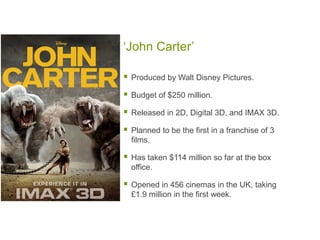
‘John Carter’

   Produced by Walt Disney Pictures.

   Budget of $250 million.

   Released in 2D, Digital 3D, and IMAX 3D.

   Planned to be the first in a franchise of 3
    films.

   Has taken $114 million so far at the box
    office.

   Opened in 456 cinemas in the UK, taking
    £1.9 million in the first week.
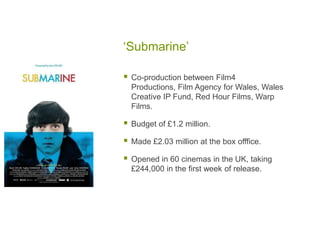
‘Submarine’

   Co-production between Film4
    Productions, Film Agency for Wales, Wales
    Creative IP Fund, Red Hour Films, Warp
    Films.

   Budget of £1.2 million.

   Made £2.03 million at the box offfice.

   Opened in 60 cinemas in the UK, taking
    £244,000 in the first week of release.
Media Ownership

   You need to be able to explain how media
    ownership effects the film industry in relation
    to:
       Production
       Distribution
       Marketing
       Consumption


   You will need to be able to consider the
    significance of cross-media convergence
    and synergy.
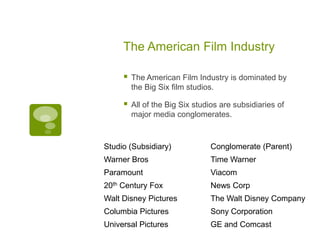
The American Film Industry

        The American Film Industry is dominated by
         the Big Six film studios.

        All of the Big Six studios are subsidiaries of
         major media conglomerates.


Studio (Subsidiary)             Conglomerate (Parent)
Warner Bros                     Time Warner
Paramount                       Viacom
20th Century Fox                News Corp
Walt Disney Pictures            The Walt Disney Company
Columbia Pictures               Sony Corporation
Universal Pictures              GE and Comcast
Ownership and the American
                Film Industry
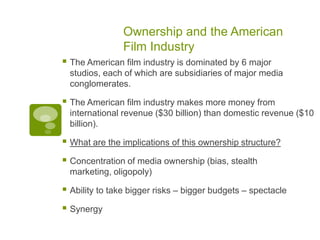
 The American film industry is dominated by 6 major
  studios, each of which are subsidiaries of major media
  conglomerates.

 The American film industry makes more money from
  international revenue ($30 billion) than domestic revenue ($10
  billion).

 What are the implications of this ownership structure?
 Concentration of media ownership (bias, stealth
  marketing, oligopoly)

 Ability to take bigger risks – bigger budgets – spectacle
 Synergy
The American Film Industry
and the Britain

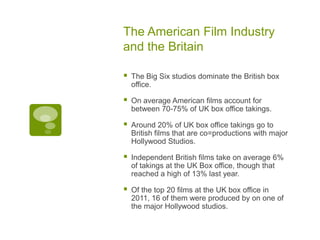
   The Big Six studios dominate the British box
    office.

   On average American films account for
    between 70-75% of UK box office takings.

   Around 20% of UK box office takings go to
    British films that are co=productions with major
    Hollywood Studios.

   Independent British films take on average 6%
    of takings at the UK Box office, though that
    reached a high of 13% last year.

   Of the top 20 films at the UK box office in
    2011, 16 of them were produced by on one of
    the major Hollywood studios.
The UK Film Industry

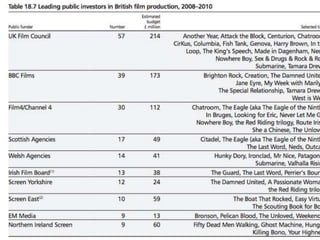
   Film production in Britain usually relies on
    co-productions between independent
    companies, government agencies, and
    television companies.

   More mainstream British films tend to be co-
    productions with Hollywood studios.
Global or National Audiences

   Hollywood films are aimed at a mass
    market, global audience.

   In contrast many British films are aimed at
    more niche audiences, and are more
    focused on reflecting British culture.
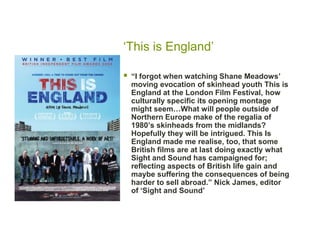
‘THIS IS ENGLAND’
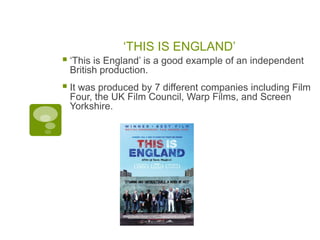
 ‘This is England’ is a good example of an independent
 British production.
 It was produced by 7 different companies including Film
 Four, the UK Film Council, Warp Films, and Screen
 Yorkshire.
‘This is England’

   “I forgot when watching Shane Meadows‟
    moving evocation of skinhead youth This is
    England at the London Film Festival, how
    culturally specific its opening montage
    might seem…What will people outside of
    Northern Europe make of the regalia of
    1980‟s skinheads from the midlands?
    Hopefully they will be intrigued. This Is
    England made me realise, too, that some
    British films are at last doing exactly what
    Sight and Sound has campaigned for;
    reflecting aspects of British life gain and
    maybe suffering the consequences of being
    harder to sell abroad.” Nick James, editor
    of „Sight and Sound‟
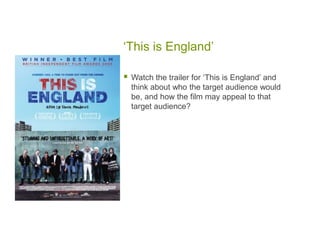
‘This is England’

   Watch the trailer for ‘This is England’ and
    think about who the target audience would
    be, and how the film may appeal to that
    target audience?
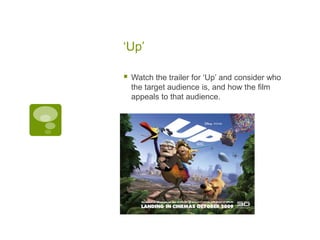
‘Up’

   Watch the trailer for ‘Up’ and consider who
    the target audience is, and how the film
    appeals to that audience.
Discuss the issues raised by media
ownership within a media area you have
studied.
   Introduction
     State argument
     Introduce focus
   Section One: The American Film Industry
     Outline structure of US film industry and
      issues raised
     Discuss specifically in relation to Disney in
      terms of production, distribution, synergy.

   Section Two: The UK Film Industry
     Contrast UK film industry with US.
     Relate to specific examples in relation to
      Film4, and any other relevant examples.

   Conclusion
     Sum up your argument.
     Relate to your own experience as a
      consumer.
   Write out your argument.

   Bullet-point points and examples.

   Choose one paragraph of your essay and
    write it out in full, ensuring that you are
    making a clear point (linked to your
    argument) in relation to the
    question, supported by a specific
    example, the significance of which is clearly
    explained.

   Remember to use key terms in your written
    work.

Media ownership essay

  • 1.
    Media Ownership Lesson Objectives: To be able to answer an exam style question about media ownership in the film industry.
  • 2.
    Compare the twofilm trailers.
  • 3.
    ‘John Carter’  Produced by Walt Disney Pictures.  Budget of $250 million.  Released in 2D, Digital 3D, and IMAX 3D.  Planned to be the first in a franchise of 3 films.  Has taken $114 million so far at the box office.  Opened in 456 cinemas in the UK, taking £1.9 million in the first week.
  • 4.
    ‘Submarine’  Co-production between Film4 Productions, Film Agency for Wales, Wales Creative IP Fund, Red Hour Films, Warp Films.  Budget of £1.2 million.  Made £2.03 million at the box offfice.  Opened in 60 cinemas in the UK, taking £244,000 in the first week of release.
  • 5.
    Media Ownership  You need to be able to explain how media ownership effects the film industry in relation to:  Production  Distribution  Marketing  Consumption  You will need to be able to consider the significance of cross-media convergence and synergy.
  • 6.
    The American FilmIndustry  The American Film Industry is dominated by the Big Six film studios.  All of the Big Six studios are subsidiaries of major media conglomerates. Studio (Subsidiary) Conglomerate (Parent) Warner Bros Time Warner Paramount Viacom 20th Century Fox News Corp Walt Disney Pictures The Walt Disney Company Columbia Pictures Sony Corporation Universal Pictures GE and Comcast
  • 7.
    Ownership and theAmerican Film Industry  The American film industry is dominated by 6 major studios, each of which are subsidiaries of major media conglomerates.  The American film industry makes more money from international revenue ($30 billion) than domestic revenue ($10 billion).  What are the implications of this ownership structure?  Concentration of media ownership (bias, stealth marketing, oligopoly)  Ability to take bigger risks – bigger budgets – spectacle  Synergy
  • 8.
    The American FilmIndustry and the Britain  The Big Six studios dominate the British box office.  On average American films account for between 70-75% of UK box office takings.  Around 20% of UK box office takings go to British films that are co=productions with major Hollywood Studios.  Independent British films take on average 6% of takings at the UK Box office, though that reached a high of 13% last year.  Of the top 20 films at the UK box office in 2011, 16 of them were produced by on one of the major Hollywood studios.
  • 9.
    The UK FilmIndustry  Film production in Britain usually relies on co-productions between independent companies, government agencies, and television companies.  More mainstream British films tend to be co- productions with Hollywood studios.
  • 11.
    Global or NationalAudiences  Hollywood films are aimed at a mass market, global audience.  In contrast many British films are aimed at more niche audiences, and are more focused on reflecting British culture.
  • 12.
    ‘THIS IS ENGLAND’ ‘This is England’ is a good example of an independent British production.  It was produced by 7 different companies including Film Four, the UK Film Council, Warp Films, and Screen Yorkshire.
  • 13.
    ‘This is England’  “I forgot when watching Shane Meadows‟ moving evocation of skinhead youth This is England at the London Film Festival, how culturally specific its opening montage might seem…What will people outside of Northern Europe make of the regalia of 1980‟s skinheads from the midlands? Hopefully they will be intrigued. This Is England made me realise, too, that some British films are at last doing exactly what Sight and Sound has campaigned for; reflecting aspects of British life gain and maybe suffering the consequences of being harder to sell abroad.” Nick James, editor of „Sight and Sound‟
  • 14.
    ‘This is England’  Watch the trailer for ‘This is England’ and think about who the target audience would be, and how the film may appeal to that target audience?
  • 15.
    ‘Up’  Watch the trailer for ‘Up’ and consider who the target audience is, and how the film appeals to that audience.
  • 16.
    Discuss the issuesraised by media ownership within a media area you have studied.  Introduction  State argument  Introduce focus  Section One: The American Film Industry  Outline structure of US film industry and issues raised  Discuss specifically in relation to Disney in terms of production, distribution, synergy.  Section Two: The UK Film Industry  Contrast UK film industry with US.  Relate to specific examples in relation to Film4, and any other relevant examples.  Conclusion  Sum up your argument.  Relate to your own experience as a consumer.
  • 17.
    Write out your argument.  Bullet-point points and examples.  Choose one paragraph of your essay and write it out in full, ensuring that you are making a clear point (linked to your argument) in relation to the question, supported by a specific example, the significance of which is clearly explained.  Remember to use key terms in your written work.