




Media For Start-Ups:
Understanding Media
Relations
N Bringi Dev
June 01, 2013
Session Objectives
 To introduce you to
 The media relations milieu
 How the news reporting process works
 Types of media interactions
 Frugal media relations strategies
What is Public Relations?
Public relations
vs. media relations
How is it different
from Advertising?
Advertorial vs. Editorial
Types of Public Relations
 Offline
 Online
 Social
Source: Alok Kejriwal
Does Offline PR Still Matter?
 There is a market of decision makers (CEOs of
Companies, Heads of Departments, Senior
Govt. Officials, etc) who only read print.
 The online websites of large publications have
large audiences and once you are written up in
print, you automatically get featured online too.
 Think of it as ‘proof of concept’ test. The day you
can make it in the Fortune or Time or The
Economist, you have done something
worthwhile.
Source: Alok Kejriwal
What can Media Publicity Do
for You?
 Build awareness
 Potential Employees
 Investors and Banks
 Possible Partners
 The public at large
 Build Brand and Value
 Generate Business?
Caveat:
There are No Free Lunches!
 While media relations appears to be ‘free’,
there are costs involved:
 Financial costs
 Media Kits, travel, etc.
 Outside resources..
 Non-financial
 Time!
 Work!
 Consistent Focus!
THE MEDIA MILIEU
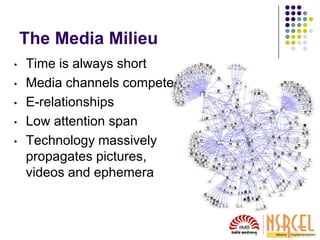
The Media Milieu
• Time is always short
• Media channels compete
• E-relationships
• Low attention span
• Technology massively
propagates pictures,
videos and ephemera
The News is a Product
• The news is a product which media
companies sell, and people have attached a
value to it with paid subscriptions a tangible
measure.
What media wants
Conflict of Interest?
What ‘sources’ want
The Bottom Line
 The relationship between source and media
is symbiotic
 There are skews
 Publications decide what their readers
want/get
 Online media is only slightly better
 Sources need to understand this relationship
and how to leverage it
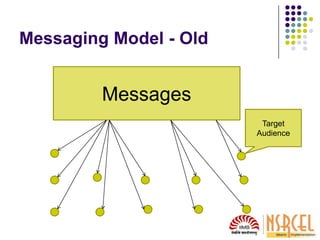
Messaging Model - Old
Messages
Target
Audience
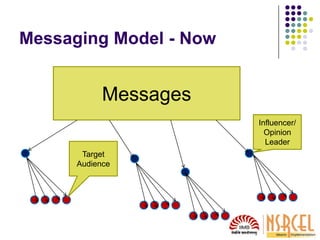
Messaging Model - Now
Messages
Influencer/
Opinion
Leader
Target
Audience
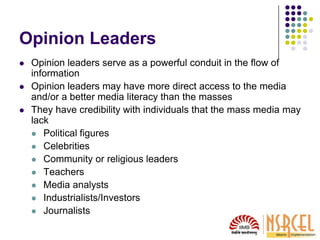
Opinion Leaders
 Opinion leaders serve as a powerful conduit in the flow of
information
 Opinion leaders may have more direct access to the media
and/or a better media literacy than the masses
 They have credibility with individuals that the mass media may
lack
 Political figures
 Celebrities
 Community or religious leaders
 Teachers
 Media analysts
 Industrialists/Investors
 Journalists
BEHIND THE NEWS
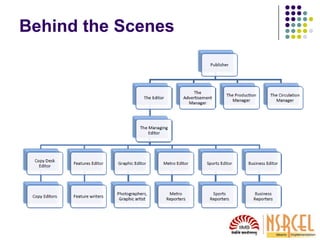
Behind the Scenes
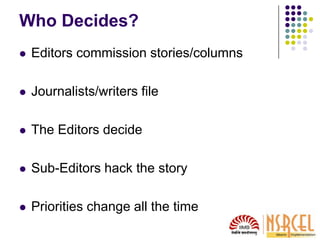
Who Decides?
 Editors commission stories/columns
 Journalists/writers file
 The Editors decide
 Sub-Editors hack the story
 Priorities change all the time
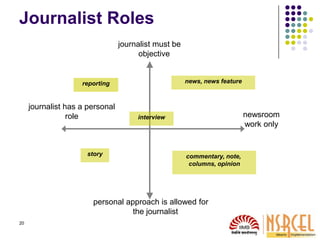
Journalist Roles
20
journalist has a personal
role
personal approach is allowed for
the journalist
journalist must be
objective
newsroom
work only
commentary, note,
columns, opinion
news, news feature
story
reporting
interview
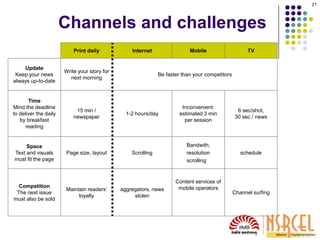
Channels and challenges
Print daily Internet Mobile TV
Update
Keep your news
always up-to-date
Write your story for
next morning
Be faster than your competitors
Time
Mind the deadline
to deliver the daily
by breakfast
reading
15 min /
newspaper
1-2 hours/day
Inconvenient:
estimated 3 min
per session
6 sec/shot,
30 sec / news
Space
Text and visuals
must fit the page
Page size, layout Scrolling
Bandwith,
resolution
scrolling
schedule
Competition
The next issue
must also be sold
Maintain readers’
loyalty
aggregators, news
stolen
Content services of
mobile operators
Channel surfing
21
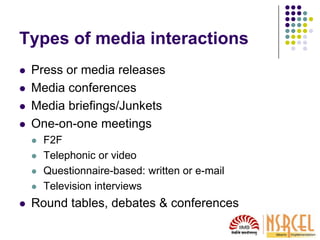
Types of media interactions
 Press or media releases
 Media conferences
 Media briefings/Junkets
 One-on-one meetings
 F2F
 Telephonic or video
 Questionnaire-based: written or e-mail
 Television interviews
 Round tables, debates & conferences
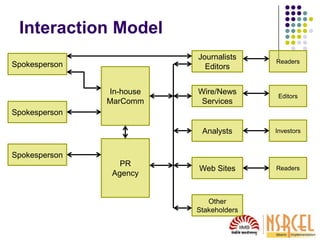
Interaction Model
Spokesperson
PR
Agency
Readers
Wire/News
Services
Spokesperson
Spokesperson
In-house
MarComm
Journalists
Editors
Analysts
Web Sites
Other
Stakeholders
Editors
Investors
Readers
MEDIA RELATIONS FOR
START-UPS
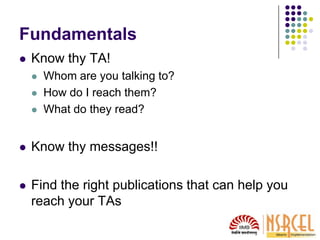
Fundamentals
 Know thy TA!
 Whom are you talking to?
 How do I reach them?
 What do they read?
 Know thy messages!!
 Find the right publications that can help you
reach your TAs
Getting Past the Gatekeeper
 What will excite the media?
 Read all the papers, magazines and web
sites you would like to be covered in
 Read the way people are quoted in your
industry – what do they say, how do they
contribute to stories, what do they stand for?
 Develop your pitch
 Prepare multiple versions for different TAs
 Spell out the benefits/implications to readers
Connecting
 Who are the journalists that write in your
area?
 What kind of stories do they write?
 Comment on their stories online –
responsibly yet provocatively
 Get their email addresses:
 Write to them, but do not spam them
 Find out who their commissioning
manager/editor is
 Give them reasons to want to know you
Connecting -2
 Network, network, network: haunt the places
journalists will see you
 Attend conferences and seminars
 Become a speaker or panelist as often as you can
 Attend entrepreneurship group meetings
 Participate in incubator activities
 Register with and participate in the ecosystem
players
 Microsoft, Intel, NSRCEL, whoever…
Connecting Online
 Develop serious blogs
 Have a trenchant point of view
 Comment on relevant issues
 Develop a Personality
Be Prepared
 Develop a pitch for the media
 Focus on highlighting the aspects of your offering
that they think will be useful to their readers
 Have a media page on your site
 Your pitch is a ‘living document’
 Develop a media kit: online + offline
Some Bright (?) Ideas
 Is there a media-savvy person in your
founding team? Why Not?
 No Idea? Get Idea
 Can you find a media relations person
cheap?
 One-person outfits exist - call themselves
consultants – select one who comes
recommended by someone you trust
 The Moonlighter Option
More Bright Ideas
 MR Now – Pay Later
 Find a PR agency that will provide consulting now
for a slice of the business or later
 Work on a pay for results basis
 Fledging agencies may be willing to work for
costs
 Get your investors to help you connect
 They have a vested interest
 Most times we do not ask them..
Stay the Course
 Like all relationships, building media relations
takes time
 Be prepared for the long haul –it is worth it!
 Most importantly – the leadership team needs
to invest time and effort to make it work.
Discussion
Media For Startups: Understanding media relations

Media For Startups: Understanding media relations

  • 2.
    Media For Start-Ups: UnderstandingMedia Relations N Bringi Dev June 01, 2013
  • 3.
    Session Objectives  Tointroduce you to  The media relations milieu  How the news reporting process works  Types of media interactions  Frugal media relations strategies
  • 4.
    What is PublicRelations? Public relations vs. media relations How is it different from Advertising? Advertorial vs. Editorial
  • 5.
    Types of PublicRelations  Offline  Online  Social Source: Alok Kejriwal
  • 6.
    Does Offline PRStill Matter?  There is a market of decision makers (CEOs of Companies, Heads of Departments, Senior Govt. Officials, etc) who only read print.  The online websites of large publications have large audiences and once you are written up in print, you automatically get featured online too.  Think of it as ‘proof of concept’ test. The day you can make it in the Fortune or Time or The Economist, you have done something worthwhile. Source: Alok Kejriwal
  • 7.
    What can MediaPublicity Do for You?  Build awareness  Potential Employees  Investors and Banks  Possible Partners  The public at large  Build Brand and Value  Generate Business?
  • 8.
    Caveat: There are NoFree Lunches!  While media relations appears to be ‘free’, there are costs involved:  Financial costs  Media Kits, travel, etc.  Outside resources..  Non-financial  Time!  Work!  Consistent Focus!
  • 9.
  • 10.
    The Media Milieu •Time is always short • Media channels compete • E-relationships • Low attention span • Technology massively propagates pictures, videos and ephemera
  • 11.
    The News isa Product • The news is a product which media companies sell, and people have attached a value to it with paid subscriptions a tangible measure.
  • 12.
    What media wants Conflictof Interest? What ‘sources’ want
  • 13.
    The Bottom Line The relationship between source and media is symbiotic  There are skews  Publications decide what their readers want/get  Online media is only slightly better  Sources need to understand this relationship and how to leverage it
  • 14.
    Messaging Model -Old Messages Target Audience
  • 15.
    Messaging Model -Now Messages Influencer/ Opinion Leader Target Audience
  • 16.
    Opinion Leaders  Opinionleaders serve as a powerful conduit in the flow of information  Opinion leaders may have more direct access to the media and/or a better media literacy than the masses  They have credibility with individuals that the mass media may lack  Political figures  Celebrities  Community or religious leaders  Teachers  Media analysts  Industrialists/Investors  Journalists
  • 17.
  • 18.
  • 19.
    Who Decides?  Editorscommission stories/columns  Journalists/writers file  The Editors decide  Sub-Editors hack the story  Priorities change all the time
  • 20.
    Journalist Roles 20 journalist hasa personal role personal approach is allowed for the journalist journalist must be objective newsroom work only commentary, note, columns, opinion news, news feature story reporting interview
  • 21.
    Channels and challenges Printdaily Internet Mobile TV Update Keep your news always up-to-date Write your story for next morning Be faster than your competitors Time Mind the deadline to deliver the daily by breakfast reading 15 min / newspaper 1-2 hours/day Inconvenient: estimated 3 min per session 6 sec/shot, 30 sec / news Space Text and visuals must fit the page Page size, layout Scrolling Bandwith, resolution scrolling schedule Competition The next issue must also be sold Maintain readers’ loyalty aggregators, news stolen Content services of mobile operators Channel surfing 21
  • 22.
    Types of mediainteractions  Press or media releases  Media conferences  Media briefings/Junkets  One-on-one meetings  F2F  Telephonic or video  Questionnaire-based: written or e-mail  Television interviews  Round tables, debates & conferences
  • 23.
  • 24.
  • 25.
    Fundamentals  Know thyTA!  Whom are you talking to?  How do I reach them?  What do they read?  Know thy messages!!  Find the right publications that can help you reach your TAs
  • 26.
    Getting Past theGatekeeper  What will excite the media?  Read all the papers, magazines and web sites you would like to be covered in  Read the way people are quoted in your industry – what do they say, how do they contribute to stories, what do they stand for?  Develop your pitch  Prepare multiple versions for different TAs  Spell out the benefits/implications to readers
  • 27.
    Connecting  Who arethe journalists that write in your area?  What kind of stories do they write?  Comment on their stories online – responsibly yet provocatively  Get their email addresses:  Write to them, but do not spam them  Find out who their commissioning manager/editor is  Give them reasons to want to know you
  • 28.
    Connecting -2  Network,network, network: haunt the places journalists will see you  Attend conferences and seminars  Become a speaker or panelist as often as you can  Attend entrepreneurship group meetings  Participate in incubator activities  Register with and participate in the ecosystem players  Microsoft, Intel, NSRCEL, whoever…
  • 29.
    Connecting Online  Developserious blogs  Have a trenchant point of view  Comment on relevant issues  Develop a Personality
  • 30.
    Be Prepared  Developa pitch for the media  Focus on highlighting the aspects of your offering that they think will be useful to their readers  Have a media page on your site  Your pitch is a ‘living document’  Develop a media kit: online + offline
  • 31.
    Some Bright (?)Ideas  Is there a media-savvy person in your founding team? Why Not?  No Idea? Get Idea  Can you find a media relations person cheap?  One-person outfits exist - call themselves consultants – select one who comes recommended by someone you trust  The Moonlighter Option
  • 32.
    More Bright Ideas MR Now – Pay Later  Find a PR agency that will provide consulting now for a slice of the business or later  Work on a pay for results basis  Fledging agencies may be willing to work for costs  Get your investors to help you connect  They have a vested interest  Most times we do not ask them..
  • 33.
    Stay the Course Like all relationships, building media relations takes time  Be prepared for the long haul –it is worth it!  Most importantly – the leadership team needs to invest time and effort to make it work.
  • 34.