Group 1: Pre-historic Age
The Evolution of
Media: From Pre-
historic Times to New
Media:
The fundamental concept of media and its transformative journey throughout history.
We will explore how media has played a pivotal role in human communication, evolving
from rudimentary forms to sophisticated technologies that shape our modern world.
Media refers to the channels or tools used to convey
information, ideas, and experiences. These can range
from simple forms like cave paintings to complex
technologies like the internet. Essentially, media acts as
a bridge between the sender and receiver of
information, facilitating communication across time,
space, and social boundaries.
Defining Media and its
Role in Communication:
Introduction to Media and
its Evolution:
• Disseminating information: Media platforms
provide access to news, knowledge, and educational
content.
• Shaping public opinion: Media can influence
perceptions, beliefs, and attitudes through the
presentation of information and narratives.
• Facilitating social interaction: Media platforms
connect people, fostering relationships and
communities.
• Providing entertainment: Media offers a wide range
of entertainment options, from movies and music to
video games and social media.
Media plays a crucial role in human
communication by:
The Evolution of Media: A Historical
Journey:
The evolution of media is a fascinating story of innovation and
adaptation. It can be broadly categorized into several key
stages:
1. Prehistoric Age: This era witnessed the earliest forms
of communication, including cave paintings, rock
carvings, and oral storytelling. These methods served as
a means of recording events, sharing knowledge, and
expressing cultural beliefs.
Example of Pre-historic Age Media:
2500 BCE
Papyrus in Egypt
2500 BCE
Papyrus in Egypt
Papyrus is a material similar to thick paper used in
ancient times as writing surface. It was made from
pith of papyrus plant. It was used to designate
documents written on its sheets, rolled up to scrolls.
These include household and administrative
documents, letters, contracts, legal texts, illustrated
narratives, and religious texts. *Papyri were
important during the Prehistoric Era because they
regulated the information and communication of
the Egyptians from one another.
Group 1: Pre-historic Age
• Cave paintings: These ancient artworks
found in caves around the world provide
insights into the lives and beliefs of early
humans. They often depict scenes of
hunting, rituals, and animal life.
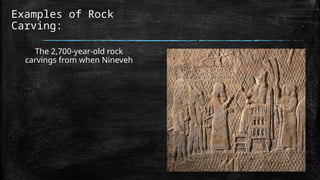
• Rock carvings: Similar to cave paintings,
rock carvings were used to communicate
messages and stories. They can be found
on cliffs, rocks, and other surfaces.
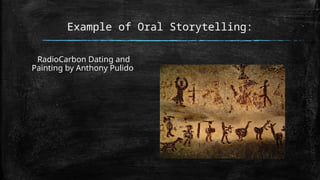
• Oral storytelling: This tradition played a
crucial role in transmitting knowledge,
history, and cultural values across
generations. Stories were passed down
through spoken word, often accompanied
by songs, dances, and rituals.
Group 1 will focus on the
Pre-historic Age of media.
This period encompasses the
earliest forms of human
communication, including:
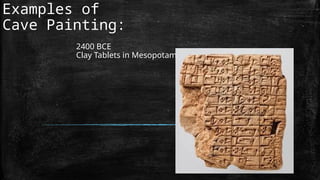
Examples of
Cave Painting:
2400 BCE
Clay Tablets in Mesopotamia
The 2,700-year-old rock
carvings from when Nineveh
Examples of Rock
Carving:
Example of Oral Storytelling:
RadioCarbon Dating and
Painting by Anthony Pulido
Pre-historic Media: Oral Traditions
and Storytelling:
• Importance: Oral traditions were essential in pre-historic societies for transmitting knowledge,
values, and cultural heritage. Storytelling served as a means of educating, entertaining, and
preserving the collective memory of communities.
• Role: Storytelling played a crucial role in passing down myths, legends, and historical accounts. It
helped reinforce social norms, instill moral values, and strengthen the bonds within the community.
• Techniques: Storytellers used techniques like repetition, metaphors, and symbolism to engage their
audience and convey complex ideas. These techniques enhanced the memorability and emotional
impact of the stories.
• Examples: Pre-historic myths and legends include creation stories, hero tales, and supernatural
beings found in various cultures around the world, such as the Epic of Gilgamesh from Mesopotamia
and the Dreamtime stories of Aboriginal Australians.
Conclusion:
• Key Characteristics of Pre-historic Media: Pre-historic media
encompassed diverse forms of communication, including cave
paintings, petroglyphs, symbols, pictograms, and oral
traditions. These early media served as vital tools for
storytelling, preserving knowledge, and reinforcing cultural
values within ancient societies.
• Significance: Pre-historic media played a foundational role in shaping
human communication and cultural development. They provided a
means for early humans to express themselves, record their
experiences, and pass down traditions from generation to generation.
These forms of media laid the groundwork for the evolution of more
sophisticated communication systems and technologies.
• Transition to Ancient Media: As we move forward in exploring the evolution
of media, we will now delve into the next stage: Ancient Media. This era
marks significant advancements in communication, including the
development of writing systems, the proliferation of written texts, and the
rise of early forms of mass communication.
References:
1. Wikipedia - Media (communication)
2. Time Toast - The Evolution of Media
3. Storytelling.com - The History of Storytelling
4. Connolly Cove - Ancient Storytelling Techniques
5. Medium - The Evolution of Media
6. PM Award - Evolution of Media Timeline
7. Technotidbits - Timeline of the Evolution of Mass Media
8. Medium - The Evolution of Media: Transforming the Way We Consume
Information.
These references provide valuable insights into the evolution of media, from its early
forms in pre-historic times to the advancements in communication technologies
throughout history.

Media and Information Technology - Pre-Historic Age

  • 1.
    Group 1: Pre-historicAge The Evolution of Media: From Pre- historic Times to New Media:
  • 2.
    The fundamental conceptof media and its transformative journey throughout history. We will explore how media has played a pivotal role in human communication, evolving from rudimentary forms to sophisticated technologies that shape our modern world. Media refers to the channels or tools used to convey information, ideas, and experiences. These can range from simple forms like cave paintings to complex technologies like the internet. Essentially, media acts as a bridge between the sender and receiver of information, facilitating communication across time, space, and social boundaries. Defining Media and its Role in Communication: Introduction to Media and its Evolution:
  • 3.
    • Disseminating information:Media platforms provide access to news, knowledge, and educational content. • Shaping public opinion: Media can influence perceptions, beliefs, and attitudes through the presentation of information and narratives. • Facilitating social interaction: Media platforms connect people, fostering relationships and communities. • Providing entertainment: Media offers a wide range of entertainment options, from movies and music to video games and social media. Media plays a crucial role in human communication by:
  • 4.
    The Evolution ofMedia: A Historical Journey: The evolution of media is a fascinating story of innovation and adaptation. It can be broadly categorized into several key stages: 1. Prehistoric Age: This era witnessed the earliest forms of communication, including cave paintings, rock carvings, and oral storytelling. These methods served as a means of recording events, sharing knowledge, and expressing cultural beliefs. Example of Pre-historic Age Media: 2500 BCE Papyrus in Egypt
  • 5.
    2500 BCE Papyrus inEgypt Papyrus is a material similar to thick paper used in ancient times as writing surface. It was made from pith of papyrus plant. It was used to designate documents written on its sheets, rolled up to scrolls. These include household and administrative documents, letters, contracts, legal texts, illustrated narratives, and religious texts. *Papyri were important during the Prehistoric Era because they regulated the information and communication of the Egyptians from one another.
  • 6.
    Group 1: Pre-historicAge • Cave paintings: These ancient artworks found in caves around the world provide insights into the lives and beliefs of early humans. They often depict scenes of hunting, rituals, and animal life. • Rock carvings: Similar to cave paintings, rock carvings were used to communicate messages and stories. They can be found on cliffs, rocks, and other surfaces. • Oral storytelling: This tradition played a crucial role in transmitting knowledge, history, and cultural values across generations. Stories were passed down through spoken word, often accompanied by songs, dances, and rituals. Group 1 will focus on the Pre-historic Age of media. This period encompasses the earliest forms of human communication, including:
  • 7.
    Examples of Cave Painting: 2400BCE Clay Tablets in Mesopotamia
  • 8.
    The 2,700-year-old rock carvingsfrom when Nineveh Examples of Rock Carving:
  • 9.
    Example of OralStorytelling: RadioCarbon Dating and Painting by Anthony Pulido
  • 10.
    Pre-historic Media: OralTraditions and Storytelling: • Importance: Oral traditions were essential in pre-historic societies for transmitting knowledge, values, and cultural heritage. Storytelling served as a means of educating, entertaining, and preserving the collective memory of communities. • Role: Storytelling played a crucial role in passing down myths, legends, and historical accounts. It helped reinforce social norms, instill moral values, and strengthen the bonds within the community. • Techniques: Storytellers used techniques like repetition, metaphors, and symbolism to engage their audience and convey complex ideas. These techniques enhanced the memorability and emotional impact of the stories. • Examples: Pre-historic myths and legends include creation stories, hero tales, and supernatural beings found in various cultures around the world, such as the Epic of Gilgamesh from Mesopotamia and the Dreamtime stories of Aboriginal Australians.
  • 11.
    Conclusion: • Key Characteristicsof Pre-historic Media: Pre-historic media encompassed diverse forms of communication, including cave paintings, petroglyphs, symbols, pictograms, and oral traditions. These early media served as vital tools for storytelling, preserving knowledge, and reinforcing cultural values within ancient societies. • Significance: Pre-historic media played a foundational role in shaping human communication and cultural development. They provided a means for early humans to express themselves, record their experiences, and pass down traditions from generation to generation. These forms of media laid the groundwork for the evolution of more sophisticated communication systems and technologies. • Transition to Ancient Media: As we move forward in exploring the evolution of media, we will now delve into the next stage: Ancient Media. This era marks significant advancements in communication, including the development of writing systems, the proliferation of written texts, and the rise of early forms of mass communication.
  • 12.
    References: 1. Wikipedia -Media (communication) 2. Time Toast - The Evolution of Media 3. Storytelling.com - The History of Storytelling 4. Connolly Cove - Ancient Storytelling Techniques 5. Medium - The Evolution of Media 6. PM Award - Evolution of Media Timeline 7. Technotidbits - Timeline of the Evolution of Mass Media 8. Medium - The Evolution of Media: Transforming the Way We Consume Information. These references provide valuable insights into the evolution of media, from its early forms in pre-historic times to the advancements in communication technologies throughout history.

Editor's Notes

  • #2 Introduction to Media and its Evolution This slide delves into the fundamental concept of media and its transformative journey throughout history. We will explore how media has played a pivotal role in human communication, evolving from rudimentary forms to sophisticated technologies that shape our modern world. Defining Media and its Role in Communication Media refers to the channels or tools used to convey information, ideas, and experiences. These can range from simple forms like cave paintings to complex technologies like the internet. Essentially, media acts as a bridge between the sender and receiver of information, facilitating communication across time, space, and social boundaries. [1] Media plays a crucial role in human communication by: - Disseminating information: Media platforms provide access to news, knowledge, and educational content.- Shaping public opinion: Media can influence perceptions, beliefs, and attitudes through the presentation of information and narratives.- Facilitating social interaction: Media platforms connect people, fostering relationships and communities.- Providing entertainment: Media offers a wide range of entertainment options, from movies and music to video games and social media. The Evolution of Media: A Historical Journey The evolution of media is a fascinating story of innovation and adaptation. It can be broadly categorized into several key stages: 1. Prehistoric Age: This era witnessed the earliest forms of communication, including cave paintings, rock carvings, and oral storytelling. These methods served as a means of recording events, sharing knowledge, and expressing cultural beliefs. [11]2. Ancient Writing Systems: The development of writing systems, such as cuneiform and hieroglyphics, revolutionized communication by allowing for the permanent recording and transmission of information. This paved the way for the creation of written documents, scrolls, and early forms of literature. [10]3. Print Media: The invention of the printing press in the 15th century marked a turning point in media history. This technology enabled mass production of books, newspapers, and other printed materials, making information more accessible to a wider audience. [8]4. Electronic Media: The 20th century saw the rise of electronic media, including radio, television, and film. These technologies allowed for the transmission of information and entertainment in real-time, further expanding the reach and impact of media. [12]5. Digital Media: The advent of the internet and digital technologies in the late 20th and early 21st centuries ushered in a new era of media. Digital platforms like websites, social media, and streaming services have transformed the way we consume information and interact with the world. [9] Group 1: Pre-historic Age Group 1 will focus on the Pre-historic Age of media. This period encompasses the earliest forms of human communication, including: - Cave paintings: These ancient artworks found in caves around the world provide insights into the lives and beliefs of early humans. They often depict scenes of hunting, rituals, and animal life.- Rock carvings: Similar to cave paintings, rock carvings were used to communicate messages and stories. They can be found on cliffs, rocks, and other surfaces.- Oral storytelling: This tradition played a crucial role in transmitting knowledge, history, and cultural values across generations. Stories were passed down through spoken word, often accompanied by songs, dances, and rituals. By examining these early forms of media, Group 1 will explore the origins of human communication and its role in shaping early societies.