by Racquel Burrowes-Blackwood
At the end of the presentation, students will be able to:
 Define the terms
Meconium aspiration syndrome (MAS)
Meconium
State the incidence
List the causes and risk factors
Explain the pathophyisiology of MAS
 State the clinical manifestation
State the diagnostic evaluation
List differential diagnosis for MAS
Explain the preventive measures
Explain the treatment measures and the nursing/ midwifery
management
State the prognosis and complications
• Meconium aspiration syndrome (MAS) is the aspiration of stained amniotic
fluid before, during, or immediately after birth.
• Meconium-stained liquor is associated with fetal hypoxia and asphyxia, and
is seen primarily in term or post-term infants.
• Aspiration of meconium-stained amniotic fluid can be a very serious
condition which can cause breathing difficulties, blocking of the baby’s
airways after birth, and lead to permanent lung damage, brain injury, or
even death.
• This aspiration induces hypoxia via four major pulmonary effects: airway
obstruction, surfactant dysfunction, chemical pneumonitis, and pulmonary
hypertension.
• Meconium is the first intestinal discharge from newborns, it is typically
passed for 2-3 days after birth. Sometimes, the foetus passes the
meconium while it is still in the uterus.
• Meconium is unproblematic unless the baby gasps or breathes in amniotic
fluid, potentially inhaling meconium simultaneously.
• Meconium consists of bile, intestinal secretions, amniotic fluid, lanugo,
mucus. It is sterile and does not contain bacteria, which is the primary factor
that differentiates it from stool
• It is believed that when the foetus becomes hypoxic, the anal sphincter
relaxes and meconium is released into the amniotic fluid.
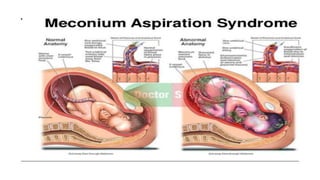
• Meconium Aspiration Syndrome (MAS) is a serious medical
condition where neonates aspirate meconium stained liqour into
the lungs and develop respiratory distress.
• Meconium-A thick, pasty, greenish- black substance that is
present in the fetal bowel, which is first stool passed by foetus or
new born in utero, during labour or after bith.
In developing countries with less availability of prenatal care and
where home births are common, the incidence of MAS is thought
to be higher and is associated with a greater mortality rate.
MAS is exclusively a disease of newborns, especially those
delivered at or beyond the mother's estimated due date.
MAS affects both sexes equally.
It occurs approximately in 8-15% of live births.
Approximately 5% of neonates born through meconium stained
amniotic fluid develop MAS
• Meconium Stained Liquor
• Uterine Infections like chorioamnitis
• Difficulty during labour process (Prolonged and obstructed
delivery)
• Decreased oxygen to foetus (Intrauterine fetal hypoxia)
• Acute or chronic hypoxia in distressed baby
• Fetal asphyxia
• Abnormal biophysical profile
• Maternal Hypertension, Pre-eclampsia/eclampsia and Diabetes Mellitus
• Maternal chronic respiratory or Cardiovascular disease
• Postmaturity (overdue baby, more than 40 weeks gestational)
• Oligiohydramnios
• Intra uterine growth retardation
• Abnormal fetal HR pattern /respiratory distress
• Ageing of placenta and Umbilical cord complications
• Maternal drug abuse, especially use of tobacco and cocaine
• Placental dysfunction (Placental insufficiency) and infection like
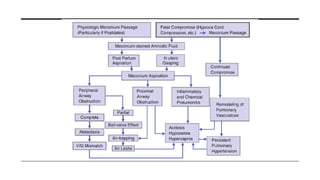
PATHOPHYISIOLOGY
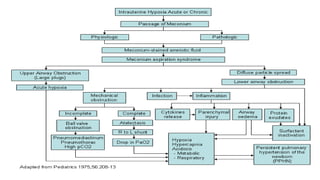
A. PASSAGE Of MECONIUM IN UTERO:
• In utero meconium passage results from neural stimulation of a maturing
gastrointestinal (GI) tract, usually due to fetal hypoxic stress.
• As the foetus approaches term, the GI tract matures, and vagal
stimulation from head or spinal cord compression or in utero fetal stress
may cause peristalsis and relaxation of the rectal sphincter, leading to
meconium passage resulting meconium stained aminiotic liquor..
PATHOPHYISIOLOGY
B. ASPIRATION OF MECONIUM:
• In the presence of fetal stress, gasping by the foetus can result
in aspiration of meconium before, during or immediately following
delivery.
• Severe MAS appears to be caused by pathologic intrauterine
processes, primarily chronic hypoxia, acidosis and infection .
PATHOPHYISIOLOGY
C. EFFECTS OF MECONIUM ASPIRATION:
• When aspirated into the lungs,meconium may stimulate the release
of cytokines and vasoactive substances that result in
cardiovascular and inflammatory responses in the foetus and
newborn.
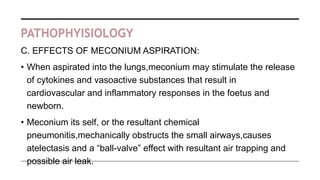
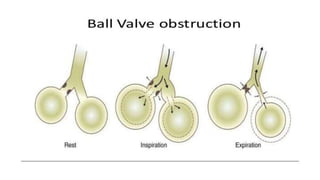
• Meconium its self, or the resultant chemical
pneumonitis,mechanically obstructs the small airways,causes
atelectasis and a “ball-valve” effect with resultant air trapping and
possible air leak.
PATHOPHYISIOLOGY
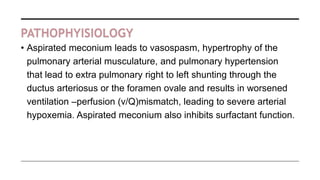
• Aspirated meconium leads to vasospasm, hypertrophy of the
pulmonary arterial musculature, and pulmonary hypertension
that lead to extra pulmonary right to left shunting through the
ductus arteriosus or the foramen ovale and results in worsened
ventilation –perfusion (v/Q)mismatch, leading to severe arterial
hypoxemia. Aspirated meconium also inhibits surfactant function.
History
• Infant with MAS must have a history of Meconium Stained Amnotic Fluid
• Often are term or post-term
• IUGR
• Many are depressed at birth/ low APGAR SCORE
Physical Examination
• Evidence of postmaturity; peeling skin, long fingernails, reduced vernix
• Green urine may be noted in newborns with MAS less than 24
hours after birth.
• Meconium pigments can be absorbed by the lung and can be
excreted in urine.
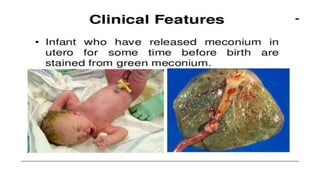
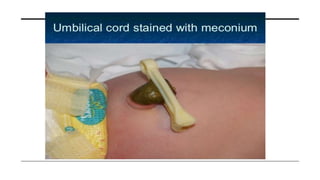
• Yellow green staining of finger nail,umbilical cord, placenta and
skin (vernix) may be observed depending how long the infant
has been exposed in utero
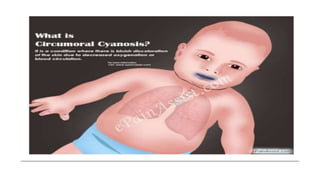
• Initially cyanotic ( circumoral cyanosis) or pale
Generally
• Respiratory distress with marked tachypnea and cyanosis within the first
hours.
• Use of accessory muscles of respiration (ICR, SCR and abdominal
breathing), grunting and nasal flaring.
• Chest : appears barrel shape with increase AP diameter due to over inflation
• Auscultation : rhonchi immmediately after birth
• Sign of cerebral irritation from cerebral edema or hypoxia : jitteriness,
seizures
• Some patient are asymptomatic at birth and develop worsening signs of
• History of term or post-term, IUGR, repiratory depression at birth
• Before birth the fetal monitor may show bradycardia or tacycardia
• During delivery or at birth, meconium can be seen in the amniotic fluid and
on the infant.Vernix, umbilical cord and nails may be meconium-stained,
depending how long the infant has been exposed in utero
• Low APGAR score after birth
• Meconium can often be visualized by laryngoscopy in the respiratory
passage and vocal cord.
• Echocardiography shows the diagnosis of right to left shunt.
DIAGNOSTIC
EVALUATION/INVESTIGATIONS
• Chest radiograph (chest x-ray)
• - hyperinflated lung and flatten diapghram
• - show patchy or streaky areas in lungs. (Bilateral diffuse grossly
irregular patchy infiltrates)
• - Pneumothorax and pneumomediastinum
• - Small pleural effusion
• - No air bronchogram
• Blood glucose and Calcium levels
DIAGNOSTIC
EVALUATION/INVESTIGATIONS
• Blood gas analysis: Arterial blood gas (Acid-base status)
• - VQ mismatch
• -Acidosis (low blood acidity)
• - Hypoxia(decreased oxygen )
• - Hypercarbia (increased carbon dioxide)
DIFFERENTIAL DIAGNOSIS
• Perinatal Asphyxia
• Bacterial Pneumonia
• Respiratory Distress Syndrome
• Transient Tachypnea Of Newborn
• Congenital Heart Disease
PREVENTION OF MAS
ANTEPARTUM PERIOD
• Identification of high risk pregnancies
- recognition of predisposing maternal factors
Women should be carefully monitored during pregnancy and should be
encouraged for hospital delivery.
PREVENTION OF MAS
• INTRAPARTUM PERIOD
• Monitoring- Careful observation, maternal and fetal monitoring
during labour
-fetal heart rate should be monitored every half an hourly to
determined the sign of fetal distress
- corrective measures should be undertaken in identified fetal
compromised
• Babies born to mother with meconium stained liquor should have
oropharyngeal suction before the delivery of shoulder.
PREVENTION OF MAS
AMNIOINFUSION- Infuse 300 to 500 ml normal saline directly in the amniotic
sac during labour
- relieved umbilical cord compression during labour reducing occurrence of
variable fetal heart rate decelerations
• TIMING AND MODE OF DELIVERY
• Pregnancy that pass the date should be induced as early as 41weeks which
helps to prevent MAS by avoiding passage of meconium .
• Delivery mode does not appear to significantly impact the risk of aspiration .
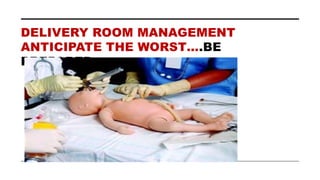
DELIVERY ROOM MANAGEMENT
ANTICIPATE THE WORST….BE
PREPARED
TREATMENT
MECONIUM-STAINED FLUID
A. INITIAL ASSESSMENT- At a delivery complicated by Meconium Stained Amnotic
Fluid determine whether the infant is vigorous, demonstrated by:
• Heart rate >100 beats/min spontaneous respiration good tone (spontaneous
movement or some degree of flexion).
• If the infant appears vigorous (strong and health with good APGAR score), routine
care should be provided, regardless of the consistency of the meconium.
• Initiate suctioning as soon as the baby is delivered.
• If the baby has continuous breathing problem, continue suctioning using
laryngoscope
TREATMENT/MANAGEMENT
• The infant should be placed on a radiant warmer and given free flow
oxygen.
• -Delay drying and stimulation and postpone emptying of any gastric
contents until the infant has stabilized.
• -Intubation should be done under direct laryngoscopy before inspiratory
efforts have been initiated .
• -Avoid positive pressure ventilation if possible until tracheal suctioning is
accomplished.
• Do NOT perform the following harmful techniques in an attempt to prevent
aspiration of meconium-stained amniotic fluid: Squeezing the chest of the
baby, Inserting a finger into the mouth of the baby
• A.Observation: Baby born with meconium stained liqour requires
close observation for the assessment of respiratory distress.
• A chest radiograph may be helpful to determine signs of
respiratory distress.
• Monitoring of oxygen during this period helps to assess severity
of infant’s condition and avoids hypoxemia.
• B. Routine care: neutral thermal environment should be
maintained with minimum of tactile stimulation.
TREATMENT/MANAGEMENT OF MAS
• Blood glucose and calcium level should be monitored and corrected if
necessary.
• Monitoring of blood glucose as the infant may be at increased risk of
hypoglycaemia after meconium aspiration.If hypoglycaemia exist then
glucose infusion, 2 ml/kg of 10% glucose, through an intravenous line is
given over 2–3 minutes. Glucose infusion is continued at a rate of 4-6
mg/kg/min or 60 ml/kg/day. Blood glucose should be maintained at 70–100
mg/dl. The infusion may be stopped after hypoglycaemia is corrected.
• Chest physiotherapy: Perform gentle chest percussion, vibration, and
postural drainage based on assessed need and neonate's tolerance.
• Fluid should be restricted as much as possible to prevent cerebral and
pulmonary edema. Use of intravenous fluids until the respiratory difficulty
diminishes for fluid maintainance, it is advisable to start intravenous infusion
in all newborn babies with respiratory distress because the oral feeding may
not be possible with the baby as oral feeding has the risk of aspiration.
• Monitoring of PaCO2 to detect worsening respiratory acidosis. If respiratory
acidosis exists then intravenous administration of 7.5% sodium bicarbonate
in dose of 3-8 meq/kg in 24 hours in 1:1 dilution with distilled water is
required.
• Special therapy for hypotension and poor cardiac output is required
including cardiotonic medicines such as dopamine.
• Circulatory support with normal saline or packed red blood cells should be
provided in patients with marginal oxygenation. (Hb above 15g and
haematocrit above 40% should be maintained)
• Insert the nasogastric tube and keep the baby nil per orally. It is advisable to
perform gastric lavage after the baby has been stabilized.
• If there are no signs of respiratory distress, just do suctioning and initiate
breastfeeding but monitor the baby's condition closely.
• Renal function should be continuously monitored.
• C. Oxygen therapy:Hypoxia should be managed by increasing inspired
oxygen concerntration and monitoring of blood gases and PH.
• D. Asissted Ventilation:
• 1. Continuous Positive Airway Pressure(CPAP)
• 2. Mechanical ventilation
• E. Medications:
• 1. Antibiotics(ampicillin, gentamicin).
• 2. Surfactants
• 3. Corticosteroids
The American Academy of Pediatrics (AAP) Neonatal Resuscitation Program
Steering Committee and the American Heart Association (AHA) have promulgated
guidelines for management of babies exposed to meconium. The guidelines are
under continuous review and are revised as new evidence-based research becomes
available. The seventh edition of the Neonatal Resuscitation Program modified its
previous recommendations regarding endotracheal suctioning for the nonvigorous
infant. The most recent guidelines are as follows :
• If the baby is vigorous (defined as having a normal respiratory effort and normal
muscle tone), the baby may stay with the mother to receive the initial steps of
newborn care. A bulb syringe can be used to gently clear secretions from the nose
and mouth.
If the baby is not vigorous (defined as having a depressed respiratory effort or
poor muscle tone)
• Place the baby on a radiant warmer, clear the secretions with a bulb
syringe, and proceed with the normal steps of newborn resuscitation (ie,
warming, repositioning the head, drying, and stimulating).
• If, after these initial steps are taken, the baby is still not breathing or the
heart rate is below 100 beats per minute (bpm), administer positive
pressure ventilation
• During labour, continuously monitor the foetus for signs and symptoms of
distress.
• Immediately inspect any fluid passed with rupture of the membrane.
• SHOUT for help from the interdisciplinary team (Paediatricians and other
midwives)
• Clear airway immediately nares and mouth of fluid, dry, stimulate, administer
oxygen and respiratory support as ordered.
• Prepare to resuscitate
• Assist with immediate endotracheal suctioning before the first breaths, as
indicated.
• Transfer ill newborn with respiratory distress to NICU/SCN.
• Closely monitor and the assess for respiratory distress. Monitor lung status
closely, including breath sounds, respiratory rate and character.
• Monitor the neonate’s vital signs -(H. R., R.R, Temp.)and GMR and Spo2
every 4 hours or more frequent depending on the baby’s condition. Note
quality and strength of peripheral pulses; assess respiratory rate, depth, and
quality; assess skin for changes in colour, and moisture; elevate affected
extremities with oedema once in a while to lower oxygen demand
• Group activities-Minimal handling is essential because these infants are
easily agitated; agitation can increase pulmonary hypertension and right-to-
left shunting, leading to additional hypoxia and acidosis; sedation may be
necessary to reduce agitation.
• Provide the family with emotional support and guidance.
• Educate parents regarding child growth and development,
addressing parental perceptions; involve parents in activities with
the newborn that they can accomplish successfully, and recognize
and provide positive feedback for nurturing and protective
parenting behaviours.
• Medicated as ordered with antibiotic and other medications
• Keep NPO while in respiratory distress to prevent aspiration of
feed
• Watch for signs of complications i.e. fever, seizure, vomiting, breathing
difficulties.
• Assist with siting IVA and taking off blood samples for ABG’S, CBC and U&Es
• Meet nutritional need when the baby stabilised orally by initiating breast
feeding or feed with expressed breast milk
• Meet hygienic needs including mouth care
• Strict monitoring of intake (intravenous initially) and output, maintain fluid
balance charting
• Weigh daily to assess the present of oedema
Interventions for thermo regulation
• Place warm blankets on scales, x-ray plates, or other surfaces in
contact with the baby
• Warm blankets and clothing before use
• Preheat incubators, radiant warmers, heat shield
• Maintain room temperature at levels adequate to provide a safe
thermal environment for neonate
Document all procedures and findings, report all abnormal findings
promptly
• -Prognosis depends on frequent accompanying of asphyxia insult rather
than severity of pulmonary disease
• -Recovery usually occurs within 3-5days but tachycardia may persist for a
longer period in some cases
• -Mortality rate is as high as 50% if Persistent Pulmonary Hypertension of
neonates (PPHN) is present.
• -Residual problem is rare but cough, wheezing and persistent hyperinflation
may extend up to 5-10years.
• -50% of MAS cases require mechanical ventilation out of which 60-70%
neonate survive. -Its mortality rate is 3-5%.
COMPLICATION
• Pneumonia(15-33%)
• Massive atelectasis
• Obstructive emphysema leading to pneumothorax
• Pneumopericardium
• Pneumomediastinum(15-33%)
• Persistent pulmonary hypertension in neonates (one third of
cases)
• If prolonged assisted ventilation, bronchopulmonary dysplasia
COMPLICATION
• Brain damage (Cerebral Palsy)
• Parenchymal lung disease
• Air block syndrome
• End-organ damage due to perinatal asphyxia
• Developmental delay/ mental retardation
Other Things to Watch For
• Hypoxia
• Acidosis
• Anoxia
• Hypoglycaemia
• Hypocalcemia
• Beischer N., Mackay E, & Colditz P., (2001) Obstetrics and the newborn , an illustrated
book, 3rd Edition W.B. Saunders, Philadelphia.
• Fraser, D. M., & Cooper, M. A. (2009). Myles Textbook for Midwives (15th edition). London:
Livingstone
• Gei, G. M., & Clark, D. A. (2017) Meconium Aspiration Syndrome Retrived from
https://emedicine.medscape.com/article/974110
• Hansen, A. R., Eichenwald, E. C., Stark, A. R., & Martin, C. R. (2016). Cloherty and Stark's
Manual of Neonatal Care. 8th Edition. Philadelphia:Lippincott Williams & Wilkins
• Macdonald, S., & Magill-Cuerden, J. (2011). Mayes Midwifery (14th ed.) London: Baillière
Tindall
• Reeder J., Martin L. & Koniak D., (2000) Maternity Nursing 7th Edition. Lippincott
Philadelphia.
Meconium  aspiration syndrome  final

Meconium  aspiration syndrome final

  • 1.
  • 3.
    At the endof the presentation, students will be able to:  Define the terms Meconium aspiration syndrome (MAS) Meconium State the incidence List the causes and risk factors Explain the pathophyisiology of MAS
  • 4.
     State theclinical manifestation State the diagnostic evaluation List differential diagnosis for MAS Explain the preventive measures Explain the treatment measures and the nursing/ midwifery management State the prognosis and complications
  • 5.
    • Meconium aspirationsyndrome (MAS) is the aspiration of stained amniotic fluid before, during, or immediately after birth. • Meconium-stained liquor is associated with fetal hypoxia and asphyxia, and is seen primarily in term or post-term infants. • Aspiration of meconium-stained amniotic fluid can be a very serious condition which can cause breathing difficulties, blocking of the baby’s airways after birth, and lead to permanent lung damage, brain injury, or even death. • This aspiration induces hypoxia via four major pulmonary effects: airway obstruction, surfactant dysfunction, chemical pneumonitis, and pulmonary hypertension.
  • 6.
    • Meconium isthe first intestinal discharge from newborns, it is typically passed for 2-3 days after birth. Sometimes, the foetus passes the meconium while it is still in the uterus. • Meconium is unproblematic unless the baby gasps or breathes in amniotic fluid, potentially inhaling meconium simultaneously. • Meconium consists of bile, intestinal secretions, amniotic fluid, lanugo, mucus. It is sterile and does not contain bacteria, which is the primary factor that differentiates it from stool • It is believed that when the foetus becomes hypoxic, the anal sphincter relaxes and meconium is released into the amniotic fluid.
  • 8.
    • Meconium AspirationSyndrome (MAS) is a serious medical condition where neonates aspirate meconium stained liqour into the lungs and develop respiratory distress. • Meconium-A thick, pasty, greenish- black substance that is present in the fetal bowel, which is first stool passed by foetus or new born in utero, during labour or after bith.
  • 9.
    In developing countrieswith less availability of prenatal care and where home births are common, the incidence of MAS is thought to be higher and is associated with a greater mortality rate. MAS is exclusively a disease of newborns, especially those delivered at or beyond the mother's estimated due date. MAS affects both sexes equally. It occurs approximately in 8-15% of live births. Approximately 5% of neonates born through meconium stained amniotic fluid develop MAS
  • 10.
    • Meconium StainedLiquor • Uterine Infections like chorioamnitis • Difficulty during labour process (Prolonged and obstructed delivery) • Decreased oxygen to foetus (Intrauterine fetal hypoxia) • Acute or chronic hypoxia in distressed baby • Fetal asphyxia • Abnormal biophysical profile
  • 11.
    • Maternal Hypertension,Pre-eclampsia/eclampsia and Diabetes Mellitus • Maternal chronic respiratory or Cardiovascular disease • Postmaturity (overdue baby, more than 40 weeks gestational) • Oligiohydramnios • Intra uterine growth retardation • Abnormal fetal HR pattern /respiratory distress • Ageing of placenta and Umbilical cord complications • Maternal drug abuse, especially use of tobacco and cocaine • Placental dysfunction (Placental insufficiency) and infection like
  • 12.
    PATHOPHYISIOLOGY A. PASSAGE OfMECONIUM IN UTERO: • In utero meconium passage results from neural stimulation of a maturing gastrointestinal (GI) tract, usually due to fetal hypoxic stress. • As the foetus approaches term, the GI tract matures, and vagal stimulation from head or spinal cord compression or in utero fetal stress may cause peristalsis and relaxation of the rectal sphincter, leading to meconium passage resulting meconium stained aminiotic liquor..
  • 13.
    PATHOPHYISIOLOGY B. ASPIRATION OFMECONIUM: • In the presence of fetal stress, gasping by the foetus can result in aspiration of meconium before, during or immediately following delivery. • Severe MAS appears to be caused by pathologic intrauterine processes, primarily chronic hypoxia, acidosis and infection .
  • 14.
    PATHOPHYISIOLOGY C. EFFECTS OFMECONIUM ASPIRATION: • When aspirated into the lungs,meconium may stimulate the release of cytokines and vasoactive substances that result in cardiovascular and inflammatory responses in the foetus and newborn. • Meconium its self, or the resultant chemical pneumonitis,mechanically obstructs the small airways,causes atelectasis and a “ball-valve” effect with resultant air trapping and possible air leak.
  • 16.
    PATHOPHYISIOLOGY • Aspirated meconiumleads to vasospasm, hypertrophy of the pulmonary arterial musculature, and pulmonary hypertension that lead to extra pulmonary right to left shunting through the ductus arteriosus or the foramen ovale and results in worsened ventilation –perfusion (v/Q)mismatch, leading to severe arterial hypoxemia. Aspirated meconium also inhibits surfactant function.
  • 19.
    History • Infant withMAS must have a history of Meconium Stained Amnotic Fluid • Often are term or post-term • IUGR • Many are depressed at birth/ low APGAR SCORE Physical Examination • Evidence of postmaturity; peeling skin, long fingernails, reduced vernix
  • 20.
    • Green urinemay be noted in newborns with MAS less than 24 hours after birth. • Meconium pigments can be absorbed by the lung and can be excreted in urine. • Yellow green staining of finger nail,umbilical cord, placenta and skin (vernix) may be observed depending how long the infant has been exposed in utero • Initially cyanotic ( circumoral cyanosis) or pale
  • 24.
    Generally • Respiratory distresswith marked tachypnea and cyanosis within the first hours. • Use of accessory muscles of respiration (ICR, SCR and abdominal breathing), grunting and nasal flaring. • Chest : appears barrel shape with increase AP diameter due to over inflation • Auscultation : rhonchi immmediately after birth • Sign of cerebral irritation from cerebral edema or hypoxia : jitteriness, seizures • Some patient are asymptomatic at birth and develop worsening signs of
  • 25.
    • History ofterm or post-term, IUGR, repiratory depression at birth • Before birth the fetal monitor may show bradycardia or tacycardia • During delivery or at birth, meconium can be seen in the amniotic fluid and on the infant.Vernix, umbilical cord and nails may be meconium-stained, depending how long the infant has been exposed in utero • Low APGAR score after birth • Meconium can often be visualized by laryngoscopy in the respiratory passage and vocal cord. • Echocardiography shows the diagnosis of right to left shunt.
  • 26.
    DIAGNOSTIC EVALUATION/INVESTIGATIONS • Chest radiograph(chest x-ray) • - hyperinflated lung and flatten diapghram • - show patchy or streaky areas in lungs. (Bilateral diffuse grossly irregular patchy infiltrates) • - Pneumothorax and pneumomediastinum • - Small pleural effusion • - No air bronchogram • Blood glucose and Calcium levels
  • 27.
    DIAGNOSTIC EVALUATION/INVESTIGATIONS • Blood gasanalysis: Arterial blood gas (Acid-base status) • - VQ mismatch • -Acidosis (low blood acidity) • - Hypoxia(decreased oxygen ) • - Hypercarbia (increased carbon dioxide)
  • 28.
    DIFFERENTIAL DIAGNOSIS • PerinatalAsphyxia • Bacterial Pneumonia • Respiratory Distress Syndrome • Transient Tachypnea Of Newborn • Congenital Heart Disease
  • 29.
    PREVENTION OF MAS ANTEPARTUMPERIOD • Identification of high risk pregnancies - recognition of predisposing maternal factors Women should be carefully monitored during pregnancy and should be encouraged for hospital delivery.
  • 30.
    PREVENTION OF MAS •INTRAPARTUM PERIOD • Monitoring- Careful observation, maternal and fetal monitoring during labour -fetal heart rate should be monitored every half an hourly to determined the sign of fetal distress - corrective measures should be undertaken in identified fetal compromised • Babies born to mother with meconium stained liquor should have oropharyngeal suction before the delivery of shoulder.
  • 31.
    PREVENTION OF MAS AMNIOINFUSION-Infuse 300 to 500 ml normal saline directly in the amniotic sac during labour - relieved umbilical cord compression during labour reducing occurrence of variable fetal heart rate decelerations • TIMING AND MODE OF DELIVERY • Pregnancy that pass the date should be induced as early as 41weeks which helps to prevent MAS by avoiding passage of meconium . • Delivery mode does not appear to significantly impact the risk of aspiration .
  • 32.
    DELIVERY ROOM MANAGEMENT ANTICIPATETHE WORST….BE PREPARED
  • 33.
    TREATMENT MECONIUM-STAINED FLUID A. INITIALASSESSMENT- At a delivery complicated by Meconium Stained Amnotic Fluid determine whether the infant is vigorous, demonstrated by: • Heart rate >100 beats/min spontaneous respiration good tone (spontaneous movement or some degree of flexion). • If the infant appears vigorous (strong and health with good APGAR score), routine care should be provided, regardless of the consistency of the meconium. • Initiate suctioning as soon as the baby is delivered. • If the baby has continuous breathing problem, continue suctioning using laryngoscope
  • 34.
    TREATMENT/MANAGEMENT • The infantshould be placed on a radiant warmer and given free flow oxygen. • -Delay drying and stimulation and postpone emptying of any gastric contents until the infant has stabilized. • -Intubation should be done under direct laryngoscopy before inspiratory efforts have been initiated . • -Avoid positive pressure ventilation if possible until tracheal suctioning is accomplished. • Do NOT perform the following harmful techniques in an attempt to prevent aspiration of meconium-stained amniotic fluid: Squeezing the chest of the baby, Inserting a finger into the mouth of the baby
  • 35.
    • A.Observation: Babyborn with meconium stained liqour requires close observation for the assessment of respiratory distress. • A chest radiograph may be helpful to determine signs of respiratory distress. • Monitoring of oxygen during this period helps to assess severity of infant’s condition and avoids hypoxemia. • B. Routine care: neutral thermal environment should be maintained with minimum of tactile stimulation.
  • 36.
    TREATMENT/MANAGEMENT OF MAS •Blood glucose and calcium level should be monitored and corrected if necessary. • Monitoring of blood glucose as the infant may be at increased risk of hypoglycaemia after meconium aspiration.If hypoglycaemia exist then glucose infusion, 2 ml/kg of 10% glucose, through an intravenous line is given over 2–3 minutes. Glucose infusion is continued at a rate of 4-6 mg/kg/min or 60 ml/kg/day. Blood glucose should be maintained at 70–100 mg/dl. The infusion may be stopped after hypoglycaemia is corrected. • Chest physiotherapy: Perform gentle chest percussion, vibration, and postural drainage based on assessed need and neonate's tolerance.
  • 37.
    • Fluid shouldbe restricted as much as possible to prevent cerebral and pulmonary edema. Use of intravenous fluids until the respiratory difficulty diminishes for fluid maintainance, it is advisable to start intravenous infusion in all newborn babies with respiratory distress because the oral feeding may not be possible with the baby as oral feeding has the risk of aspiration. • Monitoring of PaCO2 to detect worsening respiratory acidosis. If respiratory acidosis exists then intravenous administration of 7.5% sodium bicarbonate in dose of 3-8 meq/kg in 24 hours in 1:1 dilution with distilled water is required. • Special therapy for hypotension and poor cardiac output is required including cardiotonic medicines such as dopamine.
  • 38.
    • Circulatory supportwith normal saline or packed red blood cells should be provided in patients with marginal oxygenation. (Hb above 15g and haematocrit above 40% should be maintained) • Insert the nasogastric tube and keep the baby nil per orally. It is advisable to perform gastric lavage after the baby has been stabilized. • If there are no signs of respiratory distress, just do suctioning and initiate breastfeeding but monitor the baby's condition closely. • Renal function should be continuously monitored.
  • 39.
    • C. Oxygentherapy:Hypoxia should be managed by increasing inspired oxygen concerntration and monitoring of blood gases and PH. • D. Asissted Ventilation: • 1. Continuous Positive Airway Pressure(CPAP) • 2. Mechanical ventilation • E. Medications: • 1. Antibiotics(ampicillin, gentamicin). • 2. Surfactants • 3. Corticosteroids
  • 40.
    The American Academyof Pediatrics (AAP) Neonatal Resuscitation Program Steering Committee and the American Heart Association (AHA) have promulgated guidelines for management of babies exposed to meconium. The guidelines are under continuous review and are revised as new evidence-based research becomes available. The seventh edition of the Neonatal Resuscitation Program modified its previous recommendations regarding endotracheal suctioning for the nonvigorous infant. The most recent guidelines are as follows : • If the baby is vigorous (defined as having a normal respiratory effort and normal muscle tone), the baby may stay with the mother to receive the initial steps of newborn care. A bulb syringe can be used to gently clear secretions from the nose and mouth.
  • 41.
    If the babyis not vigorous (defined as having a depressed respiratory effort or poor muscle tone) • Place the baby on a radiant warmer, clear the secretions with a bulb syringe, and proceed with the normal steps of newborn resuscitation (ie, warming, repositioning the head, drying, and stimulating). • If, after these initial steps are taken, the baby is still not breathing or the heart rate is below 100 beats per minute (bpm), administer positive pressure ventilation
  • 42.
    • During labour,continuously monitor the foetus for signs and symptoms of distress. • Immediately inspect any fluid passed with rupture of the membrane. • SHOUT for help from the interdisciplinary team (Paediatricians and other midwives) • Clear airway immediately nares and mouth of fluid, dry, stimulate, administer oxygen and respiratory support as ordered. • Prepare to resuscitate • Assist with immediate endotracheal suctioning before the first breaths, as indicated. • Transfer ill newborn with respiratory distress to NICU/SCN.
  • 43.
    • Closely monitorand the assess for respiratory distress. Monitor lung status closely, including breath sounds, respiratory rate and character. • Monitor the neonate’s vital signs -(H. R., R.R, Temp.)and GMR and Spo2 every 4 hours or more frequent depending on the baby’s condition. Note quality and strength of peripheral pulses; assess respiratory rate, depth, and quality; assess skin for changes in colour, and moisture; elevate affected extremities with oedema once in a while to lower oxygen demand • Group activities-Minimal handling is essential because these infants are easily agitated; agitation can increase pulmonary hypertension and right-to- left shunting, leading to additional hypoxia and acidosis; sedation may be necessary to reduce agitation.
  • 44.
    • Provide thefamily with emotional support and guidance. • Educate parents regarding child growth and development, addressing parental perceptions; involve parents in activities with the newborn that they can accomplish successfully, and recognize and provide positive feedback for nurturing and protective parenting behaviours. • Medicated as ordered with antibiotic and other medications • Keep NPO while in respiratory distress to prevent aspiration of feed
  • 45.
    • Watch forsigns of complications i.e. fever, seizure, vomiting, breathing difficulties. • Assist with siting IVA and taking off blood samples for ABG’S, CBC and U&Es • Meet nutritional need when the baby stabilised orally by initiating breast feeding or feed with expressed breast milk • Meet hygienic needs including mouth care • Strict monitoring of intake (intravenous initially) and output, maintain fluid balance charting • Weigh daily to assess the present of oedema
  • 46.
    Interventions for thermoregulation • Place warm blankets on scales, x-ray plates, or other surfaces in contact with the baby • Warm blankets and clothing before use • Preheat incubators, radiant warmers, heat shield • Maintain room temperature at levels adequate to provide a safe thermal environment for neonate Document all procedures and findings, report all abnormal findings promptly
  • 47.
    • -Prognosis dependson frequent accompanying of asphyxia insult rather than severity of pulmonary disease • -Recovery usually occurs within 3-5days but tachycardia may persist for a longer period in some cases • -Mortality rate is as high as 50% if Persistent Pulmonary Hypertension of neonates (PPHN) is present. • -Residual problem is rare but cough, wheezing and persistent hyperinflation may extend up to 5-10years. • -50% of MAS cases require mechanical ventilation out of which 60-70% neonate survive. -Its mortality rate is 3-5%.
  • 48.
    COMPLICATION • Pneumonia(15-33%) • Massiveatelectasis • Obstructive emphysema leading to pneumothorax • Pneumopericardium • Pneumomediastinum(15-33%) • Persistent pulmonary hypertension in neonates (one third of cases) • If prolonged assisted ventilation, bronchopulmonary dysplasia
  • 49.
    COMPLICATION • Brain damage(Cerebral Palsy) • Parenchymal lung disease • Air block syndrome • End-organ damage due to perinatal asphyxia • Developmental delay/ mental retardation
  • 50.
    Other Things toWatch For • Hypoxia • Acidosis • Anoxia • Hypoglycaemia • Hypocalcemia
  • 51.
    • Beischer N.,Mackay E, & Colditz P., (2001) Obstetrics and the newborn , an illustrated book, 3rd Edition W.B. Saunders, Philadelphia. • Fraser, D. M., & Cooper, M. A. (2009). Myles Textbook for Midwives (15th edition). London: Livingstone • Gei, G. M., & Clark, D. A. (2017) Meconium Aspiration Syndrome Retrived from https://emedicine.medscape.com/article/974110 • Hansen, A. R., Eichenwald, E. C., Stark, A. R., & Martin, C. R. (2016). Cloherty and Stark's Manual of Neonatal Care. 8th Edition. Philadelphia:Lippincott Williams & Wilkins • Macdonald, S., & Magill-Cuerden, J. (2011). Mayes Midwifery (14th ed.) London: Baillière Tindall • Reeder J., Martin L. & Koniak D., (2000) Maternity Nursing 7th Edition. Lippincott Philadelphia.

Editor's Notes

  • #17 A V/Q mismatch happens when part of your lung receives oxygen without blood flow or blood flow without oxygen. Surfactant: A fluid secreted by the cells of the alveoli (the tiny air sacs in the lungs) that serves to reduce the surface tension of pulmonary fluids; surfactant contributes to the elastic properties of pulmonary tissue, preventing the alveoli from collapsing.
  • #21 Circumoral Cyanosis is a condition that affects most newborn babies wherein their skin appears to have a blue tint. This can be a cause of concern for most people, as the blue tint is attributed to low levels of oxygen in blood vessels around the blue area. It usually occurs around the mouth and upper lip area. For babies that have a darker complexion, checking the gums is a good way to gauge the extent of this condition. It can also occur on the hands and feet.
  • #51 Anoxia definition is - hypoxia especially of such severity as to result in permanent organ damage.