Mechanisms
of Evolution
Mechanisms of Evolution
There are several:
1. Natural Selection
2. Gene Flow
3. Genetic drift
4. Mutations
5. Non-random mating
Artificial Selection
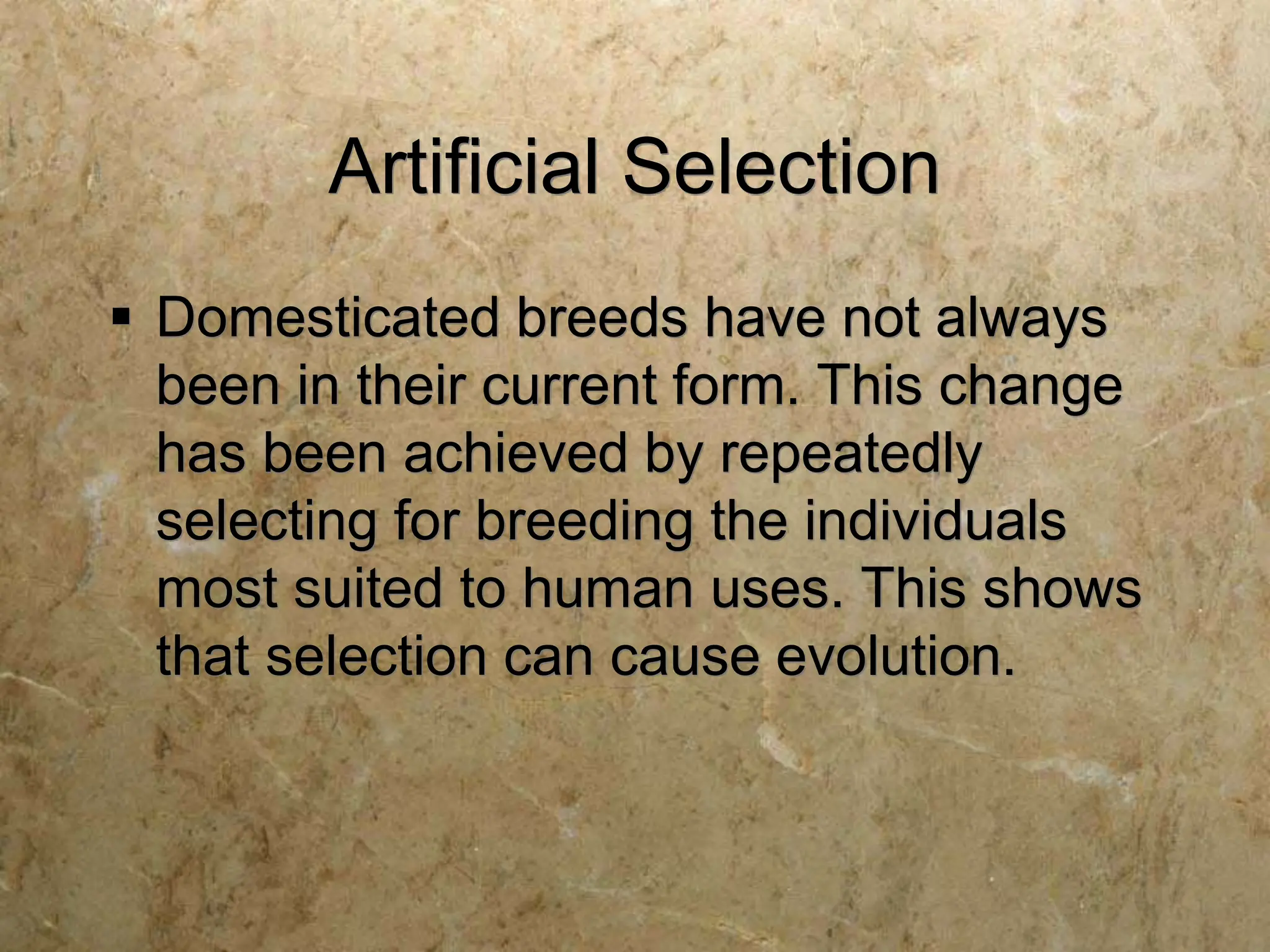
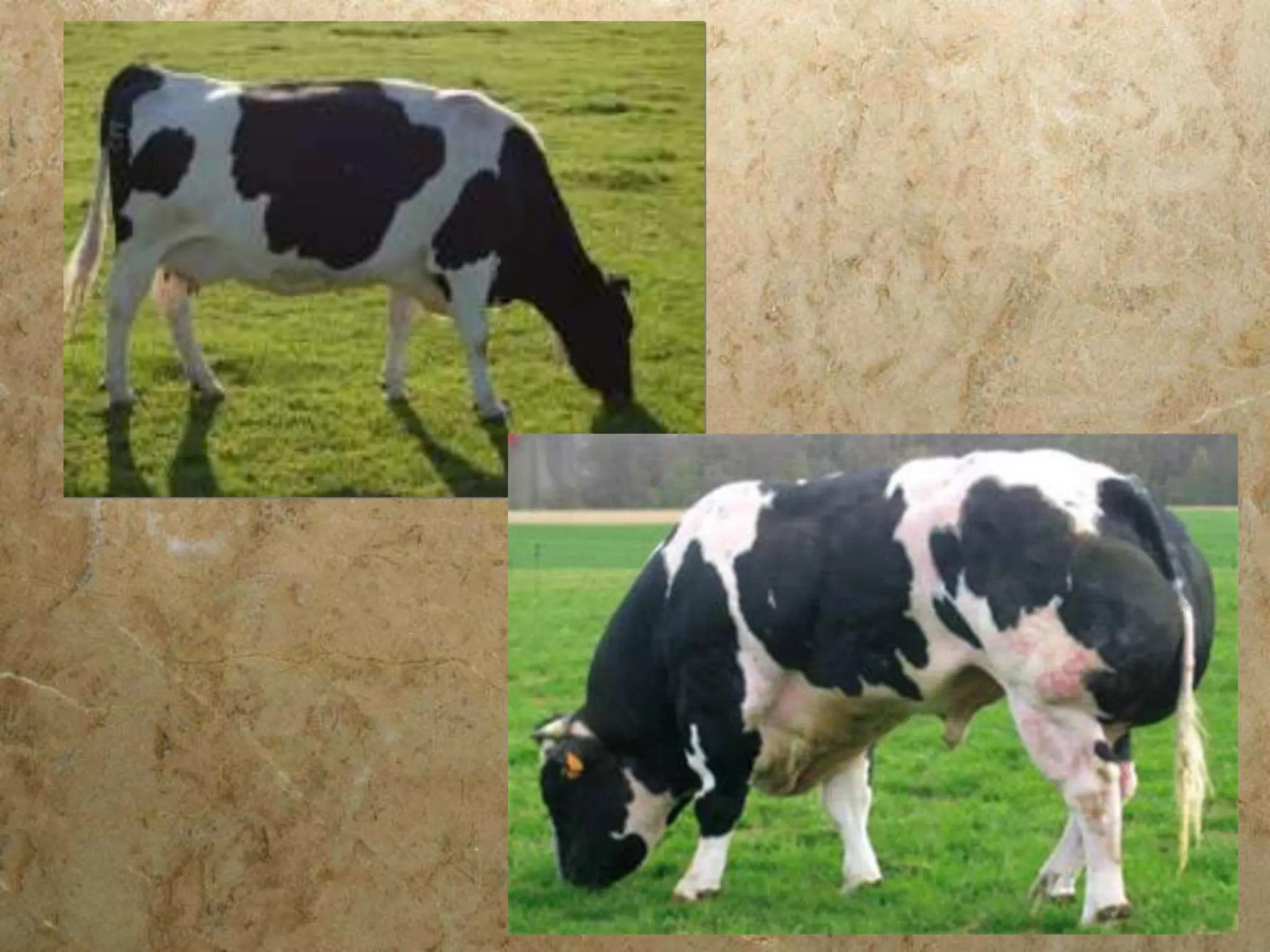
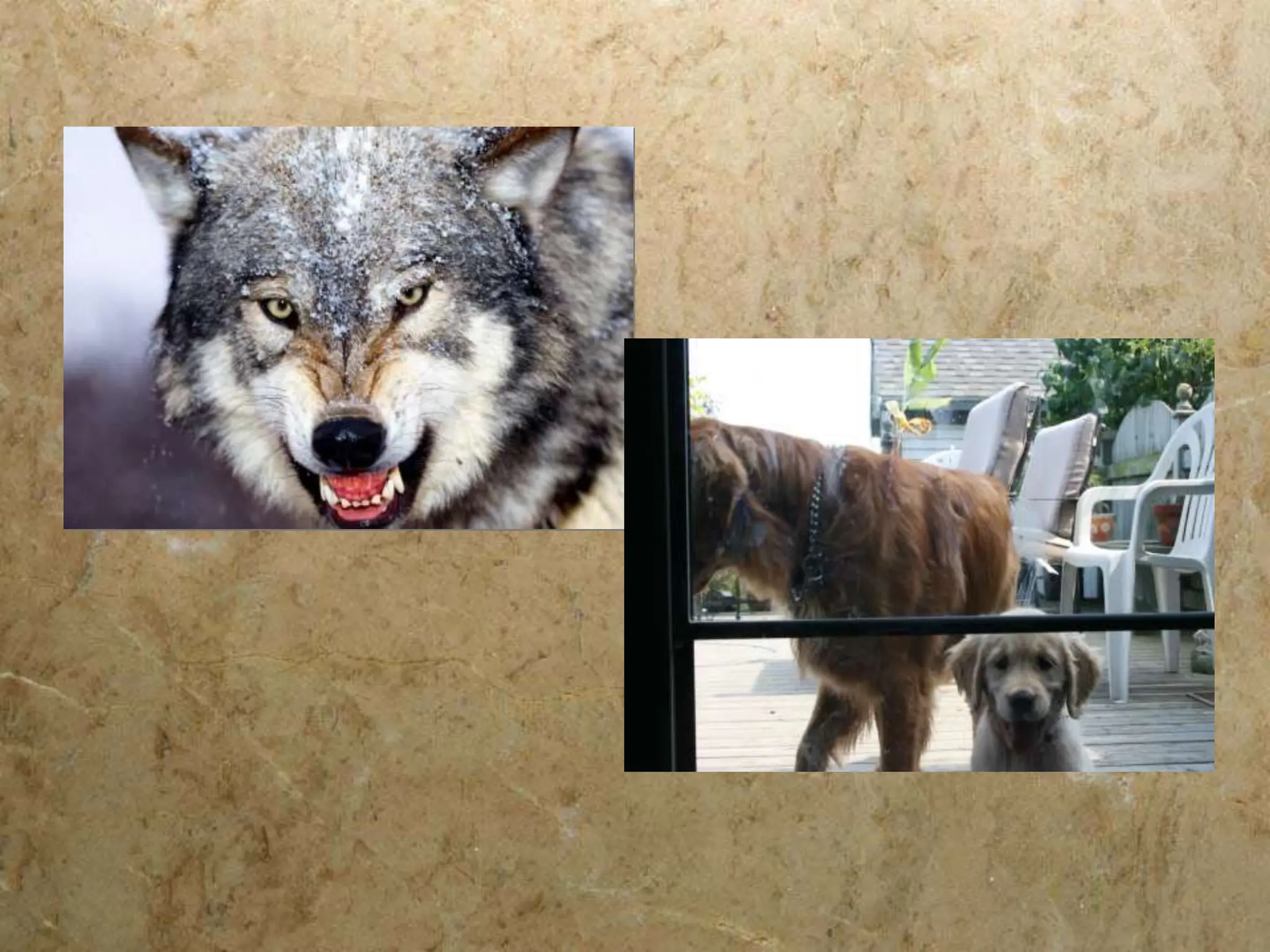
 Domesticated breeds have not always
been in their current form. This change
has been achieved by repeatedly
selecting for breeding the individuals
most suited to human uses. This shows
that selection can cause evolution.
Genetic Variation
 individuals in a species carry different alleles (An
allele is an alternative form of a gene (one member of
a pair) that is located at a specific positionon a
specific chromosome.
 Any change in gene (and allele) frequencies within a
population or species is Evolution
 Allele Frequency – proportion of gene copies in a
population of a given allele
1. Natural Selection:
 Affects variation in a population as the better
adapted (more fit) individuals to their
environment survive and reproduce, passing
on their genes to the successive generations
increasing the frequency of favourable alleles
in the population.
 Nature “selects” which organisms will be
successful
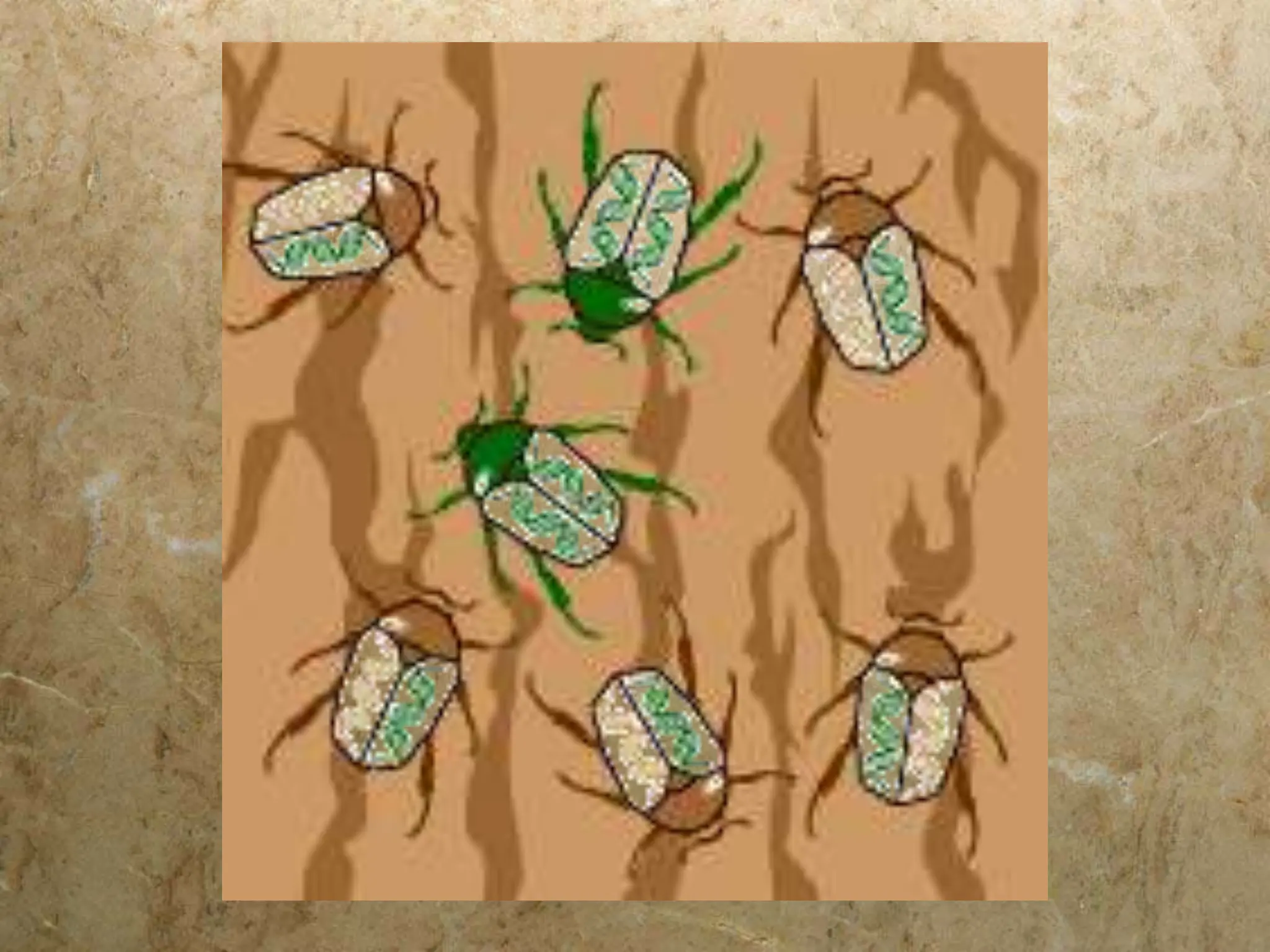
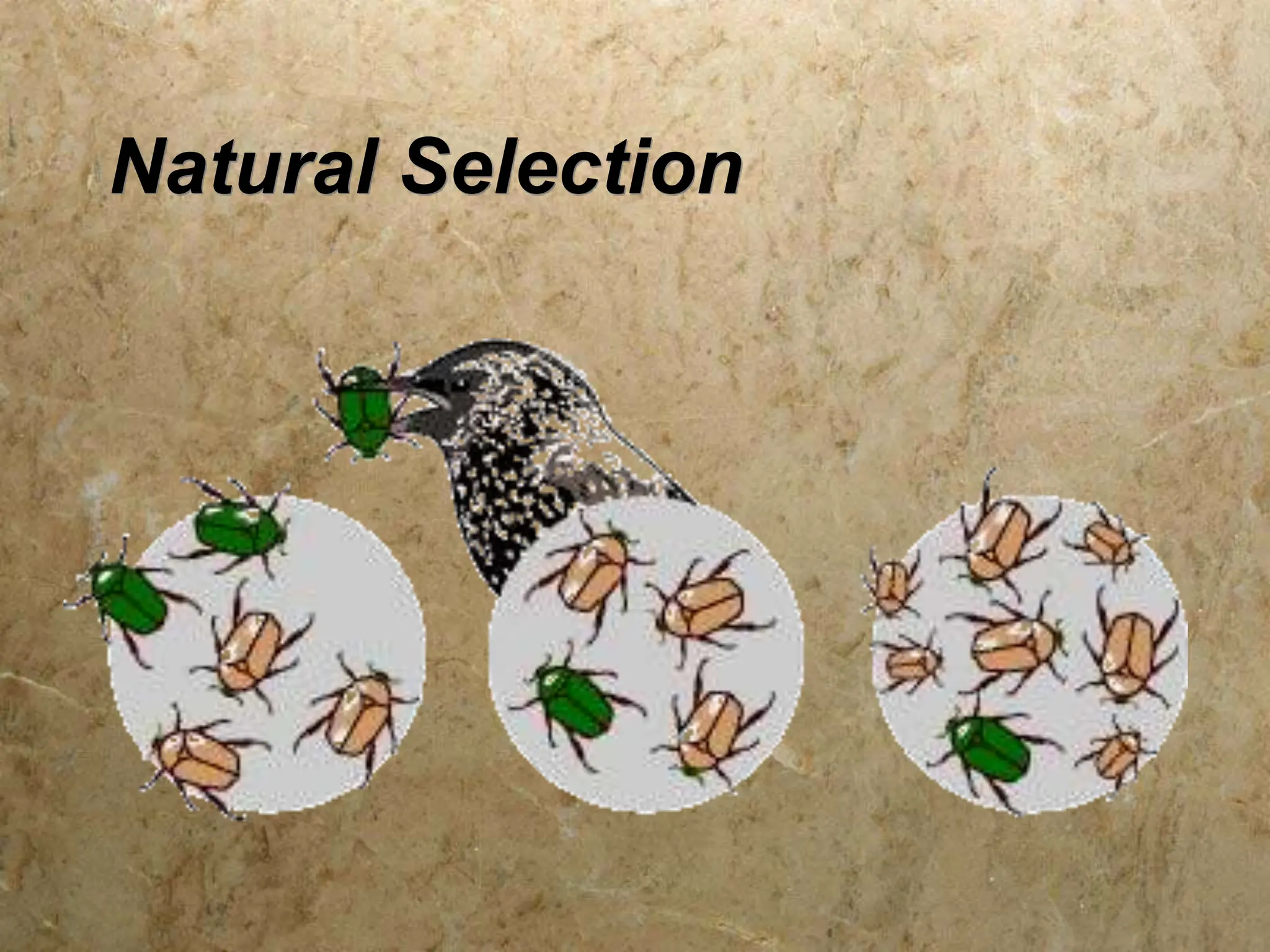
 Imagine that green beetles are easier
for birds to spot (and hence, eat). Brown
beetles are a little more likely to survive
to produce offspring. They pass their
genes for brown coloration on to their
offspring. So in the next generation,
brown beetles are more common than
in the previous generation.
Natural Selection
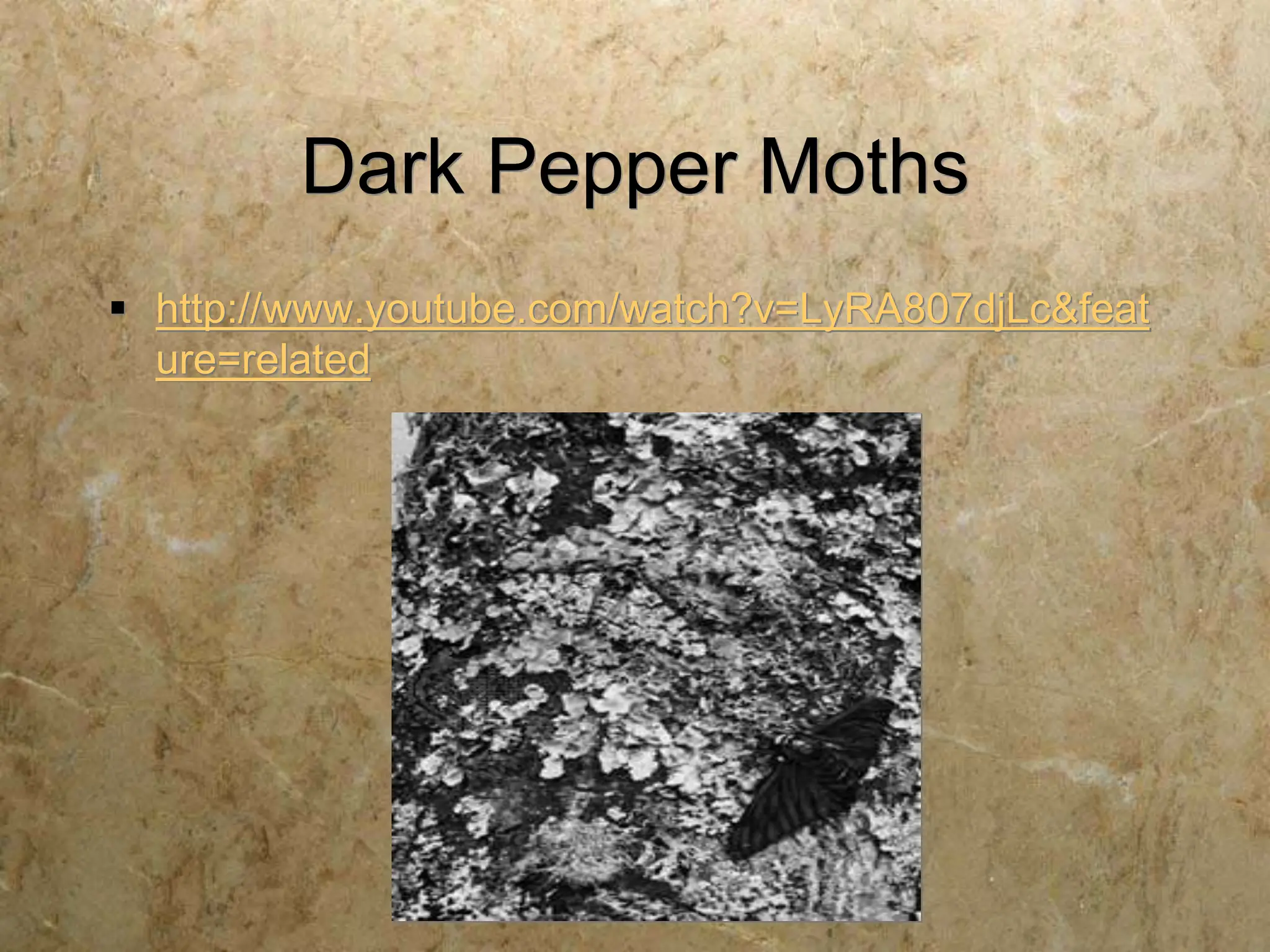
Dark Pepper Moths
 http://www.youtube.com/watch?v=LyRA807djLc&feat
ure=related
4 Steps of Natural Selection:
 1. In nature , more offspring are produced
than can survive.
 2. In any population, individuals have
variation.
 3. Individuals with advantageous variations
survive and pass on their variations to the
next generation.
 4. Overtime, offspring with certain
advantageous variations make up most of the
population
2. Gene Flow:
 Is the movement of alleles into or out of a
population (immigration or emigration).
 Gene flow can introduce new alleles into a
gene pool or can change allele frequencies.
 The overall effect of gene flow is to
counteract natural selection by creating less
differences between populations.
 Example:
 Plant pollen being blown into a new area
 Gene flow is what happens when two or more
populations interbreed. This generally increases
genetic diversity. Imagine two populations of squirrels
on opposite sides of a river. The squirrels on the west
side have bushier tails than those on the east side as
a result of three different genes that code for tail
bushiness. If a tree falls over the river and the
squirrels are able to scamper across it to mate with
the other population, gene flow occurs. The next
generation of squirrels on the east side may have
more bushy tails than those in the previous
generation, and west side squirrels might have fewer
bushy tails.
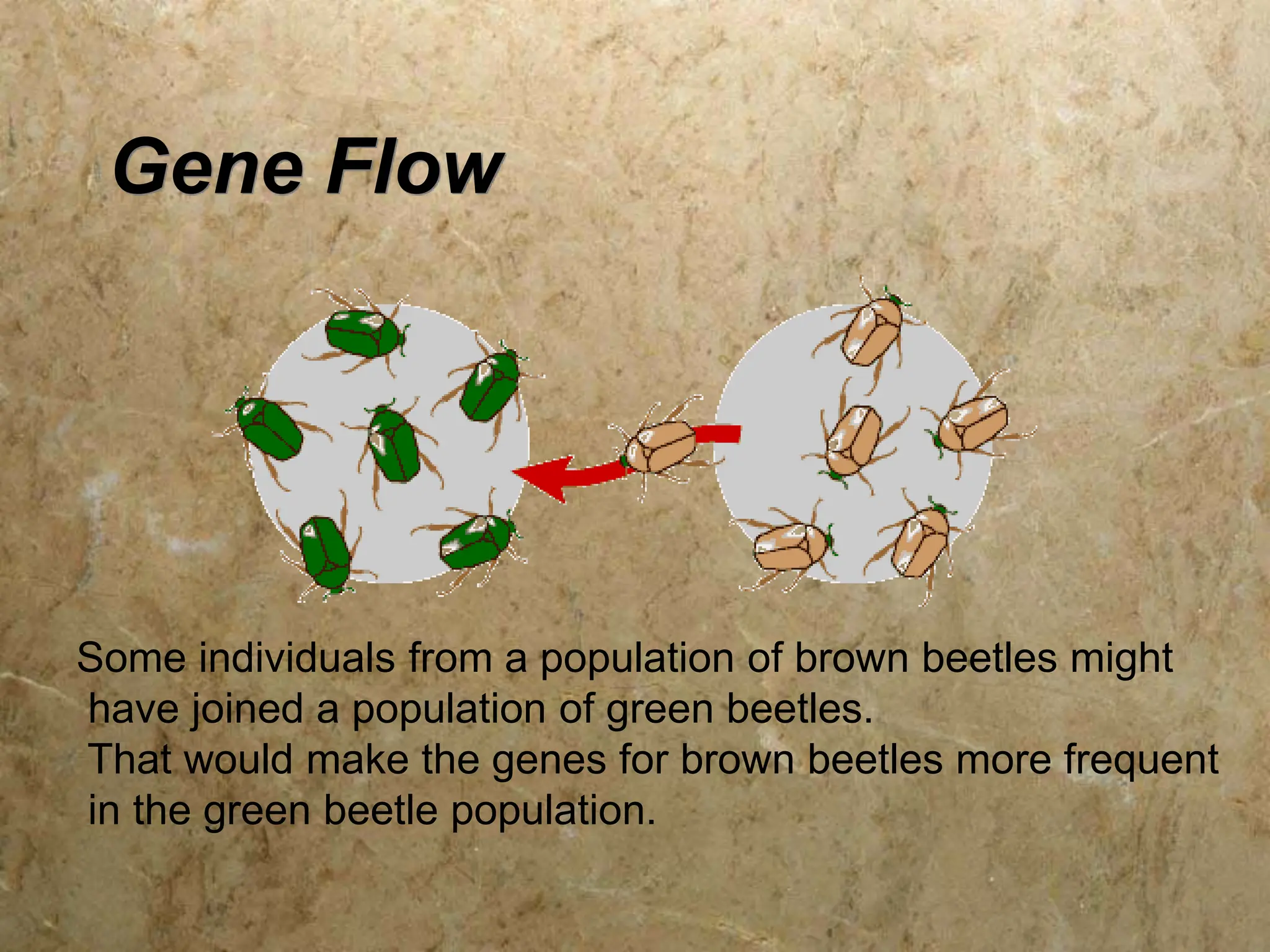
Gene Flow
Some individuals from a population of brown beetles might
have joined a population of green beetles.
That would make the genes for brown beetles more frequent
in the green beetle population.
3. Genetic Drift
 The change in allele frequencies as a result of
chance processes.
 These changes are much more pronounced in small
populations.
 Directly related to the population numbers.
 Smaller population sizes are more susceptible to
genetic drift than larger populations because there is
a greater chance that a rare allele will be lost.
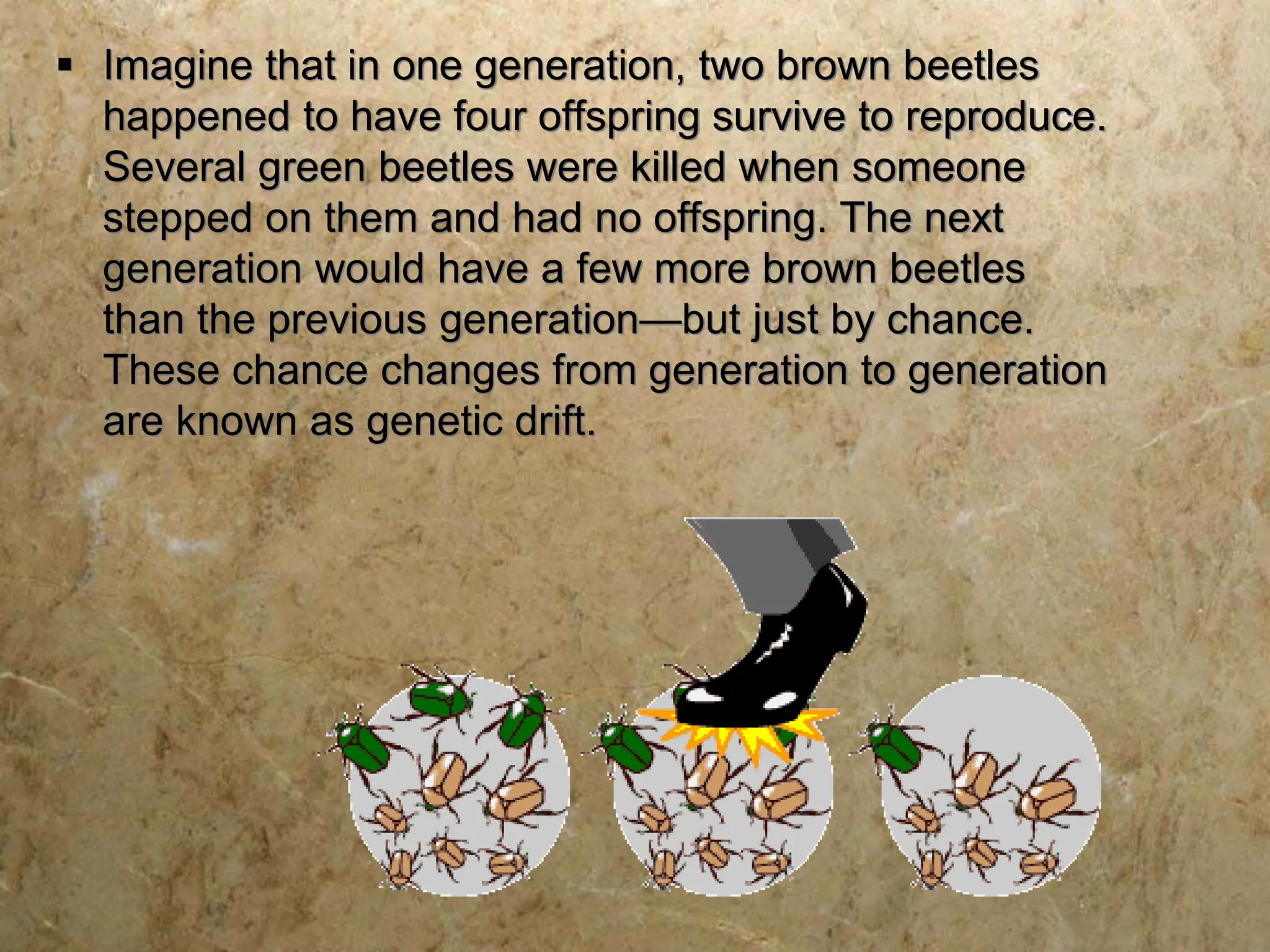
 Imagine that in one generation, two brown beetles
happened to have four offspring survive to reproduce.
Several green beetles were killed when someone
stepped on them and had no offspring. The next
generation would have a few more brown beetles
than the previous generation—but just by chance.
These chance changes from generation to generation
are known as genetic drift.
 In a population of 100 bears, suppose there
are two alleles for fur color: A1 (black) and A2
(brown). A1 has a frequency of .9, A2 a
frequency of .1 (1.0 = 100%). The number of
individuals carrying A2 is very small
compared to the number of individuals
carrying A1, and if only fifty percent of the
population survives to breed that year, there's
a good chance that the A2s will be wiped out.
Examples of Genetic Drift
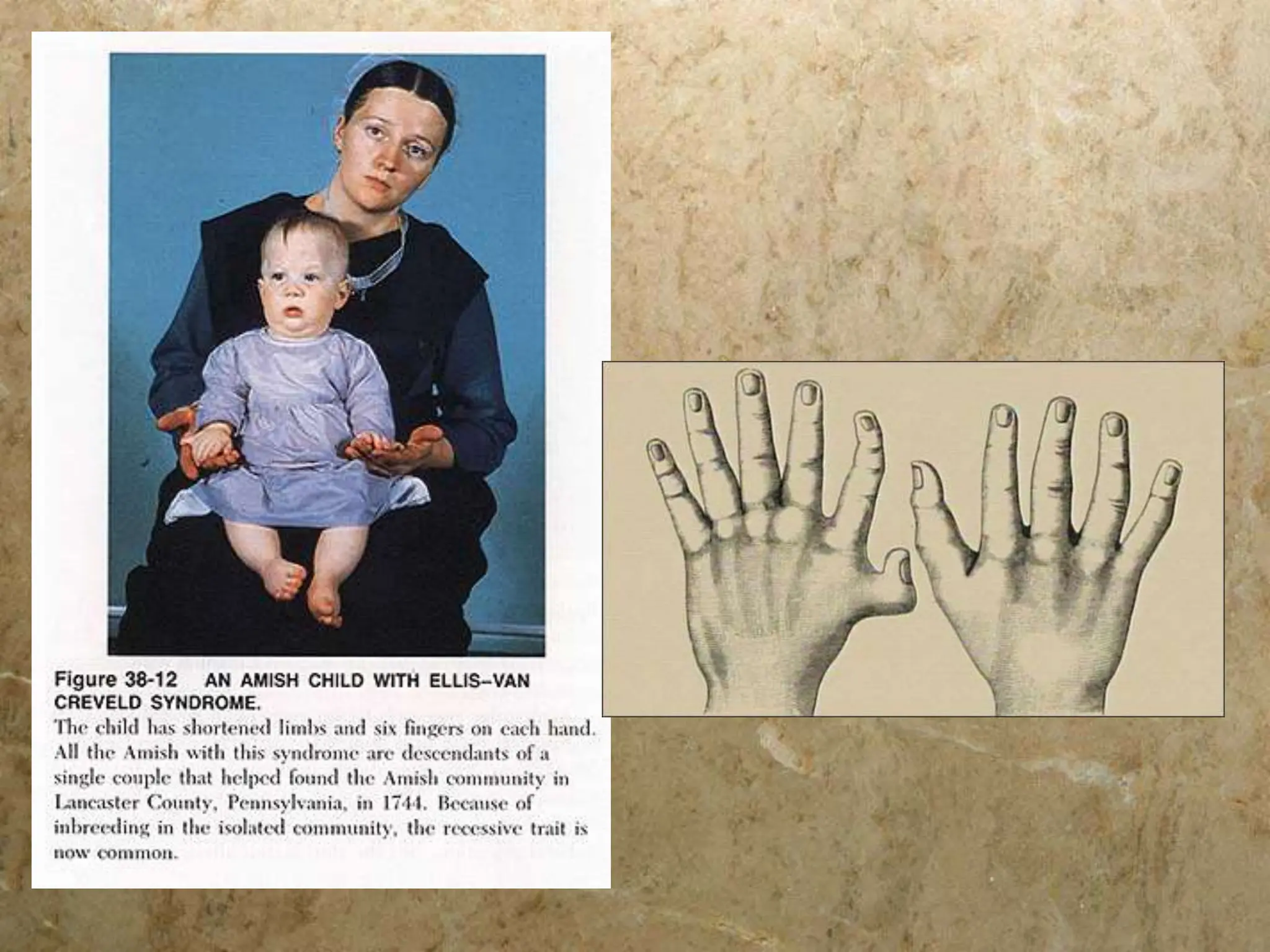
 A) The Founder Effect:
A founder effect occurs when a new colony is started
by a few members of original population.
 Small population that branches off from a larger
one may or may not be genetically
representative of the larger population from
which it was derived.
 Only a fraction of the total genetic diversity of
the original gene pool is represented in these
few individuals.
 For example, the Afrikaner population of
Dutch settlers in South Africa is descended
mainly from a few colonists. Today, the
Afrikaner population has an unusually high
frequency of the gene that causes
Huntington’s disease, because those original
Dutch colonists just happened to carry that
gene with unusually high frequency. This
effect is easy to recognize in genetic
diseases, but of course, the frequencies of all
sorts of genes are affected by founder events.
Examples of Genetic Drift
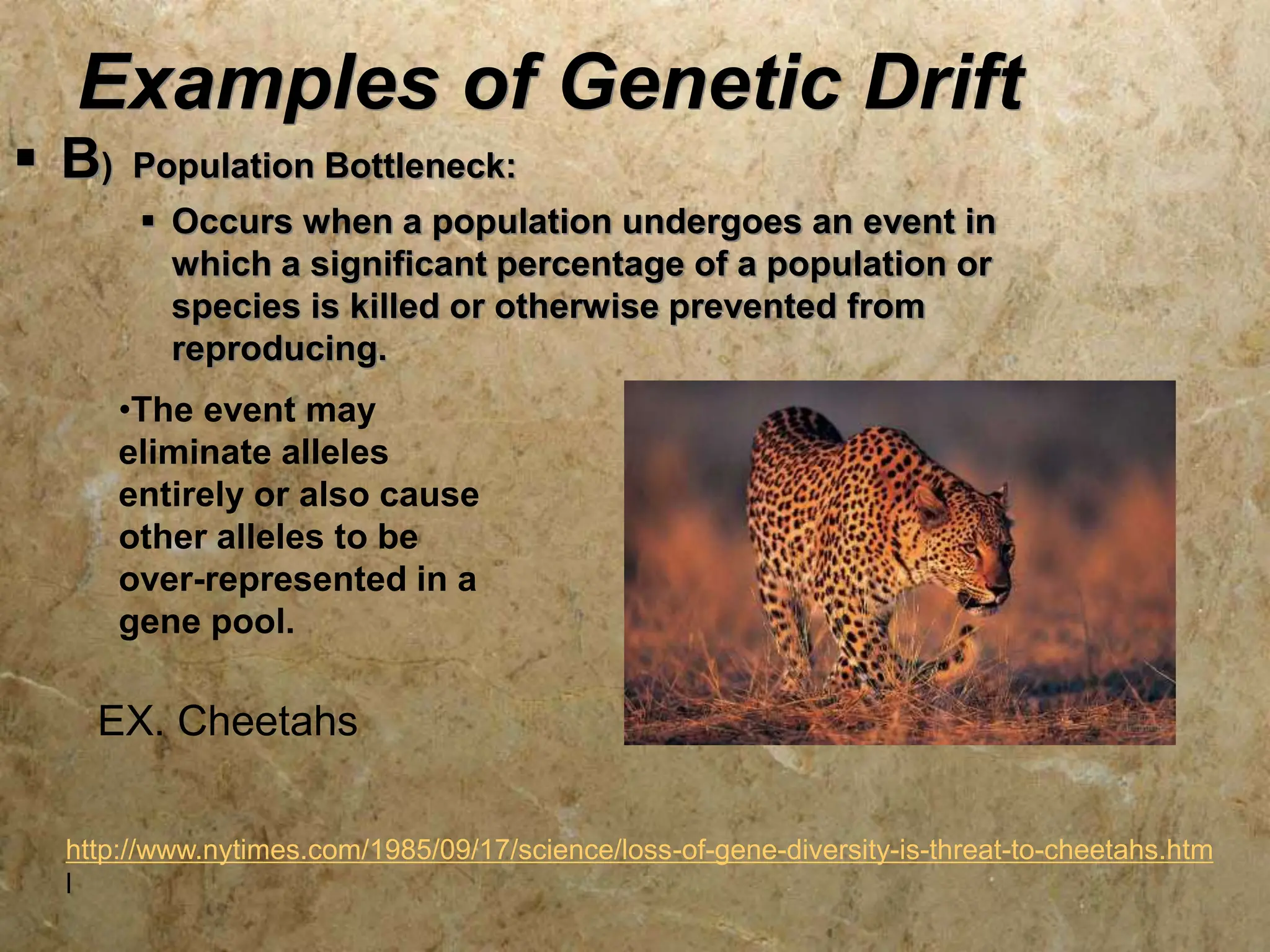
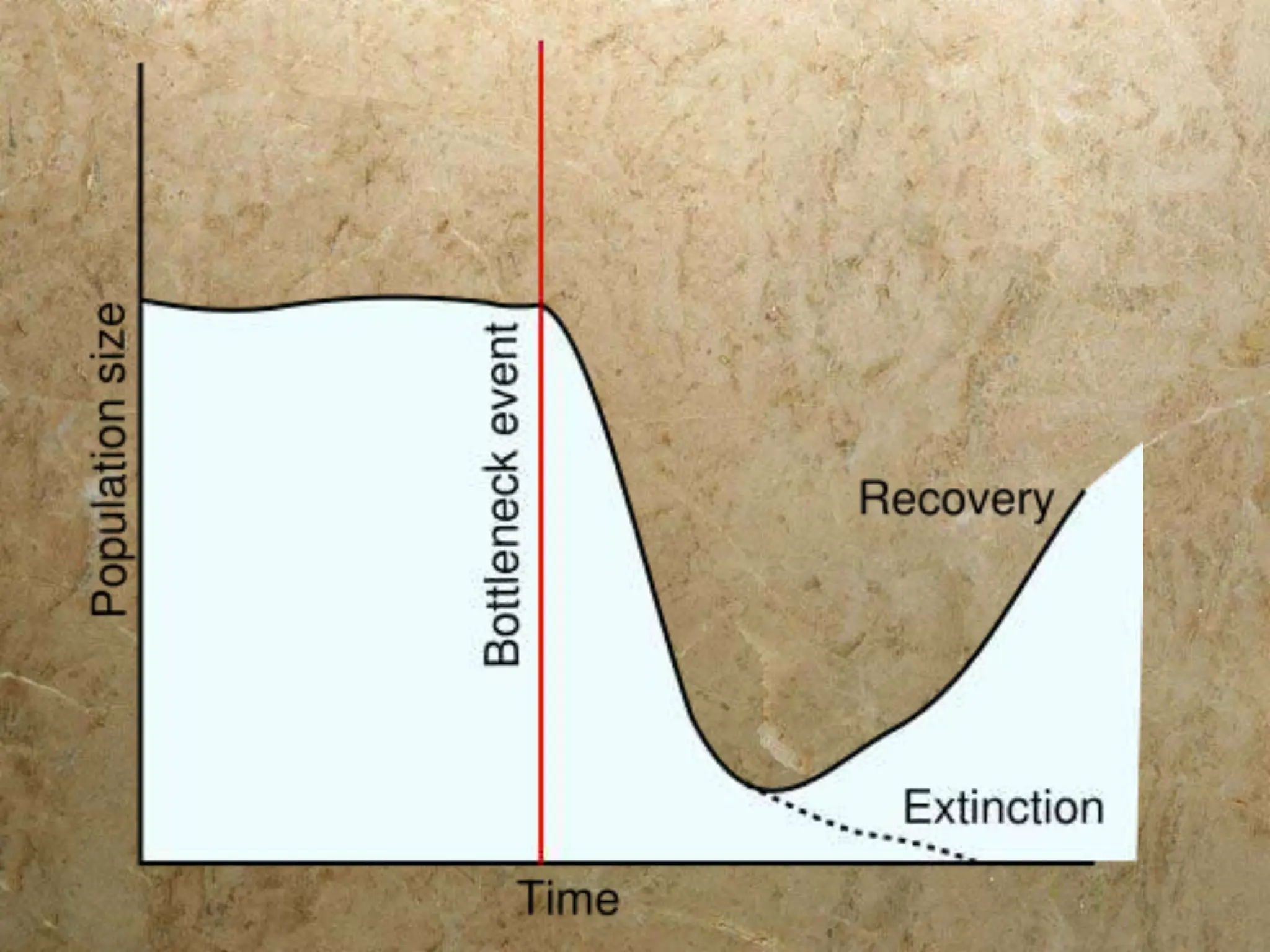
 B) Population Bottleneck:
 Occurs when a population undergoes an event in
which a significant percentage of a population or
species is killed or otherwise prevented from
reproducing.
•The event may
eliminate alleles
entirely or also cause
other alleles to be
over-represented in a
gene pool.
EX. Cheetahs
http://www.nytimes.com/1985/09/17/science/loss-of-gene-diversity-is-threat-to-cheetahs.htm
l
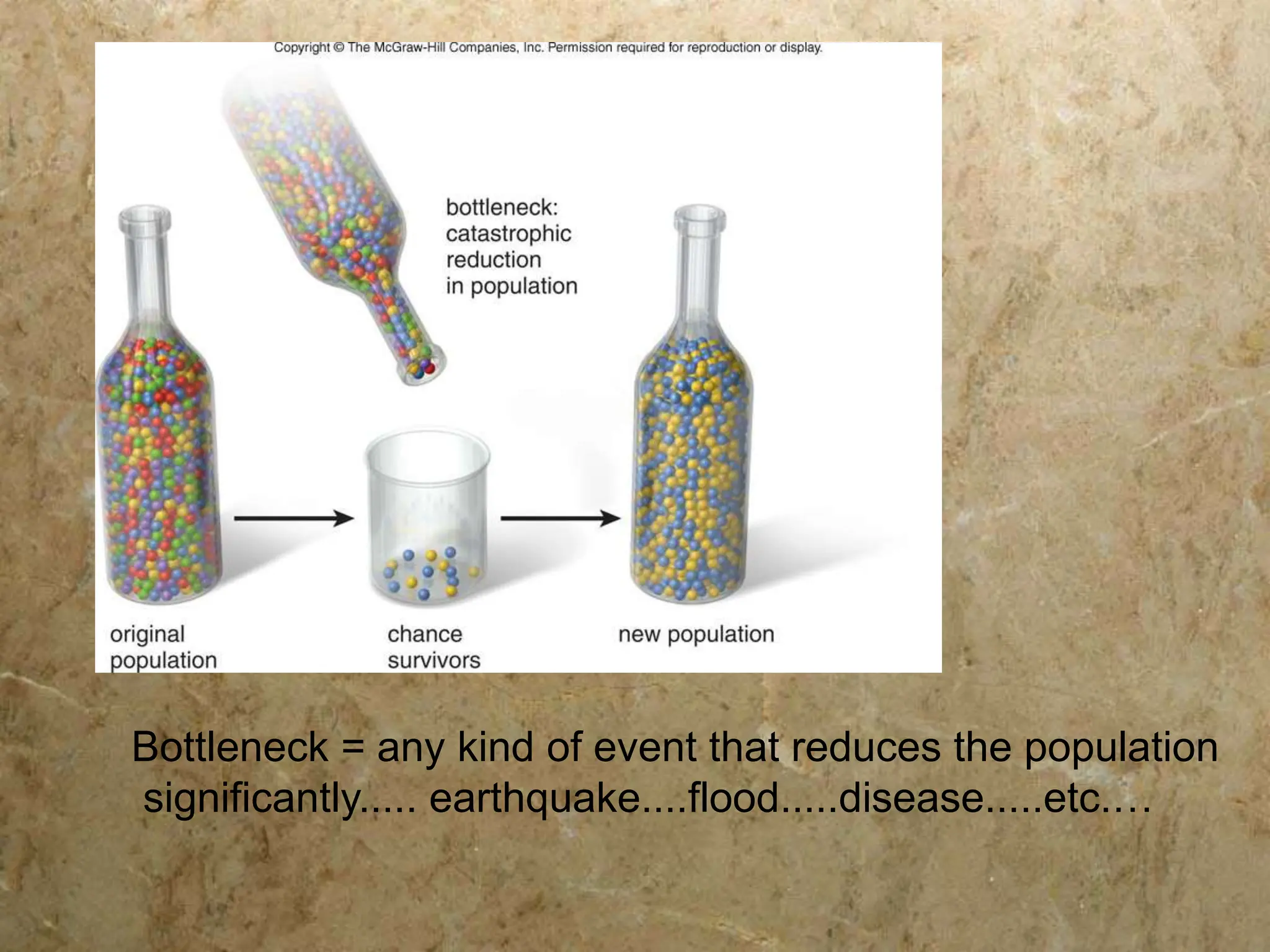
Bottleneck = any kind of event that reduces the population
significantly..... earthquake....flood.....disease.....etc.…
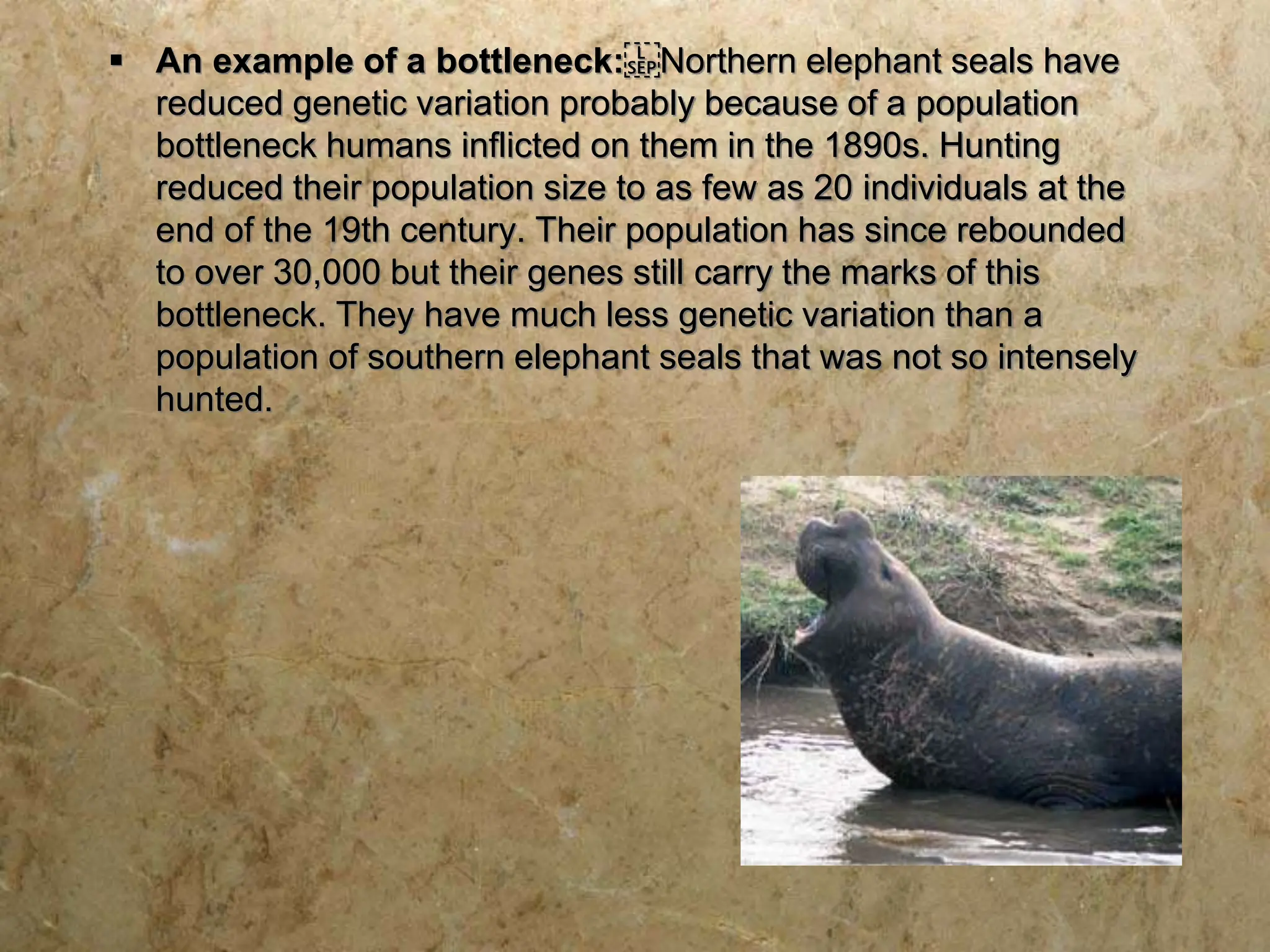
 An example of a bottleneck: Northern elephant seals have
reduced genetic variation probably because of a population
bottleneck humans inflicted on them in the 1890s. Hunting
reduced their population size to as few as 20 individuals at the
end of the 19th century. Their population has since rebounded
to over 30,000 but their genes still carry the marks of this
bottleneck. They have much less genetic variation than a
population of southern elephant seals that was not so intensely
hunted.
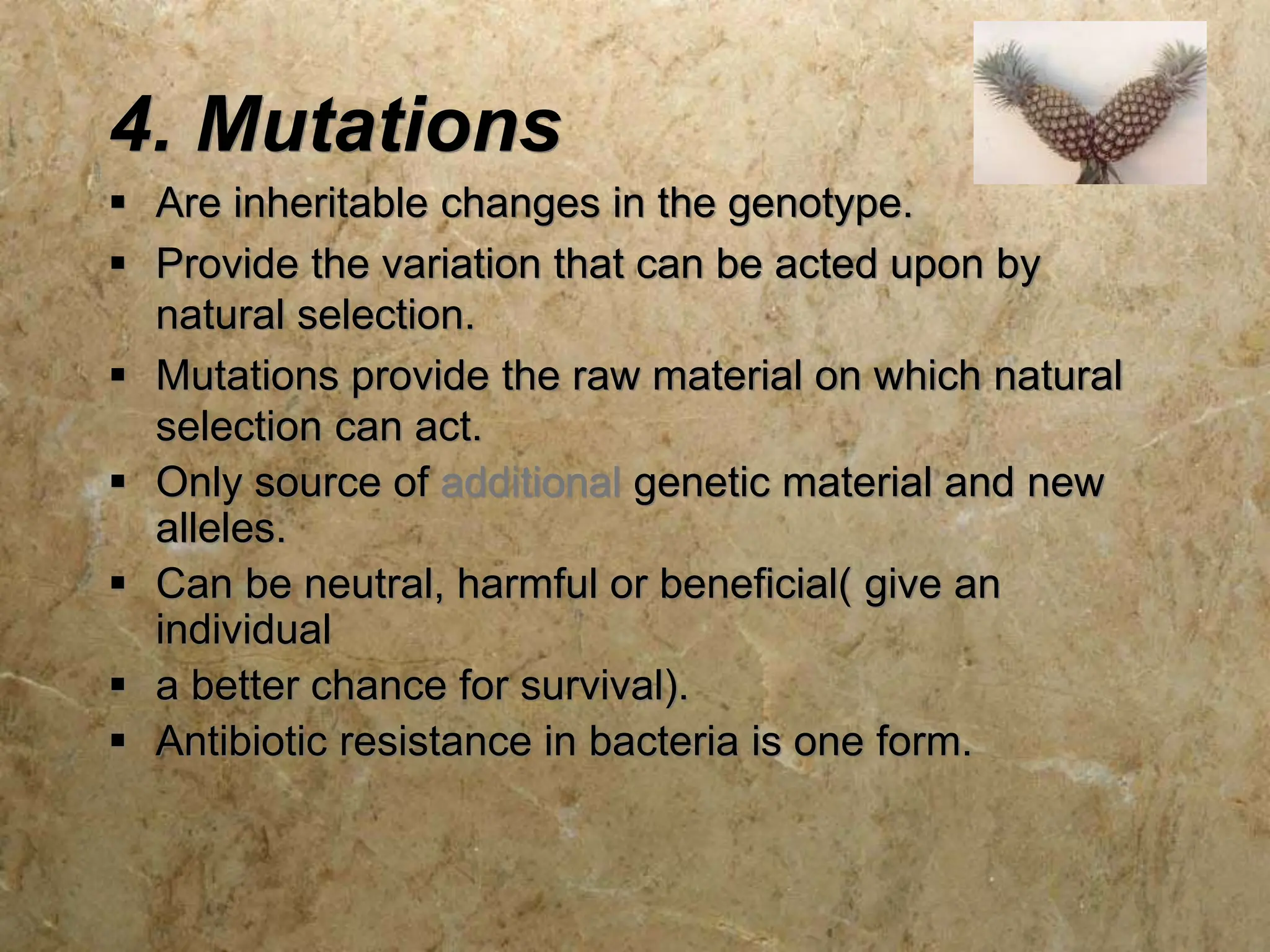
4. Mutations
 Are inheritable changes in the genotype.
 Provide the variation that can be acted upon by
natural selection.
 Mutations provide the raw material on which natural
selection can act.
 Only source of additional genetic material and new
alleles.
 Can be neutral, harmful or beneficial( give an
individual
 a better chance for survival).
 Antibiotic resistance in bacteria is one form.
 Mutation is a change in DNA the hereditary material
of life. An organism’s DNA affects how it looks, how it
behaves, and its physiology—all aspects of its life. So
a change in an organism’s DNA can cause changes
in all aspects of its life.
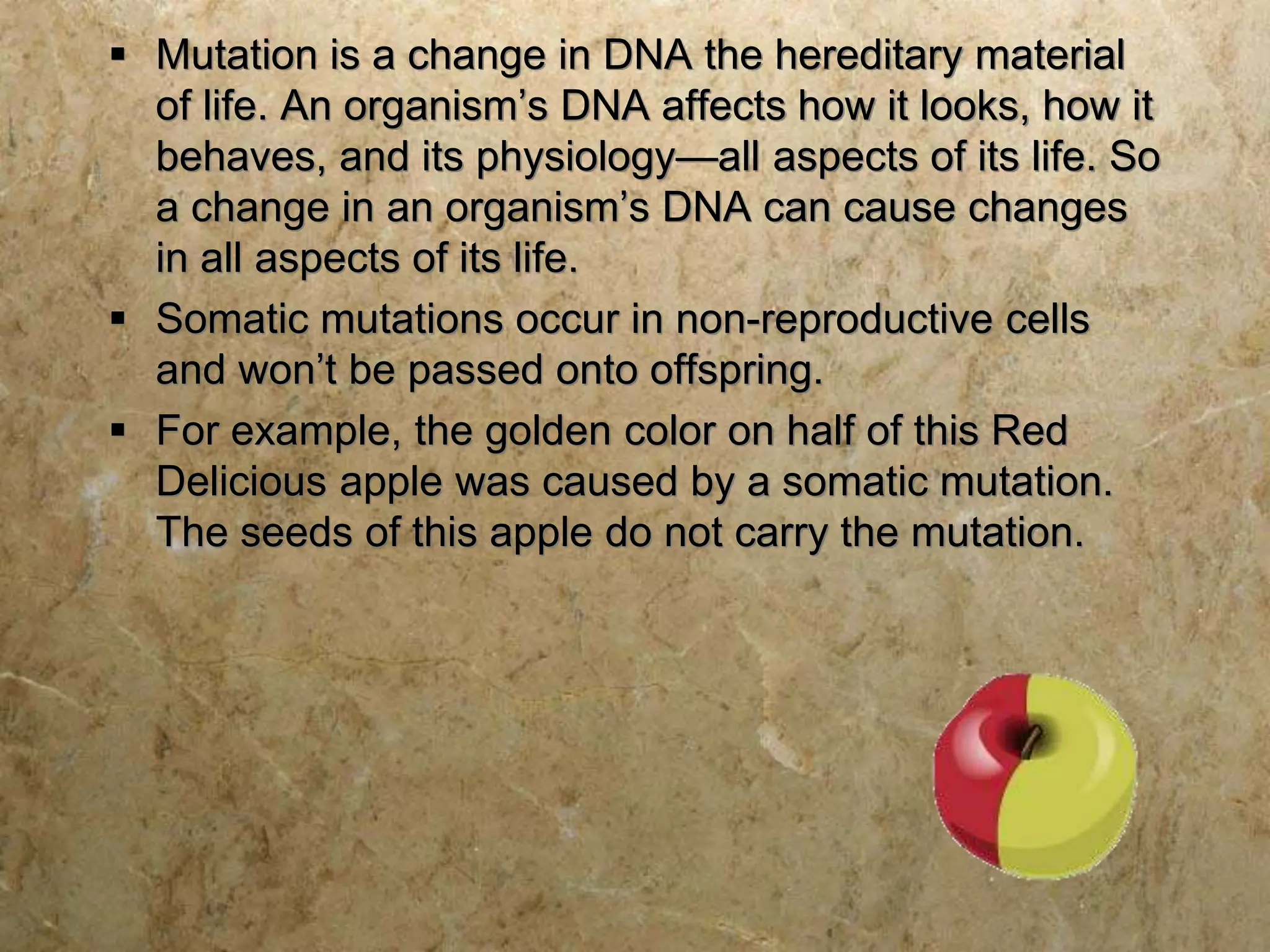
 Somatic mutations occur in non-reproductive cells
and won’t be passed onto offspring.
 For example, the golden color on half of this Red
Delicious apple was caused by a somatic mutation.
The seeds of this apple do not carry the mutation.
 The only mutations that matter to large-
scale evolution are those that can be
passed on to offspring. These occur in
reproductive cells like eggs and sperm
and are called germ line mutations.
 A single germ line mutation can have a
range of effects:
1. No change occurs in
phenotype.
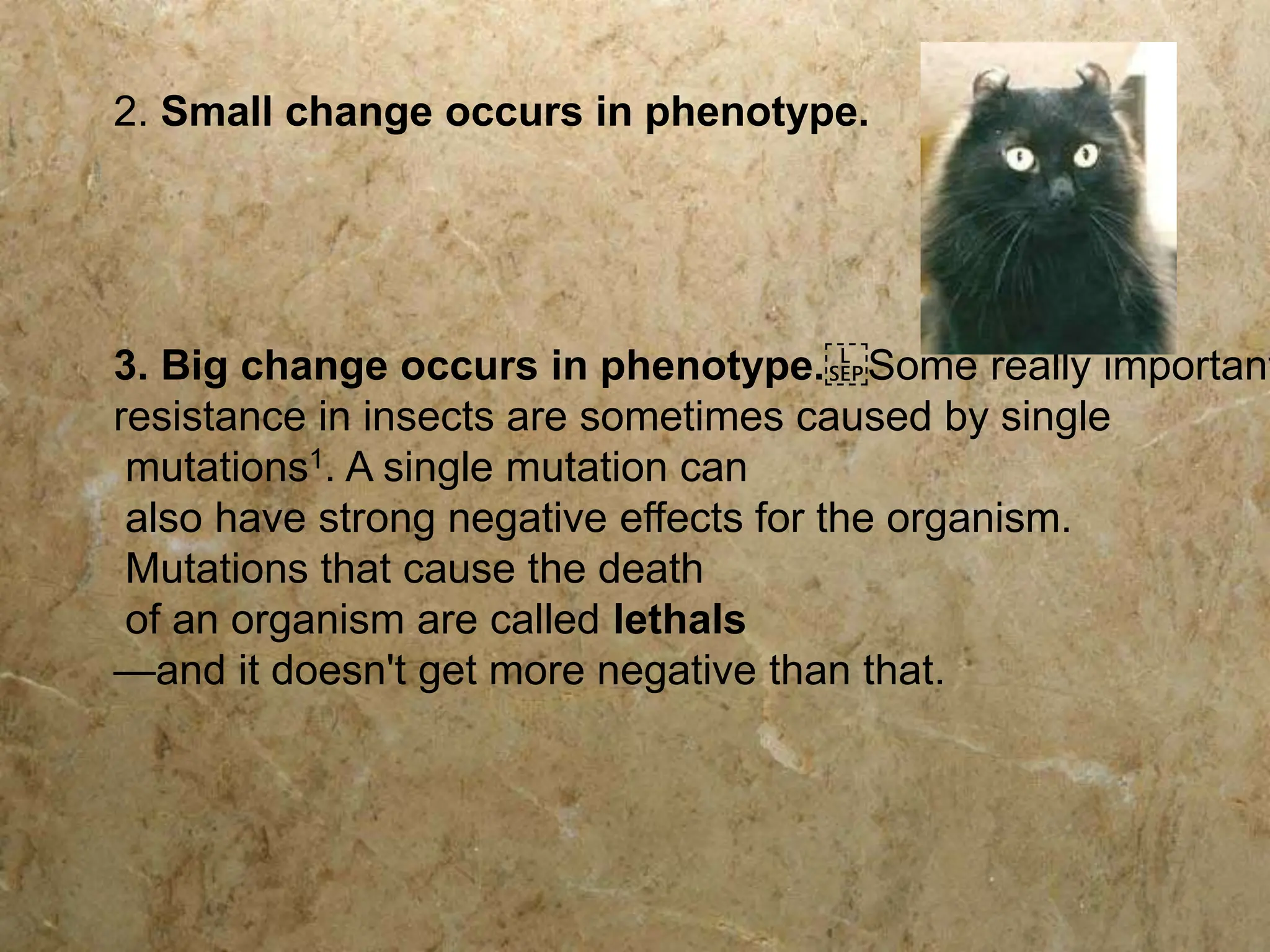
2. Small change occurs in phenotype.
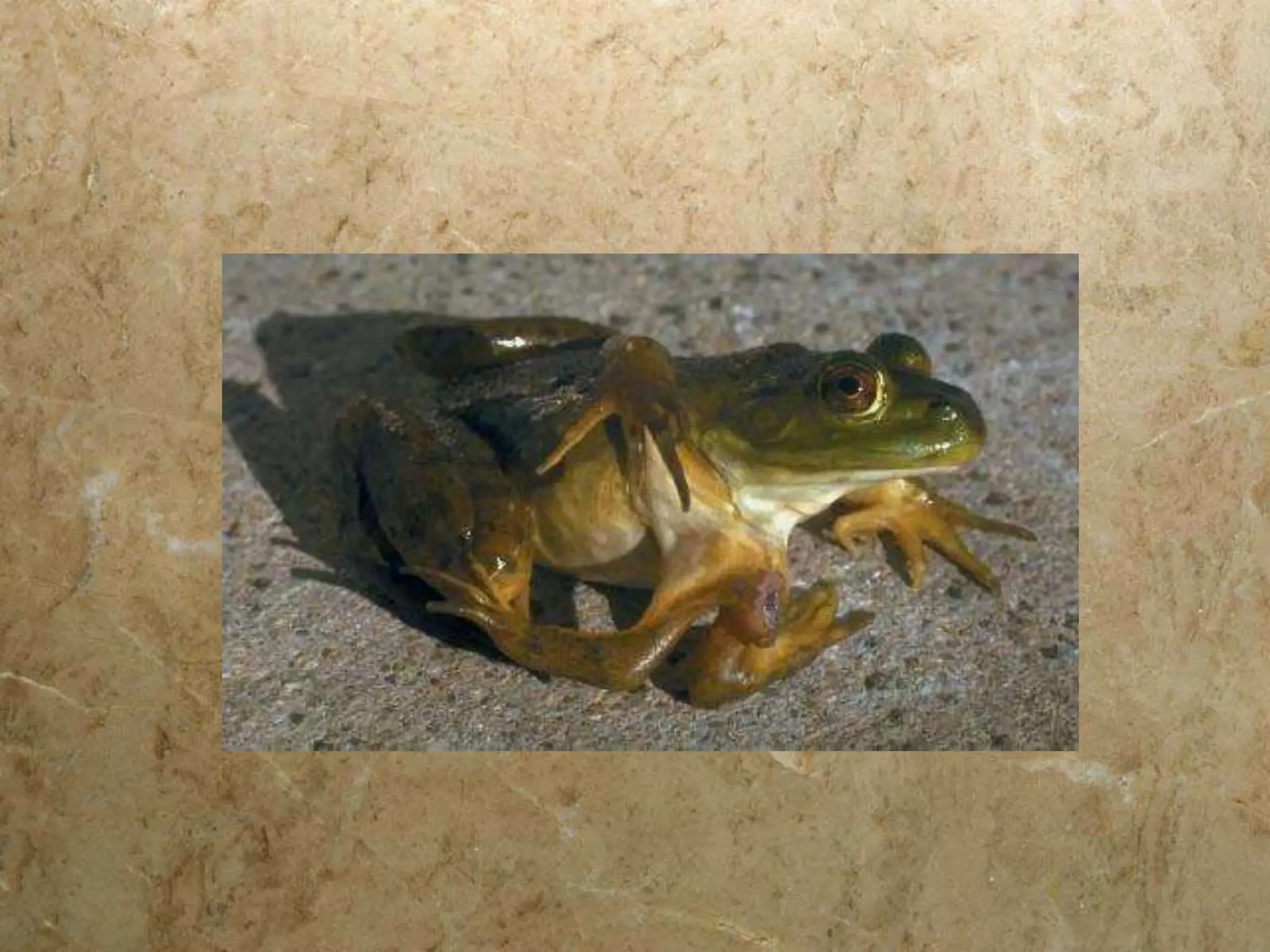
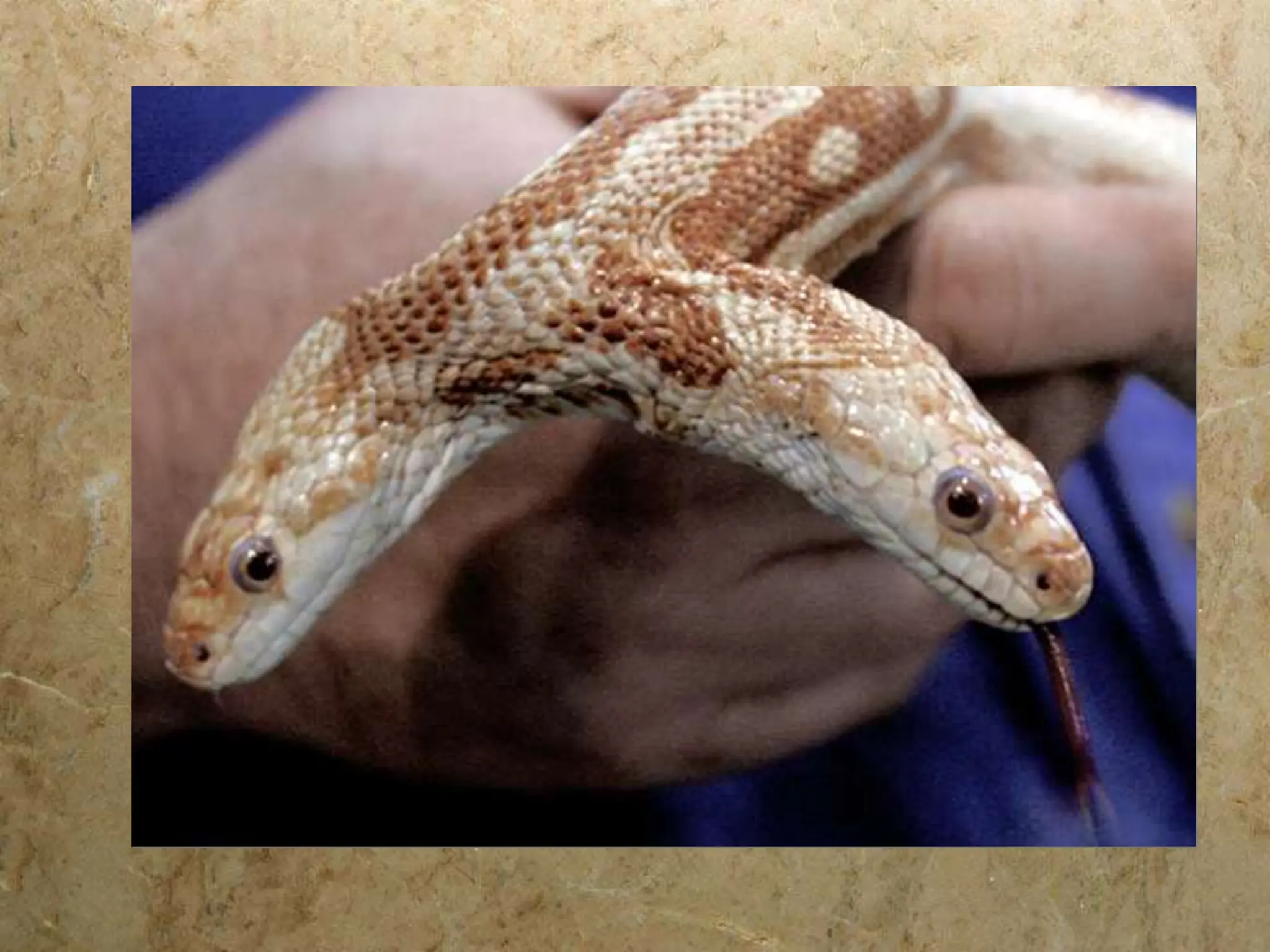
3. Big change occurs in phenotype. Some really important
resistance in insects are sometimes caused by single
mutations1. A single mutation can
also have strong negative effects for the organism.
Mutations that cause the death
of an organism are called lethals
—and it doesn't get more negative than that.
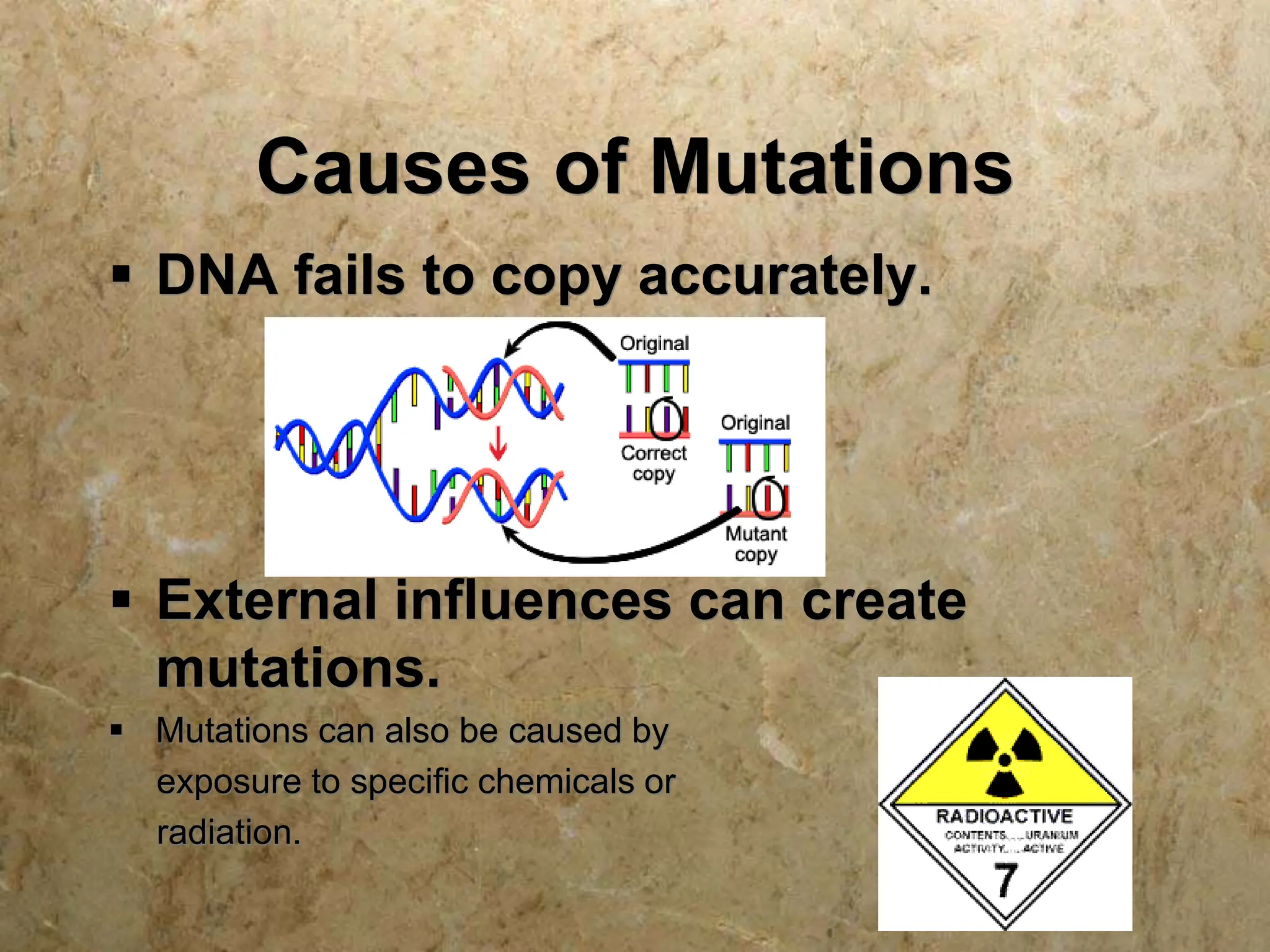
Causes of Mutations
 DNA fails to copy accurately.
 External influences can create
mutations.
 Mutations can also be caused by
exposure to specific chemicals or
radiation.
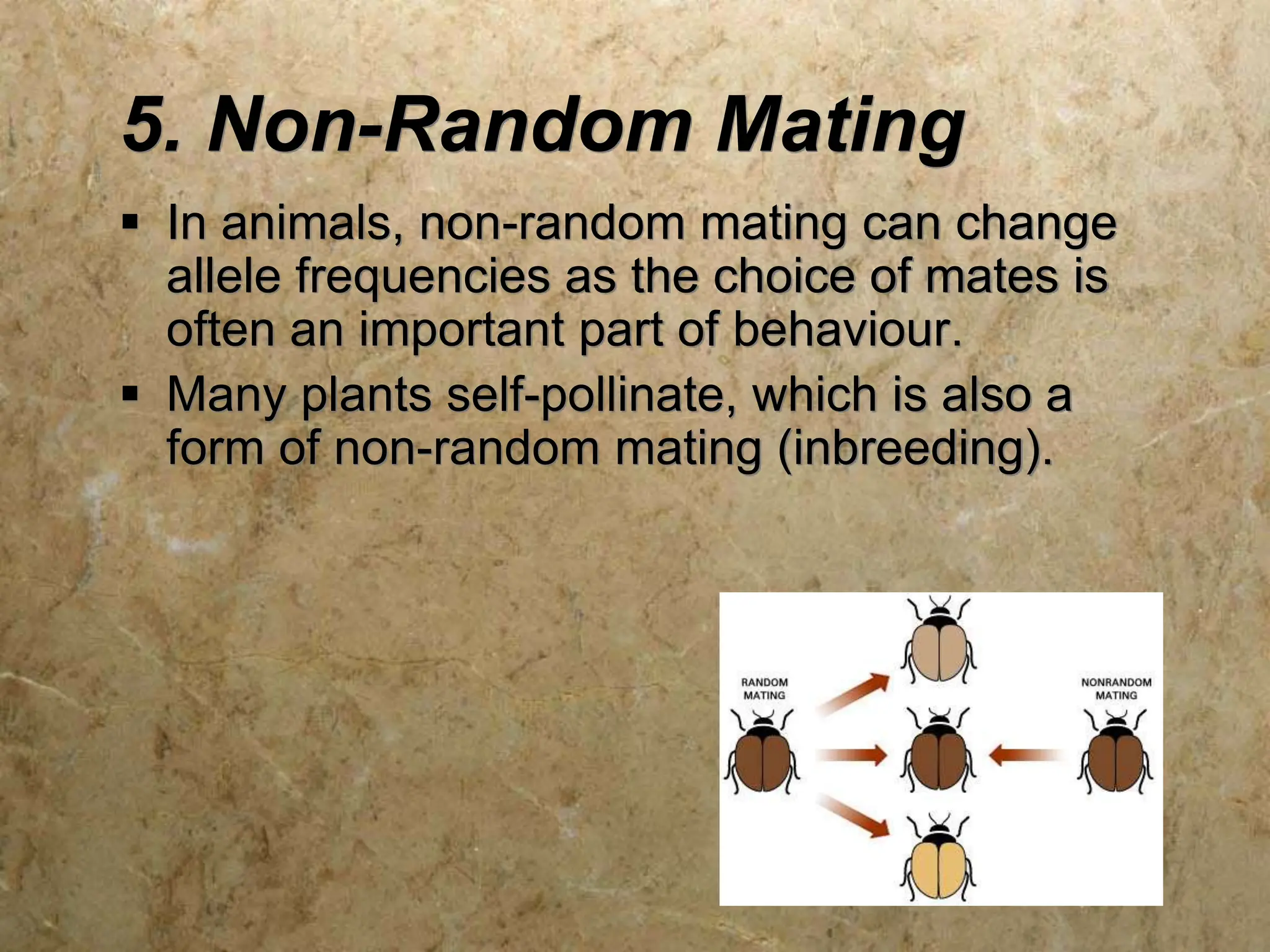
5. Non-Random Mating
 In animals, non-random mating can change
allele frequencies as the choice of mates is
often an important part of behaviour.
 Many plants self-pollinate, which is also a
form of non-random mating (inbreeding).
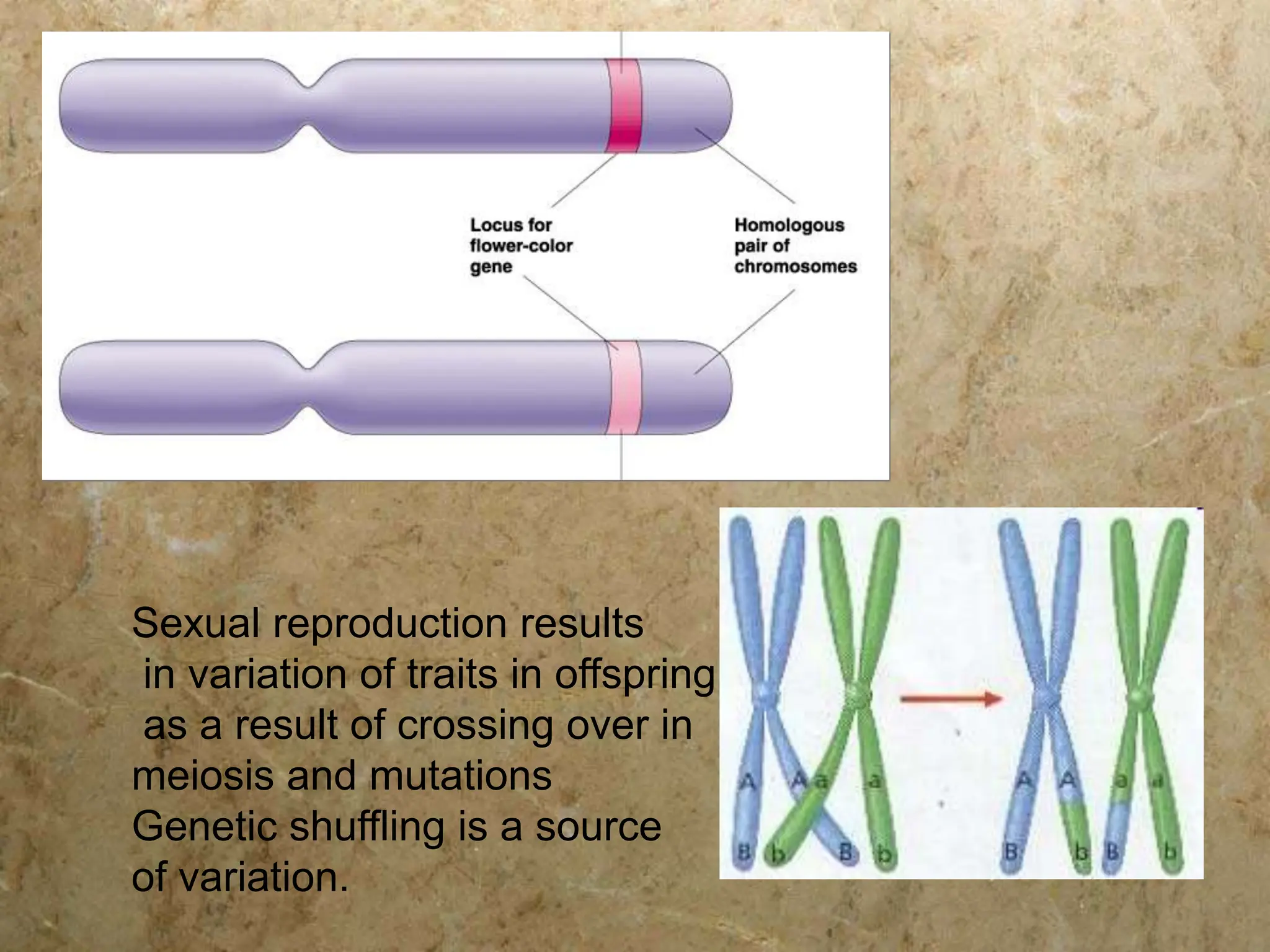
Sexual reproduction results
in variation of traits in offspring
as a result of crossing over in
meiosis and mutations
Genetic shuffling is a source
of variation.
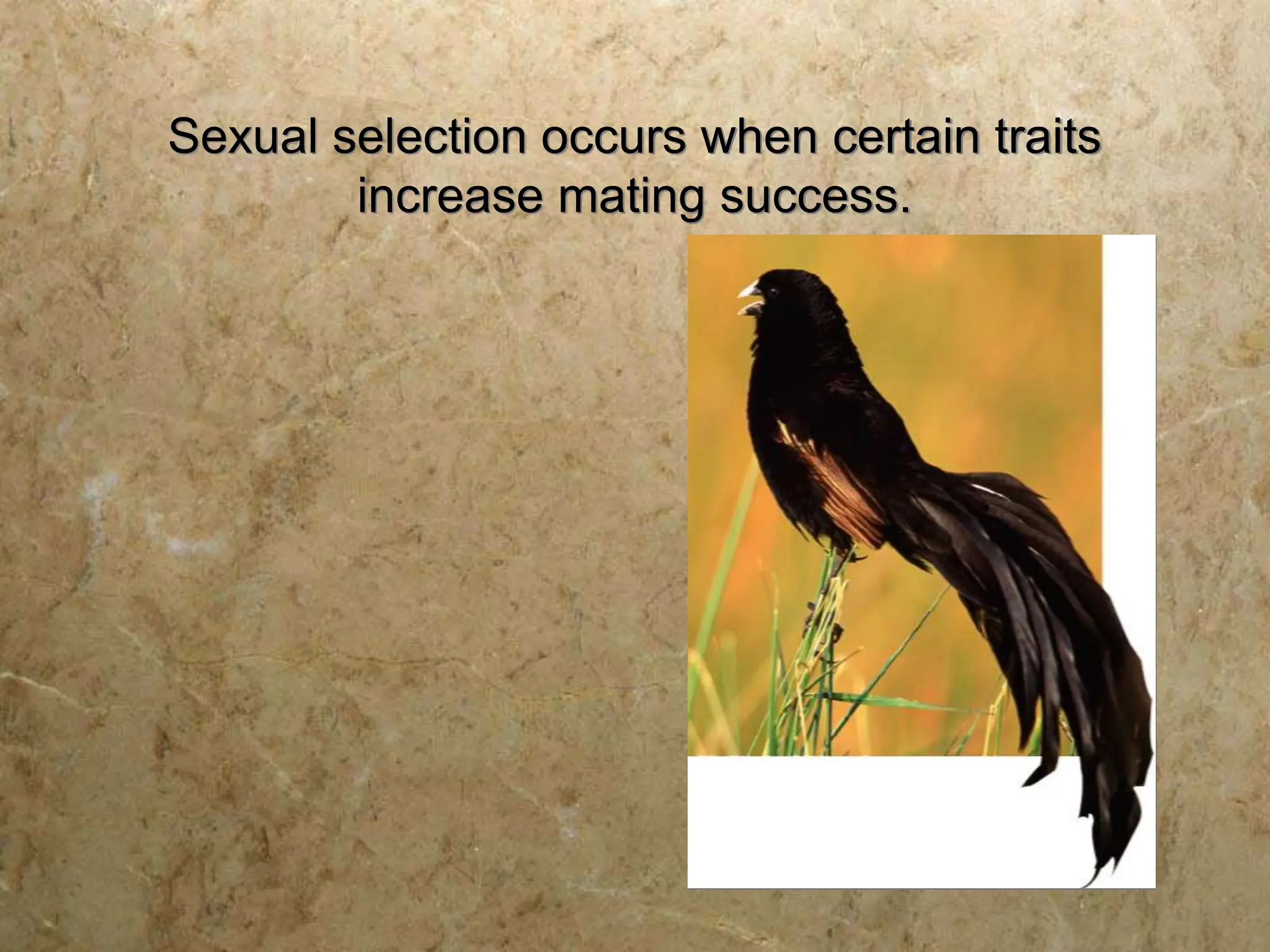
Sexual selection occurs when certain traits
increase mating success.
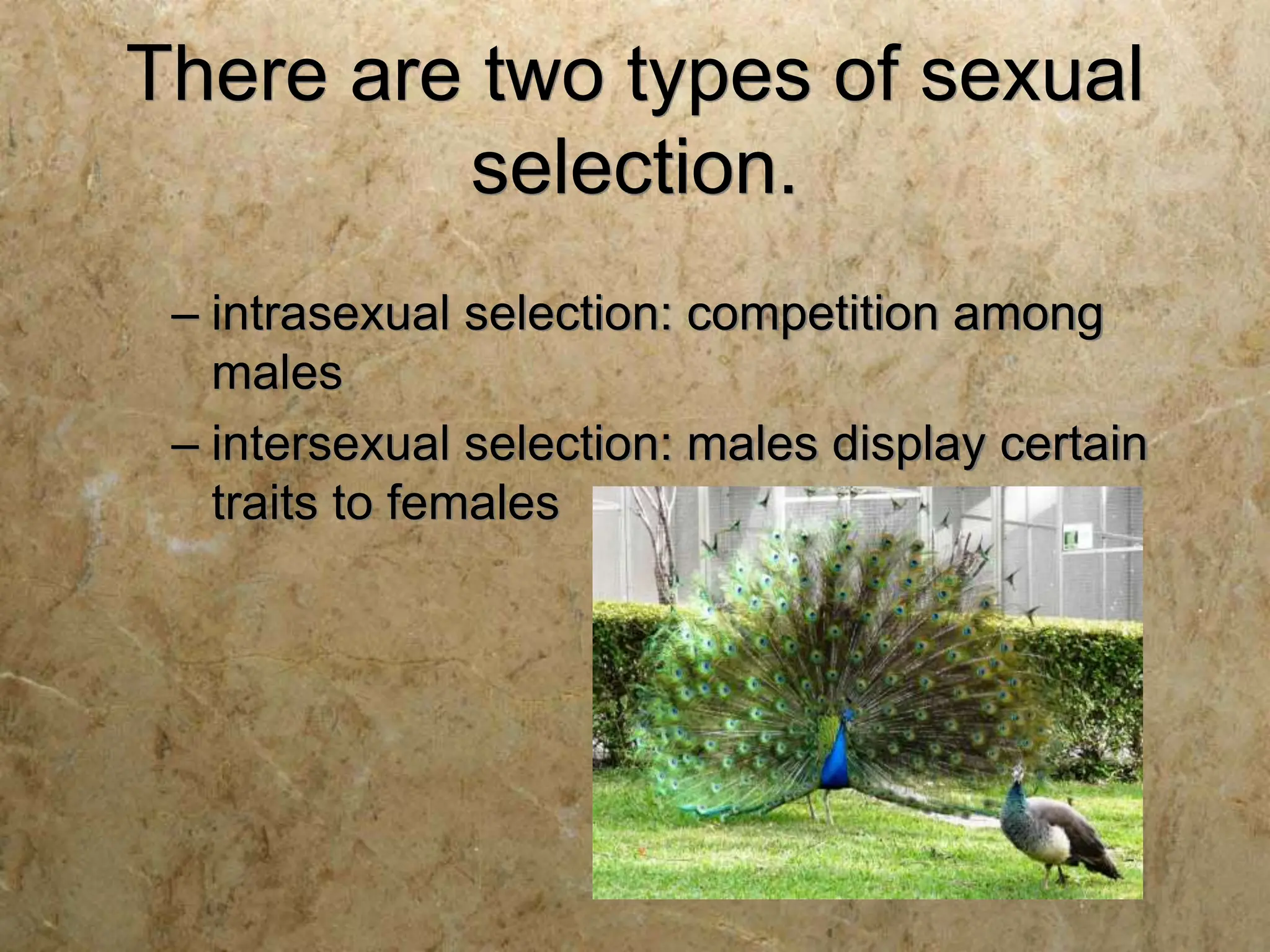
There are two types of sexual
selection.
– intrasexual selection: competition among
males
– intersexual selection: males display certain
traits to females

Mechanisms of Evolution.ppt

  • 1.
  • 2.
    Mechanisms of Evolution Thereare several: 1. Natural Selection 2. Gene Flow 3. Genetic drift 4. Mutations 5. Non-random mating
  • 3.
    Artificial Selection  Domesticatedbreeds have not always been in their current form. This change has been achieved by repeatedly selecting for breeding the individuals most suited to human uses. This shows that selection can cause evolution.
  • 6.
    Genetic Variation  individualsin a species carry different alleles (An allele is an alternative form of a gene (one member of a pair) that is located at a specific positionon a specific chromosome.  Any change in gene (and allele) frequencies within a population or species is Evolution  Allele Frequency – proportion of gene copies in a population of a given allele
  • 7.
    1. Natural Selection: Affects variation in a population as the better adapted (more fit) individuals to their environment survive and reproduce, passing on their genes to the successive generations increasing the frequency of favourable alleles in the population.  Nature “selects” which organisms will be successful
  • 9.
     Imagine thatgreen beetles are easier for birds to spot (and hence, eat). Brown beetles are a little more likely to survive to produce offspring. They pass their genes for brown coloration on to their offspring. So in the next generation, brown beetles are more common than in the previous generation.
  • 10.
  • 11.
    Dark Pepper Moths http://www.youtube.com/watch?v=LyRA807djLc&feat ure=related
  • 12.
    4 Steps ofNatural Selection:  1. In nature , more offspring are produced than can survive.  2. In any population, individuals have variation.  3. Individuals with advantageous variations survive and pass on their variations to the next generation.  4. Overtime, offspring with certain advantageous variations make up most of the population
  • 13.
    2. Gene Flow: Is the movement of alleles into or out of a population (immigration or emigration).  Gene flow can introduce new alleles into a gene pool or can change allele frequencies.  The overall effect of gene flow is to counteract natural selection by creating less differences between populations.  Example:  Plant pollen being blown into a new area
  • 14.
     Gene flowis what happens when two or more populations interbreed. This generally increases genetic diversity. Imagine two populations of squirrels on opposite sides of a river. The squirrels on the west side have bushier tails than those on the east side as a result of three different genes that code for tail bushiness. If a tree falls over the river and the squirrels are able to scamper across it to mate with the other population, gene flow occurs. The next generation of squirrels on the east side may have more bushy tails than those in the previous generation, and west side squirrels might have fewer bushy tails.
  • 15.
    Gene Flow Some individualsfrom a population of brown beetles might have joined a population of green beetles. That would make the genes for brown beetles more frequent in the green beetle population.
  • 16.
    3. Genetic Drift The change in allele frequencies as a result of chance processes.  These changes are much more pronounced in small populations.  Directly related to the population numbers.  Smaller population sizes are more susceptible to genetic drift than larger populations because there is a greater chance that a rare allele will be lost.
  • 17.
     Imagine thatin one generation, two brown beetles happened to have four offspring survive to reproduce. Several green beetles were killed when someone stepped on them and had no offspring. The next generation would have a few more brown beetles than the previous generation—but just by chance. These chance changes from generation to generation are known as genetic drift.
  • 18.
     In apopulation of 100 bears, suppose there are two alleles for fur color: A1 (black) and A2 (brown). A1 has a frequency of .9, A2 a frequency of .1 (1.0 = 100%). The number of individuals carrying A2 is very small compared to the number of individuals carrying A1, and if only fifty percent of the population survives to breed that year, there's a good chance that the A2s will be wiped out.
  • 19.
    Examples of GeneticDrift  A) The Founder Effect: A founder effect occurs when a new colony is started by a few members of original population.  Small population that branches off from a larger one may or may not be genetically representative of the larger population from which it was derived.  Only a fraction of the total genetic diversity of the original gene pool is represented in these few individuals.
  • 20.
     For example,the Afrikaner population of Dutch settlers in South Africa is descended mainly from a few colonists. Today, the Afrikaner population has an unusually high frequency of the gene that causes Huntington’s disease, because those original Dutch colonists just happened to carry that gene with unusually high frequency. This effect is easy to recognize in genetic diseases, but of course, the frequencies of all sorts of genes are affected by founder events.
  • 22.
    Examples of GeneticDrift  B) Population Bottleneck:  Occurs when a population undergoes an event in which a significant percentage of a population or species is killed or otherwise prevented from reproducing. •The event may eliminate alleles entirely or also cause other alleles to be over-represented in a gene pool. EX. Cheetahs http://www.nytimes.com/1985/09/17/science/loss-of-gene-diversity-is-threat-to-cheetahs.htm l
  • 23.
    Bottleneck = anykind of event that reduces the population significantly..... earthquake....flood.....disease.....etc.…
  • 24.
     An exampleof a bottleneck: Northern elephant seals have reduced genetic variation probably because of a population bottleneck humans inflicted on them in the 1890s. Hunting reduced their population size to as few as 20 individuals at the end of the 19th century. Their population has since rebounded to over 30,000 but their genes still carry the marks of this bottleneck. They have much less genetic variation than a population of southern elephant seals that was not so intensely hunted.
  • 26.
    4. Mutations  Areinheritable changes in the genotype.  Provide the variation that can be acted upon by natural selection.  Mutations provide the raw material on which natural selection can act.  Only source of additional genetic material and new alleles.  Can be neutral, harmful or beneficial( give an individual  a better chance for survival).  Antibiotic resistance in bacteria is one form.
  • 27.
     Mutation isa change in DNA the hereditary material of life. An organism’s DNA affects how it looks, how it behaves, and its physiology—all aspects of its life. So a change in an organism’s DNA can cause changes in all aspects of its life.  Somatic mutations occur in non-reproductive cells and won’t be passed onto offspring.  For example, the golden color on half of this Red Delicious apple was caused by a somatic mutation. The seeds of this apple do not carry the mutation.
  • 28.
     The onlymutations that matter to large- scale evolution are those that can be passed on to offspring. These occur in reproductive cells like eggs and sperm and are called germ line mutations.  A single germ line mutation can have a range of effects: 1. No change occurs in phenotype.
  • 29.
    2. Small changeoccurs in phenotype. 3. Big change occurs in phenotype. Some really important resistance in insects are sometimes caused by single mutations1. A single mutation can also have strong negative effects for the organism. Mutations that cause the death of an organism are called lethals —and it doesn't get more negative than that.
  • 31.
    Causes of Mutations DNA fails to copy accurately.  External influences can create mutations.  Mutations can also be caused by exposure to specific chemicals or radiation.
  • 33.
    5. Non-Random Mating In animals, non-random mating can change allele frequencies as the choice of mates is often an important part of behaviour.  Many plants self-pollinate, which is also a form of non-random mating (inbreeding).
  • 34.
    Sexual reproduction results invariation of traits in offspring as a result of crossing over in meiosis and mutations Genetic shuffling is a source of variation.
  • 35.
    Sexual selection occurswhen certain traits increase mating success.
  • 36.
    There are twotypes of sexual selection. – intrasexual selection: competition among males – intersexual selection: males display certain traits to females